
 Add us as a preferred source on Google
If algorithm-driven content platforms do not cater to your viewing preferences right and in fact, influence how you are seen, you are not alone. That’s how BitChute takes the center stage. Founded in 2017 by Ray Vahey, it is a bold platform offering a decentralized, peer-to-peer video-sharing space. Creators have full control over what they share and viewers explore without being steered by heavy recommendation systems.
The site reported having 218 million unique visitors in 2022. While it may not be a popular platform in comparison to many media platforms (only 6% of Americans consume content on BitChute),, its journey has been steady over the past few years. Now the question is: What is BitChute and how it works? This article is your complete guide to understanding the platform, along with its features, and tips on making the most of it.
What Is BitChute?
BiChute is a decentralized, peer-to-peer video-sharing platform that gives creators the control over their channels and audiences. The website emerged as essentially the byproduct of the rising content restrictions and demonetization on mainstream solutions.
Sounds like YouTube? It might, but it’s way different than that. While YouTube stores and streams content through a centralized server network owned by Google, BitChute distributes videos using WebTorrent technology. Through its peer-based structure, users share bandwidth with one another, ultimately reducing the need for costly hosting infrastructure and breaking free from the limitations imposed by corporate moderation policies.
The BiChute users are typically independent creators, podcasters, communities, and journalists looking for an unrestricted source for sharing speech.
How BitChute Works?
BitChute’s real strength is its peer-to-peer hosting model. It stores and shares the content directly between users instead of a central data center. The power engine behind this is WebTorrent, a browser-based technology that allows viewers to stream and share content simultaneously. This makes one thing clear: Every single viewer is a part of the distribution network.
Here’s how it works for users:
- Creator uploads a video on BitChute.
- The content is initially hosted on the user‘s node.
- It is then distributed through connected peers.
As more and more users engage with the video, it reaches across networks with less to no server dependency. From the business angle, it reduces costs and the risk of content takedowns.
That’s not where it ends. On BitChute, users can also:
- Create personalized BitChute channels.
- Subscribe to their preferred creators.
- Interact with content directly.
If we talk about BitChute vs YouTube, this is where both platforms are similar. The only catch is that the former works without centralized algorithmic control. Moreover, several tools like BitChute app and third-party BitChute downloaders let users access content feasibly across devices. To top that, the platform makes an ideal avenue for those seeking transparency and freedom online.
Even if you are looking at it from a streaming app development perspective, BitChute’s technology model opens multiple possibilities for those seeking decentralized app development and content delivery systems.
BitChute Safety, Moderation, and Legal Factors
BitChute has often landed in scrutiny regarding moderation and legal responsibility due to its open sharing model. While the platform does impose community guidelines, the enforcement is not strong enough as compared to mainstream networks. As a result, controversial and copyrighted content circulates more freely. This not only violates the standard benchmarks of content ownership but also raises concerns about digital ethics and compliance.
So how to use BitChute safely and smartly? Simply follow these few practical safety and moderation tips:
- Check (and recheck) sources before you share or believe content. Always confirm whether information or claims come from credible creators or references.
- Refrain from uploading copyrighted material. Use only your own work or licensed media to prevent potential takedowns or legal complications.
- Be careful with external links and downloads. Stick to official channels or verified creators to avoid scams or malware.
- Interact respectfully with comments and other users. Even if moderation is minimal, maintaining civility is the most basic way to ensure a healthier community.
- Set viewing preferences wisely BitChute has the option for filtering or content warnings. Make the best of them to avoid exposure to sensitive topics.
- Be the know-it-all about local digital laws. What’s acceptable in one country may not be legal in another. So, knowing your regional regulations is a must.
Is BitChute safe? Yes, it is safe from a legal standpoint as long as the published content respects intellectual property rights and doesn’t violate jurisdictional regulations. While old bitchute and other legacy domains continue to redirect to its current platform, transparency and self-regulation remain essential to maintaining user trust. Planning to develop a secure streaming site that gives competition to current platforms? Explore how to build an OTT app like Stan for insights into feature planning, monetization, and more.
BitChute vs YouTube: Key Differences
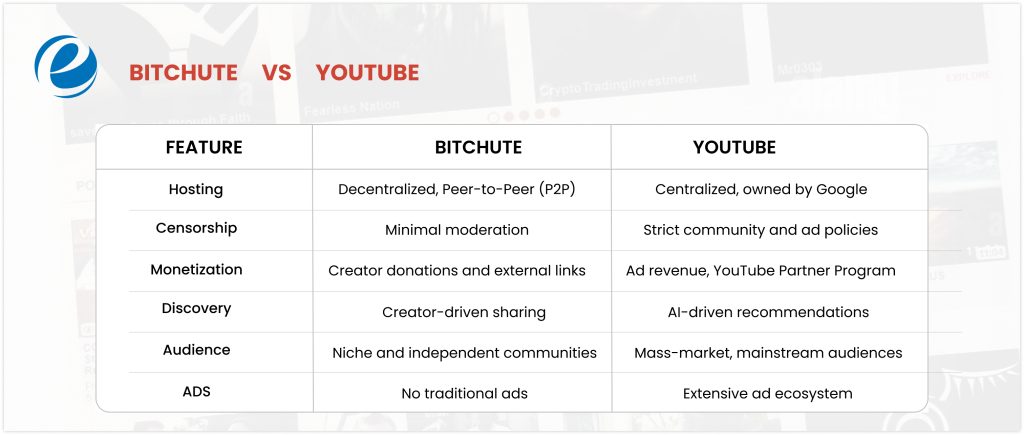
Both BitChute and YouTube are platforms designed for video sharing and community building. But their core philosophies and technologies are too distinct to put both into one league. Here below is the roundup of all the differentiators.
| Feature | BitChute | YouTube |
| Hosting | Decentralized, Peer-to-Peer (P2P) | Centralized, owned by Google |
| Censorship | Minimal moderation | Strict community and ad policies |
| Monetization | Creator donations and external links | Ad revenue, YouTube Partner Program |
| Discovery | Creator-driven sharing | AI-driven recommendations |
| Audience | Niche and independent communities | Mass-market, mainstream audiences |
| Ads | No traditional ads | Extensive ad ecosystem |
BitChute vs Emerging Platforms: A Comparison with Alternatives
BitChute gets a reputation for its decentralized video-sharing platform. But guess what? It is not the only one in the landscape. There are a number of platforms serving as top BitChite alternatives in 2025. Each offers a unique spin on content sharing, monetization, and not to mention, freedom.
| Platform | Hosting Model | Audience Focus | Monetization | Pros | Cons |
| BitChute | Peer-to-peer | Independent creators | Donations | Decentralized, minimal censorship | Limited discoverability |
| DTube | Blockchain/IPFS | Tech-savvy users | Crypto-based rewards | Transparent, ad-free | Slower adoption |
| Odysee | LBRY blockchain | Broad creator base | Crypto rewards | Sleek UI, growing audience | Complexity for beginners |
| PeerTube | Federated servers | Open-source community | External funding | Self-hosted freedom | Requires tech setup |
| Rumble | Centralized | Conservative creators | Ad sharing | High traffic, monetization | Stricter control policies |
Regional and Cultural Use Cases
BitChute’s user base and popularity is influenced by cultural and regional factors. Here below are the use cases that depict the subtle differences in what the platform serves:
United States: BitChute is primarily home to political commentators, independent news outlets, and podcasters seeking fuss-free alternatives to mainstream media.
European Union: EU’s usage of BitChute is mainly driven by communities interested in freedom of speech debates, policy talks, and niche documentaries.
India: BitChute India is used mainly by tech enthusiasts, cultural commentators, and independent educators exploring decentralized video options.
These are just a few examples of how diversely the platform caters to users in the different corners of the world. Creators do not just enjoy the flexibility to share localized perspectives, they also connect with global audiences through open-access media.
How to Get Started on BitChute? Simple Tips for Your Content-Sharing Journey
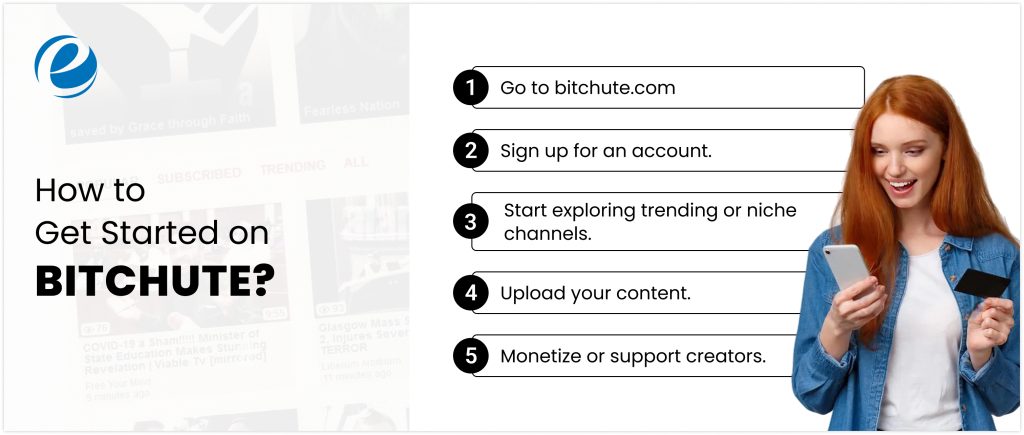
Setting up an account on BitChute is pretty straightforward. Here’s a quick step-by-step guide to help new users kickstart the journey:
Step 1: Go to bitchute.com: Visit the official platform homepage.
Step 2: Sign up for an account: Here, you will choose whether you want to set up a creator or viewer profile.
Step 3: Start exploring trending or niche channels: Search and select topics of interest or follow creators you enjoy watching.
Step 4: Upload your content: Use decentralized hosting to share videos directly with your audience.
Step 5: Monetize or support creators: Share donation links, promote via social platforms, or contribute externally.
Must-Know Tips for Creators to Make the Most of BitChute
BitChute’s community is not as big as that of mainstream content-sharing avenues. However, it is a sure-shot for creators who are clear about their goal and intent behind voicing thoughts. Is BitChute worth it? Yes, if you use it wisely. Getting successful on the platform depends on posting frequency, engagement, and targeting.
Here’s how to make the most of your efforts on BitChute:
- Post regularly to build recognition among returning viewers and create your own community of loyal audience.
- Promote your content externally. Instead of sticking to just one platform, share links on forums or social media channels to draw new audiences.
- Use catchy, intriguing titles and thumbnails. Discovery on BitChute is organic, so clear visuals help.
- Engage directly through comments and collaborations.
- Diversify monetization using donation links, merch, or crowdfunding.
Final Verdict
BitChute stands out as an independent platform where both creators and viewers can channel their value for freedom of expression. It is perfect for free speech advocates, niche content creators, and communities looking to discuss topics freely, since there is no algorithmic control on BitChute.
If you are looking at it from the BitChute App vs YouTube perspective, here’s what you must know: One cannot replace another. While the former is great for independent content posting, it still lacks large-scale reach and structured monetization options that drive mainstream creators.
For developers and brands, BitChute exemplifies how decentralized platforms can open new doors for growth in software development and mobile app innovation.
Faq’s
What is BitChute?
BitChute is a peer-to-peer video sharing/hosting platform. It is designed to provide creators with the freedom from centralized censorship and algorithmic control.
Is BitChute free?
Yes, BitChute is completely free to join and use for both creators and viewers.
How does BitChute work?
BitChute uses a peer-to-peer network instead of traditional cloud servers, allowing users to share videos directly with each other.
Can I monetize on BitChute?
Yes, you can. The platform allows creators to receive donations through integrated links, third-party platforms, or cryptocurrency.
How is BitChute different from YouTube?
BitChute focuses on freedom and decentralization, while YouTube prioritizes reach and ad-based monetization.
Is BitChute safe?
Yes, BitChute is completely safe to use. The only condition is: Users must post content within copyright laws and avoid unverified content sources.

 +1 (989) 535-9295
 info@emizentech.com
 emizentech


