
 Add us as a preferred source on Google
Are you fed up with the false reviews on online products leading you to make wrong purchases? With Fakespot shutting down in July 2025, over 10 million users are left looking for another reliable Fakespot substitute, as fake reviews are displayed to be present in 30-40% of e-commerce listings. What is Fakespot?
As per Capital One Shopping, Fake reviews cost online consumers an estimated 770.7 billion USD in unwanted purchases in 2025, projected to reach about 1.07 trillion USD by 2030.
It used to be an AI tool that assessed reviews on Amazon and Walmart for deceitfulness. Why does Fakespot have no more support? Mozilla dropped it because of budget constraints for Firefox Focus. Find out the reason for Fakespot’s closure, the best Fakespot alternatives such as ReviewMeta, and the tricks of shopping smarter through Fakespot alternatives today.
What Is Fakespot and How Did It Work?
Fakespot is an AI-based review analysis platform that supports online customers in identifying fake, unfair, or low-quality reviews on sites like Amazon, Walmart, and other e-commerce platforms etc.
It got the attention of many people because it provided swiftly, color-coded trust ratings for the products and sellers, hence a lot of people are actively looking for a trustworthy Fakespot alternative and other Fakespot alternatives as the original service is coming to an end.
By knowing what Fakespot is and how it functions, you can make more informed decisions regarding any new Fakespot replacement or alternative to Fakespot before adding it to your browser.
Collected review data
Fakespot conducted a comprehensive scan of product pages and gathered ratings, reviews and profiles of reviewers from marketplaces, and acted as a filtered layer on top of the ecommerce platforms.
Analyzed language and patterns
The engine was built with the capability of natural language processing to detect unusual wording, repetitive phrasing or bot-like behavior that helped users to quickly spot the suspicious reviews with no manual effort.
Checked reviewer credibility
The algorithm looked at the reviewer’s history, activity patterns, and rating behavior to predict if the reviewer was real or part of a fake review network.
Generated trust grades for products
Fakespot’s analysis was reduced to simple grades or scores so that shoppers could readily determine if the review section of the product was trustworthy before purchasing.
Highlighted safer buying options
Whenever the quality of reviews was questionable, Fakespot would frequently propose other products that had more reliable reviews, thus directing users to safer choices and making it easier to rely on such tools as a modern alternative to Fakespot.
Why Is Fakespot No Longer Supported?
Mozilla has publicly declared that Fakespot “did not suit a model that it could maintain”, thereby the organization is concentrating again on Firefox and developing AI‑powered browser features. High user demand for review analysis is the main reason that Fakespot is no longer supported as an independent product.
That is not the only thing explaining the shutdown of Fakespot; among other things, infrastructure costs have been rising, there has been legal friction with marketplaces, and the problem has increased of reviewing detection at scale being accurate. Also, competition from review tools that are newer and more innovative than Fakespot has created conditions that made it impractical to invest in Fakespot as a stand-alone service.
Impact of Fakespot’s Shutdown on Users
The Fakespot’s damning decision on users is that the discontinuation of Fakespot has left the loyal clients greatly unprotected against fake reviews, and they will have to quickly find a reliable alternative to Fakespot that will serve them for the long haul.
Loss of automatic review protection
There will be no more automatic review protection. Users who have similar AI-based review detection mechanisms as Fakespot are the ones who mostly search for Fakespot alternatives and their replacements.
Increased risk of scam products
Ovulation of fake products will be increased; besides Fakespot’s disappearing act, the shoppers will be getting low-quality or fake items whose reviews have been skewed.
Confusion about what is Fakespot replacement
There is going to be confusion as to what will now happen to Fakespot; the regular consumers already have doubts about what Fakespot is, and which replacement or alternative they can trust.
Disrupted shopping workflows
Shopping workflows have been disrupted. One-click overlay users will have to reshape their habits around new tools, extensions, or custom e-commerce development solutions.
Need to test multiple tools
Ultimately, the last impact is that users will need to test several tools. They would go through the list of Fakespot alternatives and review plugins until they find a stable, accurate Fakespot alternative that fits their browser settings.
Best Fakespot Alternatives You Should Use
The best Fakespot alternatives not only provide trustworthy review analysis, fraud detection, and shopping insights to the users, but they also make it possible for the users to safely replace Fakespot and fake ratings.
FakeSpotter (generic placeholder)
FakeSpotter‑like applications offer automatic review scoring, highlighting untrue or undesirable reviews and providing merchants with a fast Fakespot substitute experience across several marketplaces.
Pros
- Created as a direct Fakespot substitute concept with the same scoring.
- A simple overlay-style user interface for fast trust checks.
- Very easy for the non-technical users in your content to understand.
Cons
- “FakeSpotter” is here used as a generic placeholder and not a specific product.
- The features and the precision depend on the actual tool you integrate with the name.
- Limited worldwide reputation compared to the more established brands.
Why consider
- A helpful label when justifying how any AI review tool can be a Fakespot alternative.
- Aids readers to visualize a one-click browser plugin workflow.
- Positions the category of tools that act as Fakespot alternatives.
CamelCamelCamel

For Amazon price changes, CamelCamelCamel is the tracking that alerts users to spikes or drops, and it reduces the risk of paying more for hyped products by complementing the Fakespot alternatives.
Pros
- An old price tracker of Amazon with clear historical graphs.
- Notification through email and RSS for target price and discounts.
- Web-based and extension support for easy access while shopping.
Cons
- Does not conduct a direct analysis of fake reviews.
- The interface is old compared to newer tools.
- Extremely focused on Amazon and not wider ecommerce.
Why consider
- It is a good idea to complement Fakespot alternatives by preventing overpaying for over-hyped items.
- The shopper is budget-conscious and buys at the right time.
- Long-term value comparison is useful not just for star ratings.
ReviewMeta
By using a variety of different approaches, ReviewMeta detects any potentially suspicious patterns in product reviews on Amazon and subsequently modifies the visible rating, thereby winning the trust of Amazon shoppers who frequently use it as a highly reliable Fakespot alternative.
Pros
- Commitment to pinpointing suspicious reviews on Amazon through reports with comprehensive analysis.
- Provides ratings after the elimination of reviews that are questionable.
- Convenient and easy-to-use Chrome extension for one-click checks during browsing.
Cons
- Marketplaces other than Amazon are not covered at all; hence, the service is focused mainly on Amazon.
- Sometimes it happens that completely legitimate reviews get flagged, thus requiring human judgment for the final results.
- The interface and terms used can be too technical for casual shoppers.
Why consider
- Great choice for those looking for an expert Fakespot alternative for Amazon review analysis.
- Amazon users who compare products on a daily basis would get a lot from it.
- It can be used alongside other tools as a focused Fakespot replacement effectively.
SellerAmp‑style tools

Seller research applications akin to SellerAmp merge profit calculations, sales rank analyses, and review summaries, playing indirectly as alternatives to Fakespot for resellers and each-way betters.
Pros
- Include the profit, fees, and sales rank in the product sourcing decision-making.
- Usually offer data and quick calculators similar to Keepa.
- Designed with Amazon FBA and arbitrage sellers in mind.
Cons
- Aging up for occasional customers who just require review checks.
- Typically subscription-based with a learning curve for new sellers.
- Prioritize profits and avoid fake reviews, impede consumer protection.
Why consider
- Considered a very strong alternative to Fakespot for professional sellers taking stock of their risks.
- Helps to filter out products that seem to be profitable but are dependent on dubious reviews.
- Fits well with dedicated review analyzers in an all-inclusive seller toolkit.
Keepa
Keepa is all about tracking Amazon price history and offers, and even though it is not a direct Fakespot alternative, it nonetheless provides important context around pricing and discount manipulation.
Pros
- Gives trends in sales rank and keeps the detailed Amazon price history of the product over time.
- Compatible browser extensions for the major browsers with tight integration.
- Alerts for changes in price and availability for millions of products.
Cons
- The focus is on pricing rather than on deep fake review detection.
- The user interface may confuse beginners by displaying too many graphs and metrics.
- Might require a paid plan for power users to access full functionality.
Why consider
- It is a perfect counterpart of a Fakespot alternative, providing pricing intelligence.
- A must for resellers and serious Amazon buyers who wait for deals.
- Assists in establishing whether “too good to be true” offers really are.
Rakuten‑style browser extensions

Cashback and coupon browser extensions include basic review highlights in most cases, thus giving shoppers some additional signals that can be very helpful in pairing up with the main Fakespot alternative or review-centric plugin.
Pros
- Automatically provide cashback and coupon discovery at checkout.
- Many times, they show store-level ratings and basic trust indicators.
- Very easy, passive savings for consumers during daily online shopping.
Cons
- Mainly emphasize discounts rather than conducting an in-depth review of fraud analysis.
- They might cause a slight slowing of the pages because of deal scanning.
- The data and coverage are different depending on the region and participating merchants.
Why consider
- Besides being a core Fakespot alternative, the product is a good companion for added value.
- Safeguards and discounts for sales in partner stores are encouraged.
- A product that fits well for users who are looking for both savings and light trust checks.
Honey

Honey is able to find coupon codes and track prices automatically; although not a full substitute for Fakespot, it diminishes the risk by making deals transparent and easier to compare.
Pros
- Automatically tests coupon codes at checkout on many online stores.
- Monitors prices and has a droplist‑style watchlist.
- Very simple and user‑friendly extension with a large adoption.
Cons
- Detection of direct review fraud is limited in comparison to Fakespot.
- An account is needed for full synchronization and rewards features.
- Data collection and privacy issues for a few users.
Why consider
- Maximizes value when paired with a review‑focused Fakespot alternative.
- Great for users who would appreciate savings as much as trust.
- A brand that is well known, thus making it easy for non‑technical shoppers to adopt.
InvisibleHand‑like deal notifiers
The deal notifier extensions are providing assistance to the Fakespot alternatives by tracking the costs at other retailers and thus preventing the customers from paying more due to misleading reviews.
Pros
- Show prices that are lower in other stores at the same time.
- Facilitate comparison of prices from different stores, not only Amazon.
- Browser experience is very light, and the interaction needed is minimal.
Cons
- Do not check the authenticity of reviews or the credibility of the reviewer.
- Availability of the service relies on the retailers that are either in partnership or being monitored.
- There are times when the displayed offers and the final prices differ.
Why consider
- It is a strong complement to the Fakespot alternatives because it reveals better offers.
- It is useful if you regularly purchase from several different retailers, not just marketplaces.
- It prevents one from paying more when misleading reviews favour one seller.
Trustpilot

Trustpilot directs attention to the reputation of the store instead of individual products, which makes it easier for users to determine sellers’ overall trustworthiness using Fakespot’s shutdown and therefore loses the integrated signals.
Pros
- Big, famous platform for customer reviews at the company level.
- Excellent tools for gathering and exhibiting authentic feedback.
- Integrations and widgets for online retail stores to promote trust.
Cons
- Has been criticised for its very active selling and renewing tactics.
- Some customers complain about moderation and the fairness of review removals.
- Paid features could be pricey for small businesses.
Why consider
- A useful Fakespot alternative, but not at a product level, only at a brand level.
- It aids shoppers in assessing the overall business reputation before making a purchase.
- A valuable signal when used along with product-specific review tools.
SiteJabber

SiteJabber is a platform that gives the opportunity to rate heavily based on crowdsourced ratings of websites and online shops, thus making it a strong tool in the fight against any trust issues caused by the presence of lesser-known stores or shops that all the other alternatives to Fakespot might miss.
Pros
- Mainly focuses on real users’ reviews on websites and online businesses.
- Points out scam websites and low-trust e-commerce operations.
- Offers different categories for easier and faster discovery of trustworthy platforms.
Cons
- The coverage may vary significantly between sites, especially for the small or new ones.
- The interface and search may not feel as refined as in Trustpilot.
- User‑submitted reports are the main source of information, and it takes time for them to accumulate.
Why consider
- A very good complement to a Fakespot alternative when one is exploring unfamiliar stores.
- It helps avoid fraudulent websites, which may seem legit at first sight.
- It is useful for quick background checks before payment details are entered.
ResellerRatings
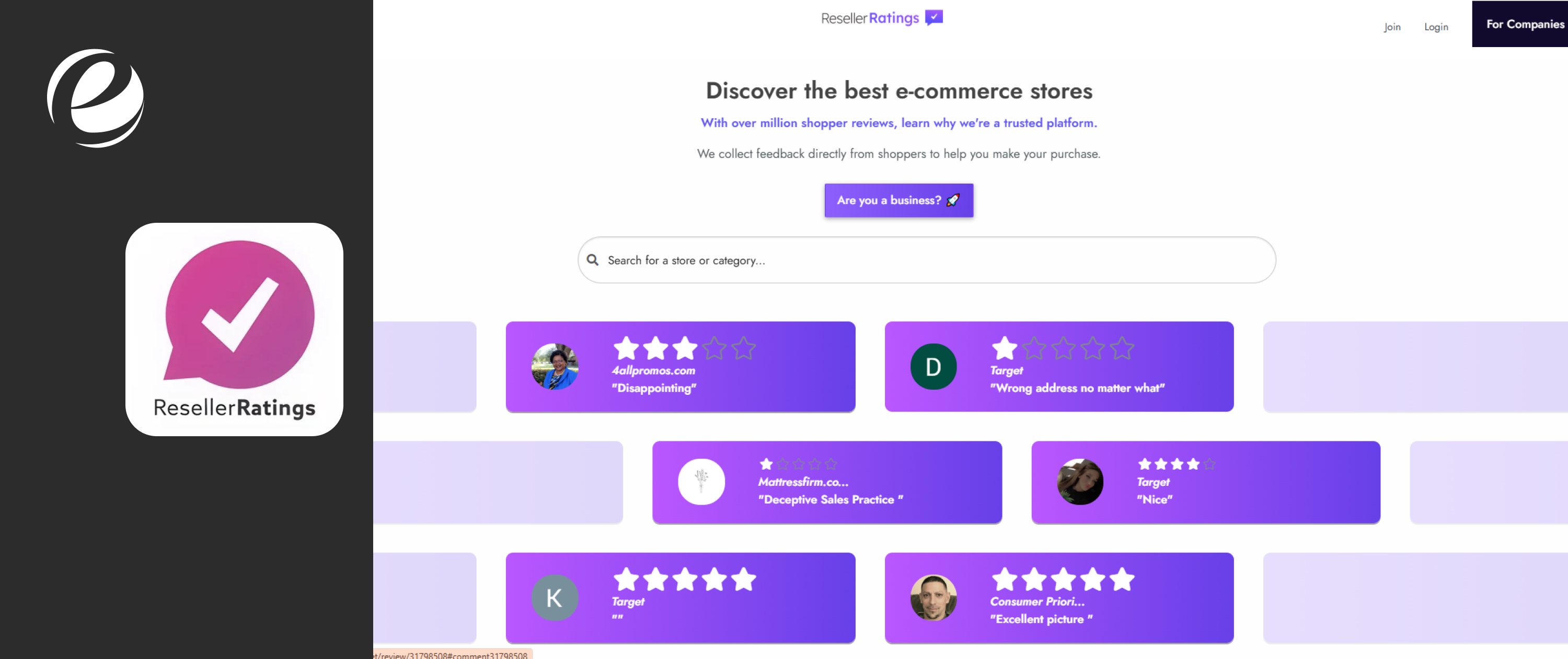
ResellerRatings is a platform that aggregates consumers’ feedback about merchants, working as a complementary Fakespot alternative via the focus on merchant reliability, support, and delivery performance.
Pros
- It focuses on the ratings of merchants and the detailed customer feedback in a different light.
- It sheds light on factors influencing a customer’s decision to keep coming back to your online store, especially delivery and support.
- Has a long history of being a reference to the online store’s reputation.
Cons
- Not so much focused on the authenticity of the individual product review.
- Some merchants may have very few reviews, which would limit the insights that could be gained.
- The interface and the branding might not be that visible to mainstream shoppers.
Why consider
- Very strong Fakespot alternative for the case of store reliability assessment before any large purchases.
- Perfect combination with product-level review analysers.
- Useful for high-ticket items cases where merchant trust is of utmost importance.
| Alternative | Launched Year | Specific Country | Platform Availability | Size (Users/Scale) | Key Features (Short) |
| ReviewMeta | 2015 | Global (Amazon focus) | Web, Chrome/Firefox extensions | Millions of analyses | Fake review detection, adjusted ratings |
| FakeSpotter (generic) | N/A (concept) | Global | Browser extensions (assumed) | Varies by tool | AI scoring, quick trust overlays |
| Keepa | 2011 | Global (Amazon) | Chrome/Firefox extensions | 10M+ users | Price history, sales rank charts |
| CamelCamelCamel | 2008 | Global (Amazon) | Web, extensions | Millions monthly | Price tracking, deal alerts |
| SellerAmp-style tools | ~2018 | Global (Amazon FBA) | Chrome extensions, apps | Seller-focused (100K+) | Profit calc, sales rank, fees |
| Rakuten-style extensions | 1997 (Rakuten) | Global | Browser extensions | 100M+ users | Cashback, coupons, store ratings |
| Honey | 2013 | Global | Chrome/Edge extensions | 17M+ users | Auto coupons, price tracking |
| InvisibleHand-like notifiers | ~2010 | Global | Browser extensions | Millions | Real-time price comparisons |
| Trustpilot | 2007 | Global | Web, apps, widgets | 200M+ reviews | Company ratings, verified feedback |
| SiteJabber | 2008 | Global (US focus) | Web, apps | 10M+ reviews | Site/business ratings, scam alerts |
| ResellerRatings | 1999 | Global | Web | 1M+ ratings | Merchant scores, delivery feedback |
Features to Look for in a Fake Review Detector
Key features are necessary to make any Fakespot alternative effective against fake reviews after Fakespot’s shutdown.
AI-powered review analysis
Robust detectors employing machine learning similar to Fakespot are capable of discerning patterns, thus ensuring a dependable alternative to Fakespot for the average consumer.
Multi-platform compatibility
Search for applications that span Amazon, Walmart, etc., Fakespot alternative will not just be limited to one ecommerce site, but rather work across the board.
Real-time browser integration
The function of instant overlays and grades is comparable to what Fakespot functionality is; thus, the alternatives to Fakespot will be very comfortable during web browsing.
Transparent scoring methodology
Direct clarifications of ratings create confidence and facilitate users in selecting the best Fakespot alternatives as opposed to black-box options.
Regular algorithm updates
Constant advancements are made to keep up with fraud; thus, the query of why Fakespot is no longer supported will not be a matter for the new Fakespot alternative.
Seller and reviewer insights
Not just reviews, analyse histories to detect scams, this is a positioning of Fakespot for buying that is complete and hence safer.
Key Capabilities That Define Strong Fakespot Alternatives
The following table illustrates the typical differences between the most popular Fakespot alternatives concerning their main areas of interest and capabilities, allowing you to choose the one that best satisfies your needs.
| Aspect | Typical Fakespot Alternative Focus | Benefit for Shoppers |
| Review fraud detection | Review fraud detection applies machine learning technology to identify and mark reviews that are fake or unreliable on a website dedicated to those products. | Helps consumers not to get fooled by wrong ratings and not to buy products that are only on the market because of hype. |
| Seller trust scoring | Consider the seller’s past sales, how they delivered goods, and how often there was an issue with that seller. | Helps customers avoid receiving fake items or items that are not delivered at all. |
| Marketplace coverage | Marketplace coverage is applicable not only to Amazon but also to other popular online shopping sites. | Protection is the same no matter how many different platforms you shop on. |
| Browser / app integration | Support for Chrome, Firefox, and mobile apps. | Very convenient for the customer, as the consumer can use the tool while browsing. |
| Extra ecommerce features | Offer price tracking, alerts for deals, or product discovery. | It’s more beneficial than just having a review checker. |
While considering any Fakespot alternative, seek solvents that give a thorough explanation for score allocation and that the vendor also discloses de-identified proof for every rating. If such transparency exists, then you can expect it for a long-term, reliable Fakespot alternative instead of a black-box extension.
How to Spot Fake Reviews Without Tools?
Learn from the patterns that no Fakespot alternative can fully replace and manually spot fake reviews after Fakespot shuts down.
Check review dates and volume
Manipulated reviews show sudden points while real feedback grows steadily, so be careful not to mix it up with the shutdown of Fakespot.
Look for generic or repetitive language
Bland compliments without mentioning anything specific or using the same words show that bots are involved, thus searching for the detail that is like Fakespot manually.
Filter by recent and verified purchases
Do not pay attention to the top reviews that are old; just focus on the flags of “verified buy” as a very simple alternative to Fakespot analysis.
Examine reviewer history and profiles
Brand-new accounts with very rare reviews or excellent ratings imitate scammers, and thus, they ought to be observed as Fakespot replacements.
Compare ratings across platforms
The conflicting scores on Amazon and Walmart show the presence of bias and serve as free replacements for Fakespot checks.
Watch for unnatural photo patterns
Use of stock photos or the same picture in all reviews points to the fact that staging was involved, and this is something that no single Fakespot alternative can deal with.
Building Custom Fakespot Replacements with Ecommerce Experts
Constructing personalized Fakespot replacements through an ecommerce development expert by creating in-house review protection layers is a way to go beyond the regular Fakespot substitutes.
Machine learning pipelines
By integrating AI fraud detection into your system, you will have a constant alternative to Fakespot.
Custom trust dashboards
With your data in real time, create seller scoring that is better than any Fakespot alternative.
Scalable data warehousing
For confidential examinations, keep review trends, thus rendering Fakespot’s closure irrelevant.
Third-party data integration
For higher Fakespot replacement precision, integrate outside indicators with in-house reasoning.
Hire ecommerce developer teams
Hire ecommerce developer, create review protection systems that are superior to basic Fakespot alternatives.
Policy-driven fraud flags
Brand-specific directives that adapt quickly than the ones common to Fakespot can be incorporated.
Final Words
Fakespot shutting down means the end of an era, but smart consumers will not miss out, as there are already strong Fakespot alternatives waiting to take over. Fakespot was a revolutionary tool for detecting fake reviews; now, you can get a trustworthy Fakespot replacement like ReviewMeta or Keepa as your go-to alternative to Fakespot.
Why is Fakespot no longer in use? The reason is really straightforward: changing priorities allowed better options to emerge. When choosing Fakespot alternatives, master manual checks and key features. Stay safe when shopping; your next tool is just a click away!
FAQs
What is Fakespot?
Fakespot is a shopping tool that applies AI grades to reviews across different platforms like Amazon and others for the purpose of fake detection.
Why is Fakespot shutting down?
Mozilla withdrew support in July 2025, due to the tremendous costs involved; they planned to divert their entire focus to Firefox.
Why is Fakespot no longer supported?
Fakespot closed its doors because of an unsustainable model, legal troubles, and competition.
Best Fakespot alternative?
ReviewMeta is one of the best substitutes for Fakespot, which provides effective analysis of Amazon reviews.
Alternatives to Fakespot?
Keepa, CamelCamelCamel, and Trustpilot are some other options that provide insights into reviews as well as prices.





 +1 (989) 535-9295
 info@emizentech.com
 emizentech


