
 Add us as a preferred source on Google
Healthcare business ideas are expanding rapidly in 2026 due to the increase in medical services and technologically advanced solutions. High-growth sectors that entrepreneurs might investigate include digital wellness platforms, integrated care solutions, and AI in healthcare, which improve patient outcomes.
In case you’re still wondering why healthcare is such a goldmine for entrepreneurs, the following section breaks down exactly why these ventures are among the most profitable industries in 2026.
Why Healthcare Ventures Are the Most Profitable Industries in 2026?
Imagine an industry where demand is continuously growing; healthcare is precisely that. It is booming because demand keeps rising for care and technological advancement. This growth creates opportunities for entrepreneurs to explore healthcare business ideas, such as telemedicine platforms, healthcare BPO services, medical digital health apps, and AI-driven diagnostics solutions.
The healthcare BPO market alone is projected to reach about US$483.07 billion in 2026, which reflects enormous opportunities for investors & startups alike. This continuous growth and profitability make healthcare one of the most attractive industries for 2026 and beyond.
Key Factors That Make Healthcare Businesses Profitable
- Efficient Revenue Cycle Management (RCM): Streamline the procedure from patient registration to payment collection. Precise coding helps reduce claim denials & speeds up cash flow.
- Optimized Patient Volume & Retention: Keep patient numbers high through thoughtful marketing, which builds a strong reputation, and engage patients proactively to encourage loyalty.
- Balanced Payer Mix: Maintain a healthy combination of commercial insurance, Medicare/Medicaid, and self-pay patients to keep cash flow steady and reduce financial risk.
- Operational Cost Control: Keep track of staffing, inventory, and overhead. Monitoring “Cost per Visit” (CPV) highlights inefficiencies and helps improve profit margins.
- Technology Integration: Use EHR and AI-driven tools to reduce administrative work, while telehealth allows you to reach patients in remote locations.
- Strategic Location & Market Demand: Offer services that match local demographic needs, such as geriatric care in aging populations, to maintain consistent demand.
Top 10 Healthcare Business Ideas in 2026
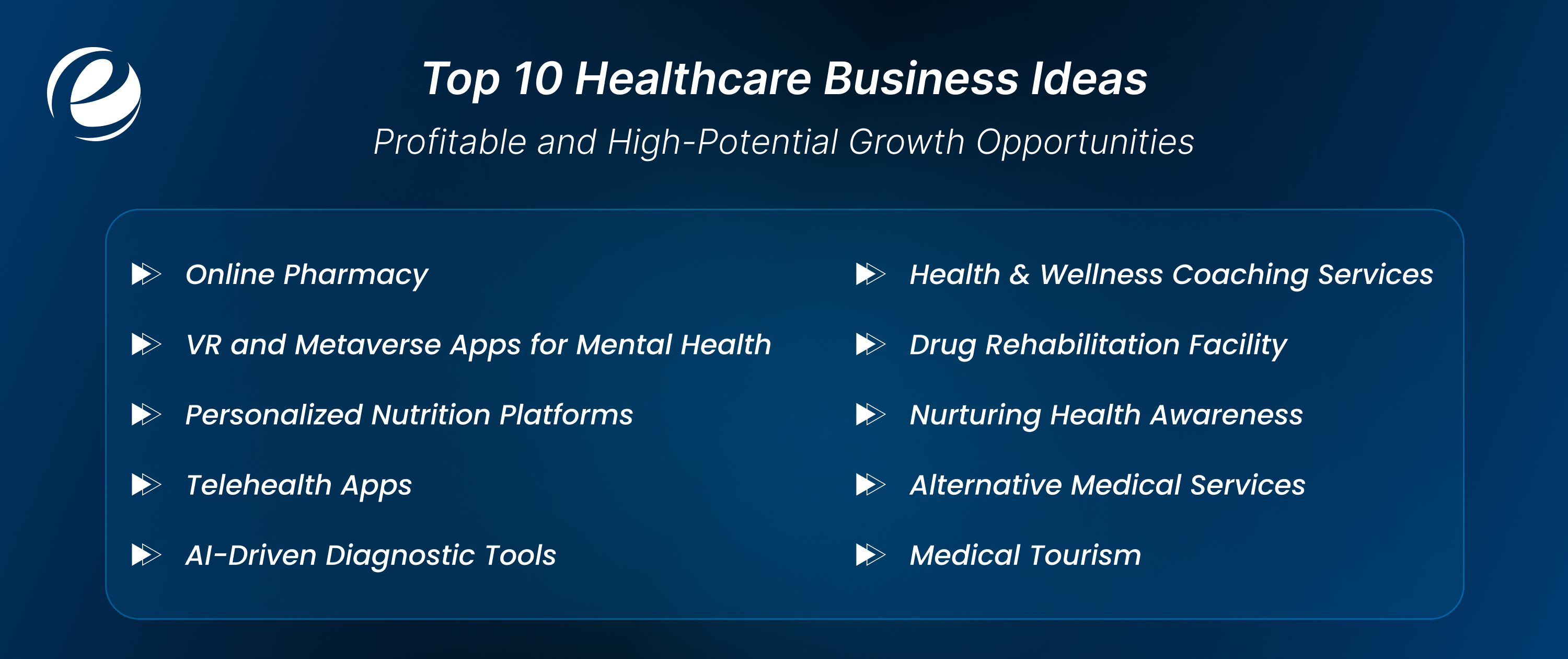
The rapid embracement of digital transformation in the healthcare industry creates high growth opportunities for startups that unite technology with patient-centric services. Many of these business models depend on robust healthcare app development to provide an intuitive, accessible, and scalable solution. Here are the top 10 healthcare business ideas you can consider in 2026:
Online Pharmacy
Online pharmacies provide the convenience of ordering medications and health products via digital platforms. Besides basic e-commerce, various successful models involve prescription fulfillment, reminders, and virtual consultations. Firms can collaborate with suppliers for rapid delivery and customized suggestions.
VR and Metaverse Apps for Mental Health
Immersive technologies are acting as strong tools for mental wellness. VR and Metaverse apps can help therapy for phobias, anxiety and stress as they create simulated environments for exposure therapy and peer engagement. These solutions cater to the growing global focus on mental health & can attract both clients and clinical partners.
Personalized Nutrition Platforms
Personalized nutrition platforms play a vital role in reshaping how people approach their diets. These platforms are based on biomarkers, health objectives, and lifestyle data. Here, the subscription model works excellently with premium extra features for in-depth insights, integration with wearables, and nutrition coaching that increases long‑term retention.
Telehealth Apps
Telehealth has moved from a trend to a vital service. Applications that connect patients to doctors via chat, video, or voice lower the obstacle that comes between them and care and expand access. This phenomenon is particularly true in areas with a shortage of healthcare providers.
AI-Driven Diagnostic Tools
AI-powered diagnostic tools help you analyze medical data, for instance, lab results. These tools provide faster and more precise results as compared to traditional methods. These platforms are widely valued by hospitals and clinics for their ability to minimize errors and speed up diagnosis.
Health & Wellness Coaching Services
Digital coaching unites professional guidance with tech. Proficient, certified experts support clients online in their lifestyle improvement, fitness, preventive wellness, & stress management. Technology helps make delivery accessible with video sessions and flexible pricing.
Drug Rehabilitation Facility
Addiction treatment is a skill meeting a pressing social need. Rehabilitation centers offer structured therapy, support services, and recovery planning, which create a meaningful impact while meeting the growing demand for accessible treatment centers.
Nurturing Health Awareness
Health awareness initiatives help people make informed decisions about their well-being. It can be done via educational content, community programs and preventive outreach. These efforts encourage healthier lifestyles and can attract sponsorships & community support.
Alternative Medical Services
Interest in alternative therapy services, such as acupuncture, massage, & holistic healing, is steadily increasing. Services like acupuncture, massage, and holistic healing appeal to those seeking complementary care, creating opportunities for independent practices or integrated wellness centers.
Medical Tourism
Medical tourism firms help cross-border healthcare, which assists patients to identify affordable treatment options abroad. These platforms manage bookings, travel logistics, and provider partnerships to simplify access to care and generate substantial revenue through structured service packages.
Investment Matrix for Health Tech Ventures: Capital, Costs, and Growth Potential
This matrix demonstrates differentiation of various healthcare subsectors in terms of capital, costs, and growth potential.
| Subsector | Typical Capital Needed | Key Cost Drivers | Growth Potential |
| Outpatient & Speciality Clinics (e.g., dental, dermatology, fertility) | Moderate–High | Real estate, clinical staff, compliance and medical equipment | High (Strong demand, private equity interest) |
| Home Healthcare & Elderly Care Services | Moderate | Logistics, care workforce and training | High (Aging population tailwinds) |
| Value-Based Care/Risk-Bearing Provider Groups | High | Clinical Trials, Regulatory Compliance | High (Shift from fee-for-service) |
| Mental Health & Behavioral Health Practices | Low-Moderate | Marketing, reimbursement management and licensed professionals | High (Rising demand and underserved market) |
| Ambulatory Surgery Centers (ASCs) | High | Surgical equipment, specialists, facility costs, accreditation | Moderate–High (Shift away from hospitals) |
| Pharma services/Contract Research (CROs) | Moderate-High | Professional labor, regulatory compliance and infrastructure | Moderate–High (Steady outsourcing demand) |
Conclusion
The industry of healthcare in 2026 is a goldmine for visionary entrepreneurs exploring innovative healthcare business ideas. Thus, it offers limitless opportunities in telehealth, online pharmacies, and medical tourism.
Furthermore, digital innovation unites with high-demand services, paving the way for profitable growth and enhancing patient outcomes. For startups that aim to launch scalable, secure, and patient-focused solutions, collaborating with expert partners is key. Explore professional healthcare software development services to bring your innovative ideas to life.
FAQs
Which Healthcare Business Can Be Started With Low Investment?
There are diverse healthcare businesses that require low initial investments. Some of them may involve home healthcare services, medical billing, health coaching, wellness consulting, and telemedicine platforms.
Is Healthcare a Good Industry for New Entrepreneurs?
Yes, healthcare is an ideal industry for new entrepreneurs, as it offers opportunities in telemedicine, digital health, wellness, and technology-driven care solutions.
Do Healthcare Businesses Require Licenses and Certifications?
Most healthcare businesses require licenses or certifications, especially if providing medical services, home care, or managing patient health data.
How Much Investment is Needed to Start a Healthcare Business?
Initial investment varies greatly, ranging from $5,000 for a consulting business to over $50,000 for healthcare facilities, equipment, or staff.



 +1 (989) 535-9295
 info@emizentech.com
 emizentech


