
 Add us as a preferred source on Google
 A software development project doesn’t always fail because of bad code. Sometimes, the problem shows up as overlooked gaps, lack of coordination, and timely fixes. That’s why most companies try to strategize how to hire a dedicated development team for their projects, because a hiring structure can make all the difference. If you are reading this, you are probably trying to avoid the same delivery mistakes while building a platform that contributes to long-term growth.
Merely hiring an expert team is not a sure-fire way to make a project successful. The key is to hire dedicated developers with intent, because they absorb the product context, secure technical strategies, and take the pressure off internal workflows and teams. This guide explains the only steps to hire the right talent for the job, highlighting what to evaluate and what not to miss.
Understanding the Need to Hire a Dedicated Development Team
Software projects are not failing due to technology. McKinsey research highlights that about 70% of digital transformation initiatives fail to fulfill their objectives due to lack of coordination, long-term strategy, and clarity about responsibilities. Companies hire dedicated developers to eliminate these challenges.
Here’s a quick catch-up on the benefits that you unlock when you hire dedicated development team:
- Clear ownership of the project and responsibilities
- Balance between roadmap and execution
- Less delays due to effective communication
- Fewer reworks
- Consistent knowledge retention
When defined roles and long-term engagement are missing, even skilled developers end up underperforming or delaying results. Continue reading on how to hire dedicated developers to drive these benefits.
7 Steps to Hiring a Dedicated Developement team in 2026
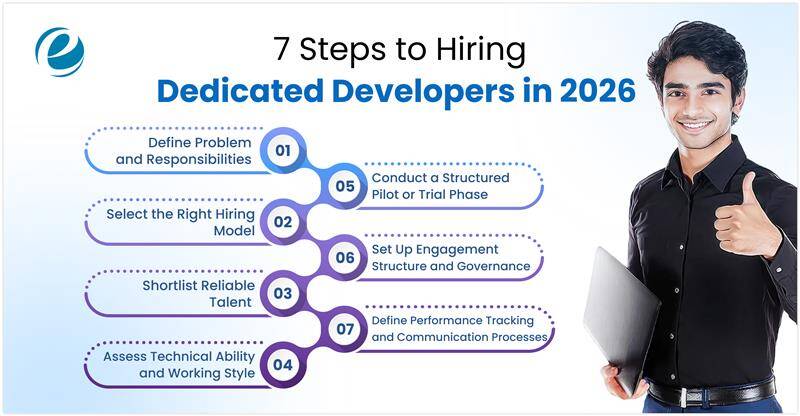
Before and after you post a job, there are multiple steps that are crucial for hiring the right talent for your company, each making or breaking the effort.
Here’s how to hire a dedicated development team in 2026:
Step 1: Define Problem and Responsibilities
The talent hunt starts with a detailed description of why you want to hire dedicated developers and what they will handle (feature development, architecture, integration, or everything). In addition to that, be clear with success indicators. Be it delivery speed or defect rates, you should have tangible grounds for determining the effectiveness of dedicated developers.
Step 2: Select the Right Hiring Model
Hiring model helps determine the dedicated developers’ cost, expectations, and coordination. Hence, it is crucial to decide whether you need in-house, nearshore, or hybrid engagement. In-house dedicated development offers maximum control, but the cost goes higher. Offshore cuts down the cost, but demands effective communication and documentation. With hybrid models, you get a combination of oversight and execution, which means flexibility for evolving needs. The final decision should align with your priorities, be they budget, communication, or flexibility.
Step 3. Shortlist Reliable Talent
Choose between dedicated development agencies, providers, or direct hires. If you hire a dedicated development team from a reputed mobile and web development company, expect structured onboarding, continuous access to expertise, and replacement guarantees if someone leaves. With freelancing, you get faster results, but communicating about long-term engagement becomes important. Evaluate vendors on technical expertise, years of experience, and retention.
Step 4: Assess Technical Ability and Working Style
When you hire dedicated developers, you look for more than just coding skills. The talent must bring a problem-solving attitude and architectural understanding to the team. Also, check if they are familiar with modern development practices, like AI development. Evaluate their collaboration style, documentation habits, and decision-making ability. To hire the right talent, you need both technical expertise and the ability to blend with your internal processes.
Step 5: Conduct a Structured Pilot or Trial Phase
Before making any commitments, track the engagement and performance with a two-to-four-week pilot on a small feature or module. Here’s what you should be monitoring:
- Quality of work
- Adherence to standards
- Collaboration effectiveness
- Responsiveness
- Decision-making
This phase gives you a clear picture of the compatibility between you and your hires.
Step 6: Set Up Engagement Structure and Governance
Be clear on responsibilities, reporting lines, and escalation paths. Prioritize results, not just the number of hours worked. Set up regular milestone reviews and check-ins. These actions are essential to a well-defined governance structure and ensure consistency, reliability, and perfect collaboration.
Step 7: Define Performance Tracking and Communication Processes
Track measurable outcomes such as feature completion, defect resolution, and code quality. Use project management tools and version control dashboards for transparency. Structured communication prevents misalignment and ensures developers focus on strategic priorities while staying integrated with your internal teams.
How Much Does It Cost to Hire Dedicated Developers in 2026?
Dedicated developer costs vary roughly from $4,000 to over $20,000 per month, depending on a range of factors, like region, project complexity, and engagement duration.
For example, the average cost to hire dedicated developers in Western Europe falls between $50 and $120 per hour, while talent in India charges $20–$50 per hour. As we just mentioned, these figures vary largely based on a number of factors and reflect what many B2B companies are willing to spend on long-term development plans.
Risk, Compliance, and Legal Considerations
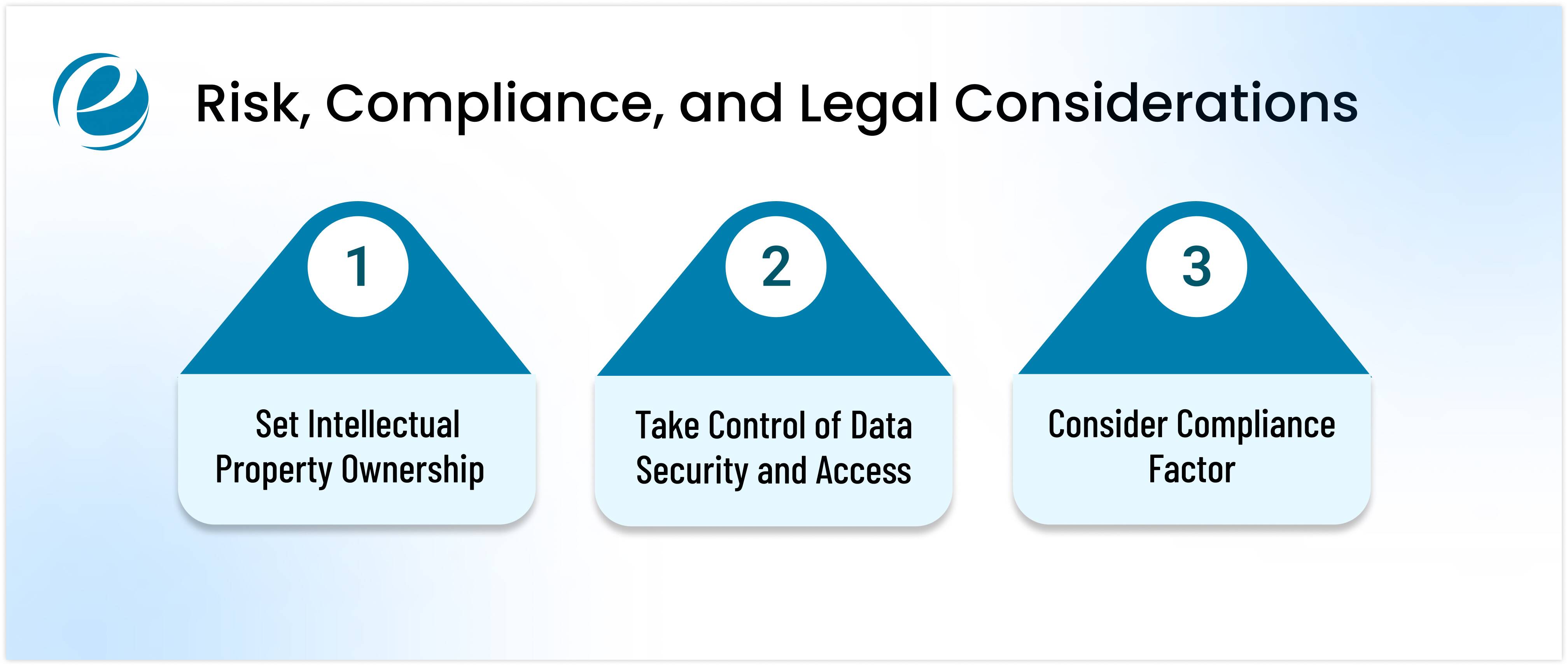
Understanding how to hire a dedicated development team is not sufficient for sustainable growth. You must also consider legal, security, and compliance risks. In fact, ignoring these checkpoints can be a costly mistake. Here is what you need to ensure.
Set Intellectual Property Ownership
Define ownership of code, IP, and deliverables. Get NDAs and exit clauses signed to protect your assets and prevent disputes if or when a developer leaves.
Take Control of Data Security and Access
Set access to code repositories, sensitive data, and production systems strictly. Set up credential management and promote secure development practices to safeguard your project against breaches.
Consider Compliance Factor
Make sure that your developers adhere to all the regulatory requirements applicable to your project, like SOC 2 or ISO certifications. Hire dedicated developers who have a complete understanding of compliance. This will ultimately reduce operational and legal risks.
How to Retain Dedicated Developers?
Wondering how to hire a dedicated development team for long-term engagement? Here’s what you can do ensure retention:
Be Clear about Expectations and Ownership from Day One
Communicate and assign responsibilities clearly. Define the list of features or modules each developer owns. Also, clarify who has the decision-making authority. This practice is mandatory for encouraging accountability and minimizing the need for constant oversight.
Track Performance Regularly
Don’t chase hours worked. Instead, measure your developers’ performance through outcomes. This means monitoring bug resolution speed, feature completion, adherence to coding standards and compliance. Split reviews into milestones and run code audits to catch blockers early.
Plan Continuity
Promote code reviews, documentation, and knowledge sharing. Keep backups planned for uninterrupted development if an unexpected event occurs.
Final Checklist to Hire a Dedicated Development Team

Here’s the final checklist for hiring the right talent for your project:
- Internal Readiness: Confirm success metrics, engagement model, and internal ownership along with scope.
- Vendor Evaluation: Validate retention history and technical expertise. Evaluate developers for cultural fit as well. Technical ability alone does not help in the long run if a steady collaboration is missing.
- Engagement and Cost Validation: Review total dedicated developers costs. Consider factors like onboarding, tools, and management to calculate the figure. Make sure your contract covers IP, data security, and continuity.
Wrapping Up!
All you need is an intentional approach to make dedicated talent transform your product development. With structured assessment, defined expectations, smart budgeting, governance, and retention planning, you don’t just hire a dedicated development team but also long-term assets. With the steps we just discussed, you can build a team that delivers reliably, maintains technical excellence, and provides the stability and momentum needed to thrive in 2026 and beyond.
FAQs
How is a dedicated developer different from a freelancer?
Dedicated developers blend into your internal processes, following structured processes and ensuring continuity. Freelancers usually only focus on short-term, task-based delivery.
How long do dedicated developers work on a project?
Most companies witness the best results with engagements lasting six months or longer. This also allows developers to fully understand the product and architecture.
Is hiring dedicated developers cost-effective for B2B companies?
When planned correctly, it is cost-effective. Dedicated developers help keep rework scope low, enhance delivery consistency, and reduce long-term costs, the challenges that are usually caused by turnover or knowledge loss.
What should I do before hiring dedicated developers?
Evaluate technical expertise, experience, process alignment, communication style, and clarity around IP ownership.



 +1 (989) 535-9295
 info@emizentech.com
 emizentech


