Where Environmental Research Goes to Spec the Right Instrument
Fondriest Environmental -a technical B2B Magento store for water quality, hydrology and weather monitoring equipment, built around expert system integration, rentals and lifetime support.
Overview
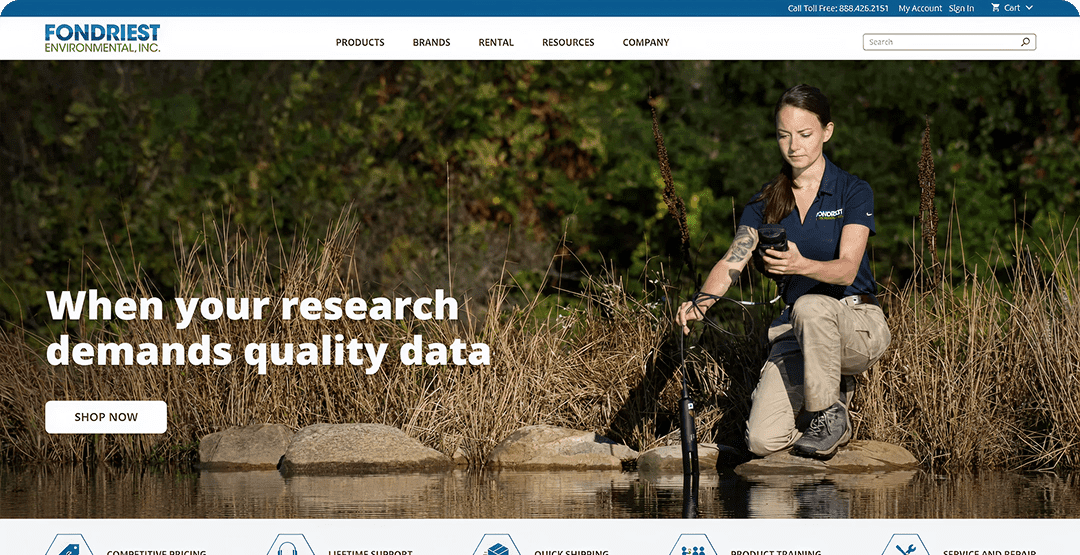
Fondriest Environmental, based in Fairborn, Ohio, supplies environmental monitoring equipment for projects of every size -water quality, hydrology, weather, sampling, soil and survey. The catalog spans thousands of products across many manufacturers (YSI, NexSens, Solinst, Hach, OTT and more), plus clearance and pre-owned lines and an equipment rental program.
But Fondriest isn’t a box-shifter. The team helps environmental professionals scope projects, select the right instruments, integrate systems, calibrate equipment, train users, and support deployments long after they go live. The brand promise is competitive pricing, lifetime technical support, quick shipping, product training and in-house service & repair -the kind of expertise a research budget depends on.
The challenge for the storefront was to do justice to that complexity: a deep, multi-brand technical catalog where buyers compare specifications, check compatibility and often need expert input -without turning every purchase into a phone call, while still surfacing the rental, support and learning resources that set Fondriest apart.
What started as a storefront project didn’t stay one. Once the catalog work was underway, the gaps behind the scenes became obvious: rentals and repairs were being tracked in spreadsheets, three separate WordPress properties were dragging on the same infrastructure, and automated bot traffic was hitting the servers hard enough to knock the store offline more than once. So the scope grew -an in-house ERP, a hardened server stack, a serious performance pass, and cleanup across every WordPress site in the group.
The Challenge
The expertise, catalog and brand authority were all there. The job was an ecommerce experience that could carry highly technical, multi-brand B2B buying -including rentals and pre-sales support -at scale, and infrastructure underneath it that wouldn’t fall over.
Deeply technical specifications
Buyers compare sensors, loggers and platforms on detailed specs and compatibility. Thin product pages send them straight to the phone.
Thousands of SKUs, many brands
A multi-manufacturer catalog with rentals, clearance and pre-owned lines is hard to navigate without strong filtering and structure.
Pre-sales expertise is essential
Many purchases need an applications engineer’s input. That advice has to be reachable from the product, not buried in a contact page.
Rentals alongside sales
Renting field computers, sampling and survey gear is a different journey from buying -but lives in the same catalog.
Content authority underused
The Learning Center, magazine and field station build huge trust, but weren’t tightly connected to the buying path.
Bot attacks knocking the site offline
Aggressive scraping and credential-stuffing traffic was eating server resources and, on bad days, taking the storefront down entirely. Nobody buys a $12,000 data logger from a site showing a 503.
Pages that were slow enough to notice
PageSpeed Insights scores were poor on mobile, especially on category and product pages. Heavy JavaScript, unoptimized images and render-blocking assets all played a part.
Back-office running on spreadsheets
Rental inventory, repair jobs, quote follow-ups and stock across suppliers lived in disconnected files. The store knew one version of the truth; the ops team worked off another.
Three WordPress sites pulling in different directions
Alongside the store, Fondriest runs content and information properties on WordPress. Old plugins, bloated themes and unindexed database tables meant they were slow, awkward to update and a security liability.
Our Approach
We treated Fondriest’s technical depth as the asset, not the obstacle. Working with their applications engineers, we mapped how buyers actually evaluate instruments by parameter, by application, by brand and by compatibility and built the catalog structure around those real decision paths.
Magento (Adobe Commerce) was the right fit for a catalog this large and technical, and our Magento development team built it for the job: rich, structured datasheets, a compatibility and accessory model so related instruments and consumables surface correctly, and faceted navigation that lets a hydrologist filter to exactly the right logger. To keep expert help close to the decision, we put pre-sales support inline live assistance and clear request-a-quote paths on technical products so a researcher can get an applications engineer’s input without leaving the page. The rental program was given its own journey within the same platform, distinct from outright purchase.
The bot problem we tackled first, because everything else is academic if the site is down. Log analysis showed most of the damage came from a handful of behaviours: aggressive crawlers ignoring robots.txt, scripted login attempts, and scraper traffic pulling entire category trees at speed. We handled it at the edge and at the origin WAF rules, rate limiting and bot-scoring through Cloudflare on the paths that mattered, then PHP-FPM pool tuning, Nginx connection and request limits, fail2ban rules, firewall blocks for the worst offenders, and OS and package updates that had been sitting untouched. Downtime stopped being a weekly conversation.
Performance came next, and this is where the real digging happened. We profiled the front end properly rather than chasing a score: deferred and split the JavaScript bundles, dropped third-party scripts that cost more than they returned, moved non-critical JS out of the render path, and cut DOM work on category pages where the filter logic was re-rendering far more than it needed to. On the back end we went through the custom modules line by line N+1 queries in the compatibility logic, uncached collection loads, layout XML doing work it shouldn’t, observers firing on every page load for no good reason. Redis was reconfigured for full-page and block caching, Elasticsearch queries were tightened, and images moved to WebP with automated resizing. The PageSpeed numbers followed, but what clients actually feel is click-to-render on a filtered category page, and that’s where the gain was biggest.
For the back office, we built a custom ERP rather than bending an off-the-shelf system into shape. Our ERP software development team scoped it around how Fondriest actually works rental cycles, calibration and repair jobs, multi-supplier purchasing, quote-to-order flow and wired it into Magento so inventory, orders and customer records move both ways without anyone re-keying anything. Rentals especially: a unit can be out in the field, back for service, and booked for next season all at once.
The three WordPress properties got their own cleanup pass plugin audit and removal, theme rework, database optimization, caching, image handling and security hardening. Same team, same standards as the store, which matters because these sites feed the store. If you’re weighing similar work, it helps to hire WordPress developers who understand the commerce side too, not just the CMS.
Finally, we tied the brand’s content authority to commerce: the Learning Center, Environmental Monitor articles and field-station data connect to relevant products, so the resources that build trust also guide buyers toward the right equipment. The architecture leaves room to extend B2B account features and managed services the kind of roadmap where it pays to hire dedicated developers who already know the catalog logic rather than re-brief a new team each phase.
Solution Delivered
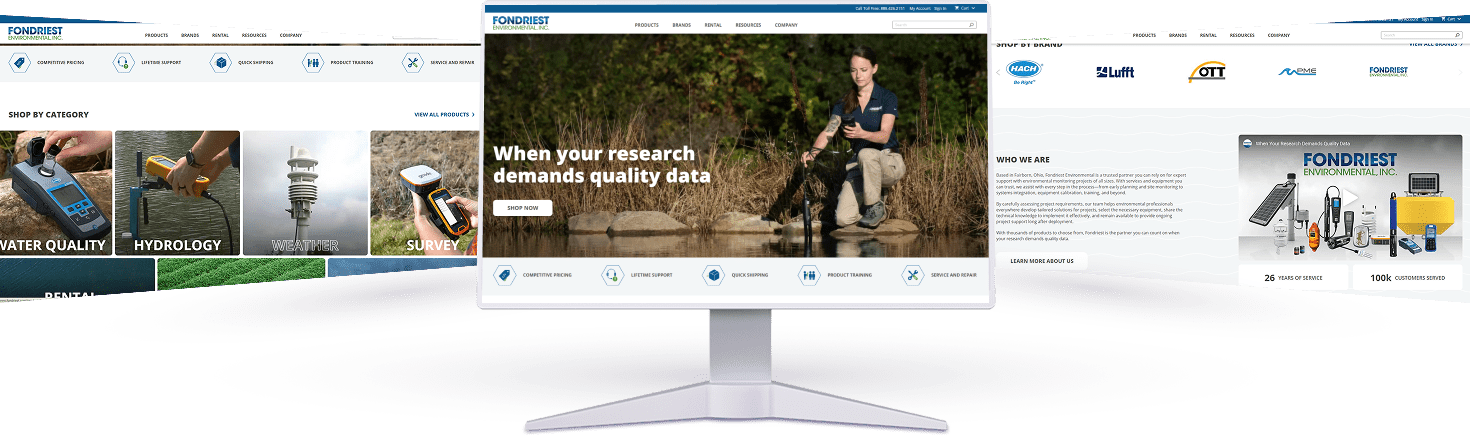
The store offers clear ways in: shop by category (water quality, hydrology, weather, sampling, soil, survey), by brand, or via a dedicated rental path. Product pages were rebuilt around technical truth full specifications, datasheets, compatibility and accessory relationships, an applications-aware ‘works with’ block with inline support and request-a-quote keeping an applications engineer one click away. Clearance and pre-owned lines serve budget-constrained projects without cluttering the core catalog..

A stack that stays up
Cloudflare WAF rules, rate limiting and bot scoring sit in front of the store. Behind them, the origin server was rebuilt to cope: tuned PHP-FPM pools, Nginx request limits, fail2ban, firewall rules for repeat offenders, and a proper patching routine so security updates don’t pile up. Malicious traffic gets dropped before it costs anything; legitimate crawlers still get through.

Faster, and not just on paper
JavaScript was audited, split, deferred and in places deleted. Render-blocking CSS was inlined where it mattered and dropped where it didn’t. Backend queries in the custom compatibility and rental modules were rewritten to stop hammering the database, caching layers were reconfigured, and images moved to WebP with automated sizing. Mobile PageSpeed Insights scores moved from the red into the green band, Core Web Vitals passed, and -the part users actually notice -filtered category pages render quickly enough that people stop bouncing while they wait.

A smoother path from search to quote
We reworked the journey end to end. Fewer steps between landing on a Learning Center article and reaching the right product. Persistent filters so a hydrologist doesn’t lose their comparison when they hit back. Clearer quote and rental CTAs on the pages where intent actually sits. Checkout and account flows simplified for procurement teams who need a PO, not a credit card. It’s unglamorous work, but this is where conversion comes from -as anyone who has run a technical ecommerce store will tell you.

One system behind the counter
The custom ERP handles rental inventory and scheduling, calibration and repair jobs, purchasing across suppliers, quote-to-order handoff, and reporting. It syncs with Magento so stock, orders and customers stay consistent in both directions. The ops team stopped maintaining parallel spreadsheets, which was the whole point.

Three WordPress sites, tidied up
All three Fondriest WordPress properties were audited and optimized: unused plugins removed, themes reworked, databases cleaned and indexed, caching added, images compressed, security tightened. They’re faster, safer, and marketing can publish without filing a ticket. If your own WordPress development has drifted into plugin sprawl, this is roughly the fix. Crucially, Learning Center guides, Environmental Monitor stories and field-station data now link through to the instruments they discuss turning authority into a conversion path.
Glimpses of fondriest
Key Features We Built

Structured technical datasheets
Full specs and parameters presented for real instrument comparison.

Compatibility & accessory model
‘Works with’ relationships so sensors, loggers and consumables match correctly.

Faceted multi-brand navigation
Filter thousands of SKUs by parameter, application and manufacturer.

Inline pre-sales support
Applications-engineer help and request-a-quote right on technical products.

Dedicated rental journey
Rent field computers, sampling and survey gear distinct from purchase.

Clearance & pre-owned paths
Budget options for projects without cluttering the core catalog.

Content tied to commerce
Learning Center and magazine articles link through to relevant equipment.

Service & repair visibility
In-house calibration, training and repair surfaced in the journey.

Bot protection & server hardening
WAF rules, rate limiting, fail2ban and origin-side tuning to stop attack traffic causing downtime.

Custom ERP with Magento sync
Rentals, repairs, purchasing and quotes in one system, kept in step with the storefront.

Frontend & backend performance work
JavaScript audited and deferred, queries rewritten, caching reconfigured, images converted to WebP.

WordPress optimization across three sites
Plugin cleanup, theme rework, database tuning, caching and security hardening.
Results & Outcomes
Illustrative targets for the engagement -to be confirmed against live analytics and Fondriest’s own reporting.
Self-serve B2B
Technical buyers comparing and specifying instruments without a phone call first.
Multi-brand at scale
Thousands of SKUs across many manufacturers, navigable by application.
Quotes inline
Pre-sales expertise reachable directly from technical product pages.
Rentals as a journey
A clear, separate path for renting field equipment by season.
Content → conversion
Learning Center authority connected to the products it discusses.
Downtime resolved
Bot-driven outages eliminated after edge and server-side mitigation.
Faster on mobile
PageSpeed Insights scores lifted into the green band, Core Web Vitals passing.
One source of truth
Rental, repair and inventory data unified in the ERP instead of spreadsheets.
Three sites, one standard
All Fondriest WordPress properties optimized, secured and easier to maintain.
Technology Stack

Adobe Commerce (Magento 2)
Enterprise platform running Fondriest’s multi-brand B2B catalog, complex product relationships and quote workflows.


PHP 8.2 / Magento Framework
Custom backend architecture extending Magento with compatibility-aware catalog logic and B2B workflows.


MySQL / MariaDB
One tuned database layer behind both the store and the ERP, holding SKUs, specs, rental stock and quotes.

Elasticsearch
Fast faceted search across parameters, manufacturers, applications and equipment compatibility.

Custom Compatibility & Accessory Engine
‘Works with’ relationships linking sensors, loggers and consumables so buyers build complete systems.

B2B Quote & Pre-Sales Workflow
Request-a-quote built into product pages, connecting researchers and procurement teams straight to applications experts.

Rental Management Integration
Seasonal rental journey for field computers, hydrology, weather and survey equipment inside the same platform.

Custom ERP – MERN Stack Build
Standalone MERN application handling rentals, repairs, purchasing and quote-to-order, synced two-way with Magento

React
Single-page ERP front end where rental calendars, repair boards and stock views update without reloads.


Node.js + Express.js
API, business logic and the queued background jobs that keep Magento and the ERP in step.

AWS S3
Off-server storage for datasheets, calibration certificates, repair photos, rental agreements, invoices and reports.

Content Commerce Integration
Learning Center and Environmental Monitor content linked to the products it discusses, for discovery and organic search.

Cloudflare CDN, WAF & Bot Management
Global delivery plus the DDoS protection, WAF rules and bot scoring that ended the outages.


Nginx, PHP-FPM & Server Hardening
Origin-level tuning, request limits, fail2ban and a patching routine to keep the stack stable under load.

Redis Caching Layer
Full-page, block and session caching reconfigured for high-traffic category and filter pages.

JavaScript Optimization & Bundling
Code splitting, deferred loading, third-party script pruning and lighter DOM work across the storefront.


WebP + ImageMagick
Automated image optimization delivering lightweight equipment visuals on mobile and desktop.

WordPress (3 properties)
Three content sites optimized alongside the store: plugin audit, theme rework, caching, database tuning and security hardening.

Mailchimp & Marketing Automation
Product announcements, educational campaigns and long-term nurture journeys for technical B2B buyers.
Conclusion
Fondriest Environmental’s digital transformation shows how a highly technical B2B business can bring complex purchasing journeys online without losing the human expertise customers rely on. Rather than reducing environmental monitoring equipment to a basic catalog, the platform was designed around how engineers, researchers and field professionals actually evaluate instruments — comparing specifications, checking compatibility, reviewing applications, and often seeking expert guidance before deciding.
It also shows that a storefront is only as good as what’s underneath it. Fixing the bot traffic and hardening the servers mattered as much as the catalog work, because a site that goes down doesn’t sell anything. The performance pass — JavaScript, queries, caching, images — turned a technically correct store into one people enjoy using, and the ERP stopped the ops team doing the same job twice.
Combining Adobe Commerce with structured technical data, intelligent navigation, quote workflows, a custom ERP and educational content across three optimized WordPress sites, the setup makes it easier to research, compare, rent and buy in one place — while keeping Fondriest’s real differentiator front and center: technical support from people who understand the field.
For complex catalogs and technical B2B journeys, this is what an experienced ecommerce development company can do with a whole-stack brief. Planning something similar? Hire ecommerce developers from our team and start with what’s hurting most.

Show Similar Projects
Goods Fulfill
An online store runs on a dropshipping business model for electronics
Rebellious Fashion
One-Stop Solution for overall women’s fashion needs
 Let’s build success Together