
Rebuilding the SlimFast Content Engine
SlimFast — a WordPress-powered content + nutrition hub that drives traffic to the Shopify store without competing with it
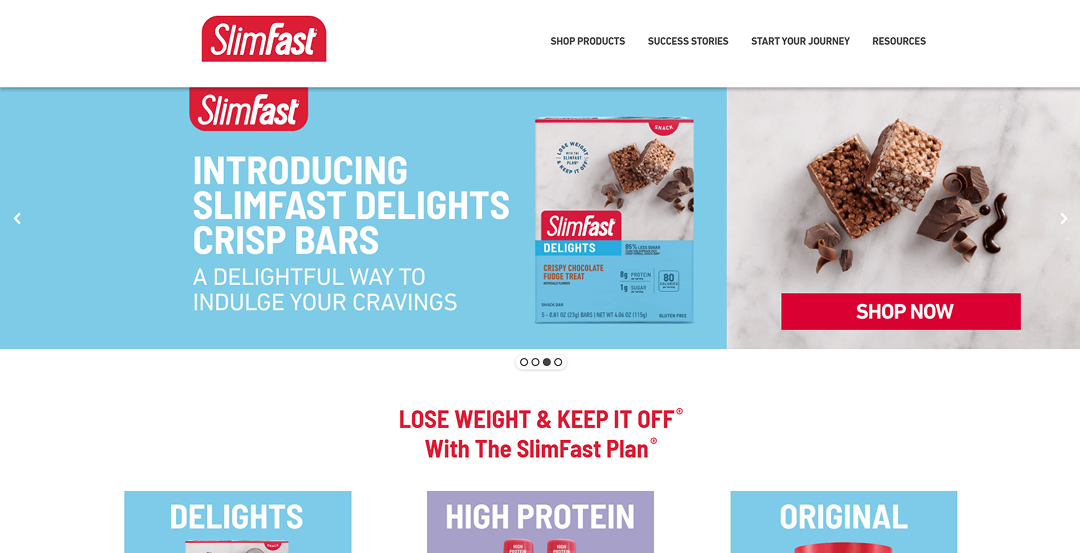
Overview
SlimFast is one of the most recognisable names in the weight-management category in North America — meal-replacement shakes, bars, snacks, the SlimFast Plan. The brand’s site does two jobs: explain the plan and the science behind it, and route motivated buyers into shop.slimfast.com (the commerce side, on Shopify).
The brief was about that handoff. The content site was rich but aging, the SEO had drifted, and the path from a curious visitor to a paying customer had too many dead ends.
The Challenge
Content brands often run into a strange problem — they’ve published so much over the years that the most useful pages get buried, while the homepage tries to be everything to everyone. SlimFast had a version of that.
Stale content architecture
Years of recipes, plan content, product info and blog posts all sat in the same flat structure. Important pages (the SlimFast Plan, How It Works) competed with old promotional content for attention.
Slow on mobile
Heavy hero modules, third-party scripts and unoptimised images pushed Core Web Vitals into the red on every key landing page.
Disconnect between content and shop
Recipes and plan pages had vague ‘shop’ buttons that dumped users on the Shopify homepage, not on the relevant product
Search performance had drifted
Big traffic terms like ‘meal replacement shake’, ‘how to use SlimFast’, ‘SlimFast keto’ were ranking lower than they should.
Editorial workflow was clunky
Marketing wanted to publish faster — recipes, success stories, plan tweaks — without filing a ticket every time.
Our Approach
We started with a content audit. Ten years of pages, scored by traffic, conversions to shop, and topical relevance. Roughly 30% of the URLs were doing 80% of the work — those got upgraded. Another 30% got merged or redirected. The rest stayed as-is for the time being, with a follow-up cleanup planned.
The site was already on WordPress, which made the rebuild a lot more straightforward. Our WordPress development services team rebuilt the theme from the ground up on a Gutenberg-block-based system, so the marketing team could compose new pages without engineering involvement.
The biggest strategic shift: tighter linking between content and shop. Every recipe gets the SlimFast products it uses, surfaced as small visual cards that deep-link to the relevant Shopify PDP. Plan pages do the same. The handoff is contextual, not generic.
Solution Delivered
The new build is a custom WordPress theme using native Gutenberg blocks for everything the marketing team touches. We wrote about a dozen brand-specific blocks — recipe cards, plan-step blocks, before/after stories, product cards that pull live from the Shopify catalog API — and locked them down so layouts stay consistent across the site.
Performance was a major focus. Heavy hero videos got swapped for poster-image-first patterns with click-to-play. Third-party scripts moved to deferred loading. Images were reprocessed into WebP and AVIF. The result: Core Web Vitals shifted from Poor to Good across the most-trafficked pages within a release cycle.
On the SEO side, we restructured the plan content into a proper hub-and-spoke model: a definitive ‘SlimFast Plan’ pillar page, with topic pages for keto, high-protein, intermittent fasting variations, and a separate spoke set for ‘how to use’ content. Internal linking was rewritten by hand for the top 200 pages.
For the shop handoff, we built a lightweight bridge that pulls product data from Shopify into WordPress so content authors can drop a product card by SKU and the price, image and stock state stay in sync. The CTA goes straight to that product on the shop, with UTM parameters for clean attribution.
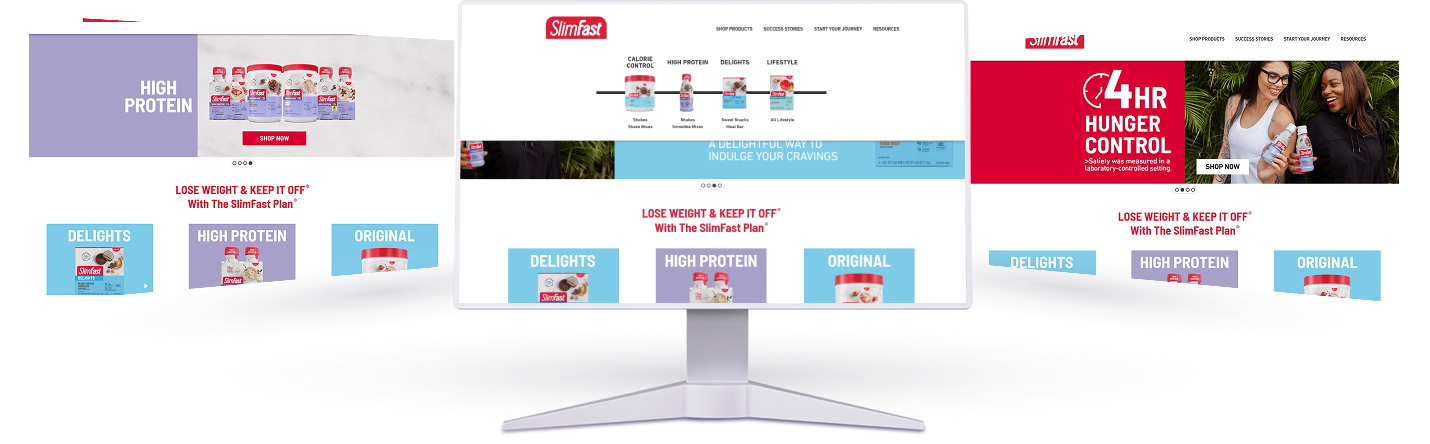
Glimpses of SlimFast
Key Features

Custom Gutenberg blocks
Recipe, plan-step, before/after, FAQ and product-card blocks for the marketing team.

Live Shopify product cards
Embedded anywhere on the content site, synced to the live shop catalog.

Plan hub-and-spoke SEO
Pillar page plus topical spokes covering keto, intermittent fasting, high-protein variants.

Recipe library
Filterable by goal, ingredient and SlimFast product. Schema-ready for rich Google results.

Before/after story format
Real-customer stories with photos, plan details and product callouts.

Core Web Vitals overhaul
Image pipeline, deferred third-party scripts, prioritised LCP elements.

Editorial workflow
Roles, drafts, scheduled publishing and approval flow inside WP admin.

Clean attribution to shop
Every shop CTA carries UTM parameters and ID so marketing can measure content-driven revenue.
Results and Outcomes
Performance metrics from the first six months post-launch.
+ 47% organic sessions
Driven by recovery on plan-related queries and the new recipe schema.
Core Web Vitals: Good
All major templates passing CWV thresholds on mobile and desktop.
+ 2.1× content-to-shop click rate
Visitors going from a content page to a shop PDP, not just the shop home.
– 33% bounce rate on plan pages
Cleaner IA and better internal linking kept readers moving.
+ 60% recipe page traffic
Schema implementation surfaced recipes in Google’s rich-result carousel.
Technology Stack

WordPress (latest LTS)
Content layer, with Gutenberg-first authoring.

Custom theme + custom blocks
Hand-built theme; ~12 brand-specific Gutenberg blocks.


PHP 8.2 / MySQL
Standard WP server stack with object cache.

Shopify Storefront API
Product data bridge from shop.slimfast.com into the WP content site.

Cloudflare
Edge caching, image polish, WAF.


WP Rocket + Imagify
Page caching and image optimisation pipeline.

Yoast SEO Premium
Schema, internal linking, redirect management.


Segment + GA4
Server-side and client-side analytics for clean attribution.
Conclusion
SlimFast didn’t need a flashier homepage. It needed its content to do more work — for SEO, for shoppers, and for the marketing team that maintains it. The rebuild puts the brand’s plan and recipes back at the centre, lets them sell without feeling like a billboard, and gives the team a publishing system they can actually move with.
Big content brands carry a lot of legacy weight. The trick is rebuilding without losing what’s working. If you’re staring down a similar overhaul, hire WordPress developers who’ll do the boring audit work first — that’s where the value lives.


