 Add us as a preferred source on Google
 A startup idea typically starts with a small moment when someone observes an issue in daily life. The problem may involve ordering food, managing tasks, booking services, or learning something new. Over time, many of these ideas turn into mobile products because people prefer quick and simple solutions on their phones. This trend in mobile products continues to grow.
Global mobile app revenue is expected to grow at a 7.25% annual rate and reach nearly $781 billion by 2029. In 2025, users downloaded over 142 billion mobile apps worldwide. At the same time, smartphone subscriptions crossed 7.3 billion, creating a large global user base for digital products.
App development for startups means building a mobile application that turns an early idea into a working product. Startups usually begin with a small version of the app that focuses on solving one problem at the start.
This process differs from enterprise app development. Enterprise apps are suitable for large organizations with long development cycles. Startup apps grow in phases, and they launch early, gather user feedback, and update the product as time passes. This step-by-step guide helps new businesses manage risk and build apps that fit real business needs with the right industry-specific app solutions.
Why Is Mobile App Development Important for Startups?
A startup requires a simple way to reach users, and a mobile app gives instant access, so users can open it anytime and complete tasks fast. The app also shows how users interact, which helps the startup improve and grow based on real feedback.
Here are a few reasons startups choose to build mobile apps:
- An app lets a startup talk to its users directly. Updates, reminders, and small announcements can reach people through notifications.
- Users can open the app and complete tasks quickly. Booking a service, placing an order, or checking updates becomes easier.
- When the app stays on a phone, the brand stays in front of the user. This helps people remember the service.
- The app helps to track the user behavior and act on different features, and this helps in app enhancement.
- As the startup gets bigger, the app can add required extra features and handle more users.
Step-by-Step App Development Process for Startups
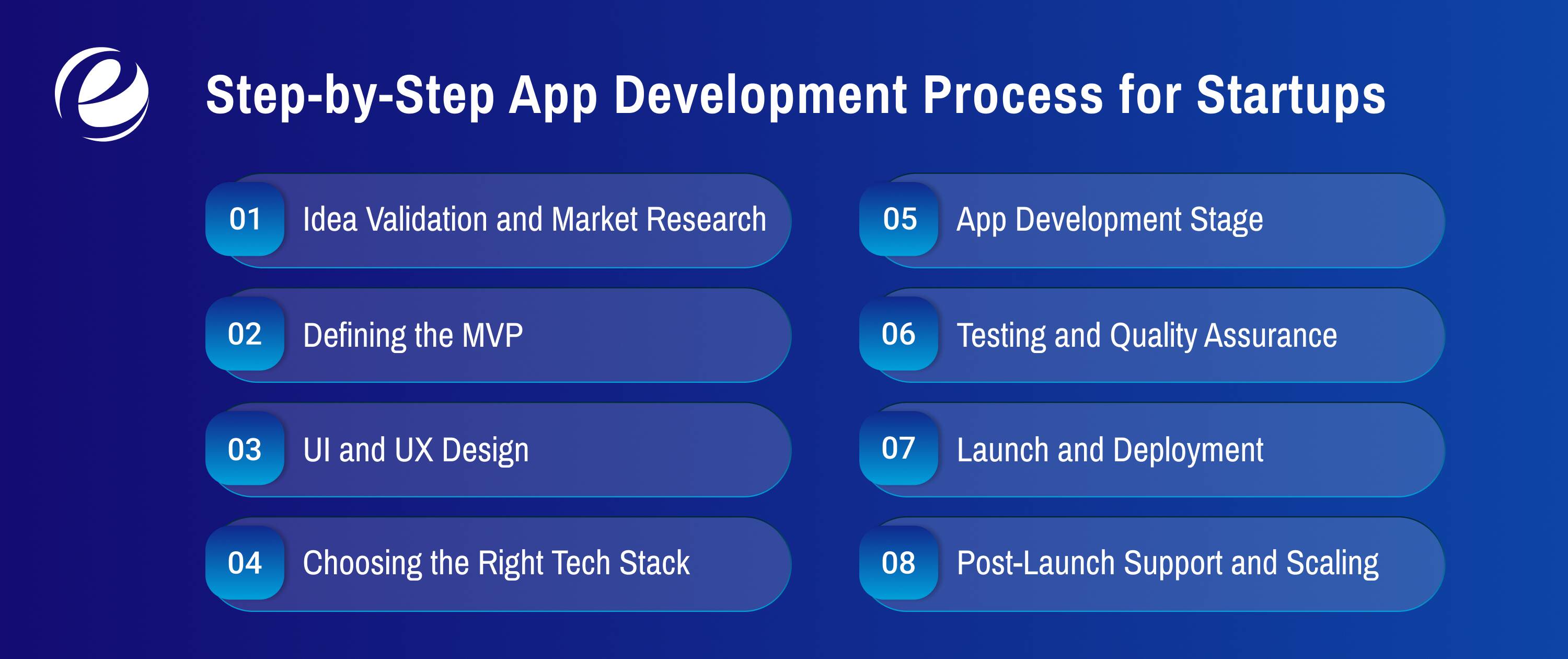
App development services for startups take careful planning with a clear process that moves in a logical flow from idea to launch without consuming too much time and money. So, given below are the main steps that are involved in mobile app development for startups that help you to understand how to build an app for startups in a clear and simple way.
Idea Validation and Market Research
Idea validation makes sure that your app really helps users with a problem. Market research helps you learn about how users act, look at your competitors, and look at apps that are similar to yours. This step helps you figure out who your target audience is, how much demand there is, and how much to charge.
Defining the MVP
After doing market research and checking the idea, startups come up with the minimum viable product (MVP). MVP app development for startups means making the first version of an app that focuses on the most important features that will help users solve their main problem. This method helps startups make apps more easily and get them out to users more quickly. Feedback from users of the MVP will help shape future improvements.
UI and UX Design
Once the main features become clear, the design stage begins. Startups need a simple interface, clear navigation, and a clean layout so users can move through the app without confusion. When the structure of the app supports a clear user journey, people can complete tasks smoothly, which improves the overall experience and makes the app easier to use.
Choosing the Right Tech Stack
For startups, choosing the right tech stack is an important step because it includes programming languages, frameworks, and backend systems. Startups need to select technologies that support performance, scalability, and future updates and ensure the app runs smoothly.
App Development Stage
At this point in mobile app development for startups
Testing and Quality Assurance
Testing and quality assurance confirm that the mobile app works as expected before launch. The team reviews the app to find bugs, performance problems, and device compatibility issues. These checks help the team detect errors early and correct them before release. Testing the app carefully makes it more stable and makes sure that users have a smooth and reliable experience when they first start using it.
Launch and Deployment
Once testing is complete, the team moves toward releasing the app. They review the app store guidelines and prepare the listing that users will see on the platform. After the store approves the submission, the app becomes available for download. At that point, the focus shifts to real user activity. The team tracks how the app performs, reads user feedback, and keeps an eye on technical issues that may appear after launch. When problems show up, they fix them and release updates that help improve the app over time.
Post-Launch Support and Scaling
Post-launch support helps the startup maintain the app after release. The team monitors performance, fixes technical issues, and responds to user feedback. Regular updates improve stability and add small improvements to the product. Scaling begins when the number of users grows. The team strengthens the app infrastructure, so the system can handle higher traffic. Developers also improve features and performance to support long-term growth.
Which App Development Approach Is Right for Your Startup?
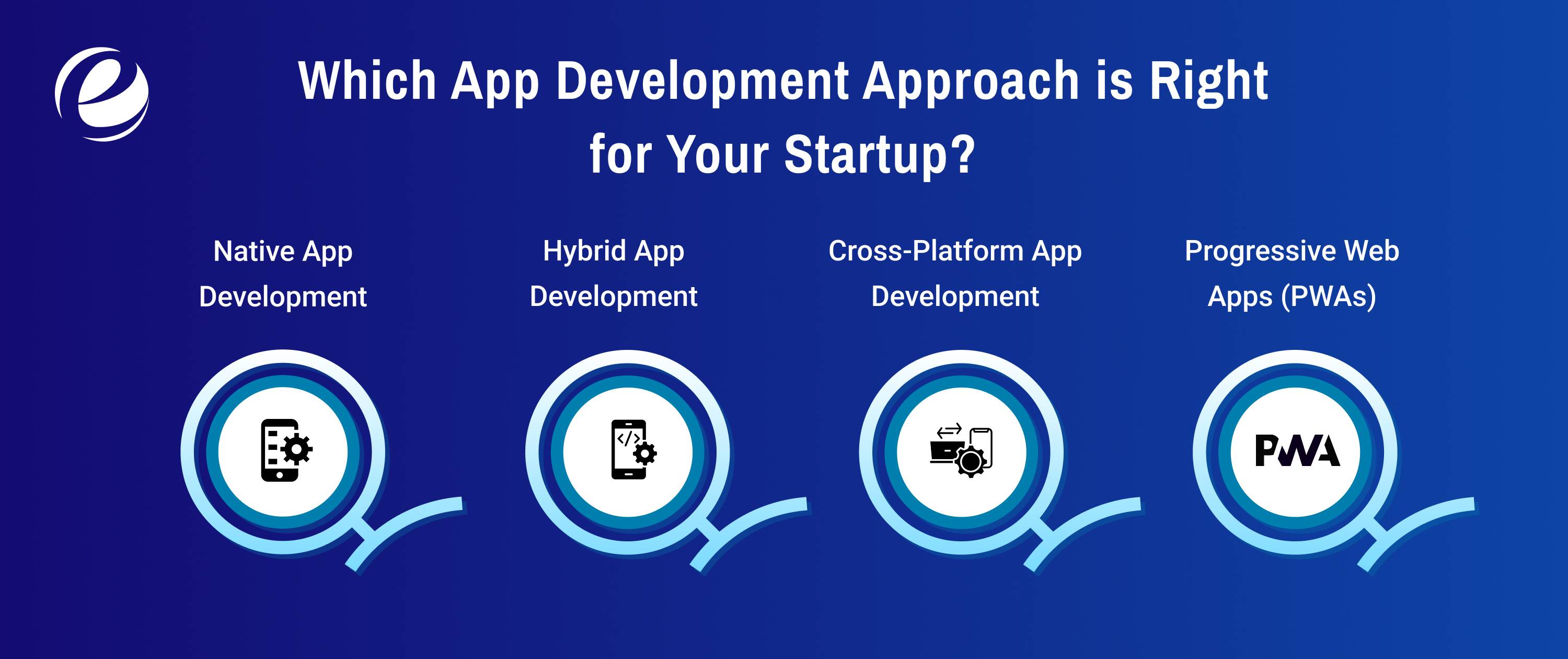
After finalizing the product idea and features of the app, it’s now time to decide how the mobile app will be built because it affects the development time, budget, performance, and future updates. Choosing the right approach helps you to manage the project. Many methods are available for developing an app, and they serve different product requirements. Understanding these options helps founders choose which method supports their product goals.
Native App Development
Native development involves building separate applications for Android and iOS using platform-specific languages such as Swift, Kotlin, Java, or Objective-C. The main challenge is that developers must create and maintain two separate apps, which usually increases both development time and overall cost. If your users are mainly on Android, working with an experienced Android App Development Company can help you build a better platform. The same applies to iOS, where choosing the right iOS App Development Company helps to build custom mobile app development for startups on Apple devices.
Hybrid App Development
Hybrid apps use web technologies such as HTML, CSS, and JavaScript to build the application interface and functions. Developers place this web code inside a mobile app container so it can run on smartphones. This approach allows startups to maintain a single codebase that works across different platforms. As a result, app development for startups usually takes less time and requires a smaller budget.
Progressive Web Apps (PWAs)
Progressive Web Apps act like mobile apps, but you use a web browser to run them. Users can click on a link to open it and then install it on their device. Some features can also be used without an internet connection. PWAs are easier to make and don’t need to be approved by an app store. This choice lets new businesses quickly launch a product and test the idea before making a full mobile app.
Cross-Platform App Development
Cross-platform development allows developers to build one application that works on both Android and iOS. Tools such as Flutter and React Native support this method. It helps startups launch the product on multiple platforms while managing a single development process. This approach is useful for startups that want a faster launch.
How to Validate Your App Idea Before Development?

A new app idea can feel exciting. You start imagining features, design, and how people might use it. Many founders jump straight into development at this point, and that rush can lead to problems later. A quick pause to test the idea can save time, money, and effort.
Understand the Problem
Start with the problem your app wants to solve. Write it down in simple words. Think about situations where people feel stuck, confused, or slow while doing something. If the problem feels unclear, the product will also feel unclear. A successful startup app fixes one clear problem and makes life easier for the user.
Identify the Target Users
Next, think about the people who might use this app. Who faces this problem in daily life or work? Try speaking with a few of them. A short conversation can reveal useful details. You may learn how they handle the issue today and what kind of solution would help them.
Look at Existing Apps
Take some time to look at apps that already solve the same problem, and try out a few of them by downloading them. Pay attention to what works and what doesn’t. Reviews from other users can also be helpful. People there tend to be honest, which can show where current products are lacking.
Ask for Honest Feedback
Ask for honest feedback: Talk to real people before you start building. Tell them what the problem is and how you plan to fix it, then pay close attention. Their reactions can show you things you might not have seen. Honest feedback at this stage helps shape a better product.
Test Interest with a Simple Page
Some founders make a small page that explains the idea. People who want updates can sign up. These sign-ups show early interest in the idea. If no one answers, you might want to rethink the idea before moving on.
Advanced Features You Can Add to Your Startup App
Once your app is out in the real world, things start to change. What looked important during planning may not matter as much. And small details you did not think about earlier begin to stand out. This is usually the point where adding advanced features makes sense, but not before. Many startups try to add everything at once. That rarely works, and the better approach is to watch how people use the app and then build around that behavior.
AI-Powered Personalization and Engagement
As users spend time in your app, patterns start to become clear. You can see what they click on, how long they stay, and what they ignore. This data becomes useful when you act on it. You do not need complex AI in the beginning. Even simple changes, like showing relevant content or suggesting the next step based on past actions, can make the app feel more personal. Many startups also use AI tools for startups to handle these improvements in a simple and practical way.
You can use Firebase Analytics, Mixpanel, or Amplitude to start keeping track of how users act. These tools help you put users into groups and figure out what they do. For instance, an eCommerce app can suggest products based on what you’ve looked at before, and a learning app can suggest the next lesson based on how far you’ve come.
Advanced Security and Trust
The moment users share data or make payments, trust becomes a real concern. People notice when something feels unsafe. Basic steps like secure login, protected data, and reliable payment systems go a long way. Without trust, growth slows down quickly.
Automation and Productivity Features
Some of the most valuable features are the ones that quietly save time. Things like reminders, autofill, and background tasks make the app easier to use without extra effort. You can use simple backend automation, cron jobs, or Zapier to do these things. These features might not seem like much, but they make the app something that people use all the time.
User Accounts and Data Sync
When users return to an app, they expect their data to be there. Accounts help store preferences and activity. With cloud sync, people can switch devices without starting over. This feature becomes important as usage grows.
Analytics and Support
Analytics shows you what people really do when they use your app. It shows where they leave, what features they use, and where they run into problems. You can get this kind of information from tools like Google Analytics. Adding simple in-app support like chat or feedback forms helps solve user problems quickly, which improves retention and overall experience.
Machine Learning for Predictions
At this point, your app starts to seem smarter. Machine learning does not only react to what users do. It looks at patterns and tries to understand what they might do next. You can use it to recommend products based on past behavior, flag unusual activity in fintech or marketplace apps, or identify points where users are likely to leave.
These small insights can make a big difference in how your app performs. You don’t have to start from scratch every time. Adding these features is easier with tools like Google ML Kit or AWS Personalize, which don’t require a lot of work.
Natural Language Interaction
Some people don’t want to have to go through a lot of screens to find what they’re looking for. Some people would rather type or ask directly. With natural language interaction, users can do things like “show my last orders” or “find nearby services” without having to go through menus. This makes the app easy to use and faster, especially when there are a lot of options.
You can use tools like Google Dialogflow or OpenAI-based APIs to build this. They take care of most of the language processing. It works well in apps that have a lot of data, which can be confusing for users. This feature is useful because it cuts down on work and saves time.
Cost of App Development for Startups
The price of making an app for a startup usually ranges between $20,000 and $300,000 or more, depending on what you want to make and how complex it is. A basic version of an app with basic features costs less than an advanced app. The final cost and timeline of building an app depend on where it is created, how complicated the design is, and the location of the team.
| App Stage | What It Includes | Approximate Cost | Timeline |
| Simple App (MVP) | Basic features, simple UI | $10,000 to $30,000 | 2 to 4 months |
| Medium App | Custom UI, API integration, backend system | $40,000 to $100,000 | 4 to 8 months |
| Advanced App | AI features, real-time systems, and a robust backend | $100,000 to $300,000+ | 10+ months |
Factors Affecting App Development Cost
There are a few simple things that need to be decided at the beginning that will affect how much an app costs. These choices will change how long and how much money the project will need.
- Features and Functionality: If the app has basic features, the cost stays low. Adding advanced features increases the cost because it needs more work.
- Design: A simple design costs less and takes less time. A custom design with animations and detailed screens costs more.
- Platform: Building for one platform is cheaper. Creating the app for both Android and iOS increases the total cost. Choosing a shared code approach with a Hybrid App Development Company can help reduce both time and cost.
- Technology Used: The tools used to build the app also affect the cost. Some technologies need more time and effort.
- Development Team: The cost depends on who builds the app. Experienced teams and teams in some locations charge higher fees.
Key Challenges in Startup App Development
Building a startup app may look simple in the beginning. You have an idea and want to launch quickly, but real difficulty starts when you begin building the product. Many startups face issues that affect time, cost, and product quality.
- Budget Constraints: Startups don’t have a lot of money, which can limit the number of features they can include in the first version.
- Hiring Issues: It can be difficult to find the right developers, and delays in hiring can make the whole project cost more.
- Choosing the Wrong Technology: The wrong tech choice can create problems later. Some tools may not support growth or may increase development time. It is important to choose technology that fits long-term needs.
- Poor User Experience: If the app feels confusing, users will leave. A clean and simple design helps users understand the app and continue using it.
- Scaling Problems: As the app gets bigger, it may need to be updated and made better. This could make things more expensive in the long run.
- Lack of Testing: Skipping testing can lead to bugs and crashes after launch. This affects user trust. Proper testing ensures the app works well across devices.
- Time-to-Market Pressure: If the app needs to be released quickly, it might need more resources, which can raise the cost.
How to Choose the Right App Development Company for Startups?
It is not just about technical skills when you choose a mobile app development company. It shapes how your product turns out. Be clear about your app idea, target users, budget, and timeline before you get in touch. This process makes things clearer in the future. Look at their past work, see if their apps are available, and find out how they deal with real projects. Working with experienced mobile app developers for startups can help you avoid early mistakes and build a product that fits your goals.
A good way to understand this is by looking at companies like EmizenTech, which has worked on over 1200 projects across 450+ industries over the last 12 years, showing strong real-world experience across different situations.
To make a better choice, focus on a few key factors:
- Experience with startups and MVP development
- Strong portfolio with live, working apps
- Clear communication and project handling
- Knowledge of relevant technologies
- Verified client reviews from trusted platforms
- Focus on security and data protection
- Ongoing support after launch
Taking these things into account when choosing an app development company for a startup helps the founders build, support, and grow their product in the best way possible.

Conclusion
App development for startups looks straightforward in the early stages. You have an idea, a plan, maybe even a feature list that feels complete. Then users step in, and things shift. What seemed important starts to fade, and smaller details begin to matter more than expected. That is where most learning happens. It is easy to overbuild. Many teams do, but a good approach usually works better. Build less, release sooner, and pay attention.
Some of the strongest products started as simple tools that solved one problem well. Working with a capable startup app development company can save time, but only if they understand how startups actually operate. Not just code, but decisions, trade-offs, timing. That part matters. In the end, the apps that grow are not the ones with the most features. They are the ones that stay useful.
FAQs
How much time does it take to build a mobile app for startups?
The timeline depends on what you are building. A basic MVP usually takes around three to four months. More complex apps with advanced features can take six months or longer.
How can startups choose the right app developer?
Look for developers who have worked with startups before, and check their past projects, how they approach MVP development, and how they communicate during the process. A good developer not only builds features. They help you make better product decisions.
Why do startups prefer lean development?
Lean development helps startups save time and money. Instead of making a whole product at once, teams release a smaller version, get feedback from users, and make improvements over time. This method makes sure that the product meets the needs of real users.
What does MVP mean in app development?
MVP is the first version of your app that only has the basic features that are needed to solve the main problem. It lets you test the idea with real users before you spend money on full development. Most products that do well start out small and get bigger over time.
What really drives the success of a startup app?
The most important thing is how well the app helps users with a real problem. It's important for a product to be clear before it can be well-designed and work well. People will keep using the app if they find it useful. If they don't, no feature can fix it later.



 +1 (989) 535-9295
 info@emizentech.com
 emizentech


