
 Add us as a preferred source on Google
 Online learning is becoming increasingly popular. Numerous companies are investing in e-learning app development
Coursera stands out for the variety of courses it offers and its user-friendly interface, making it an extremely popular choice among students globally. It offers courses in many subjects, taught by experts from top universities. It’s easy to use, flexible, and affordable, which makes it so popular.
According to a Statista report, the online education market is projected to reach $279.34 billion by 2029. User growth is expected to reach 11.6% by 2027, and the global market for online learning is estimated to exceed $400 billion by 2026. The development of an EdTech app like Coursera presents a huge opportunity to generate revenue.
This growth has sparked interest among investors to create app like Coursera and secure a top position in the market. To do this, they often ask: “How much does it cost to develop an app like Coursera?” It’s a good question. Developing an app like Coursera can cost approximately $40,000 to $300,000, depending on your project’s requirements. This cost can vary based on various factors.
There are multiple factors that impact the overall cost, which is why stating a fixed price is challenging. In this blog, we’ll explore the cost of developing an eLearning application like Coursera and the elements that influence the price.
What is Coursera?
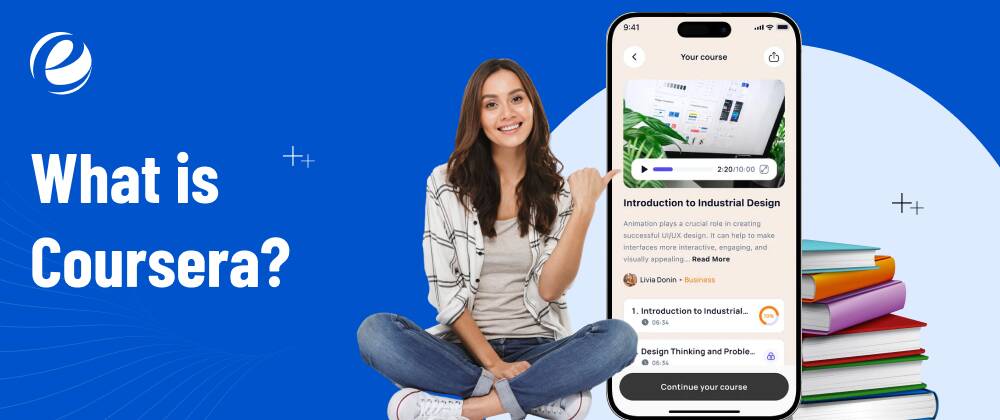
Coursera is an online educational platform founded in 2012 by two Stanford University computer science professors, Daphne Koller and Andrew Ng. Coursera aims to provide access to high-quality education worldwide through partnerships with top-ranked universities and institutions.
The platform offers excellent education across various fields, including Computer Science, Business, Sciences, Humanities, and more. One of Coursera’s key advantages is its versatility and flexibility, which allows app users to learn at their own pace. With courses available anytime and anywhere, it’s an excellent choice for both students and busy professionals.
Course content typically includes online quizzes, peer-reviewed projects, and community discussions, creating an interactive learning environment. The platform emphasizes accessibility by offering free courses and the option to purchase certificates or additional features.
Coursera has gained widespread popularity, with millions of registered users and an extensive course library. Its impact on online education has been significant, contributing to the growth of MOOCs (Massive Open Online Courses) and transforming the way learners approach education in the digital age.
Reasons To Invest In Developing An Education App Like Coursera
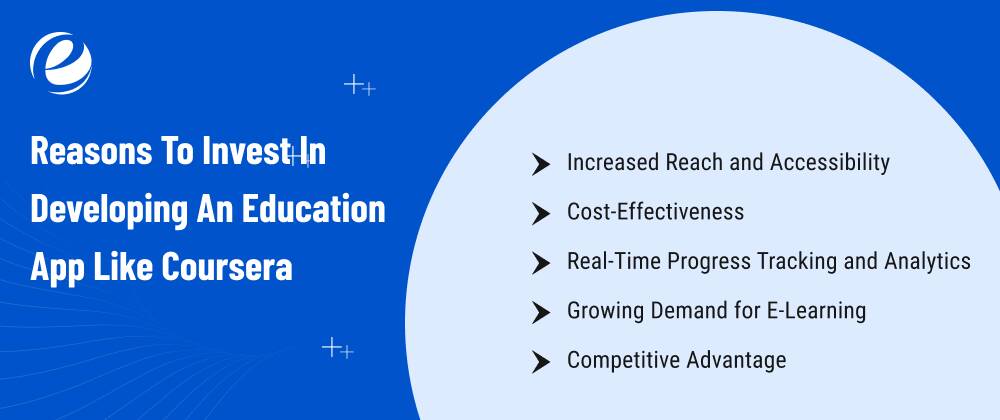
It’s estimated that 6.84 billion people use smartphones worldwide, with at least 50% of app downloads being educational apps. The educational app sector was recently valued at $7 billion, reflecting the rapid growth of online learning.
Companies are eager to invest in e-learning mobile app development
1. Increased Reach and Accessibility
Through an educational app like Coursera
This allows you to reach diverse audiences from different backgrounds, cultures, and locations. It’s like having a classroom that fits in everyone’s pocket, making learning more accessible than ever before.
2. Cost-Effectiveness
Developing an educational app like Coursera
With an app, you pay once for development and can distribute it to hundreds or thousands of users without additional costs. It’s like buying a book and having an unlimited number of people read it without needing to purchase multiple copies.
3. Real-Time Progress Tracking and Analytics
Educational apps allow you to track learners’ performance in real time. It’s like having a tutor who always knows if you’re struggling or excelling. The app provides insights such as test scores, time spent on lessons, and subjects that challenge students. This helps schools and businesses identify what’s working and what needs improvement, enabling personalized adjustments to help students succeed faster.
4. Growing Demand for E-Learning
With the rise in smartphone usage and app downloads, the demand for educational app like Coursera
5. Competitive Advantage
A well-designed educational app can set your business apart. It demonstrates a commitment to growth and learning. Companies offering online education attract employees who value professional development, and customers appreciate the convenience of accessing products or services through an app. Having an educational app like Coursera
Understanding The Cost To Develop An App Like Coursera
The cost of developing an application like Coursera can range from $35,000 to $400,000. A completely custom e-learning solution may cost as high as $100,000, which includes building the website from scratch, custom design, QA testing, and project management.
Developing an e-learning application MVP (Minimum Viable Product) may cost between $25,500 and $50,000. The MVP provides basic features like attendance monitoring, dashboards, databases, and test formats. Development costs vary based on the complexity of the Coursera-like application.
Basic app development: $40,000 – $60,000
Medium app development: $60,000 – $150,000
Complex app development: Approximately $300,000
Factors Impacting the Cost of Building an eLearning App Like Coursera
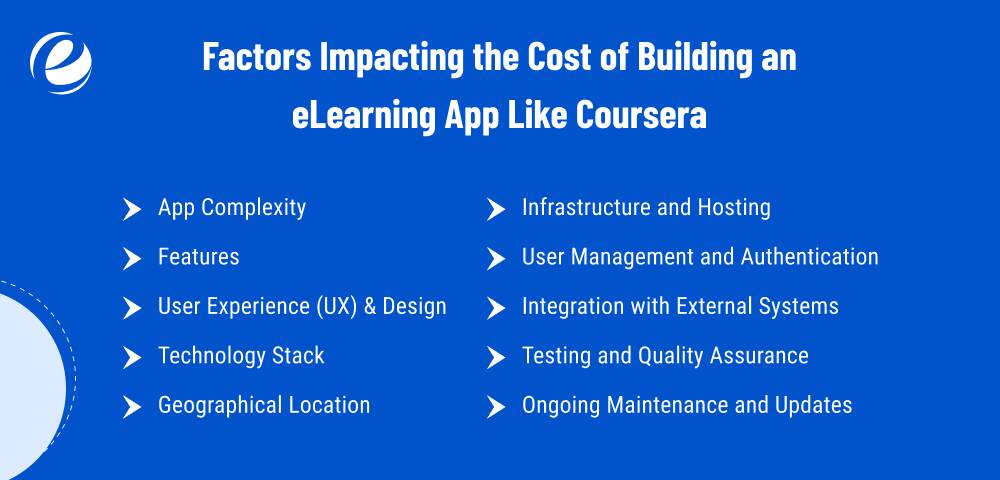
The process of creating an e-learning application like Coursera involves several factors that impact the overall development cost.
1. App Complexity
The complexity of an e-learning app significantly affects its cost. Basic features like videos, quizzes, and lessons are less expensive to develop. However, advanced features such as live videos, AI-based recommendations, and personalized learning paths require smart programming, more time, and highly skilled developers.
Think of building a small house versus an extravagant mansion. Mansions require more time, materials, and labor, just like complex apps. The more advanced the features, the higher the cost due to the need for cutting-edge technology and extensive testing.
2. Features
The number and type of features in your app directly influence the cost. Simple features like course lists, video playback, and progress tracking are cost-effective. Advanced features like live classes with interactive video, gamified certificates, and AI-driven suggestions cost more to develop.
Consider buying a basic mobile phone versus a high-end smartphone with advanced features, more features mean higher costs. The more options you include, the longer the development process, which increases the overall price.
3. User Experience (UX) & Design
User Experience (UX) simply refers to how easy and enjoyable it is to use an app. A great UX keeps users happy and engaged. To achieve this, you need an intuitive interface, clean layout, fast loading times, and smooth interactions. This requires skilled developers and designers, which can be costly.
If an e-learning app is confusing or difficult to navigate, users will quickly abandon it. Think of it like a library: if books are hard to find or the space is messy, visitors won’t enjoy their experience. A well-designed app attracts new users and keeps them coming back.
4. Technology Stack
The technology stack includes the programming languages, tools, servers, platforms, and frameworks used to build the app. For instance, handling video content requires robust cloud services, powerful servers, and fast content delivery networks (CDNs).
Using advanced technologies improves speed and efficiency but also increases costs. It’s like building a car where you can choose basic components or invest in high-performance engines. While advanced tools require more time and money, they enhance the app’s performance and user experience.
5. Geographical Location
The location of your app development team can greatly impact the cost of developing your application. For example, developers in the U.S. or Western Europe typically charge more than those in Eastern Europe or Southeast Asia. This difference is due to variations in living costs and wages.
Outsourcing to lower-cost regions can affect communication and time zone coordination. It’s similar to hiring employees: you may pay more for someone with expertise in your area, but you can also find skilled professionals at a lower cost elsewhere.
6. Infrastructure and Hosting
Your application requires robust infrastructure to handle high user demands, especially for streaming video and large content. This includes cloud servers, data storage, content delivery networks (CDNs), and security systems.
Using services like AWS or Google Cloud helps manage traffic and ensures smooth performance. However, these services can be expensive, depending on the amount of data stored and the number of users.
7. User Management and Authentication
Features for managing user accounts include registrations, logins, profile creation, and progress tracking. You also need strong security measures to protect user data, such as secure passwords and encryption.
Incorporating third-party login options (like Google or Facebook) can also increase costs. Imagine setting up an e-learning app users need to sign up, verify their identities, and keep their learning data safe. The more security features you add, like two-factor authentication or advanced encryption, the higher the cost.
Integration with External Systems
Many e-learning apps like Coursera
For example, adding payment systems like PayPal or Stripe requires extra work to ensure smooth operation. It’s like adding new features, each new option requires time and money for testing. As you add more systems, the cost increases.
1. Testing and Quality Assurance
Testing is crucial to ensure the app functions correctly and is free of security vulnerabilities or bugs. Testing features includes checking if they work properly, ensuring smooth performance, and verifying protection against hacker attacks. The types of tests include functional tests, performance testing, and security audits. Hiring testers increases costs, but it’s essential to prevent issues after the app is launched.
2. Ongoing Maintenance and Updates
After launching the app, you’ll need periodic maintenance to fix bugs, upgrade features, enhance security, and add new content. This includes updating servers, addressing issues, and ensuring the e-learning app remains compatible with all the new technologies as well as operating systems.
You need to do regular updates, bug fixes as well as security checks to keep it running smoothly. While maintenance costs can add up over time, it’s essential to ensure the app stays operational, secure, and up-to-date for users.
Monetization Strategies For Your Coursera-Like App
Monetizing your e-learning app like Coursera, is essential to generate revenue and ensure a strong return on investment (ROI). Here are several monetization strategies for apps similar to Coursera:
1. Subscription Model
With a subscription model, users pay a monthly or annual fee to access premium content. This works similarly to a gym membership, where you pay for the privilege of using facilities anytime. Apps like Coursera use this model to create steady income from regular subscribers. Offering free trials can attract more customers and encourage them to commit.
2. Course Fees
Charging course fees means students pay for each course they want to enroll in. This approach works well for specialized or popular classes. You can also offer amazing discounts or payment plans to make courses more accessible. Think of it like buying tickets for an event you pay for the specific experience you want to enjoy.
3. Corporate Training
Partner with businesses to offer training courses to their employees. Companies pay for licensing, course design, and delivery services. This model is greatly beneficial for businesses that need to upskill their workforce. It’s similar to hiring coaches to train employees, which can lead to large contracts and steady revenue.
4. Certification Fees
Offer free certificates upon course completion, but charge for verified certificates that add credibility to the learner’s achievements. You can also easily set different pricing tiers based on the certificate level. It’s like paying for a graduation certificate to officially recognize your hard work.
5. Advertising
Earn revenue by displaying ads in your app, such as video ads, banners, or sponsored content. Choose ad partners carefully to ensure a seamless user experience. It’s like having ads on a free TV channel companies pay to display their ads in exchange for exposure.
6. Data Monetization
Analyze user data (anonymously) and sell insights to educational organizations or researchers. This helps companies understand learning patterns and improve their offerings. Ensure strict data privacy measures to maintain user trust, just like how companies use market research to improve products.
7. Affiliate Marketing
Easily promote other courses or services using affiliate links. You can also earn a commission when app users sign up through your link. It’s like recommending a product to a friend and getting paid for the referral. This allows you to generate income without creating additional content.
Tips To Reduce Development Costs For An elearning App Like Coursera
Creating an online e-learning app like Coursera can be costly. However, there are ways to reduce expenses while maintaining high quality. Here are some simple tips to help you cut development costs while building a top-quality learning platform.
1. Make a Plan Before You Start
To reduce costs planning is essential. Before you begin, determine the targets, who you want to reach as well as the content to be added. The planning process helps to avoid any extra effort in the future and helps save costs. With a plan in place, you can help the team remain focused, reduce unnecessary expenses and accelerate the procedure. This also helps avoid spending too much for things that you do not require.
2. Create The Minimum Viable Product (MVP)
When developing an app, it’s best to start with a Minimum Viable Product (MVP). This means creating a simple version of the app that includes only the core features. You can launch this version to see how users respond and whether it functions effectively. Instead of adding advanced features like live video chats or AI recommendations right away, focus on the basics such as course listings, video playback, and quizzes. Once you receive feedback from real users, you can improve the app without spending money on unnecessary features.
3. Use Cross-Platform Development
Typically, apps are developed separately for iOS (Apple) and Android, which doubles the workload and costs. With cross-platform development tools like React Native or Flutter, you can build a single educational app like Coursera that runs on both platforms. This saves time because developers write the code once as well as it works on both iOS and Android. It also reduces the need for separate development teams, cutting down expenses.
4. Use Existing Content
If you already have educational resources, you can reuse these materials. You don’t have to start all over again when you have valuable content. This saves you time as well as money. In the case of example, if there are old PowerPoints or videos that you want to update, these can be done or reused in the new program. This will eliminate the expense of production of content.
5. Choose The Right Tools
Making use of free or affordable tools can drastically reduce the expense of developing e-learning app. A lot of software programs offer similar features to expensive tools. Find programs that are easy to use and allow you to create courses with no necessity of professional designer or developer. Utilizing the appropriate programs, you can cut down on the price of development.
6. Outsource Wisely
The option of outsourcing some work to freelancers may make you save money in comparison to hiring an entire team. However, be cautious when choosing freelancers. Find out if they are able to provide high-quality work at cheaper rates. Be sure that they are aware of the requirements clearly so that you don’t have to worry about additional revisions. This method can reduce expenses, but only if executed correctly.
7. Limit Course Length
Courses that are long in length usually are more expensive because they require more time to design. To reduce costs you should try to keep your course simple and focused. Make sure you have concise, easy-to-read classes that are still covering the entire range of topics needed. This will not only cut down on training time, but it also keeps students engaged and makes the instruction more successful.
8. Follow Agile Development Practices
Agile development can be a great approach to building flexible applications. Instead of constructing the complete app in a single go it is possible to work in smaller sections (called sprints) to test the app, and implement improvements based upon feedback. This allows you to spot problems in the early stages, so that you don’t have to spend money fixing large problems later. Additionally, it lets you modify features according to the needs of users and save money on unnecessary functions.
9. Use Open-Source Solutions and Pre-Built Modules
Instead of building everything right from scratch, consider using open-source libraries or pre-built modules. These are code snippets developed by others that you can download for free. They are useful for common functionalities like login systems, video players, and payment gateways. Using these resources you can save both time and money since you don’t have to reinvent the wheel.
10. Focus on Simplicity
The less complicated the design is, the lower the cost. More complex features such as animations, 3D graphics and customized interfaces may increase the costs and time to develop. Design your course to be easy and intuitive. Eliminate unnecessary features that could appear attractive but aren’t necessary in the process of learning. It makes learning easier and less expensive.
11. Test Early and Often
Testing your eLearning app during development allows you to spot errors earlier. If you delay testing until after the app is completed, you may need to make costly modifications. Regular testing the app greatly helps you address issues before they become bigger problems, saving both time and money. Frequent feedback from learners ensures that the training meets their expectations.
Why Partner With EmizenTech to Develop an App Like Coursera
EmizenTech is a highly reputable e-learning app development company
Our team of developers stays up-to-date with the latest technologies, ensuring you get an e-learning application that is fast, effective, and tailored to the audience’s needs and attention span. We specialize in creating innovative educational apps, and our ability to develop custom e-learning platforms with advanced interfaces makes us the ideal partner for your project.
Conclusion
Developing an e-learning app like Coursera involves various factors that affect the total cost. The app’s complexity, features, content production and curation, chosen technology stack, and development costs for each team member significantly impact the overall cost.
Balancing initial expenses with the potential return on investment (ROI) is crucial. Although the upfront cost can be high, an effective application can provide long-term benefits. It’s essential to collaborate with an experienced mobile app design company to ensure your e-learning app like Coursera meets users’ needs and stands out in the marketplace.
FAQs
How long does it take to build an app like Coursera?
The development process typically takes 6 to 12 months, including design research, market analysis, testing, development, and launch preparation.
What are the most important features of an app like Coursera?
Key features include video lessons, quizzes, discussion forums, certificate-based user profiles, mobility, accessibility, and personalized learning paths.
What monetization strategies are available for a Coursera like app?
Monetization strategies include course fees, subscriptions, certificates, corporate partnerships, data monetization, affiliate marketing, and premium services.
What technologies and tools can be used to create an online learning app?
Common tools and technologies include PHP, JavaScript, and Ruby on Rails, often used in the development of e-learning platforms, also known as Learning Management Systems (LMS).



 +1 (989) 535-9295
 info@emizentech.com
 emizentech


