
 Add us as a preferred source on Google
 The global transport industry has faced significant challenges over the past couple of years. The pandemic, along with other issues, caused disruptions to supply chains and increased competition. There was also a significant shift in consumer demand, coupled with a myriad of new regulations and limitations. Yet, applications and software have repeatedly stepped in to help, solving major problems in the transport industry. Through logistics app development, supply chain and related companies have made significant progress.
Logistics app development has increased transparency between freight forwarders and all the other parties involved in the supply chain process, making it more secure. This is why the number of businesses shifting towards the logistics app development
Uber Freight has set a new model, based on results that many hope to emulate in order to expand their client base and revenue. The app eliminated the brokers traditionally involved in logistics, making the process easier and more affordable for users.
However, despite the demand and huge potential in the market, many business owners in the logistics sector are hesitant to invest in new technology. If you are looking to create an on-demand logistics mobile app, like Uber Freight, you have an amazing opportunity to create a successful app and grow.
In this article, we will explore the process of logistics app development
Market Statistics For Logistics App Development
The logistics app industry is rapidly growing, driven by the increasing demand for real-time transparency in the supply chain, as well as automated and efficient storage management. Route optimization, fleet management, and inventory management are just a few key areas where logistics app development
- According to the Fortune Business Insights Report, the worldwide transportation & logistics market is expected to expand by a staggering $1,211.06 billion in 2022, reaching $1,804.49 billion by 2029.
- The global digital logistics market is projected to grow to $46.5 billion by 2025, with a CAGR of 21.7%, which is impressive.
- The growing demand for logistics software is driving the market to expand at a CAGR of 8.2% from 2024 to 2031.
- In the United States alone, the trucking industry generates over $260 billion in revenue. This explains why the creation of trucking apps has gained immense popularity worldwide.
What Is Uber Freight?
Uber Freight is an app that helps truck drivers and companies find loads to be transported. It acts as a matchmaking service, connecting shippers (those who need to deliver products) with carriers (truck drivers or transportation firms). It simplifies the process for trucks to search for suitable loads in their areas and for shippers to find truck drivers who can deliver their goods.
Through Uber Freight app, truck drivers can access shipment details, including pick-up and drop-off locations, as well as the payment they will receive for the job. The app also helps organize loads and track shipments in real time, making the entire process more efficient.
For businesses, Uber Freight saves time by connecting them with reliable truck drivers and managing their shipments. It also features transparent pricing, so all parties know the costs upfront. It’s an efficient way to handle freight logistics for both companies and drivers.
How Does Uber Freight Work?
Uber Freight is a pioneer in offering on-demand trucking services, and many entrepreneurs have since launched similar startups. Before we dive into our tutorial on building an innovative logistics app with great potential, let’s take a look at how Uber freight operates.
Uber Freight is based on the same basic principle as Uber’s ridesharing service. Basically there are 2 groups of users: carriers/drivers, who handle transportation, and shippers, who need to deliver goods or reach a destination.
In Uber for trucks:
- The app allows shippers to find and reserve a truck that meets their needs.
- Carriers confirm bookings and offer transportation services.
Payment capabilities allow both shippers and carriers to handle financial transactions directly within the app. Shippers pay carriers upon delivery, while the trucking app charges a fee for each transaction.
Reasons To Develop a Logistics App Like Uber Freight
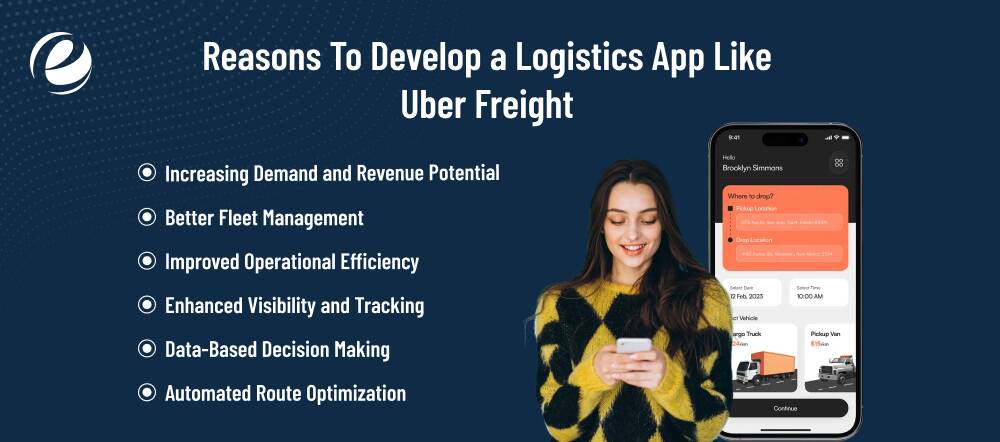
Uber Freight partners with shippers and carriers of all kinds, ensuring complete transparency and accountability. The company’s API provides the latest prices and online brokerage options. Uber Freight offers a comprehensive transport management solution tailored to the needs of businesses looking to expand their supply chain.
Logistics app development
1. Increasing Demand and Revenue Potential
The global logistics market is rapidly growing due to the expansion of the eCommerce sector and the increasing demand for fast delivery. Additionally, the trucking industry plays a crucial role in the U.S. economy, serving as a primary source of convenience. Therefore, creating a logistics app like Uber Freight can help businesses reach a large client base.
2. Better Fleet Management
Overseeing logistics operations without software or an app is challenging. Creating an application to manage your fleet will help consolidate all fleet information in one place, enabling better decision-making. Through logistics app development
3. Improved Operational Efficiency
Logistics app development
4. Enhanced Visibility and Tracking
Logistics and transportation apps allow real-time tracking of vehicles, shipments, and inventory. This functionality helps companies monitor the movement of products and receive accurate estimated arrival times (ETAs). Full visibility of end-to-end shipping movements enables better decision-making, improved customer satisfaction, and more effective inventory management.
5. Data-Based Decision Making
Logistics app development
6. Automated Route Optimization
Logistics and transportation apps use sophisticated machine learning algorithms that consider variables like weather conditions, live road status, delivery schedules, and more, to determine the most efficient routes. Route optimization reduces fuel consumption, cuts transportation costs, and lowers the carbon footprint.

Must-Have Features Of a Logistics App Like Uber Freight
Inexpensive and seamless functionality is the main attraction of any app. These features improve the performance of your mobile app and require careful attention during logistics app development services
It is important to incorporate options that will meet customer satisfaction and serve their purpose. Uber Freight generally covers three main interfaces which are the shipper, the transporter, and the admin who manages the application. Each profile has unique characteristics, and the features are as follows:
Driver/Carrier Features
1. Profile Registration
The carrier or driver should be able to create a profile that includes necessary information about themselves and their vehicle. The profile should be easy to navigate and contain a form that asks for essential details, such as their photo and vehicle information.
2. Orders List
Drivers should be notified of any orders. The order details should include information about the delivery and its requirements. This feature allows drivers to adjust their route based on the nature of the order.
3. Order Search
The driver can use this feature to search for any specific shipment they have made. It is essential to include an advanced filter in this function, allowing users to search by filtering options such as the date, type of item, location, distance, and more.
4. Order Details
Drivers need to be in contact with the shipping company if there is any information that needs to be updated. The system should provide complete details about the package, such as size, weight, destination, and more.
5. Accept/Reject Orders
Drivers are often busy with other tasks. Therefore, this option is essential as it allows the driver to accept or decline a reservation based on their schedule and availability.
6. Seamless Map
Maps are crucial tools for any driver in the logistics business. They help drivers stay aware of their current location and the next stop on their route. The use of GPS maps is a great option for this feature.
7. Digital Documents
This feature lets drivers upload or download all bills of unloading and loading. Documentation is an integral part of logistics, and a dedicated section with an integrated scanner allows drivers to use the app for this purpose.
8. Smart Payments
An efficient payment system allows drivers to receive payment once the package has arrived. Integrating top payment processors would be the final touch for this feature.
9. Real-Time Notifications
Drivers should be notified about the next stop, whether it’s a motel or dining establishment. Receiving real-time notifications about upcoming orders makes the process more efficient and beneficial. This feature should be considered when developing logistics apps.
Shipper Features
1. Registration
People who ship their goods are known as shippers in the logistics industry. This feature allows them to create a profile with details like their address, contact information, and more.
2. Order Placement
Shippers should be able to place orders and search for available vehicles. It is recommended to request specific information about the order, including the weight, size, location, pick-up and drop off points, as well as delivery dates. Customers should be able to view the offer, estimated delivery time, price, and other relevant details.
3. Online Documentation
This is crucial for both the driver and the shipper. Shipments should be accompanied by authorization for transport due to their size or nature. Therefore, documents must be uploaded to ensure smooth transport. Ensure that a built-in scanner is included for properly scanning documents.
4. Real-Time Order Tracking
Shippers want to receive notifications about their deliveries. The logistics app, such as Uber Freight, should include a map which shows the current location of the driver. This feature helps build positive relationships with customers.
5. Payment Gateways
Shippers will not use an app that lacks a reliable payment processing system. There must be multiple payment options that allow users to use their preferred payment method at any time.
6. In-App Communication
Uber Freight like app should let shippers communicate with carriers directly within the app, allowing them to request clarification or provide instructions. This helps solve problems quickly and ensures smooth communication throughout the delivery process.
7. Carrier Matching
This feature matches shipments with appropriate carriers based on location, size, and preferences. It saves time for both the shipper and the carrier, making the process faster and more efficient for everyone involved.
8. 24/7 Support
Providing 24/7 support to shippers builds trust and increases customer satisfaction. Its availability ensures that customers feel comfortable and secure using the app at any time.
Admin Panel Features
1. Dashboard
The admin panel should include a comprehensive dashboard that provides users with complete details about the app’s features. The dashboard should cover everything from future orders to delivered items and shipping destinations.
2. Bill Management
The admin panel won’t operate efficiently without a solid billing system. It should have tools for managing bills, checking invoices, and approving them using software.
3. Carrier Queries
Clients often have questions about how the logistics app works. Therefore, you must include a section specifically designed to address the concerns of both drivers and shippers. This feature will make both parties feel that your company is attentive to their needs.
4. Advanced Algorithm
A logistics app development
5. Revenue Tracking
This eliminates the need for third-party software to track income streams and generates financial reports within the app to assess earnings over a specified period.
6. Driver Verification
This feature allows admins to verify the identity of drivers through identification and background checks. It ensures safety, compliance with laws, and builds trust, protecting both the company and its customers.
7. Alerts
The alerts feature automatically informs administrators about updates to shipment information, delays, cancellations, or compliance issues. It helps administrators stay up-to-date and quickly address any problems.
Process Of Logistics App Development Like Uber Freight
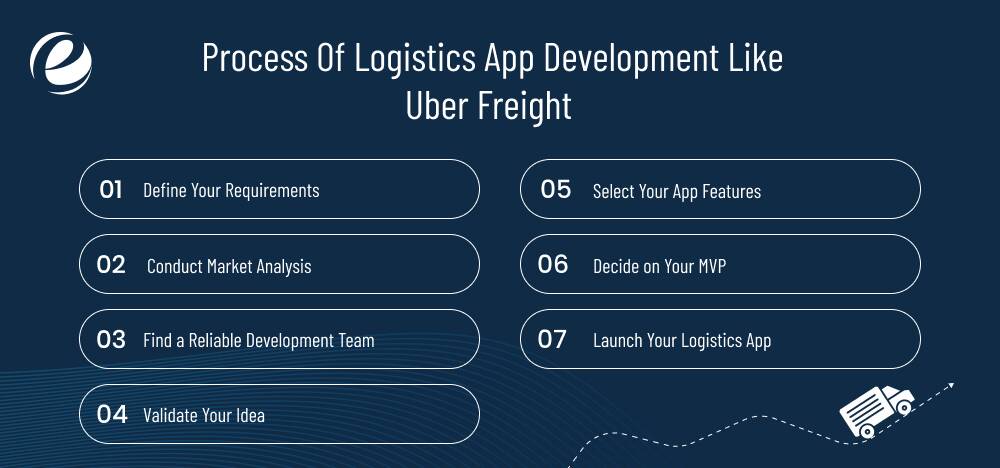
Launching and creating a logistics app can be a significant undertaking, requiring meticulous planning and strategic execution to chart a course toward success. You must allocate resources for design and logistics app development
1. Define Your Requirements
Decide what you want your logistics app like Uber Freight to accomplish. Make a list of features that will meet your company’s needs, such as helping customers locate the right loads, monitor performance, or submit bids. It is crucial to be clear about the app’s purpose and goals so that it can serve its users effectively. By clearly stating your expectations as a guideline, you can direct your development team to focus on the features that matter most to users.
2. Conduct Market Analysis
Before you begin logistics app development
3. Find a Reliable Development Team
Look for a skilled logistics app development company
4. Validate Your Idea
Once you’ve developed a team of developers, discuss your app idea with them to determine whether it will function in real life. They can help you identify the app’s user requirements. It’s important to test your idea before going live to save time and expenses. Testing the idea with potential customers or experts can help refine it. This way, you can confirm that your app concept is solid before making a significant investment in the development process.
5. Select Your App Features
Based on your market research, create a list of the most important features to include in your app. Identify the problems users face and solve them with these features. For example, if managing your warehouse is difficult and time-consuming, you could add features that simplify the process. Focus on features that address your clients’ most pressing issues and enhance their experience. Consider implementing user-friendly options that increase efficiency and ease of use.
6. Decide on Your MVP
Your logistics app development
7. Launch Your Logistics App
After thorough testing, you can launch your app on the app stores to make it accessible to users. Develop a marketing plan to increase your app’s visibility and encourage people to download it. Continuously gather feedback from users to understand how your app is functioning. Continuously improve your app based on this feedback to keep users satisfied and engaged. By monitoring and updating your app regularly, you’ll ensure that it remains current and useful over time.

Cost To Create Logistics App Like Uber Freight
The cost of logistics app development
A robust and scalable logistics app development
1. Type Of Platform
Choosing the right platform is a critical element in the logistics app development
2. Number Of Features
The design and functionality of the app are essential for attracting more customers and expanding the app’s reach. While adding new features is a good idea, be aware that the number of features included in your logistics app like Uber Freight can influence development costs. The recommended approach is to integrate essential features first and then gradually add more advanced options.
3. UI/UX Design
UI/UX design is a major factor in ensuring user interaction and engagement. Design elements that influence the cost of transport and logistics apps include the responsiveness of graphics, animations, navigation, and more. If you decide to hire developers from Asia or another country, ensure that they have a strong understanding of design principles.
4. Complexity Of The App
The features of a logistics app significantly contribute to its success. Advanced features, such as compatibility with multiple platforms, real-time tracking, multiple payment methods, etc., increase the app’s popularity. However, they also increase its complexity, which in turn increases both the time and cost of development.
5. Technology Stack
Another important factor that significantly affects the logistics app development
6. Size and Experience Of The Development Team
Logistics app development
How Logistics Apps Like Uber Freight Earn Money
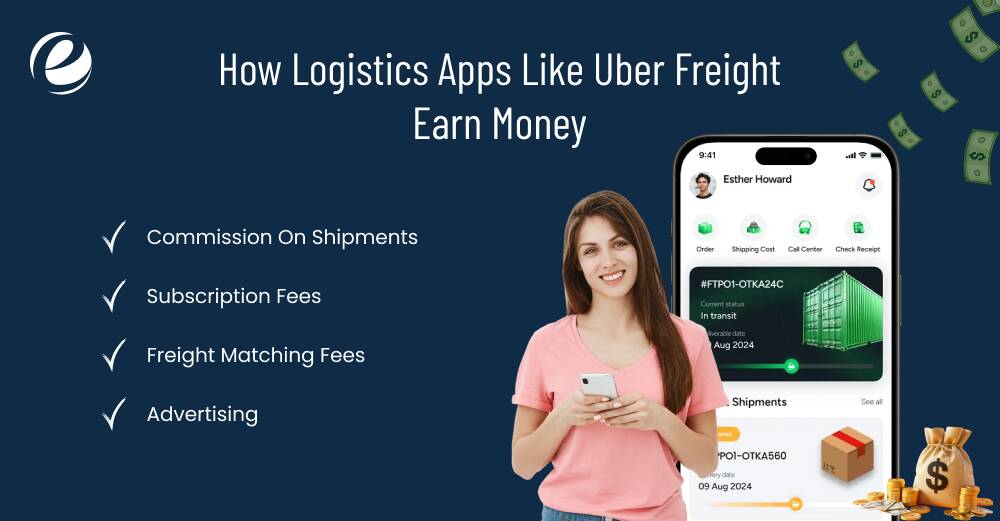
Logistics apps such as Uber Freight, provide a platform that connects shippers and transporters. They generate revenue in several ways, including subscriptions, commissions, and advertising.
1. Commission On Shipments
Logistics apps like Uber Freight earn money by receiving a small percentage of the total amount shipped through their platform. Once a shipper books delivery with a transporter, Uber Freight charges a fee to connect the two parties.
2. Subscription Fees
Some logistics apps offer premium services to shippers or transporters through monthly or annual subscriptions. For example, shippers may pay a monthly or yearly fee for access to additional features or to gain better exposure for their services.
3. Freight Matching Fees
Logistics apps may charge a fee to either the shipping company or the carrier in exchange for matching them. This fee is due once the app successfully connects a shipper with a transporter who will accept the cargo.
4. Advertising
Apps may also earn revenue by displaying ads from third-party companies. For example, advertisements related to trucking equipment, insurance, and logistics-related products can be displayed within the application.
How Can EmizenTech Help You Develop a Logistics App?
EmizenTech is a reliable logistics app development company with a proven record of creating apps for logistics and transportation across Android, iOS, and cross-platform. We have a skilled team of developers who can help you build an app similar to Uber Freight. We’ve collaborated with businesses of all sizes, which has allowed us to understand the challenges faced by the logistics industry.
Our goal is to understand the current market conditions and develop an ideal solution to meet your needs. In addition to developing new apps, EmizenTech has also worked with several established companies to improve their existing app to address the biggest challenges. We believe in creating products that streamline business processes and expand operations to a greater extent.
Conclusion
Logistics app development has led to a paradigm shift within the logistics industry, bringing clarity, efficiency, and automation to the supply chain. The scope of the mobile logistics app market is immense, offering a lifetime opportunity for anyone willing to take on the development of logistics apps.
By following the app development process discussed in this blog, you can save money and create a great mobile application that meets the needs of transporters, shippers, and business owners. Uber Freight clone applications can be a boon for businesses. All you need to do is find the right company to develop the app that will take your business to the next level.
FAQs
What is logistics app development?
Logistics app development is the process of creating mobile and web-based applications for logistics companies that help streamline, automate, and optimize their business processes.
How can I begin to build a logistics app?
To begin developing a logistics application, you must first define the purpose of the app, its features, and the target market. Conduct market research, find a reliable app development company to bring your vision to life, evaluate the concept, and finally launch your app.
What features should a logistics application offer?
Your app should include features such as shipment tracking, carrier matching, live updates, secure transactions, and in-app messaging.
How long does it take to develop a logistics application?
The development time for a logistics application varies based on the features you want and the complexity of the app. It can take anywhere from 6 months to 1 year or more.



 +1 (989) 535-9295
 info@emizentech.com
 emizentech


