
 Add us as a preferred source on Google
 Most likely, every person with a smartphone has at least one ride-sharing app on their device, highlighting just how popular these apps have become. Mobile apps that make it easier to manage your daily activities aren’t just conveniences; they are essential. In this regard, ride sharing app
Uber is a great example of a ride-hailing business that has transformed its operations to become an enterprise worth billions of dollars. It is now the most renowned sharing economy business, with 161 million customers using the app at least once a month. Uber’s business model has been successful because it addresses a common issue using the best technological stack and software.
If you’re considering creating a brand-new ride sharing app
This detailed guide will walk you through the key features, the development process, costs, and everything else you need to know to create a successful ride sharing app
So, let’s get started.
Ride Sharing App Market Statistics
Over the past 10 years, the ride-sharing industry has experienced significant growth. Here are some key insights:
- The ride-hailing industry is expected to grow at a rate of 4.9% from 2025 to 2029, reaching a market size of $212.75 billion by 2029.
- Uber has become an acclaimed sharing economy service with 161 million customers using the app at least once a month, according to the 2024 report.
- The ride-hailing industry is on the rise, with global estimates suggesting 2.31 billion riders by 2029.
- By 2025, Uber will be the most popular taxi service worldwide, with more than 150 million active monthly users.
- In 2024, Uber generated a profit of $43.97 billion, reflecting a 17.96% increase compared to the fiscal year 2023.
- The U.S. ride-sharing market is projected to be worth USD 28.5 billion in 2024, with an expected CAGR of 6.9% between 2025 and 2034.
What Is The Uber App?
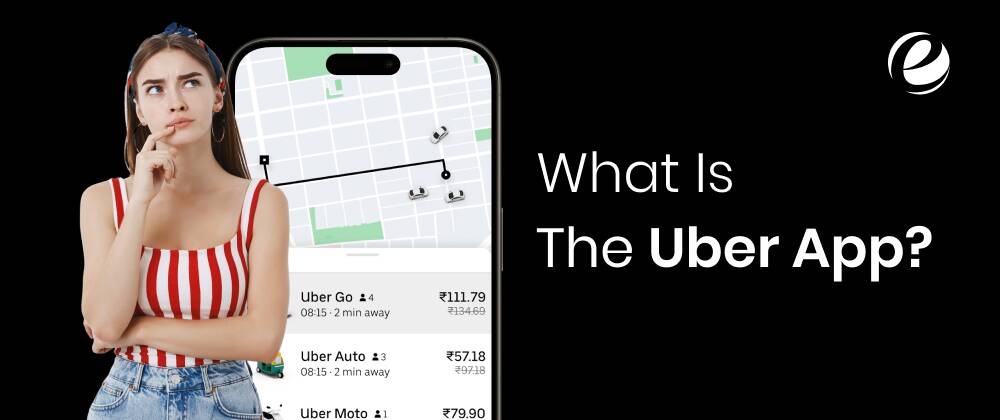
The Uber app simply refers to a mobile application that allows users to easily get rides. It connects users (referred to as “riders”) with drivers in their cars to provide taxi services. Instead of calling a taxi or using a separate service, you can use the Uber app to easily request a ride whenever you need one.
To use the app, simply enter your pickup location and destination. The app will then find drivers nearby who can take you to your destination. Uber isn’t just for cars there are many locations where you can also rent scooters and bikes. After your ride, you can rate the driver and provide feedback on your experience. This helps Uber improve its services. The Uber app is a simple and efficient way to get around without needing your own vehicle and is available in cities around the world.
How Does The Uber App Work?
Uber offers a simple and easy process for booking rides, ensuring that both consumers and riders can use the service quickly. The person requesting the ride is called a “rider,” and the one driving is referred to as the “driver.” Here’s how the app works:
Request
When a passenger needs a ride, they open the Uber app and enter their location and destination. The app then sends a request to nearby drivers.
Matching
Drivers in the area receive the request and decide whether to accept or decline it. If the driver declines, the request is passed to the next driver.
Ride
Once a driver accepts the request, they receive a notification on their phone. The Uber app also shows the estimated arrival time so riders know when to expect the driver. Riders can track the driver’s location on the map in real time while they wait.
Payment
Before the ride begins, the rider adds their payment details to the app. There are several payment options available, including debit or credit cards and digital wallets. Customers can choose their preferred payment method. After the ride, the payment is processed automatically, and no cash is required.
Feedback/Ratings
After the ride is complete, passengers can rate the driver and leave feedback on their experience. This helps Uber maintain the reliability of its service and ensures that both passengers and drivers are treated respectfully.
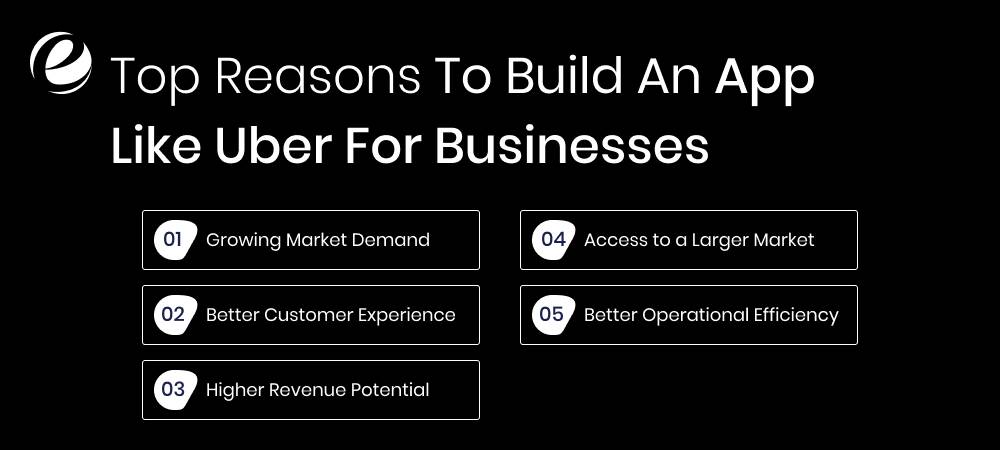
Top Reasons To Build An App Like Uber For Businesses
Investing in the ride sharing app development services
Growing Market Demand
The ride-hailing industry has been growing exponentially, transforming into a multi-billion-dollar market with limitless potential. What’s driving this massive growth? There is a growing demand for cost-effective, convenient, and technology-driven transportation solutions.
Uber boasts a record-breaking 161 million active users and is available in over 70 countries. This growth is expected to continue as ride-hailing apps become more of a necessity rather than just an option. With the rising demand and a rapid increase in riders, investing in ride sharing app
Better Customer Experience
With its smooth and efficient process for getting from one point to another, the Uber-like app significantly enhances the customer experience. Users can select different ride options, track their driver, and make payments all in one place.
The flexibility and control offered provide a more pleasant experience for customers, encouraging them to return to your business. Additionally, the ability to let customers rate drivers and provide feedback ensures high-quality service and builds trust in your company’s reputation.
Higher Revenue Potential
Creating a ride sharing app
Furthermore, the app can offer premium features, such as luxury cars or faster ride bookings, which can increase earnings. You can also easily expand into other services such as food delivery and package transport, diversifying your income streams and improving your overall profit margin.
Access to a Larger Market
By developing an app like Uber, businesses can reach a wider audience. Instead of totally relying on the traditional marketing methods, companies can reach a larger customer base who prefer using their smartphones to book services.
Uber like apps are especially popular with tech-savvy individuals, particularly younger generations. Ride sharing apps which are user-friendly and easy to navigate appeal to a wide demographic, opening new avenues for business growth and expansion into new regions and markets.
Better Operational Efficiency
An app like Uber streamlines the process for both drivers and riders. It uses sophisticated algorithms to connect passengers with nearby drivers, reducing wait times and speeding up the process. The app also keeps a record of each trip, providing an electronic log of every journey. This helps businesses monitor performance and improve routes.
It also reduces costs by automating several processes, such as fare calculation and payment processing, making it easier to organize rides, track revenue, and monitor business growth.
Must-Have Features of an App Like Uber
To create a successful app like Uber, it’s crucial to focus on the key features that will provide a seamless experience for both users and drivers. Additionally, the app must cater to the needs of every user. Here are some essential elements to consider:
Rider Panel
| Feature | Description |
| Description | Riders can register using email or social media accounts and include payment options. |
| Taxi Booking | Riders enter their address, select the type of car, and set the pickup point for the booking. |
| Ride Tracking | Receive live updates of the driver’s location, route, traffic information, and an estimated time of arrival. |
| SMS and Calling | Riders receive messages or phone calls regarding the status of their rides, including information about the ride and its progress. |
| Driver Rating and Analysis | Rate drivers based on the comfort of the ride, the route taken, and the driver’s conduct during the trip. |
| Payment | Can pay using debit or credit cards and other payment methods. |
| Travel History | Riders can view details of previous rides and transaction history. |
| Ride Cancellation | Riders can change their plans within a specified deadline to avoid cancellation charges. |
| Schedule for Later | Riders can reserve a ride in advance for a future date and time. |
| Book for Others | Users can reserve taxis for relatives, friends, or coworkers through the app. |
Driver Panel
| Feature | Description |
| Driver Profile and Status | Displays information about the driver, including license verification, proof of identity, insurance, and availability. |
| Navigation and Route Optimization | Helps drivers find the most efficient route using Google Maps to avoid traffic. |
| Reports | Provides details on travel and earnings, either on a weekly, daily, or monthly basis. |
| Trip Alert | Notifies drivers of ride requests, pick-up details, and destination information. |
| Push Notifications | Sends notifications about rides, route changes, traffic updates, and estimated time of completion. |

Admin Panel
| Feature | Description |
| Profile Management | Admins can manage driver profiles, user accounts, and oversee platform activities. |
| Vehicle & Fare Management | Can add or modify vehicle types and adjust fares based on car models. |
| Commissions Management | Users can track and adjust commissions to ensure accountability and transparency. |
| Geo-fencing | Admins can customize service delivery based on specific geographic areas. |
| Withdrawal Request Management | Ensures quick, secure payouts to drivers by managing withdrawal requests efficiently. |
| Subscription Management | Admins can manage and optimize subscriptions to enhance service delivery. |
| Analytics and Reports | Can monitor customer behavior, including bookings, payments, and profits, for insights. |
Advanced Features For Ride Sharing App
When developing ride sharing app
-
Heat Maps
If you are a taxi company offering bookings, heat maps can provide a visual representation of locations and journeys using geolocation APIs. Drivers can identify areas with high passenger demand and position themselves to quickly respond to ride requests. This helps service providers gain immediate insights into customer preferences, enabling data-driven decisions to improve app retention rates.
-
Panic Button
An essential safety feature for app like Uber, the panic button allows users to seek help if they feel threatened or are in danger. When pressed, it sends alerts to the administrator, a family member, and the company’s security department, enabling immediate intervention in emergency situations.
-
Edit/Cancel Order Service
An app like app Uber should allow riders to edit or cancel bookings, helping them correct mistakes or remove incorrectly booked rides. This feature is especially important for payment processing, as users may need reimbursements for rides canceled after payment with a card.
-
Smart Analytics System
To streamline the reservation process and gain insights into user behavior, integrating advanced analytics and cost driver reports is crucial. This feature tracks daily ride requests, booking sources, and missed or incomplete reservations. Ensure your data analytics framework is well-organized and tailored to your service. It will help identify areas for improvement and highlight successful aspects of your business through detailed, structured reports.
-
Save/Favorites
For frequent travelers visiting the same locations, the “Save/Favorites” feature allows them to store their regular destinations, eliminating the need to repeatedly enter the same address. This not only simplifies the booking process but also enhances the overall user experience.
-
Multi-Language Support
To boost user retention, adding multilingual functionality for both drivers and passengers is vital. This feature provides comfort by allowing users to select their preferred language, improving the overall app experience.
Steps To Develop a Ride Sharing App Like Uber

The development of a ride sharing app like Uber involves several key elements, each crucial to ensuring the app’s functionality, user interaction, and market viability. Here is a comprehensive outline of the app development process:
1. Market Research and Conceptualization
Before you start writing code, it’s important to understand the industry your app will serve. Creating an app like Uber requires more than just technical expertise; it also demands a deep understanding of your target market and the problem you’re trying to solve.
Conduct thorough market research to identify trends, analyze competitors, and understand user behavior. This is essential to validate the viability of your idea and define your app’s unique features. Keep in mind that developing an app like Uber isn’t just about replicating their model, your hire ride sharing app development solutions
2. Find App Development Company
Decide where you want to outsource your mobile app development. Once you’ve hired an on-demand app development company, discuss the problems you aim to solve with your custom Uber-like app. Clearly communicate your goals to the development team to help enhance your app’s performance and ensure it stands out in the market.
3. Define Your App’s Core Features
Once you have a clear understanding of your app’s purpose, it’s time to define its core features. When thinking about how to create an app like Uber, it’s crucial to consider both the basic functionalities and unique features that will set your app apart from others.
While core functions are the foundation of any ride-sharing application, don’t be afraid to think outside the box. Perhaps your app can offer carpooling options, integrate with public transportation systems, or provide exclusive safety features. The key is to strike a balance between essential functions and innovative features that address your customers’ specific needs.
4. Choose Your Technology Stack
The right tech stack is an essential element in creating an app like Uber. The technology you choose can impact the app’s performance scale, performance, and speed. Keep in mind that the tech stack that you select should be in line with the expertise of your team and particular project’s requirements. You should also consider factors such as community support, scaling and maintenance over the long term when making your choices.
5. UI/UX Design
The app plays an important part in providing a seamless ride for drivers as well as passengers. The application must have an attractive interface, allowing people to use it with ease and track their trips and even book rides easily. A well-structured layout and CTAs, make sure that the user experience is at the top of the list. Additional features such as animations, accessibility settings, dark mode as well as multi-lingual support could be included to boost user experience and make the app visually stunning and efficient.
6. App Development
It is suggested to stick to an agile approach when developing an app like Uber. The agile method is a process that involves creating and evaluating mobile application. The incorporation of new functions and tests continuously is a part of every subsequent production. Each step is carefully planned and the final product is designed according to the process.
7. Testing and Launch
By testing your app thoroughly, you can make sure it is secure, works well, and provides a great user experience. The testers check that your app is safe, reliable, and all features work properly. For promoting your Uber-like application a well-planned marketing plan is essential. The strategy should include app store optimization, pre-launch promotion and online marketing campaigns. It is possible to trigger downloads and increase engagement by using other strategies such as influencer collaborations and social media marketing early-bird discount, etc.
How Much Does It Cost to Build a Ride-Sharing App Like Uber?
Understanding the costs involved in creating a ride-sharing app is crucial for effective budgeting and planning, as this is a significant investment. The total cost can vary greatly depending on factors such as the app’s complexity, its features and functions, the location of the development team, and the software platform used.
The estimated cost for building a ride-sharing app ranges from $5,000 to $200,000, depending on various factors like complexity, features, and more.
Top Monetization Strategies for a Ride Sharing App Like Uber
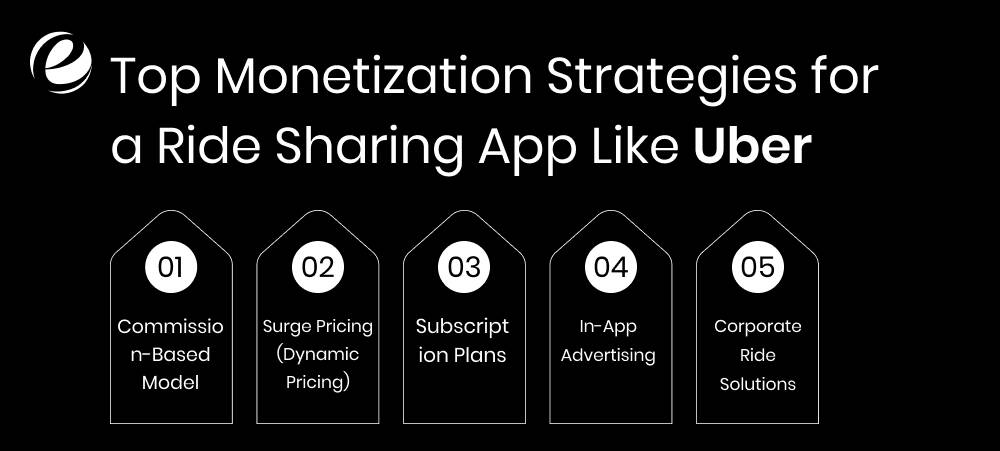
In this section, we’ll address the most frequently asked question “How to make money from Uber-like app development?” We’ll look at the following strategies:
1. Commission-Based Model
Ride-sharing services take a share (15-30%) of the price for each trip. It ensures that the revenue is constant when the app expands by granting tiered commissions to diverse options.
2. Surge Pricing (Dynamic Pricing)
Surge pricing raises fares during peak demand, like bad weather or rush hours. This increases revenue and balances demand and supply, thereby encouraging the availability of more drivers.
3. Subscription Plans
Subscriptions are available for both drivers as well as riders. The riders benefit from discount or prior bookings. Drivers are able to pay a set monthly cost to lower or even eliminate commission charges.
4. In-App Advertising
Earn money by showing ads to local brands or businesses inside the application. Pay based on views clicks, or complete transactions which makes it an incredibly versatile revenue stream.
5. Corporate Ride Solutions
Work with businesses to offer transport for their employees or customers. Businesses can pay for these services. They also offer an attractive B2B service similar to Uber for business with customized plans.
Challenges & Solutions In Developing Ride Sharing App
The process of developing a ride sharing app
-
High Competition & Market Saturation
The rideshare industry is extremely competitive, with well-established giants like Uber and Lyft dominating global markets, while regional competitors hold strong positions in certain areas. To succeed in the market, differentiation is key.
Offering specialized services, such as eco-friendly travel, luxury trips, and rides specifically designed for seniors and women, could attract niche users. Additionally, focusing on individualized promotions, more rewarding incentives for drivers, and enhanced security options can help increase user retention.
-
Data Privacy & Security Concerns
Ride sharing app
-
Regulatory & Legal Challenges
Navigating legal requirements is one of the largest obstacles in the rideshare industry. Authorities enforce stringent laws regarding driver verification, licensure, insurance, surge pricing, and classification. Violations could result in lawsuits, fines, or even bans in certain areas. Business owners should consult legal professionals to ensure compliance with local transportation, labor laws, and taxes before launching an app in any marketplace.
-
Driver & Rider Retention Strategies
One of the major operational challenges for rideshare businesses is retaining both drivers and riders. Drivers often switch platforms to seek lower commission rates, more flexibility in working hours, and better incentive programs.
Offering higher earnings per ride, loyalty programs, and a transparent commission structure can help increase driver retention. For riders, discounted rides, subscription plans, referral programs, and an easy booking process will encourage continued engagement.
Why Choose EmizenTech To Develop An App Like Uber
EmizenTech is an experienced and reliable app development company with years of expertise in mobile application development and a proven track record of developing successful apps. We have extensive experience in developing rideshare apps from scratch for businesses, whether startups or large enterprises.
Our team of highly skilled app developers, UX/UI designers, and product strategists specialize in creating seamless, high-performance apps tailored to your business requirements. Our developers are proficient in various technologies, including Android, iOS, and React Native, ensuring that the Uber-like application we build will be reliable and secure. EmizenTech is committed to high-quality, innovative technology, and customer satisfaction, making us the best option for your app development needs.
Conclusion

The future of on-demand ride sharing applications looks promising, given the increasing demand for fast, simple, and effective travel experiences. While giants like Uber have established themselves in the market and continue to push for global expansion, there is still plenty of room for emerging competitors to create innovative business models.
If you’re planning to build an app like Uber, it’s essential to prepare a solid strategy. Consider the key features, a strong technological stack, and prioritize user experience and security. While the ride-hailing giants dominate the market, there is still an opportunity for new players to enter the space and focus on expanding their businesses. If you’re ready to create a ride sharing app
Reach out to EmizenTech today to discuss your app idea.
FAQs
Can ride-sharing apps be profitable?
Yes! Ride-sharing apps make money through commissions, surge pricing, advertisements, partnerships, and subscriptions, making them highly profitable when properly scaled.
What is the time frame to create an app like Uber?
An Uber-like app with basic features can be developed in 3-6 months. However, a more feature-rich app may take between 9-12 months or longer, depending on its complexity.
How can you cut costs when developing Uber like apps?
To save money on development, it's essential to have a clear understanding of each development phase and optimize features based on your needs. Choosing the right technology and development partner, along with releasing an MVP based on market research, will help reduce costs.
What should I consider when choosing the right app development company?
Choose a firm with proven expertise in ride-sharing apps, an impressive portfolio, and transparent communication. EmizenTech values collaboration and customer satisfaction and will work to ensure your vision is achieved efficiently and effectively.



 +1 (989) 535-9295
 info@emizentech.com
 emizentech


