
 Add us as a preferred source on Google
What are the best databases for mobile apps 2024? Are you looking for the best mobile app databases? You have landed on the right page.
What is the use of the best databases for mobile apps 2024? Let’s get deeper to understand. Mobile app database options fit well when you are seeking offline data accessibility, synchronization, security, and privacy on your app. Also, some look for rich data models for complex data representation, meet their scalable needs and provide personalization to users to boost their experience.
Targeting these pain points while searching for the best databases for mobile apps 2024, remember to go for the one that can lead to user-friendly, feature-rich, and robust mobile applications.
In this post, we will discuss more deeply what a mobile application database is, its benefits and types, tips to choose the best, and more. By the end of this post, you will get an understanding of every relevant aspect you need to select the multi-platform database for your app.
What Is A Mobile App Database?
First, let’s learn about what a database is. Imagine it as a digital filing cabinet, storing and structuring information.
A mobile app database is a database that’s utilized to store and handle data within mobile apps. Developers recognize it as a digital backbone that lets applications perform well and store user details, preferences, and relevant data.
What Is The Need For Mobile App Databases – Importance Of Database In Mobile App Development
To let your mobile apps perform perfectly, you need to store and manage their data efficiently. Besides, more factors will highlight your need for mobile app databases. Let’s discuss the major ones.
1. Data Persistence
It’s the data ability that allows it to stay accessible and intact even if the app that created it has closed. It’s crucial to keep data secure and improve user experience.
Also, it meets the need for local data storage, which is essential to store the app’s generated or accumulated user data on the device.
2. Data Security and Privacy
Mobile apps usually handle sensitive customer data. With robust security measures or by encrypting data in the database while it’s in transit or at rest, you can protect data from unauthorized access. Additionally, you should adhere to data privacy regulations.
3. Data Synchronization
Data synchronization is significant, especially in collaborative mobile apps that demand sync across varied devices. User data backup to the cloud can help with a safety barrier from data loss and allow smooth device switching.
4. Scalability and Performance
With the expanding app’s user base, mobile databases should hold the caliber to scale to accomodate the boosted traffic and data volume. Thus, with well-optimized databases, users can get quick responses, even when the app is performing complicated data operations.
5. User Experience and Personalization
Databases store user behavior data, which makes it easier to analyze and provide tailored content and recommendations to users. With locally stored data, your app can provide personalized user experiences even without an internet connection.
Mobile app databases are essential to create secure and personalized mobile experiences.
Different Types Of Databases For Mobile Apps You Should Know
You may find it surprising that mobile app databases are of different types. Let’s find out.
1. Distributed Database

When the data is stored across distinct physical locations in a database, it’s distributed. It can be located in various computers placed in the exact physical location or scattered over a network of interconnected computers.
Top Distributed Databases: FoundationDB, Apache HBase, AWS SimpleDB
2. Centralized Database
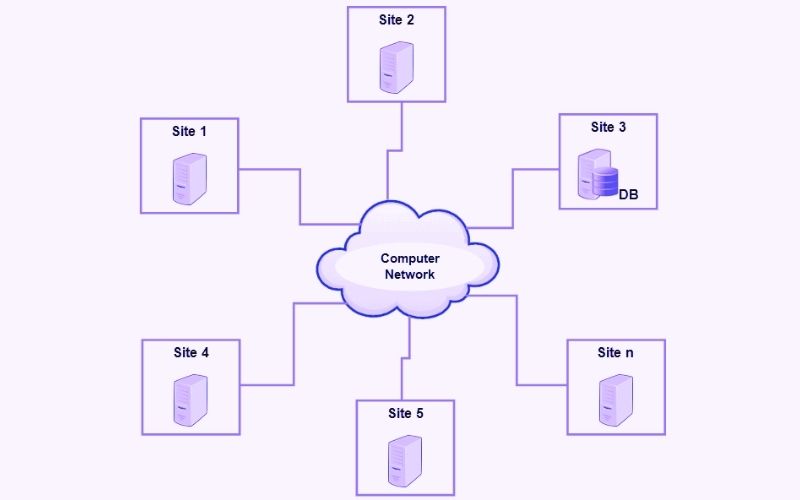
A database where data is stored in a “center” spot is a centralized database. Here, the “center” location states the database is saved in a single place but can be accessed from any external resource.
For instance, When you have complete data on your work PC, you will have easy access to it from your personal PC if that database is centralized.
Top Centralized Databases: Oracle Database, IBM DB2, Microsoft SQL Server
3. Cloud Database

Cloud-based database apps perform in the cloud. Such apps are a great innovation as they have a large amount of space to house data. The cloud is the technology over the internet that functions as a centralized database as it is always available, and one can access it from anywhere.
Top Cloud Databases: Amazon Web Services (AWS), Google Cloud Platform (GCP), Oracle Cloud Infrastructure (OCI)
4. NoSQL Database
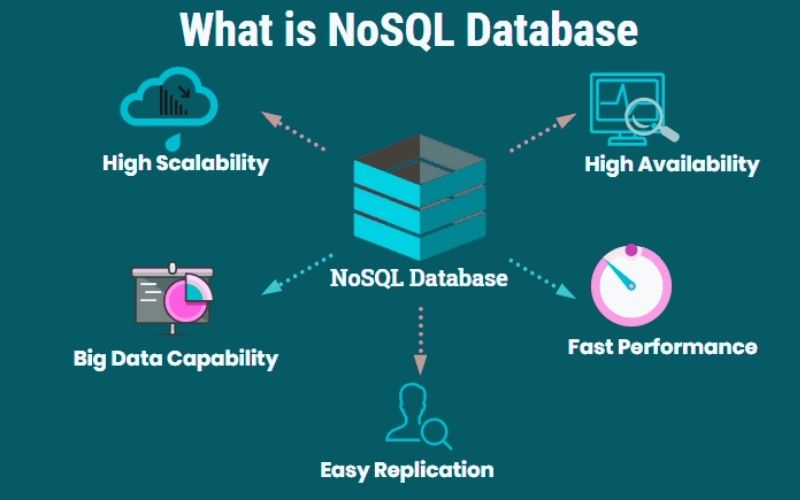
NoSQL is the only type of database that works uniquely from all other application databases. General mobile app databases store data in rows and columns patterns, but NoSQL arrives with a flexible schema that permits a developer to house data in various shapes and sizes.
Top NoSQL Databases: Amazon DynamoDB, Apache Cassandra, MongoDB
5. Commercial Database

It’s an enterprise-level database that businesses design and use for data management on a large scale. They can meet the needs of complex transactions, multiple users, and simultaneous access.
Top Commercial Databases: Microsoft SQL Server, Snowflake, Microsoft Azure SQL
6. End-User Database

An individual end-user designs and manages an end-user database as per their specific data management requirements. Users are responsible for creating, maintaining, and managing such a database.
Top End-User Databases: Airtable, FileMaker Pro, Realm Mobile Database
7. Relational Database

It’s a type of database that uses tables to organize data in rows and columns. Such tables are interconnected through relationships, permitting users to store, manage, and retrieve information efficiently.
Top Relational Databases: PostgreSQL, Oracle DB, MySQL, SQLite
8. Graph Database
Such databases underscore the relationship between varied app entities. Graph databases store and showcase data via nodes and edges. The nodes are called vertices, representing objects, and the edges indicate relationships representing connections.
Top Graph Database: Neo4j, OrientDB, ArangoDB
9. Operational Database
This type of database manages real-time transactions and offers immediate updates to data. Many businesses find such databases a power base for their routine operations.
Top Operational Database: Oracle Database, Microsoft SQL Server, IBM DB2
Convert Your App Idea Into Reality
Let’s Build A New App Together
What Are The Best Databases For Mobile Apps?
Below are the best databases for mobile apps 2024. You can choose any database for mobile app development based on your project needs.
1. ArangoDB
An open-source and free native multi-model database system, ArangoDB supports three data models with a unified query language, AQL, and one database core.
Written in: C++, JavaScript
2. CouchDB

Apache CouchDB is an open-source document-oriented database using various formats and protocols to transfer, store, and process its data.
Written in: C, JavaScript, C++,
3. Firebase

A database that helps build and run successful apps is Firebase. It is supported by Google and preferred by app development companies, from startups to global enterprises. Furthermore, it’s a cross-platform API with minimal setup needs. And one can access it easily as a real-time database from his mobile device.
4. RethinkDB

An open-source, free, distributed document-oriented database, RethinkDB stores JSON documents with dynamic schemas and is best for pushing real-time updates for query results to apps.
Written in: Java, Python, JavaScript, C++
5. SQLite
A lighter version of the popular MySQL database, SQLite is an embedded app database that permits developers to provide mobile phone users with local data storage.
Written in: C
6. Realm
An open-source database, Realm is developer-friendly and an alternative to SQLite and CoreData. It starts in minutes, ports the app in hours, and saves work for weeks.
Written in: Swift, Objective-C, Java, Kotlin, C#, and JavaScript.
7. MariaDB
A commercially supported fork of the MySQL relational DBMS, MariaDB, is intended to stay open-source and free software.
Written in: C, C++, Perl
8. MongoDB
A source-available cross-platform database-oriented database program, MongoDB uses JSON-like documents with operational schemes.
Written in: JavaScript, Python, Java, PHP, C, C++, Ruby, Perl
9. Amazon DynamoDB
A fully managed proprietary NoSQL database service, Amazon DynamoDB supports document and key-value data structures. It helps in building modern apps at any scale with high performance.
10. PostgreSQL

A unique relational database, PostgreSQL is the best database for Android and iOS apps. Developers can customize this database as they want; that’s why it’s the most preferred mobile app database.
Written in: C
11. Couchbase
A distributed NoSQL cloud database, Couchbase delivers exceptional versatility, scalability, financial value, and performance across on-premises, cloud, edge computing, distributed cloud, and hybrid deployments.
Written in: C++, Erlang, C, Go, Java
12. Riak DB

A distributed NoSQL key-value data store, the Riak DB, provides high availability, operational simplicity, fault tolerance, and scalability.
Written in: Erlang
13. InfluxDB

An open-source time-series database, InfluxDB stores and retrieves time-series data in fields.
Written in: Go
14. Cassandra
An open-source and free, wide-column, distributed store, Apache Cassandra is a NoSQL DBMS that handles vast amounts of data across various commodity servers.
Written in: Java
15. Memcached
A general-purpose distributed memory caching system, Memcached is best for speeding up dynamic database-driven websites by caching data and objects in RAM.
Written in: C
16. Redis
Redis is an in-memory data structure store, distributed, cache, key-value database, and message broker.
Written in: C
17. MySQL
An open-source relational DBMS, MySQL is a fully managed database service used to deploy cloud-native apps.
Written in: C, C++
18. SAP Adaptive Server

Also called a Sybase SQL Server, SAP Adaptive Server is a relational model database that offers availability and high performance to process targeted transactions. It lowers the operational cost of app development with a relational database server. Besides, it deploys on infrastructure as a service (IaaS) and on-premise.
Written in: C, C++
19. Solr
A blazing-fast, popular, and open-source platform, Solr is developed on Apache Lucene. It’s highly scalable, reliable, and fault-tolerant, offering distributed indexing, automated failover and recovery, replication and load-balanced querying, and more.
Written in: Java
20. IBM Db2
It is powered by AI and developed for deeper insights. It can be available anywhere through the IBM Cloud Pak for the Data. It combines an AI-infused, proven, enterprise-ready data management system with AI and an integrated data platform developed on the scalable, security-rich Red Hat OpenShift foundation.
Written in: C, C++, assembly, Java
21. FileMaker

It’s the world’s top workplace innovation platform that helps customize apps and automate workflows. You can develop custom apps to streamline manual processes, create new efficiencies, and reduce costs using its low code.
22. HBase
An open-source, non-relational distributed database, Apache HBase offers real-time, random read/write access to your Big Data. It’s an open-source, versioned, distributed, non-relational database model.
Written in: Java
23. SAP HANA

A column-oriented, in-memory, relational DBMS, SAP HANA performs like the software running a database server to store and retrieve data as the apps request.
Written in: C, C++
24. Oracle

A multi-model DBMS, Oracle is best for online transaction processing, mixed database workloads, and data warehousing.
Written in: Assembly language, C, C++
25. Splunk

Dedicated to storing data securely, Splunk adheres to global and industry compliance initiatives. It’s an advanced database technology required that uses indexing to search and address the stored log files.
26. Microsoft Access

A DBMS that merges the relational Microsoft Jet Database Engine with a GUI and software-development tools, Microsoft Jet Database Engine is a venture from Microsoft.
27. Elasticsearch
A free, distributed, and open search and analytics engine, Elasticsearch, was developed on Apache Lucene. It’s a central component of the Elastic Stack, a set of open and free tools for enrichment, data ingestion, analysis, storage, and visualization.
Written in: Java
28. Teradata

A database service provider, Teradata offers database and analytics-relevant products, software, and services. It’s best for enterprise analytics and is a connected multi-cloud data platform that unifies everything.
29. Microsoft Azure SQL

It’s a managed cloud database that runs on a cloud computing platform. It is a fully managed platform as a service (PaaS) database engine that manages many database management functions, like patching, upgrading, monitoring, and backups, with no user involvement.
30. Hive

A data warehouse software project, Apache Hive offers an SQL-like interface to query the data stored in any database and file systems integrated with Hadoop. It is crafted to handle petabytes of data quickly using batch processing. Moreover, it is easy to scale and distribute based on your requirements.
Written in: Java
31. Microsoft SQL Server
A relational DBMS, Microsoft SQL Server, is a software product that is primarily used to store and retrieve data as the software apps request. It is best at managing information.
Written in: C, C++
32. OrientDB

An open-source NoSQL DBMS, OrientDB is a multi-model database that supports document, graph, value/key, and object models. It combines the strength of graphs and the flexibility of documents into a high-performing and scalable operational database.
Written in: Java
33. Neo4j
A graph DBMS, Neo4j, offers data scientists and developers the most advanced and trusted tools to develop intelligent apps and ML workflows. It’s available as a self-hosted and fully managed cloud service.
Written in: Java
34. ORMLite
A lightweight ORM library for Java apps, ORMLite offers the standard features of an ORM tool for general use cases with no added complexity or overhead of any ORM frameworks.
Written in: Java
35. Firebirdsql
An open-source SQL relational DBMS, Firebirdsql runs on Microsoft Windows, Linux, macOS, and many Unix platforms.
Written in: C++
36. Berkeley DB
A software library, Berkeley DB offers a high-performance embedded database for value/key data. Also, it provides a simple function-call API for data management and access.
Written in: C
Choosing mobile app databases can be challenging for you. A leading mobile app development company can help you. Talk to experts today!
How To Choose The Right Databases For Mobile App Development: Selection Criteria
Choosing a suitable database for apps is an essential decision that can noticeably influence its scalability, performance, and user experience.
Below are some key factors you can consider to make the best choice:
1. Data Structure and Complexity

If you are looking for a database for mobile apps with simple data structures, go for Realm Mobile Database or SQLite.
Further, you can consider a relational database for more complex data structures and relationships. For example, NoSQL or PostgreSQL.
2. Data Volume and Scalability
Small-scale applications can opt for Realm mobile database or SQLite. Whereas. Large-scale apps with surging data volumes can select cloud-based databases, such as SWA DynamoDB or Firebase.
3. Data Modeling
Before selecting a mobile app database, you need to perform data modeling as experts suggest. It’s a representation of data structures that you want to store in the database and a robust expression of the business needs.
Data modeling is best when your app holds features such as reporting, search queries, location-based features, and more. Such mobile apps need various databases to handle distinct sorts of data.
For instance, Uber uses various databases, like MongoDB, MySQL, etc., to store a large amount of incoming data.
4. Speed
Today, users prefer responsive and fast custom mobile app development services. Therefore, the database you choose will directly impact the user experience with features such as caching, indexing, and execution mechanisms.
For real-time updates and synchronization, Firebase Cloud Firestore or Firebase Realtime Database can fit better.
5. Data Security and Privacy
You should ensure secure data management, whether you keep it in a decentralized or synchronized database system.
Apps accumulating sensitive data demand a robust security database to be safe from unauthorized access. Besides, the app should adhere to HIPAA and GDPR compliance standards. For this, the database you choose should meet the required constraints.
Opt for a database with robust security features, like access controls and encryption.
6. Mobile App Platforms
If you are planning to make apps for one or more platforms and are thinking of deciding later, then you should consider them now.
Today, various mobile apps are emerging to add a native desktop app or a web app. So, it would be best if you also thought in this direction.
If you want to develop mobile applications for Android and iOS platforms, you can use the React Native framework. It would be easier to build for both platforms simultaneously, as the developers hold the caliber to share code on both mobile app development platforms. Moreover, it supports all sorts of databases.
While you choose the best databases for mobile apps 2024, be sure to consider these selection criteria to find a suitable database for mobile development.
Selection Criteria Based On Use Cases
Choosing the top databases for mobile apps per use cases is discussed below.
Use Case 1: Real-time Mobile Apps with Frequent Updates
Suitable Database: Firebase Cloud Firestore or Firebase Realtime Database
Reasons to Choose:
- Seamless integration with other Firebase services.
- Real-time synchronization across devices.
- Best for chat mobile applications, social media apps, and collaborative tools.
Use Case 2: Simple Mobile Apps with Limited Data
Suitable Database: SQLite
Reasons to Choose:
- No server setup is needed.
- Best for easy data storage and retrieval.
- Lightweight and embedded, it goes perfectly with small-scale apps.
Use Case 3: Mobile Applications with Complex Data Structures and Relationships
Suitable Database: Couchbase Mobile or Realm Mobile Database
Reasons to Choose:
- Best offline support.
- Robust data model power.
- Ideal for complex data structures and relationships.
Use Case 4: Mobile Applications with Offline First Functionality
Suitable Databases: Couchbase Mobile or Realm Mobile Database
Reasons to Choose:
- Good data synchronization when online.
- Robust offline support.
- Best for mobile games, field service apps, and other applications that are required for offline access.
Use Case 5: High-Performance Mobile Apps with Large Datasets
Suitable Databases: Google Cloud Firestore and Amazon DynamoDB
Reasons to Choose:
- Ideal for large-scale mobile apps with high traffic.
- Scalable and best performant.
- Provides flexible data modeling and querying capabilities.
Consider these distinct use cases while you choose the best databases for mobile apps 2024 to ensure their lasting success.
You Have A Vision
We Have The Means To Get You There
What Are the Best Practices For Working With Mobile App Databases?
To reap the rewards of a well-organized database, you need to follow proven practices to optimize it. Thus, you can lead to user-friendly custom mobile app development that can offer improved user experiences.
Let’s check out the best practices to follow to work effectively with a mobile app database.
1. Consider Databases that Follow the Multiversion Concurrency Control (MVCC) Method.
Such a method permits simultaneous access with no interference in processes or threads.
MVCC facilitates a reader to check data snapshots before the writers make changes by permitting read and write operations parallelly.
| Database | MVCC |
|---|---|
| Firebird | Yes |
| MongoDB | Yes |
| Realm | Yes |
| MySQL | Partially, when used with XtraDB |
| MariaDB | Partially, when used with XtraDB |
| RethinkDB | Yes |
| InformixDB | Yes |
| PostgreSQL | Yes, but inefficient |
| MemBase | Yes |
2. Predictive Caching
It is best to improve the mobile app’s performance by looking at when, how, and where users use your app. Based on their behavioral traits, you can identify the users’ segment and serve them with specific information they always want.
You can cache and make data available locally before the users log in to your unique mobile app ideas. You can also pick MongoDB as it offers predictive caching that permits developers to serve the users with predictive-cached data before they ask for it.
3. Database Caching: To bring down the load
We should append a caching layer to decrease the servers’ load. Moreover, we need to cache data on this caching layer to avoid a recurring request for the same data. This lowers the number of requests approaching the server and makes the server’s performance more efficient.
For example, mobile apps like Amazon receive various recurring requests. One can decrease the server’s load by appending the caching layer. It holds the caliber to manage millions of requests with the lowest latency. You can also use Memcached and Redic for such needs.
4. Low Latency Challenges
Low latency is vital for online gaming and real-time apps. High latency gives the app users the wrong impression. Anything that moves down from 500ms is a high latency.
So, you can follow any method to reduce the replication and latency of the database. Moreover, you can choose databases with, on average, lower latency:
- PostgreSQL – For transactional operations in real-time.
- Pipeline DB – SQL database best for streaming apps.
- RethinkDB – Best for real-time apps.
- MongoDB – Best for Scalable and Flexible NoSQL Databases
Database Comparision Chart
It’s crucial to consider a few significant factors while you choose 2024 mobile app databases.
We have created a table that includes these parameters to help you understand the best database for mobile apps.
| Feature | SQLite | Realm Mobile Database | Firebase Realtime Database | Firebase Cloud Firestore | Amazon DynamoDB |
| Data Model | Relational | Object-oriented | NoSQL (JSON-like) | NoSQL (Document-oriented) | NoSQL (Key-value) |
| Real-time Synchronization | No | Yes | Yes | Yes | Limited |
| Offline Capabilities | Strong | Strong | Strong | Strong | Limited |
| Security | Good | Good | Good | Good | Excellent |
| Scalability | Limited | Limited | Excellent | Excellent | Excellent |
| Ease of Use | Easy | Easy | Easy | Easy | Moderate |
| Cost | Free | Paid | Free with usage limits | Free with usage limits | Pay-per-use |
| Best Use Cases | Simple apps, offline-first apps | Complex data models, offline-first apps | Real-time chat apps, collaborative tools | Scalable mobile apps, real-time updates | High-performance apps, large datasets |
Review this table to ease your hunt for the best databases for mobile apps 2024. You can hire a reliable mobile app development agency with expertise in selecting databases for Android apps and iOS apps.
Why Choose EmizenTech For Database Consultation And Mobile App Development
EmizenTech is a trusted mobile app development company and database consultation provider worldwide. So far, with years of experience, the company has helped clients from different sectors to choose the best databases for mobile apps 2024 and build a mobile app meeting their business requirements.
Key Highlights of Choosing EmizenTech for Mobile App Development and Database Consultation
- Database Consultation Expertise
- Clutch Awarded for Mobile App Development
- Timely Delivery
- Within-Budget Project Development
- Agile Development Approach
- Cost-Effective Solutions
- Post-Launch Support
- Transparent Communication
Partnering with EmizenTech, you can be confident in mobile app development and the best mobile app databases that can boost your app’s performance. The team of developers works collaboratively, understands your vision, and provides exceptional outcomes.
Conclusion
The best databases for mobile app development 2024 help with scalability, data complexity, real-time features, offline capabilities, security, and privacy. While you choose the best mobile app databases, consider the factors we discussed and the table we mentioned in this blog post.
We have also given some examples of top databases for mobile apps to ease your search for the best. You can refer to the needs of your app and make the selection accordingly.
If you are still stuck in the muddle, you can hire a mobile app development company with proficiency and expert understanding of choosing the best mobile app databases.
Frequently Asked Questions
What factors should I consider when choosing a database for a mobile app?
Consider scalability, data structure, offline support, security, and performance. The database should align with your app’s specific requirements, like handling real-time data or managing complex queries efficiently.
Which database is best for mobile apps requiring offline access?
SQLite and Realm are excellent choices for offline access. They store data locally, ensuring your app functions seamlessly without an internet connection and providing a better user experience.
Are NoSQL databases better than SQL databases for mobile apps?
NoSQL databases like MongoDB are better for flexible, unstructured data, while SQL databases like MySQL are ideal for structured data and complex relationships. Your choice depends on your app’s data model and requirements.
How does database performance impact mobile app success?
A high-performing database ensures faster data retrieval and smoother app functionality. Poor performance can lead to delays and user dissatisfaction, directly affecting app retention and success.
What are some popular databases for mobile apps in 2024?
Popular choices include SQLite, MongoDB, Realm, Firebase, and Couchbase. Each offers unique features suited to specific use cases, like real-time data synchronization or offline-first capabilities.



 +1 (989) 535-9295
 info@emizentech.com
 emizentech


