
 Add us as a preferred source on Google
 In today’s fast-paced environment, many people often forget to take their medications on time. Whether it’s a regular vitamin medicine or a life-saving prescription, ignoring doses can result in serious adverse health effects. This is why pill reminder medication tracker apps are gaining popularity as a kind of personal assistant that you can carry in your pocket, reminding you precisely when to take your medication.
Pill reminder applications can play a crucial role in enhancing medication adherence by sending timely alerts for each dose, thereby helping users maintain consistent routines. The app enables users to track their medication dosage history, monitor their medication progress, and receive reminders for refills, thereby reducing the likelihood of missing or incorrect dosages.
The market for pill reminder medication tracker app development is booming, driven by real needs and advancing technology. Businesses should develop pill reminder apps because an increasing number of people require daily assistance in managing their medications. As technology advances, users increasingly seek innovative and intuitive tools to support their health. These apps address real problems, such as missed doses and tracking treatment.
How about creating a pill reminder app? In this blog, we’ll guide you through the steps to build a mobile app that helps users manage their medication and stay on track with their health.
Market Statistics Related To Pill Reminder Mobile Apps
The market for medication reminder apps has experienced significant growth over the past few years. Below are the key statistics that help you better understand the market.
- The global market for medication reminder apps was valued at $0.4 billion in 2023 and is projected to reach $0.8 billion by 2032. This growth is anticipated to occur at a compound annual growth rate (CAGR) of approximately 8.5% over the forecast period.
- In a recent survey, 11% of participants aged 18 to 29 reported using an app to track their health data, while only 4% of those aged 61 and over used such apps.
- The global market for medication management is projected to reach $4.52 billion by 2026. Meanwhile, the number of mHealth applications is projected to grow from $37 billion in 2024 to $88 billion by 2032.
- Approximately every second American takes some or all prescribed medications each month, which means there are about 160 million potential users of drug tracking apps in the U.S. alone.
How On-Demand Pill Reminders and Medication Tracker Apps Help You Stay Healthy?
According to research, 45.8 percent of the total US population requires at least one prescription drug per month.
When these prescribed medicines are forgotten, it could even result in the disease getting worse, leading to hospitalization or even untimely death. Known as medication non-adherence, this phenomenon has severe consequences in the United States. As per the studies, 20-30% of the medication prescriptions never get filled, and approximately 50% of medicines that belong to chronic illnesses are not taken as prescribed. And the main reason behind this kind of medication non-adherence is that the patients mostly forget to take medications, and 39 percent of these people, whereas 20 percent do not renew the prescribed medicines on time, and 10 percent of patients procrastinate to get their refills.
However, the good part is that using Pill Reminder and Medication Tracker apps can help resolve this issue. These apps come around as an ideal solution for this kind of negligence. Creating a pill reminder medication tracker app with a social support system enables patients to easily track their medication doses and receive social support. Additionally, many of these apps feature a connectivity option that allows family members to track and monitor whether their loved ones are taking their medication on time. This functionality enables a connected person to monitor the patient’s pill status.
This way, the development of pill reminder and medication tracker apps enables patients to lead healthier lives through user-friendly functionality.
How Do Pill Reminder Apps Work?
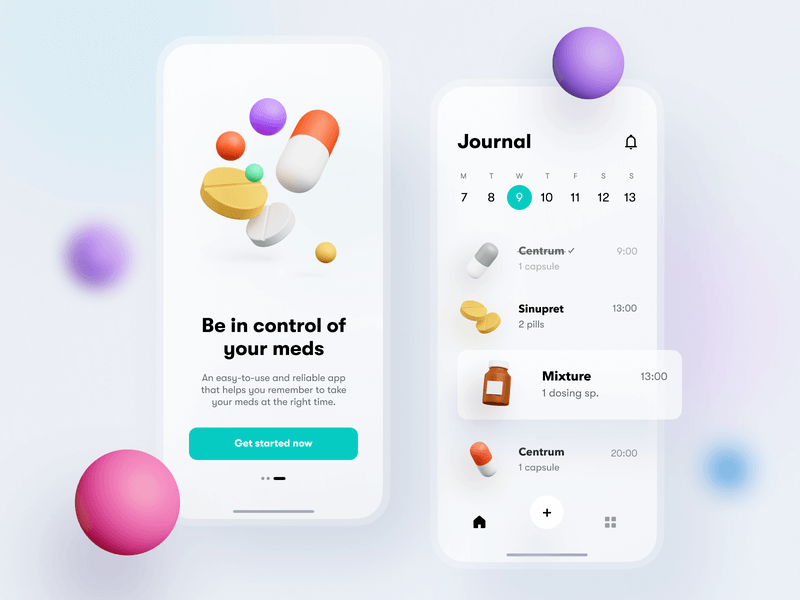
These data-driven pill management platforms are based on a B2B and B2C business model, and they typically collaborate with drug retailers, pharmaceutical companies, healthcare providers, and health insurers to create an ecosystem that enhances patient engagement and increases medication adherence by utilizing real-time information on the leading causes of medication non-adherence.
Currently, numerous such apps are available, helping a large number of people stay on track with their health. The operation of these apps is quite simple, involving a few straightforward steps: download the app, add the medication, set personalized reminders for the pills, and receive timely alerts. Additionally, the app allows users to snooze reminders and then reminds them again until the task is marked as completed.
Once the account is created on these platforms, it backs up user data on the app’s cloud platform. Hence, even if the user’s phone is stolen or lost, or the user needs to log in from another device, they will still be able to access their data. These apps feature a connection tool that allows users to connect with friends and family members. Therefore, each time the user misses a scheduled dose of the pill, the app will send an alert to the connected person.
And this is how Pill Reminder apps work exactly. Now, let’s explore the types of Medication Reminder mobile apps.
What Are The Types Of Medication Reminder Mobile Apps?
There are mainly three types of medication reminder mobile apps available out there, such as:
Simple Medication Reminders (SMRs)
These medication apps are primarily designed for patients, offering basic functionalities such as customizable alerts and flexible scheduling.
Advanced Medication Reminders (AMRs)
Along with the basic functionalities that come with SMRs, AMRs also offer time-zone support, medication pictures, user notes, and tracking of late & missed dosages.
Medication Management Apps (MMAs)
This combines the functionalities of the two previous types, enabling users to create multiple accounts, manage and store health data, and share information with doctors.
What Are The Benefits Of A Pill Reminder Mobile App?
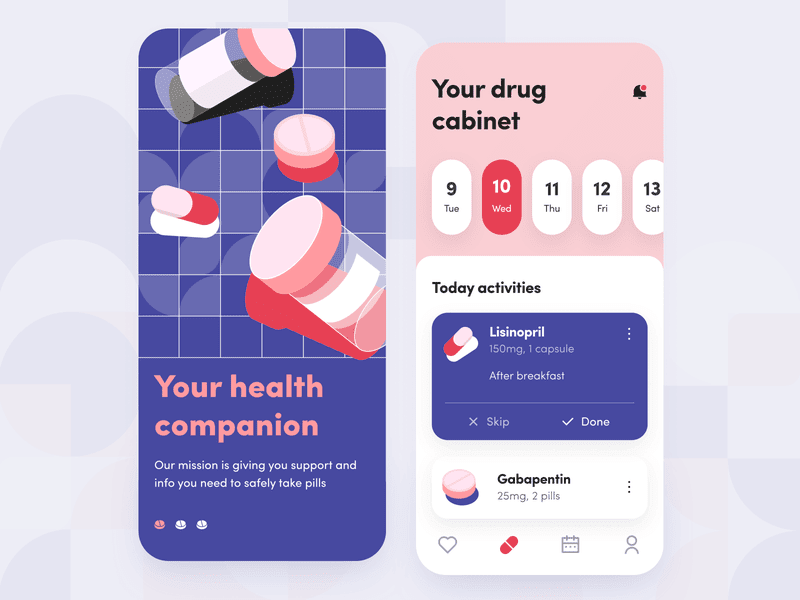
There are a number of ways in which Pill Reminder apps can benefit their users, and here we talk about them:
- These apps offer user-friendly and straightforward functionality, enabling quick scheduling.
- Often, it happens that patients end up taking the wrong medication or skipping dosages. However, pill reminder apps offer automatic reminders, helping patients stay on track with their schedules.
- There are times when patients forget to refill their prescriptions, but through these apps, they receive reminders to refill prescriptions a week in advance of the supply running out.
- Using the apps, users will be able to access personalized medication history in an intuitive format.
- These apps offer flexibility for customizing the schedule according to the requirements for each medication.
- The apps enable you to create a schedule with great accuracy, and they can also be easily edited.
- The pill reminder medication tracker app reminds users to take their medication by sending simple alerts on their phone, ensuring they don’t forget essential dosages.
- It is relatively easy to use these apps, as they are designed to offer ease, and therefore, users don’t face any hassle in using them.
- The apps allow you to customize the alerts to remind you of medications as desired, such as sending a text, vibrating, ringing, or displaying a visual notification when it’s time to take the pill. Users can also indicate when they have taken the pill already or when they would like to be reminded again in some time.
Steps to Develop a Pill Reminder and Medication Tracker App
Here, we will learn how to develop a Pill Reminder and Medication Tracker App.
1. Identify the Target Audience
First, understand who will use your app and the target audience. This way, you will get an idea about the design and functionality of the app you will create.
2. Choose a Platform
Next, you need to decide which platform you want to develop your app for: Android, iOS, or a cross-platform solution.
3. Design a User-Friendly Interface
Choose to craft an easy-to-navigate UI for your app, making it simple for users to use and reap its benefits.
4. Implement Medication Adherence Tracking Feature
Ensure you include this feature to remind users to take their medication and alert them if they miss a dose.
5. Add Extra Features
Add more features to enhance the customer experience, such as barcode scanning for effortless medication addition, allowing users to record symptoms or side effects, and an allergy check for added safety.
6. Testing
It’s time to test the app to identify issues or bugs that may impact its functionality.
7. Launch and Promote the App
After you develop your app, it’s set to launch for use on the App Store. Besides, market your app to reach your target audience.
Which Are The Top Medication Tracking Mobile Apps?
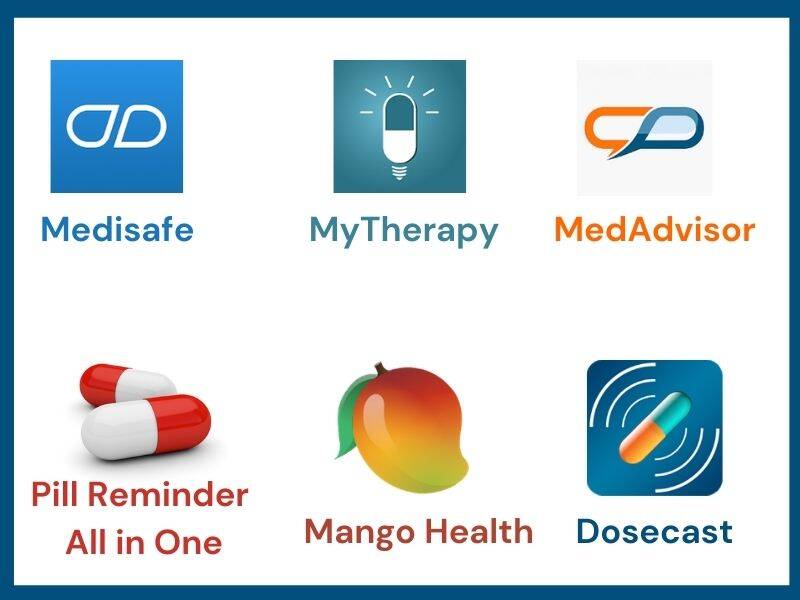
Medication Tracker by Medisafe, Medication Reminder by MyTherapy, Pill Reminder – All in One, MedAdvisor, Mango Health, and Dosecast are some of the popular mobile apps that can help you track your medication and remind you to take your pills on time.
Key Features of Medication Tracking Mobile Apps
Digital Scheduling
Using this functionality, users can create schedules (daily, weekly, or monthly) and enter the required information regarding their medications, including medication names, physical descriptions, dosages, and the times and methods of administration.
Smart Reminders
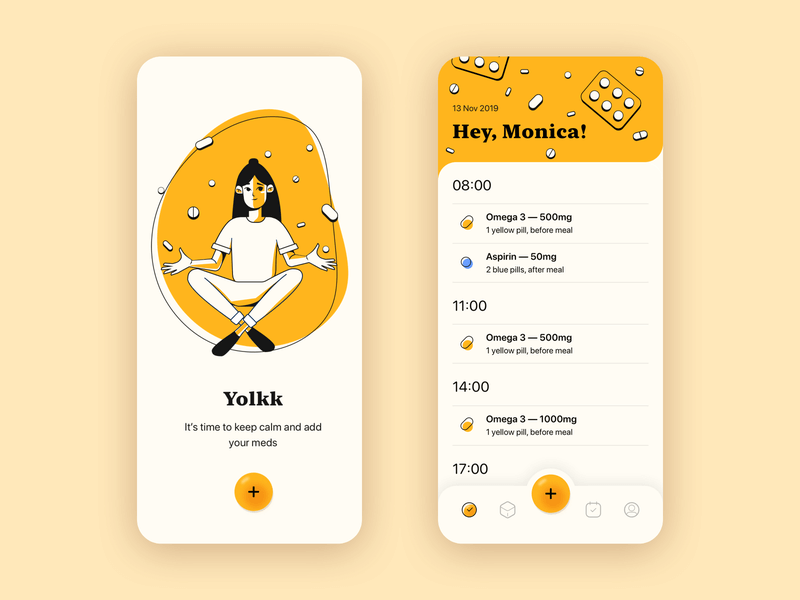
These are the alerts that appear on the phone screen each time you need to take the medication. These alerts buzz and ding constantly until the patient has taken their dosage. There is also an advanced reminder mobile app enabling users to postpone their medication intake. Additionally, these reminders prove to be very helpful for people with hearing and vision impairments.
Pill Identifier
These are usually of two types; first, there is a less convenient one that requires the user to enter the characteristics of a pill. Accordingly, the app checks its database to generate a list of pills with similar characteristics. In the case of a user-friendly app, it also features an option that enables users to upload a picture of their medication, allowing the image analysis algorithm to find similar pills in the database.
Nearest Drugstore
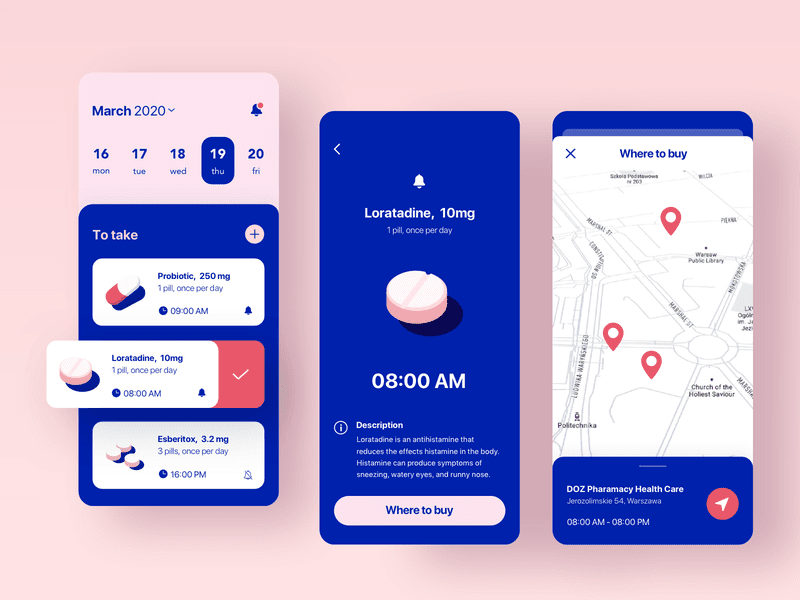
This functionality enables users to locate their nearest drugstore that stocks the required medication. Some apps even have a map integrated with navigation.
Notes Field
This feature enables users to input specific instructions for taking medications, list potential side effects, and add recommendations from doctors.
Prescription Renewal Alerts
This functionality works well in notifying app users that it’s time to refill their prescriptions. Here, the messages appear on the screen as alerts, and users are also given a form to fill out after receiving the alerts to refill their prescriptions. Here, the app directly sends the form to the doctor.
Sync Reminders
In this functionality, the users will be able to synchronize the reminders with their smartwatches. So, they won’t need their phone all the time to stay engaged with the app.
Reports
Using this functionality, the users will be able to send their medical progress reports to the physicians or nurses.
Reminder List
This feature will enable app users to view their medication reminder list and see what is due for the day.
Reminder Sound
App users can also choose the reminder sound each time the phone makes a sound, so they will know which sound is specifically designed to remind them of their medication.
Track Health
Using this feature, app users can successfully track their steps, weight, blood pressure, and health rate at all times, thereby avoiding potential health complications.
Automatic Backup
As soon as the user registers for the app, the registration will include automatic backups and restores to the HIPAA-compliant servers.
Medication Progress Reports
This functionality displays the progress registered in the user’s health since they started taking the medications. This helps in finding out how effective is the medication and treatment, or other measures need to be taken.
Required Medical Compliance For Meditation Tracker Apps
There are all sorts of medical compliances that a medication adherence or pill reminder app needs to follow, taking from
- HIPAA for health apps
- Health Level 7: HL7 Standards
- FDA’s medical apps policy
- HITECH Act
- Health and Human Services (HHS) guidelines
- Certification with EPSC
- FDA Policy for mobile medical applications.
What Tech Stack Is Necessary For a Meditation Tracker Mobile App?
| Function | Technology |
|---|---|
| Frontend Development | React, Angular, and Vue |
| Backend development | Python/Django |
| Database | MySQL and Redis |
| Hosting | AWS and VULTR |
| Cross-Platform | React and Flutter |
| iOS | Objective-C and Swift |
| Android | Java, Kotlin & and Flutter |
| API Development | PostgreSQL |
| NoSQL database | MongoDB |
How Much Does It Cost To Create A Medication Tracking Mobile App?
Several factors must be considered to determine the cost of developing a pill reminder medication tracker app. This system is integrated with several sections of healthcare groups, which is why it requires a high level of integration and support. Though the main factors affecting the cost of developing such an app are:
- Features & Functionalities
- Advance & Additional Features
- Third-party API Integrations
- Certificates & Compliances
- Location of the Development Company
- Size of the Development team
These are the key factors to consider when calculating the cost of creating a medication tracker mobile app. Also, to give a rough estimate, the cost to develop a pill reminder app can be around $25000-$30000 with basic functionalities integrated and for a single app platform like Android or iOS, whereas if the app is integrated with advanced features and various third-party API integrations, and created for more than one platform, then the cost doubles up as well, taking it to around $50000-$60000.
Conclusion
The pill reminder medication tracker app is changing how people take care of their health. It helps users remember to take their medication, track their dosage, and stay on their treatment regimen. As more people use their phones to manage their health, pill reminder apps are becoming essential for daily wellness.
Developing a pill reminder and medication tracker app may be challenging, but it offers great rewards. As more people seek easy ways to manage their health, your app can make a real difference by helping users take their medication on time and stay on track with their treatment. With its helpful features and user-friendly design, your app can stand out in this fast-growing market and become a trusted partner in promoting better health.
FAQs
What are pill reminders and medication tracker apps?
Pill reminder apps help patients stay on track with their medication schedules. Medication tracker apps allow patients to record doses, track their progress, and monitor prescriptions to improve their health.
Why Develop a Pill Reminder and Medication Tracker App?
This app is designed to address health issues, improve patient adherence to prescribed medications, and meet the growing demand in the wellness and health sector for a more convenient way to manage medications.
What is the time frame for creating a pill reminder app?
Development typically takes 3 to 6 months, which depends on the features, complexity, and platforms. The testing and refinement process may add extra time.
Can the app be integrated with wearables?
Yes, the app can sync with wearable devices, including watches and fitness trackers. This enables users to track their health data and receive real-time medication reminders for improved health management.
What is the best way to make money from a Pill reminder app?
The app can be monetized through in-app purchases, ads, premium subscriptions, as well as a freemium service with fewer options for users and additional options for paid customers.
What technology is required in order to create the application?
The technologies required are Swift, Kotlin, Flutter, Node.js, Firebase, Django, SQLite, Realm, Firebase Firestore, and many others.



 +1 (989) 535-9295
 info@emizentech.com
 emizentech


