
 Add us as a preferred source on Google
 In today’s fast-paced world, people want everything to be quick, easy, and secure, including the way they pay. That’s where eWallet mobile app development comes in. They’ve completely transformed how we handle money, making it possible to pay, send, or receive funds with just a tap on your phone. From grabbing your morning coffee to splitting bills with friends, eWallet mobile apps are becoming the go-to choice for everyday transactions.
This shift to cashless living isn’t just convenient for users; it’s a massive opportunity for businesses. With millions of users turning to mobile payments, there’s a huge demand for smart, user-friendly wallet apps that deliver both speed and security. Moreover, rewards like cashback and exclusive deals keep users coming back.
If you’re a business or entrepreneur thinking of investing in this growing market, developing your own mobile wallet app could open doors to steady revenue and customer loyalty. As the world moves toward cashless payments and demands for such solutions are growing, eWallet app development companies are creating smart, secure, and fast solutions. These innovations make everyday transactions easier and safer, transforming how we pay with just a tap.
In this blog, we’ll break down everything you need to know about eWallet mobile apps, including their key features, cost, and development process.
So, let’s get started.
What Is The eWallet Mobile App?
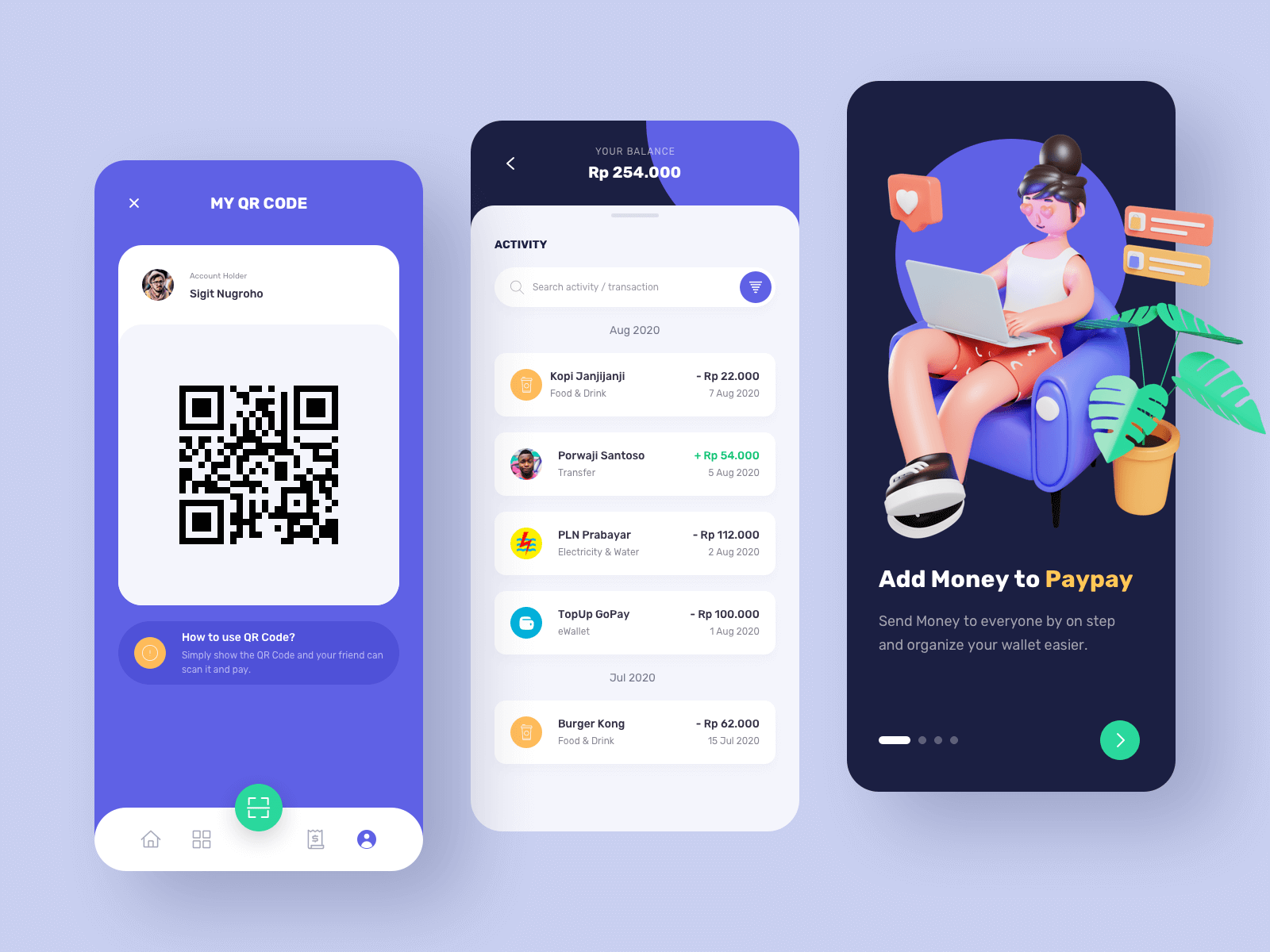
An e-wallet mobile application is a digital wallet that enables users to easily store, handle, and transact with their money using their mobile devices. It performs as a convenient and secure alternative to traditional physical wallets.
Major Uses of E-Wallet
- Making Payments
- Storing Digital Payments
- Managing Finances
- Peer-to-Peer Payments
What is an e-wallet? As you have got the answer to this, you should scan the relevant market and trends to make headway to a once-in-a-blue-moon edge.
How Does the eWallet Mobile App Work?
The eWallet mobile app works by leveraging various technologies to facilitate digital financial transactions securely and efficiently.
Here’s a Technical Overview of How It Typically Works:
- User Registration: Users must download and install the eWallet mobile app from an app store and register with their personal information, such as name, contact details, and email address. The app may require users to create a password or use biometric authentication for added security.
- Account Creation: Upon successful registration, the eWallet app creates a unique user account that is securely stored on the app’s servers. This account is linked to the user’s mobile device and may also be associated with a user’s bank account or credit/debit card for funding purposes.
- Security Measures: The eWallet app implements various security measures, such as encryption, tokenization, and multi-factor authentication, to protect user data and transactions from unauthorized access.
- Funding the Wallet: Users can fund their eWallet account by linking it to their bank account or credit/debit card. The app securely stores the payment information and may use third-party payment gateways to process the transactions.
- Wallet Balance: The eWallet app maintains a record of the user’s wallet balance, updated in real-time with each transaction.
- Transaction Types: The eWallet app supports various transaction types, including peer-to-peer (P2P) transfers, bill payments, merchant payments, and online/offline purchases.
- Transaction Authorization: Users initiate transactions through the app by providing necessary details, such as the recipient’s information, transaction amount, and a security PIN or biometric authentication for authorization.
- Transaction Processing: The eWallet app securely processes the transaction by verifying the transaction details, checking the user’s wallet balance, and confirming the transaction with the recipient or merchant.
- Transaction Confirmation: Upon successful processing, the eWallet app sends a confirmation to the user and the recipient/merchant, providing transaction details, such as transaction ID, date, time, and amount.
- Transaction History: The eWallet app maintains a transaction history that users can view to track past transactions, including transaction status, time, and amount.
- Error Handling: The eWallet app includes error handling mechanisms to detect and handle transaction failures, such as insufficient funds, incorrect transaction details, or connectivity issues, and provides appropriate error messages to users.
- Security Audits: The eWallet app may undergo regular security audits and updates to ensure the app’s security features are up-to-date and effective in safeguarding user data and transactions.
Why Develop eWallet Mobile App – Market Size and Statistics
Before you start building your e-wallet app, it’s important to understand the digital wallet market clearly. Look closely at the latest facts and numbers to get a better idea of where the market is going. This will help you stand out and make smarter decisions.
Here, we have included the latest market size and statistics. Let’s take a walkthrough.
- The market for mobile wallets worldwide is expected to generate $46,006.0 million by 2028, with a CAGR of 18.9% between 2021 and 2028.
- The number of global digital wallet users is expected to exceed 5.4 billion by 2028, up from 3.7 billion in 2023.
- The e-wallet market size is projected to grow by $124.6 billion in 2024, reaching $590.2 billion by 2032. This represents a CAGR of 22.1% from 2024 to 2032.
- The global digital payments market was estimated at $4 trillion in the year 2020 and is expected to grow to $10 trillion by 2026.
- The largest beneficiaries of the e-wallet market include retailers and e-commerce businesses, which collectively hold the largest market share at 30%.
- The total value of digital wallet transactions is projected to reach $9 trillion in 2023, surpassing $16 trillion by 2028, reflecting a 77% increase.
The Asia Pacific mobile wallet market valuation is forecasted to reach $31.10 billion by 2033 at a CAGR of about 27.64% from 2024 to 2033.
Types Of Money Transaction Methods In Digital Payments App
Since eCommerce has emerged as a winner in all situations and people’s dependence on it for retail therapy and ordering essential items has increased unapologetically, it has also given rise to e-wallets. There are several methods through which one can make online payments these days. Let’s talk at length about these methods:
1. NFC (Near Field Communication)
This is a completely contactless chip-enabled mode of payment. In this case, one does not have to touch any other device but be close so that the receiver’s pay pad reads his device. Within reach of three to four inches, the payment can be made. This technology might not be available in old smartphones, but the new phones are all being integrated with this mode of payment to avoid any contact between the users and the sellers in the near future.
2. Mobile Wallet Apps
Nothing new to us, as we have talked about in detail above, and we will continue to share some features, tech stack, team, and cost of making these applications. The best eWallets that have changed how transactions are done include the likes of Google Wallet, Cash App, Due, Samsung Pay, Android Pay, PayPal, Alipay, and Venmo.
3. Sound Waves-Based Payment Methods
Giving contactless payment a boost, this is a unique method of payment that allows one to make a transaction with the help of sound waves released by a smartphone. This feature can be integrated into any device, including smartphones, feature phones, card swipe machines, etc.
4. Internet Banking
Do you have an account with a leading bank in the country? Well, then you might have access to Internet banking as well. This method has been in play for a couple of years now. Almost all national and international banks have mandated online (internet) banking these days. Under this sort of payment, the users must first add a payee to their account by correctly adding all their details. The second step is to receive an OTP on their phones that allows them to add the payee. Then they have to wait for some time or days for the person to be added to their payee list, and voila, you are ready to make any transactions.
5. Direct Carrier Billing
Mostly used by people in undeveloped areas where several methods of online payments are still missing, this sort of payment is also easy to do. One can make purchases and ask the seller to directly add the billed amount to the phone bills that they receive monthly.
Types of Mobile e-Wallet Application Development
Different types of e-wallet mobile app development aim to meet specific requirements and preferences.
In this section, we will unveil types of e-wallet mobile applications you can build, focusing on distinct businesses and individuals.
1. Closed-Loop E-wallets
A closed-loop e-wallet is exceptionally crafted to work within a specific ecosystem, like an online marketplace or a retail chain.
Best For: Businesses looking to create a proprietary payment system for their ecosystem to be used within.
Examples: PayPal, Google Wallet, and Samsung Pay.
2. Open-Loop E-Wallets
Like closed-loop e-wallets, open-loop e-wallets are not confined to a function for a specific financial institution. These allow users to make transactions with multiple merchants and service providers using this particular type of e-wallet. Users can even withdraw cash from their accounts using such wallets.
Best For: Businesses that want to expand their reach to a broader audience and provide more payment options.
Example: Venmo, PayPal, Cash App
3. Hybrid E-Wallets or Semi-Closed E-Wallets
Hybrid e-wallets or semi-combine the elements of open- and closed-loop wallets but offer the functionality of the latter to make transactions flexible outside of their network.
Best For: Businesses seeking to combine the advantages of open- and closed-loop wallets.
Example: WeChat Pay, Alipay.
4. Cryptocurrency Wallets
Such e-wallets are designed to manage and store cryptocurrencies like Ethereum, Bitcoin, and Litecoin.
Best For: Businesses that want to meet the needs of customers who use cryptocurrencies.
Example: Trezor, Coinbase, Mycelium.
5. Government-Issued E-Wallets
Governments or central banks support such digital wallets, which are usually used by social welfare programs, digital identity verification, and government payments.
Best For: Organizations and governments that are looking to provide complete e-wallet services to their members or citizens.
Example: India’s Unified Payments Interface (UPI)
6. Digital Wallet Super Apps
These are multi-functional platforms that provide varied services crossing the borders of what the traditional banking system offers.
Best For: Multi-functional platforms that offer numerous services beyond traditional banking.
Example: WeChat Pay, Gojek, Paytm.
7. Mobile Banking Apps
It’s one more type of e-wallet application that is launched to provide convenient and secure access to their bank accounts.
Best For: Banks and financial institutions that want users to manage their bank accounts conveniently and all financial products.
Examples: Bank of America Mobile Banking, Wells Fargo Mobile App, and Chase Mobile App.
From closed-loop wallets to government-issued e-wallets, you can choose any to build and make users reap its rewards.
If you need clarification, connect with an eWallet app development company with years of experience offering e-wallet app development services to a global clientele.
Benefits Of The eWallet Mobile App Development
E-wallet, a mobile app development, arrives with a host of benefits for businesses and users. By offering a secure and convenient platform for handling finances and making payments, e-wallet apps can improve customer satisfaction, streamline operations, and drive revenue.
For Businesses
| Benefit | Explanation |
|---|---|
| Increased Customer Engagement | E-wallet apps offer an easy and accessible way for customers to interact with businesses, leading to improved engagement and loyalty. |
| Streamlined Transactions | E-wallet apps ease the payment process, diminishing transaction time and enhancing the overall customer experience. |
| Enhanced Brand Visibility | Seamlessly integrating your business with an e-wallet can boost brand visibility and expand a broader customer base. |
| Data Insights | E-wallet platforms can deliver valuable data insights into customer behavior and preferences, allowing businesses to customize their marketing and products. |
| Reduced Fraud | E-wallet apps usually use advanced security measures to safeguard against fraud, relieving businesses of financial losses. |
| Increased Sales | Proposing e-wallet payment options can draw more customers and raise sales. |
For Users
| Benefit | Explanation |
|---|---|
| Convenience | E-wallet apps provide a simple way to manage finances and make payments on the go. |
| Time-Saving | E-wallet apps are a time-saver for users because they avoid the need for cash or physical cards. |
| Security | E-wallet apps often use advanced security measures to guard user data and control fraud. |
| Peer-to-Peer Payments | E-wallet apps allow users to send and receive money quickly to friends and family. |
| Loyalty Rewards | Many e-wallet apps smoothly integrate with loyalty programs, permitting users to earn and redeem rewards. |
| Accessibility | E-wallet apps can be used on different devices, making them easily accessible to a wide range of users. |
With the constant evolution of the digital landscape, e-wallet applications are expected to play an essential role in our routine lives, whether we are users or businesses.
Industries That Propel The Rise Of Mobile Wallet Applications
The development of digital payment apps has been fueled by distinct industries that have incorporated this technology to streamline their operations and improve customer experience.
Let’s raise the curtain to know which industries are boosting mobile wallet app development.
1. eCommerce & Retail
The increasing trend of online shopping has increased the demand for secure and easy payment methods. Mobile wallets provide a safe and seamless way for customers to purchase online, surging their usage in the ecommerce and retail industry.
2. Travel and Hospitality
Travelers are adopting mobile wallets as they offer a convenient way to pay for hotels, flights, and activities. Also, they can be used to store travel documents, branding passes, and loyalty cards, easing the travel experience.
3. Transportation
By integrating mobile wallets with transportation systems, users can pay for ride-hailing services, public transport, and parking fees straight from their devices. Commuters also find such apps more convenient and best for easing their routine travel needs.
4. Banks And Financial Industries
Mobile wallets facilitate the industry by offering customers secure and safe digital banking services. Mobile wallets can be helpful in paying bills, transferring funds, and accessing account details.
5. Food and Beverage
Mobile wallets are increasingly adopted in the food and beverage industry. They allow customers to conveniently pay for drinks and meals quickly. Many cafes and restaurants now accept mobile wallet payments.
6. Event Management
Event managers can also reap the benefits of mobile wallets. They let attendees easily purchase tickets, food, drinks, and even merchandise. Mobile wallets are also best for contactless entry at the venues.
7. Entertainment
In the entertainment industry, mobile wallets have found apps that let users buy tickets directly through their devices.
Not only industries but also various other factors elevate the creation of mobile wallet applications that benefit businesses and consumers.
General Features Of The eWallet Mobile App Development
You should include every relevant and essential feature in your e-wallet app to make it valuable for users and businesses.
Let’s check some general features you can opt for:
| Feature | Description |
|---|---|
| Account Management | View account balances, the transaction history, and transfer funds between accounts. |
| Peer-to-Peer Payments | Send and receive money quickly to friends and family. |
| Mobile Payments | Make online and offline payments using NFC technology, QR codes, or other methods. |
| Bill Payment | Pay bills straight through the app. |
| Loyalty Programs | Earn and redeem rewards points from integrated loyalty programs. |
| ATM Locator | Find ATMs nearby. |
| Mobile Check Deposit | Deposit checks through your smartphone camera. |
| Customer Support | Access customer support using in-app chat or other channels. |
| Security Features | Encryption, biometric authentication, and fraud protection. |
| Budgeting Tools | Set budgets, track spending, and examine financial habits. |
| Notifications | Receive notifications for account updates, transactions, and offers. |
| Investment Features | Some e-wallet apps may provide investment options, such as bonds, stocks, or mutual funds. |
E-wallet mobile applications arrive with a complete suite of features meeting the diverse needs of users. Go through this table and choose which feature you can include to make your app an essential tool for users.
Advanced Features To Consider For Mobile Wallet App Development
Besides offering online payment functionalities, mobile wallet apps provide a broad range of advanced features that enhance the user experience. Besides, the application provides extra benefits.
Let’s review the advanced features that can make your e-wallet stand out from the crowd.
| Feature | Description |
|---|---|
| Biometric Authentication | Use fingerprint or facial recognition for safe access to the app. |
| Loyalty Program Integration | Integration with loyalty programs allows users to earn and redeem rewards. |
| Tokenization | Card details stored as tokens enhance security and lessen fraud risk. |
| Bill Payment | Paying bills for credit cards, utilities, and other services. |
| Peer-to-Peer Payments | Sending and receiving money straight to friends and family through the app. |
| Cryptocurrency Integration | Supporting the selling, buying, and storing of cryptocurrencies. |
| Travel Features | Booking flights and hotels, storing travel documents, and accessing airport lounges. |
| Voice Commands | Permitting users to accomplish tasks using voice commands. |
| Gamification | Including game elements to make the digital wallet app more engaging and rewarding. |
| AR/VR Integration | Using augmented or virtual reality to boost the user experience, such as virtual property tours or virtual try-ons for clothing. |
By including these advanced features, your e-wallet app can increase engagement and stay ahead of the curve.
A Step-by-Step Process to Develop an eWallet Mobile App
Building an e-wallet mobile app needs exceptional planning, engaging design, and seamless implementation.
Here, let’s follow the key steps to create a successful e-wallet mobile app.
1. Define Your Target Audience and Business Goals
Start by identifying your target audience and knowing their preferences and needs. Define and align your business objectives accordingly. Choose to meet goals like offering comprehensive e-wallet application development services, boosting customer engagement, and driving revenue.
2. Choose a Platform and Technology Stack
Decide on the platform for your app, whether it’s iOS, Android, or both, depending on your target audience. Pick a suitable technology stack, including a database, backend framework, and payment gateway.
3. Design the User Interface (UI) and User Experience (UX)
Craft a visually aesthetic and intuitive user interface that makes your mobile app navigation easy. Aim to offer a smooth user experience that meets your target audience’s requirements.
4. Backend Development
Develop the server-side logic that handles the server-side operations, payment gateways, and interactions with databases and other external systems. Choose a suitable backend technology stack to build an efficient and scalable e-wallet app. We will talk about the tech stack later in this post.
5. Payment Gateway Integration
Integrate with reliable third-party payment gateways, such as PayPal, Stripe, or Braintree, to enable efficient and secure transactions. Users can add and manage their credit/debit cards, make payments, and receive money.
6. Security Implementation
Implement robust security measures to protect user data, including encryption for sensitive information and secure authentication mechanisms. Also, adherence to industry standards such as PCI-DSS (Payment Card Industry Data Security Standard) will help you stay ahead in your journey.
7. Testing and QA
Conduct thorough app testing to identify and fix bugs, errors, or usability issues. It includes functional testing, performance testing, and security testing.
8. Deployment
Deploy your app to the respective app stores, such as the Apple App Store or Google Play Store, following their guidelines and requirements. Remember to implement a robust market strategy to promote your mobile app and drive users.
9. Maintenance and Updates
Continuously monitor and maintain your app, addressing any issues that arise and releasing updates to add new features or fix bugs based on user feedback, insights, and market demands.
An e-wallet mobile app development needs perfect guidance, aiming at user experience and security. Follow these steps to build a profitable e-wallet mobile app that meets the requirements of your target audience.
How Much Does It Cost To Develop A Mobile Wallet App?
The cost of building a mobile wallet app is not fixed as it depends on various factors. The estimated e-wallet app development cost can range between $20,000 $200,000.
We have mentioned the pricing of the apps above. However, it may vary depending on certain factors, such as the following:
- Geographical location of developers (you hire)
- App design complexity
- Features and functionality (you need to include)
- Integration of third-party apps (as required), etc.
Contact an eWallet app development company today and get custom e-wallet app development services.
Tech Stack Required for eWallet Mobile App Development
Now you know what steps you should follow to build an e-wallet mobile app. Next, we will take a walk through the technology stack so you can opt for successful app development.
| Technology | iOS | Android | Cross-Platform |
|---|---|---|---|
| Frontend Technologies | Swift | Kotlin | React Native, Flutter |
| Backend Technologies | Python (Django, Flask), Node.js, Ruby on Rails | Ruby on Rails, Node.js, Python (Django, Flask) | Node.js, Python (Django, Flask), Ruby on Rails |
| Database | MySQL, PostgreSQL, MongoDB | PostgreSQL, MongoDB, MySQL | MongoDB, PostgreSQL, MySQL |
| Cloud Platform | AWS, Azure, Google Cloud Platform | Google Cloud Platform, AWS, Azure | Azure, AWS, Google Cloud Platform |
| Payment Gateway | PayPal, Stripe, Braintree | Stripe, Braintree, PayPal | Braintree, Stripe, PayPal |
This table includes general tools and technologies that can be picked for your e-wallet mobile app development. Ensure that project needs, team expertise, and other aspects are considered when choosing the appropriate tech stack.
Security Compliance For The eWallet App
You should prioritize safeguarding user data and keep fraudulent activities away from your e-wallet mobile apps. For that, you need to ensure your app is compliant with related security standards and regulations. Thus, you can foster trust and maintain a positive reputation in the market.
| Security Standard | Description |
|---|---|
| PCI DSS | Payment Card Industry Data Security Standard is a set of user needs for managing cardholder data. |
| GDPR | The General Data Protection Regulation is a European Union law that regulates personal data processing. |
| ISO 27001 | International Organization for Standardization (ISO) 27001 is a framework that helps in information security management. |
| CCPA | California Consumer Privacy Act is a California law that provides consumers more control over their data. |
| HIPAA | Health Insurance Portability and Accountability Act is a U.S. law that specifies standards for health information protection. |
| Multi-Factor Authentication | Need users to offer multiple forms of identification, such as biometric data, passwords, or a code sent to their device. |
| Secure Data Transmission | Utilizing encryption to protect transmitted data over networks. |
| Secure Data Storage | Securely storing sensitive data using encryption and access rules. |
| P2P Encryption | Encrypting transmitted data between devices protects against eavesdropping. |
| Tokenization | Replacing sensitive user data with tokens to diminish data breach risk. |
By adhering to these security standards and regulations, you can exhibit your app’s commitment to guarding user data and nurturing trust.
Monetization Opportunities Offered By Wallet Apps
The main objective of building an e-wallet mobile app is to drive streams of revenue. How to monetize a mobile wallet app?
Let’s check out significant monetization opportunities:
| Monetization Strategy | Explanation |
|---|---|
| Transaction Fees | Charging an amount for each transaction conducted through the wallet. |
| Data Monetization | Selling anonymized user data to third-party businesses for analytics and marketing goals. |
| Interest on Balances | Offering interest on funds kept in the wallet. |
| Merchant Partnerships | Partnering with multiple merchants to offer rewards to users or exclusive discounts. |
| Advertising | Showing ads within the app to generate revenue. |
| Premium Features | Presenting premium features or subscriptions for extra functionalities. |
| Value-Added Services | Offering additional services, like insurance, bill payments, or investments. |
| Cross-Selling and Upselling | Advertising other products or services relevant to the wallet app. |
You can choose one or a combination of these monetization strategies to earn revenue from your digital wallet app.
Things That Need To Be Considered While Developing An eWallet App
During your e-wallet development journey, you can face specific issues or obstacles. Considering some significant factors, you can be safe from such hindrances. We have discussed a few below:
1. Regulatory Compliance
Each e-wallet app should comply with the rules laid by the regulations; therefore, it should be built on the framework accordingly. This helps avoid any risks in the future and ensures fair and transparent transactions.
2. User Data Security
The app should be properly encrypted, not giving way to any breach of the details collected from the users. A single leakage of any data can affect the app’s reliability.
3. Fraud risk
The app owners should be prepared to avoid any fraud risk in the app. Since it is an app that deals with money transactions, a lot of fraud is likely to happen. Therefore, app developers should make sure to make it risk-free in the future. The money laundering risk is usually from anonymous accounts, which are difficult to track, and since the app owners are answerable to the users, they should be able to avoid this right from the beginning.
Challenges of Developing the eWallet Mobile App
Every cloud has a silver lining. While you build an e-wallet mobile app, you can encounter challenges that you need to confront.
Here are some usual challenges:
| Challenge | Explanation |
|---|---|
| Security Threats | Safeguarding user data from cyberattacks and hackers. |
| Integration with Payment Gateways | Ensuring smooth integration with distinct payment gateways and financial institutions. |
| Regulatory Compliance | Compliance with varied regulations and standards, such as PCI DSS, GDPR, and HIPAA. |
| Scalability | Ensuring the mobile app can manage massive users and transactions with no performance issues. |
| Technological Advancements | Staying up-to-date with the innovations and latest technological advancements in the e-wallet space. |
| Global Expansion | Addressing challenges related to currency conversion, localization, and compliance with international regulations. |
| Emerging Technologies | Integrating surging technologies such as blockchain and cryptocurrency. |
Various challenges can block your pathway to a successful mobile wallet application development. Connect with an eWallet app development company with years of experience in building such projects.
Team Structure Required for Developing an e-Wallet Mobile App
It’s not only the mobile app development company that creates e-wallet apps. It’s a team of experts that performs collaboratively.
Let’s check out who the contributors to e-wallet application development are.
- Project Manager: Responsible for overall project management, coordination, and communication among team members. Ensures that the project is delivered on time and within budget.
- UX/UI Designer: Creates the user interface and user experience design for the app, ensuring it is visually appealing, easy to use, and meets the needs of the target audience.
- Mobile App Developer: Develops the mobile app for different platforms (iOS, Android, etc.) using appropriate programming languages and frameworks. Responsible for app functionality, performance, and security.
- Backend Developer: Builds the backend infrastructure for the e-Wallet app, including server-side logic, database integration, and APIs. Ensures data security and manages server-side transactions.
- Frontend Developer: Develops the frontend components of the app, including screens, forms, and user interactions. Works closely with the UX/UI designer to implement the app’s visual elements.
- Quality Assurance (QA) Engineer: Tests the app for bugs, functionality, and performance issues. Ensures that the app meets the specified requirements and is error-free before release.
- Security Expert: Ensures the security of the e-Wallet app, including data encryption, authentication, and authorization. Implements security measures to protect user information and prevent unauthorized access.
- Payment Gateway Integration Specialist: Integrates the e-Wallet app with various payment gateways and third-party APIs to enable secure and seamless transactions.
- Database Administrator: Manages the database that stores user data, transaction history, and other relevant information. Ensures data integrity, backup, and recovery.
- Marketing Specialist: Develops marketing strategies and plans for the app’s promotion, user acquisition, and retention. Manages app store optimization, social media marketing, and other promotional activities.
- Business Analyst: Conducts market research, identifies user needs, and analyzes competitors to provide insights for app features, functionality, and monetization strategies.
- Legal Expert: Ensures compliance with relevant laws and regulations, such as data protection, financial constraints, and privacy policies. Provides legal guidance and support throughout the development process.
How Can EmizenTech Help You in Creating an e-Wallet App?
EmizenTech is a leading mobile app development company that holds expertise in offering mobile wallet app development services.
Their team of skilled developers develops a user-friendly and secure e-wallet app with features such as digital payments, transaction tracking, user authentication, and data encryption. Thus, they ensure a seamless and secure user experience.
EmizenTech’s experience developing custom mobile applications can help you bring your e-wallet app idea to life.
Key Highlights for Choosing EmizenTech for E-Wallet Mobile App Development
- Clutch Awarded
- Competitive Pricing
- On-Time Delivery
- Within-time Project Completion
- Faster Time-to-Market
- Team of Experts
- Agile Development Approach
- Ongoing Support and Maintenance, etc.
Conclusion
The mobile wallet market is expected to be valued at $45.17 billion by 2029. It shows a promising future for e-wallet mobile app development.
Are you planning to develop a mobile wallet app and grab a huge market share? Hiring a team of mobile wallet app developers can help you accomplish this.
You should buck up and hire a development team with ultimate experience in building e-wallet software development or web and mobile applications.
Frequently Asked Questions
How does an eWallet app work?
An eWallet application allows you to store money on your mobile device. You can link your bank account or credit card to it, enabling you to shop, make payments, and transfer funds easily with just a click, without any hassle.
What features should an eWallet app include?
An eWallet app development company should include features such as payment integration, secure login, transaction history, and money transfer notifications in the app.
What is the time frame to develop an eWallet app?
The time required for an app depends on its complexity. A basic digital wallet app may take 3 to 6 months, while a more complex eWallet app with customized features may take 9 to 12 months or longer.
What security measures are crucial in digital wallet app development?
Digital wallet apps must have high security, including encryption, two-factor authentication, fingerprint/face recognition, and measures to prevent fraud. Using tokens instead of cards and adhering to security standards like PCI DSS helps protect user data.
What challenges are there in the development of eWallet apps?
The development of eWallet apps faces many difficulties, like rigorous security requirements, complicated payment integration, compliance with the law, support for numerous devices, transaction processing, issues with trust among users, while also making sure the app is quick and simple to use.
Does an eWallet app work with both Android and iOS?
Yes, an eWallet application can be created to work on both Android and iOS by using cross-platform development or through separate development for each of the platforms.



 +1 (989) 535-9295
 info@emizentech.com
 emizentech


