 Add us as a preferred source on Google
Is your online store really keeping up with what today’s shoppers expect, like right now? According to Forbes, the global ecommerce sales are projected to pass $7.9 trillion by 2027, and the competition is a lot more intense than it was before. The gap between a store that actually converts and one that hemorrhages customers usually comes back to design.
Keeping up with ecommerce web design trends is no longer optional; it’s the thing that makes high-performing stores stand out while others fade into the background. If you’re serious about growth in 2026, your design approach needs an upgrade, not a small tune-up.
Why Ecommerce Web Design Matters?
A great product won’t reliably move sales if your store looks dated or clunky to navigate. Ecommerce web design shapes how people see your brand, how long they’ll stay scrolling, and if they finally finish the purchase. A clean, easy-to-understand layout creates trust and reduces friction, which are two major levers every online store needs to turn casual visitors into repeat buyers.
What are the Benefits of Following the Ecommerce Web Design Trends?
Adapting to current ecommerce web design trends helps keep your store competitive, still relevant, and ready for better results. It matters more than people think.
Higher Conversion Rates
A lot of modern layout patterns lean on user psychology. When you follow the right ecommerce web design trends, you tend to remove that little bit of friction and nudge shoppers toward checkout more smoothly, so conversion rates go up. If you want the extra details, have a look at our tips for conversion friendly ecommerce website.
Improved User Experience
People shopping now have basically zero patience. Trend-aligned design makes the browsing path natural, page loads quicker, and finding products easier, which leads to longer session durations, higher engagement, and greater overall visitor satisfaction.
Stronger Brand Perception
A store that looks current signals competence and credibility. When your visuals are in step with the latest trends of ecommerce web design, customers generally see them as trustworthy and forward-looking.
Better Mobile Performance
Keeping abreast of the latest ecommerce web design trends keeps your store ahead of your competitors still working on antiquated layouts. A design-forward store is naturally more visible, more trusted, and has better retention than those that don’t embrace design evolution.
Reduced Cart Abandonment
A messy experience or weak design is a common reason people leave without buying. Trend-forward UX tweaks, like a simpler checkout pathway and stronger trust signals, can cut cart abandonment and recover some revenue.
SEO and Discoverability Gains
Modern design practices often line up with Google’s Core Web Vitals. Fast loading, tidy structure, and responsive pages are part of web design basics, but they also help search visibility in a real way, which can improve rankings over time.
Long-term Scalability
When you build your store with a trend-aware approach, you’re also sort of building for what comes next. Modern ecommerce app development frameworks make it simpler to add new features, connect external tools, and scale up without costly redesigns down the line.
Top 5 Ecommerce Web Design Trends in 2026

Below are five of the most meaningful ecommerce web design trends that are shaping how online retail experiences will be in 2026.
AI-Powered Personalization
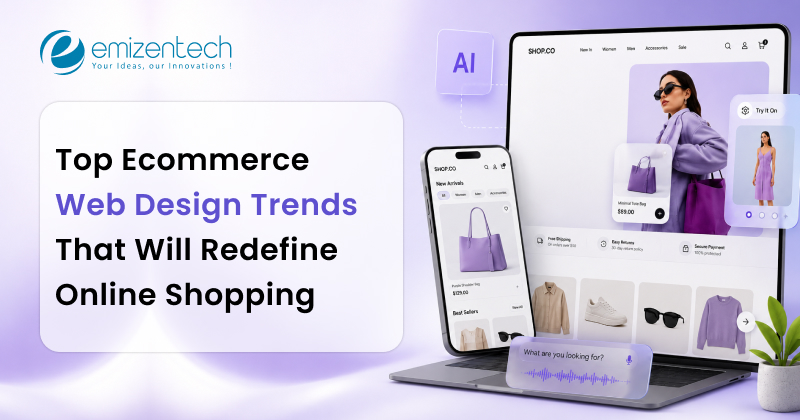
AI now drives dynamic layouts, personalized product recommendations, and real-time content updates designed for each visitor. This ecommerce web design trend creates a super relevant shopping experience that keeps users engaged and drives them further down the purchase funnel.
Immersive Visual Commerce (3D & AR)
3D product viewing and AR try-before-you-buy features are getting mainstream fast. These trends of ecommerce web design, and yes, they’re tied in closely to what’s coming in ecommerce overall, help people explore products digitally before they decide to buy.
Dark Mode & Bold Typography
Dark mode interfaces paired with high-contrast, oversized type are taking over a lot of design directions. This ecommerce web design trend brings a more refined look plus better accessibility, so brands can land a more recognizable look and feel.
One-Click and Frictionless Checkout
It is critical to simplify the purchasing process. Minimal checkout flows, autofill, and one-tap payment options are among the top trends of ecommerce web design, as they remove friction and reduce abandonment right at the most critical step.
Voice and Conversational UI
Voice search add-ons and AI chatbots are changing how users move through online stores. As part of broader web development innovation, conversational UI makes finding products quicker and clearer for today’s shoppers.
Ecommerce Web Design Trends with Real-World Examples
The most convincing proof of an ecommerce web design trend is seeing it implemented by successful brands. Here’s how industry leaders are putting these trends into action.
Amazon — AI Personalization at Scale
Amazon’s homepage is basically a tutorial in AI-driven ecommerce web design trends. Every recommendation, banner, and layout block updates on the fly, based on browsing history, location, and purchase behavior, which sets the gold standard for personalization.
IKEA — AR-Powered Product Visualization
IKEA’s app and website let shoppers place furniture virtually in their own spaces using AR. This ecommerce web design trend, closely tied with ecommerce mobile app design trends too, cuts down returns and increases buyer confidence before checkout.
Apple — Minimalist Design with High Visual Impact
Apple’s ecommerce pages lean on bold typography, a lot of white space, and that cinematic sort of product imagery. This refined ecommerce web design trend proves that less is more, because every single design element has a deliberate purpose, and it tends to make the product amplified.
Nike — Immersive Storytelling & Motion Design
Nike uses scroll-triggered animations and video-led product launches, so the whole thing is more like editorial pages than a simple transaction flow. As a web development benchmark, their site basically shows how storytelling can drive both emotion and conversion at the same time.
Shopify Stores — Frictionless Checkout UX
Shopify’s Shop Pay feature, which is adopted by thousands of merchants, is a clear example of the one-click checkout ecommerce web design trend. It also shows how smarter UX choices during the payment stage can directly turn into measurable revenue recovery.
How to Choose the Right Ecommerce Web Design Trends?
Not every trend works the same for every business, so here’s how to choose the best trends of ecommerce web design that actually match your business goals and audience.
Start with your target audience
Understand their devices, the way they browse, and what they expect before jumping into any ecommerce web design trend. Always make user-first choices; they tend to beat “trend-first” decisions and always outperform trend-chasing.
Audit your current design performance
Find the places where things fall apart most often—pages that bounce fast, shoppers who abandon carts, and session durations. The best trends of ecommerce web design should hit those exact weak points directly.
Evaluate technical feasibility
Some trends, like AR experiences or AI-based personalization, are not “plug and play” and might need real development work. So talk with an ecommerce app development team and assess what’s realistic for your budget and your timeline.
Prioritize mobile experience first
With mobile driving most traffic, always test every trend on smaller screens before you spend. If you want guidance, use ecommerce mobile app design trends as a related roadmap for mobile changes and not just as inspiration.
Test before you fully commit
Do A/B tests with trend-inspired changes rather than rebuilding everything at once. Small iterations based on actual data usually win over big redesigns.
Align with your brand identity
A trend can look amazing on a luxury fashion store, then feel off-brand for a budget retailer. The web design has to adapt trends so they fit your brand voice, not the other way around.
Keep performance as the non-negotiable
No design trend is worth slow loading times or broken layouts. Every update should be checked against Core Web Vitals so trends of ecommerce web design never cost speed.
Final Thoughts
The stores that win in 2026 won’t just sell awesome products but deliver amazing shopping experiences. Like AI personalization and that smoother checkout flow, the right ecommerce web design trends can change how customers find you, how they trust your brand, and how they actually buy.
Here’s the key to choosing trends that match your audience, your targets, and your technical bandwidth. Whether you’re doing a whole redesign or just small incremental updates, keeping up with web development best practices means your store never falls behind. Go with something simple first, test on a steady basis, and let the data, not vibes, steer your design evolution.
FAQs
Should every business follow all Ecommerce web design trends?
No, not every ecommerce web design trend fits every brand. Companies should check trends against their audience, budget, and goals, then select the trends of ecommerce web design that actually elevate their own user experience.
How do you implement AI-driven personalization in e-commerce design?
AI-driven personalization in ecommerce web design usually starts with plugging in things like recommendation engines, shifting content sections, and behavioral tracking. The newest trends of e-commerce web design often include real-time changes to layout based on user groups and purchase intent signals.
What are the latest checkout and navigation UX trends to stop cart abandonment?
Some of the strongest ecommerce web design trends for stopping cart abandonment include one-click checkout, sticky navigation bars, progress indicators, and guest checkout. These trends of ecommerce web design remove friction at the most critical decision-making moments in the purchase journey.
What is the biggest ecommerce web design trend right now?
AI-powered personalization is the top ecommerce web design trend right now. It helps stores provide tailored journeys at scale, so it ends up being the most meaningful ecommerce web design trend for boosting both engagement and conversion going into 2026.




 +1 (989) 535-9295
 info@emizentech.com
 emizentech


