
 Add us as a preferred source on Google
 The growing popularity of eCommerce is not a recent trend but has been on rise for the last few years. With increased demand for online shopping the mobile eCommerce market will reach $710.4 billion in 2025. Among the many platforms that have helped businesses embrace and expand their online presence, Adobe Commerce has emerged as a leading choice. It has played a significant role in enabling businesses to transition smoothly into fully integrated eCommerce operations.
Adobe Commerce, previously called Magento, is a top eCommerce platform that provides advanced tools for businesses to build and manage powerful online stores. While many businesses use its basic eCommerce features to handle their operations, they often overlook the platform’s broader benefits and advanced capabilities.
Adobe Commerce Cloud is a key part of Adobe Experience Cloud and offers powerful solutions to enhance your eCommerce strategy. This blog explores the main features of Adobe Commerce integration in eCommerce stores, its benefits, and the significant potential it holds for the future of eCommerce in 2025.
What is Adobe Commerce?

Originally known as Magento before Adobe acquired it in 2018, Adobe Commerce is now a leading eCommerce platform for brands and retailers. Built on Magento’s strong foundation, it stands out for providing feature-rich, omnichannel shopping experiences with excellent security, high performance, and the ability to grow with your business.
This platform enables the Adobe commerce developers to easily build online stores using a drag-and-drop tool, manage inventory efficiently, offer a smooth shopping experience across channels, and reach new markets in different locations.
Adobe Commerce enables businesses to deliver exceptional B2B shopping experiences right from the start. As a leader in enterprise marketing software, it also includes advanced marketing and analytics tools, offering valuable insights to make data-driven decisions and boost sales.
Reasons to Choose the Right eCommerce Platform
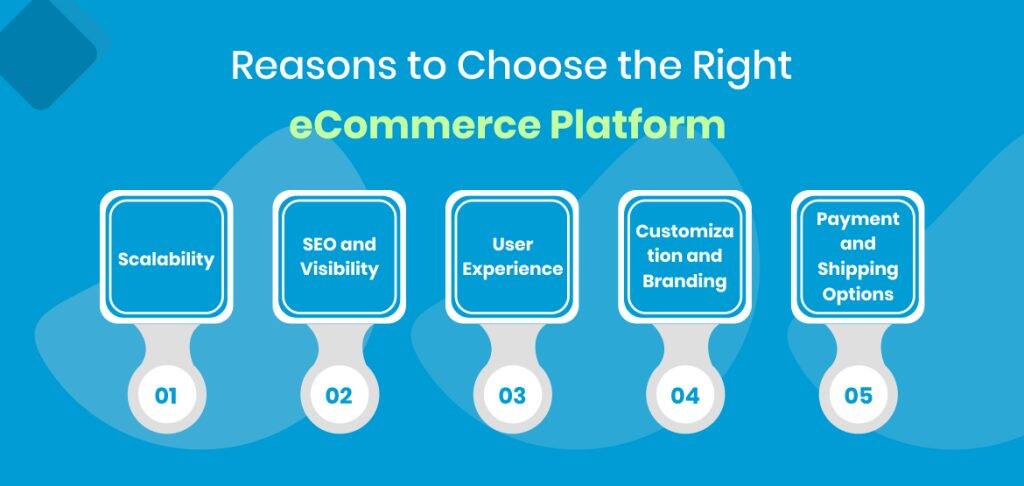
As an eCommerce business owner, choosing the right platform offers many benefits. In this section, we’ll explain why it’s important to pick the right eCommerce platform.
1. Scalability
As your business grows, your platform should be able to grow with it. The right platform can handle increased sales, traffic, and transactions without slowing down. Adobe Commerce for businesses offers excellent scalability, ensuring it can support your business growth over time.
2. Security and Compliance
Online security is crucial for shoppers. With the right platform, you won’t have to worry about it. A good eCommerce platform will protect customer information with encryption, ensure secure payment processing, and meet industry standards like PCI DSS. This keeps your store safe from cyber-attacks and helps build trust with customers.
3. SEO and Visibility
Choosing an SEO-friendly platform is key to improving your store’s visibility in search results. A good platform helps attract organic traffic and boosts your store’s ranking on search engines.
4. User Experience
The platform you choose affects the overall user experience for your customers. A well-designed, easy-to-use platform ensures smooth navigation, fast loading times, and a simple checkout process, which makes shopping easier and more enjoyable. This leads to higher customer satisfaction and better retention rates.
5. Customization and Branding
The right platform allows you to customize your store to match your brand’s identity. You can choose themes, layouts, and features that meet your customers’ needs and reflect your business image.
6. Payment and Shipping Options
The platform you choose should provide a variety of payment gateways and shipping options to suit your business needs. This flexibility allows customers to pick the most convenient way to pay and receive their orders. Offering multiple options ensures a smoother experience and helps meet different customer preferences.
Top Benefits of Adobe eCommerce for eCommerce Businesses
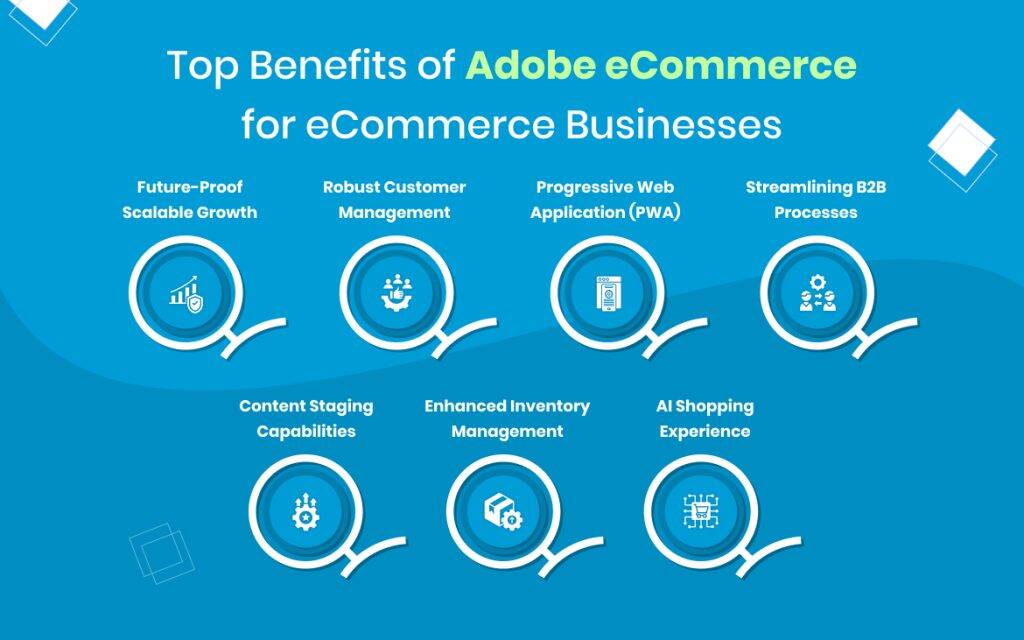
As we look ahead to the future of eCommerce in 2025, Adobe Commerce Cloud offers key benefits that will transform online businesses. Let’s explore how Adobe Commerce Cloud development can improve the efficiency of an online business, providing powerful tools and solutions for success in the evolving eCommerce landscape.
1. Future-Proof Scalable Growth
Every business aims to grow and boost revenue, but scalability challenges can hold them back. If you want rapid growth, Adobe Commerce offers a range of features that can easily adapt to your business’s size and needs, helping you scale without issues.
Adobe Commerce is designed to scale for both B2B and B2C eCommerce, providing an omni-channel experience for all customers. Its cloud-based architecture, with flexible headless and core commerce features, allows the platform to grow alongside your business.
With Adobe Commerce’s scalable growth capabilities, businesses can easily expand by adding new brands, creating stores for different regions, and offering personalized experiences across multiple channels to a global market.
2. Robust Customer Management
As businesses use Customer Relationship Management (CRM) tools, Adobe Commerce offers built-in features to manage customers effectively. For B2B sales, it’s crucial that Sales Development Representatives (SDRs) have easy access to accurate account information and a complete database of orders across all sales and fulfillment channels.
The benefits of Adobe Commerce in managing customer relationships help customer-focused teams quickly access the latest inventory and order information. This allows them to offer an exceptional experience. Adobe Commerce also provides powerful tools for managing customer accounts, such as tracking customers and visitors online, displaying dynamic information and offers for specific customers, grouping customers for targeted discounts, and more.
Adobe Commerce helps make customer interactions more efficient by centralizing customer information and providing various tools. Additionally, with Adobe’s Real-Time Customer Data Platform (Real-Time CDP), businesses can gather both anonymous and public customer data from different sources to build profiles and offer personalized experiences.
3. Progressive Web Application (PWA) Enabled Mobile Commerce
The mobile commerce market was valued at $620 billion in 2024, making it crucial for eCommerce businesses to focus on mobile-friendly solutions. A good eCommerce platform that supports Progressive Web Applications (PWAs) helps businesses tap into the growing mobile commerce market without the need to create a separate mobile app.
Adobe Commerce includes PWA features that provide smooth, app-like experiences and easy sales across different devices. With Adobe commerce tools, businesses can offer a seamless experience to customers, helping them reach more people and boost profits.
4. Streamlining B2B Processes
Most B2B businesses are already going digital, and for traditional offline B2B companies to survive, they need to make the shift to online commerce. With the global B2B eCommerce market already worth over $7900 billion, B2C businesses should consider expanding into the B2B market to increase their profits.
Adobe Commerce’s B2B features are built to support businesses with complex structures and multiple users, each having different roles and permissions. It allows companies to create corporate accounts that can include several buyers from the same business, making it easier to manage customer relationships.
Adobe Commerce also offers benefits for B2B workflows, such as creating shared catalogs with custom prices for different companies. It includes features like quote negotiations for approved customers, automated purchase order approvals for authorized companies, and more.
5. Content Staging Capabilities
Content staging allows users to create or edit web pages in a separate environment before making them live on the site. Since most eCommerce businesses depend on their online store to boost sales, it’s important to make sure everything works and looks good before showing it to customers.
Adobe Commerce offers in-depth content staging features to its business owners, allowing them to easily create, preview, improve, and plan a diverse range of content for their online store. With the Staging Dashboard, owners can see and manage planned changes over a timeframe. The timeline can be used to view earlier versions of content and make drafts of it for later use.
Multiple versions of the same baseline content can also be scheduled to bring in a fresh experience in a future update. Furthermore, businesses can schedule changes to content during a specified time, which then reverts back to the earlier version when the timer expires. This is particularly useful for sales sessions.
6. Enhanced Inventory Management
Effective inventory management is key to a company’s success. For eCommerce companies, it is equally important to ensure that inventory management is cost-effective, efficient, and precise. A proper system in place will also help in forecasting inventory and preparing for the possibility of unexpected supply chain issues that could arise, like delayed inventory from suppliers or unforeseen product sales.
Merchants with one store or multiple warehouses can use Adobe Commerce’s inventory management tools to track sales quantities and manage shipments for fulfilling orders across different channels.
The platform’s inventory management features provide real-time inventory overviews and centralized order data, giving customers accurate inventory-for-sale prices and providing shipping advice based on distance or priority. Adobe commerce also allows companies to use a single warehouse or extensive shipping networks to provide greater capacity.
7. AI Shopping Experience
AI, or Artificial Intelligence, is now a popular tool used in many industries. While using AI to speed up work processes or analyze data for targeted marketing is not a new idea, many eCommerce platforms still don’t offer AI features to help users achieve business success. Adobe Commerce stands out by offering these AI-powered tools, which help businesses grow and reach their goals more efficiently.
Adobe Commerce offers intelligent and specific product recommendations and live search results that help provide relevant and personalized shopping experiences to increase conversion and create the possibility of up-selling and cross-selling. With AI-powered search tools for intelligent product recommendations, Adobe Commerce tracks and analyses every customer interaction with the eCommerce store and uses it to boost growth by using data for businesses and increasing revenue generation.
How Adobe Commerce will Shape the Future of eCommerce?
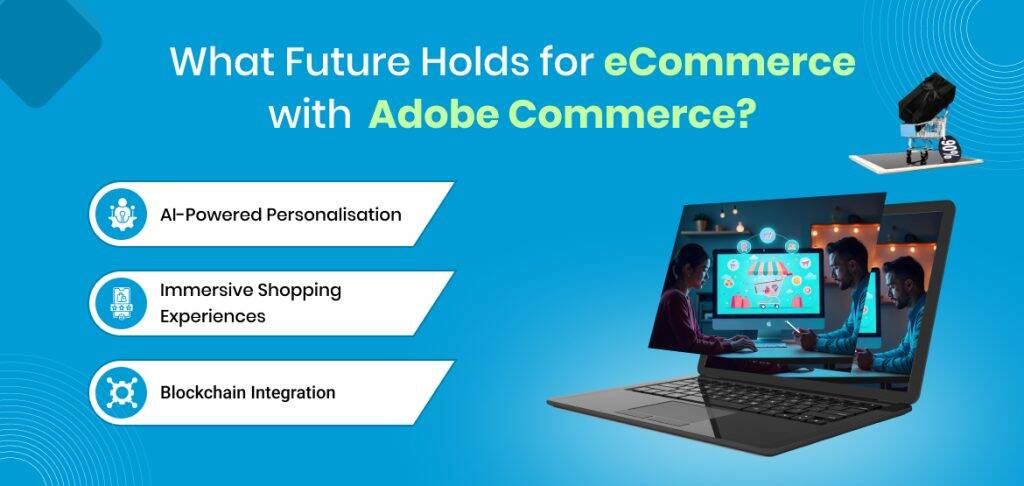
Adobe Commerce is a modern platform that incorporates the latest AI and 3D technologies to enhance flexibility and customization, delivering better business outcomes. With increased use of Adobe commerce cloud solutions, the future of eCommerce will evolve rapidly, offering innovative solutions that empower businesses to adapt, scale, and succeed in the eCommerce landscape.
1. AI-Powered Personalisation
Adobe Commerce uses AI to personalize online shopping experiences. By leveraging AI, Adobe Commerce delivers tailored shopping experiences that boost customer engagement and loyalty. AI in eCommerce analyzes customer data to offer personalized product recommendations, customized marketing messages, and dynamic pricing, ensuring each customer receives the best possible shopping experience.
2. Immersive Shopping Experiences
Adobe Commerce is poised to lead in creating immersive and interactive shopping experiences, combining online and offline shopping. By using advanced technologies like augmented reality (AR) and virtual reality (VR), it can offer customers a more engaging and realistic shopping experience. For example, it could allow virtual try-ons and 3D product visualizations, which will enhance the overall online shopping experience.
3. Blockchain Integration for Enhanced Security
As cybercrime continues to rise, Adobe Commerce is likely to adopt blockchain technology to improve online transaction security. Blockchain’s decentralized system offers a secure, transparent way to record transactions, protecting customers’ sensitive information and reducing fraud. This integration will help both B2B businesses and consumers feel more confident about online transactions.
Top Companies That Prefer Adobe Commerce to Grow Their Business
Many leading retailers are choosing Adobe Commerce to redesign and enhance their online stores. These businesses are embracing the future of eCommerce with Adobe Commerce, experiencing significant improvements in customer experience, scalability, and business growth.
1. Killer Ink
Killer Ink, a leading European tattoo equipment manufacturer, upgraded from Magento 1 to Adobe Commerce to enhance their online store’s performance and reach international markets.
With this upgrade, Killer Ink can create promotions based on a customer’s location and offer seven payment options. Their online store is connected to carriers like UPS and Royal Mail and can handle multiple inventory systems.
2. Shoebacca
Shoebacca, an American online footwear retailer, needed a platform that could manage sales, inventory, pricing, shipping, and personalization. Adobe Commerce provided a responsive design, making the website accessible on any device. As a result, their average order value (AOV) grew by 50%, and online traffic and sales increased by 25%.
Here’s how Thomas Finney, the CTO of Shoebacca, explained the role of Adobe Commerce in improving his online business: “Adobe Commerce was a key factor in our 15x revenue growth in just three years.”
3. Rossignol
Rossignol, a French company that makes snowboarding and skiing equipment, used Adobe Commerce to bring together its different brands with various backend systems. When they tried this for their mountain bike line, they sold 25% more items online than expected.
After the successful launch, Rossignol used Adobe Commerce to grow its international business. They used Owebia to set up shipping rules for each country and Hipay to manage payments. As a result, the company saw a 70% increase in conversions.
4. Byredo
A premium fragrance manufacturer and retailer located in Stockholm switched to Magento in the hope of enhancing its content and improving customer engagement. In the wake of this switch, the company increased its conversion ratio by 30% and its AOV by 160%.
5. Marc Fisher Footwear
Marc Fisher Footwear, an American shoe company, uses Adobe Commerce to manage three online stores. These stores include their own, along with two brands they recently bought, Nine West and Easy Spirit.
After moving all three stores to one platform, the business experienced a 10% increase in revenue and a 24% boost in conversions. They also cut the time spent on front-end updates by 70%.
Reasons to Choose EmizenTech for Adobe eCommerce Implementation
Adobe Commerce Cloud is a great choice for businesses looking to build or improve their website. Its flexibility, scalability, advanced personalization, and easy integration with other Adobe products make it a powerful tool for online shopping. With Adobe Commerce development services, companies can meet the demands of today’s online market and adapt to the future of eCommerce.
EmizenTech is a skilled Adobe Commerce development agency that can help you achieve the full potential of your online business. We offer comprehensive services to meet all your Adobe Commerce development needs, ensuring your business stays competitive in the digital market.
The Key Takeaway
Adobe Commerce offers unparalleled opportunities for businesses to innovate and stay ahead in the future of eCommerce. With its advanced features, scalability, and integration of cutting-edge technologies, Adobe Commerce will continue to shape the eCommerce landscape in 2025 and beyond.
Companies looking to grow their online presence and expand their stores can greatly benefit from Adobe Commerce’s built-in B2B features, mobile commerce tools, and AI capabilities. These tools help businesses achieve their goals and succeed in the competitive eCommerce market.
With Adobe Commerce integration, businesses can unlock the full potential of eCommerce marketplace development and grow their company. Its wide range of features and user-friendly design make it a great choice for businesses aiming to connect with a wider customer base.
FAQs
What is Adobe Commerce Cloud, and how does it function?
Adobe Commerce Cloud, a part of Adobe Experience Cloud, is a comprehensive e-commerce platform. It merges Magento's open-source flexibility with Adobe's powerful tools, offering a scalable and personalized shopping experience for businesses.
What sets Adobe Commerce Cloud apart from traditional eCommerce platforms?
Adobe Commerce Cloud stands out due to its scalability, flexibility, multi-channel support, and seamless integration with Adobe's suite of tools, making it ideal for both B2B and B2C businesses.
What are the standout features of Adobe Commerce Cloud?
Adobe Commerce Cloud offers flexible and scalable platform architectures, multi-channel shopping experiences, both open-source and commerce-specific versions, AI-driven personalization, and seamless integration with Adobe software.
Can Adobe Commerce Cloud efficiently manage global eCommerce operations?
Yes, Adobe Commerce Cloud is designed to support global commerce. It offers multi-currency, multi-language, and tax configuration features, which are essential for expanding into international markets.
Why should businesses select Adobe Commerce Cloud for their eCommerce needs?
Adobe Commerce Cloud combines Magento's flexibility with Adobe's powerful tools, making it an ideal choice for businesses looking to build innovative, scalable, and personalized e-commerce solutions.



 +1 (989) 535-9295
 info@emizentech.com
 emizentech


