
 Add us as a preferred source on Google
 Food delivery apps have integrated into our daily lives, primarily due to the convenience they offer. In today’s fast-paced world, where time is a valuable asset, food delivery app development services provide a practical solution by eliminating the need to cook or travel to a restaurant. With just a few clicks on a phone, we can choose from many restaurants and types of food.
In the past, some restaurants did offer food delivery, but it was not as smooth or fast as it is now. People had to call the restaurant, and sometimes the menu was not clear or updated. Now, with food delivery apps, everything is simple. You can see the full menu, read reviews, place your order, pay online, and even track your delivery.
For restaurants and food businesses, these apps offer a powerful tool to reach more customers by combining digital innovation with traditional marketing strategies. As the demand for convenience continues to grow, many businesses are considering developing their food delivery apps to stay competitive and meet evolving customer expectations. This shift represents a major transformation in how food services are delivered.
In this blog, we will explore how to develop a food delivery app for your business.
What Are the Food Delivery Apps?
Food delivery apps are mobile applications that allow people to use their smartphones or other devices to order food online from local restaurants. Once they place the order, the food is delivered to their doorstep! This means you can save time going to a restaurant and getting the desired food.
These apps make ordering food easy and convenient. They usually have menus from multiple restaurants, so you can browse numerous options before placing an order. You can also pay online for your food through the app, which makes the whole process even more seamless.
The best part about food delivery apps is that you can track your order, so you know exactly when your food will arrive. These apps often have other features, like user reviews and ratings, special deals and discounts, and the ability to save your favorite orders or restaurants for future use.
What Is Food Delivery App Development?
Food delivery app development is the process of creating a food delivery application that includes careful planning and consideration of essential features, functionality, and the latest technology and trends.
Are you planning to build a food delivery app to expand your food business and increase your brand recognition? Connect with a food app development company and get guidance and essential resources for a smooth development process and seamless product run.
Why Invest in a Food Delivery App Development?
Can food delivery apps be profitable? It’s a general question that might be hitting your mind. Here, we will help with the ultimate answer to this. While opting for the convenient and quickest ways to get food delivered at home while lounging on your couch, you can anticipate that the never-falling boom of food delivery apps will not stop now.
Let’s explore some facts and figures about the food delivery app market:
- The food delivery apps market size was $160 billion in 2024. It is likely to grow to $320 billion by 2033, showing an annual growth rate of 8.5% from 2026 until 2033.
- 60% of U.S. consumers use online food delivery regularly. The number increases to 64% among millennials.
- A further 53% of respondents think that food delivery, as well as takeaway, is essential to their daily lives. This number rises to 64 percent when focusing only on millennials within the poll.
- Revenues from the online food delivery market are forecast to grow to $1.40 trillion by 2025.
- Around the globe, 2.5 billion people are likely to get meals delivered by 2027, 1.6 billion of them from Asia.
- Ghost kitchens could be worth 1 trillion dollars by 2030.
Benefits Of Developing a Food Delivery App – From a Business Perspective
How to make a food delivery app? Business owners looking to create a food delivery app should know how they would benefit.
Here, we will go through the top advantages businesses can reap:
1. Improved Operational Efficiency
Restaurants that usually get overwhelmed with food orders find it challenging to manage, which impacts other business processes.
An on-demand food delivery app development can help with streamlined order management by automating order transmission to the kitchen directly.
2. Increased Customer Experience
Customers always cherish services that provide them ease, comfort, and satisfaction in meeting their requirements.
Such apps can help food delivery businesses ease their consumers with quick and quality meal delivery services that boost their experience and make them come repeatedly.
3. Increased Sales
Physical restaurants, cuisines, and other eateries cover local customers, which limits sales and, thereby, revenue.
Creating a food delivery mobile app helps businesses reach a wider audience, improve brand loyalty, and boost sales.
4. Increased Visibility
Every offline business venture is reached by local or nearby customers only. This means it limits the business visibility among localists.
However, with the food delivery app development services, one can connect with online customers wherever they are, at any time, increasing the visibility of their businesses.
5. Streamlined Operations
Running restaurants following customary ways can make business process management hectic, be it order processing, assigning, scheduling, delivery management, or more.
Choosing online food delivery app development like postmates can help businesses manage seamless operations by automating the jobs. Besides, making things well-managed saves time and effort for other valuable business jobs.
Types Of Food Delivery Apps You Can Develop
Based on the trending food delivery startups, some major types of food delivery apps are in demand. Here, we will talk about a few with an idea of how they work to help you make the right decision to build a food delivery app for your business.
1. Online Food Delivery App
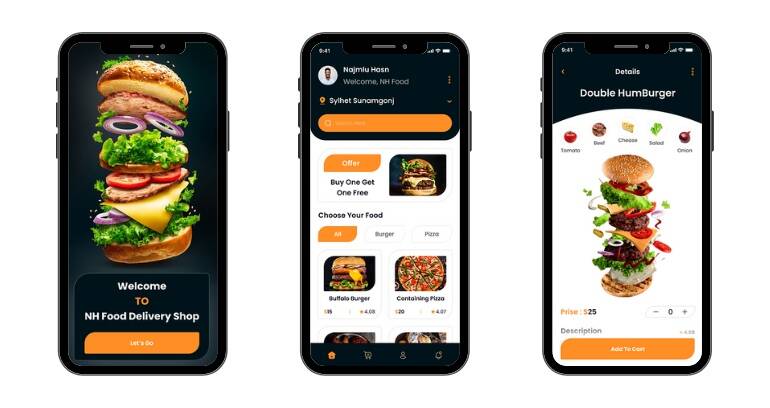
The food delivery platform that drives more orders to their cuisines and restaurants in the form of home delivery and takeaway is a food delivery app. Using the fleet of their hired drivers, the restaurants use their food order and delivery apps for successful meal deliveries. The detailed work will be described later in the blog.
Working of an Online Food Delivery App
The customers explore the listed food on the apps and order per their choice. After the order placement, the restaurant sends an order confirmation notification to the customer. Ahead, while the order is being processed, the restaurant notifies the delivery network about the food status. When the order is ready, the nearest food delivery personnel ppickit up and dedelivert to the predefined location.
Examples: Postmates, DoorDash, and Grubhub
2. Campus Food Ordering App
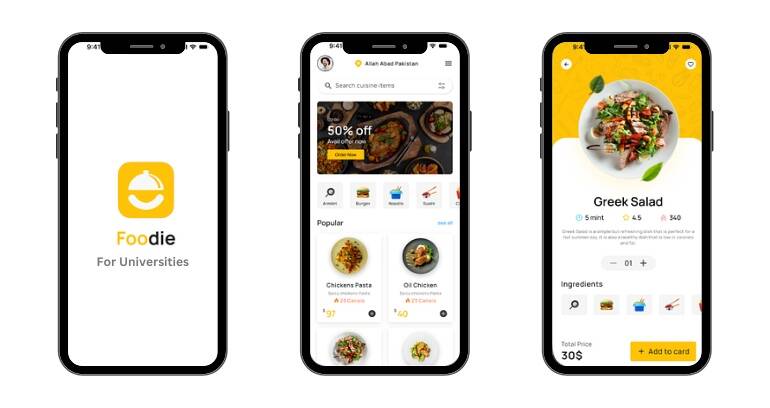
Such a food delivery mobile app facilitates staff, students, and visitors of a particular campus to order food from campus eateries. Such apps help food management brands and franchisees regulate their digital experience and connect directly with customers.
Working of Campus Food Ordering App
All-in-one campus meal delivery solution empowers students within the campus of the college, school, or other educational institutions.
First, the students order food from the campus food delivery app, and the notification is sent tothe campus restaurants. They fulfill the order, and further, the campus-based delivery agents pick and deliver the food to students anywhere within the campus.
Examples: Zingo: Food Delivery, GrubHub Campus Dining, and Boost.
3. Intercity Food Delivery App
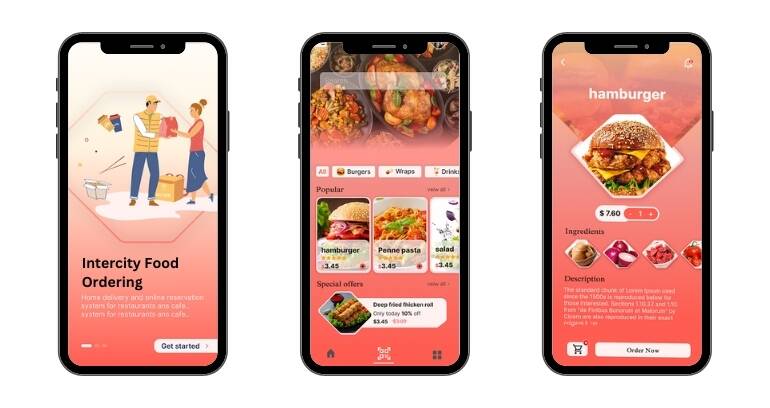
Acting as an intermediary between restaurants and customers, an intercity food delivery app allows you to order food from different cities and get it to your door. Yes, with such sort of apps, we can avail of intercity food delivery. So, no more craving for the food from another city, when you can get it in your place. Improved food storage and packaging following the cold chain mechanism may add to the cost, but are the most preferred ways to keep and deliver food with freshness intact. It maintains food at a certain temperature, retaining the moisture that’s responsible for the unharmed food taste.
Working of an Intercity Food Delivery App
Using the app, the user orders food from different cities, regardless of the location. The customers pay more than the actual price, obviously an extra amount for the extra comfort, and get the order delivered to their city. It may take a few days, but the food that’s served is of top quality with a well-maintained taste.
Examples: JustMyRoots and Tastes2Plate
4. Travel Food Delivery App
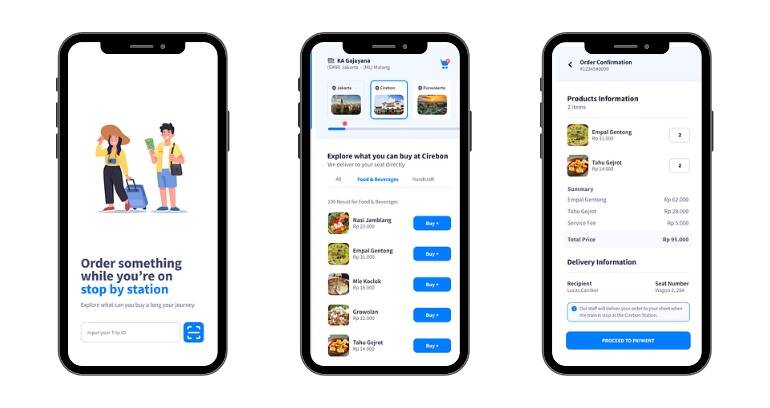
Such an app is the ultimate solution for ordering tasty food during train journeys. Using this app, you can order food while on the train and get the delivery to your train compartment.
Working of Travel Food Delivery App
On the app, the users search for restaurants, check the food menu, and place the order. The restaurants accept the orders, prepare them, and notify the courier partner who picks them up and delivers them to the customer right in his train compartment.
Examples: IRCTC eCatering, RailRestro, Eatigo, and
How Does A Food Delivery Mobile App Work?
Food delivery app development services are strengthened by the use of trending technologies. Their seamless operation is due to the algorithms they use.
Regarding food delivery apps, the algorithms opt for the best possible options that can match customers’ food delivery needs. Let’s check each separately:
1. Personalization
Considering the user’s past orders, locations, and preferences, the personalization algorithm of the app showcases the most relevant options.
2. Distance
Using the Dijkstra algorithm, most food delivery apps find the closest route between the restaurants and customers to promise the shortest delivery times and increased convenience.
3. Data
Using the data of restaurants, the app assumes their order volumes and determines whether they can deliver orders within the prescribed delivery time. Ahead, the app lowers the ranking of such eateries in the search results, allowing other restaurants to take the orders.
4. Popularity
The popularity algorithm chooses the restaurants with the highest ratings, giving them greater visibility on the application, improving the popularity factor.
Food Delivery Business Models To Choose
Choosing the most suitable business model for your food delivery business is essential for ultimate success.
Let’s review the top food delivery models you can pick for your business.
1. Aggregate-Based Model
Usually opted for by varied aggregators, this business model includes three key players:
- Customers
- Restaurants
- Delivery Network (optional)
Working
The platform acts as an intermediary between customers looking to order food and restaurants providing food delivery services. Ahead, customers browse restaurants and food, and place orders using the platform. Then, they pay online, and the platform sends the orders to the restaurant. The restaurant prepares the food and either uses its delivery network for order delivery or delivers itself.
Revenue Streams
- Delivery Fees
- Subscription Services
- Commissions
Examples: User Eats, DoorDash, and Grubhub.
2. Dedicated Model
In this model, a single eatery or restaurant operates its food delivery service, and only two players participate:
- Customers
- Restaurants
Working
Customers use the food delivery app to place their orders directly with the restaurant. The restaurant is responsible for preparing the food, ensuring its quality, and delivering it to its customers.
3. Cloud Kitchen
Also known as a ghost kitchen or virtual kitchen, a cloud kitchen is a model that prepares food for takeout or delivery.
Working
Cloud kitchens provide no facility for dine-in, and receive online orders from food aggregator platforms.
Multiple virtual brands can operate single cloud kitchens under different names and menus, meeting diverse customer choices and maximizing kitchen usage.
Revenue Streams
- Delivery Fees
- Franchise Fees
- Food and Beverage Sales
- Subscription Services
- Commission Model
4. Food Chain Stores Model
Also acknowledged as the Vertically Integrated Model, the Food Chain Stores Model is a multi-store food business structure where a brand regulates the complete supply chain of its products, from production to distribution and, finally, sale to customers.
Working
The company may own a manufacturing unit or contract with independent farmers. It processes and packages finished food. Owing to a vast distribution network, the company delivers the food to retail stores, where consumers buy it.
Examples: Subway, McDonald’s, and KFC.
8 Key Steps to Follow for Food Delivery App Development
You can grab a huge market share and boost your business’s revenue by choosing to develop a food delivery app like Postmates or Doordash.
Follow the steps below to develop your app:
1. Market Research
The first step to building a food delivery app is conducting market research in which you understand your target audience and the top apps that are ruling. Also, aim at the issues their customers are facing, focusing on which you can appear with a unique product in the market.
2. Choose a Suitable Business Model
Based on your app’s objective, pick a business model (explained above) and start with the food delivery app development services.
Select Features and Functionalities to Include: Now, choose the features and functionalities you want to incorporate in your app, making it valuable and letting it attain the pre-decided goals.
Pick Revenue Models: Make your app earn profit by picking the revenue models that suit your business objectives and target audience.
3. Choose a reliable Mobile App Development Company
You may be tech-savvy and hold the caliber to develop a food delivery app yourself. But doing this while running a business would be quite challenging. So, hire a reliable mobile app development company with an impressive portfolio to complete your app development project.
4. Design the App
Aiming at essential designing factors, like visual aesthetics, seamless navigation, user-friendliness, and accessibility, create an engaging UI/UX design for your food delivery app.
5. Develop the App
Now, perform coding per the plan and make your app a reality, including decided features and with expected quality.
6. Test the App
Now, as your app is developed, it’s time to test it, locate the bugs, errors, or issues, and fix them.
7. Deploy the App
Now, deploy the app to the app stores and make it available for the end users.
8. Ongoing Maintenance and Support
The online meal delivery app development is not enough to thrive in the market; constant support and maintenance are necessary. It takes care of regular upgrades and maintenance and makes the app match dynamic market trends.
Potential Challenges of Developing a Food Delivery App with Solutions
While developing a food delivery app, you may get flooded with varied challenges. Here, we will talk about some solutions for your ease.
Challenge 1: Increasing Competition
With the emerging new players, the food delivery market is becoming more competitive, making it challenging for food businesses to thrive.
Solution:
You can aim at your niche market, like particular dietary needs, delivery times, or cuisines. For that, implement innovative features and functionalities and stay ahead of the curve with improved user experience and robust brand identity.
Challenge 2: Logistics and Delivery Management
Businesses can find it complex to manage large restaurant networks efficiently, and delivery drivers who can make timely deliveries are in high demand.
Solution:
Investment in robust logistics tools and technologies, partnering with reliable delivery partners, and offering flexible delivery modes can help with the best quality and speedy food delivery.
Challenge 3: User Acquisition and Retention
In this crowded market, attracting and retaining users can be expensive and tricky.
Solution:
Opt for effective marketing strategies, providing promotional offers, incentives, and excellent customer service for constant improvement.
Challenge 4: Shortest Delivery and Time Estimates
Your app should offer convenience to users with the fastest delivery and accurate time estimates. Because of the growing on-road traffic, giving time estimates to customers and delivering orders quickly becomes challenging.
Solution:
Like other top food delivery apps, you can opt for the Dijkstra algorithm. Also known as a single-source shortest-path algorithm, Dijkstra helps find the shortest route to the delivery location. Also, it offers service time and high-precision delivery estimates.
Challenge 5: Payment Processing and Security
Adhering to the relevant regulations while ensuring reliable and secure payment processing is crucial.
Solution:
Partnering with a trusted payment gateway, seamless implementation of robust security measures, and maintaining transparency about data privacy and security practices can help.
Must-Have Features For Food Delivery App Development
After knowing the challenges and solutions to overcome, let’s proceed with selecting essential features and functionalities that you should include in your food delivery app development solution.
We will segregate each feature and functionality per the panels/users of the app.
1. Customer App
| Feature | Description |
|---|---|
| User Registration & Login | Create a new account or log into an existing one using existing credentials to access the app’s features and functionalities. |
| Menu Customization & Item Selection | Select specific menu items, modify quantities, and customize options, such as toppings, sizes, or particular instructions. |
| Browse/Search Restaurants & Menus | Search for restaurants or eateries by type of cuisine, location, or specific keywords, and analyze their menus with descriptions and prices. |
| Multiple Payment Options | Pay for orders securely using diverse modes, like credit cards, integrated online payment platforms, debit cards, or digital wallets. |
| Order Tracking | Track the order’s progress, from confirmation to preparation and estimated delivery time. |
| Order History & Reordering | Easily view past orders, reorder frequently the chosen items, and manage past order details. |
| Ratings & Reviews | Read and leave reviews and ratings of experiences with restaurants to help make better decisions. |
| Customer Support/Chat Feature | Access support services via chat functionality for complaints, inquiries, or assistance with app usage. |
| Push Notifications for Order Updates | Get notifications about order confirmation, preparation status, and estimated delivery time. |
| Loyalty Programs & Discounts | Participate in loyalty programs to redeem rewards, earn points, and enjoy exclusive discounts on future orders. |
2. Delivery Agent App
| Feature | Description |
|---|---|
| Profile Creation & Verification | Drivers can create a profile, upload required documents, and go through the profile identification for security purposes. |
| Order Acceptance & Management | Allows drivers to accept or decline delivery requests, view order details, and perform their workload management. |
| GPS Tracking | Facilitates location tracking and navigation recommendations to optimize delivery routes and provide efficient travel. |
| In-App Messaging | Permits seamless communication between drivers and customers for delivery updates, order clarification, or any delivery-relevant inquiries. |
| Earnings Tracking & Reports | Allows drivers a view of their earnings, access to detailed reports on completed deliveries, and their overall income tracking. |
| Delivery History & Performance Metrics | Gives drivers an overview of their past deliveries, including customer ratings, delivery times, and other performance metrics. |
| Availability Settings | Facilitates drivers to set their availability for deliveries, handle their operations when they work, and manage their schedules. |
| Support for Multiple Deliveries | Let drivers simultaneously accept and manage multiple delivery requests, optimizing delivery routes and maximizing their earnings potential. |
| Route Optimization | Suggests drivers optimized routes based on distance, traffic conditions, and numerous delivery stops, saving fuel and time. |
| Push Notifications | Notify drivers about new order requests, updates on current deliveries, and other crucial alerts. |
3. Restaurant Panel
| Feature | Description |
|---|---|
| Menu Management & Customization | Restaurants can manage their menus, including adding, removing, and editing items, specifying prices, and managing availability. |
| Order Management & Status Updates | Provide restaurants and customers with order tracking and status updates. |
| Order Alerts | Notify users relevant to their order status via push notifications or emails. |
| Table Reservation System (if applicable) | Let users book tables at restaurants directly using the app (applicable for dine-in options). |
| Integration with POS Systems | Integrate the restaurant with point-of-sale systems for seamless data synchronization and order processing. |
| Customer Feedback Management | Accumulate, analyze, and reply to customer feedback to improve the user experience. |
| Sales Reports & Analytics | Offer restaurants with elaborate sales reports and analytics for performance tracking and identifying areas for improvement. |
| Inventory Management | Help restaurants with inventory level management and get alerts when restocking is required. |
| Promotions & Discounts Setup | Permits restaurants to create and manage various discounts and promotions to attract customers. |
| Customer Database Management | Securely store and manage customer data, permitting personalized marketing and targeted promotions. |
4. Admin Dashboard
| Feature | Description |
|---|---|
| User Management | Manage varied user groups of delivery agents, customers, and restaurants, including login, registration, profile management, and access control functionalities. |
| Dashboard Analytics & Reporting | Using dashboards and reports offers data-driven insights on deliveries, orders, revenue, performance metrics, and user activity. |
| Order Monitoring & Tracking | Allow tracking of orders, permitting customers to view delivery progress, order status, and estimated arrival time. |
| Commission Management | Manage deductions, commission calculations, and payouts for restaurants and delivery agents based on predefined rules and agreements. |
| Content Management System (CMS) | Permit administrators to manage app content, like text, menus, images, and promotional materials. |
| Feedback & Dispute Resolution System | Create a system for users to raise complaints, submit feedback, and accurately resolve disputes through dedicated channels. |
| Push Notifications Management | Manage to send push notifications to targeted customers, restaurants, and delivery agents for promotions, order updates, and other relevant information. |
| Performance Monitoring & KPI Tracking | Track key performance indicators (KPIs), such as delivery times, order completion rates, app usage metrics, and customer satisfaction, to assess complete app performance. |
| System Settings & Configurations | Enable administrators to configure diverse app settings, including currency settings, notification preferences, location management, and other functionalities. |
| Security & Compliance Features | Implement robust security measures for financial information, user data, and system integrity, assuring compliance with appropriate regulations. |
Advanced Features To Consider While Developing A Food Delivery App
Integrating advanced features can significantly enhance user experience and operational efficiency during food delivery app development services. Here are some advanced features to consider:
1. Floating Window
When placing orders, consumers usually close the app window to switch to other tasks on their digital devices. They must regularly open and close their food delivery app’s window to check the order status, which can be annoying while they are doing something more important. Integrating Floating Window displays can improve customer experience by displaying a floating message on their device, holding the tracking of their order.
2. Personalize Recommendations
Customers always crave to feel more valuable, and personalization is better for them. By analyzing their past orders and other relevant details, you can better understand their favorite cuisine, the price range they look for, and their preferences. You can also customize their feeds and interface, increasing retention, improving brand reputation, and boosting revenue.
3. Coupons for Delayed Delivery
Be it a token of appreciation or a heartfelt apology for delayed delivery, many food delivery apps provide special discounts, offers, and coupons to their consumers that free up word of mouth, raise brand awareness, and drive new customers.
Advancements in Food Delivery App Development Landscape
Food delivery businesses are no longer dependent on labor. They must match the latest trends and make online food delivery reliable and quick. Some of the latest advancements that can be implemented while developing a food delivery app are listed here.
1. Drone Delivery
Imagine a drone flying to your home to deliver food and other essentials. Yes, it’s possible, and in fact, in operations by various global brands.
Drone delivery is acknowledged as a fantastic way to deliver food in less time and avoid getting stuck in heavy traffic. Firms can opt for this food delivery trend to grow faster and stay ahead of the pack.
Example: Flytrax
2. AI and ML Integration
Are you wondering how AI and ML can be used in food delivery apps?
AI and ML integration in food delivery apps address various issues businesses find challenging.
Benefits of Integrating AI and ML in Food Delivery Apps
- Streamline Operations
- Personalized Recommendations
- Improve Customer Experience
- Order Processing
- Food Safety
Example: Grubhub (to offer a seamless experience for restaurants and guests) and Uber Eats (To improve dish quality and restaurant recommendations).
3. Sustainability Initiatives
Today, people prefer brands that perform as expected while aiming for sustainability.
You can consider eco-friendly packaging solutions for your food delivery app. Like, reusable bags, bottles, composable containers, and more can promote sustainability objectives. Besides, supporting carbon footprint evaluation and food waste management by taking waste food and disposing of it safely can encourage environment-friendly choices.
Example: Green Chef
4. Curbside Pickup/Takeaway
One more food delivery trend, curbside pickup is a growing offering by food delivery apps that allow consumers to pick up their orders from specific restaurants to avoid waiting for delays and get fast, safe, and convenient food delivery.
Example: Postmates
5. Point-of-Sale
Revolutionizing food ordering via POS can help streamline off-premise orders and let the staff quickly focus on food preparation and meeting deliveries.
Examples: Grubhub, Doordash, and Uber Eats
Top Players In The Food Market
Owing to the increasing popularity of metropolitan culture, on-demand food delivery apps have become mainstream. Currently, the food delivery industry is thickly populated by some prominent names that allow customers to order their favorite food anytime and anywhere. Some of the leading food delivery mobile apps that are leading the chart so far include:
1. Postmates
Postmates was launched in 2011; with its 24/7 availability, customers can access their essentials anytime, anywhere. After merging with Uber Eats in 2020 and officially announcing the merger in June 2021, it expanded beyond food to offer groceries, flowers, and thoughtful gifts. Postmates is a reliable platform connecting customers, independent workers, and store personnel, ensuring high-quality delivery services without compromises. It’s among the top quick delivery apps, providing exceptional service to meet everyone’s needs.
Unique Selling Proposition of Postmates
- A broad range of businesses, including grocery stores, restaurants, convenience stores, etc.
- Aims at on-demand delivery.
2. Grubhub
Grubhub is a prominent player in the food delivery market. With its user-friendly interface and extensive restaurant network, Grubhub offers a seamless experience for users to explore and order from a wide variety of local eateries. What sets Grubhub apart is its commitment to customer satisfaction, ensuring timely deliveries and personalized recommendations, making it a go-to choice for food enthusiasts seeking convenience and quality.
Unique Selling Proposition of Grubhub
- Lists a large network of restaurants with varied culinary options.
- Features exclusive menu items and deals.
- Conduct a rewards program.
3. DoorDash

DoorDash is an on-demand food delivery platform connecting customers with local restaurants and drivers. Founded in 2013, it offers a mobile app and website for browsing menus, placing orders, and tracking deliveries. With a wide range of restaurant partnerships, DoorDash delivers fresh meals to customers’ doorsteps. It operates in multiple countries and has expanded its services to include DashPass and partnerships with grocery and convenience stores. One of the standout features of DoorDash is its ability to schedule deliveries, You have the convenience of ordering in advance and choosing a specific delivery time that works best for you.
Unique Selling Proposition of DoorDash
- DashPass Subscription
- Competitive Pricing
- Prioritizes driver well-being
4. Just Eat
One of the leading global online food delivery marketplaces, Just Eat, is connecting consumers with 699,000+ partners in 20 countries. It uses a hybrid model that ensures its consumers have various options (partners) to order from. Consumers order via their mobile app and website. Their chief revenue stream comes from charging an amount from their partners, and others come from online payment services, promoted placement, and sales of merchandise and packaging.
Unique Selling Proposition of Just Eat
- Popular in European markets
- Target independent restaurants
- Aim at Sustainability
5. Deliveroo

Deliveroo runs a hyperlocal three-sided marketplace that connects local restaurants and grocers, consumers, and riders to meet orders in under 30 minutes. By providing reliable and fast delivery that consumers can easily track online, Deliveroo has expanded rapidly. Now, the company operates in 10 markets globally.
Unique Selling Proposition of Deliveroo
- Aim at Technological Innovation
- Collaboration with High-End Restaurants and Chefs
- Fast Delivery Times
Tech Stack Required for a Food Delivery App Development
Developing a food delivery app requires a well-thought-out tech stack to ensure the app is scalable, secure, and provides a seamless user experience. Here’s a comprehensive tech stack for a food delivery app development:
| Category | Technologies | Description |
|---|---|---|
| Front-End Development | Android SDK, iOS SDK (Native Development), React Native, Flutter (Cross-platform Development), React, SwiftUI (UI Frameworks) | Offer optimal performance and user experience, faster development for multiple platforms, and create user-friendly and visually appealing interfaces. |
| Back-End Development | Node.js, Python, and Java | Node.js is best for scalability and capabilities, whereas Python is readable and holds vast libraries. Java is secure and robust for large-scale apps. |
| Database | NoSQL, MongoDB, Cassandra | Suitable for diverse data structures, flexible and document-oriented, scalable and fault-tolerant for high user volume. |
| Cloud Platforms | Google Cloud Platform, AWS, and Azure | Offer hosting scalability and other services. |
| Communication | WebSockets and Firebase Database | Offer features like live order tracking and chat. |
| Payment Processing | Stripe, PayPal, Braintree | Secure payment gateways for in-app transactions. |
| Push Notifications | Firebase Cloud Messaging | Send updates to drivers and users. |
| Mapping Services | APIs from Mapbox, Google Maps, or Apple Maps | Enable route planning, location tracking, and delivery visualization. |
Food Delivery App Developer Team Structure
To develop a feature-rich and flawless food delivery mobile app, one needs to deploy an experienced development team with experience in the industry domain. It is always better to hire a food delivery app development company because an app development agency has all the needed resources under one roof and a sense of responsibility. Below is the team structure you need to create a mobile app development team.
- Android App Developers
- iOS Mobile App Developer
- The Project Manager
- A good business analysis
- Front-end developers
- Back-end developers
- Quality analysis professionals
Things To Consider When Creating A Food Delivery App
Running a business demands following defined standards and regulations that can maintain your success and support infinite growth. For that, consider the following aspects while developing a food delivery app.
1. Delivery Regulations
Specific regulations relevant to food delivery services, such as license requirements, delivery restrictions, and food safety standards, are essential to follow while running your business online.
2. Regulatory Compliance
You should ensure your food delivery app complies with the local laws and regulations related to the market, such as online transactions, data protection, etc.
3. Payment Regulations
Payment processing regulations and standards should be prioritized to protect user information and financial transactions via your app.
4. Terms of Service and Privacy Policy
Ensure you draft transparent and complete privacy policies and terms of service documents highlighting user responsibilities, rights, and data handling practices.
5. Contracts and Agreements
Sign agreements and contracts with your partner restaurants, users, and delivery partners to define the terms of responsibilities, liabilities, service, and dispute resolution procedures.
6. Data Privacy
User data security is a major concern in every type of business. Be sure you implement measures to safeguard your user data and privacy per data protection laws, such as GDPR.
Food Delivery App Monetization Opportunities After Development
There are several ways in which you can monetize your on-demand food delivery app. Some of the most popular ways are listed below:
1. Surge Charge
This is another popular revenue source, wherein the app charges a surged price when demand is too high. The food menu on the app is limited, and a peak price is charged when the customer places an order. Uber Eats is one food delivery app that largely relies on this revenue stream.
Recently, Swiggy has also been experimenting with this new model, where an additional delivery charge of INR 20 is added to every order placed on festivals, holidays, and rainy days when fewer delivery staff are available.
2. Delivery Fee
Many restaurants do not offer delivery services. However, these restaurants are likely to pay the delivery charges in return for your food delivery services. This is a popular monetization strategy that has benefited many businesses.
Zomato launched its food delivery services in 2015. In a brief period, food deliveries account for 30% of Zomato’s overall revenue, making them the organization’s second-biggest source of income.
3. Advertising
Advertisements are the best and fail-proof method of generating enormous sums of revenue. You can feature a few restaurants in the top section of the app or run a short video for them on the home screen for the target audience; for all this, you can charge a specific amount of money.
This is the greatest source of income for the popular Zomato. It generates as much as 62% of its revenue via advertisements.
4. Premium Listing
One more way to earn money for your food delivery app is a premium listing, also known as a featured listing. You can charge restaurants an amount to feature their listing and increase user engagement.
5. Commission Fee
In this model, the food delivery app owner charges a specific amount of commission for every order placed through the app. This is a popular source of revenue for many companies as it helps in generating high income.
Foodpanda follows this revenue model. It charges a pre-decided commission from restaurants for every order placed through its mobile app or website.
How Much Does It Cost To Develop A Food Delivery App?
An average food delivery app development cost starts from $20,000 to $2,00,000. Well, to know the exact cost, you need to hire a reliable mobile app development company with a team of experts and the required experience.
Additionally, while setting your budget aside for app development, consider the factors that impact the cost of development. Let’s review some below:
- Development Platform: You have varied options for choosing which platform you want to build your food delivery app. You can opt for one first and later build another platform to increase your customer base.
- Geographical Locations of Developers: The regions of the developers you hire for your food-ordering app development project decide the price factor. The hourly charges vary by region, and they differ in the US, North America, Eastern Europe, and other places.
- Expertise and Skills: The more talented professionals you hire, the higher the charges will be. You need to decide which level of expertise will suit your project and budget.
- Complexity of the App: As the app becomes more complex, the cost of developing it also increases. Considering your budget, you can start with a simple app and, with time, upgrade it.
- Features and Functionalities to Include: Including features and functionalities also affects the cost of your project. Starting with the standards, they may be better despite exceeding your budget by incorporating advanced ones.
How Can EmizenTech Help You?
As you are all set for custom food delivery application development, you need perfect guidance and consultation before you start your project. A trusted and leading app development company with an outstanding portfolio and ratings can help you with a successful app development project.
You don’t have to get trapped in the crowd of varied firms when you just need to turn your head to EmizenTech, a reliable meal delivery app development company. Why hire? Here are some points that may avoid your misconception.
Key Highlights of Emizentech
- Clutch Awarded and Recognized
- Competitive Pricing
- 24*7 Assistance
- Engaging Portfolio
- Years of Experience
- Certified Professionals and Developers
- Ongoing Support and Maintenance Service
- On-time and Expected Project Delivery, etc.
Conclusion
The decision to develop a food delivery app can be profitable for your business. It can expand your services, increase customer engagement, and boost revenue and brand recognition, which can be beneficial in the long run. While building an app, consider the key things:s, choose a suitable revenue model, include must-have features, and keep track of factors affecting the budget (mentioned above).
Being tech-savvy is not enough to build an app; you need to conduct other valuable business operations that can be accomplished only on your end. But, for food delivery app development, you can connect with a mobile app development company, sit back, relax, and witness your project becoming successful.
Frequently Asked Questions
How do food delivery apps work?
Customers can select the meals they want and then place their orders on the application. Restaurants are notified and approve the order, then cook the food. The courier in the area is informed that the meal is ready, picks it up, and takes it to the location of the client.
How to monetize a food delivery app?
You can earn profits from a food delivery application through charging delivery charges, taking restaurant commissions, advertising, displaying ads, and even offering subscription plans for clients.
What essential features should a food delivery app have?
A food delivery app must have a simple user interface, live order tracking, a variety of payment options, and a powerful search feature. Additionally, features like reviews from customers, order history, push notifications, and loyalty programs are a great way to enhance customer experience.
How long does it take to develop a food delivery app?
The time frame for food delivery app development services is dependent on the complexity of the app and its features. A basic app with essential features could take 3 to 6 months. A more complex application with sophisticated features could require 6–12 months or more.
What technology is used to build food delivery apps?
Food delivery apps use React Native or Flutter for mobile, Node.js or Django for backend, Firebase or AWS, and Google Maps.
What platform should I launch my app on first: Android or iOS?
Start with the platform your target users use most. Many start with Android because it has more users globally.



 +1 (989) 535-9295
 info@emizentech.com
 emizentech


