
 Add us as a preferred source on Google
Do you know that live video is now responsible for a massive share of global internet traffic? Almost every industry is using live streaming to connect with its audience in real time. Today’s users prefer interactive experiences over passive viewing. As a result, many businesses have adapted live streaming technology to interact with their audiences with the help of chats, comments, and reactions. This shift has opened up an opportunity for business growth because it gives brands a chance to directly engage with their target users. In this blog, you will learn about live streaming app development, key features, tech stacks, and some common challenges that you must avoid during the development process.
What Is Live Streaming App Development and Why Does It Matter in 2026?
Live streaming app development is the process of creating apps that allow users to broadcast in real time over the internet. These apps allow people to connect instantly through live video, chat, and reactions that make the experience more interactive than regular videos.
In 2026, live streaming has become a key part through which people communicate, learn, shop, and entertain themselves. Businesses and creators are using live streaming to reach audiences in a short period of time.
According to a report published on Yahoo Finance, a single live stream keeps the viewers engaged for more than 25 minutes on average. This level of engagement is much higher compared to traditional video content.
Now that we understand its importance, let’s look at the different types of live streaming apps you can build in 2026.
Types of Live Streaming Apps You Can Build
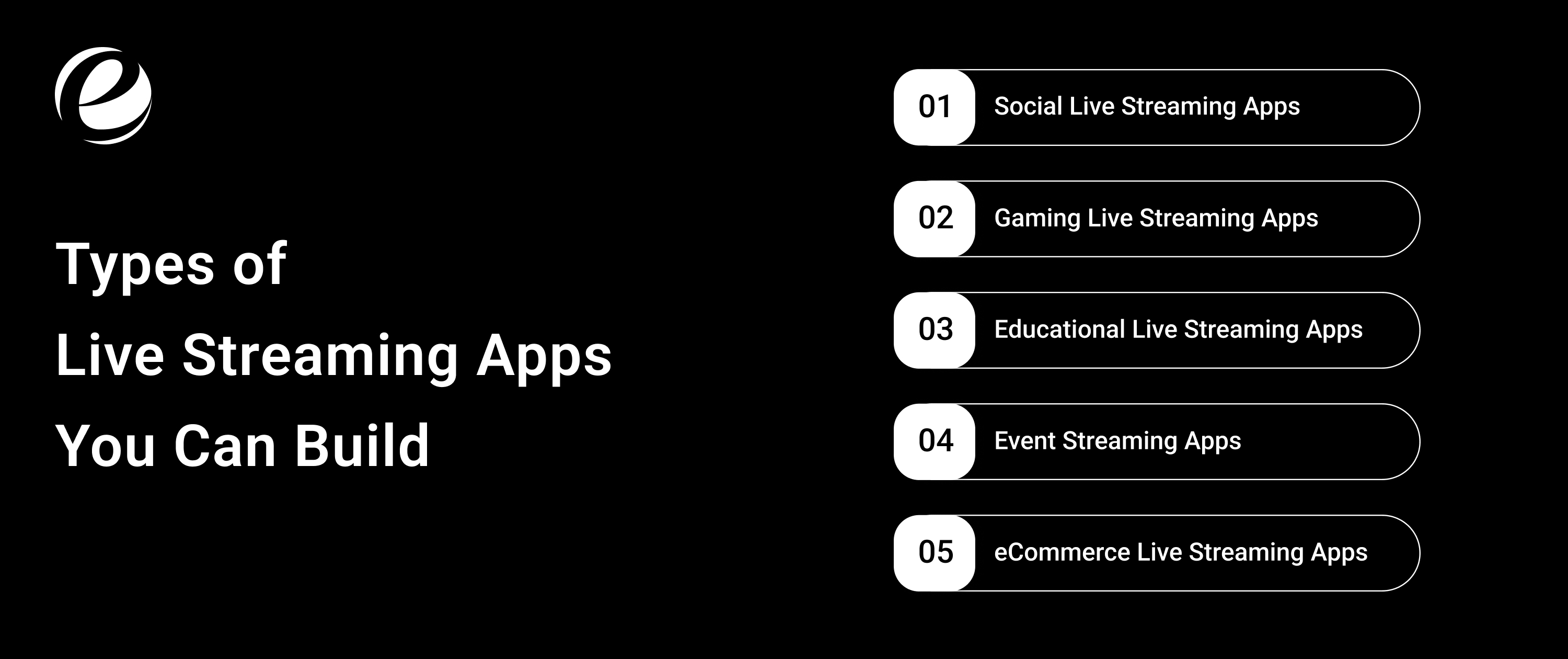
Businesses now use live streaming apps in many different ways, and a clear plan for live video streaming app development helps them build those apps. Below, you will learn about the different types of live streaming apps and their unique purposes:
Social Live Streaming Apps
These social media apps let people go live and connect with others in real time. Built around modern trends in social media app development, they allow users to chat, send reactions, and support creators through gifts or subscriptions. They focus on building communities, increasing user engagement, and delivering real-time interactive experiences.
Examples: Tango, Kick, Instagram Live, TikTok
Gaming Live Streaming Apps
These apps allow gamers to stream their gameplay live while interacting with viewers. They focus on smooth video, fast streaming, and real-time chat so viewers can watch and respond instantly.
Examples: Twitch, YouTube Gaming, Streamlabs, StarDesk
Educational Live Streaming Apps
These apps are used for online classes, training, and webinars. Teachers can share screens, answer questions, and interact with students during live sessions.
Examples: Zoom, IBM Cloud Video
Event Streaming Apps
These apps are used to stream live events like concerts, conferences, and webinars to a large audience. They focus on high-quality video and smooth viewing for many users at once.
Examples: Bizzabo, EventMobi, Cvent Attendee Hub, Eventee
eCommerce Live Streaming Apps
These apps combine live streaming with online shopping. Sellers show products live, and viewers can ask questions and buy instantly during the stream.
Examples: TikTok Shop, Instagram Live Shopping, Amazon Live
Hence, after knowing these types, you can develop live streaming app solutions that meet real user needs and deliver smoother experiences to them.
Must-Have Features for Successful Live Streaming App Development
To build a strong user experience, live streaming app development should always start with the right set of features. Below, you will learn about the features that every streaming app should have to succeed in this evolving market:
Real-Time Chat
The real-time chat is the core interaction that allows viewers to send messages instantly while watching the stream. A good implementation supports fast message delivery, emoji reactions, pinned messages, and basic moderation tools so conversations stay readable.
Interactive Layers
With the help of interactive layers, streamers turn a passive audience into active participants. Polls let streamers quickly gather opinions, quizzes add a gamified layer of engagement, and Q&A sessions allow direct communication between creators and viewers.
Social Sharing & Community Engagement
Social sharing makes it effortless for users to spread live content outside the app. With one tap, viewers can share streams or highlights to platforms like Instagram, WhatsApp, or X for organic growth without paid promotion.
Content Delivery Network Integration
A Content Delivery Network (CDN) improves streaming speed and stability by distributing the video data across multiple servers globally. This reduces delay, improves loading speed, and ensures stable playback even during heavy traffic.
When these features are planned well, it becomes easier to move forward with live streaming mobile app development to make sure that the app keeps the user engaged.
Advanced Features That Differentiate Your Live Streaming App
Moving further into live streaming app development, some advanced features help you make your stream more interactive so that the users stay engaged with the content:
360-Degree & Multi-Camera Streaming
Viewers are able to switch between multiple camera angles or explore 360-degree views during a live stream. It makes the content feel more immersive during events, gaming, and IRL streaming experiences.
AI Auto-Clipping for Viral Moments
AI auto-clipping watches the stream to pick out interesting moments like sudden chat spikes, loud reactions, gameplay wins, or funny exchanges. Then it turns them into short vertical clips for social media platforms.
Interactive Viewer Experience
The viewers participate in the live streams for a more realistic experience. Live polls, reactions, and mini-games allow the audiences to actively take part. This method makes the sessions more engaging and increases retention, which grabs more viewers’ attention.
Adaptive 4K Ultra HD Streaming
Adaptive 4K streaming helps to adjust quality automatically based on the viewer’s internet speed. It also uses modern compression methods so even high-motion content stays sharp.
Creator Collaboration Lobby
It is a built-in space that creators can instantly join, invite guests, and stream together without any third-party tools. This feature improves collaboration and makes the group’s live sessions smooth.
So, if you are also planning to implement these advanced features in your live streaming app development, then you can hire mobile app developers to handle the technical complexity easily.
Tech Stack for Live Streaming App Development
The development process also depends on choosing the right tech stack because it directly impacts the app’s performance. These are some technologies you must use in your live streaming app development:
| Layer | Technologies | Purpose |
| Frontend | Flutter, React Native, Swift, Kotlin | It builds a mobile or web user interface for watching and streaming |
| Backend | Node.js, Python, Go | These stacks are used to handle users, streams, APIs, and server logic. |
| Streaming technology | WebRTC, RTMP, HLS | It enable live video and real-time chat with low latency |
| Media Server | Wowza, Ant Media, Red5 | This stack processes, encodes, and distributes the video streams. |
| Cloud Hosting & CDN | Cloudflare, AWS, Google Cloud | It provides scalable hosting and global content delivery with minimal buffers. |
So, with the help of this table, you will clearly understand the role of each technology and choose the right tech stacks for your live streaming app development.
Live Streaming App Development Process: Step-by-Step from Idea to Launch
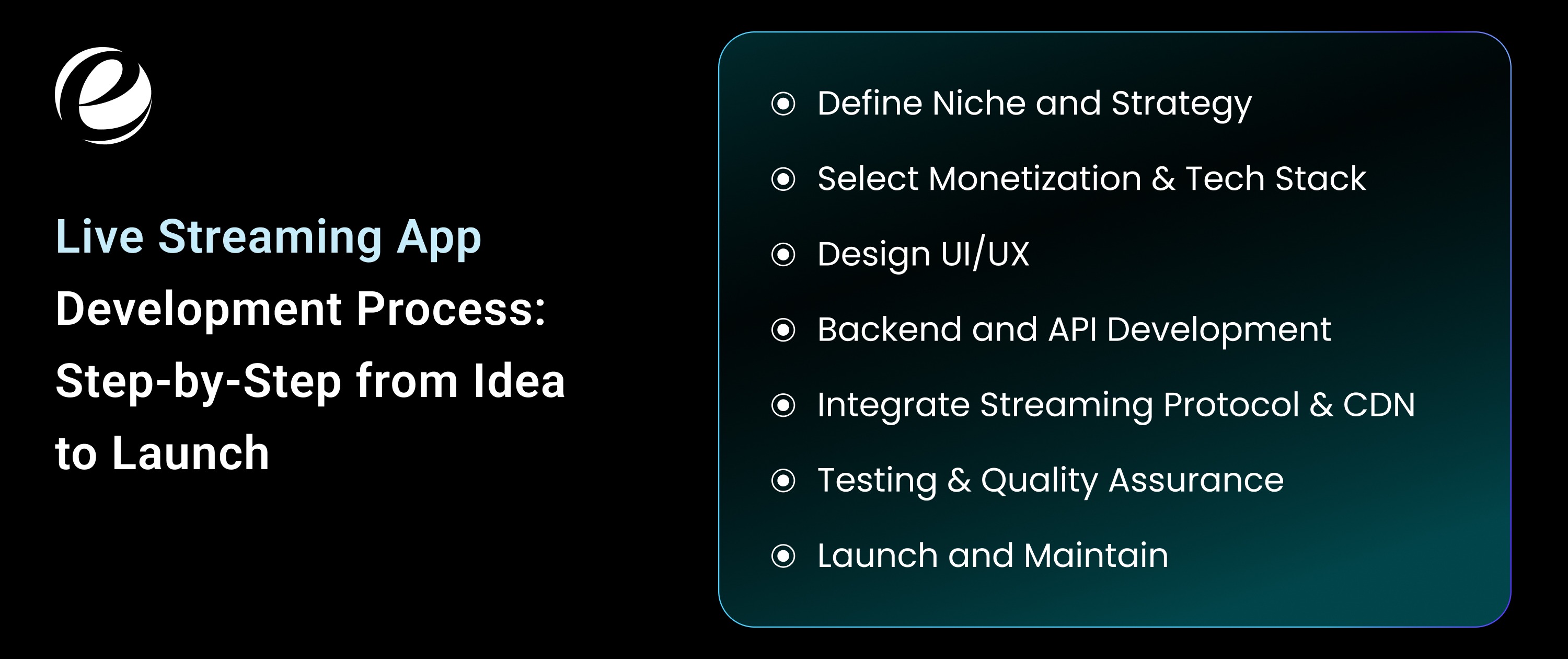
When you understand the complete live streaming app development process, it will help you to plan better and build a scalable product from idea to launch without missing important steps. Below you will see the step-by-step process that you can use to launch a quality live streaming app:
Define Niche and Strategy
Firstly, you have to identify your target audience to set a clear value proposition. However, a focused niche makes sure that the streams can get organic viewers for better retention.
Select Monetization & Tech Stack
After the core research, you have to choose the right revenue model and scalable technologies such as React Native, Node.js, WebRTC, and CDNs to ensure smooth streaming performance.
Design UI/UX
When you start the development process, create an intuitive interface with navigation and clean layouts to make live sessions more interesting. For this purpose, you must prioritize the low-latency viewing experience.
Backend and API Development
Next, you must build secure and scalable backend systems that can handle user authentication, chats, and analytics. Also, develop APIs for smooth interaction.
Integrate Streaming Protocol & CDN
For the video ingestion, you can implement protocols like RTMP and HLS or WebRTC for stream playback. Also, use CDNs to deliver your content globally and reduce buffering
Testing & Quality Assurance
Before you launch the app, always perform a functional and performance test to ensure smooth streaming under heavy traffic. It will provide a quality experience to the viewers.
Launch and Maintain
In the last step, you have to deploy the app on platforms and monitor performance closely. This will help you to fix bugs, optimize streaming quality, and release updates regularly.
So, by following these steps carefully, you can develop an app with live streaming solutions that are stable. You can also reduce development risks and launch a more reliable product that performs well even as your user base grows.
How Much Does Live Streaming App Development Cost
The live streaming app development cost depends on some factors. Below, you will see the approximate cost of development for streaming app types:
| App Type | Approximate Cost | Time Duration |
| Basic | $40,000-$80,000 | 3-6 months |
| Intermediate | $90,000-$140,000 | 6-9 months |
| Advanced | $150,000-$300,000 | 12+ months |
So, this costing table will help you to plan your budget before starting the development process.
Challenges in Live Streaming App Development and How to Solve Them
Even with the best planning from developers and businesses, the live streaming apps can have technical and operational issues that need to be addressed early before starting the live streaming app development. Below are some challenges and their solutions:
High Latency in Live Video
One of the biggest issues is the delay between analyzing viewers’ perceptions. Even a few seconds can ruin an interaction.
Solution: Use fast streaming protocols like WebRTC or optimized HLS to reduce the server hops to keep delivery as direct as possible.
Buffering and Poor Video Quality
Users quickly leave when the stream keeps buffering or quality drops too often, especially on mobile networks.
Solution: Implement Adaptive Bitrate Streaming (ABR) so video quality adjusts automatically based on internet speed without stopping playback.
Scalability During Peak Traffic
A stream can go from hundreds to millions of viewers suddenly, which can overload servers.
Solution: Use a strong content delivery network (CDN) and cloud-based auto-scaling infrastructure to distribute load across multiple servers globally.
Real-Time Chat Overload
Chat can become messy or lag when thousands of messages come in every second, making it challenging to follow.
Solution: It can add message rate limits, slow mode, pinned messages, and robust backend queue systems to manage chat flow.
Content Moderation & Safety
The live content is challenging to control because the harmful or spam content can appear instantly during the live sessions.
Solution: You can combine the AI filtering with human review tools, along with reporting, blocking, and keyword filters, to keep streams safe.
So, you have to overcome these challenges because they directly impact the users’ experience and the platform stability of the application.
Monetization Models for Live Streaming Apps That Drive Revenue

Monetization is one of the most important parts of live streaming app development, as it decides how the platform generates revenue while keeping both creators and viewers engaged.
- Ads: Ads run before or during the streams that help platforms to earn stable income.
- Subscription: The users have to pay monthly for ad-free access and exclusive live content.
- Virtual Gifts: With this model, viewers can buy and send gifts to support their favorite streamers.
- Sponsorships: The brands collaborate with the creators to promote products in the live sessions.
- Freemium: This model provides basic features to the users for free but they have to pay for the advanced ones.
So, if you choose the right monetization models for your live sessions, it helps you to build a stable ecosystem in live streaming mobile app development. With this, creators can earn consistently while improving user experience.
Why EmizenTech Is the Right Partner for Live Streaming App Development
Emizentech is a dependable choice for live streaming app development because it focuses on building scalable solutions. Our developers have completed 1200+ projects across different industries to deliver video or streaming platforms that are stable. We designed our apps to handle smooth video playback with minimal delay so the users can watch the streams without any interruptions. Also, our developers include useful advanced features with simple admin control to stand out in this competitive market. Emizentech also provides full support from design to launch to help the businesses save time and effort.
Conclusion
Live streaming app development is all about creating smooth platforms that keep the users engaged. With growing demand for live content, the businesses that invest in quality streaming apps can reach larger audiences and create better engagement opportunities. However, success also depends on working with the right mobile app development company to ensure the developers include all the advanced features on the basis of recent trends. In short, a good live streaming app is not just about video; it’s about delivering an interactive experience that keeps users coming back.
FAQs
Do I need a separate server for live streaming?
Yes, the live streaming apps cannot run only on a normal app backend. They need media servers, cloud servers, and CDNs for fast video delivery.
How do live streaming apps handle thousands of viewers at once?
They use CDNs, load balancers, and multiple servers to distribute the traffic so that they can provide lag-free streaming for large audiences.
How do live streaming apps prevent lag?
The apps use WebRTC, video compression, and adaptive bitrate streaming to reduce the delay. It also helps to maintain smooth playback even on weaker internet connections.
How do apps stop illegal or harmful live content?
They use AI moderation, keyword filters, and user reporting systems to detect harmful content in the live streams.



 +1 (989) 535-9295
 info@emizentech.com
 emizentech


