
 Add us as a preferred source on Google
Logistics processes are associated with endless, complex coordination, the constant struggle of managing shipment and fleet, and well, the list goes on. Thanks to transport and logistics mobile app development, these not-so-minor challenges have become a thing of the past. By investing in the best logistics app development, companies can now automate transport and logistics processes, making day-to-day operations more seamless, efficient, and not to mention, without burning more money.
From route optimization to real-time tracking to automated fleet management, there are many reasons why logistics mobile app development is making waves in the market. Apart from outstanding features, the demand for custom logistics app development is also skyrocketing owing to the cost-saving element, which is just as crucial for businesses as scalability.
Let’s hop on to the next section of this article and explore all that there is to know about logistics app development approaches.
How Does A Logistics Mobile App Works?
A logistics app is a digital solution designed to automate and streamline all things transportation, logistics, and supply chain. The app caters to businesses as a customized platform where they can manage fleet, transportation, shipment, inventory, and more in a few simple taps. The outcome: seamless coordination and service (for starters).
Before getting into logistics app development costs, processes, etc., it is essential to understand how the app works. A logistics app integrates different technologies, like cloud computing, AI, and GPS, to optimize overall logistics operations. Companies leverage these apps to track deliveries, track vehicles in real time, automate documentation, manage inventories, and lots more. It boils down to a significant reduction in manual labor and a remarkable increase in efficiency.
For businesses looking to improve operational control, custom logistics app development is the way to go. A custom transport and logistics app makes a tailored solution that aligns with unique business goals. Whether the plan is to manage the warehouse better or optimize the route or automate various tasks, all businesses need is the best logistics mobile app development services.

A Peek Into The Logistics Market
- Research from Allied Market Research states that the global logistics market was valued at $9,833 billion in 2022.
- It also underscores that the market is estimated to reach $16,794.7 billion in 2032, at a CAGR of 5.6% between 2023 and 2032.
- A report by Straits Research highlights that the global logistics software market was valued at $16.21 billion in 2023.
- The same report states that the market is forecast to grow from $17.72 billion in 2024 to $36.26 billion in 2032.
Different Types of Logistics Apps
The logistics market is huge and encompasses various types of companies that specialize in different aspects of supply chain management. This leads to a broader scope of transport and logistics app development, considering varying needs of these companies.
Listed below are such different types of logistics mobile apps:
1. Fleet Management

Fleet management apps are designed for logistics companies to monitor and coordinate their vehicles from a centralized platform. Businesses can optimize fleet operations, enhance performance, reduce costs, and do more by integrating custom logistics app development. These apps also enable real-time vehicle tracking, predictive maintenance, and fuel monitoring while upping the efficiency level.
2. On-Demand Logistics
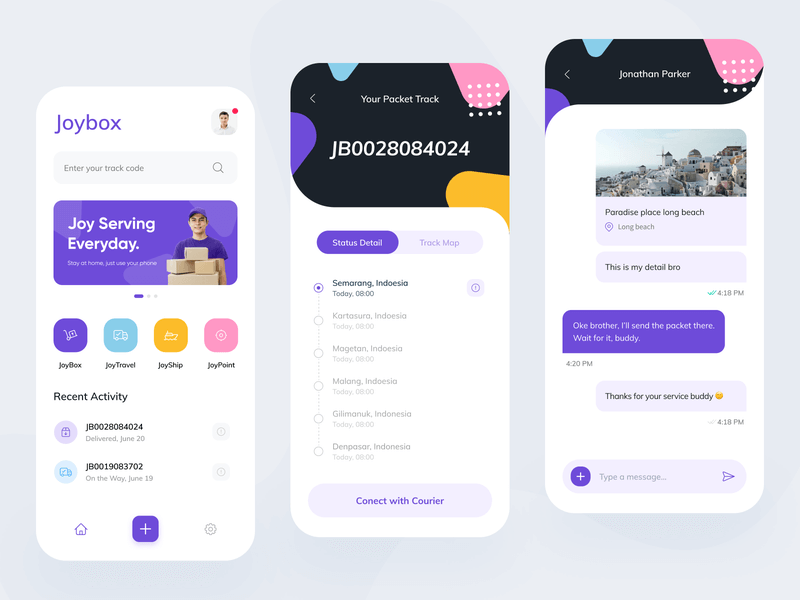
On-demand logistics app development is for businesses that are looking to improve transportation-related operations. These apps accommodate real-time delivery requirements, and ensure flexible, fast transport. Moreover, on-demand apps connect customers and businesses instantly, enabling users to book and enjoy hassle-free deliveries based on their needs. Route optimization, automated dispatch, and live tracking are the top features to consider when planning this type of logistics mobile app development.
3. Tracking & Forwarding Apps
Warehouse logistics apps are for businesses aiming to streamline tracking of shipments and deliveries. With this type of transport and logistics app development, businesses can keep an eye on driver locations, provide customers with live tracking information, and optimize delivery routes.
4. Warehouse Management Apps
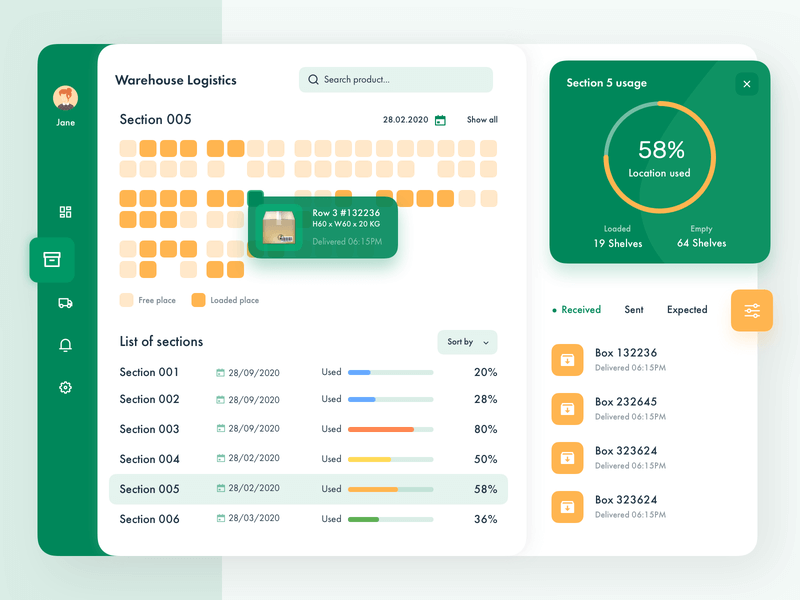
Warehouse apps cater to businesses for efficiently storing and managing inventory data. This type of logistics mobile app development helps businesses ensure they can seamlessly track stock levels, streamline order processing, and optimize storage. These apps are excellent tools for minimizing manual errors and minimizing the risk of lost/misplaced inventory.
Leading Logistics Apps and Businesses
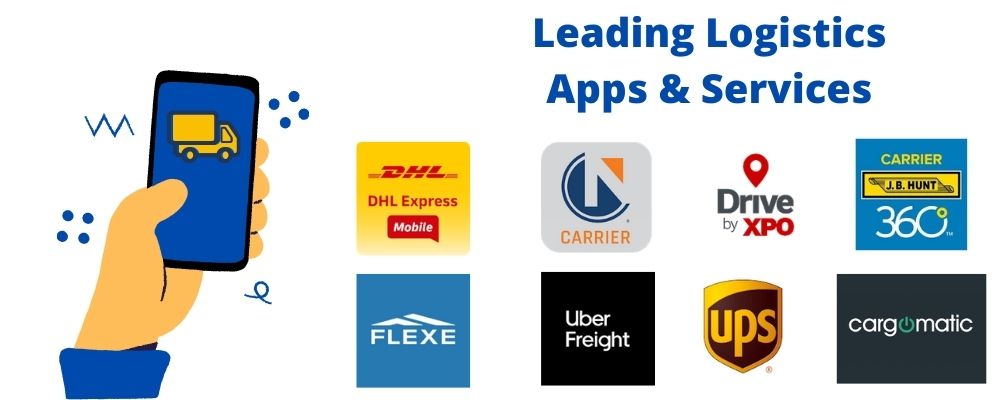
Many industry leaders have successfully implemented best logistics app development into their operations, simplifying what is typically known to be a hassle-filled task: managing transportation and logistics processes.
Some of the best logistics apps include:
- DHL Express: A global leader in supply chain and logistics management.
- Drive XPO: A feature-rich app designed for efficient transportation.
- Navisphere Carrier: A power-packed platform for freight tracking and overall management.
- Flexe: A logistics app designed to streamline warehouse and fulfillment tasks.
- Uber Freight: A digital freight-matching service connecting shippers and carriers.
What Are the Benefits of Logistics Mobile App Development?
With the best custom logistics app development services, you can maximize the potential of technology to boost efficiency, reduce costs, and pace up to your goals. Here below are the key benefits of investing in transportation and mobile app development:
1. Efficient Warehouse and Fleet Management
One of the biggest advantages of investing in the best logistics app development services is fuss-free management of fleet and warehouse. By automating inventory tracking and data storage, businesses can enhance accuracy, reduce manual errors, and improve productivity.
2. Instant Delivery Services
With custom logistics app development, businesses can enhance transparency when it comes to delivery. Logistics app enables businesses to keeps tabs on all the deliveries with breeze, and ensures real-time confirmation as well.
3. Real-Time Tracking Updates
Real-time tracking is one of the core aspects of the current logistics market space, considering it promotes transparency, and saves hassle. With logistics app development, businesses can unlock real-time vehicle tracking capabilities. A GPS-enabled app enables businesses to track delivery status, optimize routes, and enhance customer satisfaction by communicating accurate delivery timelines.
4. Optimized Supply Chain Operations
When businesses invest in a well-integrated logistics app development solution, they can expect an all-new level of efficiency across various areas of the logistics apps. These apps streamline order tracking and inventory management, minimize losses, and enhance operational visibility.
5. Hassle-Free Online Booking
Logistics apps take the convenience of booking logistics services to a whole new level. These apps have an intuitive interface where users can book, track, and manage deliveries, all effortlessly.
6. Streamlined Paperwork
Managing stacks of documents in logistics is overwhelming, and yet, is a reason to invest in transport and logistics mobile app development. These apps digitizes the entire process of documentation, minimizing administrative workload and reducing human errors. From shipment records and data invoices, everything can be managed seamlessly through these apps.
Logistics Mobile App Development: Key Features To Consider
The increasing demand for transport and logistics app development has given a push to businesses for investing in customized solutions that match their requirements and goals just right. For businesses planning the best logistics app development solutions, it is crucial to understand the features that make the app successful in future.
Listed below are the features of different types of apps that businesses must consider when opting for custom logistics app development:
Features Of User App Panel
- Registration & Create Profile
- Save Delivery Address/Location
- View Nearby Vehicles available for transportation
- Choose Vehicle Type
- View Fare Estimation
- Book A Vehicle
- View Estimated Time Of Arrival (ETA)
- Manage/Schedule Trip
- In-App Calling with driver
- Push Notifications for arrival & delivery of goods
- Rate & Review services availed
- Cancel Service/Booking
- View History of bookings
- Multiple Payment Options
- View Invoice via Email & SMS
- View Driver Details
- Share transportation details
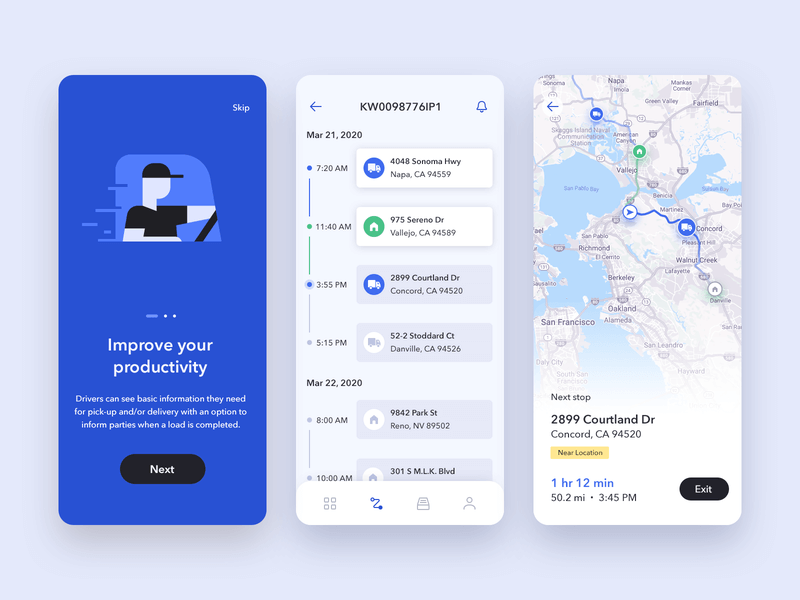
Features Of Trucker/Driver App Panel
- Login & manage profile
- Upload Documents for Id verification
- View Rate Card as per the distance & weight of goods
- View Revenue Breakdown & earnings report
- Cancel Trip
- Select Vehicle Type driver is operating
- Toggle Availability for Ride
- In-App Calling with customers
- Accept/Reject Pickup Requests
- View User & Consignment Details
- Push Notifications
- Set Route & Use Navigation Map
- Multiple Language Support
Features Of Admin & Dispatcher App Panel
- Manage Users/Drives/Fleet
- Manage User Complaints
- Manage Billing & Invoice
- Assign Sub-Admins
- Manage & Track Trips
- View/Generate Reports To Track Revenue & User Acquisition Stats
- Create Multi-Stop Routes
- Manage Rate Card
- Offer Discounts
- Offer Subscription Plan to regular users
Advanced Features To Add In A Logistics App
The recent developments in technology space are encouraging logistics markets to push its limits. This involves developing logistics apps with top-notch features that not only fit the basic criteria, but also accommodate the needs of digital-savvy customers.
1. Notifications
This feature will allow the app to instantly notify the customers regarding their shipment whereabouts, its delivery, and other important information.
2. Ratings & Reviews
With the help of this functionality, the app users would be able to rate and review the mobile app as per its performance.
3. Get a Quote
This functionality allows the customers to request for a quote from service providers as per the available deals, so to get an idea regarding cost & time of services.
4. In-app Chat
This actually is an integral feature for a Logistics app, as it enables the app users to easily get in touch with the service provider to ask queries regarding the pending delivery or anything related.
5. Chat Support
Chatbots are crucial for the B2B & B2C sectors and today most apps that provide service or products comes equipped with the chatbot app development.
6. Multi-Language Support
Often the drivers using the app may not be familiar with the English language and hence integrating multi-language functionality enables them also to use the app effortlessly. Hence the functionality makes the logistics business more scalable by allowing to properly coordinate with the drivers of different regions.
7. Link & Upload documents
This is a useful feature for the dispatchers as it allows them to upload crucial documents regarding shipping, like insurance documents, and more.
8. Trip Log Reports
This functionality will allow the admin to record trip details, like start to end trip time, covered distance, and a lot more.
10. Manage Fuel & Vehicle consumption
In this section, the details regarding fuel consumption can be stored and managed by all the running vehicles. Hence, it is possible to keep track and manage vehicles, to know whether a service or pollution check is required.
11. Global Positioning System
The GPS functionality allows determining the routes taken by the app. It gets easier to understand the small details regarding the driver’s journey and calculate time & cost.
12. Driver Safety
Through this functionality, the drivers can be monitored as it helps to track their behaviour as such speed, phone usage, speed, and a lot more. On the basis of that, a scorecard is generated which helps the users in choosing drivers and at the same time, it also ensures their safety.
13. Multiple Payment Gateway Integration
It is helpful for the Logistics mobile apps to have multiple payment methods, as it allows the users to make easy payments. Various payment gateways, such as Braintree, PayPal can be used and at the same time, it is also useful that the app allows making a payment with different currencies.
14. Cloud Storage
A logistics business deals with a huge amount of data and for storing that much of data it is required to have cloud storage. Having Cloud integrated not only helps in storing the data but it also helps in accessing data regarding users and drivers anytime and from anywhere.
Trending Technologies that Is Reshaping Logistic Industry
Logistics app development is now driven by a force of revolutionary technologies that do more than just solving minor problems. Here are the technologies that are redefining transport and logistics app development.
1. Artificial Intelligence (AI)
Artificial Intelligence, or AI, is like having a smart assistant that helps us make better decisions. In the supply chain, AI has become a game-changer. AI-powered predictive analytics can forecast demand, allowing companies to plan and produce accordingly. AI-driven route optimization and real-time tracking ensure that products are delivered swiftly and efficiently. Moreover, AI-enabled chatbots provide quick and helpful customer service, answering questions and solving problems.
2. Internet of Things (IoT)
The Internet of Things, or IoT, is a network of connected devices that communicate with each other. In the supply chain, IoT devices play a vital role. Sensors track and monitor shipments, providing real-time information on their location and condition. This helps in ensuring that products arrive safely and on time. IoT devices also enable real-time inventory management, allowing companies to keep track of their stock levels and avoid shortages. Furthermore, remote equipment monitoring helps companies maintain and improve their machinery’s efficiency and reduce downtime.
3. Blockchain
Blockchain technology ensures transparency and security in supply chain transactions. It is like a digital ledger that records every transaction and cannot be altered or tampered with. Blockchain provides an immutable record-keeping system, making it easier to trace and authenticate products. Additionally, smart contracts, which are automated and self-executing agreements, streamline processes and reduce the need for intermediaries, making transactions faster and more efficient.
4. Robotics and Autonomous Vehicles
Robots and autonomous vehicles are changing the way warehouses operate and deliveries are made. Automated systems can pick, pack, and sort products in warehouses, increasing efficiency and reducing errors. Self-driving trucks and drones are being used for delivery, making the process faster and more precise. Collaborative robots, or cobots, work alongside humans, improving productivity and safety in the workplace.
5. Big Data & Data Analytics
Big Data refers to the massive amount of information generated every day. Data analytics helps us make sense of this data and extract valuable insights. In the supply chain, data-driven decision-making optimizes operations and improves efficiency. Predictive analytics identifies potential risks, allowing companies to take preventive measures. Real-time monitoring and analysis enable companies to track their logistics operations and make adjustments as needed.
6. Warehouse Automation
Warehouse automation involves using technology to streamline storage and inventory management. Automated storage and retrieval systems (AS/RS) retrieve products quickly and accurately. Robotic material handling reduces the physical strain on workers and improves efficiency. Integrating different automation technologies helps warehouses achieve higher productivity and reduce errors.
7. Cloud Computing
Cloud computing provides centralized data storage and accessibility. Instead of storing data on physical devices, it is stored in the cloud, allowing for easy access from anywhere. Cloud infrastructure is scalable, meaning it can handle large volumes of data without issues. Collaborative platforms enable real-time information sharing among supply chain partners, ensuring everyone stays updated.
8. Last-Mile Delivery
Last-mile delivery is the final leg of the delivery process, from the transportation hub to the customer’s doorstep. Technology has made significant advancements in this area. On-demand delivery services and platforms offer convenience and speed. Drones and robots assist in last-mile delivery, reaching remote or congested areas quickly. GPS and mapping technologies optimize delivery routes, saving time and reducing.
How To Monetize The Logistics Mobile Apps?
Ready to get, set, invest in logistics app development? Here’s a quick step-by-step glimpse into how you should go about the process:
Commission
Here the app owners can directly earn money by associating with a number of drivers who are seeking mobile logistics services. This way, the commission can be earned from the earnings and in exchange, the drivers are being allowed to use the platform. Hence, this helps both the parties this way.
Advertisement
One of the most common and easy way to earn revenue by displaying relevant ads to the users using the free version of your app.
Freemium Model
This strategy of monetization is enticing to users. As the basic features are free to use but for advanced features, the users have to pay a premium
Paid Apps
This monetization model allows the user to purchase the app with a one-time fee for a lifetime license to use.
Paymium Model
If your app is very useful and has a good USP then the users will pay for the app when downloading as well as pay for the premium features available.

Team Structure For Logistics Mobile App Development?
For a quality mobile app, an entire team is required, such as:
Project Manager
This is the person who is responsible to look after the entire development process of a Logistics mobile app. Be it communication with the team and its management or coming up with the required solutions, a Project Manager handles it all.
App Developers
For the development of an app, one requires a team of developers, which may comprise of iOS app development or Android app developers, or both, depending on the number of platforms the app is being developed for. This team needs to be adept with the latest tools and technologies and have vast knowledge and experience in the app development.
Designers
This team of professionals are responsible for the look and feel of the app. They do not just make the app look good but it also makes it easier to navigate so the user like the experience of using the app and keep coming back to it.
Quality Analysts
This team of professionals ensure that the app matches the necessary standards and is free of any errors. This team runs several tests on the app that helps in determining the same.
How Much Does It Cost To Develop A Logistics Mobile App?
There are several factors that affect the app development cost of a Logistics mobile app, such as:
Choice Of Platform
Here, if the app is being developed for a single platform, then it is going to cost less as compared to when the app is being developed for more than one platform. It is because, for development for a single platform, the app would require one team, while developing for two platforms, the app would need two development teams, hence double the cost.
Choice of Outsourcing Country
Now in this aspect, the development cost is going to differ as per the country you are choosing to develop the app. The hourly app development rate differs from country to country, like in the USA and Europe, the hourly development rates are way higher when compared to the Asian countries. Hence, you need to decide where you want to invest in app development as the difference usually is huge.
Features & Design
This is again a crucial factor in determining the cost, as an app with basic features and simple design would cost less as compared to an app with advanced features and complex design.
All in all, the app with basic features and for a single platform, when chosen Asian region for development, should cost around $25000-$35000, whereas an app with advanced features and for both Android and iOS platform most certainly will cost around $50000-$60000
How Emizentech can Help you with Logistic Mobile App Development?
Logistics mobile app development market is growing progressively, as we have witnessed in the figures above. If you are devising to build one for your business, you should connect with a logistic app development company holding an exceptional portfolio and a team of experts having years of experience delivering top-notch app development services.
You can choose Emizentech as your logistics app development company, which has accomplished various relevant projects and showcases a list of top clientele worldwide. Connect today to kickstart your project now!
Conclusion
Logistic mobile app development has transformed the logistics industry by introducing a host of benefits that enhance operational efficiency, streamline processes, and elevate customer experiences. These innovative apps empower logistics companies to achieve real-time tracking, seamless communication, and data-driven decision-making, leading to optimized operations and improved customer satisfaction.
Our team is dedicated to offering custom logistics app development solutions that match your unique needs and goals. Get in touch with us today to know how we can help you transform your logistics operations and deliver exceptional experiences to your customers.
Faq’s
How much does it cost to develop a logistics app?
The logistics app development cost typically varies depending on factors like features, choice of platforms, complexity, etc. However, the average cost of developing a transport and logistics app ranges from $50,000 to $100,000.
Why is route optimization important in logistics apps?
Route optimization is one of the crucial features of a transport and logistics app as it ensures optimal fuel consumption, minimizes operational costs, and helps cut back on delivery timelines.
How do logistics apps improve supply chain management?
Logistics app development can benefit supply chain management by unlocking real-time monitoring capabilities, automating inventory tracking and management, and ensuring seamless communication between all parties.
How can custom logistics app development benefit businesses?
Custom logistics app development offers tailored transport and logistics solutions that align with unique operational needs and capacity of a business. Its benefits include improved efficiency, enhanced data accuracy, and scalability.




 +1 (989) 535-9295
 info@emizentech.com
 emizentech


