
 Add us as a preferred source on Google
 If you are planning to build a rent payment app, you are entering the right space. More than 50% of the tenants prefer to pay the rent online. However, methods like cash and cheques are still somewhat leading the line. No tenant wants the acts of writing cheques, waiting at the ATMs or worse, awkward monthly rent reminders.
Rent payment apps are eliminating the tiresome process and simplifying it with digital systems. In fact, the online rent payment system market size is forecast to reach from $10.89 billion in 2024 to $24.9 billion by 2032. To top that, the emergence of digital comforts have made rental payment apps more sought-after than ever.
Now let’s understand what a rent payment app is, how to build one, and lots more.
What is a Rent Payment App?
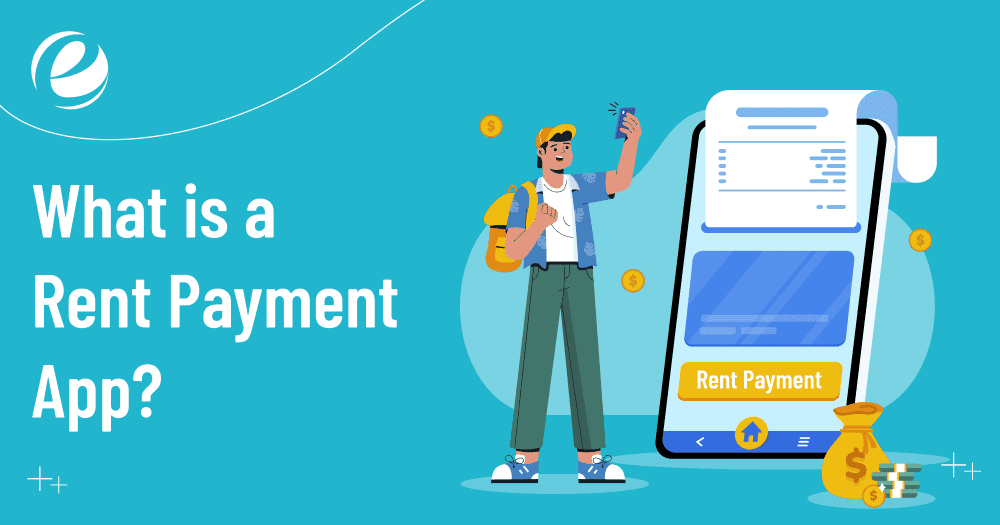
A rent payment app, or a rent payment mobile app, is a digital solution that allows tenants and landlords to make seamless rental transactions. While traditionally people used cash, cheques, or in-person financial transfers, a rent payment app facilitates a faster, safer, and more efficient way to manage rent every month.
These apps are a platform with a user-friendly interface that connects landlords and tenants. They can streamline payments, maintain all records, manage documentation, and do more, making it all effortless to oversee rental tasks.
Benefits of a Rent Payment App
Nowadays, digital payments have become more common than traditional payment methods (cash or cheques), thanks to the emergence of technologies that facilitate convenience at fingertips. And just like that, a rent payment app brings a much-needed upgrade for people to manage all the rent-related work with ease.
If you are planning rent payment app development, read on these benefits to understand the importance of the solution to make a more effective product:
Benefits of Rent Payment App Development for Tenants
1. Convenience
One of the most obvious benefits of rent payment app development for tenants is that it facilitates a hassle-free way to pay rent while eliminating the need to visit a bank or coordinate with their landlord. They can pay the rent anywhere, anytime. Moreover, the app often has automated monthly payments and reminders features which means that tenants don’t have to worry about forgetting the final date.
2. Timely Payments
Auto-debit, recurring billing, and other such features make the rent app a solid tool ensuring all the payments are made on time, always. This minimizes the classic risk of late fees. So, a tenant can make sure that their landlord is happy. That’s not all, timely payment every month also contributes to building a positive credit score.
3. Digital Receipts
Automatic generation of digital receipts and digital payment history have to be one of the most important benefits of rent payment app development. A track record of payment receipts act as a proof which can be helpful for lease renewals, disputes, loan applications, and more scenarios. So, no more rummaging old messages or bank statements to prove that you paid rent.
4. Multiple Payment Modes
Rent payment mobile apps facilitate a range of options when it comes to how you want to pay the rent. The options include credit cards, debit cards, wallets, and in some cases, even EMI options. This smooth-sailing option enables tenants to choose a mode of payment that best matches their cash flow or plan. For example, if a tenant wants to boost their credit card reward points, they may just use the card to pay the rent.
5. Financial Planning
Many rent apps have a built-in budgeting tool that allows tenants to track how much they are spending on rent. Some apps also have a rent split calculator which makes a great tool for room/flatmates. Monthly expense reports and notifications for upcoming dues are also the key features considered for rent app development. These features allows tenants to manage as well as plan their finances better, detect unnecessary spending, and make cash flow more efficient.
Benefits of Rent Payment App Development for Landlords
1. Timely Rent Collection
On-time payment guarantee is one of the important benefits of rent app development for landlords. Thanks to in-app reminders and recurring payments, tenants are less likely to face the challenges posed by delayed payments. This enhances the cash flow and minimizes the mental stress that occurs when a landlord chases down rent manually.
2. Transparent Transaction History
Rent payment apps digital record and store every payment in one place. Not only does this make managing rents more organizable, it also allows landlords to access transaction IDs, timestamps, and receipts that are useful during tax audits or disputes. It removes the unnecessary situations like “she said, he said”, acting as a proof for landlords and even for tenants.
3. Multi-Property Management
A rent payment app provides landlords, who are managing multiple properties, with a centralized dashboard where they monitor all the payments, different collections by property or tenants, send rent reminders, and do more. They no longer need to maintain separate spreadsheets manually, which results in convenience and efficiency.
4. Secure Payments
Rent apps facilitate secure payment options, powered with two-factor authentication and encryption to safeguard all the transactions. This significantly mitigates payment frauds, counterfeit cash, bounced cheques, and more such risks. Besides, landlords no longer have to use/share personal bank details with every tenant, making the transaction more on a safer side.
5. Improved Tenant Experience
One of the key benefits of rent mobile app development is that it can facilitate transparency, trust, and ease of payment management between landlords and tenants. Landlords can show that they are organized and responsible about payment and tenant’s time, all by using a digital rent payment system. It builds trust in the long run. Moreover, rent apps can also be the deciding factor for tenants to choose the best property, giving landlords a competitive edge in the market.
10 Basic Features of a Rent Payment App
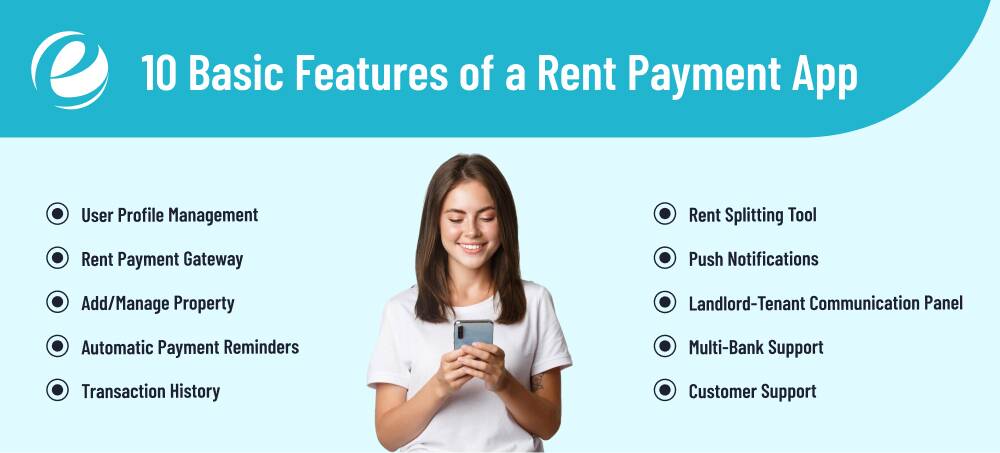
Let’s read the basic features that you must consider when planning to build a rent payment app. Note, these features are actually the backbone of any rent app:
1. User Profile Management
The first thing a user would do after downloading a rent mobile app is sign up and create a personalized profile. This feature is where tenants can add personal details, check up on rental property information, landlord contact details, and lease start/end date. Landlords use this feature to add different property portfolios and manage data related to all their tenants. This basic rent payment app features personalized experiences, for starters and is a must.
2. Rent Payment Gateway
A fast, secure payment gateway is one of the essential features to implement for rent payment app development. This feature enables seamless rental transactions using credit cards, debit cards, wallets, and more options. It facilitates faster fund transfers, providing both the parties with absolute ease.
3. Add/Manage Property
Another important feature, this one allows tenants to enter rent amount, payment date, and duration of the lease. Landlords can assign the rent amount to every property. They can also edit details in real-time. Moreover, this feature allows both the parties to have clarity on monthly rent obligations, which ultimately minimizes the risk of miscommunication.
4. Automatic Payment Reminders
In-app reminders help tenants and landlords enjoy the assurance of timely payments. Tenants receive the reminders days before the due date, avoiding the risk of missed payments. When building a rent payment app, you can consider implementing customized reminders based on grace periods, due dates, payment habits, and more, adding a personalized touch.
5. Transaction History
Rent apps keep a track record of each and every transaction made between a landlord and tenants. While landlords can leverage this feature to ensure streamlined income tracking and tax compliance, tenants can use receipts for audits, loan applications, or reimbursement.
6. Rent Splitting Tool
Individuals, most commonly college goers and corporate professionals, share the property and have to manage rent payments accordingly. The rent app enables the splitting option to ensure all the flatmates pay equal rent. The percentage of shares can also be customized, based on personal preferences.
7. Push Notifications
While rent reminders help tenants and landlords pay/receive rent on time, push notifications further enable instant alerts on payment confirmation, security updates, failed transactions, tips and tricks to manage rents, and more, with personalized nuances.
8. Landlord-Tenant Communication Panel
A secure, seamless communication platform for tenants and landlords is yet another essential rent payment app feature. Both parties can exchange words through built-in messaging/email systems. Be it about rent adjustments, notices, maintenance, or anything, both can ensure everything they communicate stays in one place.
9. Multi-Bank Support
Rent payment apps that operate across regions or are designed for NRIs support multi-bank and multi-currency integrations. This feature enables seamless cross-border transactions, making the app versatile and more scalable.
10. Customer Support
Rent apps must have a seamless customer support system in place. When you build a rent payment app, consider implementing in-app support via email, chat, or ticketing. This will help users ensure they can find a quick resolution to their problems, including payment failures, technical difficulties, or others. You can also implement a 24/7 chatbot support to provide efficient customer service.
10 Advanced Features of a Rent Payment App
Here’s a breakdown of the advanced features of a rent payment app:
1. Credit Score Management and Improvement
Many rent apps have made the idea of payment history serving as a credit score booster quite popular. Rent payment apps report regular on-time payments to credit bureaus. This enables tenants to build a strong credit history. So, no need to get a credit card to have a credit score, a tenant (especially the young one) can use rental payments for that.
2. Digitized Rental Agreement
Renters keep a legal rental agreement as a proof of renting a space, which later serves as an essential for tax purposes and disputes too. With advanced technological implementation in rent payment app development, you can enable the legal rental agreement drafting feature. The feature also allows both parties to digitally sign the agreement, share copy, and more.
3. In-App Loan
Many advanced rental payment apps can also have short-term loan facility or credit line features for tenants, helping tenants navigate tough financial situations. If a tenant is running out of funds, they can avail quick funds directly through the rental app, making on-time payment to the landlord.
4. Financial Insights
With the implementation of financial analytics, rent payment mobile app development can help tenants keep a track of rental expenses, budget upcoming payments, and compare their rent with utility expenses. Moreover, landlords can see which properties are profitable, spot delinquent tenants, and see payment trends.
5. Auto-Debit Setup
One of the wonderful features of a rental payment app, auto-debit mode eliminates the need to manually initiate payment every month. A tenant can authorize debits using their account and that’s it! This automation not only minimizes the risk of missed payments, it also offers convenience to people with fixed incomes.
6. Custom Late Fee Automation
This feature allows landlords to have customized rules for charging a specific late fee percentage or a fixed amount if/when the due has passed. The app calculates late fee automatically, alerts both landlord and the tenant, and updates the total amount payable.
7. Rental Insurance
The rent payment apps may also have insurance integrations to help landlords unlock protection against rent defaults or other unexpected problems, including stolen belongings or accidents. By implementing this feature in rent app development, you can add a layer of advancement and create a high-value solution.
8. Geo-Fencing
Geo-fencing is one of the advanced rent payment app features that allows users to access hyper local services. These include cleaning services, plumbing contacts, cooking services, emergency repair services, and more available within a certain vicinity of the place. This amazing feature facilitates ease and accessibility like no other feature, making it a standout element to consider for the rent app development process.
9. Voice and Biometric Identification
Rent payment apps must be secure in order for landlords and tenants to use it with confidence, always. To ensure everything goes well, implementing biometric logins using face recognition or fingerprint is a smart move. You can also implement voice recognition for simplifying rent status checking.
10. API Integration
Planning to build a rent payment app for real estate companies, large-scale landlords, or property managers? Make it stand out by integrating PMS software. It allows automated syncing of tenant information, maintenance tickets, rent collection data, and rental cycles. Not to mention, it also boosts scalability.
Top 10 Rent Payment Apps
| App | Highlights | Pricing Model |
| CRED RentPay | Card- and UPI-based payment options for rent, cashback offers, credit score improvement | Free (charges may apply on credit card payment) |
| Housing Edge | Rental listings integration, rent receipts, automated reminders | Freemium |
| NoBroker Pay | Card- and UPI-based rent payment, rental agreement, splitting feature | Free up to a limit, charges apply thereafter |
| Paytm Rent Payment | UPI and card payment, seamless UI, wide banking support, cashback offers | Convenience fee |
| MagicBricks Pay | Made for landlords and tenants, e-agreement, document storage | Free, premium for feature upgrades |
| MyGate | Ideal for gated society, society bills and rent collections, visitor access features | Subscription for landlords |
| RentOk | Caters to landlords, property management and rent collection features | Monthly plan |
| RedGiraffe | Standing instructions, tax benefits for tenants, Range of banking partners | Charges based on payment mode |
| InstaMojo | Automated reminders, payment gateway based rent option for landlords, | Transaction fee-based |
| BharatPe Rent Pay | Credit card-based rent payment, option for early settlement, GST-compliant rent receipts | Free |
How to Build a Rent Payment App?
From thoughtful planning and clarity on intent to design and deployment, there are multiple aspects to rent payment app development. Here are all the steps involved in the process of building a rental payment app for landlords and tenants:
Define the Scope of the Rent Payment App
The most important step when you build a rent payment app is to gain clarity on the purpose and scope oft your app. You might consider the following questions:
- Are you building a rent collection app for landlords?
- Are you planning to create a full-fledged rental management ecosystem?
- Who are your primary uses (landlords, tenants, or property managers, or all of them)?
- What would be the core idea/functionality of your rental management app?
- Is your target audience local, national, or international?
- And, are you building a rent mobile app or web app?
As overwhelming as it may seem, these questions are you shot at quickly defining the intent behind rent payment app development and the challenges it is going to solve. Moreover, understanding of the niche, pain points, and market challenges allow you to navigate the process with a more competitive and thoughtful approach.
1. Plan Features
When your vision and goals are clear, you must decide the features which you are going to implement in the rental app development. You can start by building a minimum viable product that offers essential/basic features like user registration, profile management, payment, and alerts.
You can then implement advanced rent app features like auto-debit, digitized rent agreement, credit score reporting, and more. The idea is to map out the user journey for landlords as well as for the tenants. This will help your team of rent payment app developers to organize features in a rather logical way, ensuring the solutions are user-friendly through and through.
2. Choose Technology Stack
The performance, scalability, security, functionality, and basically everything depends largely on the technology stack you choose.
While React Native and Flutter are ideal frameworks for cross-platform app development, Swift and Kotlin are there for separate (iOS and Android) rent payment mobile app development. From frontend and backend to security and database, there’s technology for all the nooks of the app. What you choose ultimately decides the end performance of the product.
3. Design UI/UX
The UI and UX design are way more crucial for determining app success than you may expect. Users are digital-savvy and hyper aware today. Plus, they expect the best possible functionality whenever they download an app on their phone.
One of the elements they will judge is the design. An rent payment app that is clean, intuitive, and highly responsive gains more user engagement than the one without all these qualities. From profile updates to payment to chats to loan applications, consider all the functions to have the branding elements to maintain consistency. Use wireframing for mapping out user journey and interactions. This phase helps the rent app developers ensure that the app is design-perfect and user-centric.
4. Build Frontend and Backend Architecture
This phase is where the rent payment app development begins for good. The frontend development emphasizes creating the visuals and interactions. On the other hand, the backend of the app has handless databases, APIs, and business logic. A secure and safe backend infrastructure makes sure that everything, from rent transactions to property records, are stored in a secure location.
Not to mention, this step also requires rent payment app developers to integrate SMS alerts, email notifications, and third-party APIs, along with cloud storage. They have to make sure that the system handles growing data and users without crashing.
5. Integrate Payment Gateway
In this step of the rental app development process, developers integrate payment gateways, one of the most crucial functions of the app. A scalable solution must support multiple payment modes to cater to diverse user needs and offer convenience. Both parties should be able to pay/receive rent effortlessly, with the payment options of their choice.
Rent mobile app developers can also add features like payment receipts, auto-debit, and smart payment scheduling to make a top-notch solution. Also, security is the element that should not be compromised at this stage. Thus, it is best to include tokenization, fraud detection, and encryption for safeguarding data.
6. Run Compliance Checks
Compliance and security are what make the rent payment app stand reputedly in the long run. The digital solution must align with regulatory requirements, including data privacy laws, anti-money laundering standards, and more. Emphasize implementation of secure data storage and user consent policies. This will only ensure that the landlords and tenants feel safe using the app.
7. Test, Test, Test
All set to launch a rent payment app? Hold on, you have got one last thing to do: TESTING. Before unveiling it, conduct multiple layers of testing of your app in order to make sure it works seamlessly across devices and scenarios.
Quality assurance is a fundamental part of the app development process which highlights the gaps and loopholes in the app and gives room to make all the wrongs right before it hits the market. This phase basically encompasses testing of all the areas, small and big, of the app.
8. Launch MVP
After testing and compliance comes the deployment and release phase. For starters, you can release the MVP of your rent payment app. This means unveiling the app for a select number of users or platforms. Why MVP? This will allow you to track performance in real-time, collect user feedback, check functionality, and more. The data you get can be used to identify friction and gaps, enabling improvements.
9. Monitor, Update, Maintain
You may now continue fine-tuning your rental management app to ensure it aligns with evolving market scenarios and customer expectations. Post-deployment maintenance involves new feature additions in phases, regular updates, and bug fixes. Moreover, you can consider partnerships for insurance, loan, and other such services to increase scalability. These steps are ways to make your rent payment app stand out in the market in the long run and be future-ready.
Tech Stack for Rent Payment App Development
| Component | Technology/Tool | Purpose |
| Frontend (for mobile) | Flutter, React Native, Kotlin for Android, Swift for iOS | Develop intuitive and seamless apps |
| Frontend (for web) | Angular, Vue.js, React.js | Web dashboards for landlords, tenants and admins |
| Backend | Node.js, Ruby on Rails, Django | API management, logic, server-based operations |
| Database | MangoDB, Firebase, PostgreSQL | User profile storage, property data, transaction, |
| Payment | Razorpay, Stripe | Recurring billing, secure payment |
| Authentication | Firebase Auth, OAuth 2.0 | Identity handling, login |
| Real-time notifications and alerts | Firebase Cloud Messaging, OneSignal | Send rent reminders, chat updates, and more |
| Cloud | AWS, Microsoft Azure, Google Cloud | Database storage, hosting backend server |
| Security | Biometric Auth, SSL Encryption | Data privacy, payment security |
| Analytics | Mixpanel, Google Analytics | Track user behavior, Churn, and engagement |
Why Choose Emizentech as Your Rent Payment App Development Partner?
Emizentech, a leading rental management app development company, helps you create an app that is not only functional and feature-rich, but also secure and highly scalable. At Emizentech, we have a decade of experience in building custom mobile and web applications. We take pride in being recognized for our technical expertise, domain knowledge, and end-to-end app development services.
Our team has the best rent payment app developers who craft solutions catering to startups, property management firms, fintech entrepreneurs, and more. In the midst of building a future-ready rent app, we ensure timely delivery and transparent communication too.
Do we just code and make the best rent payment app? No, that’s not all. Here’s what else you can expect from us:
- A team of dedicated project managers
- Top full-stack teams
- Expertise in rental, real estate, and financial industry
- Agile methodology
- Transparent communication and collaboration
- Strict adherence to compliance protocol
- Ongoing support, maintenance, and 24/7 service
By choosing Emizentech as rent payment app development partner, you don’t just hire the best developers but also ensure access to domain expertise and futuristic approach to building a solution, all in a cost- and time-effective environment.
How Much Does It Cost to Build a Rent Payment App?

The rent payment app development cost can typically swing between $20,000 and $90,000.
It depends wholly on a range of factors such as:
And the list goes on. A basic rental app with essential features and payment gateway integration can cost between $15,000 and $50,000, while the one with advanced features can go up to $70,000 and beyond.
Budgeting rent payment app costs can be overwhelming. However, you can do it smartly and save big on the development by working with top rent app developers of Emizentech. We make sure your development cost is optimized with scalable setup, quality code, and on-time delivery.
Easy Tips to Monetize Rent Payment Apps
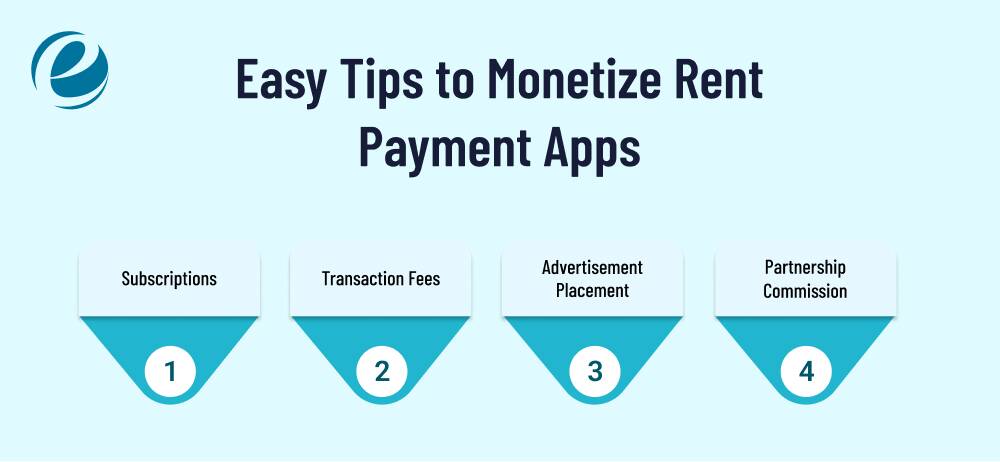
You have now built an extensively rich online rent payment system. But how are you going to eam profits out of it? Here are handy tips to monetize your rent payment apps:
1. Subscriptions
When you build a rent payment app with a set of basic and premium features, you have the leverage to charge users for providing the advanced functions. Offer a freemium model where users can access basic features for free and pay to enjoy premium tools like credit score, loan, and more.
2. Transaction Fees
Charging just a small processing/transaction fee on every rent payment is probably the most effective way to monetize your rent payment app. You can apply a flat amount or a percentage-based fee divided between the landlord and tenant. Over time, these small amounts will add up to massive profits for you.
3. Advertisement Placement
Ad placement is one of the most common app development monetization hacks across industries. All you need to do is show highly-targeted ads (make sure they are not intrusive) like furniture, home loans, or other relevant areas. You can earn by selling space in your app for their ads.
4. Partnership Commission
This method entails that you collaborate with third-party services, like repair and maintenance companies, packers and movers, insurance companies, or more. You get to earn a small commission on every lead generated and sale made through these promotions or referrals.
Future of Rent Payment Apps
The online rent payment market is picking up the pace, all set to change how the landlords and tenants interact with each other. With technologies like Al and ML, the future of rent: payment apps looks even more promising. Not to mention, automation and analytics open: doors to innovative ideas and scalable opportunities.
While fraud-proof payment and on-time payments lie at the heart of these apps, virtual lease negotiations and voice-assisted payment may also grab the attention of users.
Urbanization, co-loving, and the Gen-Z trends are pushing rent payment space to be more effective and handy. Who doesn’t want a flexible solution, right? Your rent payment app development plan must be mapped out with these trends in the loop. This will only help you gain competitive advantage and stay ahead of the market challenges that you might face in the absence of innovation.
Wrapping Up..
Automation is the knight in shining armour for businesses and people looking to simplify day-to-day agendas. A rent payment app leverages that to ease the rental hassles down the shoulders of both the tenants and the landlords. It offers speed, transparency, smart financial management, and as we read above, lots more.
So, if you are stepping into the rental management app development, it is safe to say that you are tapping into a profitable and scalable use case. Partner with the best rent payment developers today and unlock long-term growth smartly.
FAQs
How much does it cost to build a rent payment app?
The cost of developing a rent payment app can range from $20,000 to $90,000 and more. The exact cost is determined by features, integrations, design, and more such crucial features.
How long does it take to build a rent payment app?
It takes an average 3-6 months to build a highly functional rental payment app. The timeline may vary depending on the planning, collaboration, features of the app, and more factors.
What are the must-have features in an online rent payment app?
User authentication, profile management, secure payment gateway, rent reminders, and agreement storage are some of the must-have features of a rent payment app.
Is the rent payment app safe?
Yes, online rent payment systems use top security protocols like tokenization, SSL encryption, and two-factor authentication. This ensures that everything transaction is secure and in compliance with regulatory standards.



 +1 (989) 535-9295
 info@emizentech.com
 emizentech


