
 Add us as a preferred source on Google
 Have you ever wondered how companies manage their fleets so effectively? GPS tracking apps have revolutionized fleet management by integrating real-time location tracking along with IoT capabilities, and the outcome is heightened security and efficiency.
Vehicle tracking for companies that depend on timely deliveries is no longer an extra feature – it’s a requirement. The increasing dependence on these solutions has contributed to an enormous surge in demand for vehicle tracking app development.
“Innovation is the ability to see change as an opportunity – not a threat.” – Steve Jobs
This vision is defining the future of fleet management, and it’s inspiring companies to adopt technology for intelligent, efficient operations.
Market research indicates that the Global Vehicle Tracking System Market will grow by 13.2% annually from 2023 to 2031 to $66.96 billion. If you wish to create a vehicle-tracking mobile app for your company, this guide will take you through from Vehicle tracking app development phases to costs and monetization strategies. Let’s begin!
What is a Vehicle Tracking App?
GPS fleet tracking software offers monitoring of the current location and speed of a vehicle on the basis of telematics technology. It handles large amounts of fleet data and translates them into actionable intelligence, which enables businesses to manage their operations effectively.
Using a vehicle tracking software, companies can:
- Determine which vehicle is to be sent to a particular address.
- Find the nearest available service vehicle, for example, crane or tow truck.
- Track yard vehicles and monitor fleet availability.
With real-time positioning and smart information, the applications allow fleet managers to optimize routes, reduce downtime, and achieve maximum overall productivity.
Key Features of GPS Tracking Software
Vehicle tracking app development includes the inclusion of features that promote accuracy, ease of use, and efficiency. Some of the most important features that make an app to track vehicle location and overall management more enhanced are as follows:
1. Real-Time Location Tracking
Real-time location tracking apps are facilitated by a GPS tracking system where managers can monitor the exact location of their vehicles. The system prevents unnecessary communication between managers and drivers as it provides location updates automatically. Not only is it time-efficient, but it also maximizes operating costs.
2. Voice Guidance Navigation
Voice guidance gives turn-by-turn instructions like turns, straight roads, or distance to the next location. This is an undistracted mode through which drivers can drive on the roads more safely since it does not distract drivers. Voice guidance can be disabled if necessary in order to reduce distractions.
3. Automatic Rerouting
If there are roadblocks, accidents, or mistaken turns by a driver, the rerouting facility assists in selecting the most suitable alternate route. It saves drivers from entering the destination manually again so they do not waste any time.
4. Instant Alerts & Notifications
Vehicle maintenance reminders are a part of push notifications that inform users of vital details, like arrival at a location or a route change. These apps to track vehicle maintenance reminders may appear as messages or pop-ups to facilitate timely exchange of information between managers and drivers.
5. Vehicle Maintenance Reminders
Fleet management software is more than just locating cars; getting them running remains important too. Because some maintenance is time-based and some is mileage-based, manually tracking it all is a challenge. This feature automatically offers reminders for maintenance, and one can keep services up-to-date and avoid surprise failures, thus simplifying fleet operation.
6. Social Media Integration
With the addition of social media profiles in the app, a convenient and secure means of logging in without creating new credentials is provided. Most companies utilize this feature as it improves the user experience, it is simple to authenticate, and even holds a possibility for offers or rewards, thus the interaction becomes interesting.
7. Built-In Messaging System
An integrated chat option enables the driver, manager, and team members to talk directly through the application. Problem-solving, dissemination of updates, and answering questions become simple without necessarily involving third-party messaging apps. It enables organizations to enhance coordination and intensify interaction with their employees.
Benefits of GPS Tracking Software
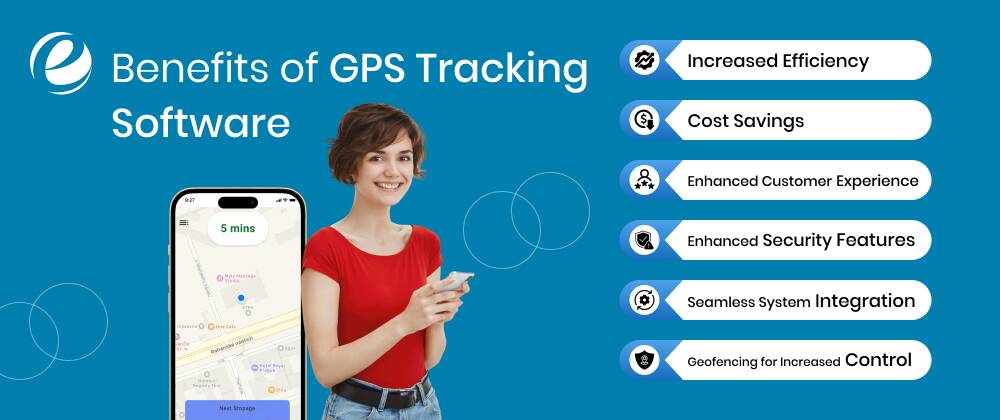
Now that you have learned about gps tracker app for vehicle, let’s see how it can be useful to your company. Here are some of the most significant advantages that can ease operations and maximize customer satisfaction.
1. Increased Efficiency
Traveling on crowded roads and unavoidable obstacles may lead to delays in deliveries. With a vehicle tracking system, the driver can determine the best possible routes in real-time, which means fewer unnecessary delays. That means faster delivery, better utilization of time, and more efficient runs. Your business can therefore make more trips, satisfy customers, and stay in business.
2. Cost Savings
Fuel prices matter to any business fleet. Proper routing decreases the amount of fuel consumed by the units, and that is savings for the company. Software maintenance on the vehicles also allows for issues to be detected before they are expensive fixes. Monitoring also allows each unit to be used to maximum effectiveness, decreasing idle time and redundant travel.
3. Enhanced Customer Experience
On-time delivery is the key to satisfied customers. With a vehicle tracking system, you can provide accurate delivery estimates, reduce delays, and make it more dependable. Happy customers are likely to come back and refer others to your business, and that can establish you as an industry leader.
4. Enhanced Security Features
Safety for your vehicles and drivers comes first. With driver behavior monitoring as an add-on, you can detect risky driving habits and react before they result in accidents.
A live vehicle tracking app also prevents theft. If a vehicle leaves its designated course or is taken away without permission, real-time notifications enable you to respond right away, lessening chances for loss.
5. Seamless System Integration
Current vehicle tracking software integrates with other business software, including logistics and supply chain management software. This allows you to schedule a delivery time, track shipments in real time, and handle unexpected delays more effectively.
By integrating tracking technology with your current processes, you are more in control of fleet operations, and coordination among drivers, dispatchers, and managers is easier.
6. Geofencing for Increased Control
Geofencing enables businesses to draw virtual fences around certain locations. When a vehicle enters or exits these predetermined areas, auto-alarms alert fleet operators. The feature prevents unauthorized access to cars, boosts route compliance, and enhances security.
Top 10 Vehicle Tracking Apps in 2025
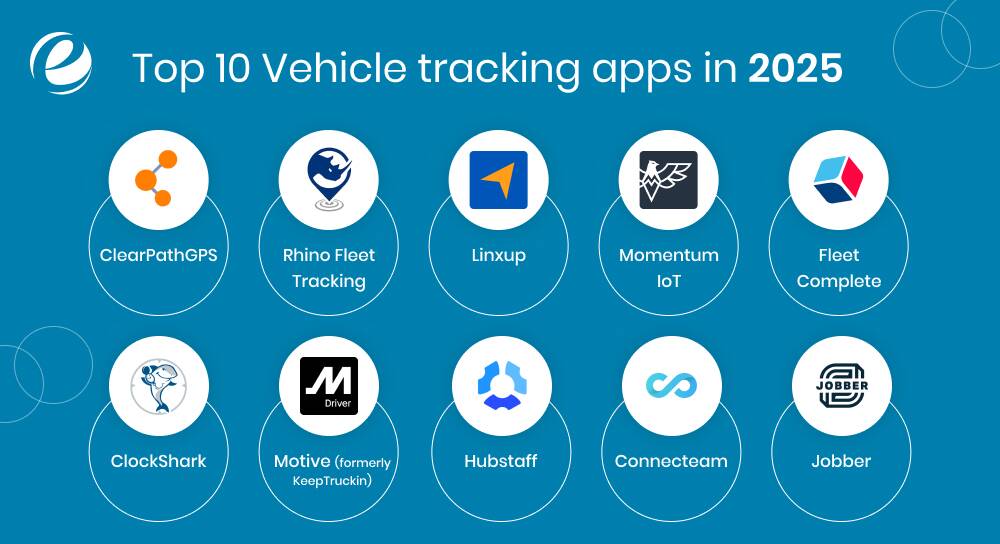
Choosing the appropriate GPS tracking software is crucial for business organizations that will be handling assets, streamlining fleets, and boosting overall productivity. Below are the top 10 GPS tracking software solutions and corresponding features and advantages:
| Software | Key Features | Ideal For | Unique Selling Point | Pricing (Estimated) |
| ClearPathGPS | Real-time tracking, geofencing, customizable reports | Small to medium fleets | Flexible month-to-month subscription | Starts at $20/month per vehicle |
| Rhino Fleet Tracking | Cloud-based GPS tracking, driver behavior insights | Fleet operators | Easy setup, reliable customer support | Starts at $16.95/month per vehicle |
| Linxup | GPS tracking, maintenance alerts, driver performance monitoring | Businesses of all sizes | Customizable alerts & reports | Starts at $25/month per vehicle |
| Momentum IoT | GPS tracking for field services, asset tracking | Construction & field service teams | Plug-and-play tracking with no contracts | Starts at $12/month per device |
| Fleet Complete | Comprehensive GPS tracking, fleet safety & efficiency insights | Large enterprises & logistics | AI-powered analytics for route optimization | Pricing on request |
| ClockShark | Mobile GPS time tracking, employee scheduling | Contractors & field workers | Time clock app with GPS for accurate payroll management | Starts at $30/month for small teams |
| Motive (formerly KeepTruckin) | GPS tracking, AI-powered dashcams, compliance tools | Trucking & logistics companies | AI dashcams for driver safety | Starts at $25/month per vehicle |
| Hubstaff | Real-time GPS tracking, productivity monitoring | Remote teams & freelancers | Tracks time and location for remote workforce management | Starts at $7/user per month |
| Connecteam | GPS location tracking, workforce management | Employee-centric businesses | All-in-one workforce management solution | Starts at $29/month for 30 users |
| Jobber | Job scheduling, GPS tracking for field teams | Home service businesses | Integrated customer management & invoicing | Starts at $49/month for small teams |
How to Develop a Vehicle Tracking App
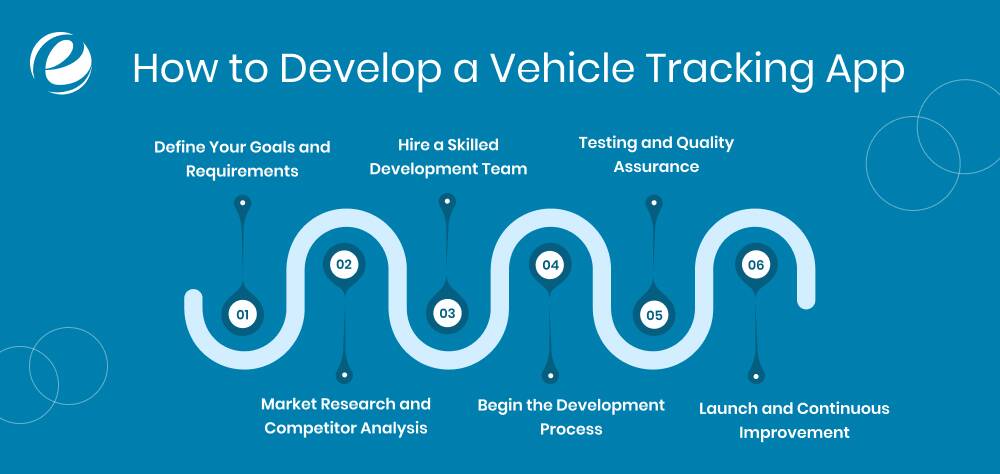
If you are building a GPS vehicle tracker app, your question is always there, which is, “Where do I start?” Creating an app takes time from learning about your needs to launching and maintaining it. Below is the division of what to do, step by step, to help you build a solid and feature-rich car tracking app.
1. Define Your Goals and Requirements
Before development, you must come up with what you would like your app to accomplish. Is it just for car location tracking, or could you furthermore require different capabilities including direction optimization, fuel tracking, or driving behavior tracking?
Below are the features that are essential for your app to possess. Some of the key features to include are:
- Real-time GPS tracking for vehicle location monitoring.
- Route optimization to minimize fuel usage and travel time.
- Unauthorized movement and delays alerts and notifications.
- Geofencing to draw virtual boundaries and receive an alert when a vehicle moves in or out of a designated area.
In order to make your concept more specific, it is better to consult with an IT expert or development team. They will suggest advanced features, such as AI-based analytics or IoT-based monitoring, to maximize your app’s performance.
2. Market Research and Competitor Analysis
Now that you are aware of what your app does, it is time to see around the marketplace. Comparison against currently available car tracking apps may provide you an insight into:
- Features which are widely provided.
- Positive and negative aspects of competing apps.
- Gaps in the marketplace that you could fill by means of your app.
- Learning about your competition will direct you on understanding user needs and avoiding mistakes of the past. Look at customer ratings and reviews in current apps for improvement areas too.
Armed with this information, you will be able to devise a well-focused plan for your app that meets market needs as well as offers something innovative.
3. Hire a Skilled Development Team
A great idea needs the right team to execute it. Get a development team that is familiar with GPS tracking apps. Employ:
- Developers with experience of similar apps.
- UI/UX designers for creating an interface that is not complex to use.
- Quality testers to check smooth app operation.
You can search for likely developers on the internet, see their portfolios, and read testimonials from their clients in order to gauge their proficiency. A solid Vehicle tracking app development team will not only construct your app but also offer suggestions on enhancing its functionality.
4. Begin the Development Process
Now it is time to start making the app. The Vehicle tracking app development process typically unfolds in the following steps:
- Wireframing and design: Outlining the app’s structure and designing an easy-to-use interface.
- Backend and frontend coding: Coding which gets the application running.
- Feature integration: Incorporating important functionalities such as GPS tracking, alarm, and report.
- Security implementation: Making the user data secure and authenticated through encryption.
Added features such as AI-powered routing optimization, fleet auto-management, or cloud backup can be introduced if you need them.
5. Testing and Quality Assurance
Before going live, your app must be well-tested so that it can be executed seamlessly. Testing includes:
- Functionality testing to ensure whether all the functionalities function as intended.
- Performance testing to check for response and speed.
- Compatibility testing to ensure whether the app will work on numerous devices.
- Security testing to protect user data from intrusion.
As much as there is no fully bug-free app, minimizing the bugs before launch increases users’ experience and reliability.
6. Launch and Continuous Improvement
After successful testing, it is time to publish your app in stores like Google Play and the App Store. But that’s not the end of it. App updates, new functionality, and integrating user feedback are necessary in order to keep your app competitive.
Monitoring app performance and fixing bugs in time will help build trust among users. In addition, promoting your app via digital marketing methods can attract more users and make your app successful.
What are the Technologies that Used in Vehicle Tracking App Development
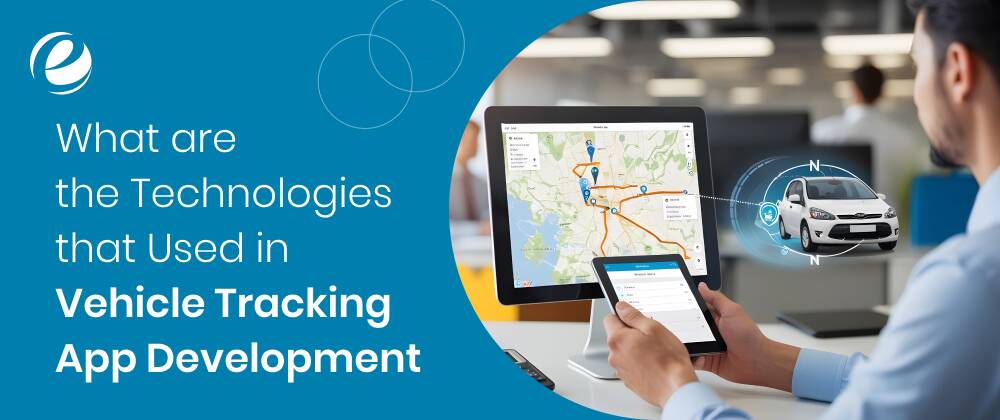
The latest technological innovations are improving vehicle tracking in terms of efficiency, security, and intelligence. Technologies such as AI, 5G, blockchain, IoT, and cloud computing are revolutionizing the functioning of tracking systems. Let’s learn about their role in detail:
1. Improved and Speedier Tracking with 5G
5G technology has changed dramatically the live vehicle tracking app. With greater speed and reduced delay, companies are able to monitor several vehicles concurrently without any latency or connectivity issue. This becomes particularly helpful with fleet management where there is urgent demand for location updates in real-time and unfractionated communication between HQ and vehicles.
2. Secure and Transparent Implementation using Blockchain
Blockchain development makes sure that vehicle tracking information is correct, safe, and tamper-proof. Every detail whether it is vehicle history, service, or transactions it is retained in a form that cannot be manipulated. This builds trust within fleet management and minimizes risk related to data tampering or fraud.
3. Smart Connectivity with IoT and GPS
GPS-tracking-enabled IoT devices with vehicle tracking provide more precise and descriptive coverage. Sensors allow monitoring of metrics like speed, fuel consumption, and engine conditions, all feeding real-time data to cloud hubs. This makes it easy for companies to make informed decisions, optimize routes, and keep the vehicles better.
4. Data-Driven Decisions based on Analytics
Current tracking systems do not only indicate where a vehicle is located—they monitor movement patterns, driver behavior, and maintenance requirements. With the power of advanced analytics, companies can spot trends, enhance route planning, and forecast when a vehicle will require servicing. It results in cost savings, enhanced performance, and improved safety.
5. Cloud-Based Access for Easy Management
Cloud computing allows vehicle tracking data to be stored and accessed remotely. Companies no longer have to support heavy infrastructure to track their fleet. Cloud platforms offer secure and scalable platforms where all the tracking data is synchronized and available as and when required.
Cost to Develop a Vehicle Tracking App
Making an auto tracker app doesn’t need to be costly, whereas GPS-based apps are quite time and effort-intensive. The last invoice then merely relies on the number of parameters like application complexity, need for features, technology involved, and geographical location of the development team.
Because each project is different, it’s hard to give you a specific figure. But here’s a rough estimate of how much you could expect to spend building a GPS tracking app:
| App Complexity | Cost Estimations | Time Frame |
| Basic Vehicle Tracking App | $10,000 – $15,000 | 2 – 3 months |
| Advanced Vehicle Tracking App | $15,000 – $20,000 | 4 – 6 months |
| Complex Vehicle Tracking App | $25000+ | 6 months + |
If you want an easy tracking application with basic features, the price is still at the lower side. But for real-time tracking, AI insights, cloud synchronization, or any other advanced feature, the price will be scaled up accordingly.
Do you need a customized cost estimate for specific features? You can approach an expert vehicle tracking app development agency to get a customized quote and professional advice!

Ways to Earn Money from a GPS Vehicle Tracking App
Converting a GPS vehicle tracker app into a successful business needs clever thinking. The following are some successful methods of earning money without making users feel any less welcome.
1. Subscription Plans
Offer different subscription plans according to features and user needs. Basic can provide real-time tracking, while business plans can provide additional insights like driver behavior analysis, route history, and geofencing. This allows personal users and businesses to choose a price plan according to their needs.
2. Freemium Model with Paid Upgrades
A free vehicle tracking application with minimal monitoring features, and has provisions for add-ons for the premium features may appeal to the users. Fuel monitoring, tracking multiple vehicles, and route planning are premium features that can be provided as add-ons. This model gets users to use the app and pay later.
3. In-App Advertising
Partner with relevant businesses, i.e., automobile repair shops, fuel stations, and insurance agencies, to feature targeted ads in your app. By using discreet ads, you can make money without explicitly asking users to pay. The trick to avoiding loss of interest in your users is to keep the ads from disturbing the user experience.
4. White-Label Licensing
Market your app as a white-label application that companies will rebrand and use as their own. Rental companies, fleet management companies, and logistics companies can license the technology of your app to apply to their company for an upfront setup or on-going licensing fee.
5. Enterprise Fleet Solutions
Offer enterprise-level fleet tracking solutions to big businesses with huge fleets of vehicles. Charge an initial setup fee and recurring monthly service fees for enterprise-level features like integration into existing corporate applications, vehicle diagnostic, or driver management software packages. This is one-time long-term revenue-generating and services large enterprises.
Use Cases of GPS Tracking Software
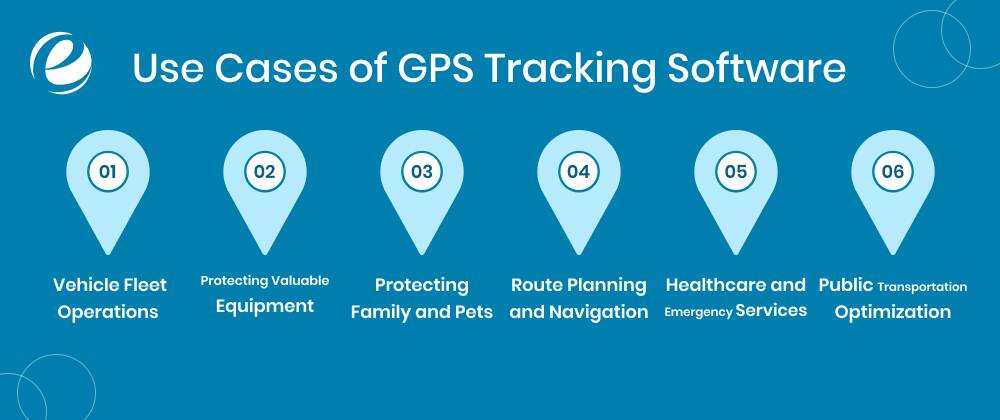
GPS monitoring software is employed in every sort of size and shape by many companies to aid business individuals as well as consumers and individuals to track vehicles, assets in real-time. That’s how some industries leverage the system:
1. Vehicle Fleet Operations
Company businesses that own cars, vans, or trucks utilize GPS tracking to fuel enhancement and reduce costs. Fleet managers use GPS systems to:
- Observe car activity in real time
- Optimize routes for fuel saving and time effectiveness
- Monitor driver behavior and curb abuse
- Be notified in real-time if a vehicle deviates from a path or is involved in an accident
2. Protecting Valuable Equipment
GPS tracking isn’t limited to cars—trucks also track valuable equipment such as construction gear, industrial gear, and valuable shipments. It helps businesses:
- Monitor where the equipment is and how it’s being used
- Stop theft and abuse
- Report real-time asset mileage
3. Protecting Family and Pets
GPS tracking is commonly utilized to provide protection for loved ones, such as young children and elderly members who are most likely to require assistance. Among its key benefits are:
- Monitoring children and ill elderly members
- Helping caregivers locate members who easily get lost with illnesses
- Monitoring pets and their health
4. Route Planning and Navigation
Navigation is the most widely utilized application of GPS. Google Maps is software that helps individuals identify the optimal routes for motor vehicle travel, walking, or public transport. Business companies can utilize GPS tracking in:
- Provide accurate turn-by-turn navigation
- Help delivery van drivers and taxi drivers save time
- Help pilots and logistics companies to track in real time
5. Healthcare and Emergency Services
On-time delivery is most critical in the healthcare industry. GPS tracking enables on-time delivery of medical devices, laboratory samples, and emergency equipment. GPS is used by emergency services and hospitals to:
- Track ambulances and dispatch them on time
- Enable on-time delivery of blood donations and life-saving drugs
- Track real-time movement of emergency response vehicles
6. Public Transportation Optimization
With increasing urban populations, effective public transport aids in easing road congestion and enhancing urban mobility. GPS tracking of public transport assists:
- Passengers track public transport arrival
- Transit agencies manage routes effectively
- Traffic congestion reduction by getting more people to use public transport
Why Choose EmizenTech for Your Vehicle Tracking App Development?
With the ongoing improvement of technology, demand for vehicle tracking apps is on the rise. Companies from different industries are depending on digital technologies to streamline logistics, streamline routes, and provide better navigation. With the progress in artificial intelligence, machine learning, and big data analytics, vehicle tracking apps are becoming intelligent and more efficient, thereby making car management easy.
Besides streamlining operations, apps are essential to sustainability. By reducing non-productive travel and maximizing fuel usage, businesses can lower their carbon footprint while saving money. The next generation of vehicle tracking is not just about following locations around—it’s about smart, customized solutions for industries like delivery firms, field forces, and fleets.
At EmizenTech, we help to develop high-performance vehicle tracker apps that simplify logistics and increase operational efficiency. Our seasoned developers take creative ideas and turn them into intuitive apps that provide real-time tracking, route-optimized navigation, and seamless integration into your business flows.
You will get to experience:
- Personalized Solutions – Apps designed specifically for your individual business needs.
- State-of-the-Art Technology – Sophisticated AI-based route optimization and real-time tracking capabilities.
- Secure and Scalable Applications – Enterprise-level security and future-proof architecture for long-term success.
- User-Centric Design – Simple-to-use interfaces that provide a seamless user experience.
Want to build a robust vehicle gps tracker app? Contact our experts at EmizenTech today to discuss your options and receive a cost estimate!
Conclusion
Vehicle tracking apps are now a market-topping trend, which has become a mass favorite among businesses and individuals alike. Since GPS tracking software has many benefits, most people are aware of their worth but cannot afford to invest.
Making the decision to develop a tracking app is easier when you receive the right guidance. Seasoned technology experts can help you realize exactly what you need and create a customized solution that suits your business needs.
From tracking valuable assets and safeguarding cars to route planning and improved driver performance, a GPS tracking app can do a whole lot more than report on position. It contributes to boosting security, efficiency, and operation control.
Want to know how tracking solutions can enhance productivity and ease management within your business? Our experts are here to help—contact us today!
Faq’s
How many months are required to create a vehicle tracking app?
It depends on the feature richness and complexity of the app. A basic vehicle tracking app would require 2 to 4 months, while a complex one with real-time tracking, route optimisation, and analytics could require 7 months or more.
How do I apply data security in a car tracking application?
To protect the app, you can:
1. Use SSL/TLS encryption to send data.
2. Encrypt data locally on the device to avoid unauthorized access.
3. Employ multi-factor authentication for additional protection.
4. Employ role-based access control to limit permissions.
What are the highest rated navigation applications?
The highest rated top-rated navigation apps are:
1. Google Maps – Offers live traffic and directions.
2. Apple Maps – A built-in navigation app, particularly for iPhone owners.
3. Waze – Best for real-time traffic conditions and local notifications.
4. MapQuest – Offers turn-by-turn driving directions with traffic updates in real time.
How Does a GPS Tracking System Improve Customer Service?
A GPS tracking system improves customer service by enabling real-time updates of deliveries. Customers are provided with accurate times of arrival, eliminating guesswork. Tracking the vehicles' locations in real time also enables companies to answer questions immediately. Route optimization means minimum delay, and deliveries are made on time and in an optimized manner.
How long does it take to build an app?
Depending on its complexity and features, an app would take different time spans to develop. A basic app would take weeks, and a high-end app with extra features would take months to complete.



 +1 (989) 535-9295
 info@emizentech.com
 emizentech


