 Add us as a preferred source on Google
Mental health is really important because it affects how we think, feel, and interact with others. More and more people are being diagnosed with mental health conditions nowadays. In fact, 1 in 5 people in the USA have a mental health disorder. This means they often need regular care and support. There is no denying that people are now more vocal about mental health issues and looking for solutions that help in improving mental health.
AI mental health apps are becoming more popular. Experts believe the mental health app market could reach $16.50 billion by 2030. This growth gives healthcare businesses a great chance to improve their services and stay competitive. Use of AI in mental health apps can help people manage their health by making everyday tasks easier and improving treatment.
However, creating AI mental healthcare apps isn’t easy either and demands considerable investment. Seeing the growing role of artificial intelligence in mental wellness, if you are also planning to develop an AI-powered mental health app, then you are on the right path as AI is the future.
But now the question arises that how much does it cost to develop an AI mental health app? Well, the cost depends on various factors and knowing these factors is the key to staying within your budget during development and avoiding unnecessary expenses.
In this blog, we’ll discuss the benefits of AI mental health apps, but we’ll also talk about the costs involved in building them.
What is AI In Mental Health App
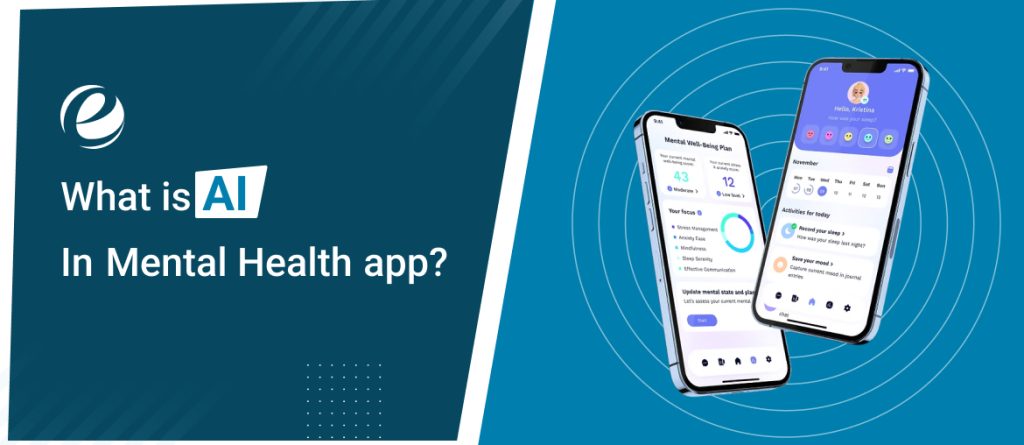
Artificial intelligence is changing the way we take care of mental health. It uses smart tools to help understand, diagnose, and treat mental health issues. AI-powered apps make it easier for people to get support, which is especially helpful as more and more people seek mental health care.
These apps have features like virtual chats and interactive tools that make it easier for people to talk about their concerns. A lot of people find it easier to talk to an AI chatbot about their feelings, especially if they have anxiety, depression, or schizophrenia. It feels safer because there’s no judgment, and they can share what’s on their mind more freely. This helps them take the first step in looking after their mental health without feeling nervous.
The demand for AI in mental health is growing quickly. According to Global Market Estimates, the market is expected to grow by 39.1% each year from 2022 to 2027. This growth shows how people are starting to trust AI’s ability to change and improve mental health care.
By bridging gaps in accessibility and offering personalized support, AI-driven mental health apps are transforming care. As technology advances, these apps promise to combine cutting-edge innovation with compassionate solutions, paving the way for better mental health outcomes worldwide.
Benefits Of AI In Mental Health App Development
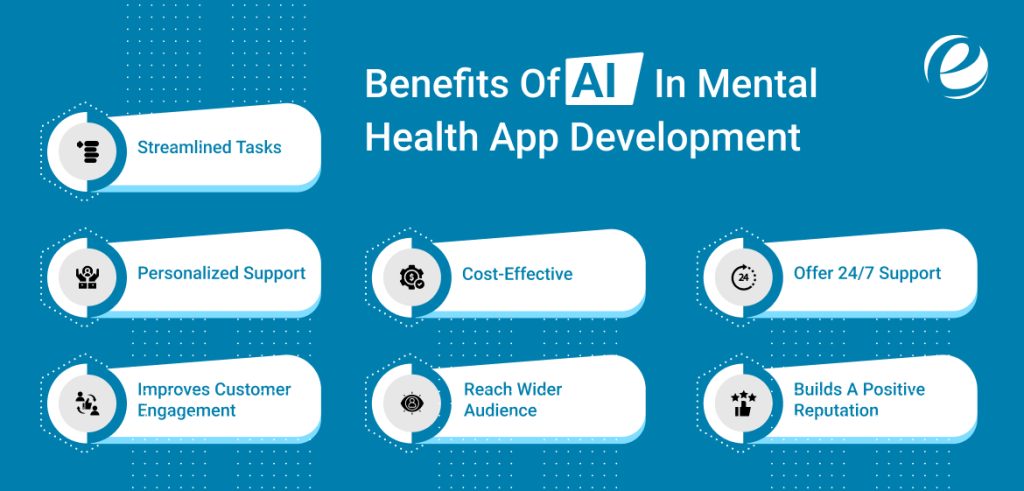
Building an AI mental healthcare app greatly helps people suffering from mental health conditions to provide the support they need easily while also helping them in the treatment and helps healthcare organizations too in so many ways to take care of the patients. Here are some reasons why it’s a smart idea to invest in these apps:
1. Streamlined Tasks
Medical staff have many tasks to do, which can slow down how quickly they help patients. An AI mental health app can take care of things like booking appointments and keeping records automatically. This gives healthcare staff more time to focus on helping patients. The healthcare system runs faster and smoother, saving time and making everything easier for everyone.
2. Personalized Support
Use of AI in mental health apps is great at giving personalised advice. The app tracks things like your mood, sleep, and daily habits to offer helpful tips. If you’re feeling anxious, it might suggest breathing exercises or ways to relax. This helps you manage your mental health in a way that feels right for you. The app’s personalized approach helps healthcare businesses attract more people, making it popular and trusted.
3. Improves Customer Engagement
AI mental health apps keep people coming back because they’re so easy to use. They’re available anytime, offering personalized tips and exercises that make users feel supported. These apps make it easy to manage stress and track your mood. Since they’re always on your phone, it’s easy to stick with your mental health routine. This helps you see better results over time.
4. Cost-Effective
Running a healthcare business can be expensive because of all the high-tech technology involved, expensive medications, the need to constantly invest in research and development, and many more. Now, AI apps can do most of these jobs for you, saving money and making work easier for staff. This helps save time and money, so the business can spend more on taking care of patients. These savings help healthcare organizations provide better services without overspending.
5. Reach Wider Audience
Getting mental health care can be hard, especially if it’s expensive or far away. AI mental health apps help by offering online care. These apps use smart tools to connect users with therapists and doctors, even in remote places. Healthcare organizations can now give everyone access to support that meets their individual needs, regardless of location. In turn, this makes life simpler for everyone in terms of getting assistance when required.
6. Offer 24/7 Support
Sometimes, people need help when regular hours are over or can’t see a therapist. AI chatbots give support anytime, day or night. With AI chatbots available 24/7, patients can get help whenever they need it, so doctors, nurses or other staff don’t have to always be available. This makes everything work more smoothly, saves money, and helps the system run better. By giving easy access to mental health help at any time, healthcare organizations can make patients happier and improve their reputation for great care.
7. Builds a Positive Reputation
AI mental healthcare app are designed to make life easier for users. The app offers personalized advice, easy booking, and quick help. When users feel cared for, they’re more likely to share the app with others. This builds trust and makes the app popular, encouraging more people to try it out. It helps improve the app’s reputation and attracts more users.
Use Of AI In Mental Health
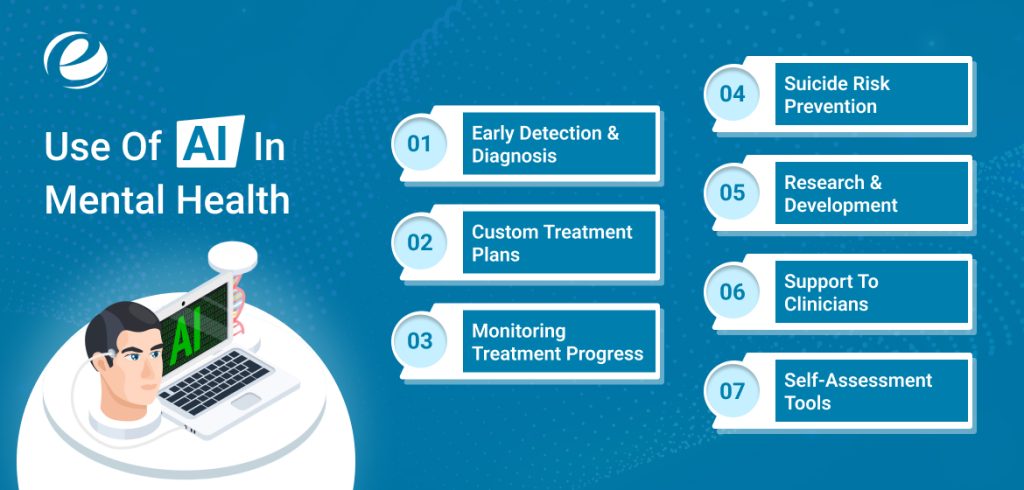
In this section of the blog, we are going to explore the top use cases of AI in mental healthcare app development. Let’s have a look:
| Use Cases | Description |
| Early Detection & Diagnosis | AI finds early signs of mental health problems by studying speech, social media posts and behaviour patterns. |
| Custom Treatment Plans | Based on personalized health records, genetic information, daily habits and practices, AI generates individual treatment and plans. |
| Monitoring Treatment Progress | AI apps track sleep, activity, and mood changes to check if treatments are working effectively for patients or not. |
| Suicide Risk Prevention | AI spots patterns showing suicide risks, helping provide care and support before situations become critical. |
| Research & Development | AI analyzes mental health data to improve understanding of conditions and create better treatment options. |
| Support To Clinicians | Artificial intelligence reviews therapy sessions and gives clinicians helpful feedback to improve their skills and treatment methods. |
| Self-Assessment Tools | AI chatbots track symptoms, give advice and connect users with psychiatrists for extra support when needed. |
Cost To Build AI Mental Healthcare App
Investment in an AI mental health app is an attractive proposition for healthcare organizations. The cost can range anywhere between $95,000 and $200,000 or even higher depending on various variables; on average it typically falls somewhere in between those numbers. The cost varies based on features, the platform, and how complex the app is. To better understand the cost, let’s look at the factors that affect how much it costs to develop an AI mental health app.
1. Platform Choice
When making an AI mental health app, you need to choose what type it will be (native, hybrid, or web-based) and which platform it will run on (iOS, Android, or both). Making an app for more than one platform, like iOS and Android, costs more because it takes extra time and effort. You have to build the app for each platform, test it, and fix problems for each one, which adds to the cost.
2. Design and User Experience (UX/UI)
A good AI mental health app needs to be easy for users to use and help with their emotional needs. When the design is engaging, people will want to keep using it. A simple and effective design keeps users coming back.
3. Operating Expenses
Creating an AI mental health app involves costs for building the app, doing research, and making sure it follows the rules and laws. The total cost can be different, from a few thousand dollars to hundreds of thousands, depending on how complex the app is and who will use it. After launch, you’ll also have ongoing costs like server maintenance, updates, and customer support.
4. Server and Cloud Infrastructure Costs
An AI mental health app needs powerful servers and cloud services to handle lots of data. Since the app uses AI to analyze data in real-time and give personalized support, it requires strong computing resources. These services can be costly, which adds to the overall development and maintenance expenses of the app.
5. Third-Party Integrations
Sometimes, AI mental health apps need extra features, like video calls or payment systems, which require third-party services. Adding integrations like video APIs or payment gateways can raise development costs. Although these aspects are necessary for an application to run as best it adds complexity and greatly raises operating expenses.
6. AI Model Development and Optimization Costs
The AI models in a mental health app are what make it function properly. They help analyze emotions, give personalized advice, and offer therapy techniques. Creating and maintaining these models is costly because it takes ongoing research, testing, and adjustments to keep them working well and improving over time.
7. Testing and Quality Assurance (QA)
Testing is essential to make sure the app works smoothly and securely. AI mental health apps deal with sensitive data, so they need thorough testing for bugs, security, and performance. The app should work smoothly on all devices and platforms. Quality assurance makes sure everything meets privacy and safety standards, ensuring the app is secure and reliable for users.
8. Stage-Wise Cost Breakdown
| Stage | Cost | Description |
| Planning | $5,000 to $20,000 | Focuses on market research, understanding user needs, and choosing platforms and technologies for the app. |
| Design and Prototype Development | $15,000 to $30,000 | Involves creating the UI/UX design, wireframes, and prototypes to visualize the app’s look and feel. |
| Implementation | $50,000 to $100,000 | This stage includes building the app’s features, developing both the frontend and backend, and adding AI models for the app’s main functions. |
| Testing & Quality Assurance | $10,000 to $25,000 | Ensures bug-free performance, user friendliness, and compliance with regulations during testing phase. |
| Deployment | $5,000 to $15,000 | This is where the app goes live on the App Store, and feedback from the user is gathered. |
| Post Launch Support & Maintenance | $5,000 to $10,000 | After the app is launched, this stage involves fixing any problems, adding new features, and making sure the app stays up-to-date. |
Why Choose EmizenTech For AI Mental Healthcare App Development?
EmizenTech is a top AI development company that builds scalable and easy-to-use AI apps for healthcare. Our team uses the latest technology to create AI-driven mental health apps that are robust and secure. We understand that mental health care is important, so we work closely with clients to make apps that not only make their business more successful but also help people suffering from mental health conditions.
EmizenTech has a proven track record of developing high-quality mental health care apps. Healthcare businesses rely on us to create AI solutions that will improve patient mental health, enable better support, and smooth out operations.
Conclusion
AI is transforming mental health care by making it more accessible and efficient. Healthcare providers are excited about AI because it offers many benefits, like cost savings and better care. AI apps are already helping people manage conditions like anxiety, depression, and stress, making mental health support more available when it’s needed most. However, AI still has some limits.
Using AI in mental health care is a big step forward. It can help doctors find problems earlier, make better diagnoses, and offer better treatment. AI in mental health apps are making it easier for people to get mental health support whenever they need it. Still, AI apps can’t replace real doctors or therapists. As AI technology improves, it will play a bigger role in mental health care. AI mental health apps will help more people, making it easier for them to get support. Many believe these apps can change lives and improve well-being.
FAQs
How does AI improve accessibility in mental health care?
AI helps people get mental health care with the help of chatbots and online therapy. These tools give fast help, work anywhere, and make it less scary to ask for support.
Can I integrate the AI health app with 3rd party systems?
Absolutely, the AI mental health app can be integrated with systems such as Electronic Health Records (EHR). It aids in the better management of patient data and enhances treatment plans.
What challenges come with adopting AI in mental health care?
Using AI in mental health care comes with some challenges. These include making sure the data is good and fixing any biases in the AI system. There also needs to be clear rules for how AI is used, especially with diagnoses and treatment. It's important to keep checking how well AI works for patients and mental health care.
What factors to consider when monetizing an AI mental health app?
When monetizing an AI mental health app, several factors need to be considered. These include ensuring privacy, understanding the target audience, and using value-based pricing. It’s vital to create a responsible monetization strategy that prioritizes user well-being while generating revenue.



 +1 (989) 535-9295
 info@emizentech.com
 emizentech


