
 Add us as a preferred source on Google
 The real estate industry has always been a bit slow when it comes to adopting new tech, but that’s changing fast. All thanks to AI, which is making a big difference in real estate. AI in real estate development isn’t just helping us make better decisions, it’s also changing how we manage properties, buy and sell homes, and invest in real estate. Whether you’re a property developer, investor, or anyone working in real estate, AI is making everything quicker, easier, and more efficient. It’s really transforming things up and bringing a whole new level of speed and intelligence to the industry.
The AI market in real estate is set to reach an incredible $1803.45 billion by 2030, growing by 35% each year. This big growth is happening for a few reasons. First is, AI is enabling smarter property management and seamless value creation. It is also handling the more tedious jobs like paperwork and admin work, etc. It can also build far more tailored experiences for customers that often feel something custom between people and business.
With all these benefits, it’s clear that artificial intelligence for real estate
What Is AI In Real Estate Development?
The real estate industry is changing a lot because of artificial intelligence. AI in real estate uses smart technology, like machine learning and data analysis, to make things work better and faster in different parts of the real estate world. It can analyze huge amounts of data, predict market trends, and make property management easier. It also creates personalized experiences for buyers, sellers, and renters. AI is now an important tool for making real estate more efficient. For businesses looking to implement these solutions, exploring real estate app development services can be a strategic step.
According to a Deloitte study, over 70% of real estate companies plan to use AI to improve their work. It has moved from being a new idea to a key part of many businesses. With the right strategy, AI could completely transform the real estate industry, just like it has in other fields. Using AI smartly helps make everything run better and more accurately.
Benefits Of AI In Real Estate Development
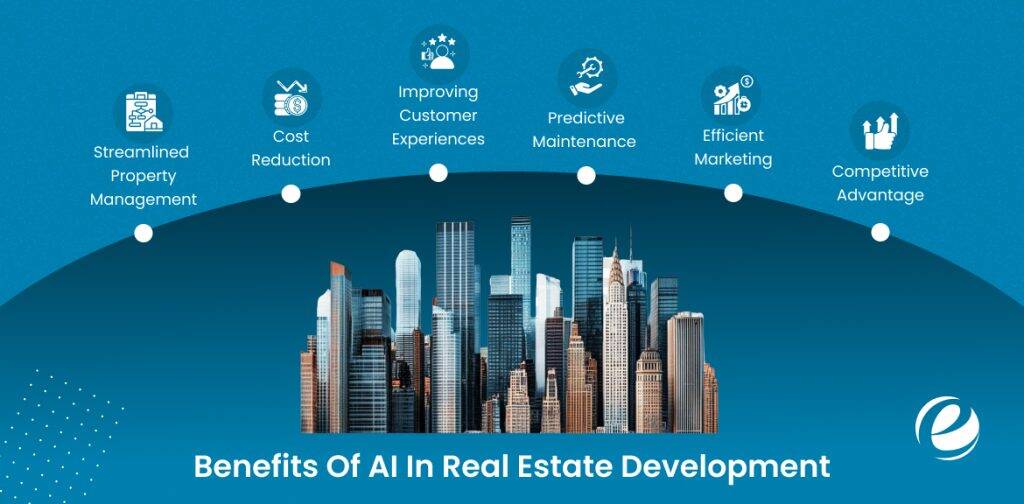
AI is about more than automating simple tasks. AI gives real estate professionals robust capabilities to increase productivity and transform their businesses in new directions. Now, let us discuss some of the most important benefits of AI in real estate development.
1. Streamlined Property Management
AI-based property management tools make managing real estate easy through automation of tasks like rent collection, maintenance and lease renewals. The other thing it can do is to predict the issue before it happen. Virtual assistants and AI chatbots are available 24*7 to help tenants, answer questions, and solve problems, improving satisfaction and keeping tenants happy.
2. Cost Reduction
AI is enabling real estate companies to cut costs by automating tasks and enhancing energy efficiency. Smart energy management systems can greatly reduce energy consumption by 30%, and this value is very significant in buildings with high energy demand, especially in large commercial buildings. This reduces operating expenses and boosts profitability.
3. Improving Customer Experiences
AI-powered chatbots and virtual assistants are completely changing the way customers use real estate services. These bots are available all day, every day, to answer questions, give property information, and set up viewings. To further speed up the property search process and make it more enjoyable for buyers and renters, AI also analyzes customer preferences.
4. Predictive Maintenance
AI tools can predict when property maintenance is needed before issues become costly. By analyzing past data, AI can spot potential failures and reduce maintenance costs by up to 20%. As a result, this method is far less expensive and avoids disrupting tenants, resulting in greater tenant satisfaction and decreased repairs.
5. Efficient Marketing
Using AI in real estate industry helps real estate companies find the right buyers by looking at how customers behave and focusing on certain groups. Since most buyers who want to buy a home or property begin their search online, AI helps companies focus on people who are more likely to buy, making marketing better and saving time on leads that aren’t as strong.
6. Competitive Advantage
Real estate companies using AI gain a competitive edge by offering unique services. Moreover, AI enhances more efficiency which saves a lot of time and money for companies. This keeps them ahead in the ever-changing market, as they better serve clients and compete well against the rest in the industry.
How To Use AI In Real Estate Development?
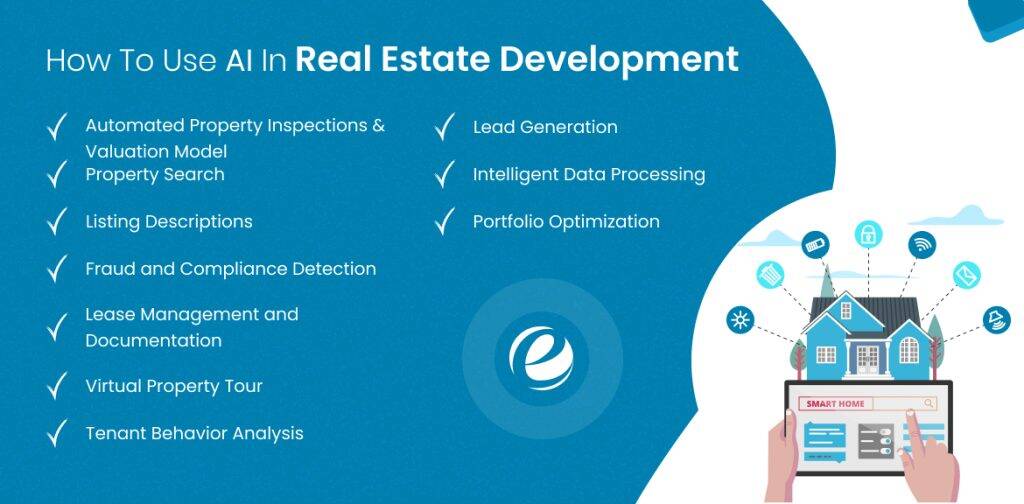
AI is transforming real estate by making home buying easier with virtual tours and predicting future market trends. This technology is helping buyers, sellers, and agents make smarter decisions. As AI use in real estate grows, it’s taking the industry to new heights, improving efficiency and creating better experiences.
Let’s explore the top use cases of AI in real estate.
1. Automated Property Inspections & Valuation Model
An Automated Valuation Model (AVM) uses technology to quickly estimate a property’s value without needing a visit. It looks at data and uses smart calculations to give accurate prices, helping real estate agents price properties right and save time. This tool makes property buying and selling faster and cheaper.
2. Property Search
AI-powered property search tools help people find homes faster by suggesting properties based on what they like, such as budget, location, and style. The system learns about the user’s preferences and shows results that match what they are looking for, making it easier for buyers and investors to find the right home.
3. Listing Descriptions
AI tools make writing property listings quicker and easier by automatically creating descriptions. Using details such as property size, location, and amenities, they create a stylish, professional listing. This helps real estate agents save time and makes properties more appealing to potential buyers.
4. Fraud and Compliance Detection
AI helps spot fake property listings or pictures that have been changed to trick people. It looks for misleading descriptions and makes sure the listings follow the right rules. This helps stop fraud and keeps both buyers and sellers safe by making sure everything is honest and legal.
5. Lease Management and Documentation
Artificial intelligence for real estate makes managing leases easier by automating tasks like writing and checking lease agreements. These tools make sure all contracts follow the law and help property managers track rent payments, maintenance, and other important details. This reduces the amount of paperwork and saves time for those managing the property.
6. Virtual Property Tour
AI-powered virtual property tours use AR and VR to let people explore homes without going there. Buyers can see details like room layouts and finishes from anywhere, saving time and reaching more people, even from other countries. It makes house hunting quicker and easier by allowing you to “walk through” homes from your own house.
7. Tenant Behavior Analysis
By analyzing the payment history, renting habits and other related stuff, AI in real estate development enables the landlords to understand how tenants behave. It can forecast whether tenants will pay regularly and enjoy being part of the place. Also gives indication on when to repair things or renew leases. This helps landlords take care of their properties and keep good relationships with tenants.
8. Lead Generation
AI helps real estate agents find people who might want to buy a house by looking at social media, websites, and listings. It helps agents focus on the people who are most likely to buy. This makes it easier and faster to sell homes and grow the business.
9. Intelligent Data Processing
Artificial intelligence real estate helps manage real estate paperwork by quickly going through documents like leases and loan papers. It can read and organize even messy handwriting. This saves time, makes fewer mistakes, and helps workers find important information faster so they can make better choices.
10. Portfolio Optimization
AI tools help real estate investors make more money by looking at market trends, property performance, and risks. They find avenues to diversify investments and propose plan modifications to achieve objectives. For example, AI can suggest moving money from bad properties or following new trends.
Steps To Implement AI In real estate
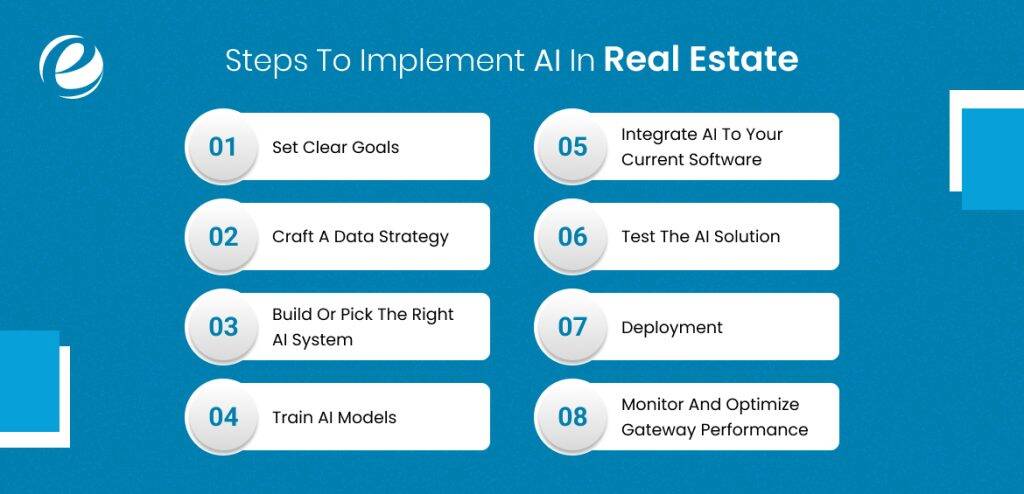
Using AI in real estate helps businesses stay competitive and make better decisions. It allows them to offer services that are more personalized and use data to grow and work more efficiently.
Let’s look at how to start using AI in real estate:
#Step 1: Set Clear Goals
Identify how you want your business to gain from AI in real estate development. Consider where it can be most beneficial, easing workflows, increasing customer service, or market predictions, etc. Make sure your AI goals match your business goals so you get the best results and value from it.
#Step 2: Craft a Data Strategy
Collect and organize data from sources such as property listings, buyer interactions, market updates, and deal transactions. However, ensure that the data is accurate and current, and secure it to comply with privacy regulations. A good plan for handling data helps AI work better. Check and update your data often so AI stays accurate and useful.
#Step 3: Build or Pick the Right AI System
Decide whether to make your own AI software or real estate app or use a ready-made solution. Make sure the system fits well with the technology you already use and solves your specific needs, like improving property searches or creating virtual home tours. Pick the one that works best for your business.
#Step 4: Train AI Models
Get the right data ready to train, test, and check your AI models. Use old data to help the AI learn patterns and make good predictions. Test the models to make sure they give useful and correct results. Keep training the AI with new data to keep it accurate and fix any problems over time.
#Step 5: Integrate AI to Your Current Software
Integrate the AI models into your existing real estate software systems. Make sure they work smoothly with other tools you use, like property listings, maps, or management software. This helps the AI be part of your daily operations and improves how everything works together.
#Step 6: Test the AI Solution
Thoroughly test the AI system to identify and address any issues, Collaborate with team members to obtain feedback and improve the AI on how people interact with it. Maintain a record of test results and the performance of the AI, so you can improve it in the future and make it even more useful.
#Step 7: Deployment
After testing the AI solution, see how it’s working, get feedback, and make changes if needed. Once it’s ready, start using it throughout the business. Train your employees on how to use it and make sure it fits into their daily work. Offer support and keep track of how well the AI is performing.
#Step 8: Monitor and Optimize
Keep an eye on how the AI is performing and how it helps the business. Regularly update the AI with new data to keep it accurate. Do checks to make sure the AI is working well and follow the latest trends to add new features when needed.
Develop Custom AI Real Estate Solutions With EmizenTech
The future of real estate depends a lot on artificial intelligence and machine learning. That’s why businesses around the world are using AI solutions to stay up-to-date with new changes and stay ahead of competitors. At EmizenTech, we specialize in developing AI solutions for businesses in many different fields. As a top AI development company, we excel in creating smart AI solutions with powerful features.
Our team of AI experts will help your real estate business by building custom AI software and real estate apps that give you a competitive edge. We’ll help you use AI to grow your business in new ways. Whether you need a real estate app, property management software, or tools to automate your work, we’ll create the right solution for you. Our solutions are easy to grow, affordable, and full of innovative features.
Contact us today to talk about your AI real estate development project needs!
Conclusion
Artificial intelligence in real estate will change the industry by making it more efficient, focused on customers, and data driven. AI helps by automating boring tasks, predicting market trends, improving security, and making transactions easier. It gives real estate professionals useful insights and helps create better customer experiences with personalized solutions. Using AI in real estate will encourage growth and innovation, and change how things are done for both individuals and businesses in the industry.
AI won’t replace real estate agents, but it will make their jobs easier by handling tasks like data analysis. This allows agents to spend their time on more meaningful work. AI and technology will work with agents to create a better future. As technology keeps improving, real estate companies need to use it to stay competitive. The future will have AI everywhere in real estate, making processes faster, smarter, and more transparent, creating many opportunities for growth.
FAQs
How to use AI in real estate?
You can use AI in many ways, like finding leads by analyzing user data. It can help write property descriptions that catch the attention of buyers or renters. AI can also make due diligence easier by automatically gathering and organizing important property information.
How will AI change the real estate industry?
AI will enhance customer experiences in real estate by offering virtual tours and personalized recommendations. It will also assist in property management, repair predictions, and enabling seamless property searches. It also helps real estate agents understand the market better.
Can AI help with real estate investment?
Yes, AI helps investors by looking at past data, market trends, and the economy to predict future property values and rental income. It helps find good investment opportunities and lowers risks, making it easier to make smart choices when investing in real estate.
What challenges might come with AI in real estate?
Some challenges of using AI in real estate include working with low-quality data, high costs to start, resistance to change, and not having enough skilled people to manage AI tools. These problems can make it harder to fully use AI in real estate projects.





 +1 (989) 535-9295
 info@emizentech.com
 emizentech


