 Add us as a preferred source on Google
 Over 56% of the world’s Smart cities are using new technology to run more smoothly, and one of the biggest changes is artificial intelligence. AI in urban planning helps make cities more efficient, eco-friendly, and better at meeting people’s needs. It’s a game changer for urban planning, and as a result the global market for AI in this field is expected to hit $54.8 billion by 2030.
AI helps by evaluating data to save energy, improve transportation, and make smarter decisions. It can create digital city models, use smart grids, and predict what cities will need in the future with the Internet of Things (IoT). AI is changing the way cities are built and managed.
In this blog, we’ll explore how AI is shaping smart cities and what this means for the future of city growth and development.
What Is AI In Urban Planning?
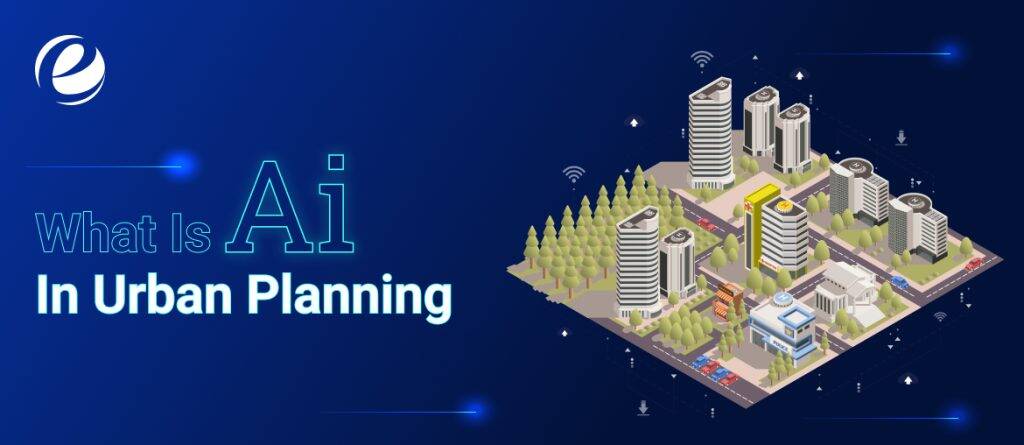
AI in urban planning uses smart technology to improve how cities are planned and built. It goes beyond just collecting data; AI analyzes the data to predict, simulate, and improve how cities function. With the rise of big data and the Internet of Things (IoT), AI has become even more powerful, collecting information from many sources to give better insights.
By 2025, it’s expected that 30% of smart city projects will use AI to model and plan city development. AI helps city planners design spaces that are not only beautiful but also efficient, using resources wisely. It looks at things like population growth and the environment to make sure the city grows in a smart and sustainable way. Cities can become smarter and more flexible by using advanced technology like AI. This helps them adjust to future changes and makes planning more effective and efficient.
Benefits Of Using AI In Urban Planning
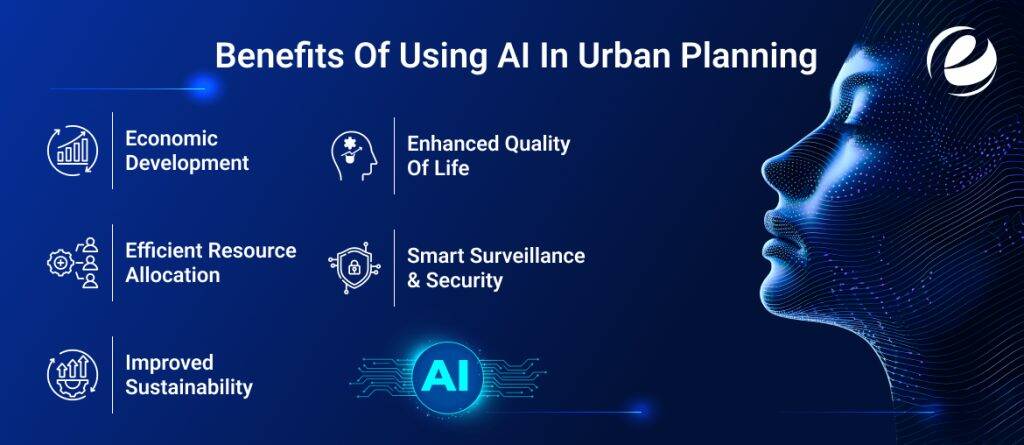
AI is making cities better in many ways. It contributes to a cleaner, safer, and more organized city. It would be right to say that AI brings convenience and comfort in urban life to all.
In this section, we will discuss the amazing benefits of artificial intelligence urban planning.
1. Efficient Resource Allocation
AI helps city leaders use resources like water, electricity, and public transportation in a smarter way. It looks at how people use these resources and how needs change over time. This helps stop waste and makes sure there’s always enough for everyone. AI ensures that water and electricity are available whenever required, and public transport operates smoothly at all times.
2. Improved Sustainability
Urban city planners use smart technology to make better decisions for the environment. It analyzes things like sunlight and wind to find the best places to build. This helps buildings use less energy and protects nature. If there is a better planning, cities are greener and more comfortable for people. Smarter choices save energy and and create a healthier place to live.
3. Smart Surveillance & Security
AI helps keep people safe with smart security systems. AI high-tech applications look for threats quickly through the use of face-recognition technology, predictive policing, and gunshot detection. Such systems can identify issues in real-time and help security authorities respond effectively. The artificial intelligence for urban planning ensures that the emergencies are handled in a much more effective way and all the threats are eliminated before damage can be caused.
4. Enhanced Quality Of Life
AI in smart cities improves life for everyone. It manages the waste which lessens litter, noise and pollution. It helps in making transportation relatively efficient, reducing traffic, and making commutes quicker. With better waste management and smoother travel, AI helps create cleaner, quieter, and more smart cities for everyone living there.
5. Economic Development
Finding good places for new businesses and improving roads and buildings is easier with smart technology. AI looks at data to find economic opportunities that help cities grow. It helps planners decide where to build shops, offices, and factories. This creates more employment opportunities and contributes to the development of the city in a positive way.
Uses Cases Of AI In Urban Planning
Employing AI in urban planning makes everything efficient, making life easier for the people who live and work there.
In this section, we will discuss the applications of artificial intelligence urban planning.
1. Smart Infrastructure and Utilities
Artificial intelligence in urban planning helps cities become greener and more sustainable. By managing energy use better, AI can reduce carbon footprints and improve waste management. Smart AI systems can predict when things need fixing, saving time and money. Energy grids can use renewable energy and spread it more efficiently, cutting waste and pollution. These intelligent systems are cleaning our cities and leading us toward a pollution-less future and better environmental management.
2. Intelligent Traffic Management
One of the most serious problem in the cities are traffic jams which cause delays, pollution and stress. By controlling traffic signals, rerouting cars, and bettering public transportation, AI can fix this issue. Sensors and cameras help AI adjust in real-time to reduce traffic and make things smoother. The market for AI in traffic management is growing fast, showing that more cities are using this technology to reduce congestion, improve safety, and make travel easier.
3. Data-Driven City Planning and Digital Twin Technology
Digital twins are digital versions of real-world cities made using data from smart devices. These virtual models allow planners to test these ideas out before implementing them in the real world. Using AI in urban planning to anticipate how these changes will function ensures that those decisions are wise and resource-conserving decisions. It allows to be better at planning traffic, designing cities or managing energy that is least disruptive to the city and its operations.
4. Intelligent Public Transport Routing
AI uses real-time data to change bus routes depending on how busy the city is. It helps buses avoid traffic and cut down on wait times. With AI’s smart planning, trips are faster, more reliable, and less frustrating. This makes getting around the city easier for everyone, improving the overall experience. AI’s ability to adjust to traffic and demand makes public transportation more efficient and convenient for all passengers.
5. Tackling Environmental Issues
With climate change affecting us, it’s important for future cities to handle waste better. Smart urban cities are using energy-efficient buildings, air quality sensors, and renewable energy to fight pollution. Air sensors monitor air pollution and locate sources of pollution. This can result in cleaner cities. AI also helps organize electric car charging stations and keeps cities running smoothly.
6. Water Management
Water shortage is a big problem in many places, so smart cities use AI to manage water better. AI tracks how much water is used, finds leaks, and predicts water needs based on past and current weather. The sensors can shut off water systems once a leakage is detected, preventing wastage. It also helps forecast peak water usage to distribute the water efficiently.
7. Smart Parking Management
Finding a parking space could be very frustrating. For this reason cities have implemented advanced parking solutions. They show drivers the locations of parking spaces that are empty at any given moment. You may locate parking close to a certain location using your phone. This also helps reduce traffic and makes it quicker and easier for everyone to get around.
8. Micromobility Infrastructure Management
Micromobility, like bikes and scooters, is changing how we get around in cities. AI can make it even better by analyzing data about how people use these services. It assists in determining where to deploy bikes, scooters or docking stations. AI in urban planning also helps distribute vehicles efficiently so that the traffic can be reduced and reaching the destination would not be a hassle. This leads to less pollution, better mobility, and eco-friendly travel for short distances in the city.
Challenges of using AI in urban planning
Artificial intelligence in urban planning can change how cities are built and how land is used. While it brings many benefits, there are also challenges to consider. It involves considering the use of AI in urban planning and design in ways that benefit city residents and investors alike.
In this section, we will discuss the challenges of artificial intelligence urban planning.
1. Data Quality and Bias
AI in urban planning needs a lot of high-quality and accurate data to make smart predictions. But sometimes, the data used for city planning can be outdated or missing. This means AI might work well in areas with lots of data but not in others. It’s important to check AI models to make sure they are fair and fix them if needed. Experts from different backgrounds should help, and data should include a variety of people and places.
2. Ethical Planning and Accountability
AI should be used carefully and fairly, with clear rules to make sure it’s doing the right thing. People should be involved in decisions, and there should always be human oversight. Citizens should offer feedback and voice their opinions both before and after the changes are implemented. City authorities should listen to everyone and take responsibility for their decisions.
3. Privacy Issues
A big concern with using artificial intelligence in urban planning is the risk of privacy violations. For AI systems to work properly, they need data from things like cameras, apps, social media, and smart devices. But this can be a problem if people are concerned about how their data is used, like being tracked or sold for ads. To ensure safety and transparency, privacy should be further ensured through strict guidelines on how the data is being collected and used, along with protective policies.
4. Transparency and Interpretability
AI systems, especially deep learning, can be hard to understand. When planners and investors don’t know how decisions are made, it’s hard to trust the results. For AI to be helpful in urban planning, it’s important that the decision-making process is clear and understandable so everyone can feel confident about the choices being made.
5. Digital Divide
Not everyone has the same access to technology, which creates a gap known as the digital divide. In order for AI to benefit everyone in smart cities, action must be taken to ensure that people from all backgrounds have equal access to technology and its benefits. This allows everyone, no matter their income or location, to benefit from AI.
Why EmizenTech is Your Ideal Partner for AI-Driven Urban Planning?
AI is transforming many areas, including urban planning. It helps reduce pollution, improve people’s lives, and solve problems related to energy, the environment, and society. To make sure AI is used and developed ethically, it’s important to partner with an AI development company that values collaboration and specialise in developing powerful AI solutions.
EmizenTech is a trusted AI development company that excels in creating AI solutions and systems for urban planning. Our team of expert AI developers creates high-quality AI solutions that support sustainability, growth, and better living conditions. We use advanced technologies to create creative solutions that make cities more efficient, eco-friendly, and able to adapt to future needs. Our reliable AI solutions were specifically designed to address the specific problems of urban planning and creating cities that are smarter.
Conclusion
AI has revolutionized the way we design and build cities. This makes cities more sustainable, efficient and more secure. AI helps city planners improve things like infrastructure, save energy, and keep residents safe, which makes life better for everyone. As AI keeps improving, it will help cities adapt to future challenges and be more flexible with new needs.
Even though using AI has its challenges, taking the right steps and managing the risks will make sure everyone benefits. Because AI will take an increasing role in urban planning tasks, engineers and planners will need to invest in continual professional development to maintain their position at the forefront of this process. Using AI isn’t just about keeping up with trends, it’s about making urban cities smarter. We must balance technology, ethics, and people’s needs to build cities that are not only smart but also sustainable and beneficial for the planet.
FAQs
What are smart cities?
Smart cities use technology to improve life for people. They use data to make things like traffic, energy, and waste management better. The aim is to make cities more comfortable, green, and eco-friendly. Cities run smarter and more seamlessly using AI's data analysis and automation.
How Can AI Be Used in Urban Planning?
By analyzing data from traffic, energy use, and sensors, AI can improve how cities function. This data-driven approach drives smarter, greener urban planning, energy conservation, and transportation efficiency.
How can AI improve decision-making in urban development?
AI analyses data and predicts future outcomes, helping urban planners make better decisions. It finds patterns in traffic and energy use to give helpful insights. This aids in the development of improved cities, addressing issues in advance, and the construction of sustainable, and healthy spaces.
How to use AI in urban city design?
Artificial intelligence can be useful in designing cities, constructing roads, as well as creating utilities, and much more.




 +1 (989) 535-9295
 info@emizentech.com
 emizentech


