
 Add us as a preferred source on Google
 Mobile phones are an integral part of our daily lives, transforming how we live. Mobile apps are not only useful but also impacting numerous businesses across the U.S. and around the globe. Fitness and health goals are among the most important things that people should consider. Nowadays, everyone has a plan for both their lifestyle and health. Therefore, many people are selecting health insurance plans with the help of healthcare insurance apps to receive the benefits of health coverage.
One healthcare insurance app gaining more recognition is Lumi, developed by Nextcare. In a time when digital technologies are changing how industries operate, health insurance applications like Lumi have made it easier for people to manage claims, policies, and health benefits.
Lumi allows users to control their health insurance policy, access services, make appointments, and much more. The app demonstrates how health insurance companies are transforming their products to meet the needs of today’s technologically savvy consumers.
The time has come for health insurance firms to move away from desktops and embrace healthcare insurance apps. If you’re considering building a similar app, it’s essential to know how much it would cost to develop a healthcare insurance app like Lumi.
In this blog, we’ll explore the costs involved in developing a healthcare insurance app like Lumi by Nextcare.
So, let’s get started.
What Is Lumi By Nextcare?
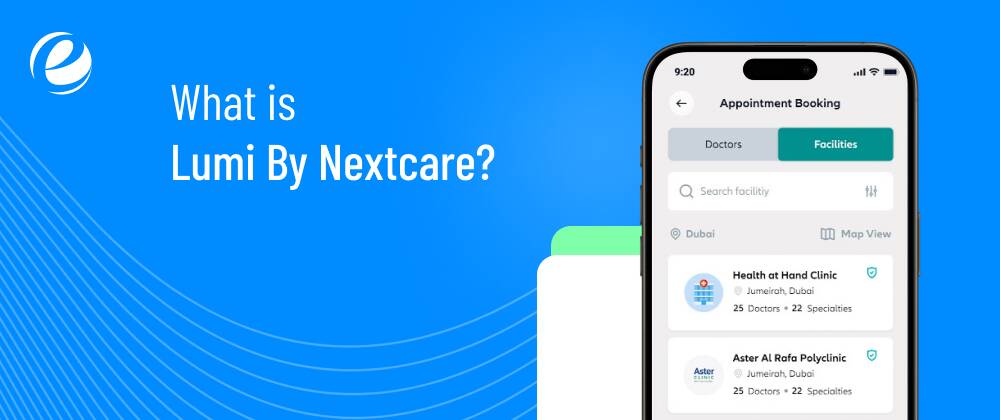
Lumi is a healthcare insurance app created by Nextcare that is designed to provide an easy and seamless experience for customers. It integrates all the essential functions required by users to manage their health insurance policies. From looking up policy information to filing claims, booking appointments, and contacting medical service providers, Lumi makes it easier to manage the entire insurance process.
The Lumi app also allows users to easily search for healthcare professionals, view medical records, and track medical expenses. Its user-friendly interface has made it popular among users. Several other insurance providers are currently looking to create similar apps to enhance the customer experience.
Benefits Of Healthcare Insurance Apps For Businesses
Insurance companies enjoy a myriad of benefits when they decide to build healthcare insurance software and apps. From simplified claim processing to improved cost efficiency, firms across all sectors can take their products to the next level.
1. Streamlined Operations
The arduous task of managing policies and processing claims places a burden on both healthcare providers and policyholders. Health insurance applications provide periodic updates on coverage, resulting in cost reductions and smoother operations.
2. Cost-Efficiency
A healthcare insurance app can automate the often costly management process. The right application eliminates the need for physical documents, which reduces administrative costs. Additionally, simplified operations help reduce time spent on tasks, improve service levels to customers, and increase user numbers, leading to higher revenue over time.
3. Simplified Policy Selection
Every person is unique, meaning their insurance needs differ as well. Health insurance and life insurance apps usually offer options to help users find the best plan suited to their requirements. These apps are extremely user-friendly, allowing customers to perform tasks they would have asked an agent about, such as reviewing policy information and searching for service providers. The app analyzes user data to help them choose the best plan and appropriate subsidy options.
4. Speedy Claims Processing
Health insurance claims processing can be complicated depending on the type of healthcare services. Claims must comply with various laws and regulations, or they could be rejected or delayed. Healthcare providers typically need advanced solutions developed by medical app development companies to handle these processes. This is where healthcare insurance apps come in to help.
5. Data-Driven Insights
As health information databases and customer feedback grow, apps help organizations gain data-driven insights that can improve business efficiency. Health insurance app provides valuable information about patient behavior, the effectiveness of medical treatments, and health trends. This information allows providers to make informed decisions and enhance the quality of their services.
6. Increased Output
According to a study, 78% of employers believe automated workflows enhance productivity. By automating processes like sending renewal reminders and generating reports, smartphone healthcare insurance apps reduce the chances of human error, preventing issues like inaccurate medical data exchange, lost paperwork, and other mistakes.
7. Maximizing Revenue
One of the biggest benefits of creating a healthcare insurance app is the potential to automate procedures as well as eliminate the need for paper documents. A better customer experience leads to an expanded customer base and accelerates business growth.
Key Features Of a Healthcare Insurance App Like Lumi
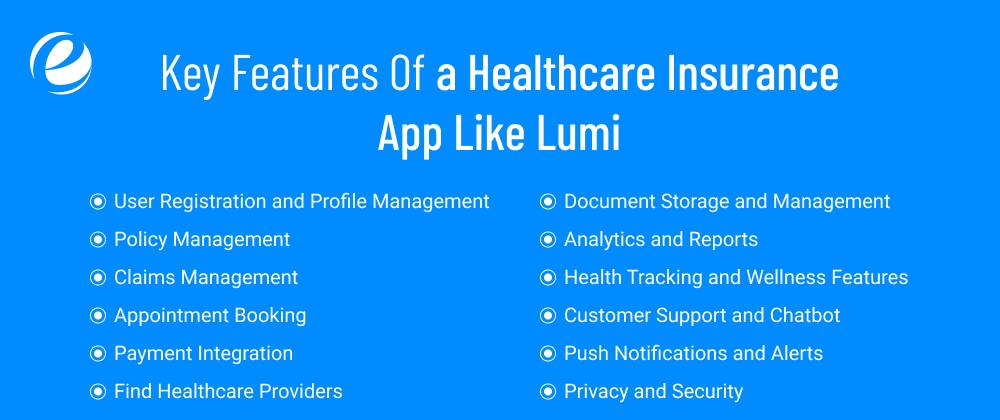
To understand the costs involved in creating a healthcare insurance app like Lumi, it’s essential to know the key features an app should have. The following are the essential features that a health insurance application, such as Lumi, is likely to include:
1. User Registration and Profile Management
Users should be able to sign up for the application by providing personal information such as their name, email address, phone number, and policy number. The profile should include details about the insurance plan, claims history, and other relevant information. Integration with social media profiles or email accounts for easy sign-ups could also be a useful feature.
2. Policy Management
The healthcare insurance app should allow users to view and manage their health insurance policy. This could include functions such as checking policy coverage, expiration dates, renewal dates, and premium status. Users should also be able to print and download their insurance card directly from the app.
3. Claims Management
A key function of healthcare insurance apps is allowing users to manage, file, and track their insurance claims. Patients can submit medical documentation and receipts, monitor the status of their claims, and receive notifications when claims are accepted.
4. Appointment Booking
App users should be able to schedule appointments with medical professionals using the healthcare insurance programs
5. Payment Integration
Secure payment platforms are essential for paying premiums and processing claim reimbursements. The app should allow users to pay premiums, track payment history, and receive receipts for payments made.
6. Find Healthcare Providers
The app must include an option to help people locate healthcare providers, including hospitals, clinics, physicians, and pharmacies. The ability to search using filters like location, specialty, rating, and more will enhance the user experience. Integrated maps can also be included to make navigation easier.
7. Document Storage and Management
The app must provide secure storage for documents, allowing users to store important medical files, such as prescriptions, lab results, and discharge summaries. Ensuring the secure storage of this important data is crucial for security and trust.
8. Analytics and Reports
The application should provide users with information about their medical costs, including the amount paid for claims, the doctors they’ve seen, and the treatments they’ve received. Health insurance companies may also use this data to produce customized reports for their customers, enhancing the user experience.
9. Health Tracking and Wellness Features
The app should integrate with fitness trackers to monitor users’ health, such as steps walked, calories consumed, or heart rate. It can also provide health tips, fitness plans, and nutrition advice based on the user’s health goals.
10. Customer Support and Chatbot
Customer support via chatbots or live chat is essential for prompt resolution of questions in insurance apps. Automated assistants can help users with complicated procedures, such as filing claims or understanding policy details.
11. Push Notifications and Alerts
The healthcare insurance app
12. Privacy and Security
Insurance companies offering health insurance must take strict measures to safeguard data, ensuring the privacy of users and compliance with healthcare regulations, such as HIPAA or GDPR. Implementing strong encryption and security protocols for data storage and transmission, secure authentication methods, and ensuring compliance with privacy regulations is essential.

What Is The Cost To Develop a Health Insurance App Like Lumi By Nextcare?
The cost to create a healthcare insurance app like Lumi will vary depending on a variety of factors. There’s no one-size-fits-all solution. On average, developing apps like Lumi will cost anywhere from $50,000 to $500,000.
Here’s the breakdown of different levels of apps:
Basic app: $50,000 to $100,000
Mid-level app: $120,000 to $250,000
High-end app: $300,000 to $500,000+
Costs vary based on factors such as the complexity of the app, the functions it offers, and the platform it’s designed to run on. If you’re looking to develop a simple healthcare insurance app, the price will be lower. However, if you want more sophisticated features, the price will be higher. Remember, these estimates are approximate, the final cost depends on your specific requirements.
Factors Affecting The Cost Of Developing a Healthcare Insurance App Like Lumi By Nextcare
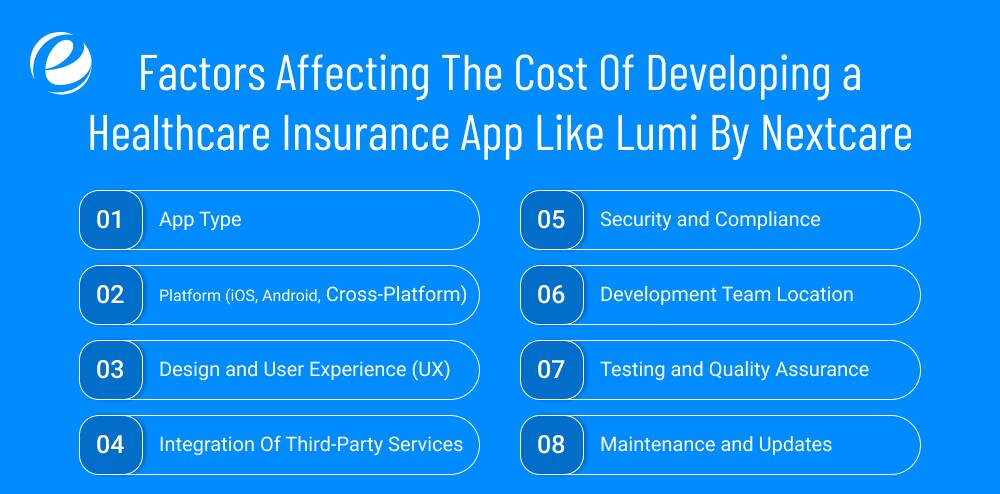
Creating digital solutions for healthcare insurance app like Lumi is a significant investment. However, with proper strategies, you can reduce costs without sacrificing the quality of your product.
1. App Type
There are various types of healthcare insurance apps, each serving different users, such as health professionals, patients, or insurance companies. These apps vary in complexity. Specifically, an app designed for managing claims might require more sophisticated backend services than a simple user interface that only provides access to information.
2. Platform (iOS, Android, Cross-Platform)
Developing a healthcare insurance app for both iOS and Android generally incurs higher costs due to the need for platform-specific adjustments. Cross-platform frameworks like React Native can reduce development costs by allowing the use of a single source code for both platforms.
3. Design and User Experience (UX)
A well-designed healthcare insurance app enhances the user experience and increases engagement, but it may also raise development costs. Creating custom animations, graphics, and intuitive navigation requires skilled designers and more time to develop. Investing in good design usually leads to higher user retention, making it a crucial element to consider.
4. Integration Of Third-Party Services
If your healthcare insurance app needs to integrate with existing applications, such EHR, payment gateways, or insurance databases, the costs of these integrations can add up. Each integration needs additional development time and resources, which can affect the overall budget.
5. Security and Compliance
Healthcare insurance applications manage sensitive user data, and therefore, must comply with laws such as HIPAA. Implementing strong security measures like data encryption and secure authentication procedures, may raise development costs. Compliance with laws, rules and regulations is important to protect both the user and the company.
6. Development Team Location
The geographical location of the development team greatly impacts the total cost. Developers in areas with a higher cost of living tend to charge more than those located in regions with lower living costs. However, outsourcing to experienced teams in regions with lower costs can offer an excellent balance between high quality and affordability.
7. Testing and Quality Assurance
Thorough testing is important to make sure that the app functions properly and provides a great user experience. The more stringent the testing process, the higher the cost. Quality assurance helps identify issues before the app’s launch, ultimately saving costs by preventing expensive repairs later.
8. Maintenance and Updates
The initial development costs will only account for a fraction of the total budget. Maintenance, updates, and bug fixes will increase the overall cost. It is essential to plan for regular updates and maintenance to keep the app running efficiently and securely.

Challenges In Healthcare Insurance App Development
Utilizing the benefits of a healthcare insurance app can give providers a competitive edge and open new avenues for growth. When an app is well-designed, clients can explore coverage options and monitor their insurance plans directly from their phones. However, developing a healthcare application is an arduous task. Here are a few challenges to consider before developing a healthcare app.
1. Security and Privacy of Data
Due to the sensitive nature of health data, companies must implement effective encryption protocols and secure authentication techniques. Security and privacy are the top priorities when protecting the user data from breaches as well as unauthorized access.
Integration with Existing Systems
For a health insurance app to work effectively, it must seamlessly integrate with existing health systems. Online health records, insurance databases, and pharmacy networks should be combined into one set of services, giving users access to real-time, updated information.
2. Compliance With Regulations
Insurance companies offering health insurance must comply with various laws governing data protection and healthcare practices. Compliance with HIPAA in the U.S. and GDPR in Europe is non-negotiable. Developers must ensure that the medical insurance app meets the legally required standards to avoid penalties and maintain user trust.
How Does a Health Insurance App Like Lumi Earn Money?
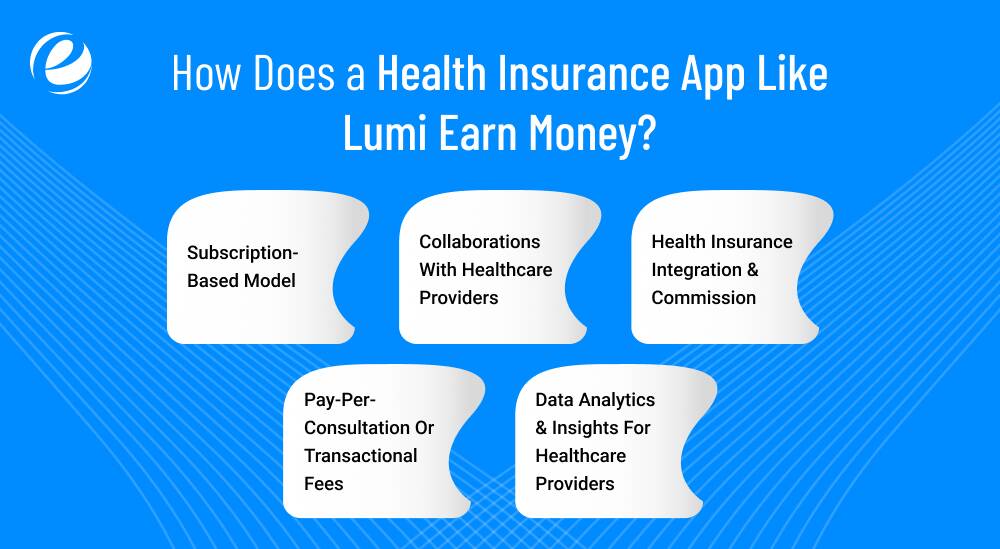
Lumi by Nextcare operates in healthcare, offering exclusive services like virtual consultations, health claims monitoring, and much more. The strategies for Lumi’s profitability must focus on providing accessible, valuable, and compliant healthcare services.
The models outlined below are proven approaches in the healthcare insurance app sector, often recommended to clients aiming to build long-term, scalable revenue streams while remaining patient-centric and regulatory-compliant.
1. Subscription-Based Model
A subscription plan can be offered to customers who require specific healthcare services. This could include unlimited consultations with a doctor, priority appointments, and discounts on medical treatments. Customers pay a regular fee to access these additional benefits.
2. Collaborations With Healthcare Providers
There is potential for collaborations with clinics, doctors, or pharmacies. By partnering with them, you could earn a fee per appointment or for any service used via your app.
3. Health Insurance Integration & Commission
By incorporating insurance claims features into your app, you can earn a fee each time a user files a claim or registers with an insurance provider through the app.
4. Pay-Per-Consultation or Transactional Fees
Customers can be charged when accessing services from health professionals. For example, they could pay for consultations via video, appointment scheduling, or medication delivery. This way, customers only pay for the services they require.
5. Data Analytics & Insights for Healthcare Providers
You could sell anonymized health-related data to healthcare professionals. This data may include patterns in treatment, symptoms, or patient preferences. By sharing this information, you could generate revenue.
How To Optimize Healthcare Insurance App Development Like Lumi Cost?
Developing a patient centric healthcare insurance app like Lumi is costly. However, with a careful plan and smart choices, you can reduce costs while ensuring a quality product. Below are some easy tips to help you optimize the cost of developing your app:
1. Start With a Clear Plan
Before beginning development, ensure you know the exact purpose of your application. What features will it offer? Will clients be able to submit claim forms, make appointments, or monitor their health coverage? The clearer your strategy, the simpler and more efficient the development process will be.
2. Focus on the Must-Have Features First
Some features may not be necessary at the beginning. To save money, start by focusing on the essential features your customers need. For example, you may begin by offering claims submission, policy review, and doctor search. Adding additional features later can help spread out costs.
3. Use Ready-Made Solutions
Instead of building everything from scratch, consider using pre-built solutions. Many pre-built software and tools are available, such as payment gateways, security tools, and messaging platforms. These will save you significant time and money compared to creating the entire system from the ground up.
4. Outsource The Development
Hiring a development team within your own country can be expensive. Consider outsourcing the work to countries with lower development costs, such as Eastern Europe. Professional development teams in these regions can provide high-quality services at a fraction of the cost compared to those in Western countries.
5. Use Cross-Platform Development
To save money on healthcare insurance app development for both Android and iOS, it is recommended to use cross-platform development tools. These tools enables you to create a single codebase for both platforms, reducing time and eliminating the need for two separate development teams.
6. Develop a Minimum Viable Product (MVP)
An MVP is a simplified version of your healthcare insurance app that includes only the essential features. Launching with an MVP allows you to test your concept, gather feedback from users, and assess how your app performs in real-world conditions. By focusing on the MVP and avoiding excessive investment in extra features, you can evaluate whether your app is effective.
7. Focus on Security Early
Health insurance companies handle sensitive medical and personal information. Therefore, security is critical. Ensuring your healthcare insurance app is secure early on can prevent cost-intensive issues later. Make sure your app includes features such as data encryption, secure user authentication, and compliance with privacy laws to avoid security problems down the road.
8. Choose the Right Technology Stack
Selecting the right technology stack is essential. Avoid overly complex technologies that can slow development and increase costs. Instead, use popular and tested technologies that will allow you to develop your app quickly and efficiently.
9. Plan For Future Scalability
If you’re starting with a smaller-sized application, think about how you want it to grow in the future. It’s more cost-effective and easier to plan for scalability early rather than making adjustments later. Choose platforms and technologies that will support your app’s growth as you add more users and new features.
10. Test Early and Often
Regularly testing your healthcare insurance app throughout the development phase will help you identify and resolve issues early. Detecting problems sooner is less expensive and more efficient than fixing them after your application has been released. Test your app for bugs, usability, and functionality to ensure it runs smoothly.
11. Use Cloud Hosting
Instead of investing in costly physical servers, consider cloud hosting options like AWS or Google Cloud. Cloud hosting is cost-effective in terms of flexibility and scalability, allowing you to pay only for the services you actually use. It can help you save on server costs and scale your application easily as it grows.
12. Optimize The Design
While a clean and stunning design is important, you can keep costs low by focusing on simplicity. Use straightforward layouts and user-friendly interfaces to keep the design process efficient and affordable. There’s no need to complicate things with elaborate animations or intricate graphics at the beginning.
13. Avoid Unnecessary Features
Be cautious about adding features that don’t add significant value for users. For example, advanced options like AI-powered suggestions or sophisticated analytics can be expensive to develop and maintain. Start with the core features, then add more advanced options once the app is secure and financially viable.
14. Join a Team of Experienced Developers
While hiring cheaper developers may seem like a good way to cut costs, it could result in poor-quality work that will drive up costs later. Instead, seek out experts with experience in the healthcare insurance industry who can provide valuable insights that will enhance your app’s performance and user experience.
Why Choose EmizenTech For Healthcare Insurance App Development Like Lumi?
The development of healthcare insurance apps, such as Lumi by Nextcare, requires specialized knowledge of healthcare features, strict compliance standards, and privacy concerns for users. EmizenTech is a reputable mobile app development company with extensive experience in creating high-quality healthcare solutions.
As a trusted healthcare development partner, we specialize in developing apps that protect patient information privacy and comply with all healthcare regulations. Our team of experts, including developers, designers, and compliance professionals, works collaboratively to create secure, efficient applications tailored to meet your specific business needs. We take a holistic approach to development, ensuring that the app complies with industry standards and delivers exceptional user experiences.
Get in touch with us to discuss your app requirements.
Conclusion
The development of a healthcare insurance app, such as Lumi by Nextcare, is a significant investment. However, it is one that will greatly enhance the customer experience, improve efficiency, and help customers manage their health insurance needs. With the rapidly increasing demand for digital health services, a robust health insurance app is not only beneficial but essential for healthcare companies looking to stay competitive.
The cost of developing a healthcare insurance app depends on several factors, including the app’s complexity, features, and the location of development. While the initial investment may be high, the benefits of offering a streamlined, technology-driven user experience can be substantial for both users and insurers.
FAQs
What are the main factors that affect the cost of building a healthcare insurance app?
The cost depends on various factors, including the number of features the app offers, whether it is designed for Android, iOS, or both, the level of security, and the complexity of the app. Higher security and more features generally result in higher costs.
How can I reduce the cost of building a healthcare insurance app?
You can reduce costs by starting with fewer features (e.g., a basic app), using cross-platform development (which works for both Android and iOS), and outsourcing to developers who provide the best value for money.
How long will it take to build an app like Lumi?
It can take anywhere from three to twelve months to develop an app like Lumi, depending on the number of features and the extent of changes or testing required during the development process.
Is it cheaper to build an app for only one platform (like Android or iOS) or for both?
It is generally cheaper to build an app for just one platform (like Android or iOS). If you want the app to work on both platforms, it will require a larger investment to develop an app suited for each platform individually, unless you use cross-platform tools.



 +1 (989) 535-9295
 info@emizentech.com
 emizentech


