
 Add us as a preferred source on Google
It’s tough to find developers who actually deliver results, not just billing hours. You’re not alone. The IT staffing space is projected to expand from $124.46 billion in 2025 to $160.5 billion by 2032.
So this gap makes the whole “hire developers” question sound even more urgent for companies that are trying to scale. In this blog, we’ll address the real challenges of hiring dedicated developers, uncover the common obstacles behind these hiring decisions, and share practical, proven approaches. So you can hire with more clarity, speed up delivery, and avoid expensive mistakes.
How Hiring Dedicated Developers Can Be a Game-Changer for Any Business
Bringing dedicated developers on board isn’t just about filling a seat. When it’s done right, it reshapes how fast you build and how well you compete. Along with how confidently you expand that product roadmap as time goes on.
Faster Time-to-Market
Dedicated developers plug into your workflow much more right away, so you skip those long onboarding cycles. Once you have ready-to-work engineers, you can push features and whole products weeks sooner than competitors who can’t afford similar hiring delays.
Access to Niche Skills
Instead of settling for generalists, you get developers with real deep focus in specific frameworks, like React, Node, or Flutter. That precision reduces rework, ups code quality, and shortens the full project delivery timeline.
Note: If you want to hire Node.js developer, then you can hire from us. Connect with our experts, and they will help you to choose the best developers for your project.
Cost Predictability
With a dedicated hiring model, you swap out the “maybe” world of freelance billing for fixed monthly costs. You dodge scope creep invoices, you plan budgets months in advance, and you get clear reporting on hours and sprints. As well as the deliverables for the entire engagement.
Scalability Without HR Overhead
Want dedicated developers for a short sprint, say three months, or for a longer plan like a two-year roadmap? You can scale the team up or down right away, without the payroll stuff to worry about, no benefits admin hassles, and not those drawn-out termination processes either.
Long-Term Product Ownership
Instead of short-term freelancers, drawn-out developers remain dialed in to your product architecture and roadmap direction, and the steadier cadence means fewer knowledge gaps, more coherent documentation, and engineers who really grasp your business context as things move forward.
Top 15 Hidden Challenges of Hiring Dedicated Developers
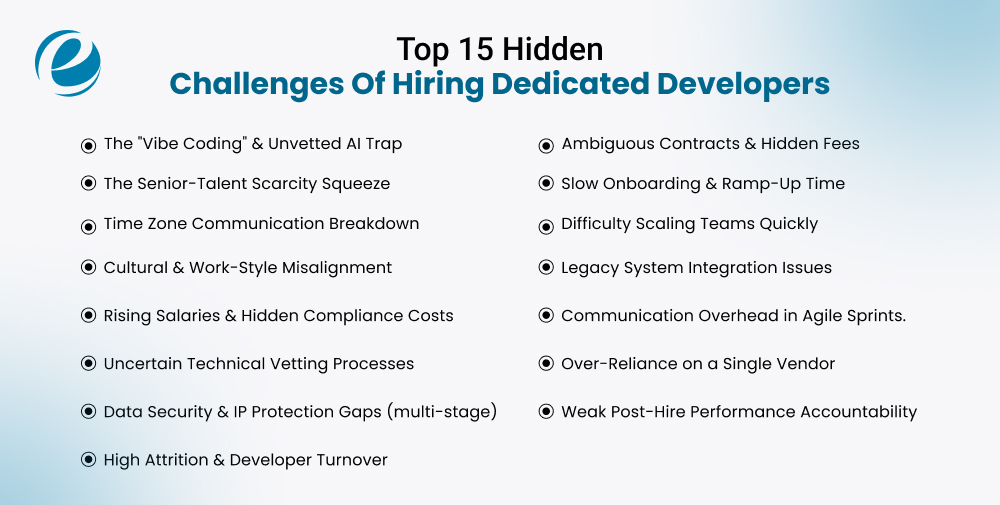
Before you hire dedicated developers, it helps a bit to notice what actually details these engagements. Below are 15 real challenges people run into when hiring dedicated developers. Furthermore, it’s often these same issues that make businesses hesitate in the first place.
Challenge 1: The “Vibe Coding” & Unvetted AI Trap
The Problem: Candidates will churn out huge volumes of AI-generated code but don’t grasp the system architecture. Additionally, they also skip the “what happens when” stuff, edge cases, and security vulnerabilities too.
The Business Impact: This can lead to technical debt, unstable releases, and security issues that become expensive to fix during future maintenance and refactoring.
The Proven Solution: Instead of shifting attention to basic syntax checks, evaluate candidates through real-world debugging tasks, legacy code analysis, system design discussions, and code review exercises to understand their problem-solving approach.
Challenge 2: The Senior-Talent Scarcity Squeeze
The Problem: Everyone wants senior engineers, but market supply is mostly entry-level. So the real senior experts are booked up fast, and then they’re hard to lock in.
The Business Impact: Projects stall for months searching for a senior hire, timelines drift, and companies end up paying inflated premiums just to get an individual capable enough to steer the work direction.
The Proven Solution: Work with a vetted, dedicated development agency that maintains a team of pre-vetted senior engineers. This typically cuts time-to-hire from months to days.
Challenge 3: Time Zone Communication Breakdown
The Problem: Work hours are spread out between in-house teams and offshore developers, so replies get delayed a bit, and everyone starts to wait longer than they should. Then stand-ups get missed, and when urgent issues come up, the whole decision is slower.
The Business Impact: Sprint velocity drops, and blockers can sit there unresolved overnight. In addition, stakeholders lose the real-time visibility of day-to-day progress across the workstream.
The Proven Solution: Pick vendors who can offer overlapping working hours, and also insist on asynchronous documentation standards. And make sure there is a dedicated day-to-day project manager who bridges that time gap daily.
Challenge 4: Cultural & Work-Style Misalignment
The Problem: Different communication norms, feedback approaches, and even work ethic can shift by region. It’s not just language but about how people pace things and what they call “urgent”. So within mixed teams, you get friction, and the collaboration slows down in a way.
The Business Impact: Incorrect assumptions start small, then snowball into missed requirements. After that, you see repeated rework, and relationships get strained between your core team and the dedicated developers.
The Proven Solution: Do a short cultural-fit trial sprint before the full onboarding phase. And set communication protocols, like tone expectations, escalation paths, and a feedback rhythm, up front.
Challenge 5: Rising Salaries & Hidden Compliance Costs
The Problem: Visa fees, salary inflation, and a bunch of compliance costs have made normal in-house senior hiring way more expensive than most budgets expected for 2026.
The Business Impact: Hiring budgets inflate mid-project, like without warning, and teams end up either shrinking scope or pushing critical features back to stay inside the money limits.
The Proven Solution: Compare fixed dedicated hiring rates against the full in-house total, salary, benefits, and compliance overhead before committing to either hiring path.
Challenge 6: Uncertain Technical Vetting Processes
The Problem: Usual coding tests and resume screening don’t expose how someone actually performs when there’s pressure or when requirements are vague and half unclear.
The Business Impact: Organisations hire dedicated developers who sound impressive on paper but then trip up on real production systems. Then you get expensive mid-project replacements.
The Proven Solution: Apply a multi-stage vetting approach, do live pair programming, and run architecture conversations. Also, include a paid trial task before anyone hires a dedicated developer contract.
Challenge 7: Data Security & IP Protection Gaps (multi-stage)
The Problem: Handing over confidential code, plus business logic, to outside developers creates real discomfort. Because leaks can happen, unauthorized use can creep in, and data-handling practices are often weaker.
The Business Impact: A single security lapse can put trade secrets in the open and trigger compliance violations. This will quietly erode the client trust you’ve built up for years.
The Proven Solution: Require signed NDAs and keep database access restricted. Also, only cooperate with vendors that follow ISO-certified security protocols for each dedicated engagement, no exceptions.
Challenge 8: High Attrition & Developer Turnover
The Problem: Dedicated developers leaving mid-project happens more often than most people believe because of better offers, burnout, or just plain timing. Either way, continuity gets stirred up, and suddenly you’re back in those awkward re-onboarding cycles.
The Business Impact: When that developer exits, a bunch of knowledge goes with them. Releases start moving slowly, timelines slip, and clients get annoyed because they assumed stable delivery would just happen, consistently.
The Proven Solution: Pick vendors with documented retention rates above 90%. And ask for contractual replacement assurances, with a defined transition window, so it’s not “soon-ish” or “as available”.
Challenge 9: Ambiguous Contracts & Hidden Fees
The Problem: These vague scope objects and unclear billing setups tend to appear only after the agreement is signed, like businesses just get caught off guard.
The Business Impact: Then you get these unexpected charges for “extra” hours and various change requests. Or even exit clauses; the real costs jump way past the original budget.
The Proven Solution: Try to insist on a detailed statement of work with expected outcomes and billing cycles. As well as exit terms spelled out before you bring on dedicated developers for any project.
Challenge 10: Slow Onboarding & Ramp-Up Time
The Problem: New developers often take weeks, sometimes even more, to understand your codebase and all the tools. Furthermore, the internal processes before they can add meaningful output.
The Business Impact: Project momentum stalls right at the beginning, and sprints end up running under capacity, so eventually stakeholders start asking if the new hire is really worth it or not.
The Proven Solution: Put structured onboarding documentation in place, plus set up a sandbox environment, so people can experiment safely without causing trouble. Additionally, do a pairing period with existing team members starting from day one.
Challenge 11: Difficulty Scaling Teams Quickly
The Problem: Business needs change fast, but getting more capable developers on short notice still turns into that recurring ops bottleneck.
The Business Impact: Teams either end up overtaxing existing staff, or they just stall feature releases while looking for additional good hires.
The Proven Solution: Team up with agencies that keep a ready bench of pre-vetted developers. So you can expand headcount in days instead of dragging it out for months.
Challenge 12: Legacy System Integration Issues
The Problem: Some developers are not used to the older technical stacks. However, they find it hard to adjust legacy code safely without mistakenly inviting regressions.
The Business Impact: Bug frequency goes up, deployments slip, and technical debt keeps compounding. Because fixes create new downstream issues.
The Proven Solution: Evaluate applicants specifically for legacy stack experience and pair them with internal engineers who actually understand the system’s history and context.
Challenge 13: Communication Overhead in Agile Sprints
The Problem: When you add external developers to the existing sprints. Sometimes you get duplicated updates, unclear ownership, and this general muddle about which tasks are actually first.
The Business Impact: In sprint evaluations, teams keep noticing wasted hours on explanation calls, not on real development work.
The Proven Solution: Instead of keeping a separate parallel way of working, weave dedicated developers right into your current sprint boards, stand-ups, and retro processes.
Challenge 14: Over-Reliance on a Single Vendor
The Problem: If you depend entirely on one staffing partner. Your business gets visible fast if that vendor raises their rates, loses key staff, or just shuts down.
The Business Impact: Any sudden vendor problem can stop development outright. However, then there is no backup plan, no transition strategy ready to go.
The Proven Solution: Maintain documentation ownership and ensure source code access stays with you. Also, just to be safe, set up a secondary vendor relationship as a contingency, like a backup safety net, because you never know how things play out.
Challenge 15: Weak Post-Hire Performance Accountability
The Problem: If there aren’t clear KPIs, it’s hard to tell whether a dedicated developer is delivering real value or just logging hours, and the distinction matters.
The Business Impact: When performance is under par, it tends to stay unnoticed for months. Meanwhile, the budget gets quietly drained, and it also pushes back product milestones, step by step.
The Proven Solution: Use measurable sprint-level KPIs and run monthly performance reviews, so value shows up in numbers. Then connect contract renewals to the delivery outcomes.
Quick-Reference Matrix: Challenges vs Proven Solutions
Running short on time? This quick reference table lays out every hiring hurdle, the real business impact that comes with it, and the proven solution. So tackling the challenges of hiring dedicated developers takes minutes, not hours.
| Hiring Challenge | The Business Impact | Proven Solution |
| Vibe Coding / Unvetted AI Code | Technical debt, unstable releases, security flaws | Live debugging & system design vetting |
| Senior-Talent Scarcity | Months-long stalls, inflated hiring premiums | Partner with a pre-vetted senior developer bench. |
| Time Zone Communication Gaps | Slower sprints, unresolved blockers overnight | Overlapping hours + dedicated project manager |
| Cultural & Work-Style Misalignment | Rework, missed requirements, team friction | Trial sprint + clear communication protocols |
| Rising Salaries & Compliance Costs | Budget overruns, delayed features | Compare fixed dedicated-hiring rates vs in-house costs. |
| Unreliable Technical Vetting | Mid-project replacements, weak code quality | Multi-stage vetting with a paid trial task |
| Data Security & IP Gaps | Leaked code, compliance violations | NDAs, restricted access, ISO-certified vendors |
| High Attrition & Turnover | Lost knowledge, re-onboarding delays | Vendors with 90%+ retention + replacement guarantees |
| Ambiguous Contracts & Hidden Fees | Budget overruns beyond original quotes | Detailed statement of work before signing |
| Slow Onboarding & Ramp-Up | Stalled momentum, under-capacity sprints | Structured docs, sandbox access, early pairing |
| Difficulty Scaling Teams Fast | Overworked staff, delayed releases | Agencies with a ready, vetted developer bench |
| Legacy System Compatibility | Rising bug rates, compounding tech debt | Screen for legacy-stack experience and internal pairing |
| Agile Communication Overhead | Wasted hours on clarification calls | Integrate developers directly into existing sprint boards. |
| Over-Reliance on One Vendor | Development halts if the vendor fails. | Keep code ownership and a backup vendor. |
| Weak Post-Hire Accountability | Underperformance drains the budget unnoticed. | Set KPIs, monthly reviews, and renewal tied to results. |
Note: If you are struggling with “how to hire mobile app developers“, then this guide will surely help you out. Check this detailed guide and hire your developers seamlessly.
What Is the Right Hiring Strategy to Follow?
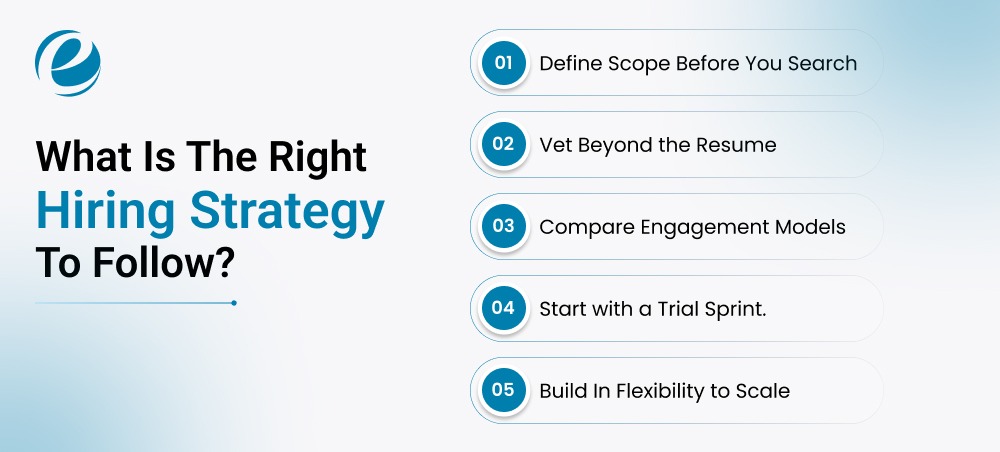
Knowing the challenges is like half the battle, choosing the right hiring strategy is the rest. Here’s how smart businesses structure their approach so they can hire dedicated developers successfully.
Define Scope Before You Search
Make sure you write a solid project brief that covers the tech stack and timeline. As well as deliverables, before you contact any vendor. Too vague requirements are one of the top reasons dedicated hiring arrangements go sideways within the first month.
Vet Beyond the Resume
Try live coding sessions and architecture discussions, rather than only using portfolios. This part alone cuts out most unsuitable candidates before you spend budget on a dedicated developer contract.
Compare Engagement Models
Look at fixed-price, time-and-materials, and dedicated-team setups against how complex your project actually is. Each pricing style shifts your total hiring budget in a different way, depending on scope and duration, and it’s worth checking before you commit.
Start with a Trial Sprint
Before you sign a long-term contract, do a two-week paid trial sprint. It shows you how real collaboration works and lets you hire developers with confidence, not just guesswork.
Build In Flexibility to Scale
Choose a hiring partner that makes scaling easier whenever you need to bring in dedicated developers for a new sprint or feature. A “locked” headcount doesn’t match up with the real demand.
Checklist: What to Verify Before Signing a Dedicated Developer Contract
Before you sign anything, run through this checklist. It tells you what to verify, and it also helps you decide whether to hire a dedicated app development team. Or if you only hire individual developers for one single project.
- Verify the vendor has a real technical vetting process, not just the slick marketing story they tell.
- Confirm developer retention rates, and ask for client references tied to similar projects.
- Get a very detailed statement of work, covering scope, timelines, and outcomes in writing.
- So, clarify the billing in plain terms and how overtime charges show up, like what counts as overtime exactly and whether there are any “surprise” costs that pop up later, not just in theory but actually upfront.
- Also, before anyone shares confidential code, check the data security certifications and read the NDA language really closely, because if it’s vague, it can turn into a problem later.
- Then confirm the time zone overlap and exactly what communication tools you plan to use for daily check-ins, like where the updates live and how quickly people respond.
- Next, ask for replacement guarantees if a developer exits mid-project, for real, not “best effort”, because you don’t want to be stuck rebuilding everything from scratch.
- Review the exit clauses and the contract termination notice periods carefully, like do it line by line, and don’t assume the default is reasonable.
- Finally, request a trial task, or a paid pilot sprint, before you go all in; otherwise, you’re betting without a proper ramp-up.
- Confirm ownership of code, IP, and documentation stays fully with you—no loopholes or vague wording.
Final Words
Hiring dedicated developers doesn’t have to be a gamble. I mean every hurdle you could confront, like AI-unvetted code or those not-so-obvious contract expenses, has a real, proven solution that businesses use day to day.
This blog, “Challenges to Hiring Dedicated Developers”, is here so you can sidestep the same pricey mistakes other people already ran into, whether you’re weighing the cost to hire dedicated developers or figuring out how to vet your first offshore team.
Save this guide for later; pop back to the quick reference matrix before your next decision. Always use the checklist before you put ink on anything. If you start handling the “how to hire professional developers” problems up front. You end up with faster launches, lower spend, and a team you can actually rely on.
FAQs
How long does it typically take to hire dedicated developers for a project?
Most well-vetted agencies can place dedicated developers in about one to three weeks, while in-house hiring takes 60-90 days. Furthermore, it depends a lot on the tech stack and the seniority level needed.
What is the difference between dedicated developers and freelancers?
Dedicated developers focus only on your project, under a clear contract, with consistency and accountability. Freelancers, on the other hand, tend to take on multiple clients with less consistent availability or commitment.
Can I hire dedicated developers for a short-term project only?
Yes, most agencies do flexible month-to-month arrangements. That means you can bring them in for short sprints, MVP work, or even targeted features without getting locked into a long-term timeline or paying extra overhead.
How do I know if a dedicated developer is a good cultural fit?
Run a short paid trial sprint and see how they communicate, respond, and collaborate when actually working before you commit to a longer dedicated developer contract with that team.
Is it cheaper to hire skilled developers offshore versus locally?
Yes, offshore dedicated developers often cost 40-60% less than local hires with comparable experience. But the exact price to hire dedicated developers will still change depending on region and on the skill level you’re targeting.
html,
body,
body:not(.web_whatsapp_com) *,
html body:not(.web_whatsapp_com) *,
html body.ds *,
html body:not(.web_whatsapp_com) div *,
html body:not(.web_whatsapp_com) span *,
html body p *,
html body h1 *,
html body h2 *,
html body h3 *,
html body h4 *,
html body h5 *,
html
body:not(.web_whatsapp_com)
*:not(input):not(textarea):not([contenteditable=””]):not(
[contenteditable=”true”]
),
html
body:not(.web_whatsapp_com)
*[class]:not(input):not(textarea):not([contenteditable=””]):not(
[contenteditable=”true”]
),
html
body:not(.web_whatsapp_com)
*[id]:not(input):not(textarea):not([contenteditable=””]):not(
[contenteditable=”true”]
) {
user-select: text !important;
}
html body *:not(input):not(textarea)::selection,
body *:not(input):not(textarea)::selection,
html body div *:not(input):not(textarea)::selection,
html body span *:not(input):not(textarea)::selection,
html body p *:not(input):not(textarea)::selection,
html body h1 *:not(input):not(textarea)::selection,
html body h2 *:not(input):not(textarea)::selection,
html body h3 *:not(input):not(textarea)::selection,
html body h4 *:not(input):not(textarea)::selection,
html body h5 *:not(input):not(textarea)::selection {
background-color: #3297fd !important;
color: #ffffff !important;
}
/* linkedin */
/* squize */
.www_linkedin_com
.sa-assessment-flow__card.sa-assessment-quiz
.sa-assessment-quiz__scroll-content
.sa-assessment-quiz__response
.sa-question-multichoice__item.sa-question-basic-multichoice__item
.sa-question-multichoice__input.sa-question-basic-multichoice__input.ember-checkbox.ember-view {
width: 40px;
}
/*linkedin*/
/*instagram*/
/*wall*/
.www_instagram_com ._aagw {
display: none;
}
/*developer.box.com*/
.bp-doc .pdfViewer .page:not(.bp-is-invisible):before {
}
/*telegram*/
.web_telegram_org .emoji-animation-container {
display: none;
}
html
body.web_telegram_org
.bubbles-group
> .bubbles-group-avatar-container:not(input):not(textarea):not(
[contenteditable=””]
):not([contenteditable=”true”]),
html
body.web_telegram_org
.custom-emoji-renderer:not(input):not(textarea):not([contenteditable=””]):not(
[contenteditable=”true”]
) {
pointer-events: none !important;
}
/*ladno_ru*/
.ladno_ru [style*=”position: absolute; left: 0; right: 0; top: 0; bottom: 0;”] {
display: none !important;
}
/*mycomfyshoes.fr */
.mycomfyshoes_fr #fader.fade-out {
display: none !important;
}
/*www_mindmeister_com*/
.www_mindmeister_com .kr-view {
z-index: -1 !important;
}
/*www_newvision_co_ug*/
.www_newvision_co_ug .v-snack:not(.v-snack–absolute) {
z-index: -1 !important;
}
/*derstarih_com*/
.derstarih_com .bs-sks {
z-index: -1;
}
html
body
.alc_unlock-pseudo-before.alc_unlock-pseudo-before.alc_unlock-pseudo-before::before {
pointer-events: none !important;
}
html
body
.alc_unlock-pseudo-after.alc_unlock-pseudo-after.alc_unlock-pseudo-after::after {
pointer-events: none !important;
}




 +1 (989) 535-9295
 info@emizentech.com
 emizentech


