 Add us as a preferred source on Google
 It’s 6 AM. Someone’s scrambling for a last-minute flight to Dubai, checking fares, picking a seat, and paying, and they’re done in under four minutes. No desktop, no travel agent, just a phone and a well-built app.
The global online travel market was $622.6 billion in 2024 and is on track to hit $1.4 trillion by 2034. More than 60% of travel transactions happen on mobile. So if you’re in the aviation or travel space and you don’t have a solid app yet, you’re already behind.
This guide breaks down flight booking app development from the ground up: features, process, costs, monetization, and the challenges nobody warns you about upfront.
What Is Flight Booking App Development, and What Is Its Importance?
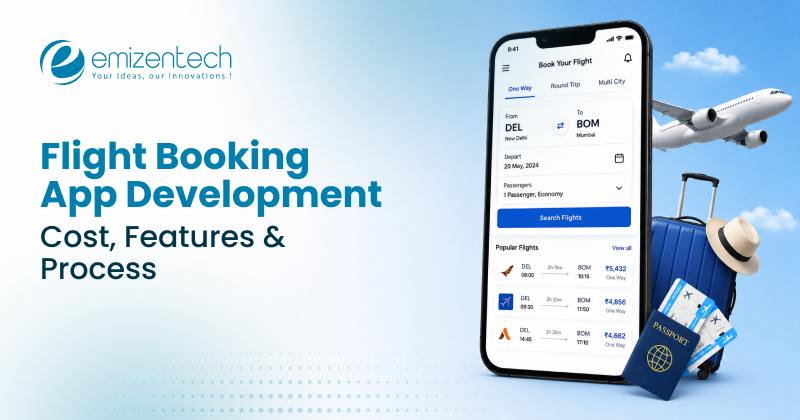
A flight booking app development is the process of building a mobile or web platform that lets users search flights, compare fares, choose seats, and pay all from their phone or browser. No travel agent, no airline counter, no back-and-forth calls. Just open the app, pick your flight, and you’re done.
Why Does It Matter?
For travelers, it saves time and puts everything in one place: tickets, itineraries, cancellations, and support. For businesses, it’s a direct revenue channel with multiple monetization options like booking commissions, add-on services, and in-app ads. And as more people book travel entirely on mobile, having a well-built flight booking app means you’re where your customers already are, not waiting for them to find you elsewhere.
Key Features of Flight Booking App Development
Every successful flight booking app is built on a core set of features that users expect from day one. Get these wrong or skip them, and no amount of marketing fixes the drop-off rate.
Before writing a single line of code, get the feature scope right. A bloated app with ten half-baked features loses to a focused app with five that actually work. Here’s what needs to be in every flight ticket booking app development project from day one:
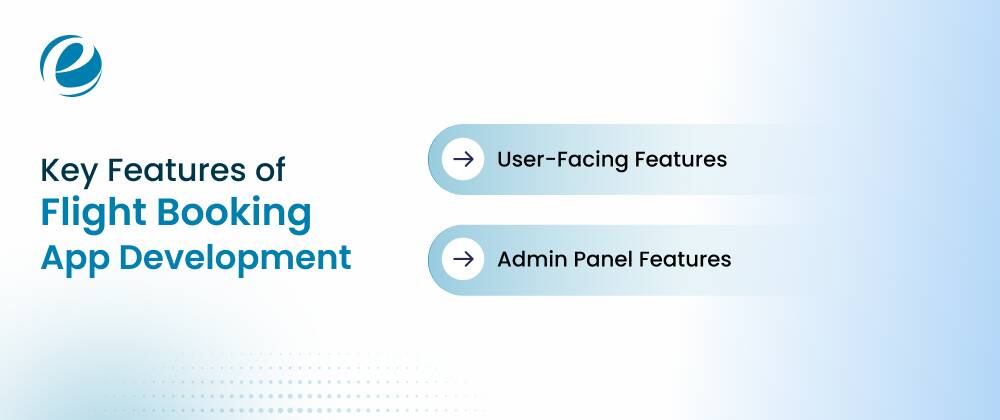
User-Facing Features
- Smart Search & Filters: It includes destination, dates, price range, stops, airline, and cabin class so users can easily narrow down results.
- Real-Time Flight Availability: This provides live inventory via GDS integrations (Amadeus, Sabre, and Travelport). Stale data kills trust fast.
- Secure Booking & Payment: With the help of multi-currency options and PCI-DSS compliant tools, users can have a safe transaction.
- E-Ticket & Boarding Pass Generation: Through this feature, users get a quick confirmation through a PDF or mobile pass delivery.
- Push Notifications: It includes gate changes, delays, and price drop alerts. These are the notifications people actually want.
- User Profiles & Booking History: This feature saves the traveler’s details, frequent flyer numbers, and past trips for a quick recheck of the history data.
- Multi-Language and Currency Support: It is not optional if you are targeting international markets; that is obvious for a flight booking app.
Admin Panel Features
These are the features that are a must for the admin panel so that they can easily manage things to make the user experience smoother:
- Booking Management Dashboard
- Revenue & Analytics Reports
- Airline & Route Management
- Refund & Cancellation Handling
- Promo Code & Discount Management
So, these are some of the common features that developers use in flight booking apps to make them reliable for the users.
Advanced Features
The basics get you to market. But in 2026, users compare apps quickly and switch just as fast. These advanced features are what separate a good app from one that actually retains users.
The features above get you to market. These features keep you there, especially as the bigger players keep raising the bar:
- AI-Powered Price Prediction: The ML models that flag fare trends and tell users when to book vs. when to wait
- Voice Search: You can provide hands-free search via Siri, Google Assistant, or a native in-app option for your users.
- AR Seat Preview: It is a 3D cabin walkthrough before seat selection. It sounds gimmicky but converts well.
- Biometric Login & Check-In: The advanced features like Face ID, fingerprint, and passport NFC reduce friction at every step
- Loyalty Program Integration: This feature uses miles, tier tracking, and partner rewards to keep users coming back.
- Carbon Footprint Estimator: The travellers are asking for this more than most companies expect
- Travel Insurance Module: The one-click add-on at checkout. High-margin, low-effort for the user
- Chatbot Support: These chatbots handle rescheduling, refund queries, and baggage questions around the clock
If you’re doing custom flight booking app development, don’t try to ship all of these features in v1. Get the core right, then layer these in Phase 2 based on what your users are actually asking for.
Step-by-Step Flight Booking App Development Process
Building a flight booking app without a clear process is how projects go over budget and under-deliver. Here’s how a well-run engagement looks from the first brief to app store launch.
Step 1: Discovery & Planning
Figure out who you’re building for: budget travelers, corporate accounts, a specific region, or an OTA. That decision shapes everything else: the UX, the integrations, the pricing model. Don’t skip this step or rush it.
Step 2: UI/UX Design
Wireframes first, then interactive prototypes. The goal is simple: get a user from search to payment confirmation in as few taps as possible. If your booking flow takes more than 4–5 steps, expect drop-offs.
Step 3: Backend Architecture
The part most people underestimate. This is the core of any flight booking app development project: server infrastructure, database design, and API layer. For aviation software development at scale, microservices are the best choice. It’s more work upfront but saves serious headaches once you start growing.
Step 4: GDS & API Integration
Connect to Amadeus, Sabre, or Travelport for live inventory. Wire in your payment gateways Stripe, Razorpay, and Braintree, and make sure ticketing is IATA-compliant. This phase takes longer than teams expect, especially on the GDS side.
Step 5: App Development
For mobile app development, React Native and Flutter are the sensible cross-platform choices if you want to ship on both iOS and Android without doubling your dev budget. Go native (Swift/Kotlin) only if performance requirements genuinely demand it.
Step 6: QA & Testing
Functional testing, load testing, OWASP security checks, and payment gateway testing. Also, simulate holiday-season traffic spikes. Flight apps can see 10x normal volume in peak periods, and that’s exactly when you can’t afford downtime.
Step 7: Launch & Post-Launch Support
Ship to App Store and Google Play. Set up crash reporting and performance monitoring from day one, not after something breaks. Build a feedback loop and actually use it.
Flight Booking App Development Cost in 2026
Cost is usually the first question and the hardest to answer without context. Scope, platform, team location, and integration complexity all move the number sometimes significantly.
The flight booking app development cost depends on scope, platform, tech stack, and the team’s location. This is a general cost breakdown based on the development stage:
| Development Stage | Estimated Cost |
| UI/UX Design | $5,000–$12,000 |
| Frontend Development | $12,000–$25,000 |
| Backend & API Integration | $18,000–$40,000 |
| GDS Integration | $8,000–$20,000 |
| Admin Panel | $6,000–$15,000 |
| QA & Testing | $4,000–$10,000 |
A lean MVP for travel app development usually lands between $50,000–$80,000. Full-featured custom flight booking app development, dual platform, AI capabilities, and advanced integrations run $100,000–$200,000+.
One number people often leave out of their budget: ongoing maintenance. Hosting, API licensing, and updates typically make up 15–20% of your build cost per year. Plan for it upfront.
Monetization Strategies for Flight Booking Apps
A great app without a clear revenue model doesn’t stay great for long. These are the monetization approaches that work in the real market, not just in theory.
Flight booking app development is a real investment, so it needs a real revenue model behind it. These are the approaches that actually work:
- Commission Per Booking: It is the standard model. Earn 3–8% on every ticket sold through your platform.
- Ancillary Upsells: This model includes insurance, seat upgrades, lounge access, and extra baggage. Often higher margin than the ticket itself
- Subscription / Membership: With this, the users pay for price alerts, free cancellations, or access to member-only fares
- Sponsored Listings: The airlines or hotels pay for prominent placement in search results
- White-Label Licensing: In this model, you sell your platform to corporate travel desks or smaller OTAs who don’t want to build from scratch
The smartest revenue models don’t rely on a single stream. Combine commission with ancillary upsells; that’s how Booking.com and MakeMyTrip grow margin without touching ticket prices.
Challenges in Flight Booking App Development
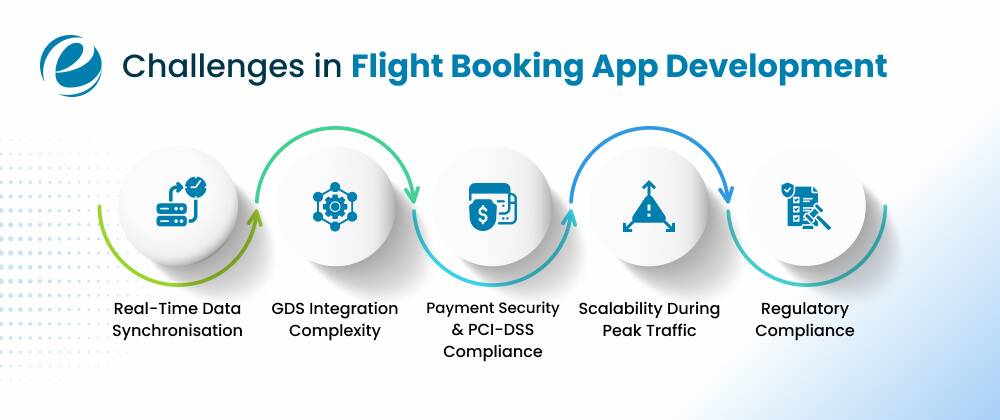
No flight booking app development project is without friction. These are the problems that come up most often and the fixes that actually hold up in production.
Real-Time Data Synchronisation
Airline inventory moves constantly. If your app shows a fare that’s already gone, users don’t give you a second chance. Fix it by using WebSocket-based updates and caching fare data with an TTL of 30–60 seconds, which is tight enough to stay accurate while being loose enough not to hammer your API limits.
GDS Integration Complexity
Sabre and Amadeus aren’t plug-and-play. Certification takes time, and the documentation isn’t exactly light reading. Practical option: use middleware aggregators like Duffel or Kiwi.com’s API to get to market faster, then migrate to direct GDS once you have volume to justify it.
Payment Security & PCI-DSS Compliance
You don’t want to be the company that made the news for the wrong reason. Never store raw card data on your servers. Use tokenized processors, run quarterly PCI-DSS audits, and treat security as ongoing work, not a one-time checkbox.
Scalability During Peak Traffic
Everyone searches for flights at the same time before school holidays, long weekends, and major events. If your backend isn’t built to scale, it goes down right when it matters most. Build on auto-scaling cloud infrastructure (AWS, GCP, or Azure) from the start. This isn’t optional in any serious flight ticket booking app development project.
Regulatory Compliance
GDPR in Europe, PDPA in Southeast Asia, and aviation-specific data rules in various markets—it varies more than people expect. Get legal counsel involved during the architecture phase, not after launch. Data residency and consent management need to be built in, not bolted on.
Conclusion
This guide covers the full picture, but the real work starts when you move from reading to deciding. Here’s what to take away before you brief a team or sign a contract. The market for flight booking app development isn’t slowing down. But it’s also not forgiving; users have plenty of options, and they’ll switch fast if your app is slow, unreliable, or clunky to navigate.
Whether you’re building an MVP to test a new OTA idea or developing a custom flight booking app for an established brand, the fundamentals remain the same: nail the GDS integration, keep the booking flow tight, and build your backend to handle scale before you need it.
FAQs
What is the cost of flight booking app development?
The cost of developing a flight booking app ranges from $20,000 to over $160,000; it depends on the complexity of backend API integrations, the development team’s geographic location and the desired feature scope.
How long does it take to develop a flight booking app?
The development of a flight booking app can take 3 to 9 months on the basis of the complexity of the features and the size of the team. However, some feature-rich platforms can also take 6 to 12 months or more.
What features are essential in a flight booking app?
The key features that are crucial in a flight booking app are AI-based search, real-time alerts for gates and delays, automated price tracking, secure flexible payments, and easy e-boarding pass access.
Which APIs are best for flight booking app development?
The best APIs for flight booking app development depend heavily on your app's scale, budget, and monetization strategy. Amadeus Travel APIs, Sabre GDS API, and Skyscanner Flights API are the industry leaders for integrating real-time search.
How do flight booking apps make money?
Flight booking apps make money through a mix of booking commissions, advertising premium subscriptions and cross-selling. Since the fights have notoriously low profit margins, apps rely on the large transaction volumes and the complementary services.
What is the best tech stack for building a flight booking app?
The optimal tech stack for a flight booking app includes React or Next.js for the frontend, Node.js or Python for the backend, and PostgreSQL for the database. This stack smoothly connects with the global flight aggregators and easily scales as your user base grows.
How does real-time flight data integration work in booking apps?
The real-time flight data integration connects the booking apps directly to airline inventory systems and aviation databases via APIs. This allows the apps to fetch the live schedules, seat availability, and flight tracking data in milliseconds.
Is it profitable to invest in flight booking app development?
Yes, investing in flight booking app development is highly profitable. The online travel booking market is booming, with mobile bookings accounting for roughly $60+ billion in annual revenue globally.



 +1 (989) 535-9295
 info@emizentech.com
 emizentech


