
 Add us as a preferred source on Google
 Your portfolio is the reflection of more than just previous projects. It displays your professional identity in a digital format. It is tangible proof that validates your skills before any potential clients ever pick up your call. 12% of the global population is engaging in freelance work. In 2026, freelancers without the best portfolio websites risk losing once-in-a-lifetime opportunities to those with strategic digital presences. It’s mainly because the difference is not that subtle. Freelancers with professionally designed portfolios land high-paying projects three times faster than those relying solely on resumes and platform profiles. One optimized portfolio website can turn candid browsers into committed clients overnight.
Despite the seriousness of using top portfolio platforms, many freelancers either delay creating one indefinitely or settle for mediocre solutions that do not ace the game. There are several amazing and effective portfolio websites in 2026 that cater to different needs, covering unique disciplines, technical comfort, and business goals. In this guide, we have reviewed and summed up 15 exceptional freelancer portfolio websites for designers, developers, writers, photographers, and digital marketers. Whether you are creating your first portfolio or moving beyond your current platform, continue reading to learn why a great website matters and which one’s right for you!
Why Every Freelancer Needs a Portfolio Website in 2026?
Your resume tells what you claim you can do, but your portfolio shows the results you have delivered. Here’s why you need the best portfolio website:
- Proof Over Claims: Your portfolio projects your real-world capability through tangible work samples rather than listing qualifications clients cannot verify independently.
- Complete Brand Control: Custom domains, design flexibility, and direct communication remove platform constraints and avoid commission cuts that eat up your earnings.
- Search Engine Visibility: Portfolio websites rank in search results when potential clients seek specialists, generating organic discovery beyond platform algorithms.
- Rate Premium and Legitimacy: Professional web presence commands higher rates because it signals established credibility, business maturity, and serious professionalism.
- Direct Client Relationships: Owned portfolios eliminate intermediaries, allowing direct communication and relationship building without platform interference or policy changes.
15 Best Freelancer Portfolio Websites 2026
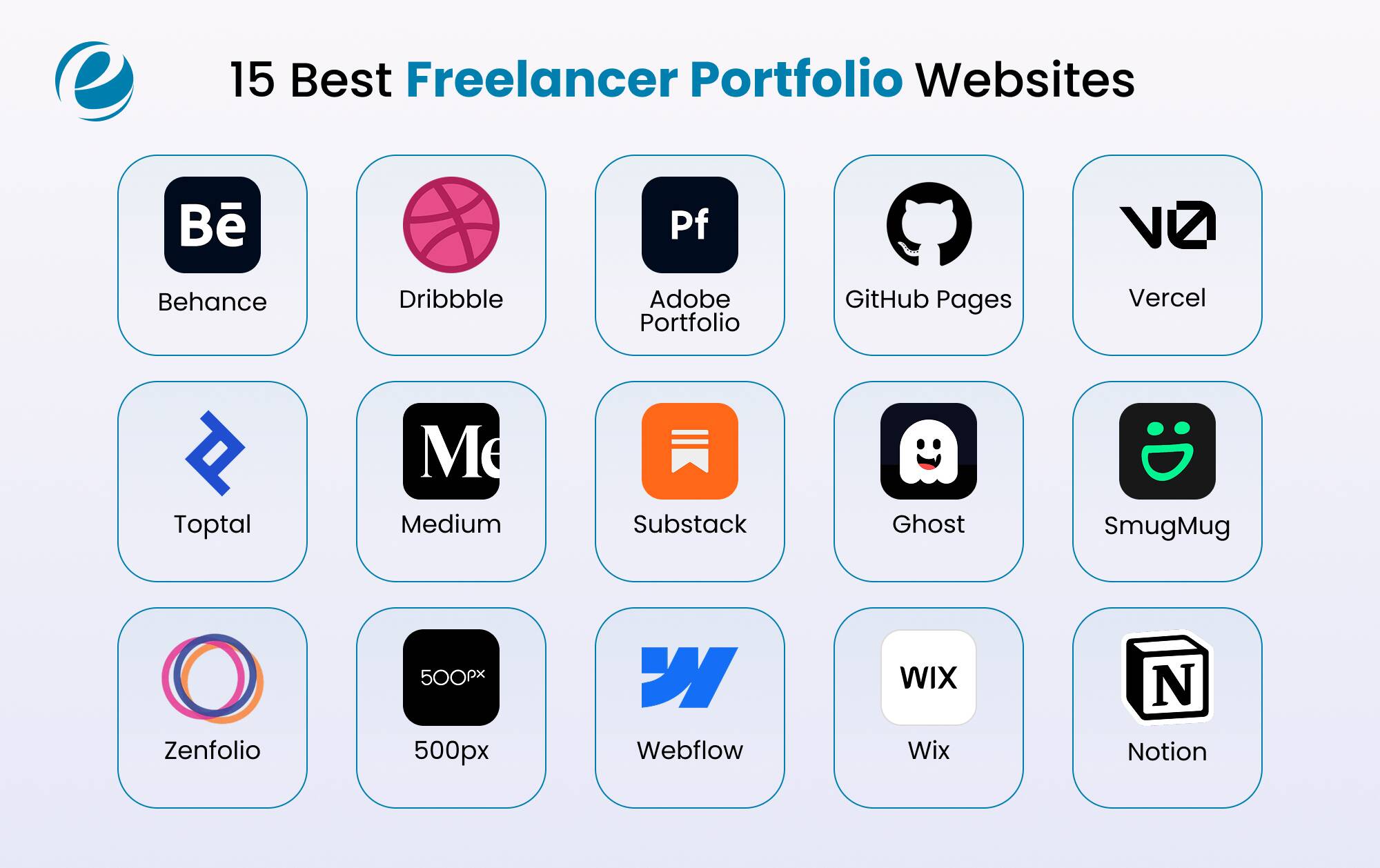
Here’s a quick walk through the best freelancer portfolio websites for different purposes.
For Designers
Behance
Powered by Adobe, Behance is both a portfolio-hosting platform and a creative-discovery network. It allows designers to upload case studies backed by multimedia support and also includes high-resolution images, process videos, and interactive elements. The platform gives designers substantial visibility, and the Adobe Talent Pool integration connects showcased work directly to freelance opportunities.
Highlights: Agency discovery, Built-in traffic, Multimedia support
Dribbble
One of the best freelancer portfolio websites in 2026, Dribble is designed for visual designers and UI/UX professionals. Designers post teaser animations, prototype previews, and high-fidelity mocks that help kickstart instant conversation. Its integrated job board that matches designer specialties to active client requests. If you buy its pro version, you will have access to exclusive recruiter connections and private project-hiding features for confidential client work.
Highlights: UI/UX focus, Active job board, Recruiter access
Adobe Portfolio
If we are talking about the top portfolio websites for freelance designers, this one has to be on the list. Adobe Portfolio gives designers free hosting for Creative Cloud subscribers, integrating with Lightroom and Behance. The platform’s templates span minimalist and editorial styles, each optimized for visual work presentation. The platform focuses on clean aesthetics, which allows client work to dominate rather than design flourishes distracting from actual projects.
Highlights: Free for CC subscribers, Lightroom integration, Minimalist design
Best for Developers
GitHub Pages
GitHub Pages turns code repositories into live websites, setting the industry standard for developer portfolios. It lets developers create portfolios using HTML, CSS, and JavaScript while maintaining version control through Git workflows. Also, free hosting through GitHub removes cost barriers, which makes it one of the best freelance portfolio websites for developers establishing an initial presence.
Highlights: Free hosting, Version control, Developer credibility
Vercel
Vercel offers zero-configuration deployment optimized especially for modern JavaScript frameworks like Next.js and React. Developers push code to GitHub, Vercel automatically detects frameworks, and live sites deploy immediately with global CDN acceleration. The platform also handles serverless functions, environment variables, and continuous integration without configuration overhead.
Highlights: Automatic deployment, Framework optimized, Global CDN
Toptal
Toptal is yet another fantastic name among top portfolio websites for developers, operating as an exclusive freelance network with rigorous screening processes ensuring quality developer placement. On this platform, developers perform multiple technical assessments, communication evaluations, and live projects before acceptance. The platform connects pre-vetted developers directly to high-paying clients seeking proven expertise, removing marketplace competition and negotiation.
Highlights: Exclusive network, Pre-vetted, Premium clients
Best for Writers and Content Creators
Medium
Medium is literally a safe haven for writers looking to reach audiences through words, be it an enthusiast or an established name. It offers free article hosting with built-in discovery through its recommendation algorithm and publication system. Writers publish content instantly (zero technical setup required), and readers actively browse a range of topics. That’s not all. The Medium Partner Program pays writers based on reader engagement metrics, creating monetization without paywalls. However, Medium controls audience discovery, limiting direct subscriber relationships.
Highlights: Built-in audience, Free hosting, Engagement-based pay
Substack
Substack is one of the most popular freelancer portfolio websites for writers, where they act as publication owners. The platform emphasizes owned subscriber relationships and direct revenue control. It allows writers to build email lists, send paid and free newsletters, and retain complete audience data. It also handles subscription payments and management while writers maintain full creative control and brand autonomy. The catch? Growth depends primarily on writers’ self-promotion, not just platform discovery.
Highlights: Owned subscribers, Direct revenue, Email-first
Ghost
Ghost is an open-source publishing platform that gives writers full design control with zero transaction fees and flat-rate monthly pricing. It offers features such as professional blogging tools, membership systems, and newsletter functionality, all without percentage-based commission cuts. Writers get ownership and flexibility, with freedom to self-host or use managed Ghost(Pro) hosting. Also, the platform requires bringing your own audience rather than depending solely on platform discovery.
Highlights: Full ownership, No transaction fees, Complete control
Best for Photographers
SmugMug
SmugMug is designed specifically for professional photographers, covering features like unlimited storage and powerful e-commerce integration. It also offers seamless print fulfillment through its partnership with premium labs. The platform handles image sales from payment processing through printing and worldwide shipping, ultimately removing the fulfillment complexity. The platform’s Lightroom integration ensures efficient workflow, while CSS customization enables pixel-perfect branding control, making it one of the best portfolio websites for freelancers who want things technically aligned.
Highlights: Print fulfillment, Unlimited storage, Lightroom integration
Zenfolio
Zenfolio is a combination of portfolio building, powerful marketing automation, client proofing, and appointment scheduling. It helps photographers with setup based on their photography type, ensuring optimal default configuration. Its customizable templates, RAW file support, and four-kilobyte video uploads complement high-resolution workflows. Besides, the email marketing automation and triggered workflow capabilities ensure that photographers nurture client relationships without hassle.
Highlights: Marketing automation, RAW support, Client proofing
500px
500px operates as a mix of a photography community and a portfolio platform. It combines social discovery with portfolio hosting and a licensing marketplace. Photographers showcase work, connect with other creatives, and license images through an integrated marketplace. Beyond portfolio functionality, the platform’s community aspect offers photographers networking opportunities and exposure beyond. That’s what makes it appealing to photographers seeking creative community alongside professional portfolios.
Highlights: Creative community, Licensing marketplace, Networking
Best for Digital Marketers
Webflow
On Webflow, digital marketers get a visual website builder with full-fledged design control and CMS functionality. This allows them to set up sophisticated portfolio sites without coding. It also combines responsive design capabilities like e-commerce, automation, and dynamic content tools. Marketers showcase their expertise through interactive case studies and dynamic portfolio elements, also reflecting technical sophistication over and above static presentations.
Highlights: Visual builder, CMS functionality, and interactive portfolios
Wix
Wix hosts over 800 customizable templates with functionalities like a drag-and-drop editor, marketplace integrations, and an app ecosystem featuring booking, CRM, and invoicing tools. It lets marketers create comprehensive portfolio websites combining services and client management in just one platform. The AI-powered design feature generates five custom layout options from uploaded content, accelerating launch timelines significantly.
Highlights: Extensive templates, App marketplace, AI-assisted design
Notion
Notion’s flexibility allows marketers to build unconventional portfolio experiences using database templates, public pages, and embedded multimedia. The platform’s customization capabilities permit unique portfolio presentations reflecting personal branding style rather than constraining users to template structures. While not portfolio-specific, Notion’s growing adoption reflects freelancers prioritizing flexibility and personality over traditional platform conventions.
Highlights: Flexible design, Unique branding, Database functionality
Best Freelancer Portfolio Websites: Quick Comparison
Here’s a comparison of the best portfolio websites for freelancers, based on the essential factors.
| Platform | Specialty | Cost | Best For | Key Feature |
| Behance | Design | Free/Premium | Designers | Agency discovery |
| Dribbble | UI/UX Design | Free/Premium | Product designers | Job board |
| Adobe Portfolio | Design | Free (CC) | CC subscribers | Lightroom integration |
| GitHub Pages | Development | Free | Developers | Version control |
| Vercel | Development | Free | Modern frameworks | Auto deployment |
| Toptal | Development | Vetted | Premium clients | Exclusive network |
| Medium | Writing | Free | Writers | Built-in audience |
| Substack | Writing | Free/Commission | Newsletter writers | Owned subscribers |
| Ghost | Writing | Paid | Serious writers | Full ownership |
| SmugMug | Photography | Paid | Print sales | Fulfillment integration |
| Zenfolio | Photography | Paid | Professional photographers | Marketing automation |
| 500px | Photography | Free/Premium | Community-focused | Licensing marketplace |
| Webflow | Marketing | Paid | Digital marketers | Visual builder |
| Wix | Marketing | Paid | Comprehensive needs | App ecosystem |
| Notion | Various | Paid | Unique presentations | Flexible design |
How to Choose the Right Freelancer Portfolio Website?
Finding the best freelancer portfolio websites is all about matching your work type, how much you want to control your audience, and how technical you’re comfortable being. Here are some tips that will definitely ease your search:
- Match your discipline first: Designers can thrive on Behance, developers will benefit from GitHub Pages or Vercel, and photographers succeed on SmugMug or Zenfolio. Specialty platforms beat the basic ones every time.
- Decide ownership versus visibility: Decide if you want to own your audience directly, like Substack, or enjoy platform traffic like Medium. Your own audience means more work promoting yourself. Platform traffic is easier, but you will lack control!
- Be honest about your technical skills: Drag-and-drop builders like Wix are perfect for non-technical people, but GitHub Pages needs coding comfort. Go for something you’ll actually maintain in the long run without frustration.
- Consider the monetization factor: some platforms support print sales, others subscriptions, and marketplace commissions. Your chosen platform should handle your income model.
- Test before investing: Almost every best portfolio website for freelancers offers free trials. Create sample work sections, check mobile appearance, and live with the interface before paying anything.
Future Trends in Freelancer Portfolio Websites
The gig economy is booming, and so is the freelance portfolio website market. According to HTF Market Intelligence, the freelance portfolio website market is expected to grow at a CAGR of 11.10% from 2025 to 2033. Here are a few trends that will play a major part in this growth:
- AI-Generated Layouts: Platforms automatically create custom portfolio designs from your work, reducing the design skills needed for a professional appearance.
- Interactive Case Studies: Videos, animations, and live demonstrations replace static galleries, showing actual process and results more convincingly.
- Direct Booking Integration: Clients schedule consultations directly from portfolios without any back-and-forth in emails and messages. This removes friction from the hiring process.
- Mobile-First Creation: Portfolios optimized for smartphones will win over desktops. This is actually where actual browsing happens for most prospects.
Thinking About Building Your Own Freelancer Portfolio Platform? Top Factors to Consider
Whether you have identified gaps in existing portfolio platforms or are looking to introduce something highly specialized to the world, building a custom portfolio site allows perfect alignment with your specific needs. Here are some factors that you must consider before investing in freelance portfolio website development:
Define Your Specific Niche and Pain Points
Identify exactly which freelancers are not getting the help they need and what specific problems existing platforms fail to solve. Your custom website development should address real pain points for specific communities to actually stand out.
Calculate Development and Ongoing Costs Realistically
Building a quality portfolio platform can cost between US $75,000 and $300,000. Also, you should plan for ongoing costs, including server hosting, security updates, customer support, and continuous feature development. Underestimating costs can ruin your plan before launch.
Plan for Content Creation and User Acquisition
A beautiful empty platform is good for nothing! Budget substantially for recruiting initial users, creating onboarding content, and potentially offering incentives for early adopters.
Build Sustainable Revenue Models
From subscription fees to commission on sales to advertising, each model creates different user incentives. Match your revenue model with what users find important instead of extracting maximum short-term fees.
How to Develop a Freelancer Portfolio Website?
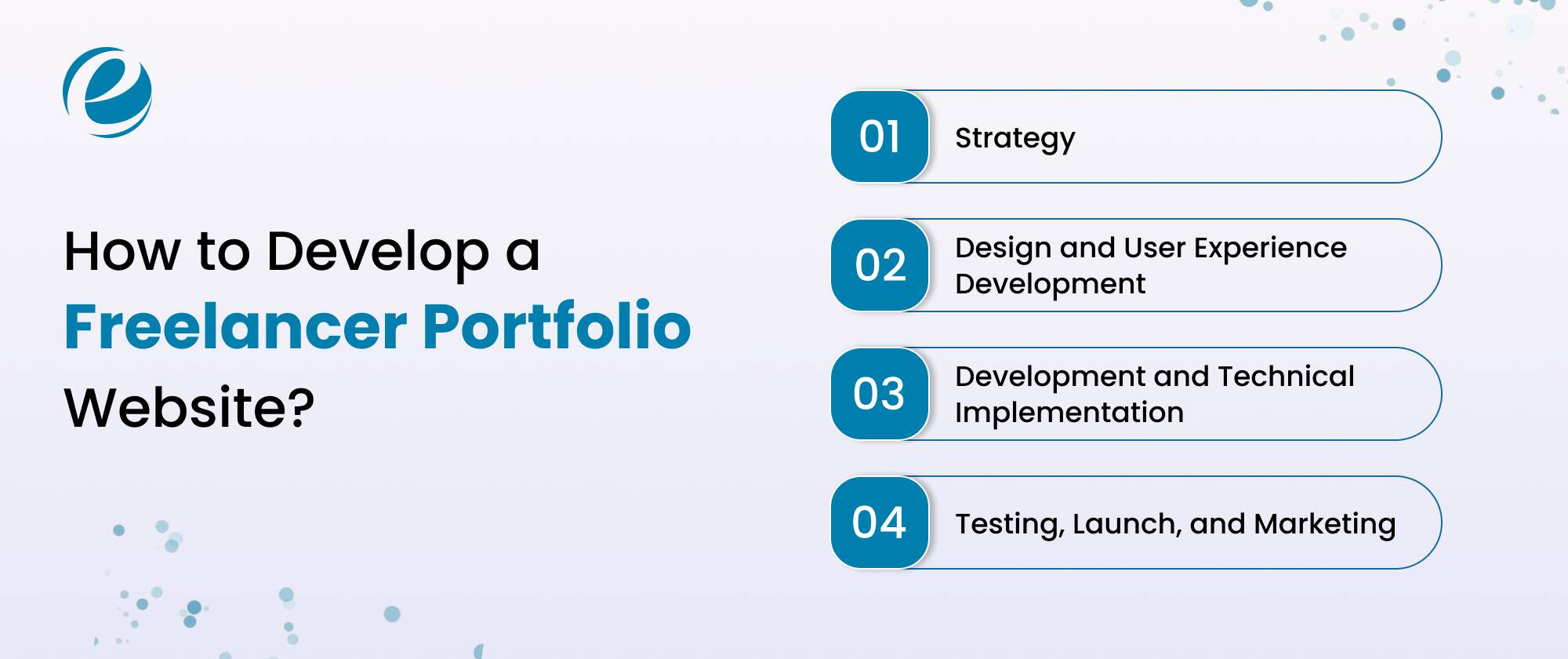
You need detailed planning across distinct phases to build a functional freelancer portfolio website. Each phase involves specific technical and design decisions that play an important role in making the project successful. Here’s a summary of how the process looks:
Strategy
This phase is to define your platform’s purpose, target audience, required features, and competitive positioning. Identify what kind of work you are catering to, how potential clients will discover portfolios, and what information converts browsers into actual inquiries. Conduct conversations with potential clients to understand what portfolio information actually drives hiring decisions. This can take 2-4 weeks, with about US $2,000-5,000, especially if you’re outsourcing research and strategy consulting to a professional app and website development company.
Design and User Experience Development
Professional design is your key to making the website feel credible, load quickly, and guide visitors intuitively toward conversion actions. This phase covers visual design, establishing your brand aesthetic; user experience design for intuitive navigation; and information architecture, organizing content logically. It can take 4-8 weeks with an average US $5,000-$15,000, depending on complexity.
Development and Technical Implementation
Development transforms ideas and planning into a functioning website with image optimization, database integration, contact form processing, and hosting setup. It covers both frontend development, creating user-visible interfaces, and backend development, managing data and business logic. You can expect this to cost an average US $8,000-30,000, depending on platform choice and technical complexity.
Testing, Launch, and Marketing
Quality assurance testing finds functional issues before you hit the launch day. Marketing through social platforms, professional networks, and direct outreach drives initial traffic. These phases collectively typically cost US $3,000-10,000 and can take 2-4 weeks pre-launch and ongoing post-launch.
Why Choose EmizenTech for Freelancer Portfolio Website Development?
If you want to launch the next best portfolio website, you will need more than just technical solutions. At EmizenTech, a trusted website and mobile app development company, we offer specialized expertise spanning web development technical skills, portfolio-specific design knowledge, and user experience best practices. With over 1000+ clients served globally, we bring the following:
- Comprehensive experience developing portfolio platforms across multiple disciplines, including designers, developers, photographers, and content creators.
- An expert team that understands that portfolio websites serve fundamentally different purposes.
- A portfolio development approach that prioritizes showcasing your work effectively rather than designing around unnecessary features.
- Expertise in putting the next-gen technologies to good use.
Don’t want to risk investing in a generic website? Connect with our team to unlock free consultation and hire web developers to transform your idea.
Conclusion
The freelancer economy requires a professional presence that clearly speaks of your capabilities and results to potential clients. The top 15 freelance portfolio websites listed in this article help writers, designers, developers, digital marketers, and photographers represent their most important marketing asset, often creating first impressions. Each platform in the guide offers diverse approaches serving different professional disciplines, technical comfort levels, and business models.
And if you are looking to build a platform of your own and cater to professionals with something unique and more seamless, studying the market and defining your priorities is the first step. Partner with a website development company that helps you with an end-to-end development process, starting right from research. This will not only make your journey easier but also more fruitful.
FAQs
Which portfolio website will get me the most client inquiries?
It depends on your specialization. While Behance is great for driving serious inquiries for designers, Vercel portfolios invites developer job offers, and SmugMug consistently converts photography browser traffic into print orders. Take the call based on the nature of your work.
Can I use multiple portfolio platforms simultaneously?
Yes, you can! Many freelancers maintain a digital presence on two or three platforms.
How much should a business invest in building a custom portfolio platform?
Developing a custom platform specifically for freelancers typically costs US $75,000 - $300,000 depending on complexity.
Why should a business invest in custom portfolio platform development?
A business should invest in custom portfolio platform development to build a scalable, secure, and branded solution with tailored features, better performance, seamless integrations, and improved SEO for long-term growth.



 +1 (989) 535-9295
 info@emizentech.com
 emizentech


