 Add us as a preferred source on Google
 Traditionally, journals and day planners have been the best buddies for people looking to level up their habit building game. They would write “X” or tick the box as a task marks the completion and feel an unparalleled sense of accomplishment. Fast forward to the date, the habit tracker app development has spruced up the personal development experiences.
From wellness freaks to corporate professionals to new moms, everyone can swap negative habits for positive ones and create a whole new version of themselves with a constant tracker at their fingertips. In fact, the global habit tracking app development market is expected to reach from $11.41 in 2024 to $38.36 in 2033, at a CAGR of 14.41% during the forecast period. This is your green light to build a never-seen-before habit tracker and accelerate an all-new venture, while helping millions of people.
What exactly is a habit tracking app? And how should you go about building a habit tracking app development? Keep scrolling to know everything.
What is a Habit Tracking App?
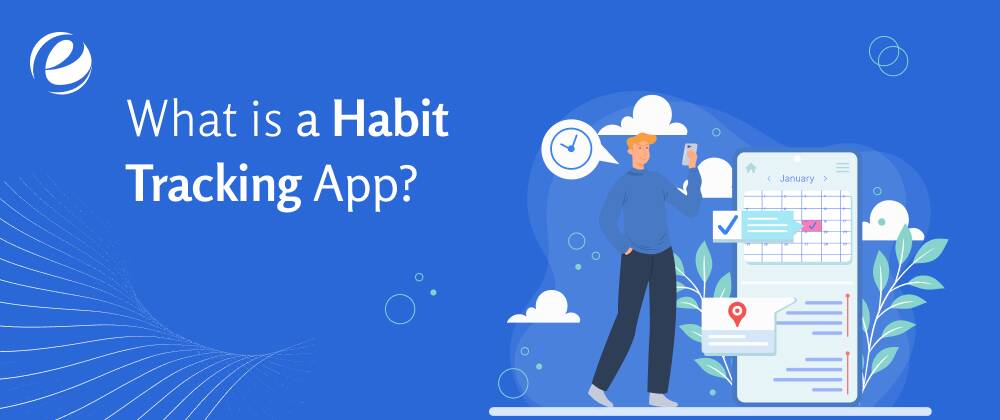
A habit tracker app is a digital solution designed to help people from all walks of life develop, manage, and sustain healthy habits in a structured manner. A productive habit app features a wide range of functionalities, including goal-setting, tracking, and analytics, for effective management. While traditional habit-tracking systems rely on manual checklists and journals that demand a time of their to manage, habit tracking apps features run on advanced technologies to simplify everything. Whether a person wants reminders for learning a language or has to monitor the progress, they can do it all with the best habit tracker apps.
But do you really need a habit tracking app? Perhaps yes. The core idea behind using a habit tracking app or even investing in habit tracking app development is to simplify the overall management of short- and long-term goals. The best habit tracker apps allow individuals to split big plans into small, everyday actions, which ultimately helps form a healthy lifestyle in the long run.
How Habit Tracking Apps Work?
From increasing productivity to enhancing fitness levels to learning, habit tracking solutions make sure that the user stays committed to their progress. When it comes to the best habit trackers in the market, many follow the cue-routine-reward model of behavioral psychology. This means that the user would form a habit by linking a specific reward/trigger with their routine. And the outcome? Many people start kicking off healthy lifestyle habits in a reward-led reinforcement cycle. So, make a note of this if you are planning to kickstart a habit tracking app development project of your own.
Hold on! The best habit tracking apps are not necessarily limited to logging in. While it is an essential for starting a goal, these apps are booming in the market because of the implementation of adaptive AI algorithms. The role of AI in habit tracking apps is making headlines due to the models that analyze behavioral patterns of a user and suggest optimizations accordingly. The data allows them to adjust their timelines, identify and manage challenges, and maximize the benefits of the advanced habit trackers with ease.
Moreover, top-notch habit trackers are also offering streaks, leaderboards, reward points, and more such gamification elements that push users to actively participate in habit-building practices. Unlike traditional to-do’s and alarms, these digital tools are making sure that users don’t just set goals but work consistently to achieve them. Advanced habits tracking apps features are also the byproduct of their integration with smart devices that enable hassle-free tracking of health-focused practices, like step counts, sleep patterns and quality, hydration, etc.
What is Habit Tracker App Development?
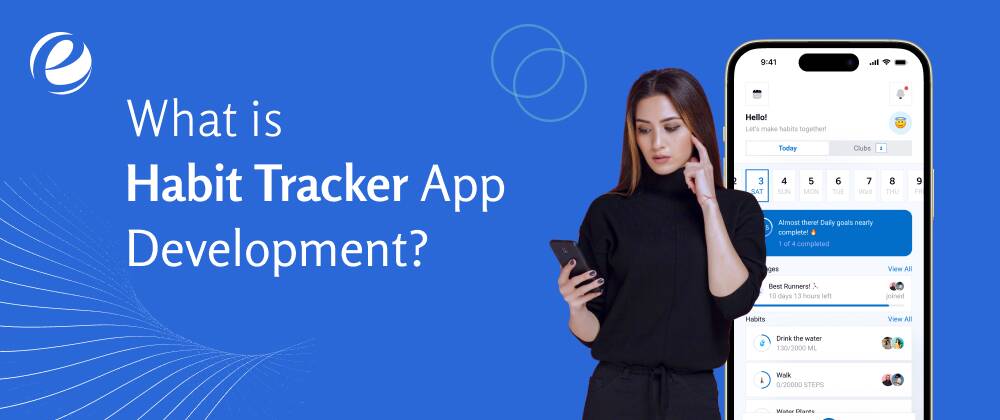
Time to brush up on the basics! Habit tracker app development is the process of planning, designing, building, and managing habit tracking apps. That’s not all. A habit tracking app development process implies creating a system that engages customers consistently, helping you scale and manage your project on a broader scale. Today, businesses use these apps to tap into the emergence of the self-improvement market by leveraging behavioral psychology and cutting-edge technologies.
The best development practices are centrally focused on designing features that drive regular customer interactions. From progress tracking to gamification to AI-powered analytics, habit tracking app developers employ key elements that encourage users to come back.
Companies also implement retention strategies in habit tracking apps, ensuring they achieve high lifetime value along with customer loyalty. From a business point-of-view, habit tracking apps unlock multiple monetization models. These include:
8 Basic Features of Habit Tracker Apps to Consider
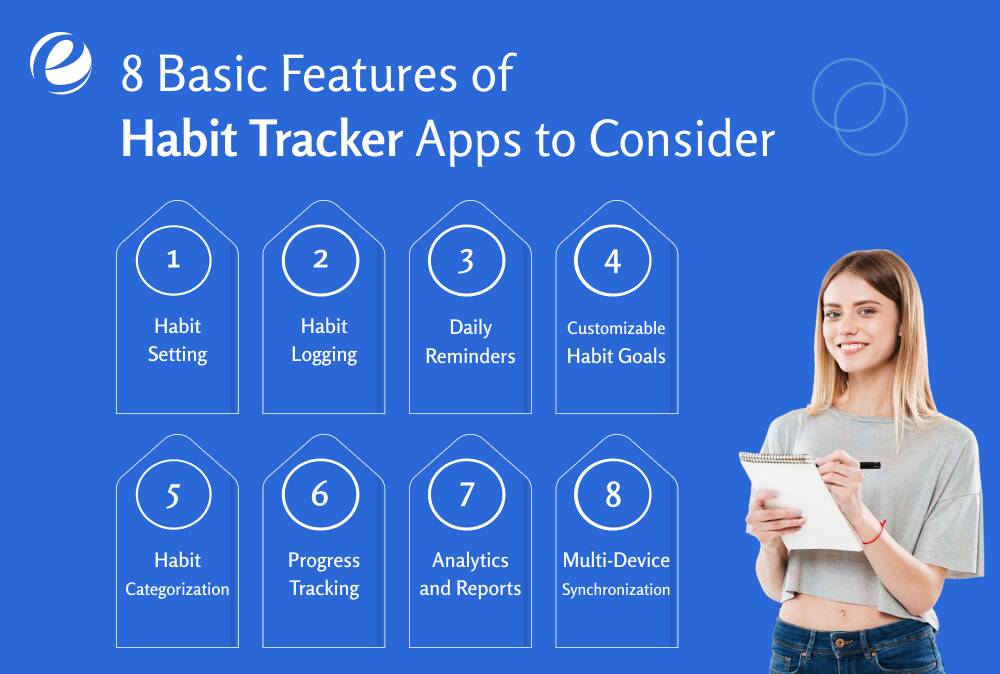
A habit tracking app, above all, should be simple, intuitive, and effective to make sure users make the best of the offerings with ease. While Al in habit tracking app and productivity app development is crucial, the core functionality is essential to making the app user-friendly and purposeful. Here are the important features that act as a foundation for habit tracking app development:
A habit tracking app, above all, should be simple, intuitive, and effective to make sure users make the best of the offerings with ease. While Al in habit tracking app and productivity app development is crucial, the core functionality is essential to making the app user-friendly and purposeful. Here are the important features that act as a foundation for habit tracking app development:
1. Habit Setting
The primary thing a person does when using a habit tracker app is setting up habits. This feature has to be as quick and easy as possible. Users should be able to add a habit or more by simply entering its name and choosing how they want to act on it (weekly, daily, or in custom intervals).
One of the core features to consider for habit tracking app development, the habit setting option ensures that the user is able to personalize their habit list without falling into any navigation complexities. This is a must not only for beginners, but also for seasoned wellness freaks and tech-savvy people.
2. Habit Logging
Just like setups, logging a habit should also be smooth-sailing for the users. This option should be fast, intuitive, and require minimal effort to ensure seamless user experience. All a user has to do is mark a habit as completed in just one tap. Some habits like “learn a language” may just need the user to check the box, while others, like “drink a glass of water” may require numerical input.
So, how would you go about this feature during a habit tracking app development project? Choose flexibility and ensure that users don’t feel restricted in terms of how they want to mark different types of habits as “done” or “completed”.
3. Daily Reminders
You have added the habit setting and logging features in your habit tracking app development checklist! Now here’s the catch: Not all users would remember to use these options. That’s the reason why you need to implement reminders, one of the most important features of all habit trackers. This simply requires you to enable the option for users to set and adjust notifications that remind them to complete each habit.
4. Customizable Habit Goals
Different users have different goals. Some want to increase their daily water intake, others want to finish 5 classic books in a month. The idea is to facilitate the option for users to set their habit goals flexibly. For example, a user may want to learn French for 30 minutes in the morning every day, another wants to read 20 pages a day. The best habit tracking apps allow users to set customized goals to ensure convenience, making the experience even more engaging for the user.
5. Habit Categorization
Just like habit goal customization, categorization is one of the essential features of habit tracking apps for ensuring user satisfaction. When a user develops multiple habits of different types, they must have an option in the app to categorize each habit into a group. For instance, workout in the fitness category or reading in personal development. This feature allows users to manage and track their goals in a rather organized way, preventing the overwhelming feeling which they might experience when exposed to too much data in a specific place.
6. Progress Tracking
What’s a habit tracker app without progress tracking is like a half-baked cake. It would look all good and tempting until the user checks into its effectiveness. Monitoring progress encourages users to stay on their game and get better at it. When executing a habit tracker app development project, implement a simple yet effective option for users to visualize consistency in the form of progress bars, percentages, or streak counters.
This feature is also great for users to identify the habits they struggle with or the challenges they are facing. These little details work wonders when it comes to fueling motivation and nudging users to improve.
7. Analytics and Reports
A habit tracking app should offer the option to users to dig deeper into their habit development journey, through analytics and reporting features. These may cover the number of completed habits over time, visual breakdowns of their consistency, and a comparison of their performance across different habits. By using these strong tools, users can understand their progress even more practically and identify the area of improvement.
8. Multi-Device Synchronization
Another important feature of the best habit tracking app, multi-device synchronization allows users to track and manage their progress conveniently across all devices. If and when a user switches between platforms, like mobile phones or desktops, they should not experience the hassle of manually updating a habit over and again. This feature facilitates a cohesive system and promises seamless user experience.
Advanced Features of Habit Tracking Apps
Modern habit tracker app development process is more than just about deploying just-another self-improvement solution. To make it successful, you must treat it as an approach that involves integration of futuristic technologies like AI and analytics, focus on meeting customer demands (that are more fierce than ever), and basically, tapping into ground-breaking offerings that go a long way.
Here is a list of advanced features of habit tracking apps that you should consider during development planning.
1. AI-Powered Habit Analysis
AI-driven habit analysis is not only one of the most advanced features of habit tracking apps, but also a must-have for staying relevant. This feature uses machine learning to analyze and interpret user behavioral patterns and provides real-time suggestions accordingly. The AI models continuously track when and how frequently a user checks the habit off the list. They also identify patterns in their routine.
So if a user, for instance, frequently logs workouts but doesn’t maintain consistency at a particular time of the day, the AI can recommend them to shift their timing to a phase when they are most active. This fantastic data-driven approach allows them to optimize habit formation while subtly encouraging them to achieve maximum consistency.
2. Gamification Elements
One of the topmost features of habit tracker apps is gamification. It transforms habit formation practices into engaging, challenging experiences by introducing game-like features. These may include badges, streaks, leaderboards, and even rewards.
The user who completes a habit in a specific timeframe wins points or badges. They can then use the same rewards to unlock premium content or participate in different kinds of challenges.
Many of the best habit tracking apps in the world have integrations with charity programs, which allows users to use their rewards for real-world causes. This ultimately leads to a sense of accomplishment for many, reinforcing continuity.
3. Adaptive Habit Recommendations
A must-have feature for a successful habit tracker app development, adaptive habit recommendation is to suggest new habits to the user based on the progress they have made and the lifestyle they have.
If a user successfully maintains a French language learning habit for a month, the app might recommend them to adopt habits like journaling, reading, etc. This approach promotes consistent self-improvement by adjusting recommendations based on individual performance and experiences.
4. Biometric Syncing System
Many habit tracker app users choose automatic tracking features over manual logging. And rightly so, given that everyone is looking for digital solutions to avail some ease. That’s when biometric syncing enters the picture and makes habit logging easier. It involves integrations with wearables and activates real-time habit tracking, particularly for health-related goals (like sleep, steps, hydration, and workout).
5. Streak-Based Accountability
As the name suggests, streak-tracking is one of those advanced features of habit trackers that cheer for users visually. Simply put, the feature visually shows habit consistency over time, building commitment by showing users how long they have managed a habit without breaking the flow.
Several studies in behavioral psychology have even suggested that the longer a habit streak, the harder it is to break. This makes it one of the coolest features to consider for habit tracking app development.
6. Multiple Habit Tracking Systems
All habit apps serve a unique purpose to every individual and different habits require different mechanisms for goal-setting and monitoring. While some are quantitative habits (“How many glasses of water did I drink?”) others are binary (“Did I exercise today?“). Best habit tracking apps offer users the ease of multiple tracking modes, which means that they can set flexible timelines or numeric goals for each habit.
When moving forward with habit tracking app development, you can also consider adding a custom success criteria feature to add your solutions, ensuring your customers get the best of both worlds.
7. AI Journaling
The best habit tracking app in the market typically has an integrated journaling feature that enables users to note down and reflect on their goals as well as progress. They can document everything, from achievements to setbacks to milestones, developing a sense of fulfillment.
AI in habit tracking apps analyzes journal entries to identify emotional triggers, recurring challenges, and stress patterns that direction or indirectly impact habit formation. This provides the user with their own emotional, physical, and mental state, allowing them to readjust the strategy.
8. Offline Functionality
You developed the best-ever habit tracking app. Users are loving it and are actively engaging with it, until they cannot. Reason: Poor/no internet connection. Sounds like a challenge you don’t want your customers to face? When developing a habit tracker app, here’s one important thing to keep in mind: The product should work seamlessly even in the absence of the internet.
Offiine habit tracking capabilities allow users to log their habits anywhere, anytime. Once the internet returns, the app will sync data with the cloud. Hence, no progress would go into vain. This feature is a must-have, especially for users who are also travelers or customers groups that have inconsistent internet access.
9. Smart Reminders
Generic notifications are good, but smart reminders are the new normal. With AI in habit tracking apps, you can implement the smart reminder feature to send habit nudges to the users at optimal times. So, if a user ignores their morning workout reminders but checks it off in the evening, the app can automatically adjust the notifications time to be in sync with the user.,
10. Social Features
Top habit tracker apps allow individuals to share their goals and progress with their loved ones, including friends, family, or coaches. For a standout habit tracking solution, you can also implement the option to participate in group challenges where they collaborate/compete on shared goals. This will make your app more interactive. Not to mention, social features in habit trackers significantly increase commitment to personal development.
Best Habit Tracker Apps in 2025
| App Name | Highlights | Pricing Model |
| Streaks | Allows you to track up to 24 habits, Customizable habit reminders, Integration with Apple Health | Paid |
| Habitica | Turns habit tasks into role playing, encourages and punishes users upon completing/missing habits, gives rewards | Freemium |
| HabitBull | Customizable reminders, Detailed progress statistics/graph, Custom goal setting | Freemium |
| Productive | User-friendly interface, Challenges to motivate users, Reminders and statistics | Freemium |
| Loop Habit Tracker | Simple habit tracking, Statistics and graphs, Flexible schedules | Free |
| Coach.me | Habit tracking features, Access to community support, Professional coaching | Freemium |
| HabitShare | Habit tracking with social accountability, Access to friends to view and comment on progress | Freemium |
| Habitify | Clean UI, Detailed progress statistics, Cross-device syncing | Freemium |
| Strides | Track good and bad habits, Detailed progress charts for both, Flexible schedules | Freemium |
| Done | Clean and intuitive interface, Option to set goals and track progress, Build streaks | Freemium |
| TickTick | Task management, Customizable features, Reminders, and Calendars | Freemium |
| Timecap | Goal setting, Customizable reminders, Progress analytics | Freemium |
| HabitNow | Reminders, Progress analytics, Task management | Freemium |
| Avocation | A visually appealing interface with habit tracking, reminders, and educational content on habit formation | Freemium |
| Goalify | Goal setting and tracking with detailed statistics, Coaching features | Freemium |
| Way of Life | Custom “Chains” for gamification, Comprehensive features, Customizable tracking | Freemium |
| StickK | High-stakes financial incentives for habit formation | Freemium |
| Notion | Extensive habit tracking tool, Productivity features, Organization tools | Freemium |
| ClickUp | Habit tracking, Productivity features, Comprehensive tool for managing tasks | Freemium |
| Toggl Track | Time-based goals, Easy habit tracking features | Freemium |
| Greatness | Coaching and courses, Habit tracking | Freemium |
| Focus To-Do | Productivity features, Pomodoro method, Habit tracking | Freemium |
Note: User reviews and rating on Google Play Store and App Store may change.
How To Develop a Habit Tracking App: Step-by-Step Guide?
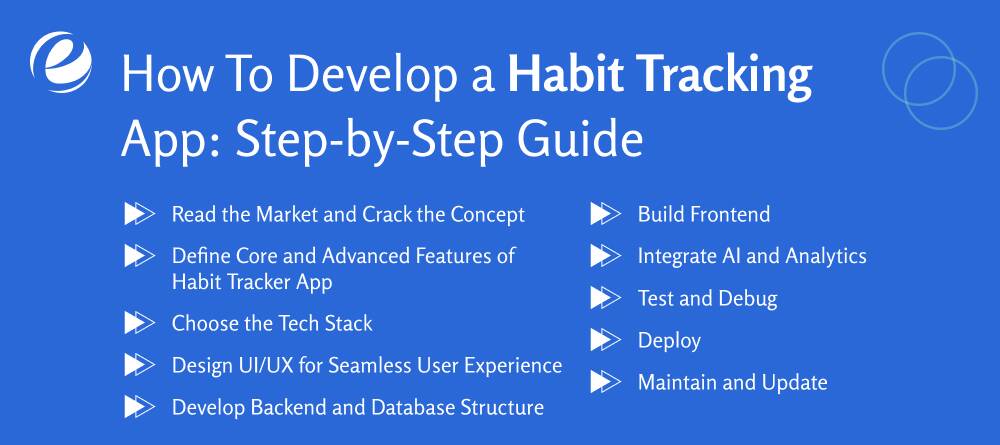
Whether you are building a productivity app or a habit tracker for corporate wellness, the development process for every project starts off with a structured approach. From usability to engagement to technological innovations, habit tracking app development processes tap into a range of areas that demand careful planning.
Without further ado, let’s walk through the steps that form an essential part of habit tracker app development.
Step 1: Read the Market and Crack the Concept
Market analysis and concept (or idea) validation is the core step to kickstarting the habit tracking app development process. This stage is when you conduct a thorough market research, understanding your user base, demands, and challenges. It also involves researching your competitors and identifying the gaps in existing top habit tracker apps. Moreover, you must decide whether your app will offer specific features like mental wellness and physical health or provide a basic tracking system.
Step 2: Define Core and Advanced Features of Habit Tracker App
one of the most highlighted areas of focus (and rightly so). Once you know the concept, the next step is to list out the basic and advanced features of the habit tracker app you are building.
As we discussed in the article earlier, core features of a habit tracker included habit setup, tracking, and reminders. Whereas, gamification, habit recommendations, and more such top-notch features make your app even more valuable.
Step 3: Choose the Tech Stack
One of the most important stages of the habit tracking app development process is choosing the right tech stack. This implies the selection of technologies that are essential to ensure app performance, security, scalability, and integrations.
While React Native and Flutter are popular choices for cross-platform mobile app development, Kotlin (Android) and Swift (iOS) are great for native app development. You can consult the best habit tracking app developers to ensure perfect tech stack for the solution and avoid hiccups later.
Step 4: Design UI/UX for Seamless User Experience
Design can make or break the effort (and money) you put in habit tracking app development companies. Blame it on psychology, but design subtly contributes to the habit formation consistency in many individuals, if not all. A well-designed habit tracking app has an intuitive interface with smooth-sailing habit setting options and progress tracking systems.
The UI should be as good at visuals as it has to be at navigation. The UX should focus on motivational reminders, personalized reminders, and other such engagement strategies. Use prototyping and wireframing to visualize your app’s structure before giving the green light to the development process.
Step 5: Develop Backend and Database Structure
The backend of your habit tracking app is responsible for managing tracking logs, processing user data, and giving the app high-performance results. This phase is to ensure that the backend of your app stores data securely while supporting cloud sync as well. A strong backend architecture plays an important role in preventing performance problems and the risk of data loss.
Step 6: Build Frontend
The frontend is, by all means, the life-giver for your app. It powers the app by integrating animations, UI, and interactive features. The best habit tracking apps offer a seamless habits setup process, making sure users log habits fast and receive timely reminders.
Step 7: Integrate AI and Analytics
AI in habit tracking app development has emerged as a game changer for businesses aiming to revolutionize the market. With AI-driven habit analysis, you can take user experience a notch up by personalizing reminders and recommendations (all thanks to user patterns).
Consider implementing machine learning algorithms to monitor and analyze user behavior. This enables optimal habit-building strategies. If you are looking to build an advanced habit tracker, then add this AI, analytics, and ML integrations to your checklist.
Step 8: Test and Debug
Once all is done and set, there comes a time to test and fix whatever that’s going wrong. One of the most crucial steps of habit tracking app development process, testing phase is the window for conducting rigorous assessment of the app and ensuring it is performing great. Here’s what this stage covers:
- Running the app across a variety of devices and operating systems.
- Checking for usability, functionality, and security.
- Identifying and fixing bugs.
- Optimizing performance.
- Ensuring good user experience.
In addition to the above-mentioned metrics, you must also look for areas like cloud sync operations, discrepancies, offline usage, and more to make sure that everything is aligned and set to hit the floor.
Step 9: Deploy
After it has been developed and the testing has been conducted, your habit tracking app is ready for deployment. This stage encompasses app release on Google Play Store and Apple Store for which you must follow guidelines specific to the platform. Ensure compliance with policies and do optimize app listing as well. Pre- and post-app launch marketing are also crucial parts of this stage.
Step 10: Maintain and Update
This stage is a non-stop process itself. Your habit tracking app must undergo regular testing and updates in order for performance optimization. Regular updates are important for your app to ensure it has the latest features and zero bugs.
Tech Stack for Habit Tracking App Development
| Function | Tool and Technology | Purpose |
| Frontend | React Native, Flutter | Cross-platform mobile app development (Android and iOS) |
| For Android: Kotlin; For iOS: Swift | Separate app development | |
| Backend | Node.js, with Express, FastAPI, Django | API and server side logic |
| Database | PostgreSQL, Firebase, Firestore MySQL | Store habit tracking records and user data |
| Redis | Data caching for performance optimization | |
| Cloud Storage | Google Cloud, AWS | Store backups, images, user data and more |
| Authentication | Firebase Authentication, Auth0, AWS Cognito | Secure user login and authentication |
| Analytics | Google Analytics, Amplitude, Mixpanel | Track and understand app engaging and user engagement |
| Notifications | OneSignal, Firebase Cloud Messaging | Send reminders and updates |
| State Management | For React Native: Redux; For Flutter: Provider | Manage app and user |
| Payment Gateway | PayPal, Stripe, Razorpay | Facilitate and manage premiums and subscriptions |
| Crash Reporting | Sentry, Firebase Crashlytics | Debug and monitor performance |
| CI/CD | GitHub Actions, Bitrise, Fastlane | Automation of development and deployment processes |
How Much Does Habit Tracker App Development Cost?
The cost of developing a habit tracker app typically ranges from $15,000 to $100,000. A range of factors, including complexity, feature integration, and platform compatibility, impact the overall cost of habit tracking app development. While basic habit tracker app features can cost $15,000 to $40,000, advanced AI-driven habit tracking cost between $80,000 to $100,000.
1. App Features and Complexity
The cost of habit tracking app development with basic features like goal setting, and reminders is less. On the other side, an AI-powered habit tracker with biometric syncing, adaptive recommendations, gamification, and more such advanced features will cost relatively high since it pushes the development towards a more high-end, tech-led approach.
2. UI/UX
An intuitive, interactive habit tracker app interface usually has leaderboards, visualization, and more gamification features. This boosts user engagement but also adds costs for design intricacies. A basic UI/UX costs $7,000 to $15,000. Whereas, the premium, interactive habit tracker app designs with gamified nuances can raise the cost to $20,000 or more.
3. Platform
Habit tracker app development for a single platform, be it Android or iOS, costs between $15,000 to $40,000. However, cross-platform habits tracker app development can cost between $30,000 and $80,000, given it demands frameworks like React Native or Flutter.
4. Security and Data Safety
Security is a non-negotiable requirement of any digital solution. Since habit trackers store personal data, you must implement robust security measures, encompassing encryption, compliance, and two-factor authentication. The cost can range from $5,000 to $8,000. If you’d like to opt for blockchain infrastructure, the cost might go above $15,000.
5. Backend
A habit tracker app requires a scalable and secure backend to store analytics, user data, and syncing across devices. The cost of a basic backend can range between $5,000 and $20,000 while a cloud-based platform with encrypted storage and high-performance database can range from $40,000 to more.
6. Integration with Wearables and Third-Party APIs
If you are planning to sync your habit tracker app with third-party APIs or wearables, the development will require additional backend work. While a basic API integration costs between $3,000 to $10,000, an app with real-time syncing capabilities and AI analytics can push the cost to $20,000+.
7. Post-Launch Maintenance
Post habit tracker app development maintenance involves bug fixes and updates, which are essential for ensuring user experience and competitive advantage.
While basic post-deployment support ranges from $2,000 to $5,000 per month, the cost of long-term maintenance, server scaling, and feature upgrades falls between $10,000 and $50,000.
8. AI and ML in Habit Tracking Apps
Implementation of AI in habit tracking app development, for features like smart nudges and predictive analytics can increase development costs. However using top-notch technologies enhances customer satisfaction and experience remarkably. The cost of AI implementation starts at between $15,000 and can exceed $50,000.
9. Offline Mode
Offline habit tracking app functionality offers convenience to users, while ensuring consistent engagement. The cost of including this feature in habit tracker app development can range between $5,000 and $15,000.
Effective Tips to Monetize Your Habit Tracking App
A habit tracking app development process is more than just building a tool to help users build a strong routine. The intent is also to make it a profitable project that keeps getting monetized in the long run.
Here is how you can monetize habit tracking app:
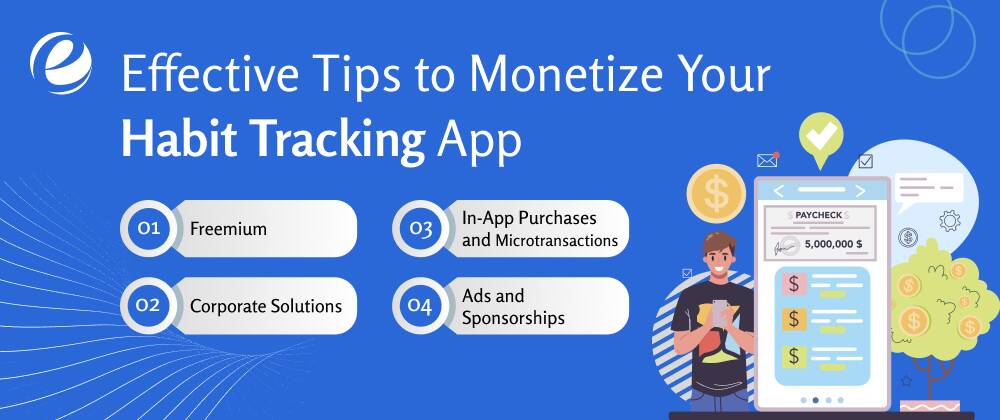
1. Freemium
A freemium model is the most viable way to monetize a habit tracking app. You can make basic tracking features accessible to all the users for free and charge a premium (fee) in exchange for unlocking advanced features. The plans in this model are typically on a monthly and yearly basis.
2. Corporate Solutions
Organizations invest in habit tracking and productivity apps as an initiative to help employees improve mental well-being and efficiency. You can offer a SaaS-based habit tracker app or a white-label solution to accommodate corporate wellness programs. This helps generate high-value contracts for a long run. That’s not all, this monetization method is a great way to promote your brand on a larger level.
3. In-App Purchases and Microtransactions
In-app purchases are when users have the option to purchase habit-building resources like guided meditations, personal development courses, and more. Moreover, you can use the microtransaction model wherein the users buy digital rewards like badges, or exclusive themes.
4. Ads and Sponsorships
Advertising is one of the best ways to monetize habit tracking apps effectively. When partnering with wellness or fitness brands, you can run targeted ad placements within the app. It may be in the form of a banner or a sponsor challenge.
Why Choose Emizentech as Your Habit Tracker App Development Partner?
Emizentech, a leading habit tracking app development company, specializes in delivering high-end mobile app solutions that drive scalability. We build future-ready habit tracking mobile apps that:
- Cater to the diverse needs of modern users
- Promote self-improvement and productivity
- Introduce new-age features to simplify habit formation process
- Drive user engagement and user retention
- Boost scalability
And how do we do that? We follow a mix of innovation, technology, and just the right amount of passion. Our team of best habit tracker app developers infuse a basic mobile app with a creative approach, leveraging the tech stack that meets your needs. Trusted by 1100+ businesses worldwide, we have expertise in building Al-powered mobile apps across industries that has pushed us even more to try something ground-breaking.
If you are planning to kickstart a habit tracking app development plan, we will help. Our team will discuss everything from the goals to the target audience to your vision and more, to come up with the best approach to make your idea successful.

Get Started with Habit Tracker App Development Today!
From hand-written checklists to Al-enabled habit tracker apps, the self-improvement space has come a long way. One can start, add, manage, and track their habit formation (or changing) journey at the comfort of their fingertips. Habit tracking mobile apps not only help individuals stay motivated to adopt a healthy lifestyle, they also present an opportunity for you to start/expand your business in this industry. And with the demands for personal development coaching and practices rising, now is the perfect time to tap into this chance
Need help with futuristic habit tracking app development? Connect with us and let’s discuss the best way to build a scalable, profitable solution.
FAQs
How to make a habit tracker app?
To start with a habit tracker app development process, you first need to define the features and USPs that you'd like to offer to the users. Choose the platform (Android, iOS, or both) to later define the tech stack. Moreover, hiring a top habit tracking app development or developers is also an important step to ensuring an effective solution.
How much does it cost to build a habit tracking app?
The cost for habit tracker mobile app development can range from $10,000 to $50,000 and more, depending on the factors like features, technology used, etc
How long does it take to build a habit tracker app?
The habit tracker app development timeline can vary based on factors like, your unique business goals, features, development team, and more. On an average, it takes between 2 and 6 months for an app to get ready and deployed
How do I monetize my habit tracker app?
You can monetize your habit tracking app through methods like freemium models, in-app purchases, ads, and collaborations with brands.



 +1 (989) 535-9295
 info@emizentech.com
 emizentech


