 Add us as a preferred source on Google
 In today’s digital world, the number of individuals using the internet for their healthcare needs is growing day by day. From ordering medicines and wellness products to scheduling appointments with doctors, people use digital platforms for quick response. A well-developed healthcare eCommerce website makes these services easily accessible and ensures the safety and trust of the users.
Whether you are developing an online pharmacy, telemedicine service, or wellness website, there are certain things you need to know before developing a successful healthcare website. In this blog, you will learn about the entire process of developing a profitable eCommerce website for healthcare businesses.
What Is a Healthcare eCommerce Website?
An eCommerce website for the healthcare sector refers to an online platform where patients can purchase medical products, book healthcare services, or order prescriptions digitally. It commonly includes medicines, wellness products, medical devices, and telehealth services. According to Fortune Business Insights, the global digital health market is projected to reach from USD 491.62 billion in 2026 to USD 2,351.24 billion by 2034, showing rapid adoption. These platforms improve accessibility, convenience, and delivery of healthcare products directly to consumers online.
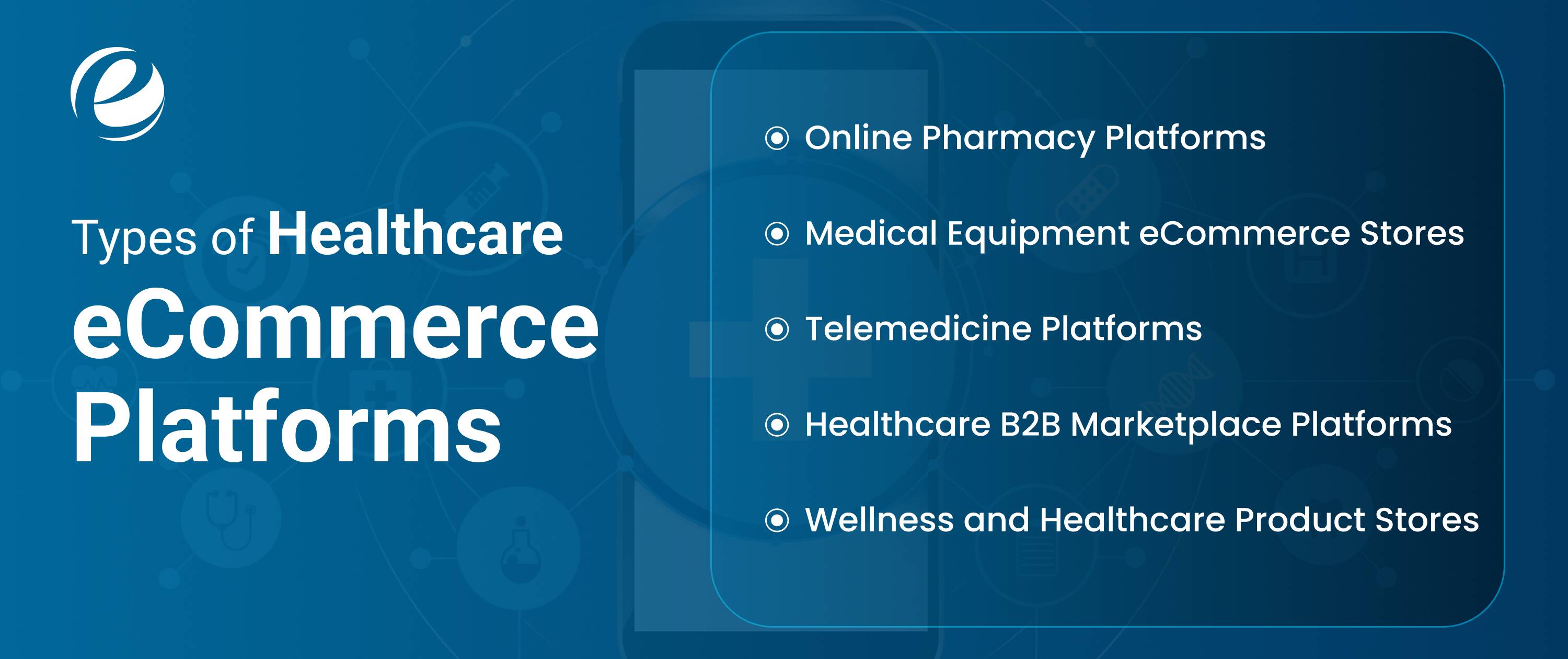
Types of Healthcare eCommerce Platforms
The healthcare industry is changing. fast, and more people are looking for ways to access medical products and services online. From ordering medicines to consulting doctors virtually, there are different types of platforms that are designed to meet these needs.
Online Pharmacy Platforms
The online pharmacy platforms allow customers to order prescriptions and medicines online for home delivery. These platforms offer features like prescription uploads, medication reminders, and online consultations with pharmacists.
Medical Equipment eCommerce Stores
Medical equipment eCommerce platforms are used to sell medical devices and equipment, such as
- Blood pressure monitors
- Glucose meters
- Mobility aids
- Oxygen concentrators
So platforms like this are used by hospitals, clinics, and home healthcare providers.
Telemedicine Platforms
Telemedicine platforms are virtual eCommerce solutions for the healthcare industry that allow patients to consult doctors online through video calls, chat, or voice calls.
With the help of these platforms, patients can easily:
- Book online consultations
- Receive digital prescriptions
- Access health records
- Order medicines after consultation
Healthcare B2B Marketplace Platforms
Healthcare B2B marketplace platforms connect manufacturers, distributors, hospitals, pharmacies, and clinics to facilitate bulk purchasing of medical supplies and equipment. These platforms improve supply chain efficiency and offer better pricing transparency for healthcare organizations.
Wellness and Healthcare Product Stores
These platforms focus on selling healthy supplements, fitness products, personal care items, and preventive healthcare products. In preventive care, they offer:
- Vitamins and supplements
- Fitness equipment
- Organic health products
- Personal care products
Brands like Himalaya Wellness Company and HealthKart combine healthcare with lifestyle and preventive wellness.
These are the types of healthcare eCommerce platforms businesses use to build compelling websites. If you are working on a specific type and facing challenges, you can seek help from professional web development services.
Key Features Every Healthcare eCommerce Website Must Have
ECommerce healthcare websites must provide a secure digital environment where patients can easily access their medical products. In the following section, there are some important features for building a reliable eCommerce platform for healthcare:
- Secure Payment Gateways: These systems protect users’ financial information through encryption and fraud prevention technologies.
- Clear Call to Action: Adding a clear CTA helps the users to quickly take the desired action on a healthcare platform.
- Mobile Responsive Design: The design makes sure that the healthcare eCommerce website works smoothly across smartphones, tablets and desktops.
- Online Appointment Scheduling: It allows patients to book consultations with doctors directly through the website.
- HIPAA-Compliant Security: It is a data protection standard that makes sure that patient information and medical records are protected.
Top Ecommerce Trends in Healthcare
If you want to stay ahead in the market, then you must implement some advanced features in your eCommerce website. Below, you will see some eCommerce trends in healthcare
- AI-powered Recommendations: AI can analyze user behavior and recommend suitable medicines or healthcare products for them.
- Telemedicine Integration: Users can consult doctors directly on the platform before purchasing medicines.
- Electronic Health Record (EHR) Integration: Patients can store prescriptions, reports, and health history securely.
- AI Chatbots: Chatbots can answer common health queries and guide users through the platform.
- Direct-to-Consumer (D2C) healthcare: The brand sells the medicines directly online by cutting out the middleman.
- Telehealth & Click to Script Integration: In this, the virtual doctor’s consultations are linked directly to the eCommerce cart.
So, these are the common healthcare ecommerce trends
Healthcare eCommerce Website Development Process
Now that you have learned about the types, features, and top trends of ecommerce healthcare platforms, it is ideal to understand the development process to make informed decisions.
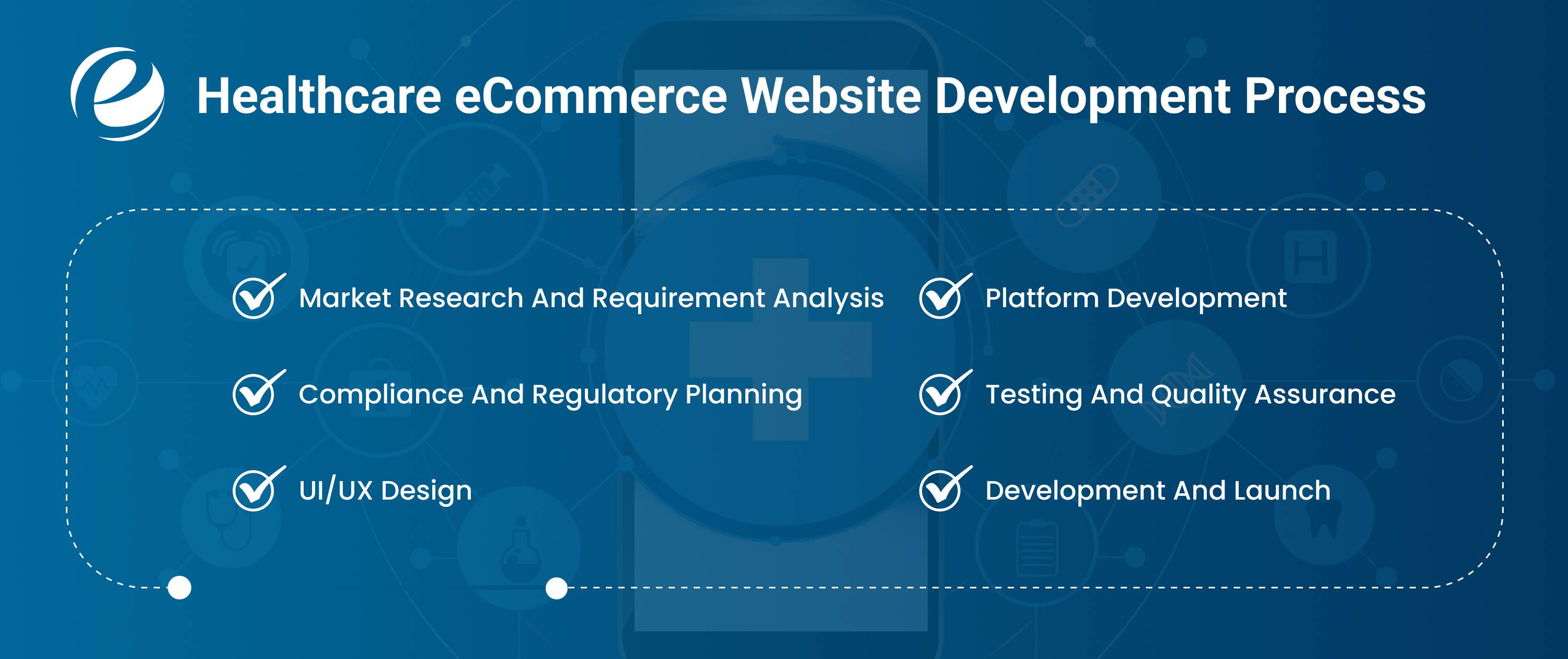
Step 1: Market Research and Requirement Analysis
In the first step, understand the healthcare market, target audiences, and business goals. Also, analyze the competitors so that it will be easy for you to decide whether the platform will focus on online pharmacies, medical equipment sales or telemedicine services.
Step 2: Compliance and Regulatory Planning
It is essential that your ecommerce website
Step 3: UI/UX Design
The designers develop an interface that is user-friendly and enables patients to search for drugs, upload their prescriptions, and schedule appointments. The responsive design enables the website to function well across different devices, improving the user experience.
Step 4: Platform Development
At this stage, the front-end and back-end of the website are developed using modern technologies. Also, the development of various features such as product catalog, login, payment, etc., is carried out.
Step 5: Testing and Quality Assurance
Prior to the launch, the platform is tested to guarantee security, efficiency, and usability. The developers will check for bugs in the site, the security measures for the data, and the usability of the website on different devices and browsers.
Step 6: Development and Launch
Once the testing is successful, the healthcare web application is deployed on the cloud infrastructure. Businesses can utilize the cloud infrastructure provided by Amazon Web Services or Microsoft Azure for scalability and hosting.
Tech Stack for Healthcare eCommerce Website Development
Choosing the right technology stack is crucial for building a suitable healthcare eCommerce platform for the targeted users. However, the modern frameworks help developers to create reliable websites that support the medical marketplaces. Here are some of the common tech stacks for healthcare eCommerce websites:
Next.js
It is an effective framework that uses React. It is used to create fast web applications that are SEO-friendly. Additionally, it supports static site generation. This makes it easier to increase the page load speed.
Node.js/Express
Node.js is an environment used in the backend. It is used to create scalable web applications. Additionally, it is used in combination with Express.js. This enables developers to create fast APIs that can handle many requests.
PostgreSQL/Prisma
It is an open-source relational database. It is known for reliability. However, it is used in applications that need to store structured data. This includes patient information.
TypeScript
It is a programming language based on JavaScript that helps developers detect errors at an early stage and improve code scalability, which is especially important for applications that handle patient information.
How Much Does It Cost to Build a Healthcare eCommerce Website?
The cost of building an eCommerce platform for a healthcare website depends on factors such as features, compliance requirements, tech stack, and development team location. In the table below, you will see the cost to develop a healthcare eCommerce website according to the level of websites:
| Size of website | Approximate Cost |
| Small Healthcare Website | $3,000-$10,000 |
| Mid-Level healthcare Website | $3,000-$10,000 |
| Complex Healthcare Website | $30,000-$100,000+ |
So with the help of the above table, you can understand which cost is suitable for your healthcare eCommerce platform.
Monetization Strategies for Healthcare eCommerce Platforms
Healthcare eCommerce platforms can generate revenue through multiple monetization models while delivering convenient digital healthcare services. You can adapt the strategies that are mentioned below to improve the service accessibility for users.
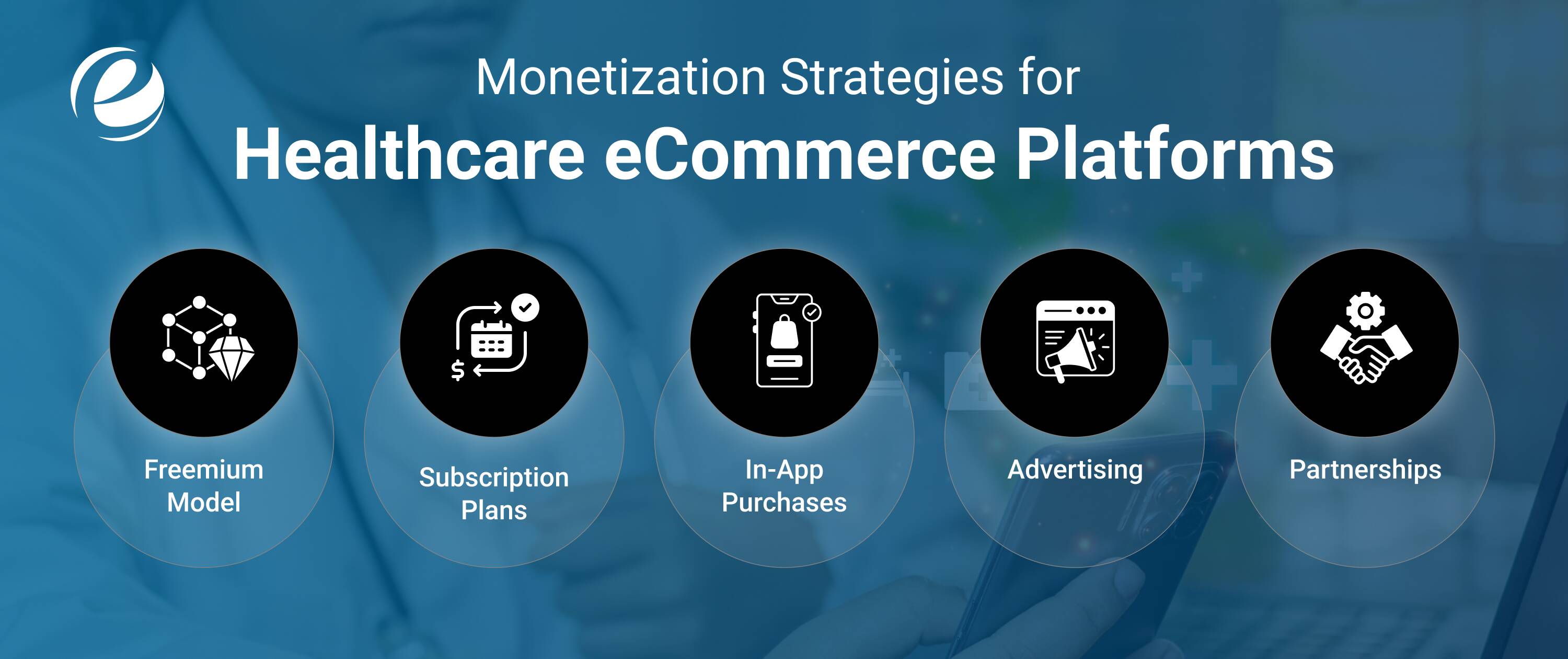
- Freemium Model: It allows users to access basic services for free while charging for advanced features.
- Subscription Plans: Plans provide recurring revenue by offering users monthly or yearly memberships.
- In-App Purchases: Healthcare platforms can offer additional paid features within their mobile apps or websites.
- Advertising: The easiest way to generate revenue by displaying targeted advertisements for pharmaceutical brands or healthcare services.
- Partnerships: Platforms can earn commissions by connecting patients with partner services such as lab testing or insurance policies.
So, you can apply these strategies when you are building your eCommerce platforms for a better user interface.
Why Choose EmizenTech for Healthcare eCommerce Development?
In today’s fast-growing digital healthcare space, having the right technology partner can truly make a difference and that’s where EmizenTech comes in. Our team of specialized developers understands your unique needs of healthcare businesses by building eCommerce platforms that simplify everything from selling medicines online to managing prescriptions and inventory.
What really sets us apart is our developers’ focus on practical solutions for a better user experience. Emizentech helps healthcare brands to build reliable online stores and grow their business without unnecessary tech complications.
Conclusion
Building a healthcare eCommerce website requires proper planning, the right technology, and strong security to protect patient data. A successful platform should include important features, a reliable tech stack and a clear monetization strategy. However, with this you can grow your platform in the evolving eCommerce marketplace.
As you all know, the digital healthcare services are growing rapidly; businesses can use these platforms to provide medicines, telemedicine services and wellness products online. Therefore, if you follow the right development process and meet security standards, you can build a secure platform for users. Additionally, eCommerce app development services can help you launch a mobile app after your website goes live.
FAQs
How long does it take to build a healthcare eCommerce website?
It typically takes 3–6 months to develop a healthcare eCommerce website. However, the timeline can vary depending on the platform’s complexity, the features you want to include, and the type of website you are building, such as a pharmacy website or a healthcare marketplace.
Is it legal to sell medicines on online platforms?
Yes, it is legal to sell medicines on an online platform. The platform has to follow the rules and regulations of the healthcare sector, ensure prescriptions for certain medicines, and follow pharmacy licensing and data privacy standards.
Can telemedicine be integrated into healthcare eCommerce websites?
Yes, telemedicine can be integrated into healthcare eCommerce websites. The feature will allow patients to consult doctors, get digital prescriptions, and buy medicines from the platform after getting a recommendation for the medicines.
Why is healthcare eCommerce growing rapidly?
Healthcare eCommerce is growing rapidly because of the increased number of people using the Internet, the convenience of home delivery, telemedicine, digital health awareness, and the need for rapid access to healthcare products and services.




 +1 (989) 535-9295
 info@emizentech.com
 emizentech


