 Add us as a preferred source on Google
 Mental health issues are becoming increasingly common, affecting millions of people around the world. According to the World Health Organization, over 300 million people suffer from depression. Traditional therapy is effective, but it can be expensive, have limited accessibility, and sometimes be intimidating. The growing demand for such solutions has fueled the rise of mental health app development. By combining technology, psychology, and design, the mental health app helps people take control of their well-being easily. In this blog, you will learn how to develop a mental health app, its features, technology, and the costs involved in developing a mental health app in 2026.
What Is Mental Health App Development? and Why Does It Matter?
Mental health app development refers to the process of designing and building digital applications that help users manage emotional, psychological, and behavioral wellness. These apps provide tools such as therapy sessions, mood tracking, meditation exercises, AI-based chat support, and personalized wellness plans.
These are some of the common reasons why developing mental health apps is important for those seeking private support:
- 24/7 Available
- Affordable
- Safe and Private
- Personalized
So, by combining technology with empathy, these apps help people take meaningful steps toward better mental health.
Types of Solutions You Can Build Through Mental Health App Development
Mental health apps are not designed to meet individual needs. It depends on your target audience and business goals. Below are several types of solutions you can build through mental health app development:
- Meditation and Mindfulness Apps: They assist the user in completing breathing exercises and relaxation techniques, as well as meditation, to help alleviate stress and increase focus.
- Therapy and Counseling Apps: Users can access therapists or counselors through a chat session, video call, or voice call. It helps people access therapy from their home.
- Mood Tracking Apps: By tracking their daily emotions and behavior, users can gain more insight into their mental health.
- Cognitive Behavioral Therapy (CBT) Apps: They provide therapy exercises that are based on cognitive behavioral therapy.
- Self-Improvement Apps: They focus on improving the user’s life through habit-building techniques, journaling, and other techniques to gradually improve their mood.
- Community Support Apps: They provide a space for users to share their experiences, ask questions, and interact with others in a comfortable environment of anonymity.
So, analyze some successful mental health apps that have combined all of these features. You can begin by understanding how to develop a meditation app that is similar to popular apps like Headspace or Calm.
Essential Features to Include in Mental Health App Development
To create an effective mental health app, it is crucial to include features that make the app engaging, supportive, and personalized for the users. Below are some core features for every mental health app development:
Mood Tracking: It allows users to log their daily emotions, thoughts, and habits to identify patterns and triggers over time.
Guided Meditation: It provides relaxation exercises, breathing techniques, and meditation sessions to reduce stress and improve focus.
AI Chat Support: These chatbots offer instant, automated support for users, helping them manage anxiety or answer common questions.
Therapy Access: This feature connects users with licensed therapists via chat, audio, or video sessions for professional help.
Personalized Plans: On the basis of each user’s mental health, it tailors exercises, reminders, and therapy suggestions.
Progress Analysis: It shows the users that they are improving over time using charts, patterns, summaries, and actionable recommendations.
Wearable Connectivity: Sync your apps with devices like smartwatches so that it will be easy to track sleep, activity, or heart rate.
Emergency Support: Must provide quick access to crisis helplines or support in urgent situations using emergency contacts.
So, these are the most important features for every mental health app development. If you want to understand the modern features, you can explore the use of AI in mental health.
Tech Stacks of Mental Health App Development
Selecting the correct technology stack is essential to developing a reliable mental health app. According to Marketing Charts, the growing demand for such apps is expected to reach around $9.4 billion in 2026. It shows the importance of scalable and secure technologies in the apps. Let’s have a look at the different technologies:
Frontend:
It is the part of the app that users interact with using buttons, screens, and design. It should be simple and easy to use.
- iOS: Swift, SwiftUI
- Android: Kotlin, Jetpack Compose
- Cross-Platform: Flutter, React Native
Backend:
This is the system that runs in the background. It stores data and makes sure that everything works smoothly.
- API Development: Node.js, Django
- Database: PostgreSQL, MongoDB
- Cloud Services: AWS, Google Cloud, or Azure for secure storage
AI & Machine Learning:
AI helps the app understand users and give better suggestions to them according to their previous data. It can track moods, give advice, or even chat with the users when they are feeling low. Moreover, tools such as TensorFlow and PyTorch are used to add these smart features.
So, these are the technology stacks that developers use to build custom mental health app development
Step-by-Step Process: How to Develop a Mental Health App
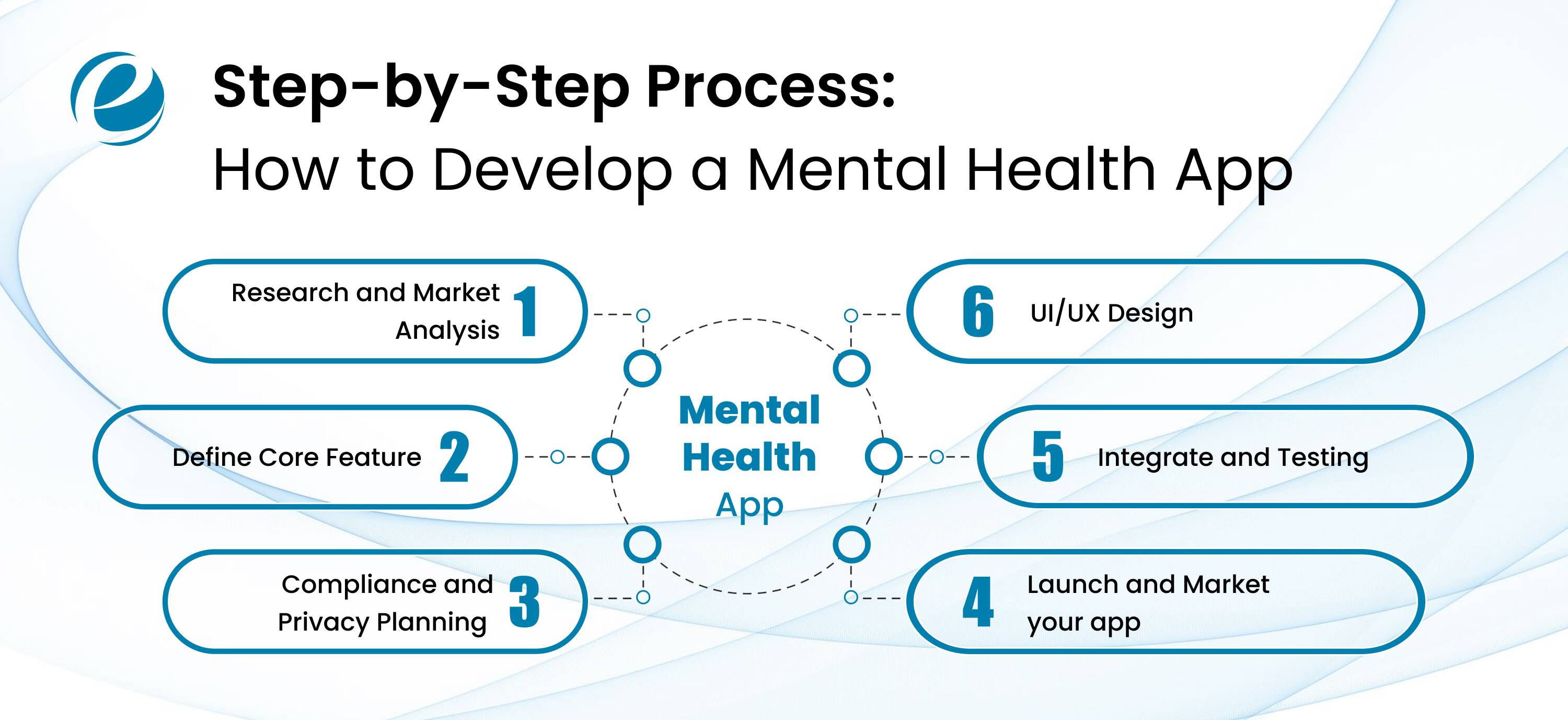
The mental health app development implies careful planning, design, and execution. Below you will learn the process to develop a secure application for your users:
Research and Market Analysis
Firstly, you have to understand your target audience, their needs and the existing solutions in the market. For that, analyze competitors and identify gaps where your app can provide unique value.
Define Core Feature
This phase is one of the most important steps that is based on your research. You have to decide on some of the essential features that you will include in your app. Be clear with your ideas, whether you focus on mood tracking or a medication app, to reduce development time and costs.
Compliance and Privacy Planning
Mental health data is sensitive for everyone. Always make sure that the app complies with privacy laws such as HIPAA in the U.S. or GDPR in Europe. Ensure that your users’ information is stored, shared, and processed securely so that it makes them feel safe.
UI/UX Design
Design an intuitive and calming interface for users because colors, typography and navigation create a sense of comfort in them. For that, you have to ensure a positive user experience on your app, as users may be experiencing stress or anxiety.
Integration and Testing
Integrate all app features and perform rigorous testing. Check the functionality, usability, and security of the overall app. Furthermore, you can involve real users in testing to identify pain points so that you can improve the experience.
Launch and Market your app
Once your app is ready, you have to launch it on a relevant platform, like the App Store or Google Play. Moreover, develop a marketing strategy that targets the mental health communities, wellness blogs, and social media.
Compliance Requirements for Mental Health App Development
Creating a mental health app means handling very sensitive personal information. To keep users safe and build trust, developers must follow legal rules that govern how health data is used and shared:
- HIPAA Compliance: These laws ensure that all personal health information, like therapy notes or mood tracking, is stored safely. They also require apps to control who can access this information and notify users if any data is accidentally shared with anyone.
- 42 CFR Part 2: Some health data is extra sensitive, like records about substance use or addiction. The 42 CFP Part 2 protects this data that can not be shared with anyone without special permissions.
- ONC Certification & Interoperability standards: Many mental health apps need to work with other health systems, like hospitals’ or doctors’ electronic health records. ONC certification ensures that your app can safely share the information by following standard rules.
- Data Privacy Laws: If your app has users in Europe or California, you must follow GDPR or CCPA. These laws give users control over their personal data. This means you must clearly tell users what information you are collecting to ask for their permission before seeing their data.
Cost to Develop a Mental Health App
The cost to develop a mental health app depends on its features, platform complexity, and location of the development team. With the help of this table, you will know the estimated cost to develop a mental health app.
| App Type | Approximate Cost | Development Timeline | Key Features |
| Basic Mental Health App | $45,000-$120,000 | 2-3 Months | Mood tracking, guided meditation, reminders |
| Mid-level Mental Health App | $150,000-$300,000 | 5-6 Months | AI mood insights, in-app chat support, personalized dashboard, and content library |
| Advanced Mental Health App | $400,000+ | 10-12 Months | Live video therapy, AI emotion analysis, wearable integration, advanced analytics |
Therefore, other factors that can also affect the cost include technical stacks and compliance-related features, such as encryption and secure cloud storage.
Factors Affecting the Cost to Develop a Mental Health App
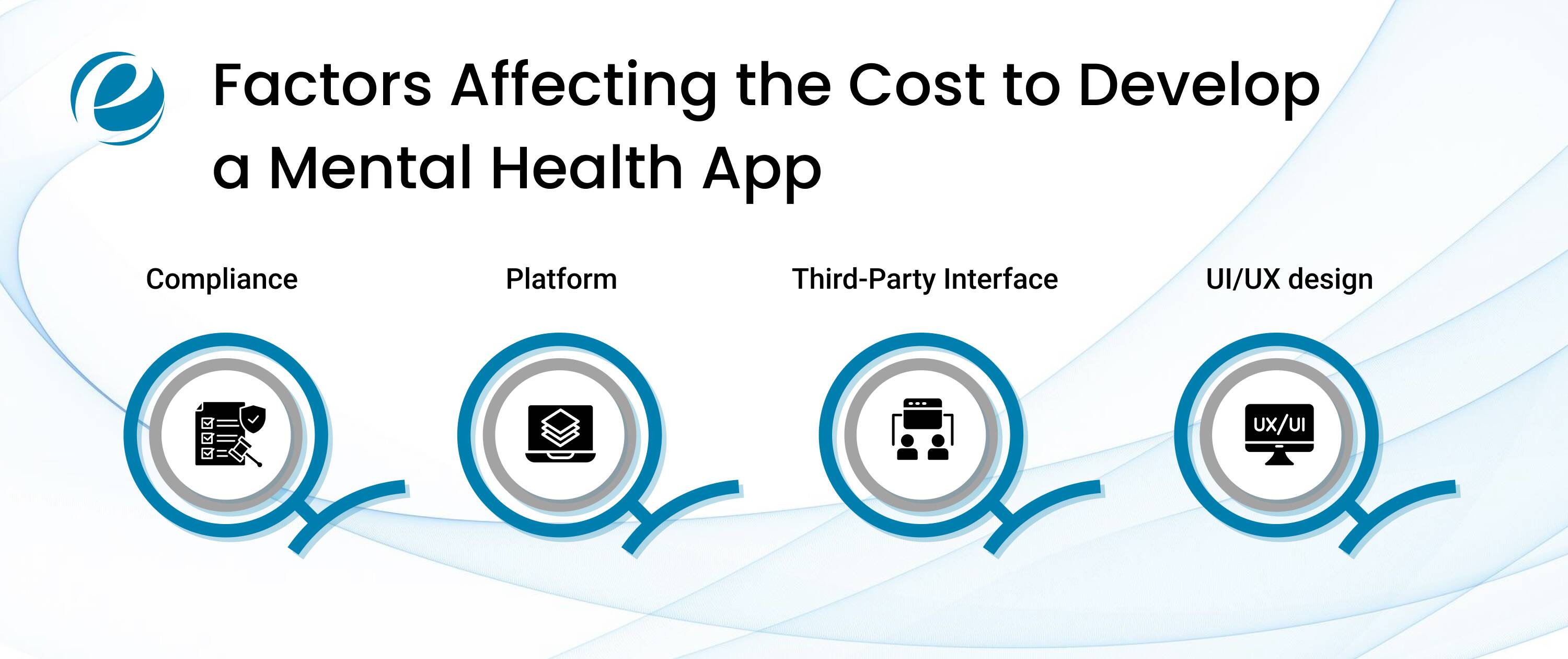
The cost of the apps depends on the features, platform, and compliance requirements of the apps. Below, you will see some of the main factors that can affect the cost of mental health app development:
- Compliance: To develop an app that follows regulations like HIPAA or GDPR, advanced data encryption and audit trails are needed.
- Platform: Building native apps for both iOS and Android is more expensive than a single native app or a cross-platform system.
- Third-Party Interface: Connecting the app with electronic health records (EHR), wearables or payment gateways increases cost.
- UI/UX design: Mental health apps should use calm colors and designs to enhance patient engagement, which can add $5,000 to over $50,000.
So, these factors can affect the total cost of building a mental health app. For example, if you are building a mood tracker mobile app, understanding these costs helps you to plan an efficient budget according to your target audience.
Common Challenges in Mental Health App Development
Mental health app development needs a solid understanding of human behavior and sensitivity. Below, there are some of the key challenges that developers must address:
- Emotional Uncertainty: Users’ moods and behaviors can change rapidly. It makes it difficult to design features that respond properly according to their emotions.
- Sensitive Design: Users may interact with the apps when they are emotionally drained, so the interface of the app must be simple and calming.
- Silent Distress: Many users may not openly express their feelings, so identifying the hidden signs of anxiety or depression with limited input is challenging.
- Clinical Accuracy: The app must provide safe guidance to the users because unverified information can negatively impact a user’s mental well-being.
- Usage Dependency: Users might depend too much on the app instead of seeking professional help, which can delay their proper treatments.
How Do Mental Health Apps Make Money?
Mental health apps use different methods to make revenue while providing benefits to the users. Some of the monetization techniques are mentioned below:
- Subscriptions: Users pay a monthly or yearly fee to unlock extra features. This is the most common way these apps use to earn money.
- In-app ads: Some apps show ads inside the app, like banners or short videos. However, this method is not used much because of the sensitive nature of users.
- Paid sessions: Many apps offer paid therapy sessions with therapists. The app keeps a small part of the fee and gives the rest to the therapist.
- Corporate Programs: Companies pay to provide access to the app for their employees as a part of employees’ wellness programs or benefits packages.
How to Choose the Right Mental Health App Development Company
Selecting the right development partner can make or break your mental health app. You need a team that knows the sensitivity of mental health solutions among people. Below are some crucial factors that you must focus on while choosing a mobile app development company for your app:
- Experience: This is one of the most important concerns, so seek a company that has built apps related to healthcare.
- Portfolio: A proven track record of the companies shows that they can deliver projects on time and meet your business goals.
- Technology Skills: You have to make sure that the team you choose is skilled in modern tech development.
- Compliance Knowledge: They know the secure use of user data with HIPAA, GDPR, and other regulations.
- Post-Launch Support: They must provide you with ongoing support if the app needs updates or new features.
So, when a team balances this expertise, it can reduce risks and create apps that truly make a difference in this modern market.
Why EmizenTech Is the Right Choice for Mental Health App Development
EmizenTech is trusted by clients worldwide because they deliver engaging apps for its clients. On Clutch, we have a 4.9/5 rating from verified clients; they praise our developers’ technical expertise across different industries. Our developers have years of experience in building apps for mental health, telemedicine, and wellness. They make sure that every app follows strict privacy rules like HIPAA and GDPR to secure users’ personal information. If you hire a mobile app developer from EmizenTech, they will guide you through the entire journey so that you can grow with your users’ needs.
Conclusion
Mental health app development in 2026 is more than just building an app; you have to create meaningful solutions that improve lives. So, with the help of the right features and technology stack, you can create an app that is engaging for the users. Also, after understanding all the fundamentals that are mentioned in this blog, you can easily excel in the core knowledge. It enables both developers and businesses to make informed decisions that benefit both users and the mental health ecosystem.
FAQs
What are the essential features of a mental health app in 2026?
If you are building a mental health app, you have to include these features:
1. AI chatbots
2. Mood Trackers
3. Teletherapy Sessions
4. Personalized recommendations
5. Crisis or emergency support options
Are mental health apps safe and secure?
Yes, the mental health apps are safe if they are built correctly. Reliable apps follow strict data protection standards such as encryption and secure cloud storage.
Can mental health apps replace therapists?
Mental health apps are not a replacement for licensed therapists because they act as supportive tools that complement traditional therapy.
How do mental health apps make money?
There are some common monetization models that include subscription plans, pay-per-session therapy services, freemium features, corporate wellness partnerships, and paid purchases through which you can make money.



 +1 (989) 535-9295
 info@emizentech.com
 emizentech


