 Add us as a preferred source on Google
Are you ready to take advantage of the rapidly expanding digital lending market? This worldwide digital mortgage software industry is expected to grow from approximately USD 3.7 billion in 2022 to USD 35.3 billion by 2032, which represents a compound annual growth rate of 24.7%, according to Allied Market Research. The explosive growth is fueling huge demand for custom mortgage software, and AI-based mortgage application solutions are driving this industry expansion.
The drive for smooth mortgage app processes by banks, brokers, and real estate platforms has made mortgage application development essential for current fintech software development and real estate mobile app development strategies. Let’s explore how this multibillion‑dollar market shift is reshaping the future of mortgage applications.
Key Takeaways
- A mortgage app simplifies applying for and tracking a mortgage application digitally.
- The mortgage app development enables faster loan approvals while creating better experiences for users.
- Mortgage software development includes multiple mortgage applications that serve the needs of lenders, brokers, and borrowers.
- The mortgage app development requires security measures, compliance standards, and banking system integration.
- Mortgage application projects fit naturally into both fintech and real estate mobile application development.
What Is a Mortgage App and Why Should You Invest in It?
A mortgage app is a digital platform that enables borrowers to complete all application tasks from a single location through web or mobile access. It streamlines the entire process by guiding users to submit documents and providing real-time updates on application progress.
Why Invest in a Mortgage App?
- Faster Loan Processing: Automates verification, documentation, and approval workflows, reducing approval time from weeks to days.
- Improved User Experience: Provides applicants with a seamless, real-time interface to track their application, enhancing satisfaction and trust.
- Operational Efficiency: Lenders and brokers can handle more applications with fewer manual errors, reducing overhead costs.
- Competitive Advantage: In a digital-first market, offering a mortgage app positions your business as modern, customer-centric, and tech-savvy.
- Data-Driven Insights: Apps can track user behavior, loan trends, and repayment patterns, allowing for better decision-making and personalized services.
Types of Mortgage Applications
Mortgage apps can be broadly categorized based on their users and functionality. These digital solutions streamline different stages of the mortgage process for lenders, brokers, and borrowers.
Loan origination and processing apps
The core functions of mortgage software development for lenders and brokers depend on these mortgage apps, which automate the intake of applications, document verification, and underwriting, significantly reducing manual effort and the likelihood of errors. By speeding up approval times, they ensure more efficient mortgage processing, allowing financial institutions to handle larger volumes of applications with greater accuracy.
Loan Servicing and Mortgage Management Apps
After a mortgage is approved, servicing apps manage ongoing tasks such as payments, escrow accounts, and statements, helping lenders maintain accurate, long-term portfolio management and improve operational efficiency.
Borrower Facing Mortgage Apps and Calculators
They allow users to check eligibility, calculate potential payments, and submit applications digitally, offering a seamless, real-time experience that simplifies the mortgage process.
Key Benefits of Mortgage Application Development
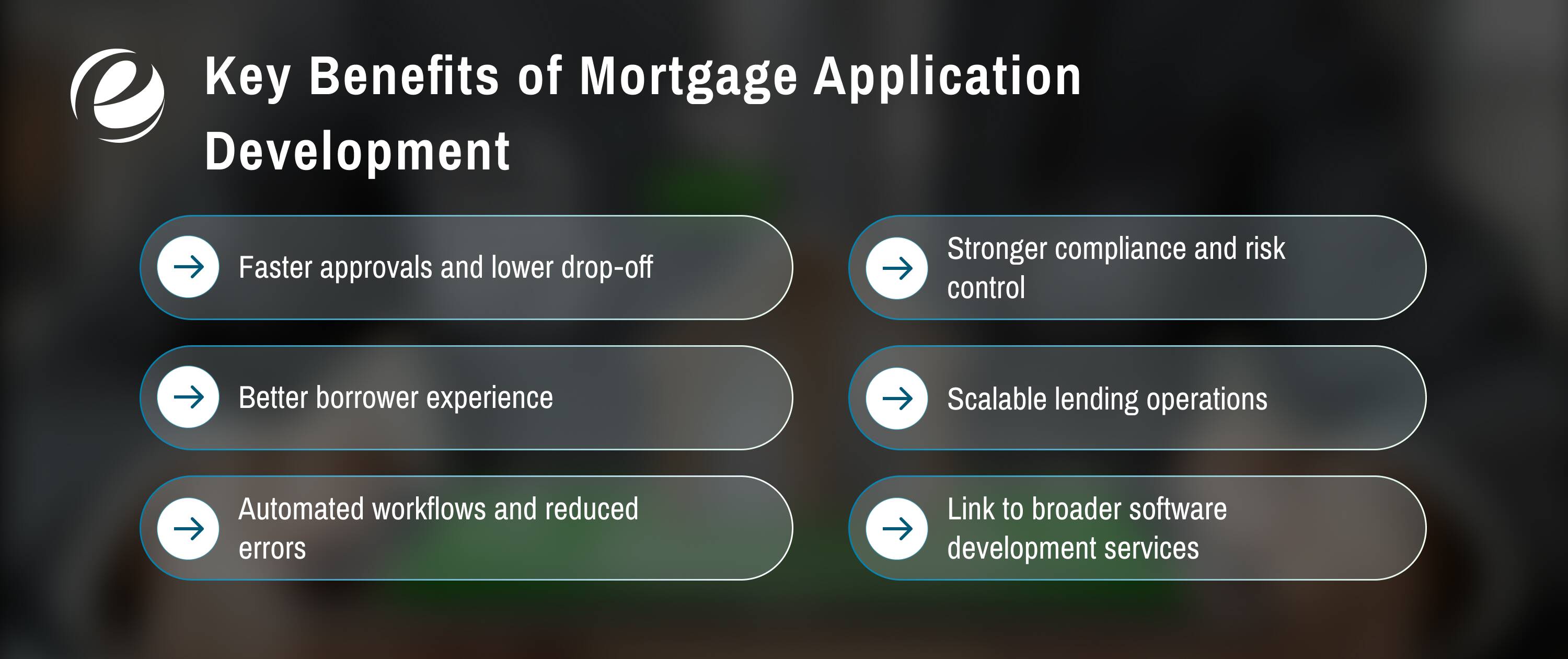
Mortgage application development allows lenders and brokers to streamline operations, reduce errors, and improve the borrower experience through efficient, automated processing.
Faster Approvals and Lower Drop‑off
The digital mortgage application process enables users to complete online applications with greater ease, which results in quicker approval times and decreased application abandonment.
Better Borrower Experience
The software development ecosystems show improved user interaction through modern mortgage application software, which provides users with guided forms and shows their progress while offering in-app assistance.
Automated Workflows and Reduced Errors
The development of mortgage software systems uses automation to handle data entry tasks, validation processes, and verification procedures, resulting in fewer errors during mortgage application assessment.
Stronger Compliance and Risk Control
Built‑in KYC, AML, and data protection measures ensure regulatory compliance and support audit readiness.
Scalable Lending Operations
Mortgage apps integrate with banking and CRM systems, enabling lenders to efficiently expand operations as their business grows.
Link to Broader Software Development Services
Mortgage application development is a core component of comprehensive software development services that support the ongoing improvement of products and platforms throughout their development cycle.
Essential Features and Components of a Mortgage Application
Mortgage applications development process requires an organized combination of features that borrowers interact with and backend systems, which together create a contemporary mortgage app.
User Onboarding and Profile Management
The mortgage application onboarding begins when users complete secure sign-up and identity verification, along with profile setup in the mortgage app.
Pre‑qualification and Payment Calculators
The mortgage application provides tools that enable borrowers to assess their eligibility and calculate monthly payments before they submit their complete mortgage app.
Digital Mortgage Application Form
The online mortgage application form enables users to complete their application by entering income information along with property details and loan specifications, which leads to improved efficiency of mortgage software development.
Document Upload and Verification
Mortgage apps allow borrowers to upload supporting documents such as identification, payslips, and bank statements. Automated systems then verify the authenticity of these documents, reducing the need for manual checks and ensuring that all required files are securely stored.
Status Tracking and Notifications
Real-time dashboards and notification systems keep borrowers informed about their application progress. Users receive alerts about document requests, approvals, and next steps, providing transparency throughout the mortgage process.
Tech Stack for Mortgage Application Development
Modern mortgage application development relies on technology stacks that ensure security, scalability, and seamless integration across web and mobile platforms. Choosing the right frontend, backend, and infrastructure technologies is essential for successful mortgage software development and delivering an effective user experience.
| Layer | Technology options |
| Frontend | React, Angular, Vue.js (web); React Native, Flutter (mortgage app mobile) |
| Backend | Node.js, Python (Django/Flask), Java, .NET for mortgage software development APIs |
| Database | PostgreSQL, MySQL, and MongoDB to store mortgage application and user data |
| Cloud & DevOps | AWS, Azure, or GCP; Docker, Kubernetes, CI/CD for mortgage app deployment |
| Security & Auth | OAuth 2.0, JWT, SSL/TLS, role‑based access controls for mortgage application data |
Step-by-Step Process for Mortgage Application Development
The mortgage application development follows a structured, step-by-step process roadmap from idea to launch, ensuring the final app is secure, accessible, and aligned with organizational objectives.
Discovery and Requirements Gathering
The mortgage application development plan begins with defining a specific target user together with essential application functions and required legal standards, which you need to identify.
Market and Compliance Research
The mortgage application needs to comply with KYC, AML, and data-protection standards through an examination of existing software and regulatory requirements.
Architecture and Tech‑Stack Design
The development team selects the backend, frontend, and cloud platforms that will support the app’s scalability, security, and integration with banking and fintech systems. A robust architecture ensures long-term performance and flexibility.
UI/UX Design and Prototyping
The mortgage application requires design development, which provides buyers with fast and organized paths through real estate mobile applications.
Development, Testing, and Deployment
The team builds the application, performs rigorous testing to ensure functionality and security, and deploys it for live use. Post-launch maintenance and updates continue to enhance the app, adding new features and ensuring smooth operation.
Major Challenges in Mortgage Application Development
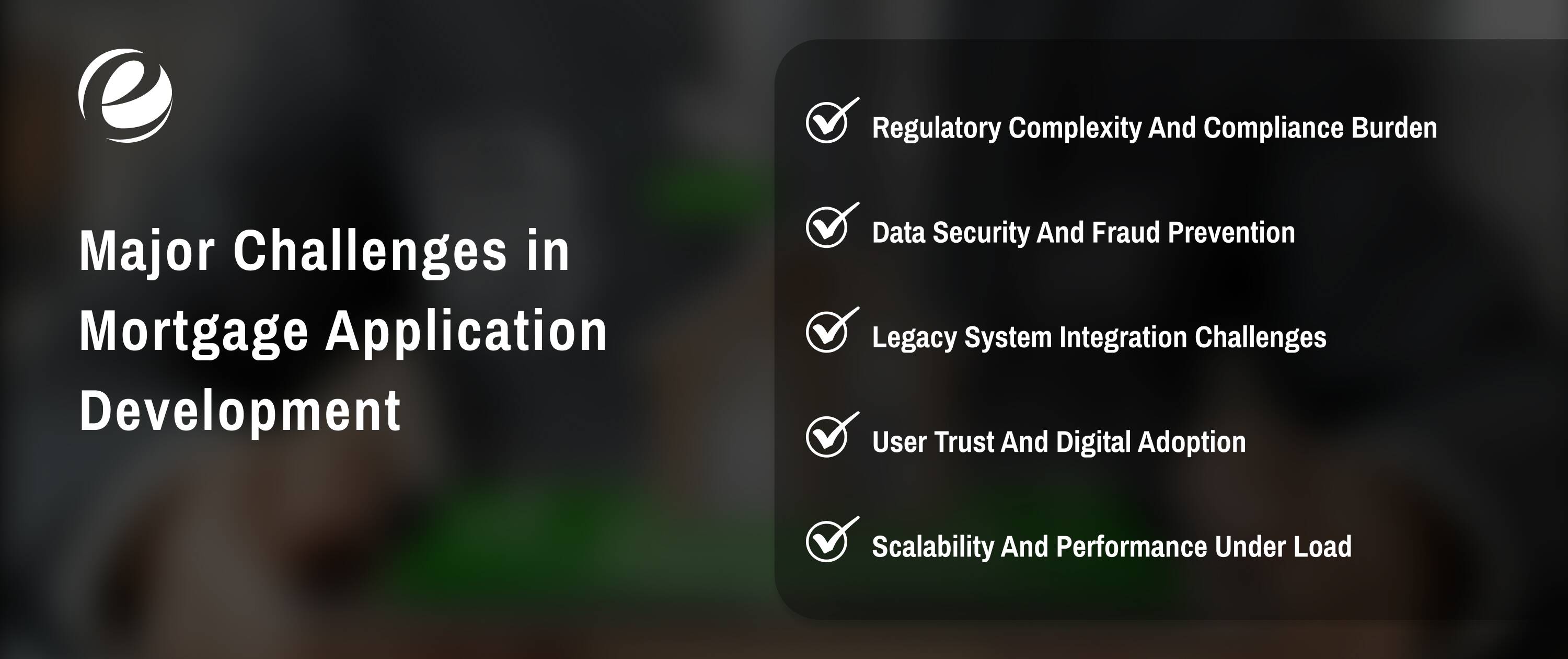
Mortgage application development faces multiple challenges like strict regulations, the need to integrate complex systems, and ensuring users trust the app with their sensitive financial data.
Regulatory complexity and compliance burden
Every market establishes specific Know Your Customer (KYC), Anti Money Laundering (AML) and lending regulations, which software developers need to integrate into their handling of mortgage application data.
Data Security and Fraud Prevention
The mortgage application software must protect its highly confidential financial information through the implementation of strong encryption methods and strict control of system access.
Legacy System Integration Challenges
The majority of banks and brokers maintain their operations through older core systems, which makes Application Programming Interface (API) integration the most difficult aspect of developing customized mortgage apps.
User Trust and Digital Adoption
People may hesitate to upload IDs and bank statements digitally, so clear explanations, consent flows, and transparent privacy policies are critical.
Scalability and performance Under Load
Mortgage applications must be built to scale efficiently and maintain high performance under heavy load, ensuring uninterrupted operation as the system grows.
Monetization Strategies for Mortgage Applications
Mortgage application development generates revenue through the combination of lending‑driven business models and platform-based services and partnerships.
Origination and Processing Fees
The mortgage app enables lenders or brokers to pay fees, which you will charge for every mortgage application that your app processes.
Subscription‑Based SAAS Model
The banks and brokers who subscribe to our mortgage software will receive ongoing access to all application software features and updates throughout the subscription period.
White‑Label and White‑Brand Solutions
You can license your mortgage application to other lenders who will market it under their own brand name, which allows you to earn revenue from your custom application development while they manage their customer base.
Data‑Driven Analytics and Reporting
Sell premium analytics dashboards that show conversion rates, risk profiles and portfolio performance metrics that originate from mortgage application data within the platform.
Partnerships and Referral Commissions
Establishes partnerships with insurers, real estate agents, and service providers to receive referral fees when users finish mortgage applications and purchase related items.
Final Words
Lenders, brokers, and real estate businesses need to develop mortgage applications as their essential operational requirement to gain a competitive advantage through speedy service, transparency, and better user experience.
The mortgage custom application development, combined with established software development methods, provides organizations with tools to achieve automated approval systems while minimizing document requirements and enhancing their regulatory compliance capabilities.
By aligning mortgage app features with modern fintech software development and real estate mobile app development trends, businesses can deliver seamless, secure mortgage applications that attract and retain borrowers in a rapidly growing digital‑lending market.
FAQs
What are the steps in the mortgage application process?
The mortgage application process begins when borrowers complete their pre-qualification process before they submit their mortgage application, which requires them to provide necessary documents for their credit and property verification process that leads to their mortgage app approval or denial decision.
What software do mortgage companies use?
Mortgage companies operate their mortgage application processing systems through loan origination systems (LOS), customer relationship management software (CRM) and mortgage software development platforms, which include Encompass and Floify.
How long does it take to build a mortgage app?
The duration of building the mortgage app ranges from 4 to 9 months, depending on multiple factors like the complexity of the mortgage application software and integration with banking and CRM systems.
What is the average cost to develop a mortgage application?
The cost of developing a mortgage application ranges between 30,000 and 300,000 USD because it mainly depends on the development scope and the software features that need to be implemented.



 +1 (989) 535-9295
 info@emizentech.com
 emizentech


