 Add us as a preferred source on Google
 Running three online stores means three logins, three inventory systems and three sets of problems. You update products once, then twice, then three times by hand. This results in stock counts being out of sync until a bestseller sells out on one site while remaining untouched on another, and support agents flipping between screens trying to piece together a single buyer’s history.
Multi store ecommerce platforms solve this by giving your business one central dashboard that runs several independent storefronts, each with its own branding, catalog, and pricing, while sharing the same backend for inventory and orders. The global ecommerce platform market was worth $11.55 billion in 2025, and Fortune Business Insights projects it will grow from $13.92 billion in 2026 to $61.83 billion by 2034. This guide breaks down what multi store ecommerce platforms do, why businesses choose them, and which options are worth considering.
What is a Multi-Store Ecommerce Platform?
A multi-store ecommerce platform is software that lets your business run multiple online storefronts from one central dashboard. Each storefront can feature independent branding, product catalogs, and pricing while sharing a unified backend for inventory, customer data, and order management.
Features to Look for in a Multi-Store Ecommerce Platform
- Centralized Backend: Manage all inventories, analytics, and fulfillment processes from a single login
- Independent Frontends: Give each store its own unique domain, theme, logo, and user experience
- Localized Settings: Customize languages, currencies, tax rules, and payment gateways for different regions
- Flexible Segregation: Run distinct business models simultaneously, such as separate B2B and B2C portals
- API-first Architecture: Connects smoothly with the external tools like ERPs, CRMs and advanced shipping providers
- Multi-Currency Language: Offers a localized shopping experience with automatic or manual regional currency conversion and native content translation
Benefits of Using Multi-Store Ecommerce Platforms
- Targeted Marketing: You are able to launch personalized campaigns, niche discounts and brand-specific promotions
- Scalability: Enter new international markets or launch sub-brands quickly without building a new infrastructure from scratch
- Efficiency: Reduce duplicate data entry and administrative overhead across separate sites
- Custom Branding: Customize each site for a unique audience, niche, or product line.
- Global Reach: You can easily adapt to local languages, currencies, and payment methods
- Local SEO: Optimize each individual store with unique keywords for higher search rankings
- Unified Control: Manage inventory, orders, and your customer data for all stores from one dashboard
- Time Savings: Update product details once instead of repeating tasks on separate systems
- B2B & B2C Support: Separate wholesale and retail buying experiences while keeping the backend data connected
How it Differs from a Regular Ecommerce Platform
- Backend Control: Regular platforms let you manage only one website per dashboard; in contrast, multi-store ecommerce platforms let you control a network of distinct shops from one master login
- Design & Branding: Regular platforms lock you into one brand identity and domain; while ecommerce platform for multiple store allow unique layouts, logos, and domains for each separate storefront
- Inventory & Operations: Regular platforms track your stock for a single store only, whereas multi-store setups sync inventory automatically to prevent overselling across multiple unique channels
Best Multi-Store Ecommerce Platforms
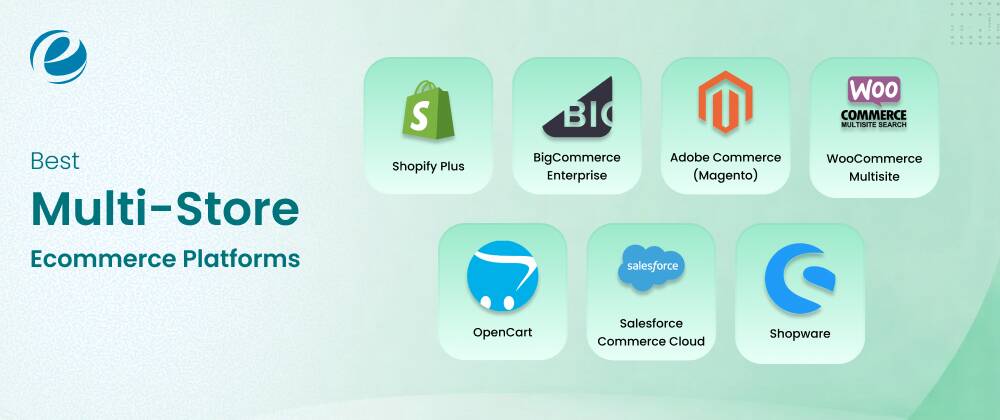
Multi-store ecommerce platforms allow you to manage multiple regional, brand-specific, or B2B/B2C storefronts from a unified backend. The best multi-store ecommerce software options range from managed B2B SaaS solutions like Shopify Plus and BigCommerce Enterprise to open-source systems like Adobe Commerce (Magento) and composable microservices like WooCommerce multisite and OpenCart.
Shopify Plus
Shopify Plus is an enterprise-level ecommerce solution built for high-volume brands. It shares the same infrastructure as a standard Shopify but unlocks advanced automation in multi-store management, international expansion and high-capacity processing.
A single Shopify Plus allows you to build up to 10 storefronts where 1 is primary and 9 are expansion stores under one license, with automated workflows via Shopify Flow for native language, local currencies and separate brands, which are managed from a single unified admin for the organization.
Pros:
- Unified Control: Manage all stores, users and apps under one contract, sharing inventory catalogs and backend controls
- Global Scaling: Easily launch local shops with different languages & currencies
- B2B Capabilities: Built-in wholesale and B2B channels with custom pricing lists and company profiles
- Dedicated Support: Includes a dedicated merchant success manager and launch engineer along with the dedicated developer team to assist with setup and scaling.
Cons:
- High Cost: Monthly fees start high and rise/grows with sales volume
- Migration Work: Requires significant time and developer resources to help to move the data
- App Expense: Your enterprise apps and custom API integrations can significantly increase the monthly budget.
Best For:
- Large merchants with high sales volume
- Brands expanding into global markets
- Organizations that need separate stores for different regions or brands.
Pricing:
- Pricing is based on term contracts that start at $2300/month for a 3-year contract or $ 2500/month for a year agreement or a variable platform fee for more advanced business structures
BigCommerce Enterprise
BigCommerce Enterprise is a top-tier multi-store ecommerce platforms and a highly scalable cloud-hosted SaaS ecommerce platform that features high performance, strong APIs and built-in capabilities. BigCommerce development lets you manage multiple brands, regional storefronts or B2B/B2C portals from a single control panel without paying a transaction fee.
Pros:
- Open APIs: Connects easily with your proprietary systems like CRM and ERP on top tiers for heavy integration.
- No Transaction Fees: BigCommerce does not charge any extra percentage fees on sales, except for your payment gateway.
- Built-in Features: Less reliance on expensive third-party apps, strong tools for SEO, promotions and product catalog outcomes.
Cons:
- Sales Limit: If you go over your monthly/yearly sales tier, you must upgrade your plan.
- Complex Setup: Needs tech skills to use the advanced features of ecommerce platform for multiple stores
- App Ecosystem Size: While BigCommerce is solid, the third-party app store is smaller than Shopify’s or Magento’s.
Best For:
- B2B/B2C or Hybrid sellers who need wholesale and retail on one backend
- High-volume mid-market to large enterprises with high sales volume, and making millions in annual revenue
- Multi-brand owners who are managing multiple brands or regional domains and want a unified inventory or management database
Pricing:
- Pricing for such a multi-tenant e-commerce platform isn’t fixed; it is based on your sales volume and usually starts at $29/month billed annually, up to Custom pricing starting at $1499/month billed annually.
Adobe Commerce (Magento)
Adobe Commerce (formerly Magento) is a powerful, enterprise-grade ecommerce platform known for its robust multi-store architecture. You can manage multiple brands, global storefronts, and massive product catalogs from a single admin panel.
This is one of the best multi-store ecommerce software solutions, excelling at high-volume inventory, global localization and heavy enterprise customization, though it demands large budgets and technical expertise.
Pros:
- Limitless Customization: Open source architecture lets Magento developers modify any frontend component or backend logic.
- Strong Ecosystem: Thousands of specialized third-party extensions and massive global network of certified developer agencies.
- Enterprise Scalability: Easily handles millions of SKUs, high-traffic spikes and complex B2B/B2C hybrid models.
Cons:
- High Total Cost of Ownership (TCO): Expensive licensing, hosting devlopment, maintenance overhead and extensions add up quickly.
- Heavy Resource Demands: Complex maintenance, upgrades, security patches and performance adjustments require ongoing technical management.
Best For:
- Mid-market to enterprise brands with dedicated IT teams or external agency partnerships
- Advanced B2B enterprises that want customized pricing tiers, corporate account hierarchies, and heavy ERP integrations.
Pricing:
- Adobe Commerce (Magento) licensing costs range from $22,000 to $200,000+/year, scaling directly with your business’s annual Gross Merchandise Value (GMV).
WooCommerce Multisite
WooCommerce Multisite lets you run multiple independent online stores from a single WordPress installation and dashboard to run a network of ecommerce platform for multiple store. It works with a shared codebase and database network, making it ideal for regional storefronts, multi-brand networks or currencies when paired with inventory management tools.
Pros:
- Centralized Updates: Update WordPress, WooCommerce and shared plugins globally from one master dashboard.
- Lower Infrastructure Cost: Saves money on initial hosting setup compared to managing multiple and completely different server environments.
- Shared Inventory: You can easily distribute identical product catalogs, maintain uniform branding and sync stock levels across multiple storefronts.
Cons:
- Plugin Limits: Network-activated plugins apply to every sub-store, and many third-party WooCommerce extensions break or lack proper multisite support.
- Database Bloat: A shared database that handles high-volume orders across multiple active shops can experience severe performance issues.
Best For:
- Budget-conscious operators with light to moderate catalog and technical resources
- Businesses launching regional or multi-currency storefronts with controlled, identical or closely shared product catalogs.
- Companies already familiar with WordPress that want to launch related sister brands under one administrative resource.
Pricing:
- The basic software pricing is free, and open-source (WordPress and WooCommerce), but the initial multisite costing starts at $50 to $500+/month with add-ons at $120 to $300+/year.
OpenCart
OpenCart is a free, open-source ecommerce platform featuring a built-in multi-store capability that lets you run and manage multiple unique storefronts from a single admin dashboard. You can share products and settings or use different themes, unique templates, product selections, currencies and native & regional pricing for each individual site without requiring separate platform installations, and extensive technical experience.
Pros:
- Compact Architecture: Uses a clean MVC structure that is fast and runs efficiently on modest, budget-friendly hosting.
- Data Ownership: Grants you full access to source code that allows total control over custom code, database management and security.
- Centralized Control: Manage orders, inventory, and customers across multiple distinct brand storefronts from one login.
- No Platform Transaction Fees: Keep 100% of your sales revenue outside of standard payment gateway processing fees.
Cons:
- Technical Requirement: Self-hosting requires manual setup, security management and update maintenance.
- High Resource: Managing complex inventories or configuring advanced multi-store themes can require developer assistance.
- Smaller Ecosystem: The extension marketplace is smaller than alternatives, and does not work well with multi-store setups
Best For:
- Businesses launching regional or country-specific websites, and want to control everything from one login.
- Brands that run and operate separate niche shops for different product lines.
- Store owners with basic technical skills who want central management without high software fees.
Pricing:
- OpenCart software is free to download (free open source), while the built-in multi-store operational cost ranges from $30 to $400+/month.
Salesforce Commerce Cloud
Salesforce Commerce Cloud (SFCC) is an enterprise-grade, cloud-based multi-store ecommerce platforms that lets you manage multiple brand sites, regional branches or distinct channels under one unified control panel. It offers advanced catalog segmentation, localization tools and advanced integration services with Salesforce CRM, Marketing Cloud and Einstein AI for real-time personalization.
Pros:
- Unmatched Scalability: This multi-tenant e-commerce platform handles massive seasonal traffic volumes and large catalog sizes without performance drops.
- Ecosystem Integration: Native and smooth integration with Salesforce CRM, Service Cloud and Marketing Cloud.
- Global Localization: Robust multi-site, multi-currency, and multi-language features right out of the box.
- Advanced Marketing: Powerful rule-based marketing, predictive search, and automated targeting
Cons:
- High Total Cost: Expensive implementations, ongoing license fee, custom development needs and paid success plans.
- Slow Deployment: Initial multi-store setups and custom integrations usually take 6 to 12+ months.
Best For:
- Large enterprise B2C and B2B retailers operating multi-regional or multi-brand portfolios, across many countries.
- Existing enterprise users are highly invested in the broader Salesforce CRM ecosystem.
Pricing:
- Salesforce Commerce Cloud pricing is custom quoted, based on GMV, and base software licensing starts at approx. $150,000+/year and goes up to over $1 million, depending on the scale and complexity of multi-store setups.
Shopware
Shopware is an open-source, API-first enterprise ecommerce platform specializing in unified multi-store management. From a single central admin dashboard, merchants can operate B2B/B2C storefronts, local languages, global currencies, diverse tax rules, product data and separate warehouse inventories.
Pros:
- Multi-Store Management: You can manage multiple stores, brands, and currencies from one unified admin panel.
- API- First Design: Connect easily with external apps, ERPs, and modern frontend setups.
- Open Source Standard: You benefit from high control over your source code and data privacy.
- Rule Builder: Create custom rules for prices, shipping, and payment methods without code.
Cons:
- Steep Learning Curve: Complex features require trained developers or specialized agencies.
- High Total Cost: Hosting, custom modules, and enterprise support add up quickly.
- Module Dependency: Third-party plugins can break during core updates.
Best For:
- Mid-market to enterprise-level B2B and B2C brands scaling across international borders.
- Multichannel retailers running distinct multi-brand or multi-region storefronts from a unified backend.
- Organizations with dedicated technical or agency resources needing more customization flexibility than rigid SaaS options.
Pricing:
- Shopware offers a free open-source Community Edition (capped at €1 million in annual sales), but you pay for your own hosting & support, which starts from $600/month and goes up to $6500/month with Shopware Intelligence add-ons that can cost $29/month or $18/month, depending on commercial multi-store setups.
How to Choose the Right Multi-Store Ecommerce Platforms?
To choose the right ecommerce platform for multiple stores, you need to match your business size, budget, and tech skills to the software. Shopify Plus and BigCommerce support fast growth with low technical effort. Adobe Commerce, Salesforce, and Shopware are ideal for large enterprises needing advanced, custom features. WooCommerce and OpenCart work best for tight budgets and open-source control.
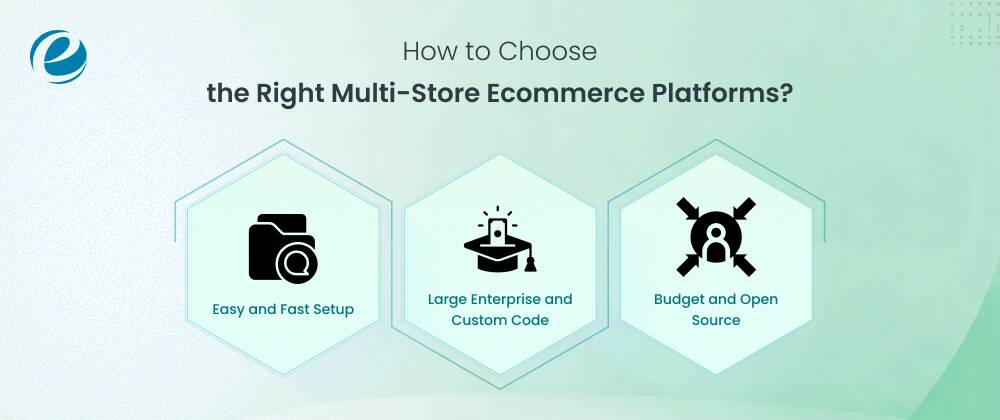
Easy and Fast Setup
- Shopify Plus: Best for scaling retail fast with simple tools and great support.
- BigCommerce Enterprise: Great for selling across many sites with strong built-in features.
Large Enterprise and Custom Code
- Adobe Commerce (Magento): Offers deep control and custom builds, but needs a large tech team.
- Salesforce Commerce Cloud: Built for huge global brands with very high budgets and complex needs.
- Shopware: A modern choice for mid-to-large companies with strong digital marketing solutions.
Budget and Open Source
- WooCommerce Multisite: Ideal for WordPress developers or users who want low upfront costs and full ownership.
- OpenCart: A simple, free system for smaller multi-store setups with basic needs.
Challenges and How to Avoid Them
Managing multiple e-commerce stores creates major operational challenges. You manage separate inventories, disconnected data, and chaotic marketing campaigns.
Here are the four most common multi-store challenges and how easily you can solve them:
- Inventory Fragmentation: Unsynchronized stock levels cause costly overselling, canceled transactions, and stockouts. Fix this by centralizing your inventory management in a single source of truth.
- Fulfillment & Logistics Chaos: Manual order processing slows deliveries, leading to higher human error. Fix this by automating order routing to the warehouse closest to the customer.
- Isolated Customer Support: Disconnected buyer data forces agents to switch screens constantly to find details. Fix this by unifying your CRM into one single dashboard.
- Reduced Brand Identity: Fragmented marketing assets confuse global buyers. Fix this by establishing strict, universal design guidelines across all active storefronts.
Best Practices for Managing Multiple Ecommerce Stores
Managing multiple ecommerce stores requires strict operational efficiency to prevent absolute chaos. As we have discussed the challenges of managing multiple online stores, you can use these four best practices to expand & manage your multi-store ecommerce platforms smoothly:
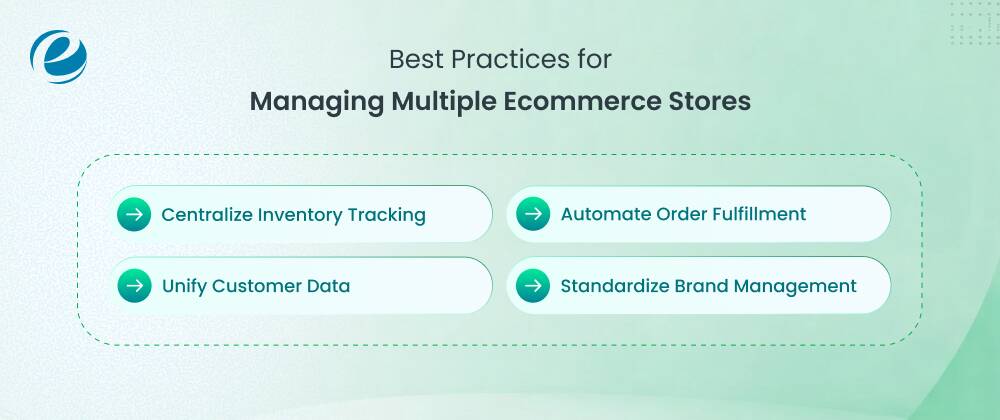
- Centralize Inventory Tracking: Connect all storefronts to a single master inventory management system. This practice stops overselling and keeps real-time stock levels perfectly accurate across all digital channels.
- Automate Order Fulfillment: Automatically send incoming customer orders to the closest regional warehouse or third-party logistics. This drops shipping times and eliminates expensive manual processing errors.
- Unify Customer Data: Combine all separate buyer messages, order histories, and support tickets into one central CRM dashboard. This standard procedure allows your team to resolve global inquiries instantly.
- Standardize Brand Management: Build a shared digital asset library containing universal brand guidelines. This allows for absolute visual and messaging consistency across every active domain.
Future Trends in Multi-Store Ecommerce
Multi-store ecommerce services are evolving rapidly to meet changing consumer demands. You can now manage multiple storefronts from a single dashboard to efficiently capture multiple market segments.
Here are the key trends defining the future of multi-store ecommerce platforms:
- Unified Inventory Systems: Real-time syncing prevents overselling across different regional and niche storefronts.
- Hyper-Localization: Retailers smoothly customize language, currency, and product catalogs to specific geographic audiences.
- AI-Driven Personalization: Machine learning customizes the shopping experience on each storefront based on user behavior.
- Agentic AI Automation: Smart algorithms dynamically sync cross-store inventory, adjust regional pricing, and manage translations autonomously.
- Centralized Data Analytics: Merchants aggregate customer data from all stores to uncover deep operational insights.
- Headless Commerce Architecture: Separating the frontend from the backend allows immediate design updates without disrupting your standard operations.
- Omnichannel Identity Hubs: Unified data streams merge physical and multi-web touchpoints into one clean, accessible customer profile.
- B2B and B2C Integration: Companies run wholesale and retail operations side-by-side using the same backend infrastructure.
Conclusion
Choosing multi-store ecommerce platforms comes down to matching your budget, technical skill, and growth plans to what each option offers. Shopify Plus and BigCommerce suit brands wanting fast, low-effort scaling. Adobe Commerce, Salesforce Commerce Cloud, and Shopware suit larger teams that need deep customization. WooCommerce and OpenCart work well for smaller budgets with in-house technical skill. Whichever you pick, centralized inventory and unified customer data save time every day.
Frequently Asked Questions
What is the difference between multi-store and multi-vendor?
Multi-store platforms empower a single company to centrally launch and manage several distinct storefronts targeting diverse markets. Conversely, multi-vendor platforms create a unified marketplace that lets multiple third-party merchants sell products.
Can all stores share one inventory?
Yes, advanced multi-store architectures naturally depend on a single, centralized database backend. This allows real-time inventory levels to sync continuously across multiple front-end domains, preventing over-selling or fragmented tracking.
Which platform is best for enterprise ecommerce?
Adobe Commerce is best for enterprise ecommerce because it stands out as a leading enterprise platform with a highly scalable architecture. It handles hyper-complex, global multi-store and multi-vendor setups through deep customizability and open-source flexibility.
Is multi-store SEO difficult?
Multi-store SEO demands careful execution but remains highly manageable. The primary complexities come from mapping distinct geographical keywords, structuring flawless hreflang tags, and installing standard configurations to eliminate duplicate-content issues.
Can different stores have different currencies?
Yes, enterprise-grade storefront solutions natively support multi-currency checkouts. This lets operators localize the financial experience by automatically adjusting prices or displaying localized base currencies for specific customer regions.
Can each store have different domains?
Yes, modern platforms support independent top-level domains, subdomains, or specific subdirectories. This flexibility lets companies curate distinct brand identities and highly optimized, localized international experiences.



 +1 (989) 535-9295
 info@emizentech.com
 emizentech


