
 Add us as a preferred source on Google
 Are you struggling to scale your business operations without increasing costs or facing a shortage of skilled tech talent? Here’s exactly why global businesses are switching rapidly to offshore development center models. Its more than traditional outsourcing and provides the dedicated extension of your in-house team, while offering your complete control, transparency, and adherence to your business needs.
ODC are needed by companies because of savings, access to a large pool of worldwide developers, and a quicker time-to-market. Many companies, from startups to enterprises, depend on offshore development Hubs to be competitive in today’s rapidly changing digital economy. Even the top software development companies have started embracing the dedicated ODC model to streamline their operations and optimize overhead.
At Emizentech, we create scalable and flexible ODC models designed for your unique needs so you can rely on experienced developers, tools, and industry standards for sustained growth.
What is Offshore Development Center, How Does It Work?
An global development hub is a fully operational remote facility or autonomous developmental team located outside of your country, but is considered an additive extension of your company’s in-house software development team. This is a complete office space that includes dedicated developers, project managers, QA testers, and IT staffing, all of whom are working solely on your projects, allowing for long-term focused engagement.
Essentially, the ODC operates using a defined structured model where the offshore team engages with your core business, follows your defined processes and business standards, and executes every part of work according to your brand specifications using the same agile workflow; all while utilizing the most effective communication and project management tools in the market to provide ample transparency and a more organized process of work.
The ODC’s team structure typically includes developers, designers, leads, and junior supportive team members who are adequately capable of supporting the entire lifecycle of software development. The ODC model allows you to define an integrated and high-performance team of talent to support your offshore software development services.
Here’s a simple 5-step process of how an ODC works:
Requirement Analysis & Planning
The offshore ODC defines your project scope and the skills and team size required based upon your business objectives.
Setup & Recruitment
Establish infrastructure and hire dedicated talent with the appropriate skillset to support your business objectives.
Onboarding & Integration
Align the offshore team with your in-house workflows and tools for your custom software development services.
Development & Delivery
Once established, the ODC begins work on the project through defined agile workflows with constant communications regarding work products.
Maintenance & Support
Continuously provide the necessary updates, bug fixes, and improvements to ensure that the product stays actively functional for a long time.
Key Benefits of Setting Up an Offshore Development Center
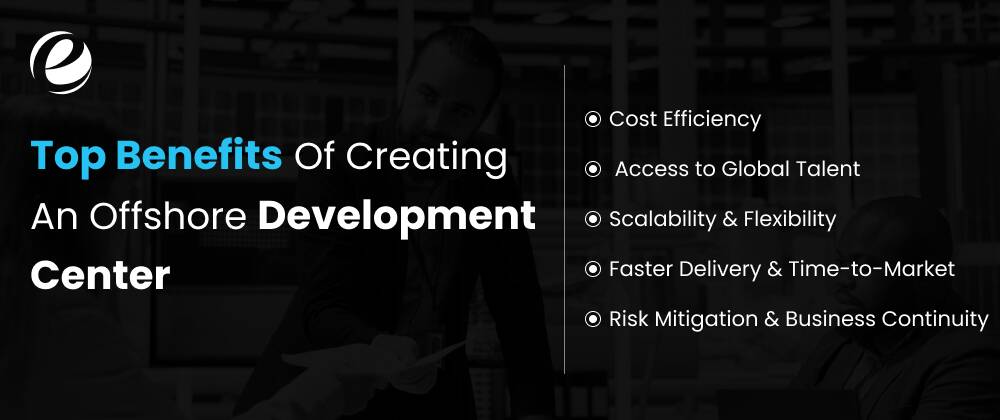
Well, establishing a dedicated team model avails businesses of a slew of enticing perks, which are beyond typical outsourcing. By utilizing the ODC benefits, companies are enabled to renew their business processes and rev up their profits simultaneously. Furthermore, companies can employ enterprise-grade web development solutions as a strategic scheme to retain their competitive edge in a rapidly transforming market.
1. Cost Efficiency
ODCs can greatly cut the costs of the company by operating and employing in regions with lower costs and thus reducing the company’s expenses significantly without compromising quality.
2. Access to Global Talent
The companies get the opportunity to open up a broader talent pool, which helps them to find a highly skilled and qualified employee for a specific job that may not be available in a local country, and with this, the companies ensure the right staff that can manage complex tasks.
3. Scalability & Flexibility
ODCs permit quick scaling of teams to the higher or lower side, taming project demand resourcefully and without possible slowdowns in recruitment or induction, thus flexibility in the project is maximized.
4. Faster Delivery & Time-to-Market
The ODCs can shorten the time of releases and updates since their round-the-clock development cycles differ in time zones, thus they work continuously without any breaks or wait times.
5. Risk Mitigation & Business Continuity
The investments across different locations reduce the risk of events that can negatively impact the business locally; therefore, the company can maintain business activities as well as be assured of the steady progress of the project.
Such benefits put ODCs in a position of perfect matches with companies looking for easy, expandable, and creative software development services.
ODC vs Traditional Outsourcing
The key difference between an Offshore Development Center vs outsourcing is in the amount of control and dedication. An nearshore development center is a dedicated remote extension of your in-house team, so your teams can work together long-term and wholeheartedly manage anything.
By contrast, when companies traditionally outsource, they hire a company to manage a specific project or task with less direct involvement. The call is often made on how much integration and control the company wants, and on the time frame of the project or engagement; so, determining between your offshore team vs outsourcing is important for your business.
| Feature | ODC | Traditional Outsourcing |
| Control | Full control over team and processes | Limited control; vendor manages team |
| Team Setup | Dedicated team working exclusively for you | Project-based teams working with multiple clients |
| Commitment | Long-term engagement | Short- or medium-term projects |
| Cost | Higher initial setup, cost-effective over time | Lower upfront costs, pay per project |
| Knowledge Retention | Strong continuity; team learns your business well | Limited retention; team may change often |
| Scalability | Scalable with planning | Scalable but dependent on new contracts |
| Cultural Fit | Better alignment with company culture | Varies; less integration |
Which Businesses Can Benefit Most from an ODC?
A number of companies benefit from the model in terms of accessing highly skilled global-level talent and managing the costs effectively. Offshore development center are used by startups to build MVPs in order to access expertise globally without having to invest heavily. ODCs come especially handy for businesses looking to engage in dependable and scalable mobile app development so that they may ensure that the specialists who will offer continuous technical support are available to them.
1. Startups
For fast-growing startups, an ODC best serves the purposes of MVP development and product launch with global talent. Access to such specialized skills, amongst others, includes mobile app development services or AI development expertise, provided local hiring is difficult or the budget is limited. This allows startups to increase their tech capability quickly at lower costs.
2. SMEs
It helps in scaling the technological operations constructively for small and medium businesses. Whether it needs fresh capacity for new digital solutions, to support growth, or allow for the smooth delivery of projects, SMEs can gain specialized skills, such as Salesforce CRM implementation services skills, without undergoing the expenses of hosting full-time employees.
3. Enterprises
For long-term, strategic digital transformation, large organizations mobilize ODCs. Dedicated teams are long-term project managers, keep knowledge in-house, and maintain a quality brand. ODCs assist enterprises in the quick rollout of innovative projects while streamlining business processes with reliable support.
This would help companies remain competitive while controlling costs and accessing world-class skills.
How to Set Up an Offshore Development Center Step by Step?
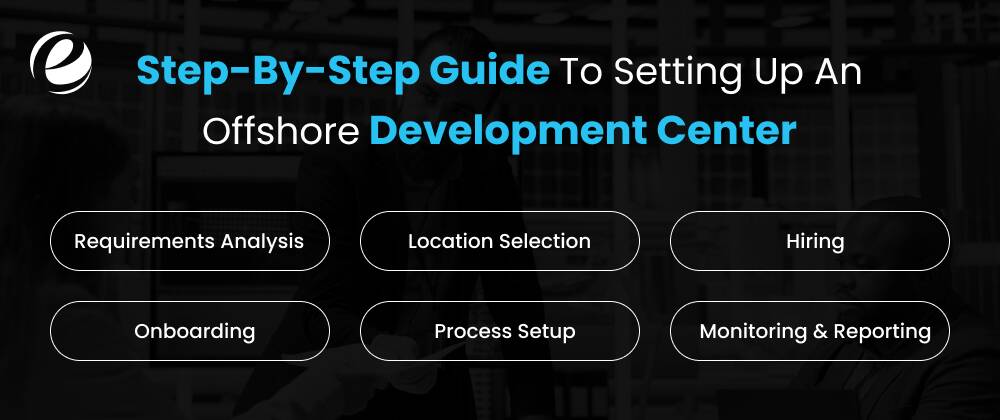
Setting up an ODC can be a game-changer for companies that are interested in developing their technical capabilities on a global scale. The setup guide for an ODC follows a clear-step process, ensuring that your offshore team is attuned and effective in carrying out the company’s goals. The roadmap will walk you through all the steps needed to set up a successful dedicated offshore development center, whether for scaling options or ointments such as low-code development solutions.
1. Requirements Analysis
Articulate business objectives and general project scope. Just what specific offshore software development services do you wish to receive? You’ll also want to define measurable KPIs for success.
2. Location Selection
Select a preferred site based on talent alternatives and cost level, not to mention time zone and legal context.
3. Hiring
Source qualified candidates that align technically and culturally, so you can thoughtfully develop your dedicated offshore team.
4. Onboarding
The onboarding process introduces your team to your company culture, workflows, and tools, and in the meantime, this smooths out communication and alignment.
5. Process Setup
Set up project management techniques, channels for communication, and quality control processes, for ease in collaboration.
6. Monitoring & Reporting
Provide monitoring/reporting tools for transparency, metrics for measuring performance, outcomes to consider, and ideas for opportunities.
Common Challenges in Managing an ODC and How to Overcome Them
Managing a dedicated development center is rewarding but not without its risks. A development engaged offshore will consistently face challenges. The corrective mindset with action plans based on solutions will allow for smooth project delivery and a smooth experience when engaging in, developing, and delivering projects.
1. Time-zone Differences
Hired team members not working at the same time can slow down communications and coordination. Defining times when common engagement can occur enables real-time interaction and reduces bottlenecks.
2. Communication Gaps
Remote team members engaged around the globe can lead to misunderstandings. As a result, it is important to articulate clear expectations and engage in the project.
3. Cultural & Workflow Integration
The potential for cultural differences and different working styles to create friction exists. Raising cultural awareness and standardizing working practices can ease cultural integration for collaboration.
4. Coordination Complexity
Where development teams are distributed across different regions or locations, additional oversight and coordination become a larger priority. A designated project manager can ensure that processes are established, maintained, and implemented in an environment of continuous improvement, and feedback mechanisms are deployed.
5. Tech Stack Alignment
Differences in technology stacks will create integration problems between offshore and onshore developers. Coordinating the tech stacks for both onshore and offshore developers within an enterprise framework is necessary for the overall completion of development cycles.
6. Understanding All Expenses
It can be complicated to estimate the cost to hire an app developer for an ODC since the expenses are not just related to salaries. There are many other expenses involved, like infrastructure, management, and hidden overheads, that are all a part of most businesses’ budgeting woes.
Utilization of some or all of these practices will enable organizations to manage offshore teams effectively while overcoming all challenges that come with offshore management.
Cost Insights – How Much Does It Cost to Set Up an ODC?
The scope of costs to set up an Offshore Development Centers must be properly budgeted for, including several key components: salaries, infrastructure, management of the ODC, and tools to complete work effectively. In the end, offshore resources will usually cost a lot less than engaging an onshore team, and there is still the ability to find skilled talent across the globe.
- Salaries: The majority of the ODC pricing is based on the competitive salaries paid to talented offshore developers, which vary greatly by location, but are typically 40%-60% more reasonable than prevailing onshore rates.
- Infrastructure: New offices, hardware, software licenses, and fast internet service make up another critical cost component, as these ensure that development can continue uninterrupted.
- Management: There are up-front costs to hire the project manager, team lead, and administrative staff to ensure everything is coordinated and works efficiently.
- Tools & Software: Effective collaboration between the team requires project management software, communications software, and development tools, which are all necessary costs.
Onshore vs Offshore Cost Comparison (in USD)
| Cost Component | Onshore (USA) | Offshore (India) |
| Developer Salary | $90,000 – $150,000 | $20,000 – $40,000 |
| Infrastructure | $3,000/month | $1,000/month |
| Management | $10,000/month | $4,000/month |
| Tools & Software | $500/month | $300/month |
Choosing an ODC can provide savings without sacrificing quality, which makes it appealing among the best app development companies whose focus is on scalable and cost-conscious software development.
Choosing the Right Location for Your Offshore Development Hub
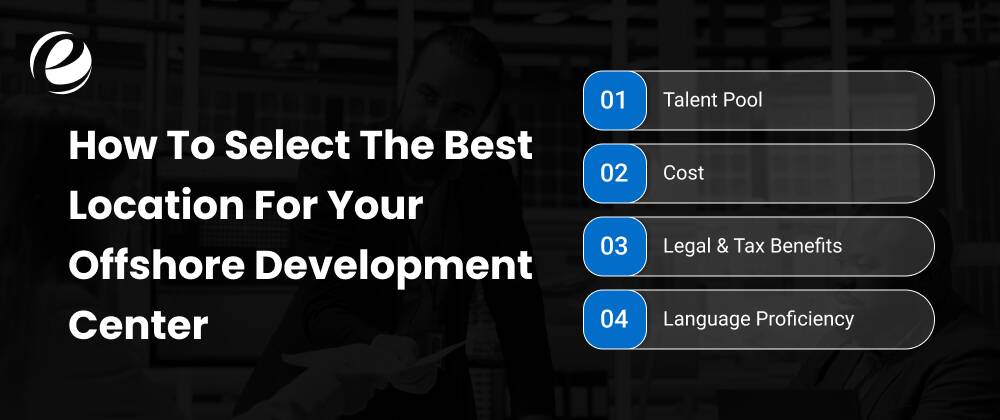
Choosing the right center location is one of the most important aspects of ensuring the best potential outcome for your project. Top locations like India, Eastern Europe, the Philippines, and Latin America contain a rich concentration of skilled employees, a cost-saving advantage, and potential benefits of a good business atmosphere.
When it matters the most to identify the best candidates for a dedicated development team, you want to consider the “best” nations with a balance of talent quality, operating costs, legal and business benefits, and recommended language skills to ensure clear communication and productivity.
1. Talent Pool
Look for locations with large pools of experienced developers and experts that align with your project, especially if it is an advanced enterprise-grade web-development solution.
2. Cost
Review expected salaries, support costs, and general operating costs that best align with your budget.
3. Legal & Tax Benefits
Favorable laws around intellectual property and tax incentives can help provide risk reduction and improve profitability.
4. Language Proficiency
Strong English language skill enhances communication and, therefore, effective integration into your team.
Popular locations such as India stand out for the vast amount of technical talent available, with cost efficiency. Eastern Europe offers substantial development talent, also close to European markets. The Philippines has great English language capabilities, and Latin America shares the same time zones, which can enhance communication. Being considered and thoughtful in taking the time for these considerations will lead you to the strongest choice of development center location, allowing for a great connection with your tech strategy and internal teams.
How to Hire and Manage the Right ODC Team?
Employing and supervising the proper dedicated offshore development team has the basis for a strong and clear process. Whether you build the team in-house or utilize an agency, you’ll want to employ developers, product managers, QA specialists, and designers with whom you are comfortable working. Use the processes in Agile and SCRUM to manage your offshore team, and develop a communication strategy that includes tools you’ll need to create constant, simple, easy communication for continuous communication in collaboration with your remote employee workforce.
1. Hiring Strategies
You will either want to build your own offshore team or utilize applicant staff agencies for hiring. If you staff your own workers, you are in total control; however, using an applicant agency may even take less time and open up developer onboarding faster since you will already have to wait for the hiring process to end.
2. Roles to Fill
You will want to build a balanced team of developers, quality assurance engineers, project managers, and designers to address the components of your project.
3. Agile Management
You will want to use the Agile and SCRUM structures because the output in shorter iterations gives these teams flexibility and allows for navigation of expectations along the way, which helps the developers get feedback constantly and offer feedback quickly.
4. Communication Tools
You might want to utilize communication tools (like Slack or Zoom), which are great communication tools when paired with task management applications (like Jira or Trello), between the team and the remote task team.
5. Performance Monitoring
Keep on top of monitoring productivity ability, and share feedback, as needed, to give the project a better chance of being respected throughout the build, but it will ultimately stay on target toward deadlines.
These practices will ensure that companies succeed in hiring an offshore development team and managing ODC operations with minimal agitation while continuing to meet their productivity and output needs.
Measuring Success – KPIs for Your Offshore Development Hub
Well, everyone knows, KPI stands for Key Performance Indicator (KPI), and what that means in terms of the KPI used for an ODC is measuring innovative timing to enhance productivity, quality, and business value. By setting the right metrics, you ensure your offshore team delivers consistent results aligned with your goals.
1. Productivity Metrics
Monitor the number of completed tasks or story points per sprint to understand how effectively your teams are working with AI-powered coding tools, and productivity increases have been reflected in a higher output of your developers.
2. Quality & Defect Rate
Keep an eye on defect rates in relation to each release or count lines of code to determine if the team is delivering more features and writing fewer bugs and therefore stronger software, which can help provide improved customer satisfaction.
3. Time-to-Market
Assess how quickly your global development hub can launch new features or products, ensuring that your distributed workforce executes faster and helps you gain a competitive advantage.
4. ROI Analysis
To determine ROI, compare the operating expenses of your dedicated development hub with the business value it generates, and use insights from your data analytics services to identify measurable returns.
Final Verdict
The offshore development center benefits are truly remarkable, including savings, access to a vast pool of talent, more rapid time to market, and scalability. The challenges are real as well, particularly in time zones, communicating without a common language, and cultural integration. Before deciding, you must factor these in along with other costs and management best practices.
In the end, the answer for you is based on the business goals and long-term scalability goals you have for your business. An dedicated remote development hub is a part of your vision if you seek a strategic and flexible software development solution that is going to be significant economically.
Make sure to have a conversation with our professionals and set up your dedicated development center today, and capture the benefits for your organization.

FAQ’s
Can an offshore development center handle ongoing maintenance and support?
Yes, ODCs often provide for maintenance and support to keep software up-to-date and resolve any arising issues immediately.
How secure is my data with an offshore development center?
Reputed ODCs consider and implement stringent security protocols, data protection policies, and measures of compliance to secure your classified business information.
What industries benefit most from an offshore development center?
ODCs are quite general-purpose and therefore find usage in the fields of finance, healthcare, e-commerce, and technology, where software development and IT innovation become crucial.
How does an ODC affect my company's intellectual property rights?
The intellectual property is protected together with in-house teams through the right legal agreements and secure infrastructure.
Can I switch from traditional outsourcing to an offshore development center?
Yes, and many organizations make that shift in pursuit of greater control, dedicated resources, and the advantages of long-term collaboration.



 +1 (989) 535-9295
 info@emizentech.com
 emizentech


