
 Add us as a preferred source on Google
 Depop set new standards for secondhand fashion on the cultural map. But it is not the only game in the market, not least now. So if you are here to find the best sites like Depop for buying and selling fashion items, this guide won’t disappoint. Luckily, there are tens of platforms like Depop designed specifically for what you need. And since we are talking about secondhand items, here’s an interesting fact: the online resale market grew 23% in 2024 alone and is expected to reach $40 billion by 2029, showing faster growth than ever.
Without further thought, let’s get started with this guide that discusses how to find the best sites like Depop and what the top 10 alternatives are, where you can buy smarter, sell faster, and keep more of what you earn.
What to Look for in a Site Like Depop?
Every resale platform is more or less built differently, and choosing the wrong one can mean the following:
- Poor sales
- Steep cuts
- A buyer pool that just isn’t looking for what you’re selling
So, before committing to a new marketplace, do a quick run-through of this checklist:
Seller Fee Structure
Judge Depop alternatives beyond the commission percentage. Check their payment processing fees, listing costs, and any “clean-out bag” fees that quietly eat into your profit margin.
Audience and Niche Fit
If you are serious about finding the best site like Depop, you will obviously check this filter. A platform with 80 million users means nothing if none of them are hunting for 1990s band tees or Y2K two-pieces. Make sure your collection matches the community that actually wants it.
Mobile Experience
In fashion resale, mobile is the whole game. You should first test whether listing, messaging, and checkout work effortlessly on your phone before you invest time in building a shop.
Buyer Protection Policies
Customers are now digital-savvy, so offering the bare minimum won’t help much. Platforms with strong buyer guarantees tend to attract more confident spenders who don’t lowball as aggressively.
Shipping Flexibility
Some platforms lock you into their prepaid labels; others let you choose your carrier. That difference matters when you’re shipping fragile vintage pieces or bulky outerwear.
Discoverability Tools
Algorithm-driven feeds, keyword tagging, promoted listings, and social sharing features all affect how quickly a new listing gets found. Check what each platform offers before you sign up.
Top 10 Sites Like Depop for Buying and Selling Vintage Fashion
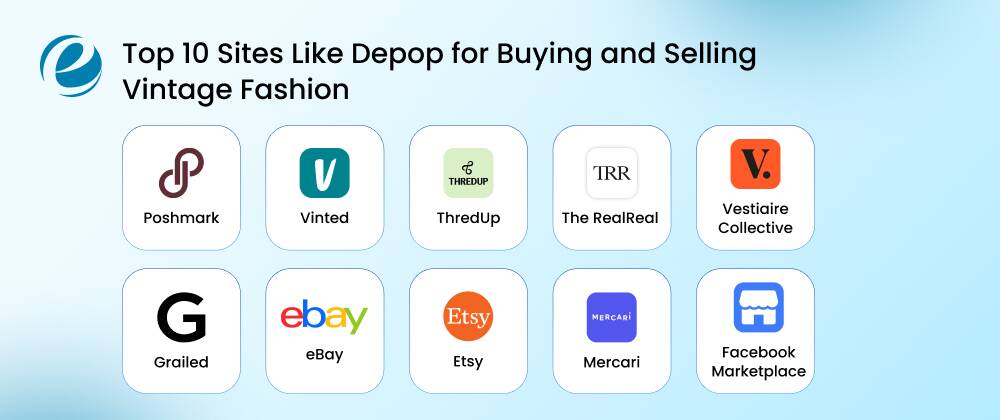
The U.S. secondhand apparel market hit $51.9 billion in 2024. Now it’s on track to reach $74 billion by 2029. Whether you are planning to invest in mobile app development services to enter this space or looking to use another platform, here are the best 10 sites like Depop that capture that essence of resale.
Poshmark
Closest cultural parallel to Depop in the U.S., Poshmark operates as a social-first selling platform where your closet is the storefront and sharing other people’s listings is embedded into the daily flow. This site is a go-to for average contemporary brands (like Free People and Coach) and is particularly strong in the women’s fashion community.
Key Features
- Social sharing and Posh Party features for real-time discoverability
- Flat-rate shipping with prepaid labels
- Strong buyer protection policy with a full-purchase guarantee on every order
Best for: Sellers of contemporary women’s apparel, accessories, and athletic wear with broad U.S. appeal.
Vinted
One of the fastest-growing resale platforms in the whole world right now, Vinted has a zero-seller-fee model, which makes IT massively popular.
You can keep 100% of your sale price, and the platform charges just a small buyer protection fee to shoppers instead. It’s already a genuine Depop alternative for sellers frustrated by Poshmark and Depop fees alike.
Key Features
- 0% seller fees
- Buyer-paid protection fee
- Growing U.S. presence, along with a remarkably established European buyer base
Best for: Sellers who aim for maximum profit per sale with zero-fee transactions across everyday fashion and vintage pieces.
ThredUp
Are you a casual seller clearing out a wardrobe and looking for a convenient Depop alternative? This one’s for you. ThredUp is a platform where you send your clothes in a “clean-out bag.” It then photographs, lists, prices, and ships everything for you. Yes, literally. If you are seriously into reselling, the commission model can run into 20% to 85%, depending on item price. It is a tough pill. However, the buying side of the platform is exceptionally good. Buyers end up finding items at up to 90% off estimated retail.
Key Features
- Fully managed consignment
- AI-powered search
- Items priced up to 90% below retail across women’s and kids’ fashion
Best for: Casual sellers looking for zero-effort cleanout and buyers hunting aggressive discounts on quality brands.
The RealReal
The RealReal is the standard in the luxury resale space. Every item exchanged on this platform is authenticated by in-house specialists, gemologists, horologists, and brand experts. That authentication layer boosts credibility among buyers who are willing to pay closer to full resale value. Not to mention, this makes The RealReal worth the higher commission split for sellers moving designer pieces.
Key Features
- Expert authentication on every single item (a wide range of categories) before it goes live
- In-home pickup and white-glove consignment service (available in select cities)?
- Dedicated luxury buyer audience
Best for: Sellers with designer handbags, luxury watches, or high-end clothing above the $100 price point who want credibility-backed listings.
Vestiaire Collective
Vestiaire Collective is yet another luxury resale platform that operates in a similar lane to The RealReal. The difference is that it has a more globally curated editorial setup and a particularly big deal in European presence. It emphasizes pre-owned luxury and contemporary designer fashion, with community-driven authentication and a tiered fee model (10% for sales between $100 and $20,000, plus a 3% payment processing fee). About 52% of consumers bought secondhand apparel in 2024, and platforms like Vestiaire are where a major portion of this activity happens.
Key Features
- Community-powered authentication with additional expert verification available
- Strong international reach
- Editorial curation and curated boutiques that give sellers a brand-like presence
Best for: Sellers of pre-owned contemporary and luxury designer fashion who want access to an international, fashion-literate buyer base.
Grailed
Once a men’s streetwear and designer marketplace, Grailed has now become one of the most diverse fashion communities online. It accepts womenswear too, while its reputation is established on archive pieces, limited-edition drops, and high-end streetwear. The platform’s “Dry Clean Only” editorial content is another reason why users stay engaged with it.
Key Features
- 9% flat commission
- No listing fee on any item (Up to 25 photos per listing)
- Fashion-literate buyer community that doesn’t lowball on legitimate items
Best for: Sellers of streetwear, archival designer clothing, and limited-edition menswear who seek buyers that understand the value of unique pieces!
eBay
This one’s incomparable! As you would already know, eBay is the largest general marketplace that stands tall, a serious contender for vintage fashion sellers seeking global reach. The platform’s strength also lies in its Authenticity Guarantee program that enables expert verification of sneakers, trading cards, watches, and handbags. Also, fee structures range depending on the category and seller tier.
Key Features
- Massive buyer pool, spanning 190+ markets globally
- Authenticity Guarantee feature for verification of high-value sneakers, watches, and handbags
- Auction-style and fixed-price listing formats
Best for: Sellers of rare vintage pieces, collectibles, or high-value accessories who look for maximum buyer exposure.
Etsy
While it doesn’t position itself as a resale marketplace, Etsy is easily one of the most effective platforms for selling genuine vintage clothing. What makes Etsy different from other platforms is the buyer mindset: here, shoppers actively look for things with historical significance, provenance, and story. Its powerful search engine and loyal repeat-buyer base are other strong points about the platform. Vintage sellers who create strong listings with era-specific keywords enjoy consistent attention.
Key Features
- Search-driven discovery with strong keyword indexing
- Repeat-buyer culture
- True vintage positioning
Best for: Sellers of certified vintage (20+ years old) who are planning to set up a recognizable shop brand and attract buyers with a collector’s mindset.
Mercari
One of the simplest and most frictionless platforms on this list of top sites like Depop, Mercari has a flat 10% commission, no listing fees, and a super clean mobile UI. This platform has a large and diverse buyer base with fashion items that move reasonably well, especially at accessible price points. For sellers who cross-list across multiple platforms, Mercari’s ease of use makes it a low-friction addition to any reselling strategy.
Key Features
- Flat 10% commission
- No separate listing or insertion fees
- Fastest listing flow of any major resale platform
- Broad category coverage
Best for: Sellers who prioritize speed and simplicity and want a no-fuss platform at scale.
Facebook Marketplace
Facebook Marketplace earns its spot on this list purely on economics: zero fees on local pickup sales and just 5% on shipped items. For sellers dealing in bulkier vintage pieces — leather jackets, coats, denim—where shipping costs eat into margins, the local sales option changes the math entirely. The buyer base is enormous by default (anyone with a Facebook account), and Messenger integration makes communication instant. The trade-off is a less curated shopping experience and less brand-building potential compared to fashion-native platforms.
Key Features
- 0% fees on local pickup sales
- 5% fee on shipped items, way below every other fashion-specific competitor
- Instant Messenger communication
- A built-in local buyer network
Best for: Sellers of larger or heavier vintage pieces; local sellers who prefer in-person handoffs; those who want to maximize per-sale profit with negligible overhead.
Depop vs Other Fashion Resale Apps: Which One Is Better?
Here’s a quick overview of all the platforms based on major features. This will speed up your search for the best Depop alternative in 2026!
| PLATFORM | ZERO SELLER FEES | MOBILE APP | AUTHENTICATION | IN-APP SHOPPING | VINTAGE-SPECIFIC |
| Depop | ✓ | ✓ | ✗ | ✗ | ✓ |
| Poshmark | ✗ | ✓ | ✗ | ✗ | ✗ |
| Vinted | ✓ | ✓ | ✗ | ✗ | ✗ |
| ThredUp | ✗ | ✓ | ✗ | ✓ | ✗ |
| The RealReal | ✗ | ✓ | ✓ | ✓ | ✗ |
| Vestiaire Collective | ✗ | ✓ | ✓ | ✓ | ✗ |
| Grailed | ✗ | ✓ | ✗ | ✗ | ✗ |
| eBay | ✗ | ✓ | ✓ | ✓ | ✗ |
| Etsy | ✗ | ✓ | ✗ | ✓ | ✓ |
| Mercari | ✗ | ✓ | ✗ | ✗ | ✗ |
| Facebook Marketplace | ✓ | ✓ | ✗ | ✗ | ✗ |
Future Trends in Online Vintage Fashion Marketplaces
In the resale marketplace, the platforms evolving fastest are the ones defining how that growth lands. Let’s take a quick look at where the market is heading:
AI-Driven Product Discovery
The best Depop alternatives are not stuck in the basics, they are moving toward AI tools that learn individual taste profiles and surface relevant pieces automatically. For example, ThredUp’s AI-powered search launch in 2024 doubled search term diversity on the platform within months. IT indicated how discovery is moving across the entire category.
Social Commerce Integration
The line between content and commerce is slowly fading. Sites like Depop that allow sellers to build editorial-style storefronts are enjoying stronger buyer retention.
Authentication at Scale
As average order values rise, buyer demand for verified items is growing with them. Expect mid-market platforms to introduce tiered verification tools for items above certain price thresholds within the next two to three years.
Sustainability as a Buying Trigger
62% of Gen Z and Millennial consumers say sustainability actively helps them determine their fashion picks! Marketplaces that surface carbon data and resale history at the product level are already enjoying significant conversion among younger buyers.
How EmizenTech Can Help You Build a Fashion Marketplace Like Depop
The resale fashion market is at an all-time high. If you’re looking to build a resale platform, the biggest task will be to keep up with the pace at which the space is growing.
At EmizenTech, a leading ecommerce development company, we have been empowering established and budding ecommerce brands to use technical depth smartly to set up a fully functional, scalable product. Be it seller dashboards or the recommendation engine, we cover it all.
Here’s a quick walkthrough of our services:
- Custom end-to-end fashion marketplace development
- iOS and Android ecommerce app development
- In-App payments and commission engine
- Interest-based discovery and search
- Recommendation systems and keyword-driven search
- Seller tools and dashboards
Ready to take the next step? We’ve got just the right plan for you! Hire ecommerce app developers or ecommerce specialists on a flexible engagement model (dedicated, hourly, or project-based) so you can scale the team exactly as the build demands.
Best Resale Sites like Depop: Summing Up!
The secondhand fashion market is not slowing down anytime, and in fact, it is set to boom like never before.
The sellers who work on their presence across multiple platforms today are more likely to capture the largest share of the growth. Depop has a reputation for being the best at what it does, but it’s one platform in a market that now has a serious alternative for every selling style and inventory type (Vinted for zero fees or Grailed for streetwear credibility).
Choose the one that strikes a match with your inventory and your bandwidth, learn its algorithm, and give it the same energy you gave Depop. Planning to opt for e-commerce app development services to create a platform of your own? You’re still in for a treat. Hire mobile app developers with industry expertise at EmizenTech to get started!
FAQs
What is the best free alternative to Depop?
Vinted is the closest true free alternative. This platform lets you pay zero commission and keep 100% of the sale price. You can also try Facebook Marketplace, as it charges nothing for local pickup sales.
Which site like Depop is the best for selling luxury fashion?
The RealReal and Vestiaire Collective are the two strongest options for luxury resale. Both offer authentication services that give buyers the confidence to pay closer to full resale value.
Can you make more money selling on Poshmark than on Depop?
It depends entirely on both your category and price points. For instance, Poshmark’s 20% fee is higher than Depop’s existing fee structure, but its larger U.S. buyer base for contemporary brands can result in faster sales.
Is ThredUp worth it for casual sellers?
Yes, if you are clearing out a wardrobe without any interest in active reselling. It’s because ThredUp’s fully managed consignment handles everything from photography to shipping.
What sites like Depop work best outside the U.S.?
Vinted dominates in Europe and is the strongest non-U.S. alternative by scale. Vestiaire Collective has a strong reach across Europe and Asia for luxury items. eBay operates globally across 190+ markets and remains one of the most practical options for sellers in regions where fashion-specific platforms have limited buyer bases.





 +1 (989) 535-9295
 info@emizentech.com
 emizentech


