

 Add us as a preferred source on Google
The idea of creating a product is just the start. The same goes for building software; just because it’s finished doesn’t mean the work is done. In fact, the real work often starts after the launch. Software requires regular updates, fixes, and enhancements in order to function properly and keep up with users’ evolving demands. This ongoing process is called software maintenance, and it plays a key role in the success of any digital product.
Making sure your software is up to date is not just a matter of spending money, but also an effective way of helping grow your business. If you don’t upgrade the software, it could become slow, old-fashioned, and even stop functioning. Security breaches could target it faster, and customers could abandon making use of the software. This is the reason that it’s essential to plan for software maintenance costs from the very beginning.
Maintenance isn’t just fixing problems; it also includes updates, improvements, and security checks. Knowing these costs helps you keep your software working well for a long time. It also makes it easier to plan your budget and avoid surprise expenses later on.
In this blog post, we’ll look at why software maintenance matters so much, what drives its cost, and how smart businesses manage the cost of software maintenance effectively.
Market Statistics For Software Maintenance
The software maintenance market is growing rapidly as businesses seek to ensure their systems run smoothly. Before we explore how to estimate software maintenance cost, let’ s have a look at key market statistics.
- The revenue for the software maintenance services market was estimated at $120 billion in 2024, with projections to reach $180 billion by 2033. It is expected to grow at a rate of 5.2% from 2026 to 2033.
- The global Adaptive Software Maintenance Market is anticipated to reach approximately $12.6 billion by 2034, up from $4.2 billion in 2024. It is expected to grow at a CAGR of 11.60% from 2025 to 2034.
- In 2024, the On-Premises Software Maintenance segment was the most dominant, holding more than 55.6% of the adaptive software maintenance market.
What Is Software Maintenance?

Software maintenance is a vital element of the software development life cycle (SDLC). A software solution is never truly complete because it goes through many small, quick updates. Failing to keep software updated can lead to errors or vulnerabilities, a loss in productivity, and an inability to compete in the market.
Software maintenance refers to the modifications made to software after it has been distributed and “delivered” to the end customer. Anyone who wants their software to remain functional and useful must ensure it is well-maintained.
It’s not about simply fixing bugs or adding new code; it’s a comprehensive collection of tasks to adjust and change the software. While building the software may take as long as two years, its maintenance can last up to 15-20 years. Utilizing the best strategies and methods for software maintenance is crucial to ensuring the software lasts over time while also keeping clients and customers satisfied.
Why Software Maintenance Costs Matter
Understanding software maintenance costs matters because they often represent the majority of the total cost of ownership over a software system’s lifecycle. Although initial development might seem costly, the ongoing expenses of fixing issues, adjusting to changing environments, adding features, and ensuring security can account for 60–80% of the software budget. Here’s why these costs are critical:
1. Helps Plan the Budget Wisely
Understanding the maintenance cost of software helps businesses plan their budgets efficiently. If you can estimate how much will be spent on updates, bug fixes, and improvements, you can avoid unexpected costs. This enables better financial planning and ensures that enough funds are available to keep your software operating smoothly. Without this understanding, unanticipated costs could delay other crucial business activities.
2. Prevents Overspending or Underinvesting
If you aren’t aware of the expense of maintaining the software, you could spend excessively or not enough. Spending too much money is a waste of money. Investing too little can cause troubles with your software, dissatisfied customers, or even system failures. Being aware of the actual cost will help to invest the correct amount that will keep the system operating smoothly without breaking the budget.
3. Supports Long-Term Business Decisions
When a business understands software maintenance costs, it can make more informed decisions over the long term. In particular, understanding the costs that are recurring can assist in deciding which option to choose: upgrade, replace the system, or keep it in use. It also aids in making plans for new projects as well as estimating future requirements. It’s simpler to grow and evolve when you understand how much your technology will cost in the future.
4. Saves Money in the Long Run
The cost of maintenance might appear to be a significant amount; however, it can actually save the company money in the long run. If your software isn’t kept up to date, it will get worse and could require a complete rebuild later on, which can be far more costly. Regular software maintenance keeps the system operating smoothly and prevents major surprises. It is like caring for your automobile. Small fixes can prevent major repairs in the future.
Key Factors That Influence Software Maintenance Cost

Many factors affect the costs, all of which have a significant impact on the total expense. An understanding of these factors is necessary to help businesses accurately estimate software maintenance costs.
1. Complexity of the Software
The more complex software gets, the more challenging it becomes to maintain. It is a complex program with many elements that are dependent on each other. Repairing problems takes time, expertise, and specialized equipment. Experts may be required to comprehend the programming. This is why maintaining sophisticated software typically costs extra effort and money compared to software that has fewer features and fewer issues.
2. Frequency of Updates
If a software requires frequent updates, maintenance becomes costly. Updates can fix problems, improve features, and introduce new security. Every update requires time for planning, testing, and more work. A team of people is required for frequent updates that is on call 24/7. The constant effort adds to the cost. The more updates you make, the greater the chance of developing new issues, making the whole process longer and more expensive to handle.
3. Legacy Systems Integration
The older systems, also known as legacy systems, are difficult to use. When software that is new connects to the older system, it typically results in difficulties. Older systems may not be able to handle the new technologies. Repairing this issue will require time and expertise. This can slow down the process of updating. Due to this, the maintenance of software designed for legacy systems may be more costly as well as more difficult than using modern technology.
4. Quality of Initial Development
A good software starts with planning and programming. If the software is designed correctly from the start and is well-structured, it’s less likely to encounter problems and bugs in the future. This means that it’s more affordable and easier to maintain. If the software was developed poorly, issues will persist, and repairing these can take longer and cost more money. Therefore, ensuring quality from the beginning will save you money over time.
5. User Base and Usage
If a lot of people are using the software or the software is frequently used, it will require more support and updates. A larger number of users could uncover more issues or bugs. Also, the system has to cope with more visitors, which requires better efficiency. This will require more maintenance. Software with fewer users typically requires less assistance. Therefore, the number of users as well as their activities can impact maintenance costs.
6. Type of Maintenance
There are many kinds of maintenance. Repairing issues (corrective) can be very quick, however costly if necessary. Software that is updated for the latest technology (adaptive) typically requires major changes. The prevention of difficulties (preventive) is more expensive initially but will save you money in the long run. Every type of software maintenance requires time and energy. The type of service your software requires determines the amount you’ll spend to ensure it is operating effectively.
7. Skill Level of Maintenance Team
Highly trained workers are able to fix issues faster and more efficiently, which saves time and cost. However, they might charge more for their work. A less experienced team might cost less, but they could take longer to fix problems, and their solutions might not work well. That’s why having a skilled and experienced team is important. The level of the team’s skills plays an important role in the total cost.
8. Technology Stack
The programming language and tools that are used to create your software are referred to as the technology stack. Older or less common tools might require expert assistance, which costs more. When technology is new but changes frequently, it may require frequent upgrades. New and old platforms can cost a lot. The technology utilized can affect how easy or challenging maintaining software is.
9. Configuration Management
Maintaining software in order is referred to as configuration management. An organized system ensures that the settings, codes, and other documents are simple to locate and access. This helps developers fix problems quickly. If the system is messy and unclear, it can take longer to comprehend, which increases the cost. Documentation that is clear saves time. Incorrect configurations make maintenance difficult, slower, and expensive in the long run. That’s why an efficient setup is crucial to cut costs.
10. Regulatory Compliance
Software must adhere to certain laws and regulations, specifically in health or finance. The rules are subject to change frequently. In order to remain compliant, periodic reviews, updates, and changes are necessary. It is time-consuming and requires skilled staff. If the software isn’t in compliance with guidelines, the business could be penalized. This means that following the rules can increase maintenance costs, but ensures that the software is secure and legally valid.
Typical Software Maintenance Cost Breakdown
Although maintenance is the final step in the software development lifecycle (SDLC), it can use up most of the time and money. This is because maintenance may require going back to earlier stages in the process to make the product better.
Are you wondering what is software maintenance cost? The cost is based upon factors like the complexity of the software, regularity of updates, as well as the amount of support needed. Regularly scheduled maintenance makes sure that the software stays secure, functional, and effective while adjusting to changing user requirements and advancements in technology. On average, costs can range from $5,000 to $35,000 or more.
Below is a table that shows the cost breakdown of software maintenance
| Factors | Cost |
| Software Complexity | $5,000 – $20,000+ per year (Higher complexity needs more resources for maintenance) |
| Frequency of Updates | $5,000 – $15,000+ per year (Frequent updates increase ongoing maintenance costs) |
| Legacy Systems Integration | $10,000 – $25,000+ (Integrating older systems requires more time and specialized expertise) |
| Quality of Initial Development | $5,000 – $15,000 (Good initial development reduces future costs) |
| User Base and Usage | $5,000 – $20,000+ per year (Larger user base requires more updates and support) |
| Type of Maintenance | $5,000 – $30,000+ (Preventive maintenance is more expensive upfront but saves over time) |
| Skill Level of Team | $50 – $200 per hour (Skilled teams are more expensive but work faster and more efficiently) |
| Technology Stack | $5,000 – $20,000+ (Older or less common technology requires expert assistance) |
| Configuration Management | $2,000 – $10,000+ (Organized systems are cheaper to maintain) |
| Regulatory Compliance | $5,000 – $20,000+ per year (Compliance requires regular updates and expert work) |
Strategies to Reduce Software Maintenance Costs

The ability to accurately estimate the cost is essential for efficient budgeting and ensuring the longevity of the software. It requires a systematic strategy, taking into account the various factors that influence maintenance costs and ensuring they do not become a burden on your budget. Are you wondering “how to reduce software maintenance cost“? Here are a few tips that can help you reduce the cost of maintaining your software:
1. Minimize Technical Debt
The foundation of your software plays a significant role in the long-term maintenance cost. When software is built with clean code, clear architecture, and good practices from the beginning, it prevents many common issues like bugs and errors. This reduces the need for frequent updates and fixes, ultimately lowering maintenance costs. A solid foundation ensures that future changes and expansions are easier and less costly.
2. Plan For Scalability
Scalability is crucial for managing long-term maintenance costs. As your business grows, your application must be able to handle more users, data, and requests without slowing down or requiring costly rework. Planning for scalability from the start ensures that your software can adapt to higher demand without a major overhaul. This approach greatly saves time and resources, reducing the impact of future maintenance needs.
3. Be cautious about adding new features
Today, there is a wide range of cutting-edge technologies like Artificial Intelligence, ML, and data science that can enhance your business. While these technologies can be valuable, avoid the trap of thinking “more technologies equals better.” Sometimes, it’s better to keep things simple. Less is often more.
4. Collaborate with other teams
No matter how strong your team is, there will always be gaps. By involving external experts, you can accelerate the process and complete projects more quickly. Adding new team members brings fresh ideas and fills in any gaps in existing expertise. Additionally, it allows you to focus on solving urgent challenges.
5. Implement a proactive monitoring system
Proactive monitoring helps detect and resolve potential issues before they become critical, reducing the resources required for ongoing maintenance. The benefits of proactive monitoring include significant reductions in maintenance costs, as problems are identified and resolved before affecting software performance.
6. Stay up-to-date with regular updates
Regular updates are essential to ensure software runs efficiently. Frequent updates help resolve minor issues before they escalate into larger problems, reducing the need for costly repairs and keeping your application secure. Regular updates can cut maintenance costs by as much as 15%, as fewer urgent issues need attention over time.
7. Track bugs effectively
Finding and fixing bugs fast will save time and cash. If there’s a reliable process in place to identify and resolve bugs, issues can be dealt with faster by preventing their growth. This means that there is less need for costly repair. An organized bug-tracking program can reduce maintenance costs around 25%, which makes it cost-effective over the long term.
8. Remember to re-document
Regardless of your team’s experience, having good documentation is key! Without it, new team members may spend up to 50% of the software maintenance costs just trying to understand the product. Documentation is a pivotal element for any software project; without it, developers can take as much as 21.5% longer identifying the code. With good documentation available and up to date, you can bring maintenance costs down to as low as 12%.

How To Plan Your Software Maintenance Budget
Creating a strong and reliable maintenance budget takes careful planning. Here are some helpful tips to guide you when planning for your software maintenance budget.
1. Analyze Current System Usage Patterns
Review user behavior and system load. Also, look at high usage times as well as component dependencies. This information will reveal what parts of the software require more assistance or may be susceptible to problems. An accurate analysis of usage will ensure that all maintenance resources are effectively directed and help prevent problems, increasing long-term reliability within an achievable budget.
2. Estimate Costs for Each Task
Divide maintenance work tasks into the type of task and determine their specific cost. This may include development time, third-party tools, modifications to infrastructure, and testing. Add time estimates as well as hourly fees. A clear cost estimate helps in budgeting more efficiently, avoiding overspending, and ensuring that critical jobs are covered financially throughout the calendar year.
3. Prioritize Based on Business Impact
All maintenance jobs are not equally critical. Prioritize them in relation to their impact on the user experience, security effectiveness, or even compliance. Prioritized issues that directly affect operations or customers should receive a greater budget. Strategic prioritization can help avoid the cost of downtime and ensure that valuable regions receive constant consideration and financial support.
4. Include Emergency and Buffer Funds
Cyber threats, unexpected bugs, or system failures can occur at any time. Set aside a contingency reserve of generally 10-20% of the budget for these emergencies. This will prevent the delay of projects or cash flow problems when unexpected incidents occur, which allows you to manage unplanned events without jeopardizing your main maintenance strategy.
5. Review and Report Regularly
Keep track of your maintenance expenditures in comparison to your budget every month or at least quarterly. Compare actual expenses against estimated costs, and then adjust according to the need. Review these results to help inform the future planning of budgets, spot patterns, and enhance forecasting. Regularly reporting helps to maintain the flexibility of a sustainable, responsive approach to software maintenance over the course of the duration.
What Are The Different Types of Software Maintenance Services?
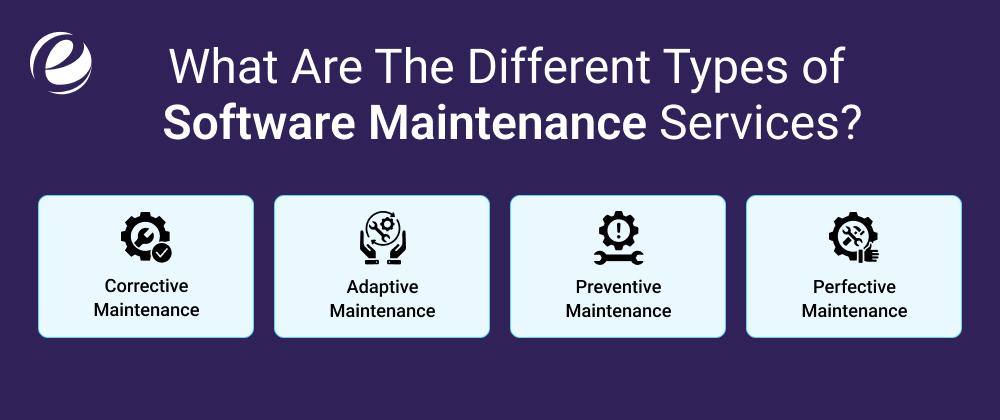
You now know how much does software maintenance costs and will agree that it’s not a one-size-fits-all approach. Every software has specific requirements unique to it, and meeting those requirements will require different strategies. In fact, there are various kinds of software maintenance services available. Let’s take a look.
1. Corrective Maintenance
Corrective maintenance in software engineering is probably the most obvious form of maintenance. It’s often the first thing that comes to mind when someone learns about the method. The focus of this maintenance is identifying the source of errors and making necessary changes to optimize the software’s functionality. These flaws, which may appear as glitches, bugs, or weaknesses, are then analyzed to pinpoint the cause.
Corrective maintenance is essential whenever users report problems with the software or if security issues arise. After applying the necessary updates or patches, corrective maintenance restores the program to a stable, secure condition to prevent further disruptions and data leaks. Typically, corrective maintenance accounts for about 20-25% of all software maintenance operations.
2. Adaptive Maintenance
Adaptive maintenance means changing software to keep it working well with new updates or changes in the outside world. This could include making sure the software works with new operating systems, software updates, or changes to other programs it depends on. It’s important to update the software when things like new technology, infrastructure changes, or new rules affect how it works.
Adaptive maintenance ensures that the software evolves with its environment, such as adapting to new versions of operating systems or software. For example, software originally designed for Windows 10 may need updates to function properly on Windows 11. While the original code isn’t necessarily flawed, updates are required to ensure seamless operation. This type of maintenance is vital and typically accounts for 15% to 20% of total maintenance efforts.
3. Perfective Maintenance
The perfective maintenance accounts for between 25 to 305 of the total cost of maintenance. The emphasis is on upgrading software with additional features or making improvements to existing ones based on consumer feedback and market demands. If, for instance, your message app’s users ask for the option of editing messages once they have sent them it, you may add that option to enhance the user experience.
This kind of maintenance is vital to adapt to evolving patterns in the market and improving the satisfaction of users, while remaining in the market. Through constant refinement of the software, a perfective maintenance will ensure that the software stays relevant, efficient and is able to provide higher value to customers.
4. Preventive Maintenance
The goal of preventive maintenance is to avoid any future problems and is designed to ensure long-term stability. This is a proactive method which identifies problems that could arise before they affect the performance of software, thus reducing the chance of interruptions. When the system is regularly maintained, firms can prevent unexpected breakdowns and expensive repair costs.
As an example, preventive maintenance could include periodic updates, checks for performance, and security updates. This greatly helps to reduce the overall burden of managing older systems by fixing potential security vulnerabilities prior to them becoming major problems. By investing in preventive maintenance, you can easily keep your software operating smoothly, which makes it safer and more reliable to ensure its future security.

The Importance of Software Maintenance Services for Businesses
Maintenance of software refers to the constant improvement of software by updating, repairing, or enhancing it following its initial installation. This is essential because it ensures that your software continues to function smoothly, remains secure, and is flexible to meet changing user demands or technological advancements. Let’s explore the benefits of software maintenance for businesses.
1. Improves Performance
Maintenance tasks, including optimizing code and tuning databases, help clean the system and boost the overall performance of the program. More efficient loading times and smoother processes improve user satisfaction and effectiveness. Well-maintained software also reduces the chances of user frustration and abandonment.
2. Adapts to Changing Needs
As business requirements evolve, maintenance allows software to stay up-to-date with the latest strategies, market trends, and user needs. This makes it possible to integrate the latest features and technologies, enhancing the software’s capabilities. Its flexibility ensures that it remains current and competitive, which is crucial for both support and upkeep.
3. Reduces Customer Churn
Lack of maintenance can cause glitches, bugs, and issues that customers dislike. Worse, users are more likely to abandon your program if there are persistent problems. It is also essential to continuously add new features to ensure the software aligns with user preferences. If this doesn’t happen, there’s a risk that users will leave the application.
4. Cost-Effective
Regular software maintenance helps businesses avoid costly repair expenses and system malfunctions. Proactive fixes can prevent major issues, such as expensive interruptions to productivity or emergency repairs. Over time, companies can save money and reduce the risk of losing revenue due to unexpected software malfunctions.
5. Ensures Longevity
Software maintenance extends the life of the system, allowing it to evolve along with the business. Regular updates and improvements ensure the software can accommodate changing business needs and adapt to the latest technology. In the long run, maintenance helps businesses avoid expensive replacements, ensuring the program stays relevant and continues to meet future needs.
6. Improved Security
By fixing vulnerabilities and reviewing potential risks associated with software, maintenance serves to protect software against forthcoming security risks. It protects against security breaches, hacking, and unauthorized access, ensuring the safety of sensitive information belonging to both companies and customers. Moreover, regular maintenance helps to ensure that the enterprise is compliant with regulations and avoids penalties for negligent security breaches.
7. Prevents Downtime
software maintenance is able to assist in the detection of potential problems prior to them leading to system breakdowns. This proactive method ensures that software functions smoothly with no interruptions. It is essential to avoid downtime for companies since it reduces the chance of losing revenue as well as decreases productivity. It also diminished customer trust, which allows the operation to be run smoothly.
8. Extends Software Lifespan
Regular maintenance ensures that software is up-to-date with the most current technological advances to ensure it is in operation for a longer period of time. Updates and fixes regularly keep software from becoming outdated and allow companies to get the most value from the return on their investment. When software is maintained properly, businesses can avoid expensive replacements and can extend its duration, making it up-to-date and productive over time.
Why Choose EmizenTech for Software Maintenance Services?

If you need a skilled partner to improve and manage your software’s performance, EmizenTech is the right choice. As a trusted software development company, we have the experience to keep your software running at its best. We focus on anticipating future needs and stopping problems before they happen, not just fixing them after they occur.
Our expert team helps take care of your software, making sure it lasts longer, works better, and stays affordable. Whether it’s regular updates, improving speed, or adding new features, EmizenTech provides solutions that fit your business needs.
Get in touch with us today to discover how our software maintenance services can help you prolong the life of your software while minimizing maintenance expenses
Conclusion
Managing the cost of software maintenance is crucial for all businesses. Regular maintenance saves cost, increases the effectiveness of your software and also fixes any issues before they become more serious. In order to effectively manage the costs, companies must be aware of the many factors that influence the cost, including how frequently it is necessary to update the software or how difficult the tasks of maintenance are.
By carefully estimating these costs and planning ahead, businesses can avoid unexpected expenses. Picking the right way to take care of their software can save money in the future. If businesses have a good plan for maintaining their software, it will work well and stay within their budget.
FAQs
How much time does software maintenance take?
The maintenance duration for software varies based on the degree of complexity, update modifications, and the type (corrective or adaptive). It can range from daily tasks to periodic updates, generally taking 15-20% of the development time.
Does software maintenance is really expensive?
Maintenance can be cost-intensive and sometimes exceed the cost of development. Proper planning and budgeting can help, but keep in mind that developing the software is just the beginning. Maintaining it is crucial.
Can software maintenance costs be reduced?
Following maintenance guidelines, such as regular checks, quality development, routine upkeep, and outsourcing to skilled service providers, can help reduce long-term maintenance costs.
Should you keep software maintenance in-house or outsource it?
Managing it in-house is great, but can be costly, while offshoring gives you all the expertise for a fraction of the cost. We need a clear communication line and an appropriate SLA, or service level agreement, to ensure the quality.




 +1 (989) 535-9295
 info@emizentech.com
 emizentech


