
 Add us as a preferred source on Google
 Have you ever wondered how people book their accommodations when traveling, whether it’s a luxurious resort or just a basic room? In the past, booking a place to stay involved searching through endless listings, making phone calls, and sometimes dealing with confusing processes. But today, vacation rental apps have completely transformed the way we plan our trips.
The vacation rental industry is experiencing rapid growth as more travelers opt for unique, home-like experiences over traditional hotel stays. These apps have made it easier for property owners to list their properties and for travelers to find the perfect place to stay, all at the touch of a button. Whether you’re looking to rent your own home or manage multiple properties, vacation rental apps streamline everything from booking to payment processing.
This shift isn’t just convenient for travelers; it’s a game-changer for property owners as well. With the right app, they can reach a global audience and manage their rentals effortlessly. As more travelers seek unique, home-like experiences over traditional hotel stays, businesses that fail to adapt to this trend may be left behind. If you’re a business looking to stay ahead in the travel and hospitality industry, investing in vacation rental apps is a smart move to tap into this rapidly expanding market.
In this comprehensive guide, we will discuss the benefits, features, cost monetization strategies, and much more of vacation rental mobile apps.
Vacation Rental Platform Market Statistics
The growing demand for vacations and relaxing stays is predicted to drive the growth of the vacation rental app market. An increasing number of tourists, along with a rise in app usage among young people, is expected to contribute to this market growth.
Let’s explore the key market statistics of vacation rental apps or platforms.
- The global vacation rental platform market is projected to grow from $621.99 million in 2025 to $2,646.02 million by 2033. This will be accompanied by an annual growth rate of 19.84% between 2025 and 2033.
- The vacation rental market in the United States is projected to generate $21.08 billion in 2025.
- In 2025, the vacation rental market is expected to account for a 19.1% share and is projected to rise to 20.5% by 2029.
- Seventy-one percent of families traveling with kids prefer to cook their meals, which is likely a significant factor in their decision to stay in an apartment.
Overview Of Vacation Rental Apps?
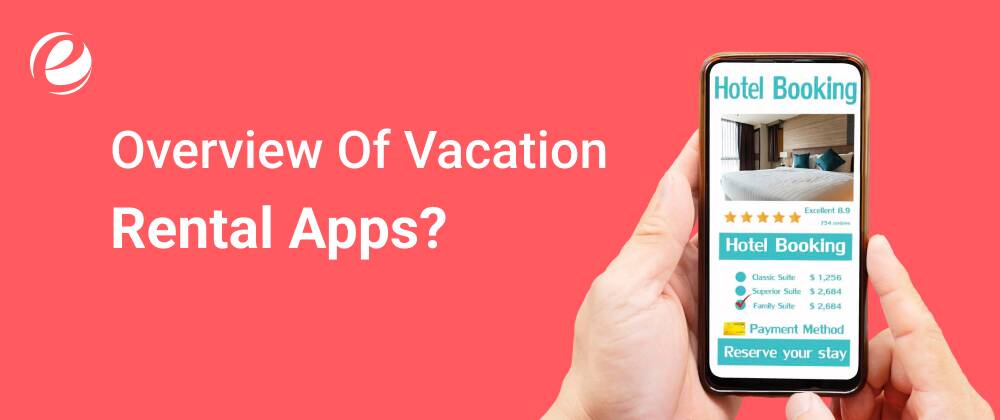
Vacation rental apps are mobile platforms that connect travelers with property owners or managers offering short-term rentals. These apps allow users to easily search for vacation homes, apartments, or unique stays by location, price, and amenities. Travelers can view property photos, read reviews, and check availability before making a booking. They can also manage their reservations, communicate with hosts, and occasionally access additional services, such as local experiences or airport transfers.
For property owners, these vacation house rental apps provide a space to list their rentals, set prices, and manage bookings. Vacation rental apps make it simple for travelers to find personalized accommodation, while helping property owners reach a wider audience.
Vacation rental and hotel booking apps are popular because they are easy to use and often offer more affordable and diverse options than traditional hotels. They make booking and managing stays fast and straightforward.
Key Benefits of Vacation Rental Apps
Vacation rental apps can be a fantastic tool for property owners to manage and maintain their properties. These rental apps for vacation offer several benefits that simplify the management process. Here are the key advantages they provide:
1. Streamlined Operations
Vacation rental apps help simplify daily tasks by organizing schedules and managing staff activities. Whether it’s maintenance, housekeeping, or guest services, tasks are tracked and assigned within the app. This ensures that no task is overlooked and that work is completed on time. Supervisors can monitor progress and make quick adjustments to maintain high standards while ensuring guest satisfaction.
2. Better Personalization
Vacation rental apps provide personalized experiences tailored to user data, including location, time of visit, and past behavior. As a result, guests receive tailored recommendations and information specific to their needs, including local activities and nearby services. This makes guests feel valued and connected, while also providing property owners with insights to improve guest satisfaction and engagement.
3. Automation and Efficiency
With vacation rental apps, manual processes, such as paper-based bookings and communications, are streamlined and automated. This streamlines administrative tasks, enabling property owners and managers to concentrate on enhancing customer satisfaction. Automation ensures more efficient operations, faster bookings, quicker payments, and reduced human errors, benefiting both staff and guests.
4. Optimized Pricing Strategies
Best vacation rental management apps often include dynamic pricing options that adjust rates based on factors such as season, demand, and local events. These features enable property owners to set competitive prices, attracting more guests while maximizing profits. By continuously adjusting prices, owners can remain competitive, make more informed financial decisions, and increase overall profitability by analyzing data.
5. Marketing and Visibility
Integrating vacation rental apps with major listing platforms and travel websites boosts property visibility. Advertising across multiple channels attracts more guests and increases occupancy rates. Greater visibility enables owners to fill vacancies more efficiently, ensuring consistent reservations and ultimately leading to increased revenue.
6. Data-Driven Decision-Making
Vacation rental apps provide valuable insights and data on guest preferences, booking trends, and financial performance. This data enables property owners to make informed decisions to improve operations and guest satisfaction. By understanding business trends, owners can adjust their strategies to meet customer needs and improve overall performance.
7. Better Control and Monitoring
Mobile apps allow property managers to stay on top of day-to-day operations, offering greater control and oversight. Tasks can be assigned or adjusted instantly, and staff can quickly address issues or requests. Maintenance tasks are closely monitored to ensure timely completion, enabling the prompt resolution of any problems that may arise. This helps ensure smooth operations, creating a better experience for both employees and guests.
8. Improved Communication and Guest Engagement
Vacation rental apps facilitate communication between property managers, owners, and guests. Whether it’s assisting with check-in, answering guest inquiries, or providing local recommendations, the app ensures instant contact. This enhances the guest experience, making them feel comfortable and secure during their stay, which in turn leads to higher reviews and more repeat bookings.
Must-Have Features in a Vacation Rental App
When creating your vacation rental app, several key features should be integrated to ensure and enjoyable user experience. Take a look at some of the most essential features:
User Panel
| Features | Description |
| Log-in/Sign-up | Users can sign in with their existing account or create a new one using basic details, such as their name and email address. |
| Manage Account | can easily edit and update their profile details, such as email, phone, password, and personal information. |
| Search Filter | Users can search for rentals by selecting the desired dates, price, room type, and amenities. |
| Host Interaction | Allow users to message hosts before booking, accept offers, or request changes to their stay. |
| Chat and Push Notifications | Instant messages about offers, discounts, and updates. The chat feature helps with quick answers to questions. |
| Payments | Users can select a payment method, view receipts, and review their transaction history. They can change currency too. |
| Booking | Users can easily check their current or upcoming bookings in the app. |
| Create Wishlists/Saved | Allow them to save places they like and get alerts if prices drop or availability changes. |
| Coupons | Users can apply coupons or referral codes at checkout for discounts or rewards. |
| Help | Users can view FAQs or request assistance if they encounter any issues with booking or renting. |
| Maps | Maps show rental locations in the area users want to stay, making it easier to plan. |
| Rate and Review | Users can rate and leave reviews for hosts, sharing their experiences with others. |
Host Panel
| Features | Description |
| Sign Up | New users must sign up using either their phone number or email to list properties, following a similar process to guest registration. |
| Listing | Users can update property details, photos, amenities, documents, and bank information through this feature. |
| Messaging | Property owners can send messages to guests, including booking confirmations or updates. A simple but effective tool. |
| Help | Users can fill out the FAQ section to address common property-related queries for guests. |
| Approval | Property owners can approve or reject booking requests due to unavailability or other issues. |
| Booking History | View past and current bookings, payment history, and generated revenue to track property performance. |
| Availability Calendar | Update availability dates for properties to ensure guests are aware of when bookings are open or closed. |
| Reviews Management | Read and respond to guest reviews, helping maintain a property’s reputation and improve services. |
| Payment Settings | Manage payment methods, track earnings, and set preferences for property-related payouts. |
| Security Features | Implement security measures, such as guest ID verification, to ensure safe bookings and interactions. |
Admin Panel
| Features | Description |
| Admin Panel Dashboard | Displays all registered users, hosts, and photographers, including both new and established ones. Essential for managing the app. |
| Manage New Listing | Admin can review, edit, add, or delete new posts as needed. Ensures listings are up-to-date and accurate. |
| Booking History | View and manage past and current bookings, including editing, updating, or deleting any booking details. |
| Feedback & Complaints | Admins view all guest and host feedback, ratings, and address complaints to ensure service quality. |
| User Management | Admin can manage user profiles, activate or deactivate accounts, and ensure compliance with app rules. |
| Payment Tracking | Monitor payments made for bookings, refunds, and outstanding balances to ensure all financial records are accurate. |
| Report Generation | Generate detailed reports on bookings, payments, feedback, and complaints to assist in decision-making. |
| Notification System | Admin can send alerts or notifications to users about important updates, booking status, or promotions. |
Advanced Features of Vacation Rental App
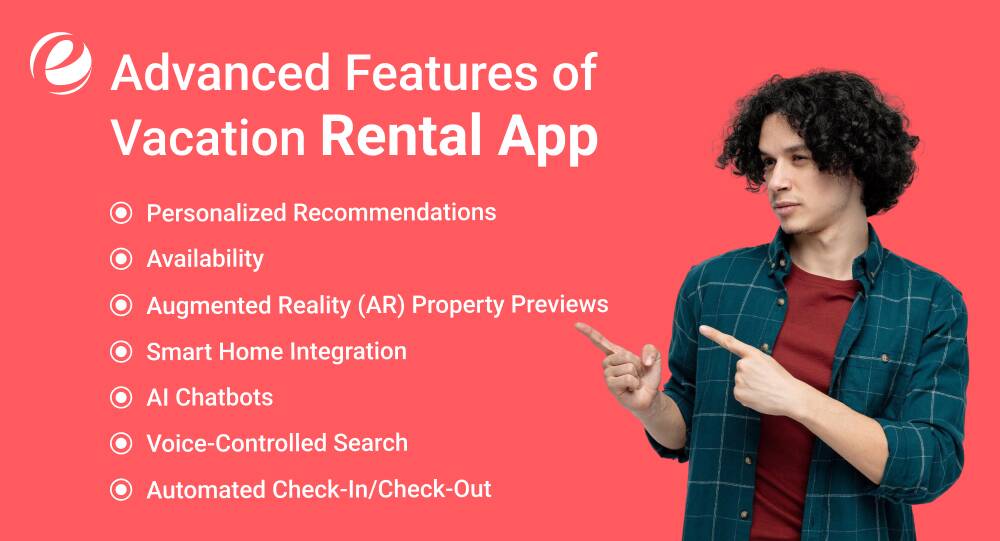
In this section, we will explore the most advanced features to integrate into vacation rental apps. These features enhance the user experience, simplify booking procedures, and provide valuable tools for both property owners and travelers.
1. Personalized Recommendations
Personalized recommendations suggest vacation rental properties based on the user’s browsing history and preferences. This individualized approach enables guests to find accommodations that suit their preferences, thereby enhancing the overall booking experience.
2. Availability
Availability provides the most current information on which properties are available for booking. This significantly reduces the risk of double bookings, allowing travelers to make informed decisions about their travel dates.
3. Augmented Reality (AR) Property Previews
AR allows users to view vacation rentals from the comfort of their homes before booking. Using their smartphone camera, guests can place furniture or visualize décor, helping them imagine how the property will look in reality.
4. Smart Home Integration
Vacation rental apps can integrate with smart home devices, including lights, thermostats, and security cameras. Guests can control these settings at the rental property via the app, enhancing convenience and comfort during their stay.
5. AI Chatbots
AI-powered chatbots assist users with queries, offer suggestions, and guide them through the booking process. They provide instant support to improve overall customer satisfaction with fast and reliable help.
6. Voice-Controlled Search
Voice-controlled search enables users to find properties by simply speaking commands. By integrating with voice assistants such as Alexa and Google Assistant, vacation rental apps make property searches easier and more user-friendly.
7. Automated Check-In/Check-Out
Automated check-in and check-out features enable guests to enter and leave the property without contact. Using a smartphone app, visitors can unlock doors and manage their stay time, providing a contact-free experience.
Top Vacation Rental Apps in the Market
If you’re looking to create the best vacation rental app or are looking for some inspiration, the following apps are worth checking out:
1. Airbnb
Airbnb remains the market leader, offering a diverse range of rental options, including homes, apartments, and unique accommodations like treehouses. Despite recent legal difficulties, its widespread presence and user-friendly layout continue to make it a popular choice among tourists. The app’s popularity, extensive selection, and verified reviews make it a favorite and one of the best vacation rental house apps for many.
2. Booking.com
Booking.com has been a leading player in the travel industry for over a decade, expanding beyond hotels to include holiday rentals. With AI-powered tools that enhance search and suggestions, the app is available in 43 languages and provides over 28 million listings worldwide. Its accessibility, ease of use, and broad range of options make it extremely popular in countries such as the USA and across Europe.
3. HomeToGo
HomeToGo is a specialized European vacation rental app that aggregates listings from multiple sources to help users find the best prices. The platform supports multiple languages, making it accessible to a broad audience. It is renowned for its extensive European coverage, offering a diverse range of vacation rentals, including cabins, apartments, and chalets. Users appreciate its user-friendliness and comprehensive search capabilities.
4. Vrbo
Vrbo, which stands for Vacation Rentals By Owner, has been operating since 1995 and is a pioneer in the vacation rental market. Known for focusing on family-friendly homes and larger properties, Vrbo’s long-standing reputation adds to its trustworthiness. It continues to provide an affordable alternative to those mentioned above, specifically the best vacation rental app, Airbnb, with a focus on vacation and beach rentals.
5. OneFineStay
OneFineStay is a top vacation rental app offering luxury houses, villas, and homes in prime locations worldwide. It specializes in well-curated, upscale homes and offers exclusive amenities, including private beaches, gyms, and concierge services. It’s a fantastic option for those seeking a sophisticated, personalized experience with an emphasis on design and luxury.
6. Vacasa
Vacasa stands out by offering more than just a booking platform; it provides full-service vacation rental management. With over 40,000 rentals across North and Central America, Vacasa actively handles maintenance and cleaning services. This level of support appeals to both property owners and guests, ensuring a smooth travel experience and well-maintained properties.
7. TripAdvisor
TripAdvisor is widely recognized for its comprehensive travel reviews and user-generated content, now featuring vacation rentals within its app. The platform helps users find everything from hotel rooms to private residences, often accompanied by detailed reviews, ratings, and traveler photos. As a comprehensive travel guide, TripAdvisor’s vacation rental services are a valuable resource for planning trips.
8. Hipcamp
Hipcamp is the go-to app for outdoor enthusiasts who enjoy camping, glamping, and unique experiences, such as yurts, cabins, or Airstream trailers. It offers both traditional campsites and luxurious, eco-friendly accommodations. Perfect for adventure seekers, Hipcamp enables users to connect with nature while staying in unique locations, making it ideal for those seeking extraordinary outdoor experiences.
9. Sonder
Sonder is a stylish and modern vacation room rental app offering apartment-style rooms in urban areas. It’s perfect for travelers looking for sleek, contemporary spaces with hotel-like amenities. Sonder has partnered with Marriott Bonvoy, allowing members to enjoy exclusive perks. Though the number of properties is still limited, Sonder is growing rapidly and is recognized for its quality and attention to detail.
10. Agoda Homes
Agoda Homes is part of the well-known Agoda platform, originally built as a hotel reservation site. It now features vacation rental properties, including apartments, homes, and villas, with a strong presence in Asia. With competitive pricing and a wide range of options, it’s the most affordable vacation rental app, making it an excellent choice for those seeking budget-friendly, comfortable stays in popular destinations.
Tech Stack Required for vacation rental app
The technology stack mentioned below will ensure the ability to build and expand your vacation rental app in the future, which includes the essential features required to attract users and provide them with an experience.
| Category | Technology | Description |
| Frontend | React, Vue.js, Angular | Frameworks for building the user interface (UI) for the web app. |
| Backend | Node.js, Django, Ruby on Rails | Server-side technology that handles the business logic, APIs, and database operations. |
| Database | PostgreSQL, MongoDB, MySQL | Stores the app’s data, including user details, property listings, and bookings. |
| Authentication | Firebase Auth, Auth0, Passport.js | Handles user login, registration, and session management. |
| Cloud Storage | AWS S3, Google Cloud Storage, Firebase | For storing images, videos, and other media related to the properties and user profiles. |
| Payment Integration | Stripe / PayPal / Square | Enables secure payments for bookings, cancellations, and other transactions. |
| Hosting | AWS, Heroku | Cloud platforms for deploying and hosting the app. |
| Analytics | Google Analytics, Mixpanel, Segment | Tracks user behavior and app performance for data-driven decision-making. |
| DevOps / CI/CD | Docker, Jenkins, GitHub Actions | Continuous integration and deployment for smooth updates and scaling of the app. |
| Version Control | Git, GitHub, GitLab | Source code management system for collaboration and version control. |
Steps to Develop a Vacation Rental App
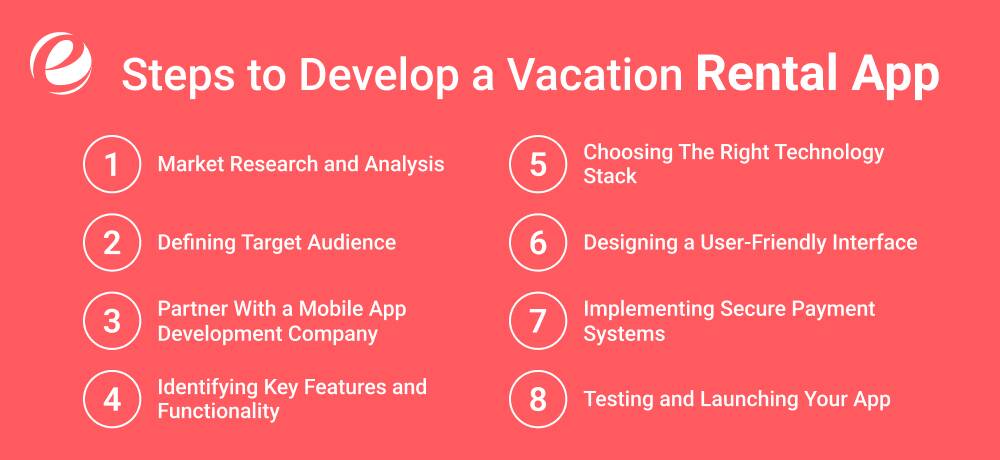
What are the steps to develop the best vacation home rental app? This is a crucial issue that arises in the minds of any entrepreneur before deciding to create an app. To build a vacation rental app, follow the steps mentioned below:
1. Market Research and Analysis
Conducting market research allows you to discover market gaps and competitors. Review existing vacation rental apps to identify their strengths and weaknesses. This will enable you to differentiate your application by providing distinct features that meet the preferences and needs of your customers, ensuring your app stands out in the market.
2. Defining Target Audience
Identify your customers by analyzing the demographics of your target audience, their travel habits, and personal preferences. Understanding your customers enables you to tailor the design and functions to their specific needs, resulting in increased engagement. A family-oriented vacation rental app will differ from an app designed for single travelers or professionals, making customization essential.
3. Partner With a Mobile App Development Company
Selecting a top-notch reputable mobile app development company with expertise in creating the best vacation rental apps. Review their work history, portfolio, and technical knowledge to determine if they are capable of building your ideal app. A strong partnership is vital to a successful project, so choose a development company with a proven track record.
4. Identifying Key Features and Functionality
Focus on essential features, including property listings, booking management, and secure payment methods. Include search and filter capabilities, user profiles, ratings, and communication options for user experience. Consider additional features like multi-language support or interactive maps to make your app user-friendly and feature-rich.
5. Choosing The Right Technology Stack
Select the best technology stack based on your application platform (iOS, Android, or both). Consider frameworks, programming languages, and third-party integrations. A strong tech stack ensures app scalability, speed, and security. Consult with experts to select the most suitable technology that aligns with your business objectives.
6. Designing a User-Friendly Interface
Create a user-friendly and visually appealing interface that facilitates easy navigation for users. Ensure the layout is clean, providing clear and easy-to-read details such as property information, amenities, pricing, and more. The goal is to make booking effortless with an experience from start to finish.
7. Implementing Secure Payment Systems
Integrate secure payments using trusted gateways, such as Stripe and PayPal. Offer multiple payment options to meet diverse user needs. Additionally, ensure compliance with data security standards, such as PCI DSS, to protect sensitive data, build trust with users, and encourage repeat transactions on your platform.
8. Testing and Launching Your App
Before launching the app, examine its performance, check for bugs, and ensure compatibility with various platforms and devices. Confirm that the user experience is and free of any issues. After everything has been done, ensure that you promote the app and offer rewards to early adopters to increase the app’s adoption and reviews.
Cost To Develop a Vacation Rental App
The cost to develop a Vacation Rental App ranges from $30,000 to $300,000, depending on numerous factors such as the features, the complexity of the application, the development team’s location, platforms, and the technology stack on which the app is built.
It is essential to understand that the development cost is only one component of the overall expense associated with creating a vacation rental application. Other factors to consider include maintenance and hosting fees, advertising expenses, and costs related to acquiring and retaining customers.
1. Basic App (MVP)
A basic app, featuring user registration, property listings, search capabilities, and a booking system, can cost between $30,000 and $50,000. The cost covers development, design, and testing for one operating system (iOS or Android).
2. Standard App
If you’re looking to include functions like payment integration, reviews and ratings, chat, and map integration, your cost can increase from $50,000 to $100,000. Creating apps for both iOS and Android can add expenses, particularly if you opt to develop custom designs or technology stacks.
3. Premium App
If you want a premium app with advanced features such as AI search, multi-language support, personalized suggestions, and a comprehensive admin panel, development can cost between $100,000 and $300,000 or more. These apps usually require a large team of skilled developers.
Factors Affecting the Cost to Develop a Vacation Rental App
The cost to build a vacation rental app depends on several factors, and understanding these aspects plays a crucial role in determining your overall development cost.
1. Choice of Platforms (iOS, Android, or Web)
The choice of platform to develop your app for vacation rentals can significantly impact the development cost. iOS applications typically require less development time, as they do not require as much testing on devices as Android applications do.
Android offers a greater variety of devices, which can increase the development and testing costs. Cross-platform apps, such as those that utilize React Native, increase initial development expenses but lower costs over time by catering to both iOS and Android users.
2. Features and Functionality
The more functions and features you include in your application, the more costly the development process becomes. Basic functions, such as booking history or reviews, may be simple; however, more advanced options, like notifications, SMS integration, or payment gateways, require third-party solutions that come with their costs. Other infrastructure needs, such as SSL certificates and platform charges, are also added to the total development budget.
3. Design and User Experience
A well-designed UX and UI are essential for engaging users and encouraging them to use the app. Vacation rental apps must appear visually appealing, simple to use, and user-friendly. Creating these apps is a process that requires patience and experience; the more complex the layout, the greater the costs. The extensive UI/UX design process increases the development duration, which directly impacts the application’s costs.
4. Development Team Location
The location of your development team can affect your budget. If you want to build your app and save money, consider outsourcing development to areas with low labor costs. Employing a competent team in expensive labor markets, such as the U.S. or Western Europe, is costly. Outsourcing, on the other hand, can still provide the same quality of development at less than half the price, allowing for savings to be allocated to marketing and user acquisition.
5. Maintenance Costs
Your app is an ongoing investment that requires continuous management. After launching, your app will require updates to address bug fixes, introduce new features, or support newer operating systems and devices. These updates are necessary for the app to function correctly and to meet user expectations. The costs of maintenance could also be higher in the future if you frequently need to update your app to keep pace with the rapidly changing market in the vacation rental app industry.
How Vacation Rental Apps Make Money
Would you like to learn how vacation rental apps generate revenue? They employ a variety of effective monetization strategies to generate revenue. Let’s take a look at them:
1. Booking Fees
The majority of vacation rental apps require guests to pay a fee per booking. This fee is typically a percentage of the reservation cost, ranging from 5% to 15%. The app utilizes this money to cover expenses such as payment processing, customer service, and marketing. It is a significant contributor to the company’s revenue.
2. Host Fees
Many vacation rental apps charge hosts a percentage of the reservation, typically ranging from 3% to 15%. The commission is deducted from the rent price. This allows the app to continue operating, provides hosts with marketing tools, and ensures that rental listings are available to prospective guests.
3. Premium Listings
Vacation rental apps provide hosts with the opportunity to pay for listings with premium prices, which appear higher in search results. The paid listings are better-known and more attractive to potential tenants. Hosts also gain access to additional features, including enhanced photographs, increased exposure, and more advanced booking analytics, which improve their chances of securing reservations.
4. Advertising
Many vacation rental apps generate revenue through third-party advertising. They display ads from local businesses, travel services, or other travel-related products on their platforms. By allowing companies to advertise, the apps generate revenue per impression or click from these ads.
5. Subscription Plans
Some vacation rental platforms offer subscription plans for hosts, providing access to advanced tools, analytics, and increased visibility. These subscriptions range from monthly to yearly payments. They also provide valuable services, including pricing optimization tools, automated messaging, and professional photography, all available for a fee.
Why Choose EmizenTech for Vacation Rental App Development?
EmizenTech is a reputable mobile app development company specializing in creating custom, scalable, and high-performance vacation rental apps that attract both guests and hosts. Our app developers are experts in developing robust and reliable apps that offer the same functionality and user experience as the top vacation house rental apps on the market. Our skilled development team has in-depth knowledge of the advanced technologies and frameworks required to build successful vacation rental apps.
We maintain continuous communication with you throughout the entire development process, ensuring you are involved and satisfied at every stage. Our team greatly values your feedback and works diligently to address your needs. Our primary goal is to develop an application that exceeds your expectations and delivers exceptional results.
Contact us today to discuss your app idea.
Conclusion
In today’s world, travel has become more accessible than ever. We can easily choose our destination, transportation, and, importantly, where to stay. Vacation rental apps have significantly improved the travel experience by offering accommodations for all types of travelers. These platforms allow users to find the perfect place to stay, whether it’s a cozy apartment or a luxurious villa, all at their fingertips.
With the growing reliance on smartphones, creating an app for vacation rentals is an excellent business opportunity in this digital age. However, building an app is no simple task. It requires technical expertise and careful planning. To ensure success, partnering with an experienced travel app development company is essential. With the proper knowledge, your vacation rental app can become a leading platform in the competitive travel industry.

FAQs
Why develop a vacation rental app?
A vacation rental app provides a convenient platform for travelers and hosts to connect. It offers a competitive business opportunity by tapping into the growing demand for flexible and accessible travel accommodations.
How long does it take to develop a vacation rental app?
Development time depends on the features and complexity, but typically ranges from 4 to 6 months. Factors like design, testing, and integrating payment systems can extend the timeline.
What security features should my vacation rental app have?
Your app should feature secure payment gateways, user data encryption, identity verification, and a robust privacy policy to protect both guests and hosts, ensuring trust and safety for all parties involved.
What is the best app for vacation rentals?
Top vacation rental apps include Airbnb, Booking.com, and Vrbo, all of which are known for their extensive property selections, straightforward booking processes, and reliable user experiences.



 +1 (989) 535-9295
 info@emizentech.com
 emizentech


