 Add us as a preferred source on Google
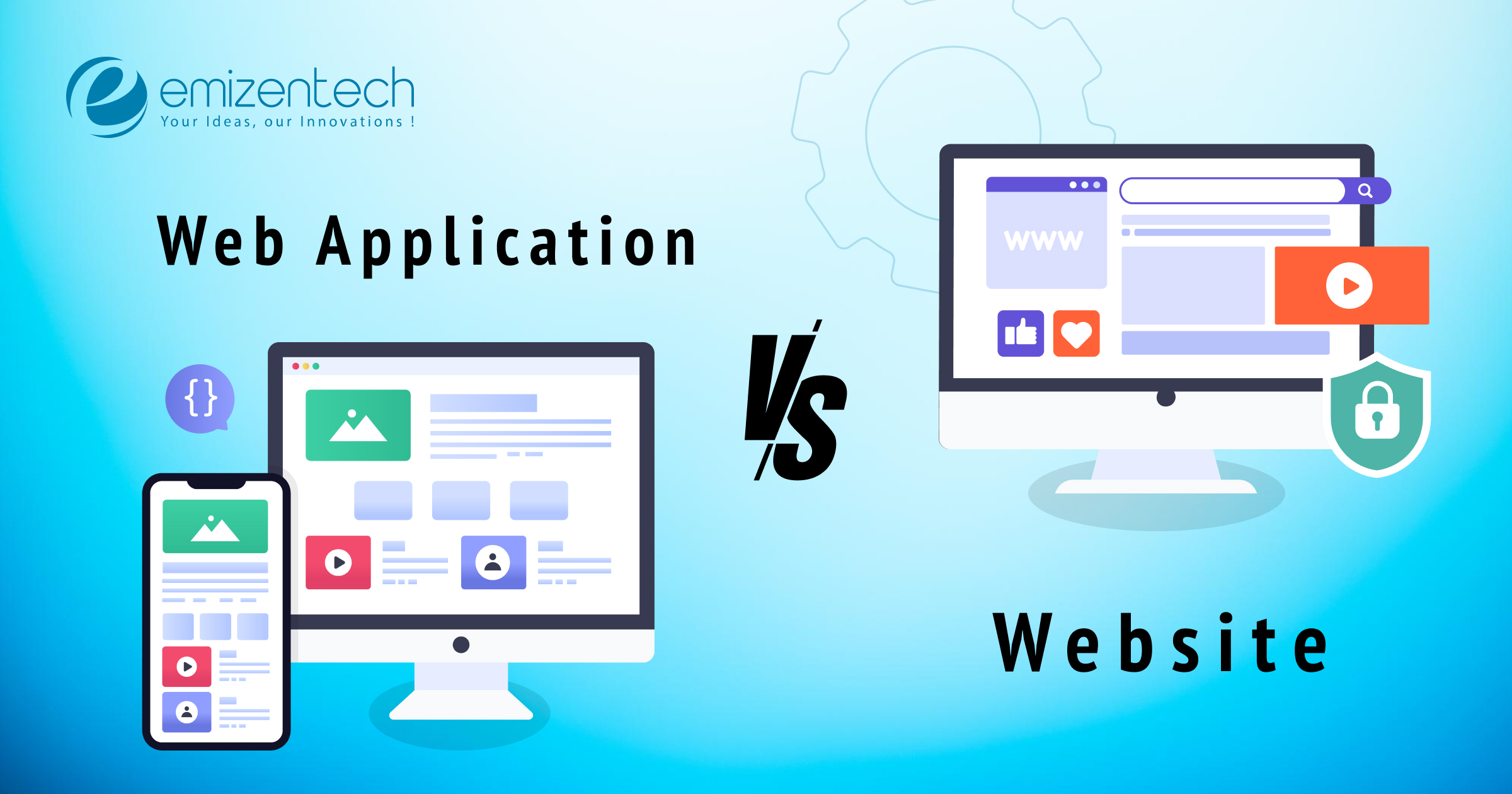
 When it comes to the age-old debate over web app vs website, it is essential to understand the differences and similarities between the two digital platforms to make or break your online strategy. In the year 2026 and beyond, over 68% of online experiences will start with search engines and mobile engagement.
Although websites have historically offered static content and brand presence, web applications have provided the means for interactive experiences and task-oriented functionality. Understanding the differences and similarities between the two digital platforms can empower businesses and developers to create engaging and successful experiences in the ever-changing digital world.
This blog will take you through some of the key differences between web app vs website, examples, and trends of websites and web applications to help businesses, startups, and developers make informed decisions to increase user engagement and business growth.
What Is a Website?
A website is defined as “a group of web pages with links to each other and created to provide information to users.” Websites may be referred to as either static or dynamic. Static websites are defined as websites where the data is not altered based on how users interact with it.
They may be used for various purposes, such as informing, educating, and entertaining users with minimal user interaction. For example, websites may include:
- YouTube
- Wikipedia
- Amazon
What Is a Web Application?
A web application is an application that can be run on a web server and can be accessed using a web browser. Unlike static websites, where the user is only able to view information, web applications give the user an opportunity to interact with the website by filling out forms, sending data, or even interacting with the content. This highlights the key differences in a web app vs website in terms of user interaction and capabilities.
Web applications are dynamic applications, and their implementation may require backend programming. They use databases to store data. Some of the common web applications are:
- Email services
- Online banking
- E-commerce
- Social media
- Cloud storage services
Website vs Web Application: Key Differences
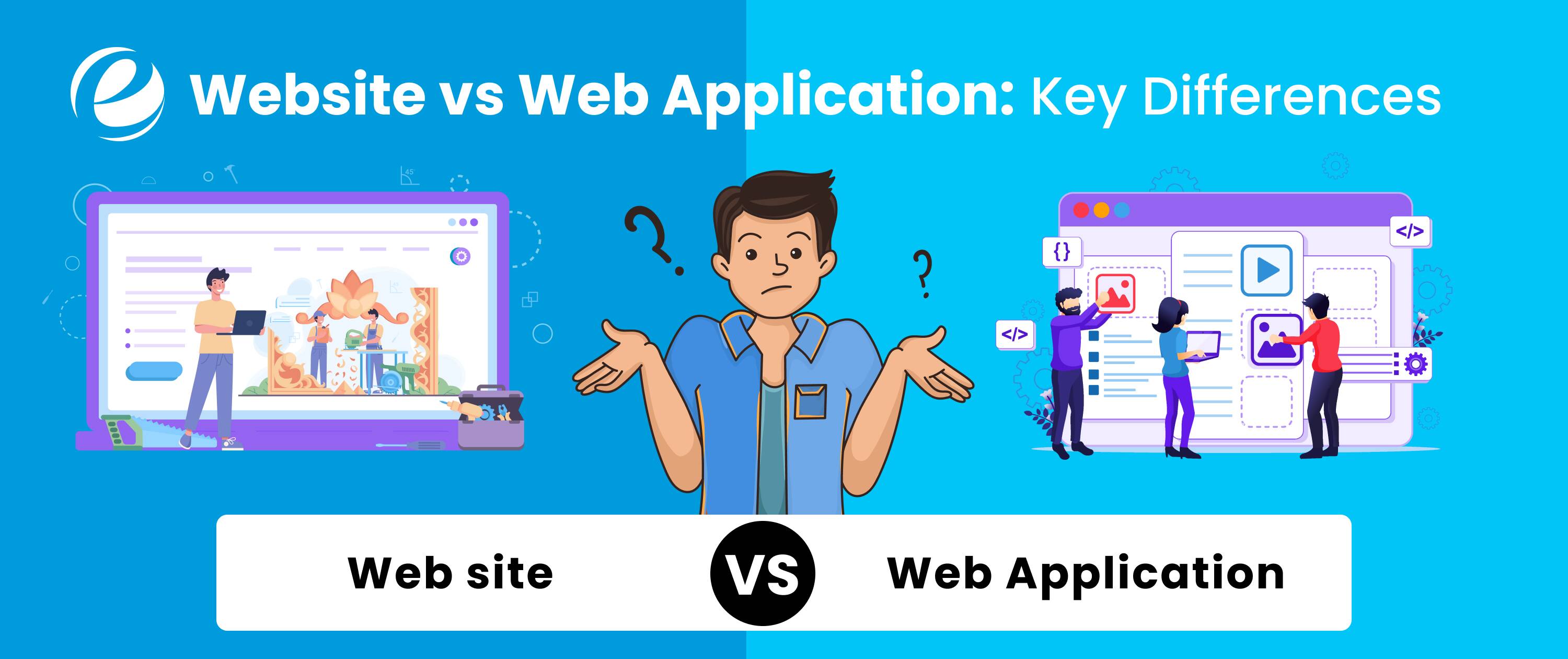
Although web applications and websites look almost identical, they are used for distinct purposes and offer varying functionality and interaction with users. The following is a comprehensive comparison of web applications vs websites in terms of different features:
| Aspect | Website | Web Application |
| Interactivity | Limited Interactivity. The primary activity of users is to read or browse content. | Highly Interactive. Users are allowed to input, modify, and retrieve data in real time. |
| Functionality | Provides static content, mostly for reading and browsing. | Allows users to perform specific tasks, goals, and actions. |
| Technology | Can be created using only HTML and CSS, with optional JavaScript and a CMS like WordPress. | Requires complex technologies like frameworks, server-side technologies, and APIs to create highly interactive applications. |
| Development | Less back-end work, more emphasis on front-end design and content structure. | Requires more complex architecture, which requires back-end integration, APIs, and a database for web apps. |
| Maintenance | Primarily consists of updating content, which also requires keeping software up to date, a function that can be automated. | Involves a more complex process, and testing has to be done continually due to the complexity of the system. |
Real-World Examples of Websites and Web Applications
Let’s understand the characteristics of both of them and learn the differences in a web app vs website with the help of examples.
Popular Examples of Websites
- CNN: It is a content-based website. The main idea behind this website is to provide content to visitors.
- Medium: This website is composed of articles and blogs. The design of this website is very simple.
- Wikipedia: It offers content to its visitors in the form of static web pages.
- Apple: This website offers information about its products and company, and its layout is very simple.
- Microsoft: This site contains information related to products, downloads, and documentation. The design is simple and well-organized.
Popular Examples of Web Applications
Web applications transform passive browser experiences into interesting experiences with the help of interactive features and real-time functionality that distinguishes them from traditional websites. This makes it easier to understand the difference between a web app vs website. Some of the examples of web applications are as follows:
Gmail
- Personalized email management
- Real-time message updates
- Built-in chat and video conferencing
- Custom filters and organization tools
Trello
- Drag-and-drop task management
- Real-time collaboration of team members
- Custom boards and sharing
- Automated workflow tools
Google Docs
- Simultaneous document editing
- Real-time commenting and suggestions
- Version history
- File sharing
Spotify
- On-demand streaming of music
- Personalized music recommendations
- Synchronized music across multiple devices
- Streaming of podcasts
Netflix
- On-demand streaming of movies and TV programs
- Personalized recommendations for content
- Resume watching from where you left off
- Stream on multiple devices
Looking at what is already available on the web can also help to spark ideas for interactive features and real-time functionality. Check out these web app ideas for inspiration.
When Should You Build a Website?
Let’s discuss below some of the key times to build a website:
- Startup Phase: Immediately, if you have a business idea, mission, or product defined, start generating leads and gaining trust.
- Before Launch: It is essential to build it before launching your business because if you wait until after launching your business, it may hinder the number of visitors to your site.
- When relying on Social Media: You may lose access to your social media audience if it shuts down your account.
- When Professionalism is Needed: It is vital to build a website if you need professionalism in your business.
When Should You Build a Web Application?
Below are various key scenarios for building a web application:
- For Software as a Service (SaaS) Products: Web applications are most suitable for software as a service products since users can use the software via the internet without having to download it. Web apps can also be easily scalable in case there is an increase in the number of users, and it can also be easily updated in real-time, which is vital in a competitive environment.
- When You Need Advanced Functionality: You would need web applications when you are working on a project that needs advanced functionality like chat functionality, online booking, user authentication, and integration with other external data sources like HR and inventory systems, and content management with various user roles.
- To Reach a Broad, Cross-Platform Audience: Web applications operate within any web browser (Chrome, Firefox, Safari, etc.) on the internet, regardless of the user’s operating system (iOS, Android, Windows, or Mac), providing the greatest reach with one codebase.
- To develop a Minimum Viable Product (MVP), first: Creating a web app is considered to be a low-risk strategy to validate the business model and gain user feedback, considering the high rate of iteration and instant deployment compared to the app store review process.
- To Prioritize SEO and Discoverability: Web applications should not only appear in app stores but also be optimized to rank well on search engines.
To learn how to implement these features, you can get aid from the web app development guide.
Future of Websites: How Websites Slowly Turn into Web Applications
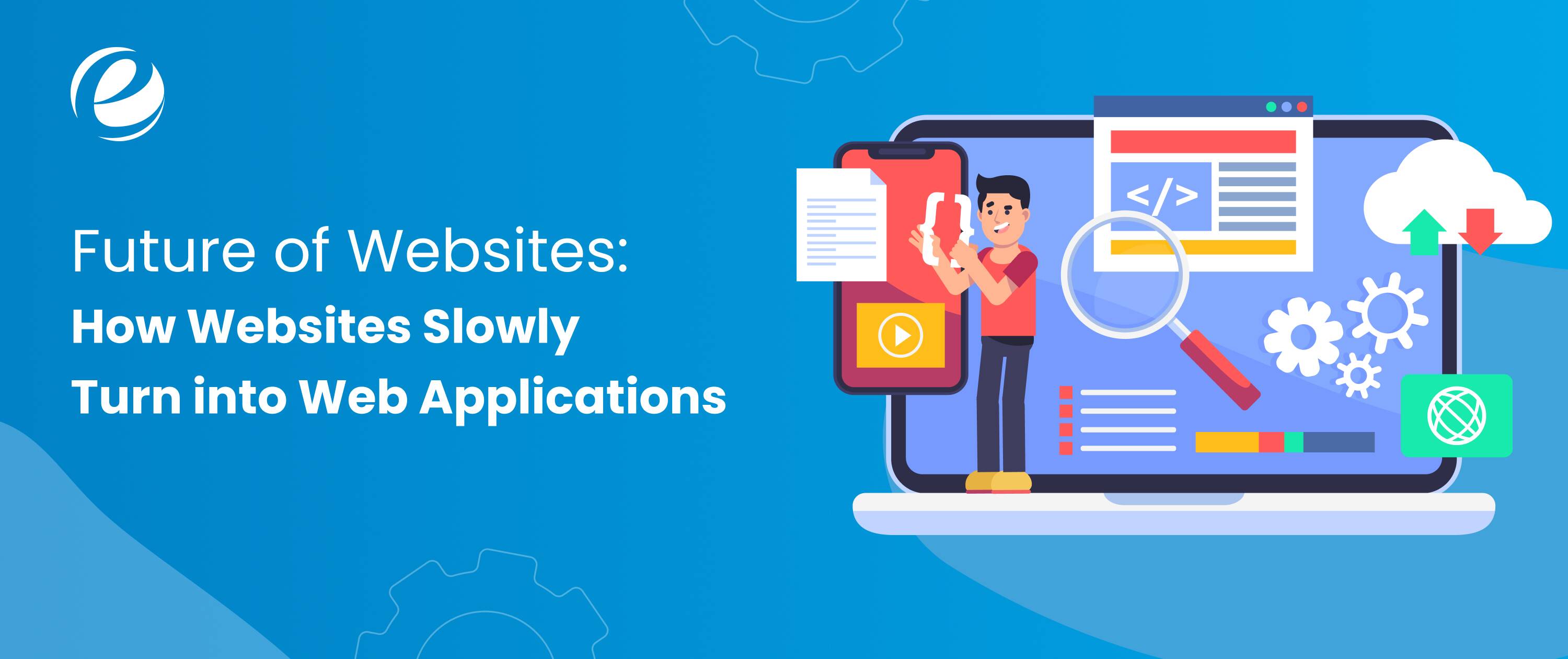
As technology is advancing, websites are slowly transforming into web applications, offering various features such as interactivity, live updates, and app-like experiences. This shift is part of modern web development trends. Now, let’s dive deeper and try to get a better insight into the topic.
Progressive Web Apps (PWAs)
These are websites that offer app-like features such as those offered by native applications, which are quick, engaging, and sometimes offline without having to install them from app stores.
AI-Driven Personalization and Interaction
AI is transforming static websites into intelligent platforms that are capable of personalization and real-time interaction.
Performance and Speed
Web applications are built for speed and efficiency, utilizing Edge computing to bring intelligence closer to the user.
WebAssembly (Wasm)
This is a way to run high-performance languages at near-native speeds in browsers to create complex software applications.
API-First, Modular Architecture
Modern websites function as a central hub in a larger ecosystem, utilizing APIs to connect to external platforms and services, rather than being a destination in and of themselves.
Voice Interaction and Accessibility
Voice UIs and other accessibility features are also expected to increase interaction and user experience on the web. Users would be able to interact with websites using voice commands and various input methods.
Advanced Cybersecurity
The ‘never trust, always verify’ policy is becoming a standard in cybersecurity. It requires strict authentication of all users and devices to counter cyber threats.
Why Choose EmizenTech for Website and Web Application Development?
EmizenTech offers innovative and cutting-edge web and application development services that are designed according to your specific business requirements. We have completed over 1200+ projects in over 450+ industries, providing top-class UI/UX services, advanced web application development, and integrating platforms with cutting-edge technology and AI-powered personalization. Whether you are deciding on a web app vs website, we make sure the solution matches your business needs. We focus on delivering secure, interactive, and innovative web development services that boost user engagement and drive growth for your business.
Conclusion
The distinction between a web app vs website is important for businesses and developers looking to offer engaging experiences through digital media. Websites are generally used to offer content and presence, whereas web applications are used to offer experiences, thereby engaging the user.
With the advancement of technology, the line between a web app vs website is gradually blurring, as websites adopt features like AI, PWAs, and other interactive elements to offer richer user experiences.
If you are experiencing difficulties in closing the gap between traditional websites and modern web applications, you can hire web developers to develop customized solutions to improve user experiences and business growth.
FAQs
What is the Difference Between a Website and a Web App?
A website shows data, whereas a web application shows data and provides interactive functionality, user input, and data processing capabilities over the internet.
Can a Website Become a Web Application?
Yes, it is definitely possible for a website to transform into a web application with the addition of interactive functionalities and user input capabilities.
How Do I Know Whether I Need a Website or a Web Application for My Business?
If you are looking to share information, then a website is required. If you are looking to interact with users and process information, then a web application is required.
Are Web Applications More Secure Than Websites?
Yes, web applications are more secure compared to websites. However, websites are also secure when data is encrypted and updates are done properly.
What are Common Real‑World Examples of Web Applications vs Websites?
Websites: - Blog sites, corporate sites, and news sites. Web applications: Gmail, Trello, Facebook, online banking, and e-commerce sites.



 +1 (989) 535-9295
 info@emizentech.com
 emizentech


