 Add us as a preferred source on Google
 Let’s be honest: buying property still feels a bit old-school sometimes. You can find a property online in just two minutes, but what about the actual paperwork and verification process? That can drag on forever. You will always get stuck between the brokers, approvals, and signatures, and the excitement disappears.
That’s one big reason Businesses are investing in web3 real estate app development to make property buying, selling, and investing a lot simpler. It means that you do not have to rely on the traditional methods because these apps use technologies to handle transactions.
This market is growing faster every year. A recent report shows that the tokenized real-world asset market will cross $19.3 billion by the end of 2026
Of course, like all other technologies, Web3 in real estate is still in its work-in-progress stage for better results. There are still some conversations that are going around regulations, adoption, and scalability. But despite that, more businesses and investors are starting to see its potential for fractional ownership, faster transactions, and global investment access.
In this blog, you will learn about web3 in real estate, its use cases, benefits, features, costs and real estate app development with a structured process.
What Are Web3 Real Estate Apps and How Are They Transforming the Real Estate Industry?
A Web3 real estate app is a decentralized platform (dApp) that uses blockchain technology to buy, sell, manage or invest in property without traditional intermediaries. These apps make investing more accessible because they allow users to purchase tokens that are fractions of ownership that represent property shares.
Web3 is transforming real estate apps in many ways, as mentioned below:
- It is reducing the need for middlemen, which reduces the transaction costs of the property.
- The users from different countries can easily invest in or purchase properties through this digital platform.
- The blockchain technology helps protect property records from fraud and data manipulation.
So these are some of the changes that the apps are making for the real estate industry. In the below sections, you will learn deeper about the benefits and use cases of web3 in real estate. Let’s get started on the main course.
Top Use Cases of Web3 in Real Estate
Web3 is slowly changing the real estate industry working methods. However, with Web3, buying, selling, and investing in property have become easier for the investors and businesses. Below are some practical ways that real estate uses Web3:
Property Tokenization
It allows real estate assets to be divided into digital shares on the blockchain. Instead of purchasing an entire property, people can invest smaller amounts.
NFT-Based Property Ownership
In some cases the property ownership records can be linked to NFTs. This creates a digital proof of ownership that is secure and simple to transfer, in contrast to traditional methods.
Decentralized Property Marketplaces
Web3 platforms are making it possible for users to buy, sell, or rent properties directly. It reduces the dependence on brokers and third parties which lowers the transaction costs.
Secure Identity Verification
The identity verification through blockchain systems helps to improve the security during property transactions. It reduces fraud risks and makes the user authentication more reliable.
Transparent Property Records
One major advantage of blockchain is transparency. The property records stored on blockchain networks are easier to track and much harder to change or manipulate illegally.
Fractional Real Estate Investment
With fractional ownership, multiple people can invest in the same property and own shares on the basis of their contribution and opening real estate opportunities to a larger audience.
Crypto-Based Property Payments
Some Web3 real estate platforms support cryptocurrency payments for property purchases and rentals. This can make international transactions faster and more convenient in certain cases.
Virtual Real Estate in Metaverse
Virtual property view inside metaverse platforms help users to interact with objects of that land to buy, sell, and rent properties. The investors are exploring these digital assets as a new type of investment opportunity.
Crowdfunding Platforms
Blockchain crowdfunding platforms allow groups of investors to fund property projects together. The process is more transparent, and investors can track transactions more easily.
Benefits of Launching Your Own Web3 Real Estate App
Web3 is becoming a big part of the real estate marketplace shift in 2026. However, launching your own Web3 real estate app can help businesses offer faster, safer, and more modern property solutions to users. Below are some benefits you will receive from these apps:
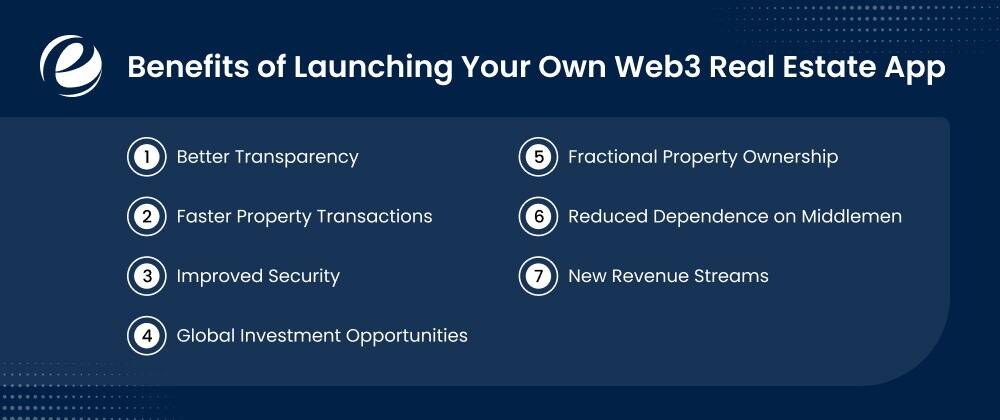
Better Transparency
Blockchain technology keeps the property records and transactions transparent. Every transaction is recorded securely, which helps build trust between buyers, sellers, and investors.
Faster Property Transactions
The traditional real estate deals take time because of paperwork and third-party approvals. Web3 apps simplify many of these processes by making the transactions quicker.
Improved Security
Web3 real estate apps use blockchain systems that make data difficult to change. However, it helps reduce fraud risks and improves transaction security for the users.
Global Investment Opportunities
People from different countries can easily invest in the properties with the help of digital platforms. This helps businesses to attract investors with the right international marketing.
Fractional Property Ownership
With tokenization, users can buy small shares of a property instead of purchasing the whole asset. This makes real estate investment more affordable for many people.
Reduced Dependence on Middlemen
Web3 apps reduce the need for brokers and third parties in numerous ways. However, it can lower transaction costs and simplify the buying or selling process.
New Revenue Streams
The businesses can easily generate revenue with the help of transaction fees, token sales, premium features, NFT listings, subscriptions, and property marketplace services.
So, these are some of the benefits that you will get from a web3 real estate app solution for your business so that you can stay competitive in the marketplace.
Read Further: Web2 vs Web3: Complete Guide
Must-Have Features of a Web3 Real Estate App
A successful Web3 real estate app should offer more than just property listings. In the section below, you will learn the most crucial features to include in your web3 real estate app development:
User Registration & Wallet Integration
The users should be able to create accounts easily and connect multi cryptocurrency wallets for secure transactions, digital asset storage, and property investments.
Property Listings Management
The app should allow the users to browse, upload, edit, and manage property listings with details like pricing, location, images, ownership records, and amenities.
Property Tokenization
The tokenization features let the property owners divide real estate assets into digital shares that allow the multiple users to invest in a single property with smaller investments.
Smart Contract Integration
These smart contract integrations help automate property agreements, payments, ownership transfers, and transaction approvals without the requirement of manual intervention.
Secure Payment System
A Web3 real estate app should support secure crypto and digital payment options for property purchases, rentals, and investment transactions for smooth transactions.
NFT-Based Ownership Records
The NFT integration can be used to represent digital property ownership that makes the ownership verification secure and easier to transfer for the users.
Advanced Search & Filters
The users should be able to search properties on the basis of the location, price, property type, investment value, amenities, and ownership model for a better browsing experience.
Blockchain-Based Verification
The app should verify property records and transaction history on the blockchain to improve transparency and reduce the fraud risks associated with it.
Admin Dashboard
An admin panel helps the businesses to manage users, transactions, property listings, investments, reports, and platform activities easily on their dashboard.
AI Chatbot & Customer Support
If you include the AI chatbots in the apps they can easily assist the users with property queries, investment guidance, and technical issues in real time with 24/7 availability.
High-Level Security Features
The app should include strong security measures such as encrypted transactions, two-factor authentication, secure wallet access, and smart contract audits to keep the user data protected
So, the combination of these features in your app can make it reliable for the users. Additionally, you can add more advanced features to stay ahead of your competitors.
Steps to Develop Web3 Real Estate App in 2026
When the topic is building a well-designed web3 real estate app solution, it is a lot more than just adding blockchain features to a property platform. The users don’t care about the advanced technology if the app feels confusing to use; they want a smooth experience. If you want to know how it is possible, then follow the structured process given below:
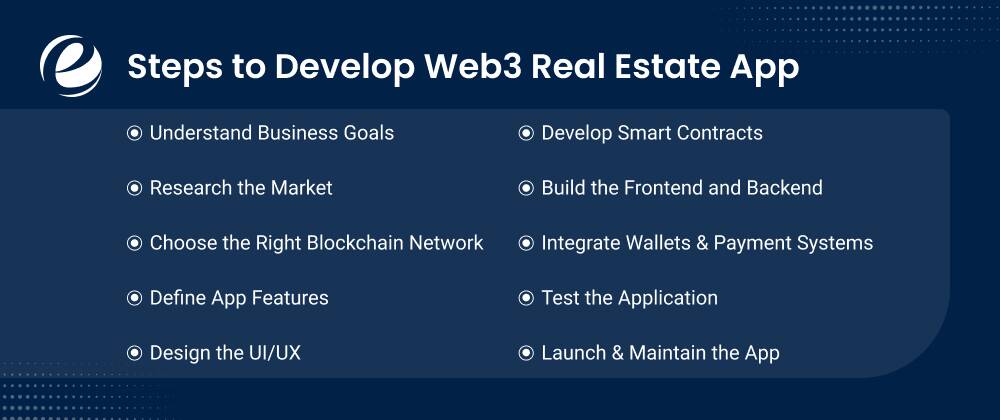
Step 1: Understand Business Goals
At the start of development, you have to set your clear goals because the direction matters as it shapes everything that comes next. Some businesses want a platform for tokenized property investments, while others focus on rentals, NFT ownership or property crowdfunding.
Step 2: Research the Market
This step gets skipped more often than it should because, in reality, you spend time looking at competitors, user behavior, and current market trends; there are high chances that you establish your business in this competitive marketplace.
Step 3: Choose the Right Blockchain Network
Not all blockchain networks are built for the same purposes, so choose wisely. Ethereum is popular for tokenization because it is a mature ecosystem, but platforms like Polygon or Solana may work better depending on transaction speed, low fees, and scalability.
Step 4: Define App Features
Now comes the practical part: you have to decide the features the app really needs. Most Web3 real estate apps usually include the following:
- Wallet integration
- Property listings
- Smart contracts
- Tokenization
- Crypto payments
- User verification
- Admin dashboard
A pro tip is that your goal is to keep things useful for the users, not to overload the app with unnecessary features.
Step 5: Design the UI/UX
A lot of blockchain apps still feel too technical for regular users. That’s honestly one of the biggest issues in Web3 right now. They expect a clean interface and simple navigation, especially when they are using the app for the first time.
Step 6: Develop Smart Contracts
The smart contracts can automatically manage the payments, ownership transfers, agreements, and transactions in the background. When these contracts deal with valuable assets, there is very little chances of the mistakes.
Step 7: Build the Frontend and Backend
In this phase everything starts coming together. The frontend is for the users so that they can interact with the app and its features, while on the other hand, the backend manages data, transactions, notifications, and overall platform functionality.
Step 8: Integrate Wallets & Payment Systems
The app must be developed in a way so that the users are able to connect wallets, complete transactions, and manage assets. They will not like it if your app goes through a complicated process every single time when they are paying.
Step 9: Test the Application
The testing phase deserves more attention than most people think. A small issue in a smart contract or payment flow can create major problems later. The major things you should test are the security, performance, and usability of the app before launch.
Step 10: Launch & Maintain the App
You have to understand this early that launching the app is only the first step because the Web3 platforms need regular updates because the user expectations change quickly, and if you want to stay relevant in this market, you have to keep up with their needs.
Cost of Web3 Real Estate App Development in 2026
The cost of developing a Web3 real estate app ranges from $25,000 to $500,000, depending on the app’s complexity. Also, the other factors that can affect the initial costs are features, technologies, and the location you are hiring the development team from. Below is a general cost of web3 real estate app development:
| App Complexity | Approximate Cost | Timeline |
| Basic App | $25,000-$60,000 | 2 to 4 months |
| Mid-Level App | $60,000-$150,000 | 4 to 8 months |
| Advanced App | $150,000-$500,000 | 8 to 15+ months |
So, this table shows the estimated cost of real estate app development, but there are also some hidden costs for maintenance and updates. Make sure you get a clear idea of the ongoing costs from the app development company.
How to Choose the Right Web3 Real Estate App Development Company
If you want to choose the right web3 real estate app development company before you hire a mobile app developer, you have to focus on some steps that are mentioned below:
Specialized Expertise: You must look at the fact that the developers specialize in tokenizing real estate and building dApps and integrating wallets.
Technical Expertise: You have to make sure that they have worked with the relevant blockchain platforms in the past with successful results.
Support: You have to understand that blockchains operate 24/7 so you have to prioritize the companies that offer transparent communication.
Security and Compliance: Select the firm that has robust security strategies that include smart contract audits and secure key management.
Blockchain Platform Knowledge: The company should understand the different blockchain networks like Ethereum, Polygon, or Binance Smart Chain so that they can recommend the best one for your project.
Integration Capabilities: You have to make sure that the company can integrate important features like crypto wallets, smart contracts, property listings, and NFT marketplaces easily.
Conclusion
Web3 real estate app development is transforming the buying, selling, and managing of the properties. These apps work with blockchain technology, smart contracts, and property tokenization to make real estate transactions more secure for the users. However, building a successful Web3 real estate platform needs the right mix of expertise. When you choose an Web3 real estate app development company, analyze all their expertise and integrations. It can help your business create reliable solutions that simplify property transactions and keep you competitive in the growing digital real estate market.
FAQs
What is a Web3 real estate app and how does it work?
A Web3 real estate app is a decentralized platform (dApp) that uses blockchain technology to buy, sell, manage or invest in property without traditional intermediaries. These apps make investing more accessible because they allow users to purchase tokens that are fractions of ownership that represent property shares.
How much does it cost to develop a Web3 real estate app in 2026?
The Web3 real estate apps can cost between $25,000 and $250,000+, but the initial price depends on the project size, features, tech stack, and location of the development company.
What are the key benefits of using Web3 in real estate?
Web3 in real estate simplifies the transactions through blockchain smart contracts, significantly reducing intermediary costs, increasing liquidity through asset tokenization and enabling fractional ownership.


 +1 (989) 535-9295
 info@emizentech.com
 emizentech


