 Add us as a preferred source on Google
Your website is much more than a marketing tool, so maintaining it is crucial. It is an engine that drives your brand, sales, and reputation in the online market. But like other machines, it also demands a proper time for maintenance to stay fast, secure, and reliable for the modern market trends. Have you ever opened an invoice labeled “web maintenance fees” and wondered where that money actually goes? This guide will walk you through analyzing all the major expenses of website maintenance costs listed to show you what affects pricing and share smart ways to keep your costs under control.
What is Website Maintenance Cost?
Website maintenance cost refers to the regular expenses of sites that keep a website secure, updated, and smooth for the users and visitors. It covers common tasks that are required in websites, such as software updates, security, backups, bug fixes, content updates, and performance optimization. However, these costs can be monthly, quarterly, or annual; they mainly depend on the website’s size, complexity, and business needs.
Why Website Maintenance Is Now a Business Survival Cost?
Every day, hackers breach 30,000 websites, often due to outdated software. However, businesses must understand that investing in ongoing updates, secure sockets layer (SSL), and regular monitoring of user confidence can boost traffic and conversions. The website maintenance costs are an investment in your site’s health and growth. A personal blog may only cost you between $5-$25 per month, while an eCommerce site may need $1,500 or more to stay reliable, but skipping these expenses can lead to broken features, lost traffic, and security threats.
How Much Does Website Maintenance Cost in 2026?
The cost usually depends on the length of the website and the number of features and technical support it needs. For example, a simple personal website needs less work compared to an online store or a large corporate website. Below, you will find the estimated cost for different types of websites:
| Website Types | Cost Per Month |
| Personal Websites | $20–$50 |
| Small Business Websites | $50-$500 |
| eCommerce Websites | $500-$5,000 |
| Marketing Websites | $750-$3,500 |
| Custom/Enterprise Websites | $2000-$25,000 |
So this is the cost of website maintenance, and knowing these general price ranges can help you understand what level of maintenance your website needs.
The 7 Cost Pillars Behind Every Website Maintenance Plan
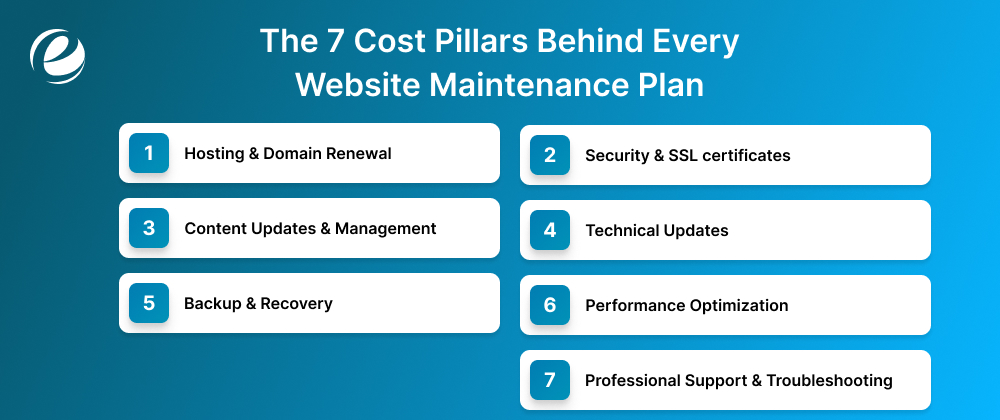
Understanding the website maintenance plans is crucial for businesses that are looking to hire web developers. Below, you will learn seven pillars to make sure that you choose a suitable plan so that your website remains secure and fully functional:
Hosting & Domain Renewal
Hosting is where your website files are stored, and the domain is your website’s name. You need good hosting and an active domain to keep your site online and fast. However, bad hosting or an expired domain can make your site go offline, and with this, you may lose your visitors and hurt your business reputation.
Costs:
- Shared hosting: $5–$30 per month
- VPS hosting: $20–$100 per month
- Dedicated hosting: $100–$500 per month
- Domain renewal: $10–$50 per year
Security & SSL certificates
Security is used to protect your website from hackers and malware. SSL certificates are used to encrypt visitors’ information. If your website is not secure, then there are high chances that it can be hacked, customers can lose trust, and your search engine ranking can drop. SSL shows your site is safe and helps your visitors to feel confident.
Costs:
- SSL certificates: Free (via Let’s Encrypt) to $300 per year for premium certificates
- Security monitoring & malware protection: $50–$300 per year
Content Updates & Management
Content updates mean adding or changing the text, images, videos, blogs, or products on your website. Updated content keeps the visitor interested and makes sure that your website always shows correct information. Old content can confuse the visitor, and then it can reduce sales.
Costs:
- Small updates: $50–$200 per month
- SEO optimization: $300–$1,000 per month
Technical Updates
Technical updates keep your website running smoothly by analyzing all its features to ensure they are functioning properly. However, updates prevent slow performance, broken features, and security risks to improve the user experience on your websites.
Costs:
- CMS & plugin updates: $50–$300 per month
- Custom code maintenance or patching: $100–$500 per month
Backup & Recovery
The backups are copies of your website that can be restored if something goes wrong. Recovery allows you to restore the website after crashes. Although without a backup, you can lose content, products, and customer information.
Costs:
- Automated backup services: $5–$50 per month
- Enterprise backup solutions for large websites: $100–$500 per month
Performance Optimization
Website optimization helps your site load faster, which keeps visitors engaged, reduces bounce rates, and improves search engine rankings. Slow-loading websites often frustrate users, which can lead to lost traffic and potential sales.
Costs:
- Basic optimization tools: $10–$50 per month
- Advanced speed optimization by professionals: $100–$300 per month
Professional Support & Troubleshooting
Seeking professional support provides help with website problems, updates, or emergency fixes. Websites can break or stop working for many reasons. Having support ensures issues are solved quickly, and your website stays live without losing customers or money.
Costs:
- Freelancers: $50–$150 per hour
- Agencies: $200–$2,000 per month for full-service support packages
So, these are the common cost pillars that lead to website maintenance. If you are still on the starting level of making a website, then you must get detailed information on how much it costs to make a website and how you can try it on your own.
Monthly vs Yearly Website Maintenance Cost
When selecting a website plan, it is important to understand the costs involved in both monthly and yearly budgeting. In the following section, we have outlined the estimated website maintenance costs on a monthly and yearly basis, along with their pros and cons.
Website Maintenance Cost Per Month
If you prefer having things flexible and easy to manage, a monthly website maintenance plan is a good option for you. Here, you will make a small payment every month, and in return, your website will be secure, updated, and running smoothly all the time. This is ideal for businesses that want to avoid a high upfront cost and also have the flexibility to make changes as their website evolves.
Costs:
- Personal Websites: $5-$50 per month
- Small Business Sites: $50-$650 per month
- E-commerce Sites: $600-$5,000 per month
Pros:
- If you pay on a monthly basis, you can spread the cost out over time, so you do not need to worry about a large upfront expense.
- With a monthly plan, your website gets regular maintenance, which helps prevent downtime and data losses.
Cons:
- Even though payments are smaller each month, the cumulative cost may be slightly more than paying annually due to the lack of long-term discounts.
- You need to ensure that the monthly payments are processed on time; otherwise, your service could be interrupted.
Website Maintenance Cost Per Year
Having a yearly website cost and maintenance plan is best if you want to make things easier and save money in the long run. You only need to pay for the whole year, and your website will get all the updates, backups, and security. This is best for businesses that want to plan ahead and have the peace of mind knowing that their website is taken care of for the whole year.
Costs:
- Average Small Business Website: $6,700 per year
- Range: $3,600-$12,000 per year, depending on the services included
Pros:
- Many website management services offer discounts for annual payments, which can save you money as compared to paying every month
- Instead of tracking 12 monthly payments you pay once and know your maintenance costs are covered for the year.
Cons:
- A single yearly payment can be a significant expense, which might be difficult for small businesses or new websites to pay.
- Annual plans lock you in, so adjusting your plan for sudden increases or decreases in site traffic or features can be tricky.
Hidden Website Costs Most Businesses Don’t Know About
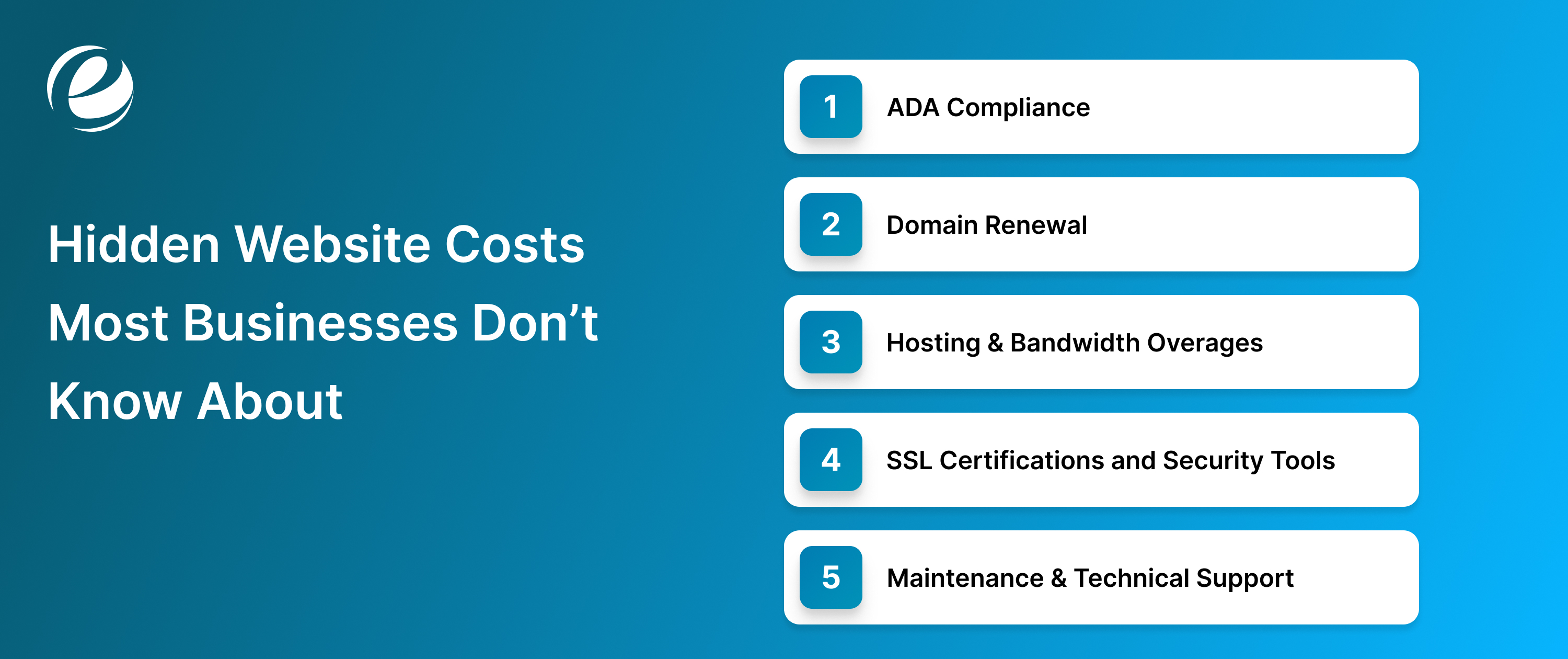
When businesses plan a website budget, they often focus only on the main costs for design, development, and hosting. However, several hidden expenses can appear later and affect the overall website maintenance cost.
ADA Compliance
Your website should be accessible to everyone, including the disabled. This might even require the addition of certain features to your website. It includes the addition of screen reader support, sufficient color contrast, and keyboard navigation support.
Domain Renewal
Your domain must be renewed annually to keep your website active. If you fail to renew it, your website may go offline, and the domain could be purchased by someone else, which can create serious problems for your brand.
Hosting & Bandwidth Overages
If your website uses more storage or bandwidth than your plan allows, then you can get extra charges. This will happen because your site might attract more visitors than expected, so it’s better to keep your files small to avoid extra fees.
SSL Certifications and Security Tools
An SSL certification protects the connection between your website and its visitors. While some hosting providers offer basic SSL for free, advanced security tools like firewalls and malware scanning.
Maintenance & Technical Support
Websites include software updates, fixing bugs, monitoring performance, and backing up data. Without ongoing maintenance, small technical issues can turn into bigger problems that cost more to fix later.
DIY vs Freelancer vs Agency: The Real Cost Comparison
In the below table you will understand the cost comparison between hiring models:-
| Factors | DIY | Freelancer | Agency |
| Definition | You need to do it yourself, using tools or tutorials | A professional who works independently on a specific task or project | A company that has a team of specialists who can provide a full range of services |
| Monthly Costs | $0-$100 | $100-$800 | $800-$5000+ |
| Best For | Startups, small tasks, learning | Medium projects, limited budgets | Growing and large businesses |
| What It Includes | CMS updates, Plugin, Hosting, Backups, Bug Fixes, Content updates | Core updates, Minor bug fixes, Small content changes, Performance check | Proactive monitoring, Security checks, SEO technical fixes, Performance Optimization |
| Pros | Lowest cost, full control, learn new skills | Affordable, flexible, skilled help | Professional team, full service, reliable support |
| Cons | Takes time, limited technical knowledge | Quality may vary; limited availability. | Higher cost, less direct control |
What Are Some Easy Tips to Reduce Your Website Maintenance Costs?
It is not necessary that you need to spend a lot of money on your website’s maintenance every month. Here are some of the ways you can cut down your costs without compromising the functionality and quality of your website:
- Use Free or Cheap Plugins: Choose free or low-cost plugins to add features without increasing your website expenses.
- Select Hosting with Maintenance Included: Always select a hosting plan that includes backups, updates, and security to save extra costs.
- Manage Updates Yourself: Try to handle basic tasks on your own, like updating plugins or editing content, to avoid paying for small changes.
- Outsource Complex tasks: Hire experts only for technical or complicated work to keep maintenance costs lower.
- Plan Updates in Advance: You can also schedule updates ahead of time to avoid the urgent fixes that can cost you more.
Therefore, these are some of the approaches you need to take to keep your costs low and ensure your website’s functionality and quality.
How to Choose the Right Website Maintenance Plan?
Choosing the right website maintenance plan is crucial to keeping your site safe, fast, and up-to-date. Here are some key factors to consider when selecting an average website maintenance cost plan:
- Security & Backups: Make sure that the plan includes regular security checks and automated backups so your data stays safe.
- Frequency of Updates: Choose a plan that handles new content and plugin updates automatically to keep your site functional and free from errors.
- Technical Support: Look for a plan that offers fast, reliable support, ideally 24/7 so issues are fixed quickly without affecting the visitors.
- Compare Plan Features: See each plan carefully because it must include uptime monitoring, content updates, or custom development.
- Research Providers: Look for trustworthy providers with experience in your platform, like WordPress, shopify or Magento, by checking their reviews and portfolios.
Conclusion
The website maintenance cost can vary depending on the size and complexity of the website. Some people prefer monthly plans because they are flexible, while others choose yearly plans to save money in the long run. In this era of tech, you must keep your website properly maintained to stay secure. Overall, hiring a professional web development service will help you to keep your website reliable for your visitors.
FAQs
What is the cost of a basic website that you think you can afford?
A basic website can cost between $5 to $50 each month if you use DIY builders, between $500 to $2,500 if you hire freelancers, or between $2,000 to $5,000 if you hire small agencies.
What is the average cost of website maintenance in 2026?
The average cost of maintaining a website ranges between $50 to $500 each month.
What are the common factors that affect the cost of website maintenance?
The cost of maintaining your website depends on several factors, including the number of pages, required updates, hosting quality, website complexity, the number of plugins, and interactive features.
Do the packages offered for website maintenance include SEO and performance optimization?
Most packages offered for website maintenance include basic SEO optimization, as well as performance optimization, including speed, broken links, etc. However, advanced SEO optimization is usually offered separately.
Is website maintenance necessary for all types of websites?
Yes, website maintenance is necessary for all types of websites, even for the smallest ones, as it ensures that your visitors have the best experience.




 +1 (989) 535-9295
 info@emizentech.com
 emizentech


