
 Add us as a preferred source on Google
 Wellness apps are becoming a daily companion for individuals seeking to improve their health in a consistent manner. The demand for digital wellness solutions is growing as users focus on fitness, better sleep, and balanced lifestyles. As per the Business of Apps, there are now around 313 million health app users globally, with the leading categories being fitness, nutrition, and mental wellness apps.
At the same time, people are not satisfied with the basic tracking features. They want apps that understand their habits and give simple, useful guidance in real time. Whether it is reminding them to drink water, suggesting a short workout, or helping them manage stress, users expect a more personal experience. In this blog, you will learn about the wellness app development in detail, from features to monetization models.
What Is Wellness App Development? and Why is it Booming in 2026
Wellness app development means creating mobile or web apps that help people to stay healthy and feel better both physically and mentally. These apps can focus on areas like fitness, medication, diet, sleep tracking, or mental health support, and more. However, these practices help people gain healthier habits for a better lifestyle
Are you still wondering why these apps are booming in 2026? So, some reasons behind this growth are mentioned below:
- Wearable integration: Devices like smartwatches and fitness trackers help people track their health in real time.
- Remote Lifestyle: Many people work from home, and they look for digital ways to stay healthy because of higher screen time.
- AI Personalization: With the help of AI, wellness apps offer users guidelines on the basis of their habits and goals.
So, building these types of apps is a big chance for businesses to grow in this industry. But you all know that many successful apps already exist, so the growth depends on building something useful, scalable, and focused on users’ needs.
Popular Types of Wellness Apps
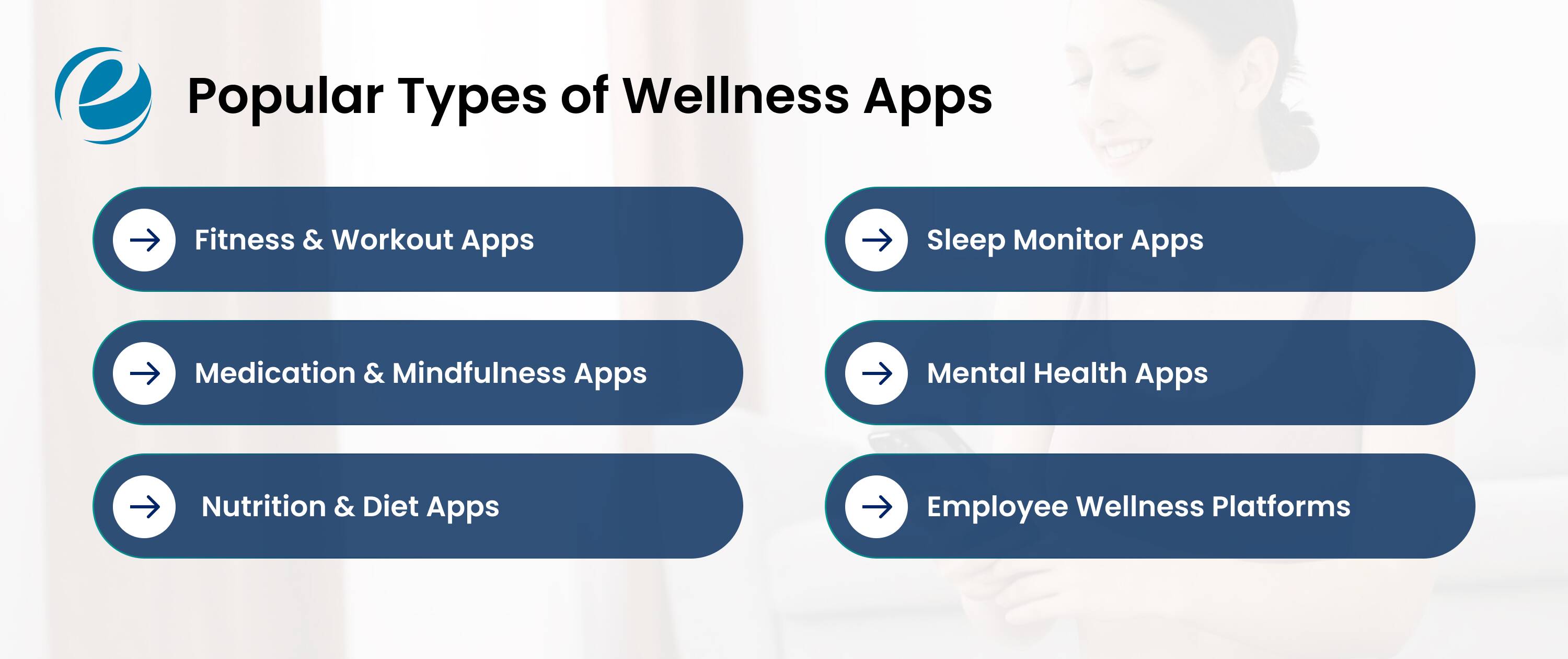
There are many types of wellness apps people need that are built to help them in a specific area. It includes fitness, sleep, diet, and mental health. Below you will learn about those types to get a clear idea of your target audience for your wellness app development:
Fitness & Workout Apps
These apps help users stay active by offering workout plans, exercise videos, and progress tracking. They can also connect to wearables to monitor steps, calories, and heart rate. As a result, fitness app development continues to be a major focus for businesses investing in wellness apps.
Medication & Mindfulness Apps
These apps focus on mental calm and daily care. It reminds users to take medicine, as well as do breathing exercises and use stress relief tools. They help users to build simple habits for better focus.
Nutrition & Diet Apps
The nutrition apps guide users to eat healthy by tracking their calories, nutrients, and meal plans. They include food databases and suggestions to support healthy eating habits for their users.
Sleep Monitor Apps
These apps track the sleep patterns by the duration and quality of rest to provide tips to improve their sleep cycle. It provides some features like smart alarms and calming sounds for better sleep routines.
Mental Health Apps
Mental health apps provide support through mood tracking, therapy chats, and stress management tools. They make it easier for users to manage emotions and improve their overall health.
Employee Wellness Platforms
Mental health apps provide support through mood tracking, therapy chats, and stress management tools. They provide all the information to the employee as well as the company.
So, these different types of wellness apps show the way technology is helping people to take better care of their health in simple ways.
Must-Have Features in Wellness App Development
A wellness app brings useful tools together in one place so users can easily track, improve, and manage their daily habits. The right features make the app more helpful and easier to use. Below, you will learn about some crucial features that you should know before starting the wellness app development process:
User Profiles
This feature allows users to sign up and create their personal space so that they can check their health data on a regular basis. It helps the app to offer a more tailored experience to them
Goal Setting & Tracking
With this feature, users can set simple goals, like daily steps, weight loss, or medication time. However, the app tracks progress and shows the achievement of goals to keep them motivated.
Activity Tracker
It records daily actions such as walking, workouts, calories burned, and water intake. This feature helps users to stay aware of their habits and make better health choices for the users.
Push Notification
The app sends reminders for workouts, meals, sleep, or medication at the right time. These gentle alerts help the users to stay consistent without remembering everything.
Analytics dashboard
It presents health data in easy charts and summaries so the users can quickly understand their progress. It makes things simple to spot their improvement areas.
Content Library
A collection of useful content, such as exercise videos, meal plans, and mindfulness guides. The users can explore and follow the trusted resources without searching anywhere else.
Social Features
With these feature the users can easily connect with friends, join challenges, or share achievements in the app. This creates a sense of community that can boost their motivation.
Advanced Features That Make a Wellness App Stand Out
There are some more advanced features with new technologies that improve the user experience.
- AI Personalization: It gives smart suggestions based on the user behavior to make plans feel more relevant for the users.
- Voice Assistants: This feature allows users to interact with the app using voice commands for quick access.
- AR/VR Experiences: It creates immersive workouts or relaxation sessions that feel more interactive.
- Gamification: This feature adds points, rewards, or challenges to make staying healthy feel fun and motivating.
- Telehealth Integration: It helps connect users with doctors for online consultations directly within the app.
- Wearable Device Sync: Links with smartwatches and bands to automatically track health data without manual input.
All these features help users build healthier routines in a simple way. If you are a startup and planning to invest in wellness mobile app development in your early stage, it is better to begin with MVP development first, so you can focus on the most crucial features to make health tracking simple.
Best Tech Stack for Wellness App Development
You all know that choosing the right technology is a crucial step in building a reliable wellness app. A strong tech stack helps the app run smoothly, stay secure, and handle user data. It also ensures better performance across different devices.
| Layer | Technology |
| Frontend | Flutter, React Native |
| Native iOS Development | Swift |
| Native Android Development | Kotlin |
| Backend Development | Node.js, Django, Laravel |
| Database | PostgreSQL, MongoDB, Firebase |
| Cloud Hosting | AWS, Google Cloud, Microsoft Azure |
| AI Personalization | Python, TensorFlow, PyTorch |
| Wearable Integration | Apple HealthKit, Google Fit API |
| Analytics and Tracking | Google Analytics, Mixpanel |
| Security and Compliance | OAuth 2.0, SSL, HIPAA/GDPR tools |
So, with the right technology, the wellness app development process becomes more stable. If you want expert support, you can also hire mobile app developers so your app can scale more easily as it grows
How to Build a Wellness App: Step-by-Step Development Process
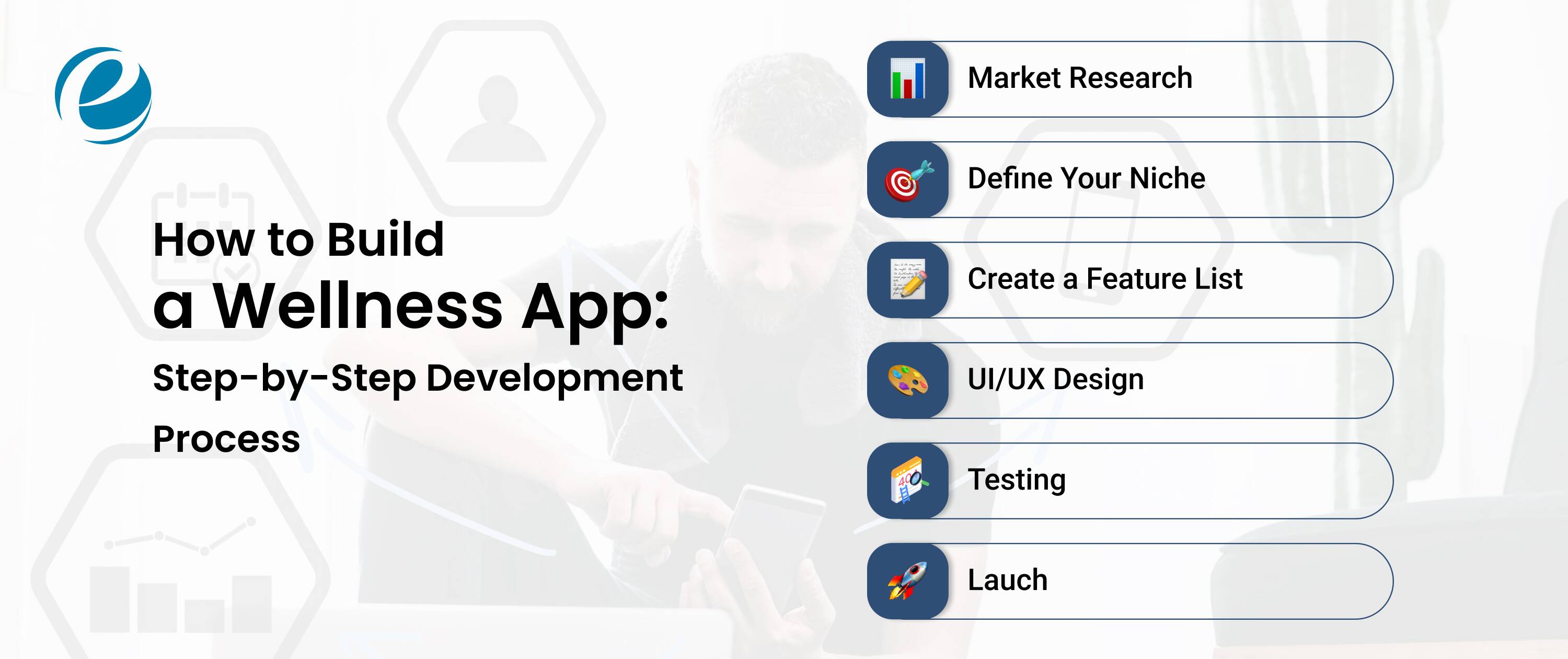
Building a wellness app needs a clear plan, and each stage plays a crucial role in adding value to the app. Below, you will learn a structured process that will help you in wellness app development:
Market Research
Firstly, you have to understand the user needs and the problems they face in their daily health routines. However, you can study existing wellness apps to identify the market gaps. Also, avoid things that already exist and add unique features so that you can stand out.
Define Your Niche
You need to focus on one clear area that can be fitness, mental health, or nutrition. A specific niche helps you to target the right audience and deliver better value to your app. However, clear focus leads to stronger user trust.
Create a Feature List
After finding the niche of your app, list all the features you will need. Start with the basic ones: logins, tracking, and notifications. Do not overcomplicate the first version of your app; for that, separate the basic and advanced features.
UI/UX Design
Always remember, if you are developing a wellness app, to choose simple designs. Focus on clean layouts, easy navigation, and clear buttons so that users do not feel confused. A good design makes the users enjoy using the app and come back regularly.
Testing
After developing the app, you need to test it so that you can easily find bugs, errors, or confusing parts in the app. It will help you to prevent bad user experiences and help the users to build trust in your app.
Launch
Once you are done with testing, launch your app on platforms like the Google Play Store and the App Store. A proper launch includes marketing, app descriptions, and visuals to attract users. First impressions during launch can decide early success.
So, if you follow these steps carefully, it can help you build an app that is simple yet useful for the users. A proper development process also increases the chances of long-term success in the market.
How Do Wellness Apps Make Money?
The wellness app uses different ways to generate income while still providing value to users. These methods help keep the app supporting new updates and features. Below, you will see some common models that are designed to match different users’ needs and app types:
Subscriptions
Users pay per month or year for access to advanced wellness solutions such as workouts, dieting programs, medication programs, etc. This monetization type implies updates for the app and the engagement of users with the new health information.
One-Time Purchases
In this model, users pay a single fee to unlock full app access or advanced wellness features for life. However, this monetization works well in fitness apps that do not need ongoing content.
Freemium
Through this model, the users can easily access all wellness features for free. However, the advanced options like artificial intelligence coaching or health insights become accessible after paying.
Affiliate Marketing
Users get recommendations from the app to purchase certain health products, including fitness equipment, supplements, or even smartwatches. Each purchase made using affiliate links means additional revenue.
In-App Purchases
Users have an option to purchase more wellness content in addition to the basic one. They can add advanced workout programs or even psychological assistance.
So, if you use the right earning method, your app can stay profitable. A balanced approach ensures both business growth and long-term user satisfaction.
How Much Does It Cost to Develop a Wellness App?
The cost of building a wellness app can change based on the type and features. In the table below, you will learn about the general costing of the wellness app development:
| App Type | Estimated Cost | Timeline | Key Features |
| Basic Wellness App | $20,000 – $40,000 | 2–4 months | Simple login, track daily steps, set small goals, get reminders |
| Mid-Range Wellness App | $40,000 – $80,000 | 4–6 months | Connect with smartwatches, unlock extra features, earn rewards, or badges for progress |
| Advanced Wellness App | $80,000 – $150,000+ | 6–12 months | Smart suggestions based on user habits, detailed progress insights. AI suggestion, strong data security |
So, with this, you can easily choose the right level of app depending on your goals and budget. If you start with proper planning, you can create a useful app for your audience.
Why Partner with EmizenTech for Wellness App Development?
Most of the businesses face challenges because the development process gets complex with iterations and wearable support in the apps. On top of that, many apps fail because they do not scale well or struggle to keep users engaged after launch. This is where EmizenTech becomes a strong support system. With years of experience in healthcare software development, we understand the challenges and build future-ready solutions.
Our developers focus on the real features that users rely on every day, like wearables sync, AI-based recommendations, and progress dashboards. The apps are built to handle high concurrency, continuous data syncing, and modular feature expansions. Behind the scenes, everything is built to scale smoothly, so the app keeps working well even when more people start using it.
Conclusion
You all know that wellness apps are becoming an important part of everyday life to keep the body healthy. These apps are helping users to be consistent about their healthier habits. This space offers a strong opportunity for businesses and startups to create meaningful digital tools that truly make a difference. However, success depends on understanding users’ needs before wellness app development. At last, you do not have to focus only on adding advanced technology; focus on helping people feel better and stay consistent with their health goals.
FAQs
Is offline functionality important in wellness apps?
Yes, offline access allows users to track activities or view saved content without internet, which also improves usability. The apps also stay consistently engaged even in low connectivity areas.
What role does user feedback play in app improvement?
User feedback is very crucial because it helps to identify and improve features and understand user needs, which allows the developers to make better updates.
What is the importance of onboarding in wellness apps?
A simple onboarding process helps users to understand features quickly, set goals, and start using the app easily, which improves the first impressions.
What are the risks in wellness app development?
The risks in wellness app development are data breaches, poor user retention, inaccurate tracking, and compliance issues that can affect the credibility.



 +1 (989) 535-9295
 info@emizentech.com
 emizentech


