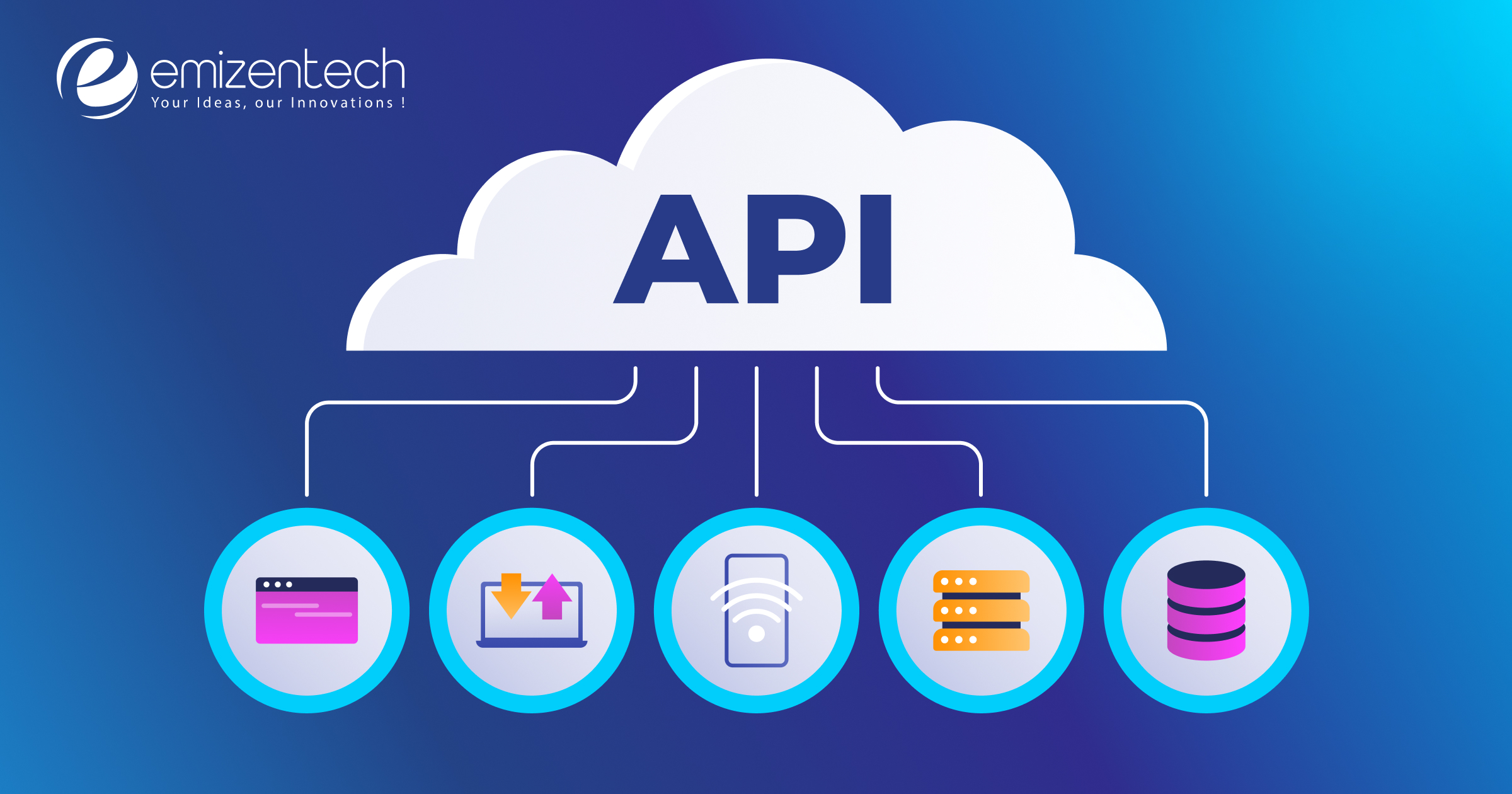
 Add us as a preferred source on Google
 Have you ever considered how your favorite applications can seamlessly communicate with different systems when tracking your orders, online shopping, or checking the weather? REST APIs – the invisible threads that link almost every digital experience today. So what is REST API, and how did it become the normal way for applications to communicate?
In this complete guide, we will talk about everything related to REST APIs, beginning with the rest API definition and the history of its roots, as well as its core principles and how it works. We will also compare SOAP API vs REST API specifications and requirements, with use cases that include the Power BI REST API, important benefits of REST APIs: simplicity, scalability, and performance, and REST API testing practices, best practices for REST API design, and the growing relevance of REST APIs in eCommerce Development, Generative AI Development, Cloud Computing, and Mobile Applications.
At the end of this complete overview, you will learn why REST APIs will be the relevant backbone of modern apps in 2025 and beyond, and how businesses will benefit from expert guidance (consider the API Development Guide) and professional support from Emizentech.
What is REST API?
 A REST API, or Representational State Transfer, is a software architecture type that facilitates seamless communication between applications over the web. To demonstrate what a REST API is with an example: when you check the weather in a mobile app, the mobile app requests data from a server by applying REST principles and then displays the data typically in a JSON format.
The formal rest API definition was first documented in Roy Fielding’s dissertation in 2000, a reference of which is necessary to complete the understanding of how REST API applications serve as a foundational technology for the modern web.
REST is built upon five core principles: the client-server architecture separates responsibilities from the user interface with the back end, statelessness means that each request is processed independently of other requests, cache ability allows a system to reuse cacheable responses in order to enhance performance, layered systems allow increased scalability and performance to handling multiple layers of server interactions, and the uniform interface refers to the rules and conventions by which interactions can occur.
All these principles allow REST API to be designed in a lightweight, scalable, and adaptable manner for many applications, including, but not limited to, Website development services, as well as cloud services.
How Does a REST API Work?
A REST API is designed so that two systems can easily communicate with each other over the web by establishing some simple rules. A REST API is designed using the request and response model. The request and response schema allows applications to exchange data with one another efficiently by establishing endpoints, as well as standard HTTP methods that facilitate and define the interactions.
1. Request and Response Model:
The client (which can be a browser or application) sends a request to the server, and the server returns the requested information, generally in JSON or XML format.
HTTP Methods: In REST APIs, different methods are available based on the action required:
- GET – Gets specific information (for example: weather information),
- POST – Creates new information (for example: a user registering for something),
- PUT – Modifies or updates information (for example: a user’s profile),
- DELETE – Deletes information (for example: a user deletes a comment).
2. Resources:
Data objects are treated as resources that could be users, products, and/or orders and are identified by unique URIs or endpoints.
3. Endpoints and Headers:
Endpoints are used to strictly define the location of your resources, while request headers provide additional information to the request, called metadata, such as authorization or content type.
4. Data Format (JSON/XML)
REST API’s usually use JSON for data to pass in the body of the request, since JSON is a lighter-weight message type, but XML is also an option when compatibility is needed in very specific systems.
SOAP API vs REST API: Which One Should You Use in 2025?
From comparing SOAP API vs REST API within the context of your individual and specific application’s context, while both methods provide a way for two systems to communicate with one another, they differ in relation to flexibility, scalability, and performance, and understanding these differences can aid in determining which method would be best for your specific application.
SOAP API vs REST API
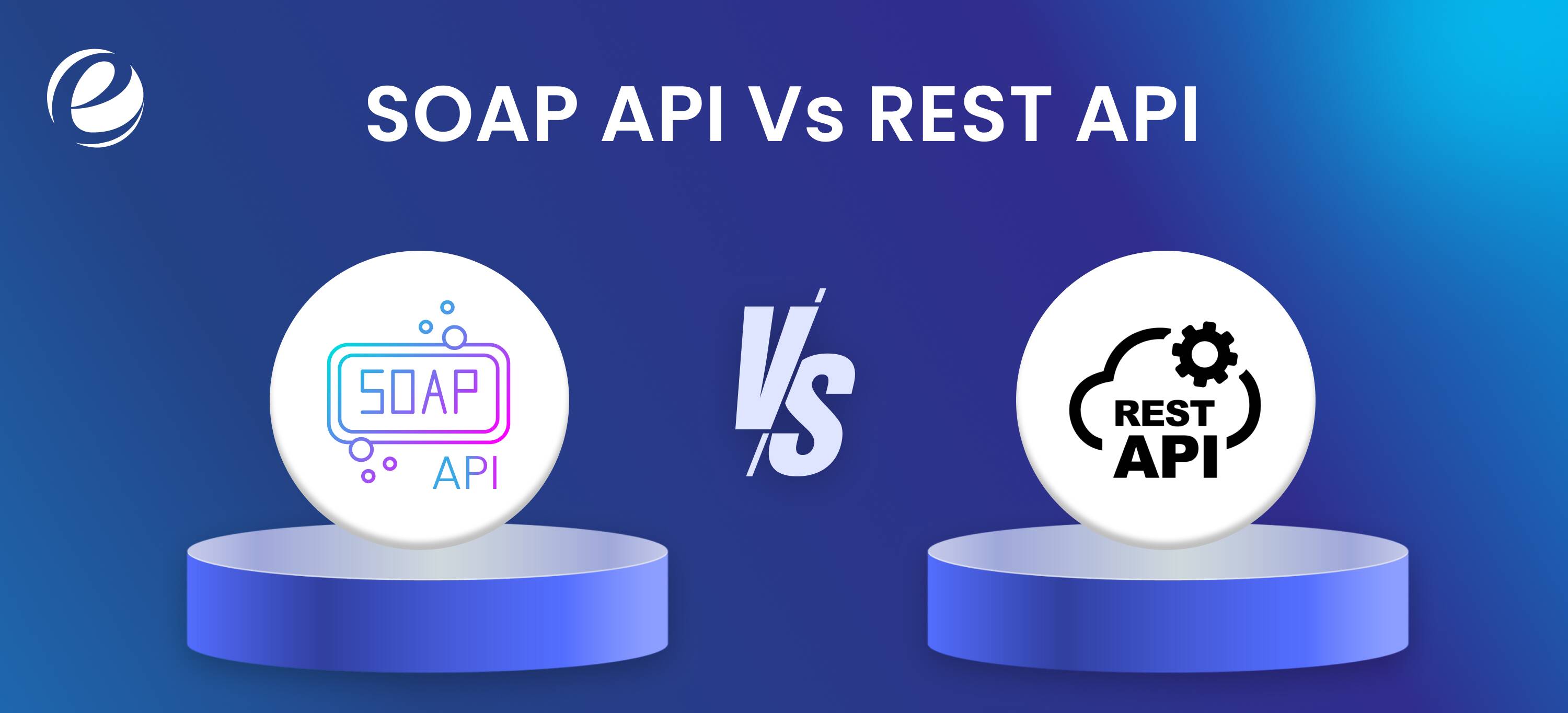
| Feature | SOAP API | REST API |
| Definition | Adheres to a formal specification in XML formats | An architectural style that can utilize the formats of JSON, XML, or HTML |
| Flexibility | Less flexible, rigid standards | Highly flexible with multiple data formats |
| Performance | Slower due to strict messaging rules | Faster with lightweight syntax like JSON |
| Scalability | Limited scalability, heavy processing | Highly scalable for modern web and mobile apps |
| Use Cases | Most appropriate for enterprise apps requiring very strict security measures (e.g., banking and financial systems). | Most appropriate for web, mobile, e-commerce, and cloud integrations. |
SOAP is the approach for when reliability and security are critical. REST, conversely, is more suited toward fast-paced applications like an eCommerce platform or as the API for generative AI development projects.
Top Advantages of Using REST API in Modern Applications
REST APIs are flexible and efficient, making them a desirable option for all developers in the world. They are easy to use and scalable as they can be used by any programming language, providing even more collaboration between languages. REST has great performance and much lower use of bandwidth, and is suited for modern web development and app development in high-bandwidth situations.
- Simplicity –REST is easy to implement because of standard resource endpoints and HTTP methods.
- Scalability – REST can have large systems and perform under high client diversity.
- Language-Independent – REST is not dependent on any programming language, and can be used across programming languages.
- Performance Efficiency – REST’s lightweight and cached design provides a low performance impact along with lower bandwidth consumption.
- Widespread Adoption – REST is used as a web technology, and is used with mobile applications and service technology.
Seamless Integration – REST is the best choice for integrating applications with third-party services, e.g., payment gateways or CRM’s, or tools which may be authored by an AI App Development Company.
REST API Use Cases in the Real World
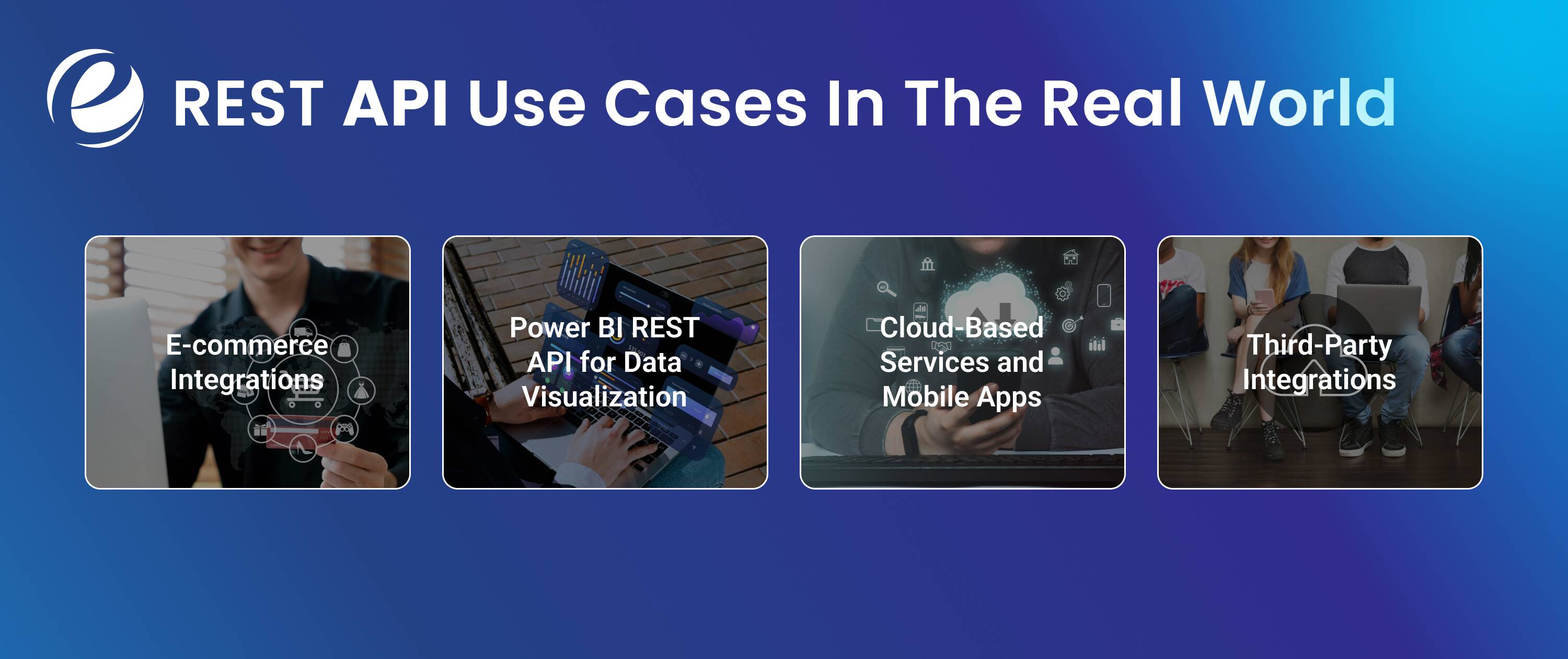
There are countless examples in modern-day digital experiences relying on REST APIs, starting with e-commerce sales and ending with data visualizations. The overall importance of REST APIs is also seen in enabling innovation and third-party integrations with e-commerce development, cloud services, and business intelligence apps.
1. E-commerce Integrations
At a high level, e-commerce is a convenient shopping experience that can be realized in the digital online space. REST APIs mediate the e-commerce experience with shopping cart systems, healthy payment gateways, and inventory systems to provide a better experience for customers in the e-commerce channel.
2. Power BI REST API for Data Visualization
Companies utilize the Power BI REST API to retrieve datasets, apply refreshing, embed reports/dashboards, and visualize their data in order to make data-driven decisions in real-time.
3. Cloud-Based Services and Mobile Apps
REST APIs help any client solicit and send data to a server and help to keep data transactions instantaneous. Common use cases of REST APIs include AAA(Authentication, Authorization, and Accounting), allowing for messaging services, having data in a different context, and having an on-demand delivery experience for customers.
4. Third-Party Integrations
REST APIs enable tools, including Google Maps, to find customers, process payments securely, and customer relationship management solutions, which add value with improved user experience and operational efficiencies for businesses.
Automating REST API Testing for Faster Development
Test APIs to ensure that your REST API is secure, stable, and performs as intended, and under different environments. Automated testing enables companies to validate API functionality on a large scale, create operational efficiencies, and drive down risk for web, mobile, and cloud applications.
1. Importance of Testing REST APIs
Test to verify response accuracy, performance, security, and error messages. Because API connects important systems, each system needs robust validation to ensure the expected behavior of integrations and user experience.
2. REST Assured API Testing
REST Assured API testing is one of the most used frameworks for Java Testing RESTful services. It provides developers with the ability to validate response status, HTTP response code, and payloads to manage quality and compliance.
3. Popular Tools for REST API Testing
- Postman – The most commonly used manual API testing interface with a simple and user-friendly layout.
- Swagger – Swagger is used for documentation about APIs and has a testing capability.
- JMeter – JMeter is a testing framework specifically designed for performance and load testing an API against heavy traffic.
REST API Design Essentials Every Developer Should Know
To create a REST API, it is important to prioritize designing for scalability, usability, and security as three main areas to acknowledge. Design your APIs with known best practices such as versioning, error handling of responses, authentication, and documentation in mind to build APIs that are clear to use and consistent across applications.
1. Versioning Your REST API
Versioning will help the developer maintain backward compatibility with existing integrations as the APIs are updated. By using a version identifier – for example, v1/v2 – developers can upgrade additional features to the API and make the best use of the latest technology to continually enhance the user experience.
2. Proper Error Handling
Error messages should be clear, consistent, and easy to debug and interpret. If you employ a standard for your error responses, for example, the HTTP status codes for (404, 500). Clients can successfully identify issues and respond accordingly.
3. Secure Authentication (OAuth 2.0, JWT)
It is important to secure sensitive user data in transit and at rest. REST APIs implement a method for secure authentication, often using OAuth 2.0 or an encrypted JavaScript Object Notation (JWT) approach to securely authenticate while maintaining the flexibility of the process across platforms.
4. Documentation and Developer Experience
Documentation for your API is a must when adopting the application. Documentation will improve the developer experience. If you utilize an API exploration tool like Swagger or Postman, developers will have an easier time querying the REST API, which will reduce the time to integrate the API, improve usability, and provide a better overall developer experience.
Future of REST API in 2025 and Beyond
Although GraphQL and gRPC are rising in popularity, the REST API continues to be the standard for digital communications, and its adaptability will allow for updates across cloud, AI, and IoT ecosystems that govern modern business.
1. Role in IoT, Cloud Computing, and AI-Powered Apps
When it comes to IoT devices, cloud platforms, and solutions offered through an AI App Development Company, typically, a REST API is used to exchange information in real time. From your smart home device or smart chatbot, REST APIs power system integrations across the AI and Cloud ecosystems and will not be going away any time soon.
2. REST API Relevance in the Era of GraphQL and gRPC
GraphQL is flexible, gRPC is fast, and while other APIs may be unpredictable, the REST API is the most used standard because of its minimal structure and flexibility with respect to compatibility, and it has a large community of developers. Not that the REST API is outdated and has gone by the wayside because there are modern APIs, but they work together.
3. Predictions for REST API Evolution
Moving forward, REST APIs will evolve to improve security, improve performance through thin protocols, and increase advanced integration in Generative AI Development. REST APIs will continue to be a part of eCommerce development and cloud-native applications, and expand into the hybrid architecture over the next few years.
Final Words
A REST API is a set of guidelines that allow software applications to communicate with each other in a secure, scalable, and efficient manner- which is the single most important requirement of our digital world. REST APIs are the backbone of any web, mobile, or cloud-based application. REST APIs power everything from e-commerce applications to enterprise-level artificial intelligence integrations.
If you plan to create new and innovative solutions or are working on improving your business processes, consider exploring Emizentech’s expertise in API development, their e-commerce experience, or any other experience with integrations that will give you future-ready digital experiences for your enterprise.
FAQs:
What is REST API in simple words?
A REST API is a way for applications to talk to each other across the Internet, where there is a simple and small base of rules and standard methods to exchange data - normally in JSON format - that uses standard methods like GET or POST to exchange the data.
Is REST API better than SOAP?
Yes, for almost all modern use cases. REST is faster, easier, and will scale more easily, while SOAP is heavier and is used intentionally for secure connections and enterprise-level financial applications.
What are the most common REST API methods?
The four principal methods are: 1. GET – Get data 2. POST – Create new data 3. PUT – Update existing data 4. DELETE – Delete data
Is REST API still relevant in 2025?
Of course. Although GraphQL and gRPC are growing in popularity, REST is still one of the most commonly used APIs in web, mobile, cloud, and IoT due to simplicity and widespread adoption.
Where is REST API used the most?
REST API is used a lot in eCommerce development, mobile apps, social media development, cloud applications, and integrations such as Power BI REST API or third-party integrations like Google Maps and Stripe.



 +1 (989) 535-9295
 info@emizentech.com
 emizentech


