
 Add us as a preferred source on Google
What if your app idea fails because of mobile app design problems instead of technical issues? According to Fortune Business Insights, the global mobile app market will reach approximately $330.02 billion by 2026, because of increasing smartphone use, AI-based solutions, and users accessing multiple platforms through web and mobile.
In this blog, A Comprehensive Guide to Mobile App Design, we cover essential UX design fundamentals, key design tools, and practical methods for choosing the right mobile app design company to help you build a differentiated product in a highly competitive market.
Highlights
- The success of a product depends on mobile app design, which combines UX and UI elements to achieve user adoption, user retention and user conversion.
- A well-designed app creates an experience that enables users to navigate the application with ease while maintaining quick response times, displaying a unified brand identity and providing access to all users and using direct micro-interaction elements to communicate information.
- Design teams implement Figma Sketch and Adobe XD as their primary design tools while using prototyping and collaboration platforms to create efficient workflow processes.
- The complete design workflow includes all design stages starting with discovery and progress through wireframing UI design prototyping testing to final developer handoff.
- The query “what should I consider when hiring a mobile app design firm?”, you should first assess their relevant experience and their ability to establish a UX-driven design process and their ability to provide open pricing information and maintain effective communication throughout different regions and business models.
What Is Mobile App Design and Why Does It Matter for App Success?
Mobile app design refers to the process of creating the visual layout, interaction flow, and overall user experience of a mobile application. It combines user experience (UX) design, which focuses on usability and navigation, and user interface (UI) design, which includes visual elements such as buttons, icons, colors, typography, and animations.
The success of a mobile application design project leads to improved business outcomes through multiple metrics, including faster onboarding processes, better task completion rates, decreased uninstallation rates, and increased conversion rates. Users who find an application difficult to use because of its disorganized interface and unclear navigation paths will stop using your application.
Essential Features of a Well‑Designed Mobile App
A well-designed mobile application delivers a seamless user experience by combining usability, performance, and consistency. These core features should be prioritized from the start to avoid costly redesigns and ensure long-term product success.
Intuitive navigation
Navigation should be simple, logical, and easy to learn. Menus, tabs, and gestures must allow users to move through the app without confusion or extra effort. Poor navigation leads to higher drop-off rates.
Fast performance
App performance is critical for user retention. The system needs to be designed so its components load quickly, respond instantly to user actions, and deliver smooth screen transitions without lag, crashes, or delays.
Consistent branding
The app should reflect a strong brand identity across all visual elements, including color schemes, typography, and iconography, to ensure a cohesive and recognizable user experience.
Accessibility
An accessible app supports all users, including those with disabilities. It should include readable text sizes, strong color contrast, screen reader compatibility, and easy-to-use interactive elements.
Feedback and micro‑interactions
The system provides visual indicators showing users when they can interact with the system, when an error occurs, and when the system progresses toward completion.
The establishment of these features at the beginning of a project will save your company money because it prevents expensive redesign work and establishes the initial path toward developing an excellent user experience.
Tools and Technologies Used in Mobile App Design
Modern mobile app design integrates UX design principles with platform-specific capabilities and advanced development tools such as Figma, SwiftUI for iOS, and Jetpack Compose for Android. Beyond visual design, an app’s real effectiveness depends on its backend architecture, API integrations, and real-time data handling, which collectively determine its performance, scalability, and overall user experience.
Figma
The software serves as a common tool for creating wireframes, high-fidelity user interface mockups, and interactive prototype designs, with strong real-time collaboration for distributed teams.
Sketch and Adobe XD
The software remains popular for creating user interface displays and basic prototype designs, which MacOS-based teams use to perform their work.
Prototyping tools
Tools like InVision and ProtoPie enable designers to build interactive prototypes that simulate real user interactions. These help teams validate user flows and gather feedback before development begins.
Collaboration platforms
Remote mobile app design teams use tools like Slack, Jira, Trello, and Loom to improve communication, manage workflows, and streamline feedback collection. These platforms help maintain alignment across designers, developers, and stakeholders throughout the app design process.
Step-by-Step Process of Mobile App Design

The mobile app design process follows a structured approach that combines user research, information architecture, and visual design to deliver seamless, user-focused digital experiences.
Discovery & Research
The process begins by defining project goals, understanding target users, and identifying key tasks the app must support. Teams typically run workshops, interviews, and discussions to align stakeholders and build a clear, shared product vision.
Information Architecture & Wireframing
The team defines clear user journeys by mapping screens, structuring navigation, and creating wireframes that outline how users move through the app from onboarding to completing key tasks.
UI Design & Branding
Designers transform wireframes into high-fidelity interfaces by applying brand elements such as color palettes, typography and web design principles to ensure a consistent and visually cohesive user experience.
Prototyping & Testing
Interactive prototypes are built to simulate real app functionality and evaluate user experience before development. Usability testing is conducted to gather feedback, which is then used to refine and improve the design for better performance and usability.
Design Handoff
Final design files are shared with developers, including Figma or Sketch assets, design systems, and detailed specifications needed for implementation. A structured handoff process helps ensure accurate development and reduces issues during launch.
How Much Does Mobile App Design Cost?
Mobile app design costs vary based on factors such as team location, project complexity, hiring model and specific project requirements. The Following tables below provides a simple cost breakdown to help guide your budgeting plan.
Estimated design cost by region (per project)
| Region | Basic app | Mid‑range | Complex / SaaS |
| South Asia | $3K–$7K | $7K–$15K | $15K–$25K+ |
| Eastern Europe | $7K–$12K | $12K–$25K | $25K–$45K+ |
| North America | $15K–$25K | $25K–$45K | $45K–$75K+ |
| Western Europe | $12K–$20K | $20K–$35K | $35K–$60K+ |
Cost by complexity (approx.)
| Complexity | Features / Scope | Typical cost range |
| Simple (MVP) | 3–5 core screens, basic UI | $3K–$12K |
| Mid‑tier | 10–20 screens, flows, UI kit | $12K–$25K |
| Complex (SaaS‑like) | Multiple modules, dashboards | $25K–$50K+ |
Cost by hiring model
| Model | Description | Usual range |
| Fixed‑price | One‑time project, defined scope | $3K–$50K+ |
| Hourly | Pay per hour (freelancer or agency) | $25–$150/h |
| Subscription | Monthly design retainer | $1K–$5K+/mo |
These figures provide a cost range for planning the budget required to design a mobile application and help set initial cost expectations.
What Should I Consider When Hiring a Mobile App Design Firm?
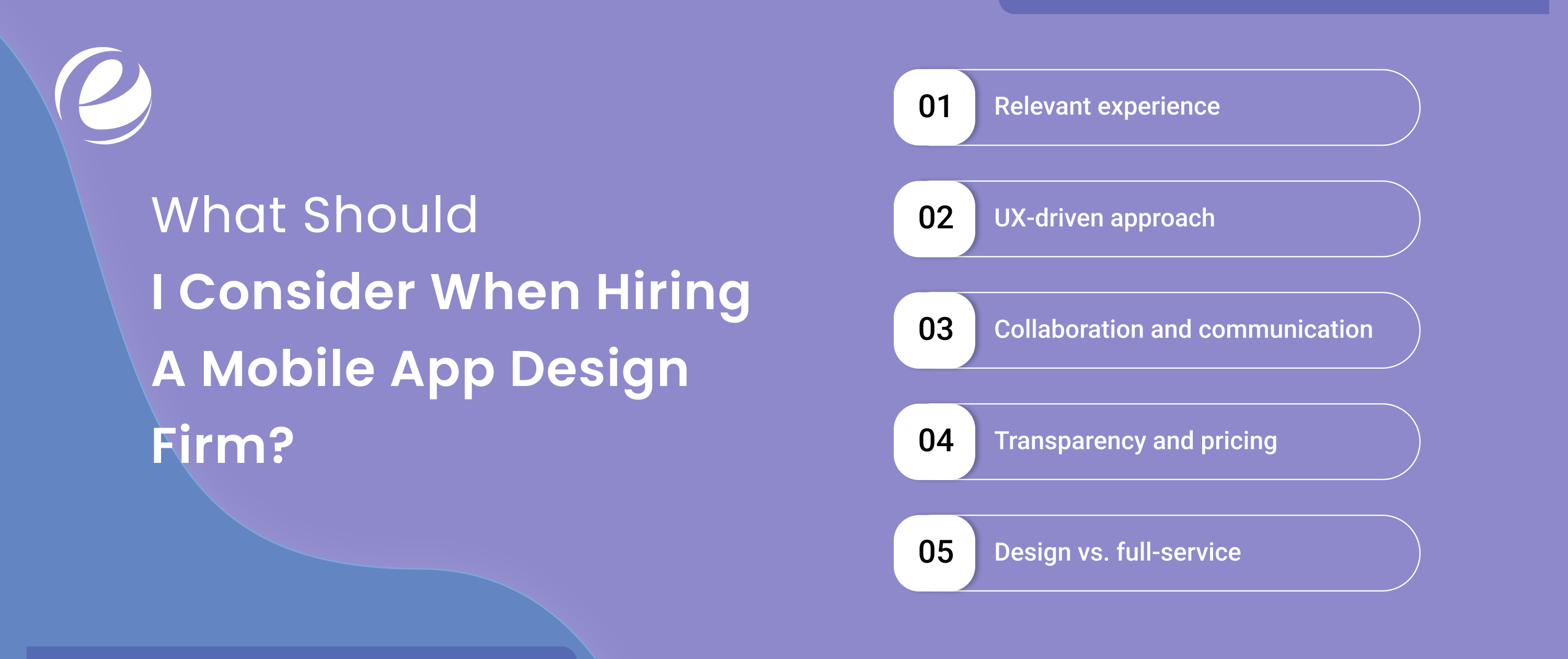
When you consider hiring a mobile app design firm for your product, you should evaluate the company’s experience, process, their communication skills and their ability to achieve your objectives within your financial plan. Also here is the checklist which helps you while considering a perfect mobile app designing company.
Relevant experience
Look for proven expertise in your industry, whether fintech, SaaS, healthcare and experience handling similar application requirements. Evaluate their portfolios, case studies, and third-party reviews on platforms like Clutch to assess credibility and quality of work.
UX‑driven approach
The best companies conduct user research while they collect data and proceed with their testing process to achieve better outcomes than only measuring visual accuracy. The customer should inquire about their process for managing user acquisition, user retention and their method of determining essential product functions.
Collaboration and communication
You need to evaluate their ability to respond to inquiries and their process for using different tools which include Figma, Slack, Loom and their method of managing user feedback. The development team will work better with agencies, maintain constant communication through scheduled meetings and show their development progress through organized transitions.
Transparency and pricing
The ideal companies need to present their service offerings, which include research, wireframes, prototypes and design systems with no extra hidden charges.
Design vs. full‑service
You must choose between two options including working with a design agency that provides only design services and engaging with a full-service agency that offers combined design and development solutions.
Before signing, ask about ownership of deliverables, timelines, and how they handle mid‑project changes or feedback.
Common Mobile App Design Mistakes to Avoid
Common mobile app design mistakes can negatively affect user engagement and conversion rates. Avoiding these issues early in the planning and wireframing process helps prevent design flaws and improves overall app performance.
Overloading the UI
The interface becomes overloaded when it has excessive features and buttons, resulting in users experiencing difficulty because of the visual clutter. Designers must create screens to allow users to achieve their main objective through a dedicated focus on one particular task.
Ignoring platform conventions
Users experience confusion when developers transfer iOS interaction patterns to Android without making necessary platform-specific adjustments.
Skipping research
Skipping user research, analytics review, and usability testing results in assumption-driven design decisions that do not align with real user needs, often leading to poor usability, reduced engagement, and weaker product performance after launch.
Prioritizing aesthetics over usability
Putting aesthetics ahead of usability backfires because a visually stunning but confusing app frustrates users more than a simple, functional design that actually helps them complete their tasks quickly and easily.
Poor mobile–web alignment
Mobile design should stay consistent with the web application in terms of branding, layout patterns, and interaction behavior. Treating them as disconnected products creates an inconsistent user experience and weakens overall product identity.
To avoid these common mistakes, following established mobile app design best practices can help ensure better usability, a smoother user experience, and improved app performance.
Final Words
A comprehensive guide to mobile app design demonstrates that projects achieve success when their UI-UX design and strategic plans work together from their initial stages. Every aspect of product development, including user journey design, visual language creation, tools, and team selection, will contribute to a product that users will find valuable and they will use to complete their tasks.
Founders and product managers who ask themselves what they need to think about when they hire mobile app design companies should make experience, process, communication and transparency their main focus. A strong agency partners with you to create business solutions that go beyond just delivering Figma files.
FAQs
How long does it take to design a mobile app?
The design process for a typical MVP-grade app takes between 4-12 weeks because research depth, design complexity and feedback cycles determine the time required. The design process for larger enterprise applications needs several months to complete.
How much does hiring a mobile app design company cost?
Design-only partners charge monthly fees starting at $5-$10K while full-service agencies present design and development services through end-to-end solutions that cost between $25K-$100K+. The final cost of a project depends on its size, chosen platform and selected engagement method.
Can I hire a firm to redesign an existing app?
Yes. Multiple agencies provide UX audit services that enable organizations to redesign their systems by improving navigation, system performance and creating mobile interfaces that match their existing web design and brand identity.
What makes a mobile app design agency the best?
Top agencies bring together relevant domain knowledge with user-oriented design methods, open price structures and effective communication practices. They provide data-driven recommendations to enhance product usability while maintaining your product vision.





 +1 (989) 535-9295
 info@emizentech.com
 emizentech


