 Add us as a preferred source on Google
 The market for on-demand delivery has seen significant growth due to the increasing demand from consumers for fast and reliable solutions. As a result, on demand delivery apps are gaining more attention, and their demand has surged. It is now essential for businesses to grow sales using an app like this. Thanks to these apps, various day-to-day tasks have become easier and safer.
The rise in demand has positioned mobile applications as essential tools for companies aiming to meet this growing need. Among the major players in the market, Mrsool stands out as an extremely successful on demand delivery app, with high ratings from its users, making it the leader of its kind in the kingdom.
Its distinctive approach to delivering all kinds of food items and grocery products, even the forgotten ones, has been a hit with customers. This makes it an attractive idea for business owners looking to enter the lucrative business. If you are interested in creating an app like Mrsool, understanding the Mrsool application development costs is crucial for planning and investment.
Creating a user-friendly, high-quality, feature-rich, and on demand delivery app will require a well-thought-out financial plan, taking into account various factors. Based on these variables, the estimated cost to develop an app for on-demand delivery similar to Mrsool can range from $30,000 to $300,000 or more.
In this blog, we’ll examine the key elements that impact the overall cost of an on demand delivery app, along with the development process and revenue models.
What is Mrsool?
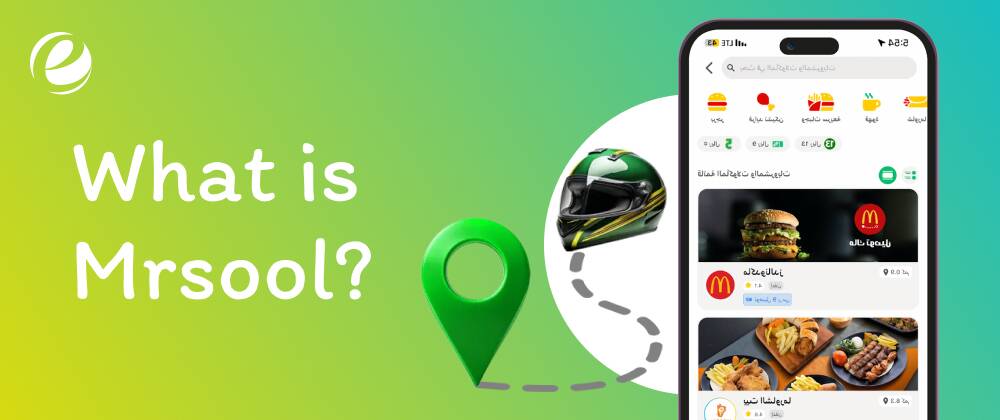
Mrsool became the top on demand delivery app
Through the app, customers can place orders, browse a variety of products from various retailers, track their deliveries in real time, and pay for their purchases. With just a few mobile clicks, users can have items delivered directly to their doorsteps. If they prefer fast and safe delivery, the app has become their preferred choice.
How Does The Mrsool App Work?
The online business model is an updated variant of the traditional method, utilizing a unique approach that integrates a variety of components. An app similar to Mrsool includes a buyer’s app, a delivery panel, websites, and apps for ordering food and meals from a variety of providers.
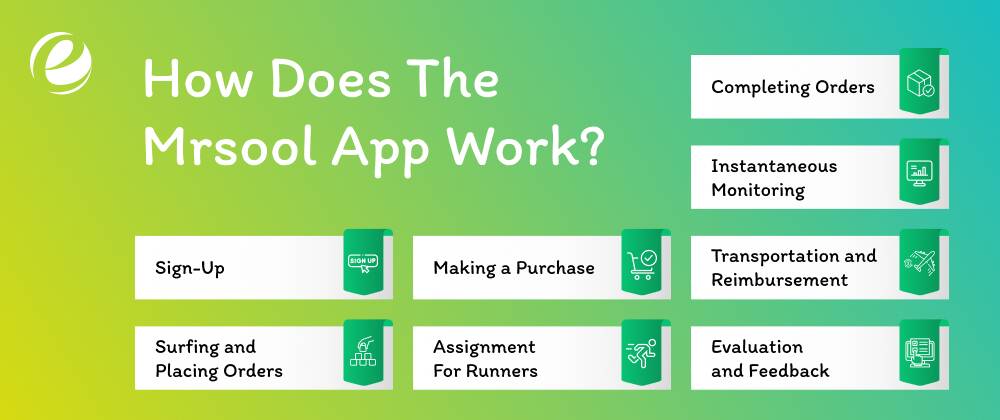
The following is an overview of how Mrsool app functions:
1. Sign-Up
Users can install the Mrsool app from their respective app stores and create an account. Contact details, along with delivery addresses and payment information, are submitted via email.
2. Surfing and Placing Orders
After creating a profile, users can browse a range of products through the app, such as electronics, food items, groceries, and more. They can search for preferred items or explore various categories of stores. To make better decisions, shoppers can compare prices, features, and reviews from sellers.
3. Making a Purchase
Once users have selected an item, they add it to their shopping cart and after that proceed to the payment page. Here, they can modify their order, add comments or preferences, and select a delivery time.
4. Assignment For Runners
After the order is confirmed and verified, the app assigns a “runner” to complete the delivery. The email sent to the runner contains all the necessary information, including the contents of the package, the pick-up location, and the delivery address.
5. Completing Orders
The runner then heads to the designated store or restaurant to collect the goods. They ensure the correct products are picked up and confirm the order details. If an item is out of stock, the runner may collaborate with the user to find alternative options.
6. Instantaneous Monitoring
Customers can very easily track the status of their orders in real-time via the Mrsool app. They receive notifications about the delivery’s progress, the precise location, and the expected delivery time.
7. Transportation and Reimbursement
The runner delivers the items to the chosen address. Upon arrival, customers can check the order’s quality and accuracy. If everything is correct, they complete the payment using the payment method which is linked to their account. Mrsool accepts various payment options, including credit/debit cards, mobile wallets, and cash on delivery.
8. Evaluation and Feedback
After the service is completed, users can rate their experience and provide feedback on the runner and the app. Mrsool uses this feedback to improve its services and maintain high standards.
Cost Of Developing An On-Demand Delivery App Like Mrsool
The on demand app development cost
Several factors influence the cost of developing an on demand delivery app like Mrsool, including the number of features, customization requirements, and the need for the latest technologies. A detail analysis of these factors is crucial for providing an accurate cost estimate and planning the project.
The level of complexity and the number of features integrated into an app are the primary factors that impact the development cost. Most apps can be categorized into three levels: simple, medium, and advanced, based on their functionality.
Basic apps offering simple functions like user login and profile management may be priced between $30,000 to $150,000. Apps with moderate complexity, which include features like real-time chat or API integrations, may cost between $150,000 to $300,000.
Factors Affecting The Development Cost Of On Demand Delivery Apps Like Mrsool
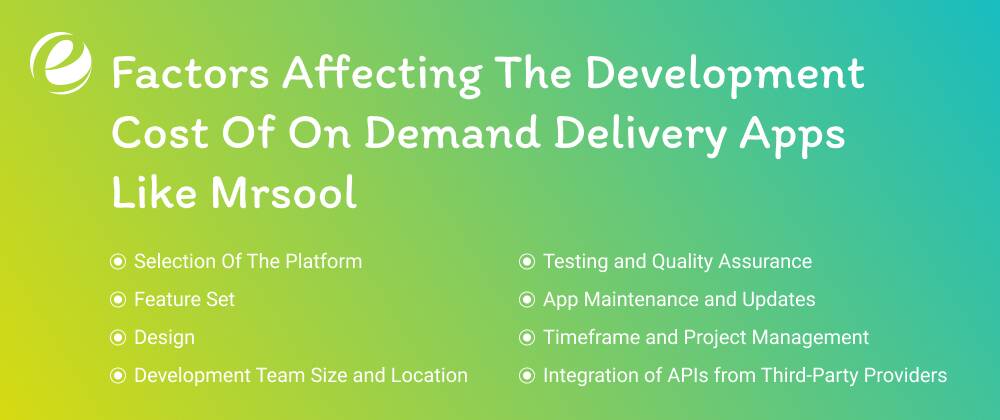
Many factors influence the development cost of on demand delivery apps similar to Mrsool. Let’s take a look at these factors:
1. Selection Of The Platform
Whether you choose iOS, Android, or both will impact the development budget. Developing an app for one platform may be less costly than creating native apps for both iOS and Android independently.
Native development offers the highest performance and a user experience tailored to each platform, but it is more labor-intensive and costly when it comes to multi-platform deployment. Developing cross-platform applications using frameworks like React Native or Flutter provides a cost-effective solution by allowing the same codebase to be used across both platforms.
2. Feature Set
The app’s complexity and the features it includes, such as secure payment gateways, live tracking, user reviews, promotions, and chat functions, all contribute to the overall feature set. Additionally, a simple, user-friendly interface is designed to integrate these features seamlessly, ensuring easy navigation and improving overall accessibility.
Implementing personal recommendation algorithms can add another layer of sophistication, enhancing user satisfaction and engagement. These advanced features and functions increase the total development costs, reflecting the effort needed to provide users with a unique and intuitive online delivery service.
3. Design
A well-designed user interface is crucial for satisfaction and engagement in a mobile app. A positive user experience largely depends on the responsiveness, intuitiveness, and appeal of the interface. The complexity of the user interface design is a major factor in the cost of developing an on demand delivery app.
Creating complex designs, including intricate images, animations, and various transitions, requires more time and effort. Similarly, the level of customization such as custom-designed themes, personalized user experiences, and unique interactive features, can influence the overall cost of developing the on demand delivery app.
4. Development Team Size and Location
The size of the development team and their location can influence how much you invest in creating your application. A larger team may require a higher budget to cover their costs. Additionally, developers working in locations with higher hourly rates can make the project more expensive.
Developers in areas with higher living costs typically charge more. If you’re looking to reduce costs, you can consider smaller teams or hiring professionals from regions where the costs are lower. Balancing the team size and geographic location can help reduce expenses.
5. Testing and Quality Assurance
Testing your app is crucial to ensure it functions properly. Before launching, the app must be thoroughly tested to identify any issues or bugs. The more thorough the testing process, the better the app will run. However, extensive testing can be costly because it requires time and effort.
It’s essential to ensure the app provides a smooth and secure experience for users. Without proper testing, you risk launching a faulty app that could harm your brand’s image and user experience. Therefore, investing in quality assurance is well worth the extra cost.
6. App Maintenance and Updates
Once your app is launched, the work is not over. The app must be maintained and updated to fix bugs, enhance features, and ensure it runs efficiently. This ongoing task requires time, effort, and money.
App maintenance may involve fixing bugs, adding new features, or ensuring the app remains compatible with the latest hardware and software versions. You should plan for these expenses even after the app is launched to keep it up-to-date and reliable over time. Neglecting maintenance can lead to unsatisfied customers and poor app performance.
7. Timeframe and Project Management
The time it takes to develop the on demand delivery app will affect the price. If you need the app completed quickly, the cost may increase due to the extra work required to meet deadlines. Certain development methods, such as Agile, may speed up the process but could require additional resources, raising the cost.
On the other hand, if you have a flexible timeline, the development team can work at a slower pace, potentially reducing costs. The speed at which you’d like your app to be completed will impact the overall budget, so be sure to plan the timeline in advance.
8. Integration of APIs from Third-Party Providers
Connecting your app to other third-party applications, such as social media, maps, or payment platforms, can add to the development costs. These services, known as APIs, provide useful capabilities to your app, but they can be difficult to integrate. Each integration is time-consuming and requires careful attention to ensure it functions properly and efficiently.
Sometimes, third-party services upgrade their software, which may require additional effort to make sure everything continues to run smoothly. While these integrations can increase the efficiency of your app, they also incur additional costs and work to ensure everything functions flawlessly and remains up-to-date.
Additional Factors Affecting Mrsool Like App Development Cost
Below are some additional hidden factors that may influence the development cost of a Mrsool like app offering a multitude of services:
1. Legal and Compliance Costs
To operate legally, your business must comply with various regulations. These regulations will generally differ depending on your location and the areas you intend to serve. They may include privacy laws (such as GDPR), business licenses, and payment security standards (like PCI compliance).
Hiring legal professionals to ensure your app meets all legal requirements can result in additional costs. Violating legal regulations can lead to penalties and other legal issues, so it is important to budget for these costs in advance.
2. App Security
Security is a critical component of any app, especially for on-demand delivery apps that handle sensitive information, such as personal data and payment details. Strong encryption, secure payment gateways, and regular security audits can increase costs.
However, investing in top-tier security protects both your customers and your business from attacks and data breaches that can be costly in terms of money and reputation.
3. Customer Support System
Customer support is essential for every business, particularly in the service industry. A reliable system to address customer inquiries, concerns, complaints, and other issues during service delivery is vital.
Whether it’s chatbots, email support, or phone support, setting up and managing a customer support solution will add to your app’s development and operational costs. The more sophisticated the customer support, the higher the cost of development and management.
4. Scalability and Performance Optimization
As your on demand delivery app grows, you may need to scale it to handle an increase in users and traffic. This requires investments in scalable cloud infrastructure, load balancing, and performance optimization.
Ensuring that your on demand delivery app
5. Analytics and Reporting Tools
To analyze your app’s performance, user behavior, and trends, you’ll need to integrate analytics and reporting tools. These tools allow you to track metrics like order volume, customer satisfaction, and revenue. Setting up these tools takes time and incurs costs. If you opt for advanced analytics or custom reports, this will further increase the development costs. However, investing in these tools is crucial for making data-driven decisions for your business.
6. Integrating Advanced Technologies
If you plan to use advanced technologies such as Artificial Intelligence (AI), Machine Learning (ML), or Augmented Reality (AR) to enhance your app’s capabilities, it can raise the price. AI can improve delivery routes and product recommendations, while AR can enhance the user interface. These technologies require specialized knowledge and can increase both the development time and the cost of the app.
7. App Store and Licensing Fees
Once your app is complete, it’s time to launch it on app stores like Google Play or the Apple App Store. Both platforms charge fees to host apps. Google charges a one-time fee, while Apple requires an annual fee to maintain an app on the store.
Additionally, you should be aware of the costs related to app store optimization (ASO) to help your app get noticed by users and increase downloads. These fees are ongoing and can impact your app’s overall budget.

Steps To Create An App Like Mrsool
The Mrsool like application development process involves crucial steps, starting with thorough market research to understand user needs. Let’s have a look at the key steps to follow to develop on demand delivery app
1. Conceptualization and Planning
During the initial planning phase, the development team determines the app’s objectives, intended audience, and key features. The development team also conducts market research to understand the competition and user requirements. They meticulously plan the structure and functions of the app, taking into account resources, obstacles, and strategic objectives for the development process.
2. UI/UX Design
In this phase, the team creates the user interface and user experience (UI/UX) for the app. Wireframes are developed to evaluate how the app functions and how on demand delivery app users will interact with it. The design focuses on creating a user-friendly, attractive interface that aligns with the brand’s image and mission, ensuring it is easy to use.
3. Development
During the development phase, the team selects the appropriate technologies to build the app’s frontend and backend. Key features such as order processing, real-time tracking, and payment system integration are included. Throughout development, the app is continuously tested to identify problems and ensure it is secure, reliable, and functions according to specifications.
4. Testing
Testing covers the app’s functionality, accessibility, performance, and security. Usability testing ensures a seamless user experience, while functional tests confirm that all features are working correctly. The on demand delivery app is tested on various platforms and devices. Any security concerns are addressed, and quality control procedures are used to ensure the app is stable.
5. Deployment
The deployment process involves setting up the server and databases, followed by releasing the app on platforms like Google Play or the App Store. Once launched, the app’s performance is carefully monitored to quickly identify and fix any bugs, ensuring a smooth user experience from the start.
6. Post-Launch Maintenance and Support
Once the on demand delivery app is live, ongoing maintenance is essential to fix bugs and improve efficiency. Regular updates are made to add new features and address any issues raised by users. Analytics are tracked to gather data on user behavior, which helps improve the app based on user feedback.
Revenue Model Of On Demand Delivery App Like Mrsool
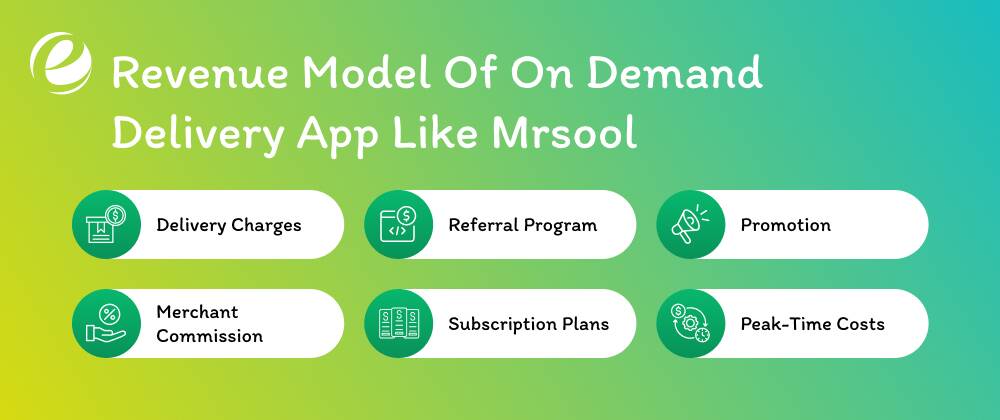
Deciding on the revenue model for an on demand delivery app like Mrsool requires careful consideration of various monetization methods that meet user value and profitability. It’s crucial to align these revenue streams with the overall user experience, as well as the costs associated with building an on-demand delivery app similar to Mrsool.
This approach will ensure the sustainability of the business model, benefiting both users and the long-term viability of the platform.
1. Delivery Charges
You can charge customers a delivery fee for each purchase. This fee could be fixed or based on factors such as speed, distance, and order size. This approach helps generate income while maintaining customer satisfaction, as seen with Mrsool’s popularity. A clear and fair delivery fee system also increases customer loyalty by providing transparency in costs.
2. Merchant Commission
Partnering with local businesses and earning a percentage of every order placed through the app is an effective revenue model. This approach is widely used by Mrsool and other apps, where businesses pay a portion of their service fee. Both parties benefit: businesses gain more customers, and you earn a profit from each transaction. This model helps your app grow and flourish.
3. Referral Program
Referral programs encourage merchants and users to bring in new customers by offering them discounts or other rewards. For example, when someone refers a friend who joins and places an order, both parties can receive a discount. This helps expand your customer base, rewards loyal users, and attracts more business to your platform.
4. Subscription Plans
The company can offer subscription packages for customers who want additional benefits, such as priority service, free or discounted deliveries, or exclusive offers. Customers who pay a consistent fee can enjoy these benefits. This model fosters customer loyalty and provides a stable source of income, ensuring users continue to engage with the app for long-term benefits.
5. Promotion
Earn money by showing ads of local companies or sponsors on your application. Businesses pay for the privilege of promoting their offerings or services to the app owners. It is a win-win for both parties: the businesses gain more visibility, and app owners get revenue through these ads without inconveniencing your app users.
6. Peak-Time Costs
Delivery fees can be increased in peak periods, such as holiday hours and rush hour, where demand is at its highest. The customers expect higher prices in these times of high demand products. The peak-time pricing system ensures sufficient drivers for delivery are on hand, to maximize your app’s revenues during peak times while balancing demand and supply effectively.
How Can EmizenTech Help You Develop On Demand Delivery App Like Mrsool?
EmizenTech is a reputable app development company that specialized in developing high-quality, on-demand applications such as Mrsool. As well-known name in the app development industry and with our team of experienced professionals, we possess a deep and expert understanding of every stage of the development process. From concept and design, through development, testing and finally, deployment, we lead the way in creating apps.
Our highly skilled designers, developers and project managers work together to convert your ideas into an app that is fully functional. After years in the industry we have collaborated with the top clients in the world as well as assisted entrepreneurs and businesses of all sizes expand their business with custom applications.
Conclusion
The idea of creating an app similar to Mrsool in 2025 represents a huge opportunity for expanding delivery services market. Mrsool is successful because it is packed with amazing features and a user-friendly interface and a solid security. However, to build an app that is as good as Mrsool requires careful planning and knowledge of aspects like the design, features, as well as maintenance expenses.
Being aware of the development process as well as the cost of development can help businesses and developers to make better choices and prevent costly expenses. If they select the right choices and stay up to date with the latest technology, they can create a great application that delivers a fantastic user experience just like Mrsool.
FAQs
How much time does it take to build an on-demand delivery app like Mrsool?
The development of an app like Mrsool generally takes 8 to 12 months, which generally depends on the features and complexity. The time needed can vary based on your specific requirements.
What are the challenges of creating an app like Mrsool?
Challenges like managing deliveries at various dates and times, as well as weather, traffic and delivery times. All of these factors can make it challenging to plan routes that are optimal for drivers.
Can I integrate third-party applications into my Mrsool-like app?
You can also add extra features to your app by connecting it to other services. These could be things like social media, payment systems, or tracking locations. This makes your app work better and helps customers have a better experience.
What can I do to ensure the security of user information on my app?
To ensure the security of user data, ensure that you use protection measures, such as data encryption, access control, and authentication. Check your application regularly for security holes, and ensure you are following the laws regarding data protection.


 +1 (989) 535-9295
 info@emizentech.com
 emizentech


