
 Add us as a preferred source on Google
 If you are on the hunt for the best apps for stress relief in 2026 or are inspired to build one, you’re exactly where you need to be.
Stress has become an unavoidable aspect of modern life. Be it work deadlines, financial concerns, or relationship challenges, the pressure accumulates in your mind and body. It often leaves you exhausted and depleted. The World Health Organization estimates that over 332 million people globally have depression, with stress being a significant contributing factor. This situation is particularly urgent because the stress left unmanaged compounds into serious mental health conditions, physical ailments, and eventually, a poor quality of life. Thankfully, several fantastic stress relief apps help millions of people overcome mental health challenges.
These digital solutions offer immediate, accessible, and often personalized approaches to managing stress at your fingertips. Curious to find out the top ones? Continue reading this comprehensive guide that walks you through fifteen of the most effective stress relief apps available today.
What Is a Stress Relief App and How Does It Work?
A stress relief app is a digital solution designed to help people manage, reduce, and cope with stress through various therapeutic techniques and evidence-based methodologies. Think of them as a portable mental wellness companion that you can access whenever you need support, regardless of location or time of day.
Most stress relief apps incorporate guided sessions that teach evidence-based stress management techniques. These sessions typically cover mindfulness meditation, progressive muscle relaxation, breathing exercises, or cognitive behavioral interventions. For example, apps like Calm and Headspace do not give you generic advice. Instead, they help you tune into professionally recorded audio guidance that walks you through specific mental and physical practices.
That’s not all; such apps track your
- Engagement patterns
- Sleep quality
- Heart rate variability
- Subjective stress ratings
Using this data, the app personalizes recommendations based on what actually works for you. So, if you consistently benefit from sleep meditations, the app sets this preference and prioritizes similar content in your feed. And that’s what makes it worthwhile, in addition to some features that you will find in all the best stress management apps.
Key Features to Look for in the Stress Relief Apps
Not every stress relief app you download delivers the same value. The key is to figure out what genuinely contributes to your stress reduction journey and make an informed decision. Here are the top stress relief app features to look for in 2026:
Content Variety
Your stress relief needs will vary depending on your circumstances and the time of day. A comprehensive app usually has:
- Guided meditations of varying lengths, from five-minute quick resets to forty-five-minute deep dives
- Breathing exercise libraries, sleep stories, or meditations specifically for nighttime use
- Body scan exercises
- Potentially yoga or movement sessions
This variety saves you from repetition fatigue and ensures you always have an appropriate tool available.
Personalization Capabilities
These features tell exceptional apps from mediocre ones. When finding the best apps for stress relief, you should ask yourself the following questions:
- Does the app ask about your primary stress sources, preferred meditation style, and goals during onboarding?
- Does it adjust recommendations based on your usage patterns and stated preferences?
- Does it allow you to track specific metrics like mood, sleep quality, or anxiety levels over time?
The option to track and visualize your own progress is psychologically powerful and helps sustain motivation.
Accessibility Features
The top stress management apps in 2026 are serving users with different needs and preferences. This includes options for sessions with or without background music, dark mode settings to reduce eye strain, adjustable narration speeds, and closed captions for deaf and hard-of-hearing users. Moreover, the best apps feature content in multiple languages and provide options for users with attention difficulties who might struggle with lengthy sessions.
Community and Social Features
These can be total game-changers! Some users find ease in knowing what others are practicing alongside them. Features like community challenges, discussion forums, or the ability to practice with friends create community and shared experience that enhances the stress relief process.
In addition to the above, transparency about effectiveness and data privacy is also key to building trust. The reputable apps clearly state what research supports their content, share their data security practices, and allow you to understand what information they collect and how it is used.
15 Best Apps for Stress Relief in 2026
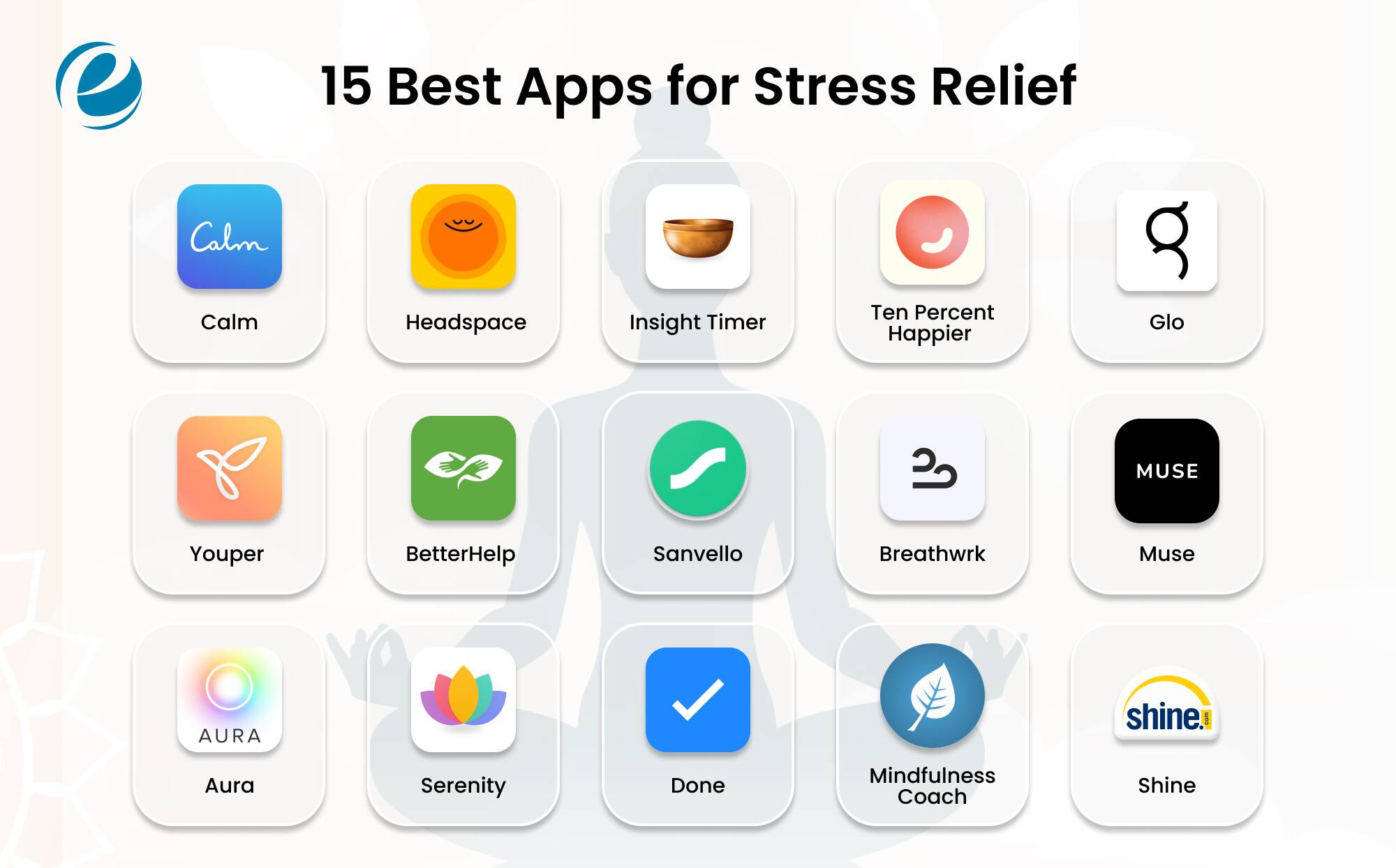
Here’s a list of the best apps for stress relief that are helping millions of people tackle mental health challenges through proven techniques.
Calm
One of the most popular apps for stress relief, Calm offers thousands of guided sessions from 2 to 30 minutes with a standout sleep story library. It gives you daily meditations, targeted anxiety and focus programs, and stress-reduction music. The app is perfect for both beginners and experienced practitioners.
Highlights: Sleep stories, Extensive library, Beginner-friendly
Headspace
Headspace is a big name in the lot. The app offers meditation through structured courses rather than random sessions. Its best features include exercise videos, sleep meditations, and SOS sessions for acute stress. If you prefer educational frameworks, this one’s for you.
Highlights: Structured curriculum, Progressive learning, Educational approach
Insight Timer
Insight Timer hosts 100,000+ free meditations from hundreds of teachers representing diverse traditions. You can explore Buddhist meditation, secular mindfulness, and culturally specific approaches. If you don’t like the guided instruction, you can use the app’s independent timer.
Highlights: Free content, Diverse teachers, Massive library
Ten Percent Happier
This one is a solid combination of guided meditations and educational content explaining the science behind each technique. With each meditation, you get background information about effectiveness and expectations. The app appeals to analytical minds who trust practices when understanding the underlying mechanisms.
Highlights: Science-backed, Educational, Analytical approach
Glo
This app is all about yoga, Pilates, and movement-based stress relief. It combines physical exercise with mindfulness principles, offering thousands of classes ranging from 5-minute stretches to 90-minute full practices led by experienced yoga instructors. Beyond movement, Glo offers meditation and breathing sessions, creating a comprehensive wellness platform that addresses stress through physical and mental integration.
Highlights: Movement-focused, Offline access, Yoga emphasis
Youper
Youper is your AI-powered emotional wellness companion that uses cognitive behavioral therapy principles. It processes stress through conversational interaction rather than traditional meditation. The best features include mood tracking and journaling, with an AI companion available during acute stress episodes.
Highlights: AI companion, CBT-based, Conversational
BetterHelp
On BetterHelp, you can connect with licensed therapists through messaging, video calls, and phone sessions. The app lets you message your therapist anytime for professional stress guidance. It also removes scheduling barriers and location challenges, preventing many from seeking help.
Highlights: Licensed therapists, Anytime access, Professional support
Sanvello
Sanvello mixes meditation, mood tracking, and cognitive behavioral therapy. The app helps identify stress triggers, understand emotional patterns, and develop coping strategies. You receive personalized recommendations based on mood data and tracked symptoms.
Highlights: CBT focus, Mood tracking, Pattern-based
Breathwrk
Find meditation difficult? Try Breathwrk. It offers breathing exercises like box breathing, 4-7-8 breathing, and holotropic breathwork. In this app, you get educational content that explains how breathing patterns affect your nervous system.
Highlights: Breathing-focused, Multiple techniques, Nervous system
Muse
Muse has an EEG headband integration that provides real-time brainwave feedback during meditation. In this app, you learn how to notice mind wandering and guide attention back. Users appreciate the app’s meditation quality.
Highlights: Biofeedback hardware, Data-driven, Interactive meditation
Aura
Aura is one of the best stress management apps, where you get personalized three-minute meditations based on your current mood and stress level. You answer brief questions, and the AI creates a meditation tailored to your situation. This hyper-personalization addresses specific circumstances rather than offering generic content.
Highlights: AI-personalized, Three-minute sessions, Situational approach
Serenity
Another name among the top stress relief apps, Serenity specializes in narrative sleep stories rather than traditional meditation instruction. The stories on the app use pacing and tone designed to slow breathing and lower heart rate. Many users find stories more effective than music or meditation.
Highlights: Sleep stories, Narrative-focused, Adult content
Done
Done allows you to process completed tasks and transition mentally between activities. The app’s brief guided sessions help acknowledge completed work and shift mental states. This particularly helps people with high-stress work environments.
Highlights: Task completion, Mental transitions, Work stress
Mindfulness Coach
Mindfulness Coach is an evidence-based program developed by the Department of Veterans Affairs. Though designed for veterans, the principles apply universally to civilian stress management. Complete free access makes it exceptionally accessible.
Highlights: VA-backed, Evidence-based, Completely free
Shine
Shine pairs AI meditation with daily messages from real humans, creating a hybrid connection. The app offers mood tracking, personalized recommendations, and crisis support. Shine specifically serves marginalized communities with culturally responsive content.
Highlights: Human connection, Culturally responsive, AI-human hybrid
Best Apps for Stress Relief in 2026: Quick Comparison
| App | Primary Focus | Free or Paid | Best For | Special Features |
| Calm | Meditation + Sleep | Free/Premium | Beginners | Sleep stories library |
| Headspace | Meditation curriculum | Free/Premium | Structured learning | Courses and progression |
| Insight Timer | Diverse traditions | Free/Premium | Variety seekers | 100k+ meditations |
| Ten Percent Happier | Science-based meditation | Free/Premium | Analytical users | Educational content |
| Glo | Yoga + Movement, with mindfulness practices | Free/Premium | Physical exercise | Offline downloads available |
| Youper | AI emotional wellness | Free/Premium | Conversation learners | CBT-based AI companion |
| BetterHelp | Professional therapy | Subscription | Clinical support | Licensed therapist access |
| Sanvello | CBT + mood tracking | Free/Premium | Thought pattern work | Behavioral therapy focus |
| Breathwrk | Breathing techniques | Free/Premium | Breathing focus | Multiple breathing styles |
| Muse | Hardware + feedback | Premium + hardware | Data-driven users | EEG brainwave feedback |
| Aura | AI personalization | Free/Premium | Quick sessions | Three-minute personalized meditations |
| Serenity | Sleep stories | Free/Premium | Sleep focus | Narrative-based sleep |
| Done | Task completion | Free/Premium | Work stress | Activity transitions |
| Mindfulness Coach | VA-based program | Free | Military/PTSD | Evidence-based free option |
| Shine | Human + AI | Free/Premium | Marginalized communities | Culturally responsive content |
How to Choose the Right Stress Relief App for Your Needs?
Can’t figure out how to pick the right stress relief app? These tips will help you make the right choice:
Identify Your Primary Stress Source
Does this stress stem from work pressure, sleep problems, anxiety, relationships, or general overwhelm? Apps like Sanvello target thought patterns driving stress, while Calm excels at sleep disruption. Choose accordingly.
Define Your Engagement Preference
Some people find structured, educational approaches like Headspace’s progressive curriculum helpful, while others prefer flexibility and exploration like Insight Timer’s vast library. Which one are you? Take trial runs to find out.
Assess Time Availability Realistically
Apps offering two-minute to thirty-minute sessions accommodate busy schedules better than those requiring commitment to longer practices. If you have fifteen minutes daily, prioritize apps offering quality, shorter sessions.
Assess Cost and Trial Options
Most quality apps offer free trials, typically one to two weeks. Use this period actively, testing premium features and honestly evaluating whether the app reduces your stress meaningfully. Balance quality features against your budget.
Say Yes to Testing Before Switching
Try apps consistently for at least two weeks before you decide that they are ineffective. Meditation and stress relief practices require consistency to produce measurable results. Jumping between apps weekly prevents building the sustained practice necessary for real change.
Thinking of Building the Next Best Stress Relief App? Consider These Factors
To build a custom stress relief app, you must address specialized market gaps with significant investment and expertise.
Here are the factors to consider before investing in stress relief app development:
- Mental Health Expertise: For app content, you need licensed therapist or meditation teacher validation.
- Data Security: Top-notch encryption and privacy protection are non-negotiable for the app, from day one.
- User Experience Design: The platform must feel calming for users to effortlessly navigate.
- Content Strategy: Fresh content for meditations and regular updates requires ongoing investment beyond initial development.
- Market Research: You must also define specific underserved communities or professions your app uniquely addresses.
How to Develop a Stress Relief App: Steps and Cost?
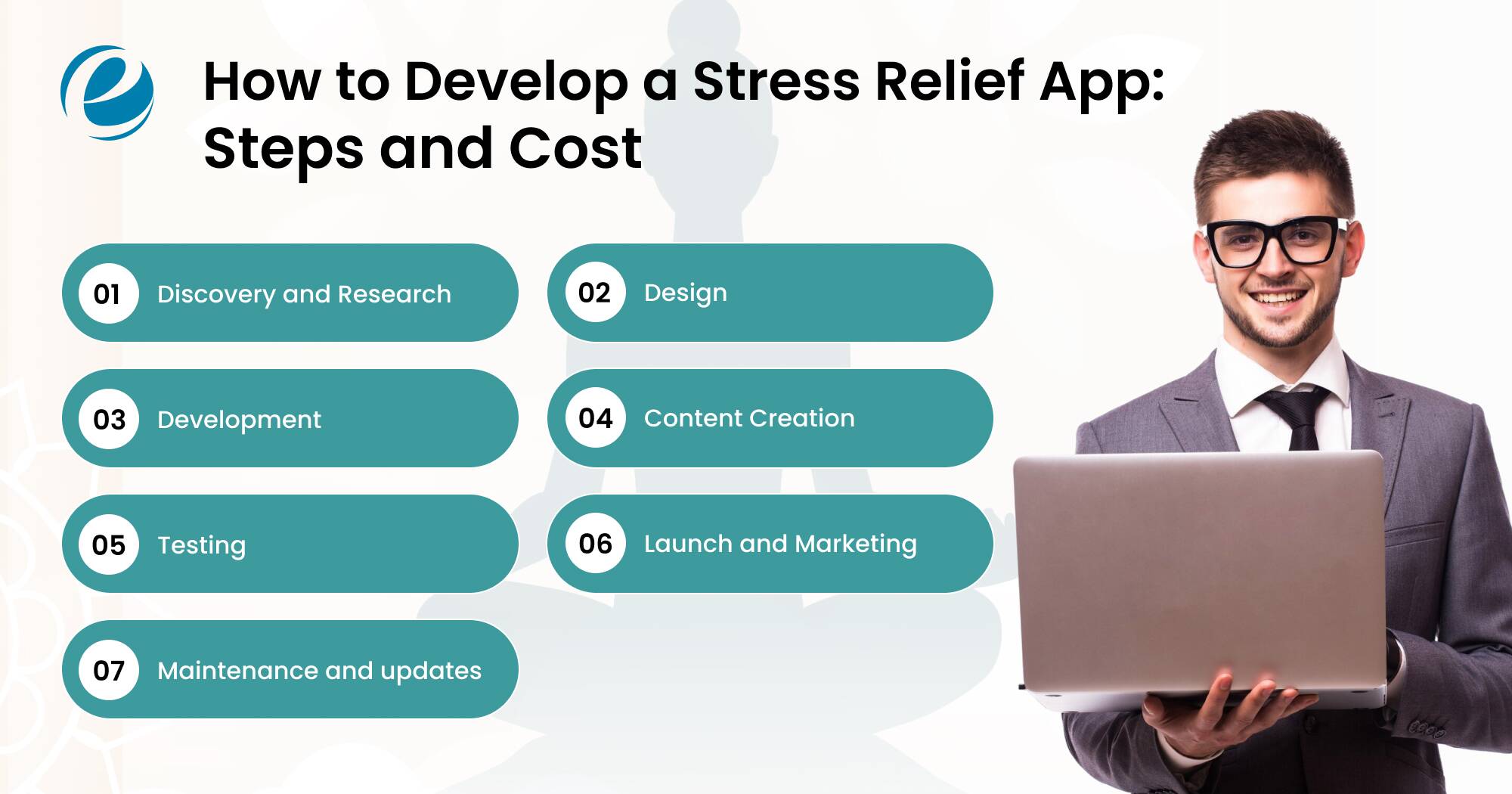
To build a stress relief app from scratch, you will need a full-fledged plan including clearly defined phases, each with specific deliverables and costs.
Below is a brief on how the process looks:
Discovery and Research
Find your target audience, research their specific stress sources and app usage patterns, understand competitor applications, and define your app’s unique value proposition. At this stage, you should also conduct research through interviews and surveys with potential users. This page can span 4 to 6 weeks, with costs swinging between US $5,000 and $15,000.
Design
The design phase turns your research work into visual and interactive specifications. It involves creating wireframes showing the app’s structure; designing the visual interface, including colors, typography, and visual hierarchy; and designing user flows that guide users through key features and interactions. The costs range from US $8,000 to $20,000 and can take 4-6 weeks.
Development
This phase drives the major chunk of cost and time investment. Both iOS and Android app development for stress relief platforms requires developing separate codebases or using cross-platform frameworks. A comprehensive stress relief app with original content and personalization features typically costs between US $30,0000 and $100,000 for the initial version, depending on complexity and whether you build in-house or hire mobile app developers.
Content Creation
Content creation represents an ongoing investment distinct from development. Recording high-quality meditations requires hiring meditation teachers or voice talent, renting recording studios, and paying for professional audio editing. Creating original sleep stories requires hiring writers and voice talent. Premium meditation apps often invest fifty thousand to five hundred thousand dollars annually in new content development to keep the app fresh and engaging.
Testing
This stage is necessary for ensuring that your app operates just the way you expect. It includes functional testing, security testing, performance testing, and user testing to identify any issues before launch. Testing typically costs US $5,000 – $15,000.
Launch and Marketing
You need both strategy and investment for this. With App Store Optimization, your app ranks well in search results within the app stores. On the other side, marketing typically includes paid advertising, partnerships with wellness organizations or healthcare providers, public relations outreach, and influencer partnerships. Expect the costs to range from US $10,000 to $50,000, with ongoing marketing spend for user acquisition.
Maintenance and updates
This stage is constant. You need to fix bugs, update the app for new device and operating system releases, add new content regularly, and respond to user feedback. Annual maintenance typically costs between US$15,000 and US$50,000. fifteen thousand and fifty thousand dollars.
Note: The total overall cost of building and launching a stress relief app typically ranges from US $70,000 to $300,000 seventy-five thousand to three hundred thousand dollars for the first year, including development, content, testing, and launch marketing.
The specific cost depends on whether you are building a simple meditation app or a comprehensive platform with personalization, community features, and professional therapy integrations.
Connect with our team to get the exact quote that matches your roadmap and budget.
Why Choose EmizenTech for Stress Relief App Development?
If you decide to build a stress relief app in 2026, partnering with an experienced app development company is non-negotiable. At EmizenTech, a trusted healthcare and wellness app development company, you get the expertise that it takes to plan, develop, and launch an app.
Having delivered over XXX+ apps worldwide in the industry, we understand the unique requirements and complexities of mental health applications, including the security requirements, regulatory compliance, and user experience principles that make stress relief apps truly effective.
Here’s a glimpse of our services:
- Full-stack iOS and Android development services creating stress relief apps
- Specialized knowledge building HIPAA-compliant applications that safeguard sensitive user data and ensure strict privacy standards
- Professional UX design ensuring stress-relief apps feel calming to navigate with intuitive interfaces
- Capability to combine stress relief features with fitness tracking, sleep monitoring, and AI capabilities
- Access to experienced developers who understand mental health space requirements
Inspired to build your own stress relief app? Get free consultation with our expert mobile app development team.
Summing Up!
Stress relief apps are emerging as sophisticated, evidence-based mental wellness tools that meaningfully help you reduce stress, improve sleep, and take your overall well-being a notch up. The 15 best apps for stress relief reviewed in this guide represent different approaches, styles, and specializations, offering options for virtually any stress relief need and preference. What you choose among these depends largely on your specific stress sources, learning styles, budget, and time constraints. If you want structural meditation learning, choose Headspace. If maximum variety is what you are expecting, go for Insight Timer.
And if you are planning to build a stress relief app to address unmet market needs, understand that making it successful will require more than great technology. You need mental health expertise, excellent user experience design, strong user privacy protections, and sustained investment in content and marketing. Ready to take the first step? Connect with us for a free consultation.
FAQs
Are stress relief apps backed by scientific evidence?
Yes, the most effective stress relief apps are designed using scientifically validated techniques. However, effectiveness varies based on individual response and consistent practice.
Can stress relief apps replace therapy?
Stress relief apps are powerful tools for self-directed stress management and anxiety reduction. However, they cannot fully replace professional therapy for clinical mental health conditions.
How long does it take to see benefits from stress relief apps?
Many users notice improved sleep quality within days of starting sleep-focused meditations. However, the full benefits of meditation and mindfulness practices typically emerge over weeks and months of consistent practice.
Which is better, expensive apps or free apps?
Both excellent and mediocre apps exist in the free and paid categories. Some free apps offer comprehensive content and excellent features. The paid premium features in many apps are valuable but not essential.



 +1 (989) 535-9295
 info@emizentech.com
 emizentech


