
 Add us as a preferred source on Google
 Getting started with investing can feel overwhelming for most people: there are too many options, too much jargon, and a very real fear of making a mistake with your own money. The good news is that it doesn’t have to be that complicated. A decent app removes most of the friction.
Today’s platforms are genuinely built with beginners in mind: simple layouts, low minimum deposits, and tools that help you understand what you’re actually doing rather than just clicking buttons blindly. Whether you’re setting aside $20 a month or ready to put in more, there’s something that fits. This guide covers the best beginner investing apps 2026, what they offer, who they work for, and how to pick one that suits you.
What Makes the Best Investment App for Beginners?
Not every investing app is built the same way, and what works for an experienced trader is often the worst possible starting point for someone just beginning to invest. A good investment app for beginners should get out of your way and let you focus on actually learning what you’re doing.
A few things genuinely matter here:
- Simple, clean interface: if you need a tutorial just to place your first trade, that’s already a problem.
- Low or no minimum deposit: barriers to entry should be small, not $500, before you’ve even started.
- Educational resources: charts and numbers mean nothing without context; good apps explain the why behind what you’re looking at.
- Transparent fees: hidden charges have a nasty habit of quietly eating into small portfolios over time.
- Regulated and trustworthy: always check the app is authorised by the FCA (UK) or your local financial regulator before putting any money in.
According to the WEF report, 45% of Generation Z and millennials are more likely to invest in their early adulthood as compared with just 15% of Generation X.
The best apps don’t just execute trades. They build your confidence gradually without making you feel like you’re already three steps behind everyone else.
15 Best Beginner Investing Apps 2026
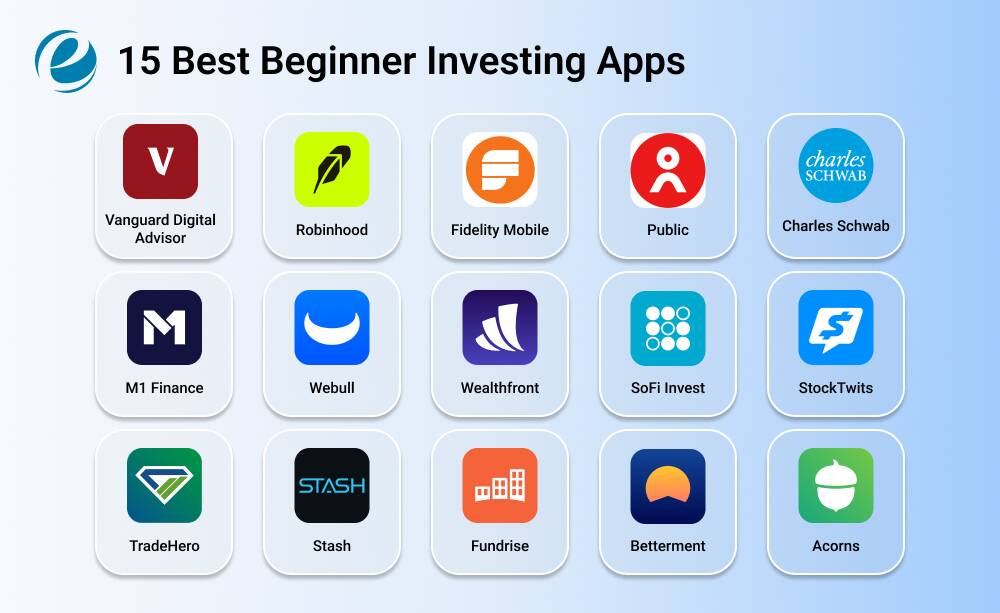
There are a lot of options out there, probably more than you need. Some are genuinely great for complete beginners. Others look beginner-friendly but quietly assume you already know what you’re doing. Budget matters, your goals matter, and honestly, how much hand-holding you want matters too. Here’s what’s actually worth looking for: the best beginner investing apps 2026:
Vanguard Digital Advisor
Vanguard has been around long enough to have a solid reputation, and its Digital Advisor app is equally well regarded. It builds a portfolio around your goals and handles the rebalancing automatically; you don’t need to check it every week. All investments go into Vanguard’s own index funds, which keep costs low. It’s not flashy, but it doesn’t need to be. For anyone exploring investment app development as a concept, Vanguard is a strong benchmark for what a well-structured beginner platform looks like.
- Minimum to start: $100
- Fees: No commissions; one of the lowest annual fees in the industry
- Best for: Retirement planning, taxable accounts, long-term hands-off investing
Robinhood
Robinhood is probably what got a lot of people into investing in the first place. No commissions, a simple interface, and you can buy a slice of Apple or Tesla for $1. That’s genuinely useful when you’re starting out and don’t have much to spare. Options and crypto are in there, too if you ever want to explore. Robinhood Gold unlocks research reports for a monthly fee, though most beginners won’t need it right away. It remains one of the most recognized and best investing apps for beginners in the US market.
- Minimum to start: $1 (fractional shares)
- Fees: $0 commissions; Robinhood Gold from $5/month
- Available on: iOS and Android
Fidelity Mobile
Fidelity doesn’t get enough credit as a best beginner investing app, honestly. No account minimum, no commissions, and a library of educational content that’s actually useful: articles, videos, and calculators. You can buy fractional shares for $1. Research tools are strong, and customer support is available around the clock. It covers everything from basic stock trading to retirement accounts, all in one app.
- Minimum to start: $0
- Fees: $0 commissions; no account fees
- Fractional shares from: $1
Public
Public takes a different angle; it’s built around transparency and community. You can see what other investors are buying and why, which is a solid way to learn when you’re new. It covers stocks, ETFs, crypto, bonds, and even things like fine art or music royalties. No payment for order flow, which means your trades get cleaner execution. There’s also a high-yield cash account. It’s a solid investment app for beginners who learn better by watching others.
- Minimum to invest: $1 (fractional shares)
- Fees: $0 commissions; no hidden order-flow charges
- Best for: Beginners who learn better by watching others invest
Charles Schwab
Schwab is a full-service brokerage that happens to have a very good app. No minimums, no commissions, and thousands of investment options: stocks, ETFs, mutual funds, bonds, and retirement accounts. Schwab Intelligent Portfolios is a free robo-advisor built right in, which is unusual for a platform this size. Research tools are thorough, and support is 24/7. Schwab Stock Slices lets you buy fractional shares of S&P 500 companies. It’s regularly mentioned among the top investing apps for beginners for good reason.
- Minimum to start: $0; Intelligent Portfolios requires $5,000
- Fees: $0 commissions; no management fee for robo-advisor
- Fractional shares: Yes, through Schwab Stock Slices
M1 Finance
M1 uses a “pie” system where you pick your stocks and ETFs and assign each a percentage of your portfolio. Once you set it up, M1 handles the investing and rebalancing on its own. It’s a nice middle ground between full automation and doing everything yourself. M1 Borrow lets you take a loan against your portfolio, and M1 Spend is a linked checking account.
- Minimum to start: $100 ($500 for retirement accounts)
- Fees: $0 management fees; M1 Premium available for more features
- Best for: Beginners who want control without daily management
Webull
Webull is a step up from the most basic beginner apps, but not in a bad way. Charts, technical indicators, and real-time data are all free. The paper trading feature is the standout—you practice with virtual money in real market conditions before putting in actual cash. Extended trading hours are available too. It takes a little more time to learn, but the free tools here would cost money on other platforms. A strong pick among the best beginner investing apps for those who want to grow into more advanced features.
- Minimum to start: $0
- Fees: $0 commissions on stocks, ETFs, and options
- Paper trading: Yes, fully available for free
Wealthfront
Wealthfront is a robo-advisor that quietly does a lot behind the scenes. It builds your portfolio using index funds matched to your risk level, and it runs tax-loss harvesting to help cut your tax bill at year-end. There’s also a high-yield cash account with decent rates. The $500 minimum is the one barrier, but after that, the annual fee is modest, and you genuinely don’t have to do much.
- Minimum to start: $500
- Annual fee: 0.25% of assets managed
- Best for: Passive investors who want tax efficiency built in
SoFi Invest
SoFi Invest is part of a bigger financial app for banking, loans, and insurance, so it works well if you want everything in one place. Trading is commission-free, and you can get started without any minimum. Fractional shares are available from $5. The standout feature for beginners is free access to certified financial planners, which most apps charge extra for or don’t offer at all. It’s one of the more well-rounded investment apps for beginners currently available.
- Minimum to start: $0; fractional shares from $5
- Fees: $0 commissions; CFP access included at no extra cost
- Best for: Young investors who want financial planning support
StockTwits
StockTwits isn’t a brokerage where you can buy stocks. Think of it more like a social feed where traders and investors post their thoughts on the market in real time. For beginners, it’s a low-pressure way to learn how people talk about stocks, spot trends in sentiment, and see how experienced traders react to market news. It connects to brokerage apps for actual trading.
- Cost: Free
- Best for: Learning market psychology and following experienced traders
- Note: No direct trading; works alongside your main brokerage app
TradeHero
TradeHero is a practice-first investing app. You get virtual money and trade it in real market conditions, real prices, real timing, and no real risk. There’s a leaderboard so you can compare your practice portfolio against other users and a social feed to follow top performers. It’s a good place to build instincts before you start putting in real money, especially for students or anyone who feels nervous about making mistakes.
- Cost: Free to use
- Available on: iOS and Android
- Best for: Complete beginners who want to practice before investing real money
Stash
Stash groups stocks and ETFs into themes like clean energy, big tech, or consumer brands so you’re picking based on what interests you rather than tickers you don’t recognize. Fractional shares start at $5. There’s also a debit card that gives you small amounts of stock as a reward when you spend. The banking features and investing are built into the same app, which keeps things simple.
- Plans start at: $3/month
- Minimum to invest: $5 for fractional shares
- Best for: Beginners who want a simple, interest-based approach to building a portfolio
Fundrise
Fundrise opens up real estate investing to regular people, something that used to require significant capital or connections. You invest in a portfolio of commercial and residential properties across the country and earn returns through rental income and property appreciation. Real estate tends to move differently from stocks, so it’s a reasonable way to diversify. The platform clearly shows what’s in your portfolio.
- Minimum to invest: $10
- Annual fees: Around 1% (0.15% advisory + 0.85% management)
- Best for: Beginners looking to invest beyond stocks and bonds
Best AI Investing App for Beginners
AI in fintech has changed how beginner platforms operate, from automated portfolio building to personalized investment suggestions based on your spending habits and goals. Below are some of the best AI investment apps for 2026:
Betterment
Betterment is one of the best beginner investing apps in the robo-advisor space and still holds up well. Answer a few questions about your goals and timeline, and it builds and manages a portfolio for you. Tax-loss harvesting is included, retirement accounts are available, and there’s a cash reserve with solid interest rates. No minimum to start. It doesn’t require much involvement once you’re set up, which suits a lot of beginners just fine.
- Minimum to start: $0
- Annual fee: 0.25%; 0.40% for premium plan
- Best for: Long-term, set-it-and-forget-it investors
Acorns
Acorns does something clever: it rounds up what you spend and quietly invests the difference. Buy a coffee for $3.60, and $0.40 goes into your portfolio. It sounds small, but it adds up. There are five portfolio options ranging from conservative to aggressive, all built with ETFs. There’s also a retirement account and a kids’ investing account if you want to go further.
- Plans start at: $3/month
- Minimum to invest: No set minimum; spare change adds up automatically
- Best for: People who find it hard to save consistently
Quick Comparison Table of the Best Beginner Investing Apps 2026
After you have learned a lot about these best beginner investing apps 2026, but still have a little bit of doubt about something, this is a quick comparison of these investing apps.
| Investing Apps | Minimum Balance | Fee | Best For |
| Vanguard Digital Advisor | $100 | No commissions | Long-term, hands-off investing |
| Robinhood | $0 | $0; Gold from $5/mo | Commission-free stock trading |
| Acorns | $5 to start investment | From $3/month | Micro-investing, spare change |
| Fidelity Mobile | $0 | $0 | All-round beginner platform |
| Public | $0 | $0 | Community-based investing |
| Charles Schwab | $0 | $0 | Full-service brokerage |
| M1 finance | $100 brokerage; $500 IRA | $0 Management | Automated pie investing |
| Webull | $0 | $0 | Practice trading, free tools |
| Wealthfront | $500 | 0.25%/year | Passive, tax-efficient investing |
| SoFi Invest | $0 | $0 | All-in-one financial app |
| Betterment | $0 | 0.25%/year | Robo-advisor, long-term goals |
| StockTwits | $0 | Free | Market learning, social feed |
| TradeHero | $250 | Free | Practice investing |
| Stash | $0 | From $3/month | Theme-based beginner investing |
| Fundrise | $10 | ~1%/year | Real estate investing |
So, with this guide, you will get a brief idea about the type of investing apps that you should prefer as a beginner in 2026.
How to Choose the Best Beginner Investing Apps?
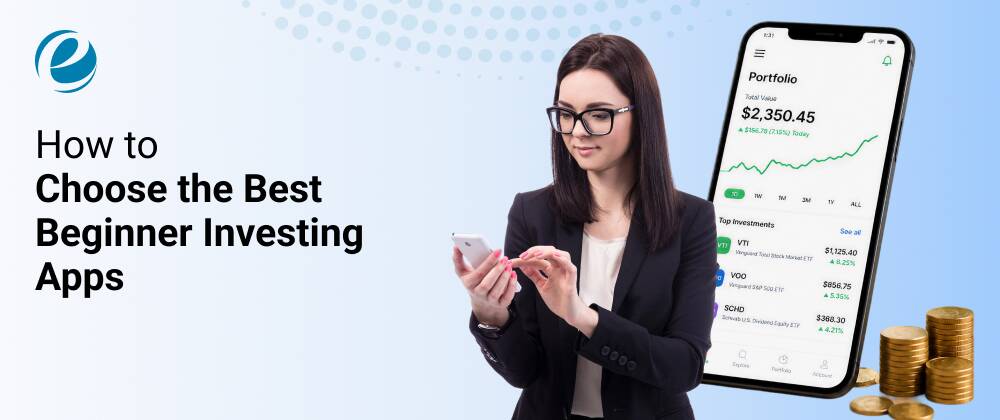
Picking an investing app isn’t something worth rushing. The wrong choice won’t ruin you, but it can cost you more in fees than necessary or make everything more confusing than it needs to be. If you’re newer to the space, it’s also worth understanding what fintech actually is before committing to any platform.
A few honest things to consider before you commit:
- Know what you actually want: long-term saving, a stocks and shares ISA, or just learning how markets work? Your goal shapes which platform actually suits you
- Check the fees: per trade, flat monthly, or percentage-based. On a small portfolio, these differences add up quicker than most people expect
- Start with what you understand: 10,000 available assets sounds impressive. For a beginner, it’s just noise. Five well-explained options beat thousands of confusing ones
- Look at the educational side: does the app teach you anything, or does it hand you a chart and disappear?
- Verify regulation: FCA-authorized in the UK. If you can’t confirm that quickly, move on
- Try before you commit: demo accounts exist for a reason. Use one before putting real money in
The best beginner investing apps are the ones that meet you where you are right now, not where you plan to be eventually. Start simple, get comfortable, and grow from there.
Are Investing Apps Safe in 2026?
This is one of the first things most beginners ask, and honestly, it’s a fair question. Putting money into an app you downloaded from your phone does feel a bit different from walking into a bank branch. Most reputable investing apps are safe. But safe and risk-free are two different things, and that distinction matters.
In the UK, any legitimate investing app should be FCA-authorized. That means the platform is held to real standards: how it handles your money, how it operates, and what happens if something goes wrong. You can verify any firm on the FCA register yourself. Takes two minutes. Always worth doing.
A few things worth watching for:
- Platforms with no FCA registration
- Any app promising guaranteed returns
- Pressure to deposit fast or act urgently
- Little to no customer support when you need it
Investing carries risk. That’s just the nature of it. But picking a regulated, well-reviewed platform removes most of the danger that comes from the app itself. Get that part right, and the only real risk left is the market, which is the same for everyone, beginner or not.
Why Choose EmizenTech for FinTech and Investment App Development?
Building a financial app is not the same as building a standard mobile application. The stakes are higher, compliance requirements are stricter, and when real money is involved, things need to actually work. That’s where experience matters, not just general development experience but genuine FinTech knowledge.
EmizenTech has spent years in this space, building investment platforms, trading apps, and financial tools that function properly in the real world, not just in a polished demo.
A few reasons they’re worth considering:
- FinTech-specific experience: they understand compliance, data security, and the architecture fintech software development demands. This isn’t a general development team that dabbles in finance
- Built around your product: no copy-paste templates. Every build is shaped around the client’s specific goals, users, and market
- Security from the ground up: encryption, secure payment handling, and compliance aren’t afterthoughts here. They’re part of the build from day one
- One team, full process: concept, design, development, launch, support. It stays in one place rather than getting handed between different agencies
- Real track record: they’ve delivered financial products across multiple markets. That kind of depth shows in the work
If you’re building an investment app for beginners, a portfolio tracker, or something more involved, the technical foundation matters just as much as the idea. EmizenTech understands both sides of that. You can also hire mobile app developers directly through their team if you’re ready to get started.
Conclusion
Investing doesn’t need to be as complicated as it’s often made out to be. A decent app removes most of the friction, and when you’re starting, that matters more than having access to every feature under the sun. Every platform in this guide does something well, but the best beginner investing apps are simply whichever ones fit your budget, your goals, and, honestly, your patience level. Start small. Stay consistent. Don’t overthink it in the early stages. The hardest part for most people isn’t the investing itself; it’s actually starting. You’re already past that bit.
FAQs
Are beginner investing apps safe for investors?
Yes, most major investment apps are registered brokerages that are SIPC-insured up to $500,000, including $250,000 for claims in cash. This protects your portfolio in the event of brokerage failure, though it does not protect against natural market losses.
How much money do I need to get started?
You do not need much money because many top investing apps for beginners have dropped their account minimums. Thanks to features like fractional shares, you can buy slices of major companies with as little as $1 to $5.
What is the difference between an online broker and a robo-advisor?
Online brokers allow you to self-direct your investments by choosing the exact stocks or ETFs you want to buy. Robo-advisors ask you about your financial goals and risk tolerance and then automatically invest and rebalance a portfolio for you.
Can I use multiple investing apps at the same time?
Yes, and many experienced investors do. For example, you might use an app like Charles Schwab for long-term retirement planning while using a simpler, best beginner investing app to test out new strategies with a smaller amount.
Are free investing apps really free?
Yes, the leading modern best investing apps for beginners charge $0 in commissions when you buy and sell US stocks and ETFs. However, apps may charge extra for premium services such as live market data upgrades or advanced trading margins.
What should I do before I start investing?
Before you start investing, pay off high-interest debt, build an emergency fund covering 3 to 6 months of living expenses, and define your timeline and risk tolerance. Always remember — never invest money that you will need in the next 3 to 5 years.



 +1 (989) 535-9295
 info@emizentech.com
 emizentech


