
 Add us as a preferred source on Google
 Auto parts retailers no longer sell in brick-and-mortar stores. The convenience online shopping brings made them invest in auto parts ecommerce website development. In these five years, the online automotive parts and accessories sales industry has skyrocketed, and the market size is set to triple worldwide by 2027.
The online marketplace is ripe with opportunities, but it’s essential to have a solid strategy to compete with established players. If you are wondering how to take your auto parts business online, then we’ve got you covered.
In this journey, we will discuss how to develop an online store for selling auto parts, their types, and their essential features. Also, we will discuss the key benefits and uncover the cost of developing an online store for selling auto parts.
What Is An Auto Parts eCommerce store?

Like any other eCommerce store, an auto parts ecommerce store is an online platform that specializes in selling automotive parts and accessories directly to consumers. With an ecommerce platform, both customers and sellers can purchase and sell the products within a few seconds, even in remote areas.
For a successful auto parts ecommerce website, businesses need to focus on auto parts ecommerce website development that ensures a user-friendly experience. For this, you can also include features like inventory management, secure payment processing, and responsive design.
Autozone and Rockauto are some of the best ecommerce platforms for auto parts, which provide a convenient way for consumers to browse, compare, and purchase auto parts from the comfort of their homes.
By utilizing an ecommerce platform like Shopify, you can simplify the setup process for your auto parts business without any extensive technical knowledge. Also, by partnering with an Ecommerce development company, auto part retailers can easily tap into the growing automotive market and maximize their business potential.
Why To Develop An Online Store For Selling Auto Parts
It is crucial to develop an online store for selling auto parts in today’s digital landscape, as consumer behavior shifts toward the convenience of automotive eCommerce. The online store allows you to reach a broader audience, providing access to customers who may not have a local auto parts retailer.
Additionally, an automotive ecommerce website development strategy can enhance your business’s visibility and credibility, making it easier for customers to find and trust your brand.
With the right auto parts eCommerce website builder, you can create a user-friendly platform that showcases your products effectively, streamlining the shopping experience.
Investing in aftermarket auto parts eCommerce not only opens new revenue streams but also positions you to compete in a growing market. As more consumers turn to automotive eCommerce websites for their needs, having an online presence is crucial for success.
Latest Facts & Figures Of The Auto Parts Industry
With the advent of e-commerce, the auto parts industry has seen significant growth. Now, customers, manufacturers, and suppliers can easily buy and sell from the Autoparts ecommerce platform.
The global automotive industry is experiencing significant growth, and its size will be USD 4,359.98 billion in 2024. It is expected to reach USD 6,678.28 billion by 2032, growing with a CAGR of 5.66% from 2024 to 2032.
With the rise of automotive, the demand for auto parts is rising alongside making a substantial portion of sales occurring online. Moreover, the demand for aftermarket auto parts eCommerce is particularly strong, as consumers seek cost-effective alternatives to OEM parts.
The online sales of auto parts have surged, and projections suggest that this sector will grow by USD 1103.4 billion by 2030. The rise of consumers shopping online to shop for auto parts highlights the need for responsive automotive ecommerce websites.
Studies show that customers value convenience; therefore, having an effective auto parts e-commerce development strategy helps you attract and retain customers. You can invest in an automotive ecommerce platform and capitalize on the growing demand for auto parts and accessories.
Let’s move to the next section and discuss the benefits of developing an auto parts ecommerce platform.
Benefits Of Developing Best Ecommerce Platform For Auto Parts
The best thing you can do for your auto parts business is to take it online and increase your customer base, improving your revenue generation. However, automotive ecommerce websites not only benefit manufacturers but also bring convenience to retailers and customers. Take a look.
Benefits For Manufacturers
1. Increased market reach
Automotive ecommerce applications allow manufacturers to reach a broader audience by facilitating sales in those places where it takes time to reach by traditional modes.
2. Data-driven decision making
By implementing analytics tools, manufacturers can easily analyze customer behavior and utilize data-driven insights to improve their products and services.
3. Streamlined operations
Automating sales processes reduces operational costs and optimizes inventory levels. It also reduces the risk of overstock and out-of-stock situations. So manufacturers can focus on production and innovation.
4. Automate your business
As online stores offer 24/7 personalized self-service assistance, it cuts order processing costs by ten times. Automated business workflow lets you manage multiple sites from a single admin lead to centralize data.
5. Brand visibility
Manufacturers can invest in a well-designed automotive e-commerce platform and elevate their brand presence and credibility, helping them enhance trust among customers and partners.
6. Direct customer engagement
With Autoparts’ e-commerce platform, manufacturers can give customers exactly what they want and build stronger relationships with them. With D2C, manufacturers can retain control over their brand and pricing without the need for any intermediaries.
Benefits For Customers
1. Convenient and accessible
Customers can easily browse and purchase auto parts anytime and anywhere. The automotive ecommerce platform meets the customer’s needs in multiple languages and currencies, making the shopping experience more convenient.
2. Wide product selection
An extensive online inventory allows customers to compare various products easily. Regardless of time and location, customers can shop seamlessly for whatever they want at a suitable price.
3. Detailed product information
Automotive ecommerce platforms bring engaging, personalized, and easy purchasing. The platform provides product descriptions, specifications, and reviews so that customers can make informed decisions.
4. Enhanced customer support
Integrated support features such as live chat, customers can connect with support representatives in real-time, and FAQs improve customer service and resolve issues quickly, minimizing downtime.
5. Personalized shopping experience
Utilizing customer data, purchase history, and behavior to enhance personalized shopping experience. Recommending personalized products and marketing messages enhances customer satisfaction.
Types Of Automotive eCommerce Websites
From parts and accessories to full vehicle sales, automotive ecommerce websites come in several forms, each serving a specific purpose. Understanding the different types will help you navigate the market and auto parts ecommerce development become easy.
With this in mind, let’s explore various types of automotive ecommerce websites.
1. Original equipment manufacturer (OEM) parts stores
These websites specialize in selling genuine parts made by the vehicle’s original manufacturer. They ensure that the parts meet the exact specifications of the vehicle.
Moreover, the OEM parts store often provides detailed catalogs, compatibility information, and the assurance of quality and reliability.
2. General marketplaces
General marketplaces offer a wide variety of products, including automotive parts, along with other categories. They serve as a platform for multiple sellers.
Users can check reviews and ratings and compare prices of the products, making it easy for them to find what they need from a vast selection.
3. Specialized auto parts website
Specialized auto parts websites focus on specific niches within the automotive sector, such as performance parts, classic car components, or specific vehicle brands.
They usually offer expert advice, specialized products, and community engagement through forums or blogs related to their niche.
4. New and used auto parts platform
These types of platforms facilitate the buying and selling of both new and used auto parts, specifically catering to the needs of budget-conscious consumers. And for those looking for rare or hard-to-find items.
They often provide listings from various sellers, with options to compare prices and conditions of parts.
5. Aftermarket auto parts websites
These sites are focused on aftermarket parts, which are designed to fit and function like OEM parts but are typically offered at a lower price point. They cater to consumers looking to customize or enhance their vehicles.
Moreover, they offer a wide range of products, installation guides, and customer reviews so that buyers can make informed decisions.
6. Accessories only platforms
Now, these types of platforms specialize exclusively in automotive accessories, such as floor mats, seat covers, and tech gadgets.
Customers who want to personalize their vehicles can select from a variety of styles, colors, and brands, along with detailed product descriptions to assist consumers in product selection.
Types Of Autoparts You Want To Sell
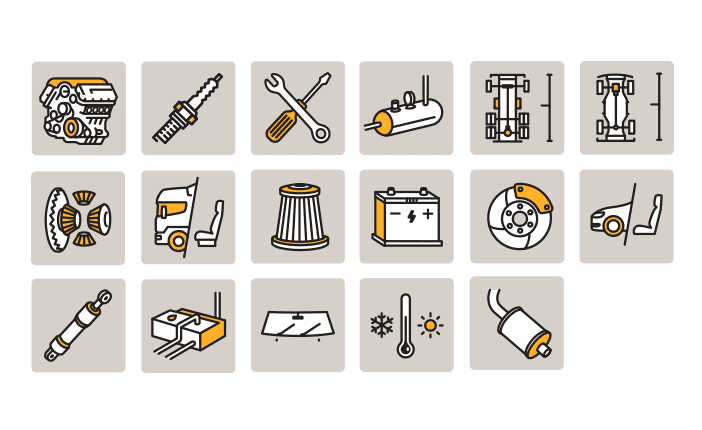
Now you know the benefits, it’s time to discuss the types so that you can easily develop an online store for selling auto parts. Online requires you to decide what type of auto parts you want to sell. Usually, there are three types of auto parts: OEM, OES, and aftermarket parts.
1. OEM – Original Equipment Manufacturer
These auto parts are usually manufactured by the company, and the model is assembled according to the company’s requirements. The auto parts that are originally used by the company and produced by them themselves are known as OEM parts.
2. OES – Original Equipment Supplier
To produce specifications and productivity, companies usually hire other automobile companies to produce auto parts and replace them with OEM parts while repairing, which are, therefore, called OES parts.
3. Aftermarket Autoparts (Other Brands)
These types of auto parts are usually referred to as alternatives. This is because they serve as an alternative to the original part if the original parts are somewhat difficult to find. The parts from the aftermarket would be of another brand but would be the same as the original parts.

General Features Of Autoparts Online Store
Incorporating essential features makes a successful Autoparts online store. It not only makes navigation easy for users but, at the same time, enhances the overall shopping experience, builds trust, and ultimately drives sales.
A well-designed auto parts website includes these general features. Take a look.
1. Social login and signup
In an automotive e-commerce website, buyers usually need to fill in their information and some basic details, which is known as the “sign up” process. On the other hand, the login feature denotes that the buyer’s profile has been made and that by logging in, he can order the desired auto parts or accessories.
2. Refine Search & Filters
Refined search and filters are another feature that helps the users navigate the auto parts store and significantly increase conversion. It also helps in narrowing the results further for the customers, making it easier for them to select and purchase the auto parts. Customers can refine their searches based on the customization of the brand category of the auto parts.

3. Auto Parts Finder (Year/Make/Model Lookup)
The auto parts finder is a feature that directly helps you search for the specific auto parts you wish for, and similar options are available on the auto parts e-commerce website. This makes it easier for the customer to search results for a particular vehicle, narrow down several auto parts, and suggest those that fit the customer’s vehicle.
4. Wheel Search
This feature helps the customer to specify the sizing of wheels for his particular vehicle with both upsizing and downsizing options.
5. Tires Search
This feature is also similar to the wheels search feature as it helps the customer specify the sizing of tires for vehicles with both upsizing and downsizing options.
6. Verify Fitment
Sometimes, the customers may not have a pre-selected vehicle saved in the garage. This is when the verify fitment feature works, as it allows users to check if the item is compatible with the desired vehicle or not before ordering it.
7. Fitment Compatibility Table
This is the feature where a table or listing with data on vehicle fitment is placed for the perfect description on the product page, helping customers to be sure of their purchase.
8. Recommendations
Recommendations usually convince people to buy more. This feature generates some product or auto part recommendations to increase the order value by the customers, giving them validation.
9. Informative Product page – Auto Part Details
The product page should be nothing less than informative. It should have detailed information about the autoparts and accessories available in the ecommerce store. The product page should contain a list of products, and when a customer clicks on a certain product, a piece of information should be presented to him. This helps the customer with all the necessary information and helps him order the product precisely.
10. Discounted Prices for Garages & Bulk Buyers
Discounted prices for bulk buyers help the sellers earn profits by enabling the customers to order autoparts at a discounted price range and letting them order in large bulk or units.
11. Shipping Calculation
This helps the customer automatically calculate the price and total cost of the product or auto parts, including shipping costs, with precise shipping information.
12. Domestic & International Payment Gateway
After the order has been added to the cart or the garage, during the time of the transaction, there is the feature of efficient payment and checkout pages that help customers purchase the product and immediately have a payment confirmation on them. There are also customized modules for domestic and international payment gateways to speed up the transaction process with more payment options.
13. Upsell & Cross-Sell
Cross-selling is the feature where the customers are offered compliments or supplements about the purchases they’ve already made. Upselling is the feature that occurs when there is an increase in a customer’s value by encouraging them to add on services or purchase a more expensive model.
14. Reports & Analytics
Reports and analytics are features of the e-commerce store that allow the company to understand trends and shifts in customers’ purchasing behavior. Reporting and analytics tools help to gain a detailed report about the record of sales and purchases of eCommerce sites.
15. Informative blogs
An informative blog on the website of an automotive ecommerce store helps to gain insight into the store and its specializations to the customers. The informative blogs help provide detailed information about certain subject matter and products that serve as an add-on to a rich amount of sales and are a fundamental feature in successful web marketing and utilized by most ecommerce stores.
Advanced Features Of Online Autoparts Store

To enhance the functionality of your online auto parts store, integrate advanced features such as AI-powered chatbots, personalized product recommendations, VIN integration, and more. These features will elevate your shopping experience to meet the evolving needs of customers. Take a look.
1. ChatBot
E-Commerce chatbots serve as a powerful helping hand to ecommerce sellers. Using intelligent prompts and message replies, they engage customers as well as passive visitors to solve their queries and questions related to a particular product just by chatting on the ecommerce website store.
2. Smart Search Integration
The Smart Chart integration is a feature that allows the provision of perfect labeling of products with relevance to charts, reducing confusion and making it easier for the buyers to easily search their desired products.
3. Vehicle identification number integration (VIN)
VIN decoding capabilities will automatically identify and match auto parts with specific models, including their year of manufacturing. This will help in ensuring precise product compatibility.
4. AI-powered product recommendations
You can implement an AI-powered product recommendations feature that helps in suggesting customers’ products based on their purchase history and browsing behavior.
5. ERP Integration
This multi-channel integration process serves as the foundation for running an automotive ecommerce business. It helps manage items that the sellers wish to sell with customer-specific pricing, inventory, and availability in sales and order processing.
6. CRM Integration
This multi-channel integration process helps provide an understanding of channel management as it helps translate value-adding interactions with customers through pre-sales communication, sales interaction, post-sale service, and customer support.
7. POS Integration
POS integration is a multi-channel feature that is a streamlined connection between POS software and an auto parts accounting and operations platform that can pull detailed data directly in real time.
8. RMA Reporting and Flow
A return merchandise authorization (RMA) is a multi-channel integration feature that deals with returning auto parts after they have been purchased due to some difficulty or other reasons. It helps customers receive a refund, replacement, or repair during the auto parts warranty period.
Factors To Consider While You Develop An E-commerce Automotive Store
When you develop an online store for selling auto parts, it requires careful planning and consideration of various factors. Here are the important factors to consider while you start your eCommerce automotive store development.
| Factors | Description |
|---|---|
| User-Friendly Design | Focus on creating a clean, intuitive interface that is easy to navigate. The layout should prioritize usability, with clear navigation menus, well-organized categories, and easily accessible product information. |
| High-Quality Product Images and Videos | It is essential to provide clear and detailed product images and videos from multiple angles. Along with videos demonstrating the product in use, it helps customers visualize what they are purchasing. |
| Advanced Search and Filter Options | You need to implement an advanced search filter as it allows customers to easily find specific products using filters like make, model, year, and part number. |
| Vehicle Compatibility Checker | A tool to help customers ensure they are purchasing the correct parts for their vehicle. This feature minimizes the risk of incorrect orders, leading to a smoother buying process. |
| Secure Payment Gateway Integration | Secure payment options during transactions are vital to protect customer information. This is why it is important to utilize trusted payment gateways that offer encryption and fraud protection. |
| Inventory Management System | A real-time inventory management system tracks inventory levels to avoid stockouts and backorders and provides updates on product availability. |
| Customer Reviews and Ratings | Encourage customers to leave reviews and ratings to build trust and credibility. Positive feedback impacts their physiological shopping behavior, making them confident about their purchases. |
| Real-time Shipping Tracking | Provide customers with real-time updates on their order status. Tracking information allows customers to monitor their shipments, reducing anxiety about delivery times. |
| Multi-Language and Currency Support | You can cater to a global audience by offering support for multiple languages and currencies. |
| Mobile Optimization | Ensure your website is optimized for mobile devices to provide a seamless shopping experience on the go. This will allow customers to browse and purchase products easily, regardless of the device they use. |
| Customer Support | Offer excellent customer support through various channels, such as live chat, email, and phone. So that customers can get assistance whenever they need it. |
| Clear Returns and Exchange Policy | A straightforward and hassle-free return and exchange policy reassures customers about their purchases. Providing clear guidelines on how to return or exchange products builds customer trust. |
| Loyalty Programs and Rewards | Implement loyalty programs to incentivize repeat purchases by offering discounts, points, or exclusive access to new products. |
| Social Media Integration | Leverage social media to connect with customers, promote your products, and share content. |
| SEO Optimization | Optimize your website for search engines to improve visibility and attract organic traffic. Implementing SEO best practices, such as keyword optimization, meta tags, and quality content, will be helpful. |
Characteristics Of A Successful Online Autopart eCommerce Store
Before we dive into the process of creating a successful online auto parts ecommerce store, certain characteristics are essential for its success. Let’s explore them down below:
1. Fast Shipping
An online autopart store provides fast shipping in regard to details such as zip code, which helps decide whether fast shipping is available or not. Generally, fast shipping is a great factor in auto parts sales.
2. Friendly Return Policy
This is another aspect where an auto part ecommerce store should have a friendly return policy and refunds without any complications to avoid client complaints. The return policy should always be as complex, transparent, and accurate as possible in automotive ecommerce stores.
3. Security Provisioning
Secure Device Provisioning is a characteristic that ensures secrets regarding auto parts or other products purchased by the customer cannot be exposed or manipulated. The security provision also implies secured manufacturing with innovative code protection and Whitebox technology, where the secrets remain protected for the rest of the device’s use and disposal.
4. Super Fast Load Speeds
Super Fast Load Speeds helps customers use the latest technology with definite website standards that allow them to find their specific parts and witness a fast checkout.
5. Mobile Responsive
The auto parts e-commerce sites should be responsive to mobile devices. They should have a perfectly designed mobile site so that it becomes easier for the customers to shop directly from their smartphones or Androids.
6. Product Photographs
Usually, in an auto parts e-commerce store, customers like to see the products before they buy. Therefore, a perfect professional photograph of the auto part will influence the customer to access the auto parts store online and buy it.
Steps To Develop An Online Store For Selling Auto Parts
To develop an online store for selling auto parts, you need to partner with an expert ecommerce development company that understands your project requirements and works accordingly. Here is the step-by-step process of auto parts ecommerce development.
1. Market research
Market research is vital for understanding your target audience, competitors, and industry trends.
This process will help you create a business plan outlining your goals, budget, and marketing strategies. Also, enables you to identify opportunities and your USP.
2. Choose a business model
After conducting market research, you have a clear idea about the purpose of your website. You have to decide whether you will sell OEM (Original Equipment Manufacturer) parts, aftermarket parts, or a combination of both.
Also, consider whether you want to hold an inventory or use a dropshipping model because your business model will impact your supply chain, pricing strategy, and customer service approach.
3. Select an ecommerce platform
Now, choose a suitable e-commerce platform, such as Shopify, WooCommerce, or Magento, that meets your technical requirements and budget.
Whichever platform you choose, it will provide you with the necessary features for managing products, payments, and customer interactions effectively.
4. Domain name and hosting
Register a domain name that reflects your brand and is easy to remember, so choose a reliable hosting provider that offers good performance and security.
When you choose a professional domain name, it will enhance your credibility, while quality hosting ensures your site runs smoothly.
5. Website design and development
Designing a user-friendly website with a clean layout and responsive design will enhance user experience. Ask your team of UI/UX designers to design the front end of the app while keeping user experience in mind.
Frontend and backend development of auto parts websites go hand in hand to create a seamless experience. While the front end focuses on the visual aspects, the back end handles data management, server-side logic, and integration with databases and APIs.
6. Product catalog setup
Creating a product catalog with detailed descriptions, specifications, and high-quality images is crucial for making a successful auto parts ecommerce solution.
You can include advanced search and filter options for easy navigation. With a well-organized catalog, customers can easily find the parts they need quickly and make informed purchasing decisions.
7. Implement payment gateway
For secure transactions, integrate secure payment gateways to accept various payment methods, including credit cards, PayPal, and digital wallets.
When you offer multiple payment options, user feel more in control of their purchasing experience. Moreover, providing a well-known payment option can significantly increase customer confidence and reduce the risk of fraud.
8. Inventory management system
Implementing an inventory management system is crucial for streamlining operations such as reordering and sales trends. This will save time and also minimize human error.
Moreover, you can always ensure that you have the right amount of auto parts on hand, reducing the risk of stockouts or overstock situations.
9. Customer support system
Offering reliable customer support such as live chat, email, and a helpline is crucial for resolving queries quickly. You can integrate AI-powered assistance that provides 24/7 customer support.
Additionally, the FAQ section should be implemented so that users can independently resolve common queries and enhance the user experience.
10. Testing
Before launching your store, conduct rigorous testing to make sure your site is free from any potential issues. The team of developers, along with QA, will perform various tests and rectify if any issues occur.
Additionally, UAT (User acceptance testing) can be conducted to gather feedback from real users, providing valuable insights into how the site performs in real-world scenarios.
11. Launch and promote your store
Once everything is in place, launch your auto parts online store and promote it through social media, email campaigns, and online ads to attract initial customers.
With these steps, you can easily develop an online store for selling auto parts. But before you invest in this niche, let’s discuss its development cost in the next section.
How Much Does It Cost To Develop An Autoparts eCommerce Store?
Usually, ecommerce website development costs can range from $20,000 to $2,00,000 or more depending on the complexity of auto parts store platform selection such as Shopify, WordPress, Magento, etc. Various other factors affect the cost of auto parts ecommerce stores, such as the developer’s location, platform choice, design complexity, development time, and more.
Using platforms like shopify, you can build a custom website, and it will cost less compared to building it from scratch. If you want to create a unique design, it will cost more because the more features you add, like special search tools or payment options, the more time and money it will take to develop an online store for selling auto parts.
Moreover, hiring ecommerce developers can be cheaper than an agency, but agencies often provide more services. The ongoing expenses for hosting, security, and marketing also add to the total cost, so it is recommended to consult with an expert e-commerce development company that can help you plan your budget better.
Approaches To Develop An Autopart eCommerce Store
When it comes to building an auto parts ecommerce store, there are several approaches you can take. Each has its own benefits and considerations, so choosing the right method depends on your specific needs, budget, and technical expertise.
1. Develop from the Scratch
If you want to develop an online store for selling auto parts from scratch, it is usually custom-based and designed with a hand-coded website. So, creating a website from scratch means that the site is constructed per the client’s needs and the specific business requirements of the auto part store.
2. Self-hosted Store Using Opensource ecommerce platform
A self-hosted store using an open-source ecommerce platform helps acquire and install into the server of choice of the company such that the company manages and runs the resultant tools. This helps the company to have unlimited flexibility regarding website handling, especially considering that it is an open-source system.
3. Hosted eCommerce platform
A hosted ecommerce platform is a type of software that services and acts as a host to online stores. These kinds of hosted platforms offer convenience and an ideal auto parts ecommerce development experience.
Team Structure Required To Develop An Autoparts eCommerce Store
To develop an online store for selling auto parts, one needs a structured team that aids in the development of the specific auto part e-commerce website store. For that, we should clearly define the business needs by hiring the right kind of people to develop a website. Then, we should design an efficient boarding process and give a definite explanation of the employees’ workflow. Then, we should define roles in executive management and stress-efficient product management to build a perfect auto parts ecommerce store. From the structure of executives and assisting people with certain tasks such as handling payments and orders, keeping records of payments, etc., the team structure is necessary for a better auto parts ecommerce store.
- Project Manager
- Backend Developers
- Front-End Developer
- Data Specialists
Monetization Opportunities For An Autoparts eCommerce Store
With auto parts e-commerce store development, you can create multiple income streams while providing valuable services to your customers. Take a look at some effective monetization strategies:
1. Featured Listings
A featured listing usually refers to promoting or putting an auto part at a popular sport for some time. The listings allow auto parts to be featured in specific categories in the automotive e-commerce store.
2. Advertisement Selling
Advertisement selling usually refers to promoting auto parts of an ecommerce store through various advertisements to create awareness about the auto parts or products. This includes banner ads, sponsored content, or affiliate marketing, driving sales while generating additional revenue.
3. Garage Integration
Garage integration stands for “Listing various workshops and garages within the auto parts ecommerce portal so that customers can locate nearby garages and book services. This feature will benefit both garages and customers as workshop owners will get more jobs, and customers can book services online.
4. Subscription services
You can offer subscription plans that provide regular maintenance reminders or discounts on parts and services. This not only creates a steady income stream but also builds customer loyalty.
5. Loyalty programs
Implementing a loyalty program allows customers to earn points for their purchases. This process will encourage repeat business. You can also partner with other businesses and offer additional rewards, benefitting everyone involved.
6. Cross-selling and upselling
By analyzing what customers buy, you can recommend related products or upgrades at checkout. This strategy increases the average order value and improves customer satisfaction.
7. Online workshops and tutorials
Offering paid online workshops or tutorials on auto maintenance can attract customers eager to learn. This approach generates revenue while establishing your store as an expert in the auto parts industry.
Why Choose EmizenTech To Develop An Online Store For Selling Auto Parts
Selling auto parts over the Internet can be alluring and complex for many sellers and manufacturers. However, ecommerce stores carry their own set of complications, so success and profits will rely on the right combination of tools and strategies used for development.
So, when it comes to developing an online store for selling auto parts, Emizentech stands out as a top choice. As a leading e-commerce development company, we have years of proven experience creating tailored e-commerce solutions.
Our team understands the unique challenges of the auto parts industry and can design automotive ecommerce solutions that meet your specific needs. We also offer custom web and mobile app development services that ensure your online store reflects your brand identity.
When it comes to security, we have a team of skilled experts who prioritize the security of your online store and customer data. Our development practices include advanced security measures to protect sensitive information, ensuring a safe shopping environment.
Let us help you build a robust e-commerce online store that meets your business goals and exceeds customer expectations.
Conclusion
Starting an online store to sell automotive parts can be a rewarding venture as consumers are turning to online platforms for their automotive needs. With the right strategies and tools, you can tap into a growing market and meet the needs of customers looking for quality auto parts.
We hope that with this blog, you understand how to sell auto parts online. Now, you can develop an online store to sell auto parts and bring your vision to life.
All you have to do is connect with us, get expert advice, and establish your presence in this competitive market.
Frequently Asked Questions
What are the essential features of an online auto parts store?
Your store should include advanced search filters, parts compatibility checks, detailed product pages, secure payment options, and streamlined checkout. These features enhance user experience and drive conversions.
How much does it cost to develop an auto parts eCommerce store?
The cost varies based on features, platform choice, and design complexity. On average, you may expect between $20,000 to $2,00,000 for a functional and customized store.
How can I make my auto parts store user-friendly?
Use intuitive navigation, clear product categories, and high-quality images. Prioritizing a mobile-friendly design also enhances accessibility for all users.
Why should I contact EmizenTech to develop my auto parts eCommerce store?
EmizenTech specializes in creating tailored, feature-rich eCommerce stores with optimized user experiences. Our team ensures seamless integrations, secure transactions, and high performance for your auto parts business.





 +1 (989) 535-9295
 info@emizentech.com
 emizentech


