
 Add us as a preferred source on Google
Are you wondering which digital commerce platform fits your online business? Fast-track in the e-markets puts the platform selection as the key to achieving success. According to Research & Markets, the global digital commerce platform market is projected to grow from 12.2 billion USD in 2025 to 23.55 billion USD by 2030, at a CAGR of just over 14%.
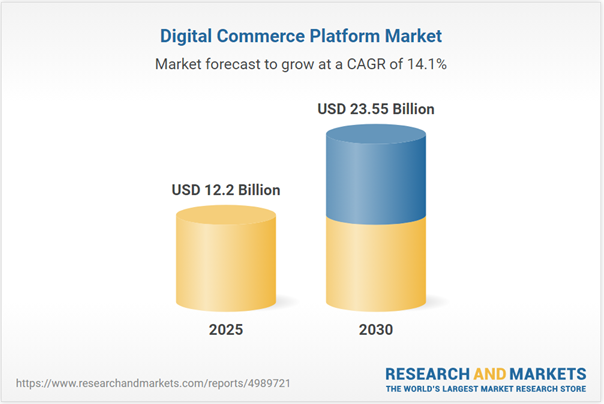
This boom is caused by advancements in AI, cloud computing, and mobile commerce, among rising consumer demand for localized, omnichannel shopping. Top platforms help businesses with scalable, feature-enriched, and secure solutions to prosper in an ever-evolving market landscape.
In this blog, you will discover about digital commerce: everything you want to know, like what a digital commerce platform is, the top 10 platforms, factors to consider while choosing the perfect one for your business, and why choose the best one, and much more.
What is a Digital Commerce Platform?
A digital commerce platform integrates technology that allows enterprises to transact, buy, and sell goods and services through digital channels like websites and mobile apps. It goes beyond typical e-commerce to provide personalized shopping experiences, buy real-time engagements, and provide quick skipping of payments and inventory management.

These platforms are central to any contemporary digital business because digital commerce keeps pace with evolving consumer demands, new technologies, etc. EmizenTech is a leading digital commerce and eCommerce development company, renowned for providing scalable, innovative solutions worldwide. If you want to understand more about E commerce Development, you can check EmizenTech’s Digital Commerce page.
Top 10 Digital Commerce Platforms for Your Business
Here are the top 10 best digital commerce platforms that your business can use to scale its presence online: These top ecommerce platforms offer a consistent UI for listing products and services for sale, managing orders, and offering marketing all in one to a global clientele. The selection of a digital commerce platform is vital for finding success in the e-commerce marketplace these days.
1. Shopify
Shopify is the most trusted for ecommerce with an easy-to-use, scalable approach. With Shopify development, a business can very quickly establish an e-commerce store that is highly flexible in theme design, offers safe payment acceptance methods, and sells over multiple channels: a web, social, or a marketplace channel. It’s quite fascinating because it’s one of those few platforms that allow you to use a common interface to cater to all of your sales channels.
- Best For: Shopify is especially suitable for small and medium enterprises and entrepreneurs who want to set up a store with powerful tools.
- Key Features: Easy-to-use interface, Shopify Payments, mobile-enabled themes, a huge landscape of apps.
- Pros: Very quick setup, and it will require minimal technical knowledge; the App ecosystem helps in extra functionality.
- Cons: Transaction fees will be charged if you do not use the Shopify Payments; very few customization options for advanced users.
2. WooCommerce
The WooCommerce WordPress plugin is an open-source platform. Being extremely flexible, it suits businesses willing to have complete control over their store’s design and features. And from offering unlimited product listings to advanced inventory management, WooCommerce is the affordable platform to go for any custom store in the World.
- Best For: Those users working on WordPress and businesses working with not-so-large budgets because they want the flexibility and control over its functions.
- Key Features: Free. Fully customizable. Supported practically by thousands of plugins and themes.
- Pros: Works perfectly fine with WordPress, with a tight-knit community supporting it in various ways to customize it to suit their needs.
- Cons: You need a host and a bit of technical know-how. Installing too many plugins can make managing your store difficult.
3. Magento (Adobe Commerce)
Magento-turned-Adobe Commerce aims to provide for companies with very complex needs. Features such as AI-powered product recommendations, multi-brand management, or advanced levels of analytics are available on the enterprise level. Though powerful, it requires developer skill and bigger budgets, so it must be considered on the scale of the highest enterprise-level businesses.
- Best For: Large companies and global brands with multifarious ecommerce needs.
- Key Features: AI-powered personalization, multi-store management, and Adobe Cloud integration.
- Pros: Highly scalable with tons of B2B and B2C functionality for the largest of high-traffic stores
- Cons: Costly to set up and maintain; technically savvy setup required.
4. BigCommerce
Another flexible and growth-oriented commerce platform for a business that must scale is BigCommerce. This digital commerce platform works well in multi-channel selling, from selling on Amazon, eBay, and social platforms, with B2B capabilities included. There are no transaction charges, meaning that the seller who works in bulk prefers it further.
- Best For: Growing businesses selling across multiple channels.
- Key Features: Multi-storefront support, advanced analytics, and built-in sales tools.
- Pros: No transaction fees, suitable for B2B and B2C, highly scalable.
- Cons: Limited design flexibility, certain features require higher-priced plans
5. Wix eCommerce
With Wix, setup is very easy, as it offers drag-and-drop tools with ready-made templates. It is reasonable in pricing and easiest to set up, and comes with SEO and marketing tools built in, so it is best for beginners and smaller businesses.
- Best For: Small businesses, start-ups, and entrepreneurs embarking on ecommerce
- Key Features: Simple drag-and-drop editor, customizable templates, mobile optimization
- Pros: Quick setup, cheap, comes with marketing and SEO tools
- Cons: Not really suitable for large-scale commercial business, and a lack of advanced features for scaling
6. Salesforce Commerce Cloud
Salesforce Commerce Cloud is the ultimate, enterprise-level commerce environment with the most considerable scalability, with the integration of knowledge-based Generative AI in e-commerce solutions. It could also be used well as the control plane for omnichannel management, integrating with strong CRM capabilities via the Salesforce ecosystem.
- Best For: Large enterprises, multinationals, and multi-brand operations.
- Key Features: AI/Einstein, omnichannel, headless commerce, integrated CRM.
- Pros: A real powerhouse, great scalability, seamless customer experience tools.
- Cons: Comes with a price, more complicated implementation and management, requires a heads-up from teams.
7. Squarespace
Squarespace is the best digital commerce platform because it is more geared toward attractive design templates, and it better suits creative businesses. In a way, this is where ecommerce and content functions merge and provide artists, freelancers, and boutiques with one single site where even the smallest detail counts.
- Best For: Creatives, small businesses, portfolio-driven brands
- Key Features: Visual templates, blogging + ecommerce integration, a single platform to manage all aspects
- Pros: Great-looking sites, less time to set up, best for content + commerce
- Cons: Not as advanced in ecommerce features, fewer third-party integrations, best suited for smaller stores
8. PrestaShop
PrestaShop is the digital commerce platform known for its open-source ability to be customized and laboriously stamped with a huge European user base. There are even numerous modules and add-ons to customize a store even beyond the dictates of a brand.
- Best For: Open-source supporters and small businesses requiring very high customizations
- Key Features: Full customization, multi-language, multi-currency, gargantuan marketplace with add-ons
- Pros: Right base platform for free; supports international selling, and is flexible
- Cons: Needs technical skill; lacking in official support; hosting and security become your responsibility.
9. Shopware
Shopware has so far managed to increase its growth presence globally, especially in Europe, because of its modular framework and support for complex business models. German and European brands use this software; hence, they will benefit from inherent GDPR compliance and multi-store capabilities.
- Best For: European companies, particularly those in the DACH region, requiring regional customization of their brands
- Key Features: Modular build, multi-store, multi-language, GDPR-ready
- Pros: Flexible architecture, great for multiple markets, tailor-made European integrations
- Cons: It needs development skills and does not have well-known global exposure like its bigger competitors.
10. Volusion
Volusion provides an all-in-one solution for businesses focused on online retail. Most of the dashboard, inventory management, and marketing tools attracted small-to-medium online selling businesses.
- Best For: SMBs in Retail, brands with lots of inventory
- Key Features: Catalog management, SEO, mobile-ready themes, multiple payment gateways
- Pros: Easy to set up; inventory is nice for smaller stores, and for more affordable plan options.
- Cons: Not many theme options or integrations; somewhat unscalable for larger businesses.
You must want to discover retail and eCommerce, right? Which model is best in every aspect with our “E-commerce vs. Retail Store” guide!
Factors to Consider When Choosing a Digital Commerce Platform
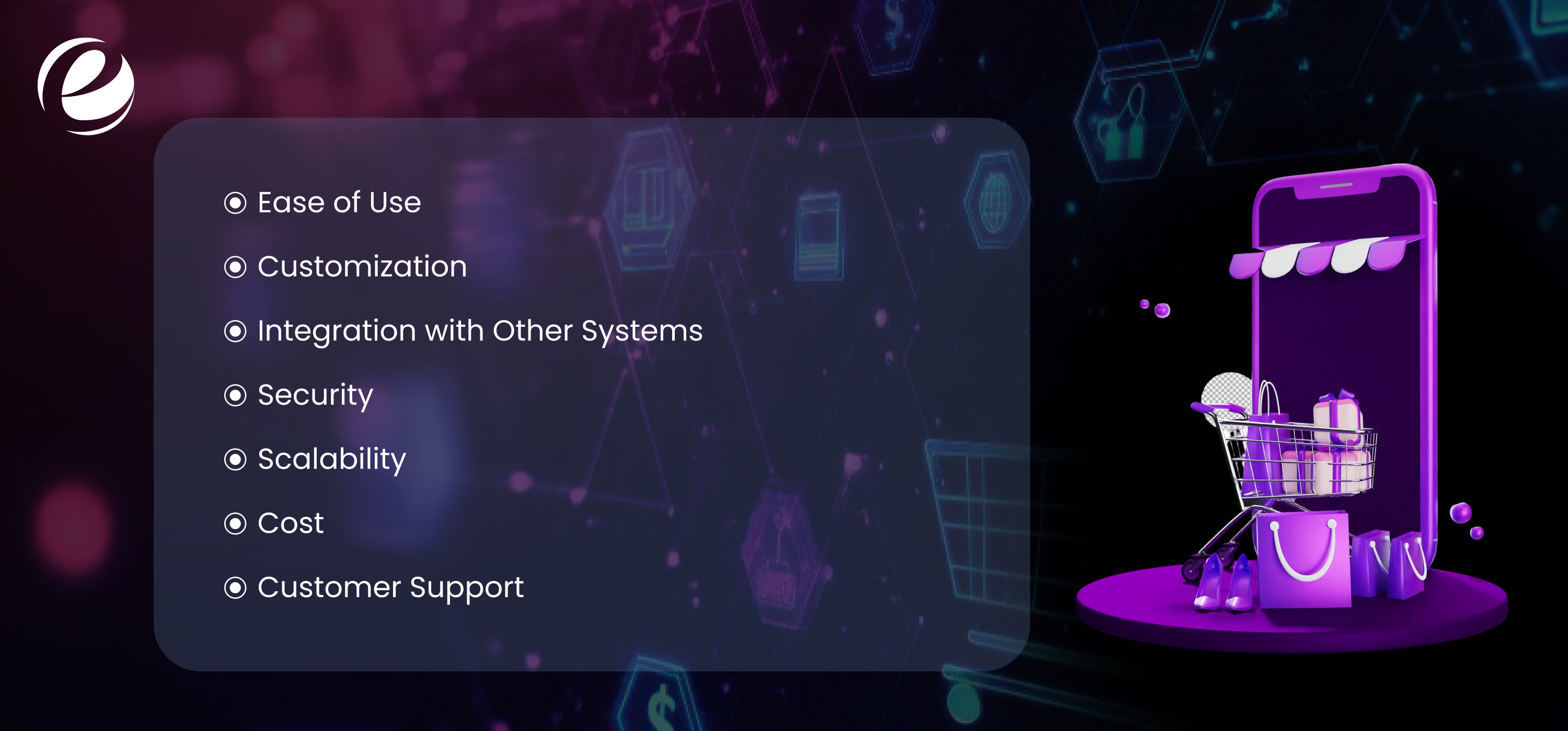
One of the most critical decisions is choosing the right digital commerce platform for your business. In general, the following factors, such as ease of use, customization, integration, security, and scalability, have an impact on the overall. An in-depth examination of these different parts will guarantee a platform that will meet not only your current needs but also your future ones.
1. Ease of Use
Simplified store setup is one of the main benefits of a user-friendly interface and intuitive back-end management tools. Easy navigation platforms reduce the amount of training required and allow employees to effectively handle sales.
2. Customization
The business can turn into a one-of-a-kind brand experience, leveraging the option of design, features, and functionalities presented by the enterprise. The top ecommerce platforms that allow enterprises to be custom-made will become the pivotal point for the adaptation to the changing market trends and customers’ preferences.
3. Integration with Other Systems
The all-around non-stop communication between ERP, CRM, payment gateways, and other critical systems is the key factor to operational efficiency. With strong integration, for instance, data consistency is guaranteed, allowing for a smooth customer journey.
4. Security
The security of payments, data protection, and SSL encryption can NEVER be compromised and are thus the foundations of customers’ trust and compliance. Multiple-layer security thoroughly guards the client’s personal data as well as all transactions against hackers.
5. Scalability
The platforms must be designed with the potential to expand in tandem with your company, so that they will be capable of coping with extra visitors and sales volume. The ability to make an enterprise thrive during peak periods and aid in entering new markets.
6. Cost
Consider fees, transaction fees, and additional plugin or addon costs on a monthly basis. A transparent pricing structure thoughtfully helps manage your budget and ensures a given platform can deliver value to your customer without hidden costs.
7. Customer Support
Having 24/7 support, detailed documentation, and an active community can minimize downtime dramatically. Reliable software support addresses technical issues so as not to impact business continuity.
Comparison Table of Top Digital Commerce Platforms
The following comparison table demonstrates the top 10 digital commerce platforms in 2025, describing important features, pros and cons, as well as pricing for ease of comparison in the selection of the top ecommerce platforms for your business.
| Platform | Best For | Customization | Integrations | Security | Scalability | Cost Structure | Customer Support | Mobile Optimization |
| Shopify | Small to medium businesses | Moderate | Extensive (Apps marketplace) | High (PCI compliant, SSL) | High | Monthly + transaction fees (if no Shopify Payments) | 24/7 support, docs | Mobile-responsive themes |
| WooCommerce | WordPress users, budget-conscious | High (Open-source) | Strong (WP plugins) | Depends on hosting | High | Free base + hosting + plugins cost | Community & docs | Responsive |
| Magento (Adobe Commerce) | Large enterprises | Very high | Extensive | Very high | Very high | License + hosting + development | Enterprise-level | Mobile-optimized |
| BigCommerce | Growing businesses, high volume | Moderate | Excellent | High | High | Monthly, no transaction fees | 24/7 support | Mobile-friendly |
| Wix eCommerce | Small businesses, beginners | Moderate | Limited | Good | Low to moderate | Fixed monthly fees | 24/7 support | Mobile-responsive |
| Squarespace | Creative entrepreneurs | Moderate | Limited | Good | Moderate | Monthly subscription | 24/7 support | Responsive |
| PrestaShop | Open-source enthusiasts, growing | Very high | Good | Depends on hosting | High | Free + hosting + modules | Community, limited paid | Mobile-friendly |
| Shopware | European businesses (Germany) | High | Good | High | High | License + hosting + add-ons | Good community | Responsive |
| Salesforce Commerce Cloud | Enterprises with advanced needs | Very high | Extensive | Very high | Very high | Enterprise pricing | Enterprise-level | Mobile-optimized |
| Volusion | Online retail businesses | Moderate | Moderate | Good | Moderate | Monthly + transaction fees | Support & docs | Mobile-friendly |
Why Choose the Right Platform for Businesses?

Choosing the right one is vital to business success. The right software will support current operations, encourage growth, improve experience, and encourage operational efficiency.
1. Business Growth
A responsible platform will support a growing product set and an expansive user base without sacrificing performance or user experience. A growth plan can help your business grow and support its expansion.
2. Operational Efficiency
These platforms grant orders, inventory, and customer interaction smooth handling, thereby doing away with manual efforts and, with that, adding productivity.
3. Customer Experience
Optimized platforms provide their customers with personalized shopping experiences, mobile-friendly applications, and smooth checkouts, which improve customer satisfaction and retention.
4. Competitive Advantage
The distinctive platform with advanced features, integrations, and marketing tools works on different stages of operations for getting more customers, indeed differentiating itself.
5. Cost Management
When it comes to choosing the right platform, one of the factors that helps us keep our budget is the prevention of overspending on unnecessary features or costly migrations later, helping maintain a healthy budget aligned with business goals.
Final Words
Well, digital commerce platform selection is the most essential for a business that is to grow, get more efficient, and have a competitive advantage. No platform is a hundred times better than the other, and each has its pros and cons, so one should carefully study their requirements before choosing the top ecommerce platforms.
In this case, whether the main concern is scalability, customization, or user-friendliness, the suitable platform will be the one that is capable of facilitating normal functioning as well as giving customers superior experiences.
By thoroughly comparing such aspects as features, prices, and support, a business can not only find a platform that will satisfy its current requirements but will also easily keep up with the shifting trend of digital commerce and thus help achieve future victories. Taking such a step paves the way for sustained online prompt business growth.
FAQs
What is the best digital commerce platform for small businesses?
Platforms like Shopify, Wix, and Squarespace are the best because they are suitable for small businesses due to their ease of use, affordability, and built-in marketing tools.
How does digital commerce differ from eCommerce?
Digital commerce involves any form of buying and selling through digital media. It covers all the digital channels, including mobile, social, and online stores. On the other hand, Ecommerce is just one of the digital channels where buying and selling take place, the main one being websites.
Which digital commerce solutions are best for enterprises?
The trio of Salesforce Commerce Cloud, Magento (Adobe Commerce), and Shopware is perfect for enterprises as they can be modified to fit a company of any size and complexity, and can also seamlessly integrate with other systems.
Are digital commerce platforms expensive?
The costs depend on multiple factors; platforms range from affordable options suitable for small enterprises to expensive solutions for big enterprises with more resource requirements and higher fees.
What trends will shape the future of digital commerce?
The major trends are AI personalization, omnichannel selling, mobile commerce expansion, voice commerce, and improved data security practices.



 +1 (989) 535-9295
 info@emizentech.com
 emizentech


