
 Add us as a preferred source on Google
 With the enlargement of the Internet of Things (IoT), generation has changed into a manner of existence rather than a revolutionary product. With IoT, we now have smart homes that reveal our habits, smart cars that drive us, and even smart plant life that water themselves. This generation is revolutionizing the manner we live and work globally.
Agriculture is not any different. Shifting from old farm practices to data-based automation is actually redefining the business face. Farmers can now monitor soil quality, monitor animal health, and manage irrigation systems through automation using IoT devices. This translates into higher productivity and efficiency on the farm.
As demand for food grows around the world, so does the adoption of smart farming technology. Smart farming is predicted to drive the market to up to $28.56 billion by 2030, industry insiders say.
Here in this guide, we can discover how IoT in agriculture industry is remodeling nowadays, what its unique applications of iot in agriculture are, how is IoT used in agriculture, role of iot in agriculture, implementation of iot in agriculture, and underscore the maximum treasured advantages it has to provide. If you are seeking to invest in smart agriculture or create an IoT-primarily based product, this guide will provide you with a few beneficial knowledge about the future of IoT in agriculture.
What is IoT in Agriculture and How is IoT Work Used in Agriculture?
IoT farming is a phrase used to consult the mixture of smart gadgets, sensors, and automated systems to beautify agriculture. IoT and farming permits farmers to optimize their farm equipment, animals, and fields more efficiently by collecting real-time input and actionable data.
IoT in agriculture relies on a network of devices and sensors that communicate with one another and to the internet and gather and give feedback. Sensors are positioned at numerous places such as soil, crops, machines, and animals and with the objective of measuring characteristics such as temperature, moisture, water in soil, and nutrients. The data gathered is also used and utilized for enhancing irrigation, fertilizers, pesticides, and agriculture itself.
For instance, farmers can be given real-time data on their tablets or phones regarding the condition of their crops, water usage, and prevention of problems from arising. It is data-based and enables decisions, reduces wastage, and increases production.

Benefits of Iot in Agriculture
IoT is transforming the agricultural industry by making agriculture efficient and smart, sustainable. From the utilization of resources to the optimization of crop yield, IoT equips farmers to tackle challenges of the current era with food security for a growing population. Some of the major benefits of iot in agriculture are as follows:
1. Smart Agriculture with Real-Time Information
Real-time data is collected by IoT technology to notify farmers about their fields. Accurate information on soil moisture, temperature, and nutrient content is offered by sensors. Farmers decide on irrigation and fertilization based on this so that crops receive what they require. This makes them healthier and more productive.
2. Water Conservation for Sustainable Agriculture
Agriculture is being stressed, particularly in water use, but can be managed with proper management. IoT sensors monitor water usage and identify leaks so that waste is prevented. Intelligent irrigation systems provide only the perfect amount of water that the plants require, preventing overuse and ensuring sustainability. The system not only saves precious resources but also money for farmers in the long term.
3. 24/7 Crop Health Monitoring
Through IoT, it can be continuously monitored how the crops are growing. Plant health is monitored constantly by sensors that notice even a tiny sign of infection or pests. This helps take timely actions, stopping the proliferation of problems and limiting losses. A healthy crop results in a quality crop and improved profitability for the farmer.
4. Intelligent Livestock Management
IoT is transforming animal husbandry as it makes monitoring the health of animals all the easier. Wearable smart collars, very much like fitness trackers, monitor animals’ vital signs such as body temperature and heart rate. The moment farmers are alerted in real time in case something random happens, the range of instant response expands, and it not only adds to better healthcare for animals but also boosts the efficiency of farms overall. By paying close attention to their animal’s health, farmers can avoid problems and have a successful farming business.
5. Farm Machinery Automation
Field work is no longer done by hand. IoT devices such as smart tractors and autonomous harvesters can perform their work autonomously with immediate feedback from the field. They help to plant, harvest, and tend to soil, reducing human effort as much as possible and increasing efficiency. Farmers have less time performing backbreaking work and more time to make strategic choices.
6. Advanced Weather Forecasts
Weather can make or break a season on the farm, yet IoT gets farmers prepared anyway. Intelligent weather monitoring systems correlate weather patterns and issue timely predictions. This enables farmers to schedule their activities accordingly, from determining the optimal time to sow seeds to safeguarding crops from surprise weather. Proper forecasting results in improved yields and reduces losses.
7. Improving the Supply Chain
Farm to table, there are numerous steps in between the process, and IoT keeps food fresh in between. Smart sensors monitor the storage temperature and transportation of fruits and vegetables, keeping accurate temperature and humidity levels. It avoids the food from getting spoiled, saves from wastage, and gives consumers fresh, quality produce. Efficient supply chain management is a blessing for farmers and consumers alike.
Key Features of IoT in Agriculture
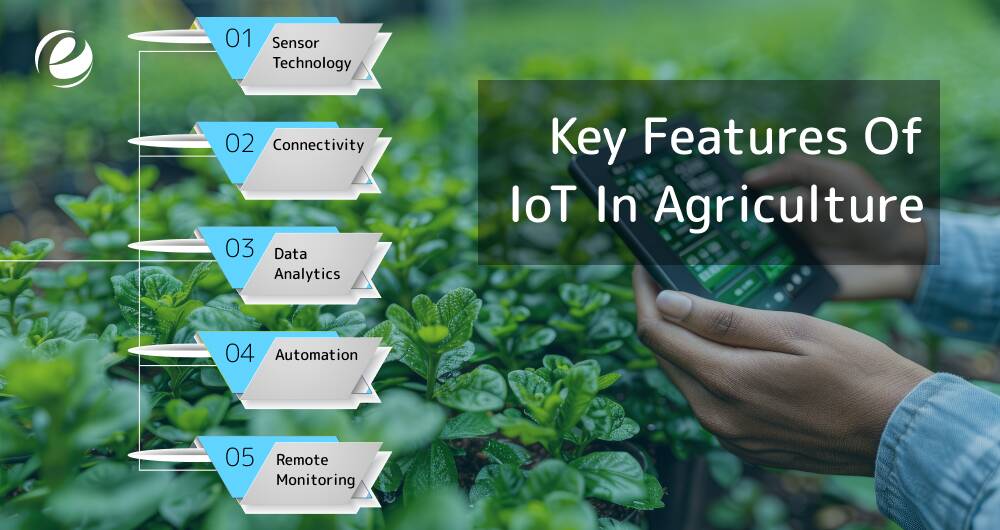
The Internet of Things (IoT) is revolutionizing agriculture by bringing with it a host of features that improve farming practices. Some of the most important features of IoT in agriculture are:
1. Sensor Technology
IoT farming relies on a combination of sensors that monitor environmental factors. The sensors can measure ground humidity, temperature, humidity, and mild depth and deliver essential facts through which the farmer is able to make rational selections.
2. Connectivity
IoT devices are interconnected via a mix of communication technologies such as Wi-Fi, LoRa, NB-IoT, and 5G. It is convenient to switch information among devices and important control systems and allows real-time monitoring and control.
3. Data Analytics
IoT solutions collect big volumes of information from sensors and hardware. Advanced information analytics solutions type via the data to provide insight into the fitness of the plants, the health of the soil, and the productivity of the farm, and allow farmers to optimize their operations.
4. Automation
Automation is the foundational pillar for IoT on the farm. There may be automated irrigation, fertilizer delivery, and pest control systems based on real-time input with less human intervention to achieve maximum efficiency.
5. Remote Monitoring
The farmers can access the animals and fields remotely through IoT apps. The remote access provides them with rapid monitoring and instant response to problems at the moment they occur, e.g., machine failure or fluctuations in environmental conditions.
Top 5 IoT Apps in Agriculture
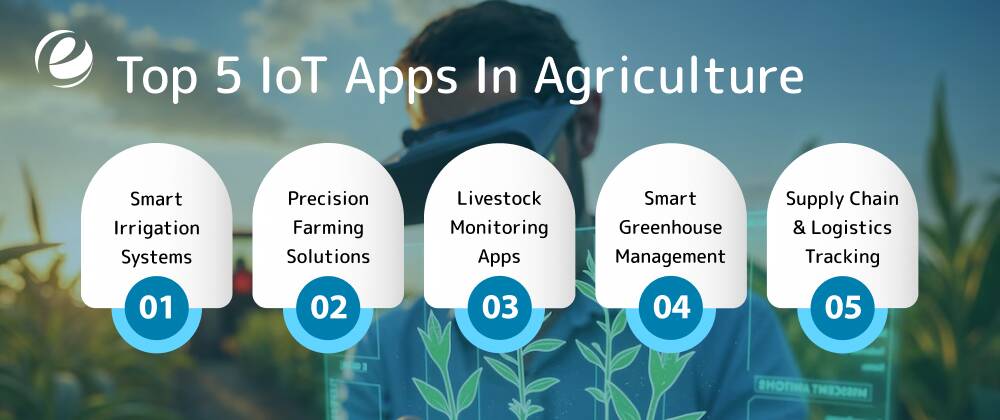
In India, organic farming new technologies are gaining widespread popularity as they aid in resolving the necessary issues and increasing production at farms. Some of the greatest use of iot in agriculture reshaping the field around the world include the below-mentioned five.
1. Smart Irrigation Systems
IoT-enabled irrigation apps measure the soil’s water content and environmental conditions through sensors and provide the crops with the ideal quantum of water. IoT-based systems avert excess water supply and water stress in addition to lowering wastage of water. Two major platforms utilized for this purpose are NetBeat and CropX.
2. Precision Farming Solutions
Precision farming software such as Trimble Ag Software and Ag Leader applies IoT sensors, GPS, and AI to analyze weather, crop growth, and soil conditions. Farmers use these reports to take well-informed decisions on pest control, fertilizing, and planting and maximize yield at the lowest cost.
3. Livestock Monitoring Apps
IoT-based livestock monitoring systems such as Allflex and CowManager monitor animal behavior, movement, and health using wearable sensors. Some agritech mobile apps notify farmers of possible diseases, breeding periods, and abnormal activity, enhancing herd productivity and management.
4. Smart Greenhouse Management
IoT-based greenhouses like Growlink and Autogrow regulate the climate automatically through temperature, humidity, and light control in response to sensor readings in real time. Applications guarantee ideal conditions for growing, resulting in superior crop quality with reduced human involvement.
5. Supply Chain & Logistics Tracking
IoT in agriculture supply chains such as FarmLogs and IBM Food Trust enable real-time tracking of harvested crops for the purpose of ensuring transparency and efficiency. These solutions enable tracking of storage conditions, minimizing post-harvest loss, and enhancing distribution management.
Step-By-Step Process of Implementation of IoT in Agriculture
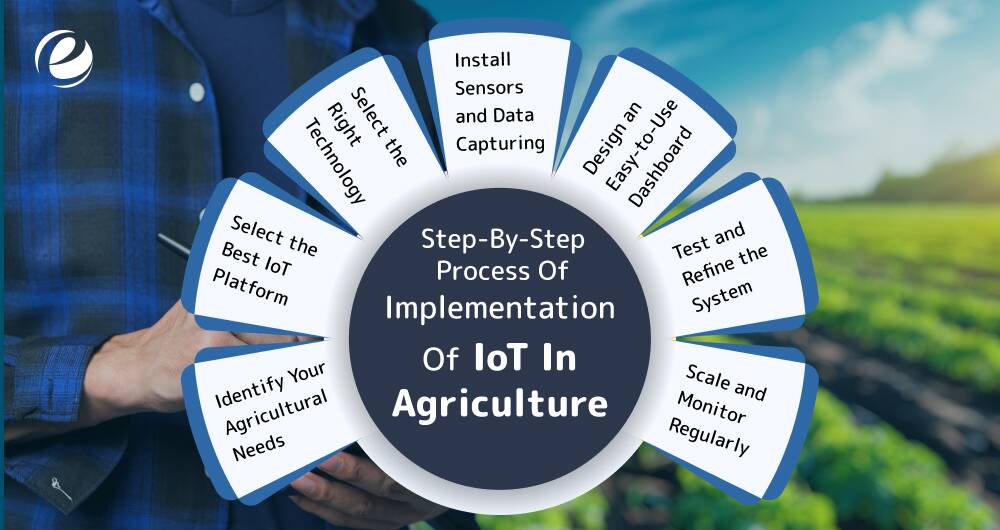
IoT devices like sensors, drones, and automation devices are transforming farming into smart and efficient farming. Pre-planning is the key to implementation of iot in agriculture in the best possible way. Simply follow this simple step-by-step guide of iot implementation in agriculture:
1. Identify Your Agricultural Needs
Begin by deciding what specific issues you need IoT to address. Determine what you need to do with the technology—maybe it’s the enhanced monitoring, improved irrigation control, or raising animals and crops. This will decide the appropriate tools and technology.
2. Select the Best IoT Platform
Choose an IoT platform that best fits your farming needs. You might have a device and sensor that supports an agricultural platform or a farm platform. Choose the capability that will allow you to manage your devices and your data in a positive manner. When choosing what platforms to study, think about how easy they are to use, if they scale or not, and how well they handle data.
3. Select the Right Technology
In order to successfully implement iot for agriculture, you need to select the right technology. Keep the following in mind:
- Sensor Types: Decide what sensors you will implement, i.e., to detect soil moisture, weather, or track animal movement.
- Connectivity Options: Select a mechanism for enabling your gadgets to securely connect, using technologies which include LoRa, NB-IoT, or 5G, relying on the geographical place of your farm.
- Data Storage Solutions: Determine whether or not you’ll need records storage on-web site or utilize cloud centers, which go away sufficient space for increase in the future and easy accessibility.
- Integration Capabilities: Ensure the IoT platform you choose integrates thoroughly with any farm software program or cellular app you have already got in place.
4. Install Sensors and Data Capturing
To get actual-time facts, having sensors in your farm is vital. Sensors can display soil wetness, climate situations, and the activity of animals. Choose a statistics keep that is suitable for you—the cloud for scalable ease or the neighborhood machine for complete control. Make positive the facts being harvested is easily integratable into your IoT platform for seamless capability.
5. Design an Easy-to-Use Dashboard
In order to maximize IoT, the farmers should have easy access to the data. You can have a dashboard in which you get to see real-time updates, identify patterns, and send alerts on sudden changes. Make the dashboard available across various devices like tablets and smartphones so that you can control the farm from afar.
6. Test and Refine the System
Prior to the final decision to your IoT deployment, test rigorously to ascertain that all is in order. Find any such deficiencies such as rogue sensor values, network down, or sluggish data processing. Adjust parameters and repair to optimize within the system.
7. Scale and Monitor Regularly
As your farm expands, so will equipment and expertise. Keep an eye on system performance periodically, update software from time to time, and install new sensors to meet changing requirements. Upgrading your IoT system ensures long-term productivity and improved decision-making for enhanced farming results.
By doing these steps, you will be able to successfully apply IoT in agriculture and make farming smarter, efficient, and highly productive.
Cost of Implementing IoT in Agriculture
The expense of implementation of iot in agriculture is varied with respect to aspects such as the level of sophistication required, the number of devices to be equipped, and what has to be tailored. The following is a description of major cost drivers:
1. Hardware Costs
It comprises hardware components such as sensors, controllers, among other devices necessary for data collection and automation processes.
2. Firmware Development
Firmware is the built-in software for IoT devices in order to operationalize them.Firmware customization and management are part of the total cost.
3. Software and Analytics
That encompasses the platforms and tools for data monitoring, reporting, and controlling the farm’s IoT system. A readily accessible monitoring dashboard falls under this cost.
4. Connectivity and Network Setup
IoT applications are reliant on reliable connectivity, such as network hardware, SIM cards, and data transmission charges. Choices between Wi-Fi, LoRa, NB-IoT, or 5G can influence expenses.
Below is the full segmentation of the cost variables by farm size:
| Farm Size | Estimated Cost | Features Included |
| Small Farm (10 acres) | $4,000 to $7,000 | Basic sensors, gateways, and cloud subscriptions |
| Mid-Sized Farm (50-100 acres) | $15,000 to $40,000 | Advanced sensors, automation systems, and software integration |
| Large Enterprise Farm (500+ acres) | $100,000+ | Totally automated IoT platform with greater analytics |
While more costly in initial investment, IoT for agriculture can take one a long way towards efficiency, saving resources from wastage and improving farm yields overall, so an absolutely great investment for the future.

IoT Use Cases in Agriculture
IoT technology is revolutionizing the way of farming by allowing farmers to make well-informed decisions, optimizing the utilization of resources, and automating functions. Some of the most important areas where IoT in agriculture is contributing significantly are mentioned below:
1. Climate Monitoring for Smart Farming
IoT sensor-based weather stations are placed over farms to measure real-time temperature, humidity, rainfall, etc. All data is saved in the cloud, which is advantageous for farmers as it analyzes climatic conditions, selects best crops, and maximizes yield with precision agriculture.
Smart Elements, AllMETEO, and Pycno are some of the most widely used IoT-based climate monitoring software.
2. Automated Greenhouse Management
Earlier, environmental factors in greenhouses such as temperature, light, and moisture content of the soil were controlled manually. Now, the farmer is able to perceive these conditions in real-time and modify them automatically with the help of IoT sensors.
Ventilation, irrigation, and lighting, for instance, may be regulated by intelligent systems as per pre-stated conditions with reduced labor and maximum plant wellness. Software-based on IoT like Farmapp and Growlink provide such control options to ensure optimal operation of the greenhouse.
3. Smart Crop Monitoring
IoT crop monitoring devices gather important data like rain, temperature, humidity, and soil health. These sensors are crop-specific and not like typical weather stations; they enable the farmer to find diseases, inhibit infestations, and produce healthier crops.
Farmers, through real-time notifications, are in a position to respond rapidly to save the crops. The Arable and Semios IoT devices are such examples of IoT in agriculture that facilitate the optimization of crop health and also improve the quality of harvest.
4. Livestock Tracking and Health Monitoring
The health and activity of animals can be monitored by farmers using IoT-based sensors worn by animals. Sensors monitor feeding, movement, and body temperature for early detection of disease and blocking disease transmission.
GPS collars and aerial surveillance systems also permit monitoring of large farm animals with no labor input. Advanced animal management systems such as SCR by Allflex and Cowlar enable real-time monitoring of herd health, streamlining farm management.
Future Trends of IoT in Agriculture
With the ongoing evolution of technology, a number of new trends in IoT in agriculture are leading the way to more intelligent and efficient farming.
1. AI and Machine Learning for Intelligent Farming
Artificial intelligence and machine learning are revolutionizing agriculture by making IoT systems predictive and data-centric. These iot and ai in agriculture manage large volumes of farm data, enabling farmers to maximize crop yields, water consumption, and overall efficiency and minimize waste.
2. Blockchain for Real Food Supply Chains
Blockchain technology in the farming sector ensures higher traceability and earns consumers’ confidence. Monitoring every step in food production stages—literally, from planting to delivery—keeps everyone out in the open and provides no room for fraud at supply stages. The technology makes traces of farm produce readily traceable through to convenience for farmers and consumers.
3. Drones and Autonomous Vehicle Automation
Autonomous tractors and drones are transforming farm activity. They cultivate, monitor crops, and harvest with ease and without any faults, fewer men required, and more effectively.
4. Edge Computing for Faster Decision-Making
A majority of the farms are located in areas with little internet connectivity. Edge computing facilitates the processing of IoT device data like sensors and drones locally without any intervention by cloud networks. Farmers can have real-time decision-making, such as varying the levels of irrigation during drought or applying fertilizers when necessary.
Why Choose EmizenTech for Implementation of IoT in Agriculture?
The Internet of Things (IoT) is leaving a permanent mark in the majority of industries, and agriculture is the most prominent one among them that has been affected. Technology is evolving day by day, and IoT-based solutions are helping farmers increase productivity, optimize resource usage, and automate processes.
We at EmizenTech are professional smart agriculture solution creators as per your business needs. With our IoT application development services, we have helped numerous startups and businesses embrace digitalization and develop their business successfully. With today’s technology, we help businesses streamline farming activities and stay competitive in the market.
Our IoT Solutions in Agriculture:
- IoT Consulting and Strategy for Smart Farming
- IoT solution design, deployment, and maintenance
- Scaling and integration from low-end Bluetooth sensors to high-end robots
- Quick prototyping and development to push ideas into functional solutions
- Hardware and software expertise, from sensor integration to application development
- Microcontroller and sensor integration for half of the smart farming machines
If you are looking to learn about how IoT is going to change the agriculture sector, we’re here to lead you through this revolution. Call our experts now and find out how iot in agriculture will change your agricultural operations!
Conclusion
IoT in agriculture has been successful in incorporating new technology with traditional farming methods such that farmers have been successful in enhancing the quantity and quality of their produce. With real-time data obtained from sensors, farmers can now make the right decisions to save crops, preserve resources, and enhance productivity.
With automated procedures and real-time monitoring, operations on the farm are now continuous. This does not just guard against damage to crops but also speeds up operations from the farm to market, putting fresh crops in consumers’ hands sooner than ever. IoT remains at the forefront in converting agriculture into a still more data-driven and sustainable business.
FAQs
How Does IoT Improve Large-Scale Crop Yield?
IoT facilitates mass cultivation with intelligent sensors and drones feeding real-time information on soil, weather, and plant health. It facilitates precision agriculture, with optimized irrigation, fertilization, and pest control, conserving water and fertilizer and optimizing yield. Equipment tracking and automated watering also reduce man-involvement in farm activities.
To What Extent Can IoT Automate Farming Processes?
IoT can be used to automate agricultural activities, ranging from irrigation to animals. Intelligently controlled irrigation monitors water levels according to the requirement, auto feeders oversee animal feeding, and robots cultivate, weed, and harvest. Real-time monitoring equipment also monitors soil and crop health, making it more efficient and lowering operational costs.
Are IoT Systems Reliable in Harsh Farming Environments?
IoT agriculture is made dust, heat, and humidity-proof. But constant working in these conditions reduces the sensor efficiency. The rugged weather-proof components are hard wired and, from time to time, also maintained, thus providing additional reliability and life.
What Are the Top Security Concerns of IoT for Agriculture?
Since IoT is harvesting a tremendous amount of data in the case of agriculture, security is more important than ever. Sensitive information are safeguarded by robust encryption, secure authentication, and access control. Software and cyber security measures are updated from time to time in an effort to avoid data breaches and maintain a secure and efficient system of smart agriculture.




 +1 (989) 535-9295
 info@emizentech.com
 emizentech


