 Add us as a preferred source on Google
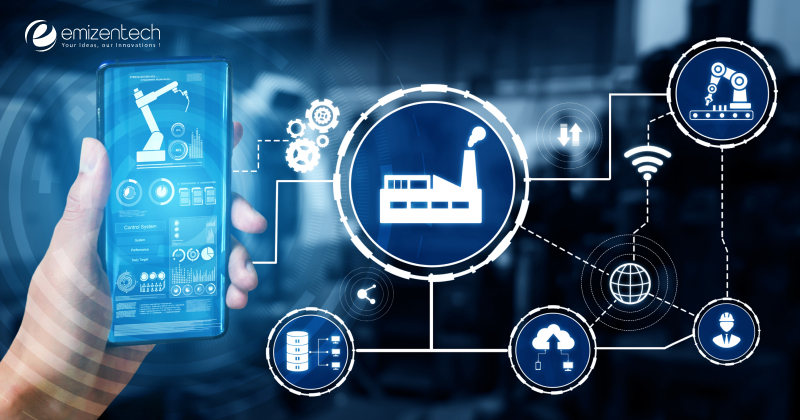
The Internet of Things (IoT) is establishing a rage in the manufacturing industry by connecting devices like machines, sensors, and software to enhance efficiency and productivity. The IoT allows real-time monitoring, predictive maintenance, process automation, and data-enabled decision-making, thus improving the smartness and efficiency of factories.
IoT Apps in manufacturing industry will apply in instances of machine tracking, quality control, supply-chain management, and worker safety, allowing manufacturers to reduce costs, minimize downtime, and streamline operations. These advancements in technology-powered AI, 5G, and digital twins will further assist the IoEs in moulding the future of smart manufacturing.
In this guide you will explore everything about IoT Applications in manufacturing industry and also you will learn about how IoT use cases in manufacturing industry, key features, benefits, how it works and many more.
What is IoT Application in manufacturing industry?
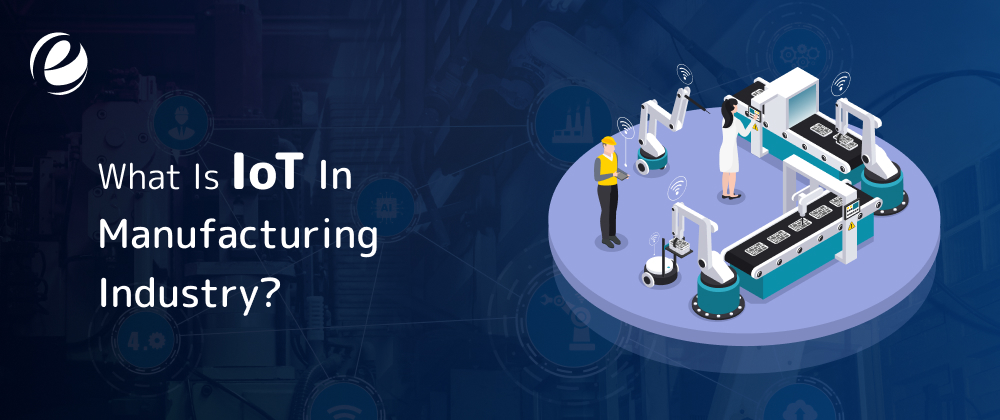
The Internet of Things (IoT) is an overarching term that combines many physical devices, machines, and objects endowed with different sensors, software, and other technologies to communicate and share information with their external systems over the Internet. You may have a question that “how IoT Apps helps in manufacturing”, right? IoT helps radically transform the manufacturing process through better efficiency by identifying failure in real-time.
IoT Apps in manufacturing industry involves different devices, such as machines, sensors, and robots, working together so that production lines run at the optimum level and minimize downtime. It helps producers achieve the factory of the future, which can respond quickly to changes in market and production demands.

How IoT Applications Works in the Manufacturing Industry?
The Internet of Things (IoT) connects everything in manufacturing, from the machines on the floor to inventory systems and customer-facing services. The minute IoT solutions are deployed, sensors on machines or products relay information back to a central system; a continuous supply of data allows them to monitor performance, track processes, and, finally, predict future issues before they actually occur.
The impact of IoT Apps in manufacturing industry offers lower human involvement to eliminate human errors, provide better efficiency, and make production much more agile and interconnected. Be it tracking the movement of goods or allowing predictive maintenance for machines, IoT speeds things up, makes them smarter, and more efficient.
Sensors collect data – IoT sensors help monitor many factors like machine operation, temperature, and pressure.
Data goes to the cloud – The information collected is sent through a network-based transmission such as Wi-Fi, Bluetooth, or 5G.
Analysis of data – smart algorithms and AI analyze data to find patterns, detect issues, and further improve efficiency.
Triggering automated actions – IoT systems can automatically adjust machine settings, send alerts, and trigger maintenance scheduling.
Monitoring and control – Managers are capable of continuously monitoring and controlling onsite operations in real-time.
Predictive maintenance insights – Through IoT, possible machinery failures are discovered ahead of time, making it possible to take measures to prevent expensive breakdowns.
Continuous improvement – The system keeps learning and improving over time, leading to a productivity boost in manufacturing and lower manufacturing expenses.
Note: You also want to know about “how to build an IoT app” right? If you really are then consider this blog. This will definitely help you out to develop the IoT app successfully.
Benefits Of IoT In Manufacturing Industry
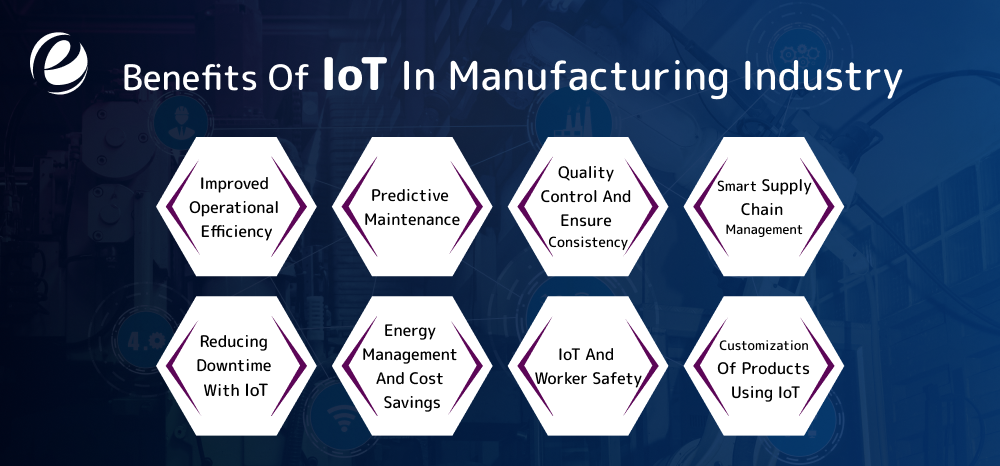
Basically, we can say that there are many benefits of IoT in manufacturing sector. IoT is a means of smoothening operations in this industry, ultimately reducing the costs thereof. Here come its greatest advantages:
1. Improved Operational Efficiency
With IoT, manufacturers are able to track production metrics, identify inefficiencies, and make data-backed adjustments; for instance, sensors placed on machines could signal when such machines operated inefficiently and needed a readjustment. Such would lead to smoothened workflows and speedy production.
Just like a car that incorporates GPS to avoid traffic, IoT in manufacturing industry prevents delays and optimizes their routes toward success.
2. Predictive Maintenance
Save Time and Money: Predictive maintenance is one of the distinguished uses of IoT in manufacturing itself. Rather than having to wait for a machine to shut down entirely, IoT devices read signs of wear and tear, alerting operators in good time to take action. This, indeed, allows for maintenance and repairs to be done on time, thereby averting surprise downtimes while also saving much on repair costs.
Just like a tire sensor in a car—once it senses low pressure, it alerts the driver to avoid further damage; just that hi-tech now does it for machines.
3. Quality Control and Ensure Consistency
Quality control is critical to manufacturing, and IoT ensures every manufactured product is up to standard. By doing continuous parameter measurement of the production process (temperature, humidity, pressure, etc.) IoT can anticipate problems long before they result in defective products. Once a glitch has been identified, either the system can seize production or operators can be alerted, thereby ensuring that only good quality gets through to the consumer.
This constant vigilance thereby alleviates wastage and maximizes consumer satisfaction.
4. Smart Supply Chain Management
IoT made a very strong impact on supply chain management. Various IoT devices are being used to track the inventory, monitor the delivery routes, and forecast the level of stock in order to make sure manufacturers do not run out of raw materials or components. It also provides that manufacturers can indeed trace the flow of materials in real-time, thus informing any immediate decision due to, although not limited to, delays in movement, etc.
For example, an alert about delayed shipments might allow managers to modify production schedules.
5. Reducing Downtime with IoT
One of the major issues in manufacturing is downtime, but this is generally a problem that IoT in manufacturing industry can tend to properly. Sensors can pick up on performance issues in machinery and alert technicians in real time so they can fix them before they turn into a major breakdown.
One way of avoiding downtime pays off in actual production flows and timely completion of commitments while giving savings through financial losses.
6. Energy Management and Cost Savings
Manufacturing is one of the richest areas consuming energy; the power cost component can be up to 40 or 50 percent of the total manufacturing costs. The wastage of energy ends up causing losses worth millions of dollars, therefore smart building systems provide advanced functionality that optimizes and adapts to energy usage through IoT sensors so that they can be controlled to put into practice proper energy management techniques.
Just think of it as a smart thermostat for your whole factory, constantly modulating its energy usage depending on how much energy it gets.
7. IoT and Worker Safety
Manufacturing takes workplace safety as its major priority, and that’s where IoT is expected to come into play to ensure the safety of workers. Wearable IoT devices that can have everything from worker vitals to movement patterns monitored and can also give alerts to the dangers like levels of toxic gases or high temperatures threatening them. In moments of danger for workers, IoT systems can instantly alert supervisors and sometimes even ensure the shutdown of dangerous machines to prevent any harm from occurring.
IoT in manufacturing industry further provides a safer working environment with a reduction in workplace injuries and, hence, liability risks.
8. Customization of Products Using IoT
Customization of products using IoT Well, customization is an ever-growing demand of the manufacturing sector. With IoT, one can quickly modify his production line based on what customers prefer. For instance, a clothing company reinforces IoT in manufacturing sector to track customer trends and then automatically adjust its designs or sizes based on demand.
This flexibility raises customer satisfaction while opening opportunities anew.
Key features of IoT applications in manufacturing industry
With these features, manufacturers can improve productivity, save costs, and raise efficiency!
- Real-time Monitoring: Real-time tracking of machines, devices, and processes.
- Predictive Maintenance: Detection of early problems, thus avoiding a breakdown.
- Automation & Control: Remotely control machines with the least human effort.
- Data Collection & Analysis: Collect critical data for improvement in efficiency.
- Supply Chain Management: Keep track of stock, shipping, and all deliveries.
- Energy Management: Curb energy wastage, hence saving costs.
- Smart Safety Systems: Detects hazards and improves worker safety.
- Seamless Connectivity: You can connect using wifi, Bluetooth, or 5G.
- Cloud and Remote Access: Safe data storage with access allowed from anywhere.
- Cybersecurity Protection: Keeping the system safe from hackers and data leakage.
Top 10 IoT Applications in Manufacturing Industry

Here are some of the top application of IoT in manufacturing sector. Look at this table, which shows important information about these applications. You can get an overview of these selected companies and then make informed decisions by comparing all applications of IoT in smart manufacturing.
| Application Name | Launch Year | App Size | Rating | Reviews | Platform | Category |
| Oracle IoT Production Monitoring | 2018 | 50 MB | 4.2 | 1,200 | Android, iOS | Industrial IoT |
| Just Trackers – Plant IoT | 2019 | 35 MB | 4.5 | 900 | Android | Asset Tracking |
| Rush IoT | 2021 | 42 MB | 4.3 | 750 | Android, iOS | Logistics IoT |
| Siemens MindSphere Smart Predictive Maintenance | 2017 | 60 MB | 4.6 | 2,000 | Android, iOS, Web | Predictive Maintenance |
| Asset Tracking and Maintenance | 2020 | 48 MB | 4.4 | 1,100 | Android, iOS | Asset Management |
| QC Inspection | 2019 | 30 MB | 4.1 | 850 | Android | Quality Control |
| SCM – Supply Chain Management | 2018 | 55 MB | 4.3 | 1,500 | Android, iOS, Web | Supply Chain Management |
| MyApp Energy | 2022 | 40 MB | 4.7 | 1,250 | Android, iOS | Energy Monitoring |
| WorkerSafety Pro – Digital PPE | 2021 | 38 MB | 4.5 | 900 | Android, iOS | Worker Safety & Compliance |
| Qingping IoT | 2019 | 37.8 MB | 3.2 | NA | iOS | Utilities |
How To Implement IoT In Manufacturing Industry?

Incorporating IoT in manufacturing is bound to usher in a new level of efficiency that is set to cut down costs and enhance productivity. Here are seven simple steps to getting started:
1. Define Goals & Requirements
Identify the goals and requirements for real-time monitoring, predictive maintenance, or automation.
2. Choose the Right IoT Devices
You have to choose appropriate IoT devices because this would include sensors, RFID tags, and any other smart devices based on your needs.
3. Set Up Connectivity
Now you need to set connectivity that will ensure a stable internet connection and network connections like Wi-Fi, Bluetooth, 5G, or LPWAN.
4. Develop IoT Software & Cloud Storage
In this step, you need to develop IoT software and cloud storage that will use IoT platforms to cobble up, analyze, and store data securely.
5. Integrate with Existing Systems
Connect IoT with your ERP, MES, or any other software related in Manufacturing.
6. Ensure Security & Compliance
Now you need to be sure about security and compliance while imposing measures based on cybersecurity in order to protect data from threats.
7. Monitor, Analyze & Optimize
You must constantly keep track of how well a certain element arrangement performs and analyze data, which will optimize not only the arrangement itself but also the strategy of management.
How Much Do IoT Applications in Manufacturing Cost?
The integration of IoT Apps in manufacturing industry is drastically changing the way operations are being done. The Implementation cost of IoT in manufacturing depends on various factors like the nature and level of complexity of the projects, skills and knowledge required from the developers to build or integrate IoT in the projects and also the type of selected infrastructure.
Majorly, they consist of hardware, software development, cloud services, connectivity, cybersecurity, and further maintenance. Below, we provide an estimated cost breakdown table, which is based on the different roles involved.
Breaking Down the Cost of IoT Applications in Manufacturing
| Role | Category | Average Hourly Rate ($) | Estimated Entire Project Cost ($) |
| IoT Consultant | Planning & Strategy | 80 – 150 | 10,000 – 50,000 |
| Hardware Engineers | Device Development | 50 – 120 | 30,000 – 100,000 |
| Embedded System Developers | Firmware Programming | 60 – 130 | 40,000 – 150,000 |
| Software Developers | IoT Platform & Apps | 70 – 140 | 50,000 – 250,000 |
| Cloud Engineers | Cloud Infrastructure | 80 – 160 | 50,000 – 200,000 |
| Data Scientists | Analytics & AI | 90 – 180 | 50,000 – 250,000 |
| Network Engineers | Connectivity Setup | 60 – 140 | 40,000 – 150,000 |
| Cybersecurity Specialists | Security Measures | 80 – 170 | 50,000 – 200,000 |
| Maintenance & Support Team | Ongoing Management | 40 – 100 | 20,000 – 100,000 (Annually) |
Understanding the Cost of IoT Applications in Manufacturing
- Small-scale Project: $100,000 – $300,000
- Medium-scale Project: $300,000 – $800,000
- Large-scale Project: $800,000 – $2,000,000+

Use cases and examples of IoT Apps in the manufacturing industry.
The application of IoT in manufacturing industry is indeed a jackpot for the industry. With the advent of Industry 5.0, new IoT in manufacturing use cases will emerge. Here are some of the interesting examples of IoT in manufacturing industry:
1. M2M Automation
M2M Automation controls and manages the data from equipment remotely. It is a process of receiving information from some sensors embedded throughout the equipment and transmitting it through the networks. The IoT cases inform each other using sensor information and are able to take many actions, such as deciding on what material is needed, forecasting product demand, and other supply decisions.
Linking the ERP with the data grants an insight into production performance and manufacturing practices. This does offer ways to enable remote monitoring, asset tracking and monitoring, restocking products, and other similar activities.
2. Application of Smart Assets
The organizing of IoT sensors, asset tags, and software to provide real-time information about asset location and status provides an ecosystem of interconnected devices, security components, application software, controllers, and much more. They track and optimize the assets at all stages of the manufacturing process, from the supply chain to the product delivery.
Such technologies are able to bring out problems that can affect product quality or time-to-market faster than any human ever could. Some IoT examples of intelligent assets include digital equipment, plant instrumentation, and embedded systems.
3. Monitoring Assistance
The Internet of Things allows for the remote tracking of industrial assets and the state of machines to monitor equipment for compliance, safety, and reliability. These sensors track the best practices in production processes for proper notifications. IoT technology allows monitoring of industrial assets remotely.
IoT sensors will help figure out the health of the equipment and its usage, which in turn will help measure performance. The sensors may also enable service to be deployed for any issues arising. It offers quality control, inventory optimization, and logistical supplementing.
4. Accurate KPI Performance Visibility
Key performance indicators (KPIs) are used to steer decision-making. Furthermore, an easily accessed dashboard of KPIs creates an ability for companies to prioritize focus and ensure they are on the right track. Manufacturing KPIs such as Overall Equipment Efficiency (OEE) among others help you understand performance in your factory from different areas through machine uptime data that will be collected.
IIoT platforms will use analytics to gather and provide context to disparate data in an interactive dashboard showing how well a manufacturing plant is performing. Besides, IoT platforms facilitate combining and contextualizing the data into simplified dashboards and reports that inform more broadly how well a business is doing.
5. Efficient Logistics
There are several application of IoT in manufacturing that assist business owners. For example, it contributes toward reducing or eliminating transportation, vehicle, and labour costs. IoT-based interconnectivity between devices and systems enhances supply chain efficiencies.
Autonomous fleet solutions and real-time performance monitoring of drivers and vehicles decrease both damage and insurance payments. One may optimize operational tasks, fuel costs, and deliveries through the use of IoT in logistics.
Future of IoT Apps in the Manufacturing Industry

The global Internet of Things in manufacturing is expected to touch USD 1523.91 billion by 2030, registering a growth of 24.91 per cent CAGR over the analysis period for 2022-2030 (suggests Precedence Research).
IoT-based Predictive maintenance is the most-significant application of IoT in manufacturing industry as it allows users to know of any impending system malfunction and correct the problem before machines break down.
Apart from being the most technologically advanced region, North America also happens to be the region with the highest demand for IoT in manufacturing industry. With the high demand for such solutions, vendors are collaborating with industrialists to develop smart production machines.
The other critical reason for IoT in manufacturing industry market growth is to improve the process of inventory management. By integrating IoT in RFID scanners, the industry can have insights over the inventory from the time of order placement to delivery.
Some projections suggest that the global count of IoT devices could exceed 100 billion by the year 2050. Moreover, the industrial sector, including the IoT in manufacturing industry, will account for more than 70% of those IoT connections.
Why Choose EmizenTech For Implementation Of IoT In Manufacturing Industry
EmizenTech is one of the best and leading IT companies in the market. Here is a team of experts with years of IoT capabilities in manufacturing. The developers understand the industry requirements and provide customized IoT internet of things solutions as per the clients’ demands. Our expert programmers provide complete IoT implementation in manufacturing services, from planning and device selection to software development and maintenance that ensures an absolutely seamless project.
We are designed to deliver customized solutions based on requirements with better efficiency, more automation, and lower costs. Our experts designed secure systems which safeguard your data from breaches and hacking. Our experienced coders are also adequate for integration of the IoT devices and platforms with the existing systems of manufacturing like ERP and MES.
Our team members are always available at any time, whether it is day or night, whenever you require help, they all are a call away. Our developers also believe in offering cost-effective and scalable solutions that the businesses can afford; this means you can enlarge IoT applications in manufacturing as needs arise.
With EmizenTech, you can have assured, more secure, and more efficient IoT solutions for your manufacturing function!
Conclusion
Let’s discuss this blog’s conclusion. Well, we all know that IoT is revolutionizing the manufacturing sector by enabling smart automation, real-time monitoring, predictive maintenance, and data-driven decision-making. From machine monitoring and quality control to supply chain and worker safety, IoT helps manufacturers improve efficiency, reduce costs, and increase productivity.
Continuing further along the technological road, AI-powered analytics, 5G connectivity, and digital twins will revolutionize smart manufacturing in the future. To keep pace and not lag behind, businesses should be capable of adopting IoT in manufacturing industry that actually improves their operations while driving innovation throughout their entire organization.
EmizenTech is your trusted partner in implementing customized IoT solutions in manufacturing. Drawing on our expertise, secure systems, and end-to-end services, we help you unlock the full capabilities of IoT for a smarter and more efficient future.
FAQs
How long does it take to implement IoT in a factory?
That would depend on the size and complexity of the project. Smaller IoT solutions would typically take some months, while large-scale implementations may take up to a year or so.
Can IoT help in diminishing production costs?
Yes, IoT solves that as well! It optimizes energy consumption, acts as a preventive health measure to avoid machine breakdown, improves quality control, and automates manual processes.
What types of data are collected by IoT in manufacturing industry?
IoT collects data on temperature, humidity, performance of the machine, energy consumption, inventory levels, and speed of production.
What are the challenges faced while implementing IoT in manufacturing industry?
Some of the challenges would be a high initial investment, cybersecurity threats, network connectivity issues, and availability of skilled labour.
What is the future of IoT in manufacturing industry?
In the future, we may see Artificial Intelligence analytics, 5G connectivity, digital twins, and self-learning machines deployed in smart factories.




 +1 (989) 535-9295
 info@emizentech.com
 emizentech


