 Add us as a preferred source on Google
 One of the most significant moments in any e-commerce business is when customers purchase things. To ensure this is done smoothly, you must use the best software. The software you choose to run your business could significantly affect how effective you are. The most essential piece of equipment for online retailers is the POS system for eCommerce.
A POS system is more than just a tool to take payments; it’s the heart of your business. For an e-commerce store, especially, a POS system helps connect your online sales with everything happening behind the scenes. It keeps track of your products, records sales by itself, and helps make shopping easier and better for your customers.
With the growing trend of omnichannel selling, more businesses sell on websites, social media, and in stores; a sound POS system helps everything work together. It updates inventory right away, handles returns easily, and shows how well your sales are doing.
There’s a lot of competition in the world of e-commerce. Having top-quality software is essential for the growth of your company. If you do not have the right retail POS system software in place, you can fall behind in the market and miss out on significant opportunities to expand your business.
Given the variety of POS solutions available, choosing the right one for your business can be challenging. In this comprehensive guide, we’ll look at the best eCommerce POS system and help you choose the one that’s right for your online business.
Market Statistics For Retail POS System Software
Today, businesses utilize data to make informed decisions, and Point of Sale (POS) software is a vital tool for retailers and companies seeking to stay ahead of their competition. Let’s examine some key facts about how a POS system for e-commerce can transform the way businesses operate.
- The United States point-of-sale (POS) terminals market is poised for significant growth, with an estimated value of $29.11 billion by 2025. This market is projected to reach $44.63 billion by 2030, growing at a compound annual growth rate (CAGR) of 8.92% during the forecast period.
- The Retail POS Terminal Market size was $36.7 billion in 2023. The market is expected to increase by more than 5.5% between 2024 and 2032.
- Retailers who utilize their POS data typically experience 30% more revenue growth than their competitors who do not value this data as highly.
- The retail Point of Sale market is expected to grow from $15.8 billion in 2020 to $34.4 billion by 2026, with an annual growth rate of 13.9%.
What is a POS System for eCommerce?
A POS (Point of Sale) for e-commerce is an online software application used by online stores to manage various business functions in one location. It aids in managing the sales process, monitoring inventory levels, storing data about customers, and managing payments. Unlike conventional point-of-sale (POS) systems designed for brick-and-mortar stores, POS systems for e-commerce are specifically for businesses that operate exclusively online.
It is compatible with various e-commerce platforms, including Shopify, WooCommerce, and Magento. It also provides tools to manage orders, shipping, and returns. The central system streamlines operations, enabling eCommerce and retail businesses to monitor their activities, enhance efficiency, and enhance the user experience all on one platform.
Benefits of POS Systems for Ecommerce Business
The software for POS systems plays a key role in e-commerce business operations, performing tasks that go beyond just processing transactions. Many businesses are moving away from basic cash registers and implementing POS systems due to their advantages.
1. Better Customer Engagement
An eCommerce POS system helps keep customers happy. You can use it to reward customers with points or discounts whenever they shop at your store. This makes them feel valued and encourages them to visit again. Some POS platforms already include tools to manage loyalty programs, making implementation simple. Small rewards can strengthen customer relationships and encourage repeat purchases, which is beneficial for the business.
2. Streamlined Operations and Time Savings
A POS system can save you time and effort by handling everyday routine tasks. It tracks sales, monitors inventory, and generates regular reports, meaning you won’t have to manage everything manually. This allows you to focus on growing your business. Additionally, it helps reduce errors and speeds up the process. The more efficiently you operate, the higher your profit potential.
3. Improved Cash Flow Management
POS software provides clear visibility into your finances, allowing you to track the money coming in and going out. This helps you make informed decisions about when to purchase more products or hold sales. With clear financial information, it’s easier to plan your budget and also avoid running out of funds. You’ll have greater control over your company’s finances and expenses.
4. Enhanced Security Features
Security is critical for businesses, and POS system software ensures the protection of both your company and your customers. The system uses secure payment methods and keeps customer information safe, helping to prevent fraud and protect against hackers. Customers feel more secure knowing their data is protected, which can lead to increased transactions. A secure system reduces risk and provides peace of mind for both you and your customers.
5. Scalability for Growing Businesses
As your business expands, your ecommerce POS system will grow with it. An efficient system enables you to add more stores, products, or sales channels without issues. There’s no need to start from scratch every time. Whether you’re opening a new store or selling online, your POS system can handle it, making it easier to scale your business while keeping everything organized in one place.
6. Increased Accuracy in Transactions
A POS system makes checkout quick and reliable. It automatically adds tax, updates prices, and adjusts inventory whenever a transaction occurs. This reduces the likelihood of manual errors. Each sale is recorded immediately, ensuring accurate records without the need for guesswork regarding sales or inventory levels. This helps you make better business decisions and ensures efficient operation.
7. Enhanced Sales Reporting & Analytics
A retail POS system software will show you your business’s performance. It gathers information about sales and converts it into reports that are easy to read. It lets you know which products are most popular, which clients like, and at what times you’re busiest. This information helps you make better decisions regarding pricing, stock, and promotions.
8. Multi-location Management
If you manage multiple stores, a POS system will manage each store. It allows you to view the sales, inventory levels, and customer information for each store, all on the same screen. This will ensure that the stores are stocked with enough items and that they provide the same quality customer service. It is also possible to establish the exact pricing and offers across all stores. The system ensures everything is running efficiently and helps you save time.
10 Best Ecommerce POS Systems
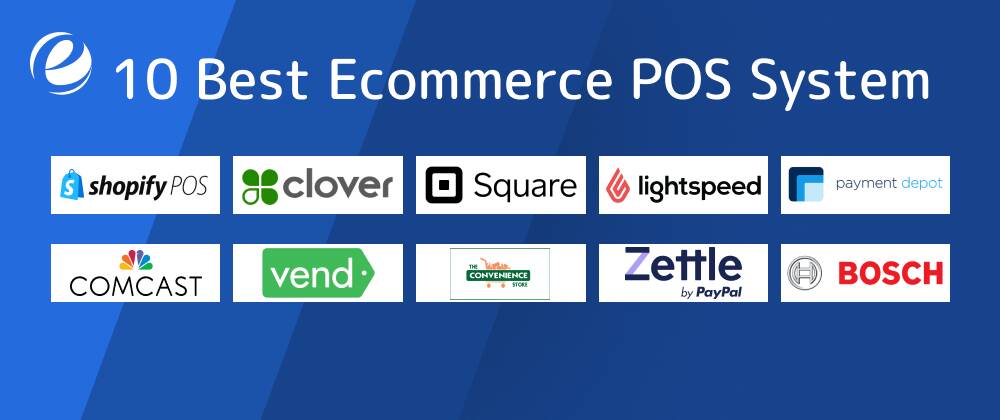
Many eCommerce POS systems will lead the industry in 2025, each offering a unique array of features designed to meet the needs of different businesses. This is a comprehensive list of the top 10 POS systems for eCommerce:
1. Shopify POS
Shopify POS is an excellent solution for those who already use Shopify to run their online stores. It can connect offline and online sales from one central location, making it easier to manage multiple software tools. Shopify POS is simple to use on mobile and tablet devices. It provides comprehensive reports on inventory, sales, and performance.
This solution is ideal for medium to small businesses looking to improve their processes. It allows you to track payments, monitor performance, and integrate with other applications and services, making it an ideal choice for those running e-commerce businesses.
2. Square for Retail
Square for Retail is a simple and affordable POS system designed specifically for smaller businesses and startups. It’s user-friendly and features useful tools, such as robust reporting capabilities and the ability to handle sales across multiple locations.
The company offers a basic free plan, making it an economical choice for businesses just starting. Square also accepts various payment options, and its intuitive interface makes setup quick and easy. Square Retail is perfect for small businesses that are just beginning or managing multiple stores.
3. Clover
Clover is a flexible POS system software
Clover is particularly suited for businesses that operate both physical and online stores, providing a unified method for tracking all sales. It also offers reporting tools to help you manage everything from customer purchases to inventory. Clover’s versatility allows businesses to grow and adapt to changing needs.
4. Lightspeed Retail
Lightspeed Retail is a robust POS system that works well for companies selling both online and in physical stores. The system comes with advanced features to manage inventory, customer relationships, and sales across multiple locations. Lightspeed is designed to scale as your business grows, making it ideal for larger or more complex operations.
It also offers detailed reports and analytics in order to help businesses make informed decisions. If your business operates across different sales channels, Lightspeed can streamline everything from order processing to inventory management.
5. Payment Depot
Payment Depot is an online payment processor with a cost-effective and straightforward pricing structure. Businesses can use it to reduce credit card processing costs by offering an easy-to-understand interchange-plus pricing model. With no hidden fees, it’s easy for business owners to see exactly what they’re paying.
Payment Depot also offers a free online payment gateway and virtual terminals, enabling businesses to accept payments online easily, whether over the phone or in person. This is an excellent choice for online businesses that want to reduce expenses and streamline payment processing.
6. Comcash
Comcash is a POS system designed for independent retail stores, offering an intuitive interface with advanced features. It includes Android handheld terminals and integrated payment options, allowing businesses to manage inventory and sales from a single device.
You can scan items or select products from a menu, and even process card transactions through the Comcash mPOS app available on the Google Play Store. Comcash also integrates with the Comcash Counts inventory app, helping you track stock and manage sales.
7. Vend
Vend is a cloud-based POS platform specifically designed for small and medium-sized businesses. It helps you manage inventory, monitor sales, and store customer details, all in one place. Because it’s cloud-based, you can access your business information from anywhere, which is ideal for entrepreneurs who are constantly on the move.
Vend is an easy-to-use application that offers reporting tools to analyze sales performance. It’s an efficient and affordable solution for small businesses looking for a simple yet powerful inventory management system.
8. C-Store
C-Store POS is a point of sale system made for convenience store owners. It helps simplify daily tasks, increase sales, and enhance customer experience. With C-Store POS, you can easily manage transactions, inventory, and customers.
The system also provides quick setup, training, and round-the-clock support to ensure everything runs smoothly. It’s created to save time and improve the overall efficiency of your store, making it easier to track sales and stock. C-Store POS is a reliable and user-friendly solution that helps convenience stores run better and serve customers more effectively.
9. PayPal Zettle
PayPal Zettle is a simple mobile POS solution intended for small and medium-sized companies. Zettle lets you handle sales and transactions while on the move, which makes it the perfect solution for companies that require an easy, flexible solution. Zettle enables you to accept a variety of payment options, like mobile wallets and credit cards, and integrate them with a PayPal account.
Zettle is a good alternative for small-scale business owners who require a secure point of sale system to manage transactions, regardless of whether they are located at a specific location, while on the move, or at events.
10. Bosch
Bosch offers a POS system built to integrate with your store online to help you run the online and in-store processes. The system provides advanced functions like inventory management, secure payment gateways, and business automation tools. Bosch POS works across multiple platforms, which makes it the ideal solution for companies that have physical stores and online ones.
Additionally, it provides companies with comprehensive data and analysis of inventory and sales to help make more informed decisions. Bosch POS is a comprehensive software for those who want an easy, comprehensive system to handle information and sales effectively.

What to look for in POS System for Ecommerce
There are a variety of eCommerce POS systems
1. User-Friendly Interface
The POS software must be easy to operate, even for those without technical expertise. An intuitive, simple interface reduces training time and minimizes errors. Choose a platform that offers easy navigation, a simple product search, and a fast checkout process. This will boost efficiency and improve your customers’ checkout speed.
2. Inventory Management
A reliable POS system will help you track your inventory quickly. It should manage products of various sizes, colors, and features. Additionally, it should allow you to label items for easy organization and seasonal archiving. The system should also support easy reordering and purchase management, enabling you to determine when to restock products and ensure you don’t run out of your best-sellers.
3. Payment Flexibility
The POS system should accept a variety of payment options, such as debit and credit cards, as well as electronic payments like Apple Pay and Google Pay. It should also support PayPal, Venmo, gift cards, and store credit. Offering multiple payment options makes it easier for customers to pay, increasing the likelihood of repeat purchases and improving the overall shopping experience.
4. Reporting Tools
POS system software with reporting capabilities helps you track profits, sales, and inventory. It shows you which products are performing well and which are not. Additionally, you can analyze customer spending patterns, staff performance, and the effectiveness of promotional campaigns. This data helps you make better decisions, adjust stock levels, and optimize staffing schedules for busy or slow periods.
5. Third-Party Integrations
Many POS solutions integrate with third-party applications, helping to manage customer loyalty programs, targeted promotions, and other aspects of business operations. These integrations, done by your web & eCommerce development company, allow your system to connect with various software tools, saving time and ensuring every part of your business runs smoothly. This improves overall efficiency and enhances the customer experience.
6. Multi-Channel Support
A great POS system will work on various sales channels such as physical stores, online shops, and even marketplaces like Amazon and eBay. It allows you to manage every sale from a single place. The system should transfer inventory and sales across every platform, assisting in ensuring that stock levels are accurate and stopping overselling on any platform.
7. Security Features
Security is vital to safeguard the personal information of customers and financial data. Your POS solution should comply with PCI and provide encryption for secure transactions. You should also be able to restrict access for users to ensure only authorized employees are able to access the sensitive information, which reduces the chance of committing fraud.
8. Customer Support
Select the POS solution that has strong customer service. Choose a service provider that provides 24-hour support via a variety of options (phone or email, as well as Live chat). A reliable customer support service will aid you with technical issues efficiently, while limiting downtime and making sure your company runs efficiently. A sound support system is vital for those who face system problems or have questions.
How to Choose the Right POS Software for Your Ecommerce Business
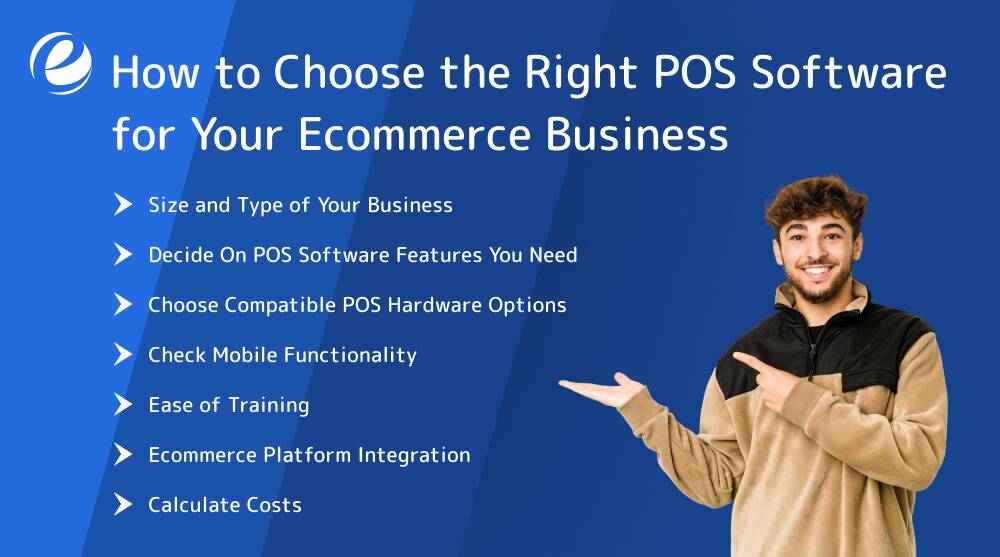
When you’re planning to start your first retail store or considering switching from your existing point-of-sale software, here are a few key things to think about when selecting the right POS solution that will work for your company:
1. Size and Type of Your Business
The dimension and nature of your business matter in deciding on the right POS software. A small-sized business that has just one store or is online might require an affordable system that is easy to operate.
Larger companies with multiple sites or locations may need additional features such as monitoring inventory levels and support for multiple locations. Take a look at how intricate your sales processes are and pick a retail POS system software
2. Decide On POS Software Features You Need
Businesses of different types require distinct POS options. A restaurant, for instance, could require tools to control tables and the inventory of food. A salon may need appointment booking. Take note of the main jobs your company has to perform each day.
Create a list of essential options and desirable extras. Make sure you choose POS solutions that satisfy the requirements you need to meet so that you don’t get overwhelmed by choices you won’t use.
3. Choose Compatible POS Hardware Options
POS systems usually require equipment, including barcode scanners, card readers, or receipt printers. Businesses such as salons and cafés might need a display for their customers that includes tip options. Not all POS equipment is compatible with every software.
To prevent issues, you should select an ecommerce POS system
4. Check Mobile Functionality
If your company isn’t dependent on a specific location, such as pop-up shops or service-based businesses, it’s best to use a mobile POS. An effective mobile POS can be used on tablets and phones and should connect easily with card readers.
It needs to be speedy, reliable, and easy to operate wherever you are. Mobile capabilities allow you to take payments, monitor sales, and handle customers without being trapped at a particular cash register.
5. Ease of Training
A few businesses, specifically those with high staff turnover or seasonal workers, require advanced POS systems that are straightforward to master. Complex systems are time-consuming and could lead to mistakes.
Choose software that has straightforward layouts and easy directions. This will help new employees get started quickly and confidently. An easy-to-use POS system helps reduce anxiety, enhances customer service, and keeps your business operating smoothly even while instructing new team members.
6. Ecommerce Platform Integration
If you operate an online shop, then your POS system must work with your e-commerce platform. This means that sales, customer information, and inventory will sync between your online and in-person sales.
With integration, you don’t need to change things in two places. This saves time and avoids the possibility of mistakes. It also helps you control your company, track sales, and provide the best shopping experience for clients.
7. Calculate Costs
When choosing a point-of-sale system, consider the cost of the initial purchase and any regular fees. Equipment like card readers and receipt printers can be expensive initially. Specific POS software programs are completely free, while others have monthly costs.
Additionally, you’ll have to pay a transaction fee for every sale. Pay attention to hidden costs such as setup, maintenance, and security fees. Make sure your system fits your current budget and will continue to do so as your company expands.

What Makes Emizentech Stand Out in POS System Software
EmizeTech is a trusted eCommerce app development company with years of experience delivering custom POS solutions for businesses of all sizes. We create eCommerce solutions that fit each business’s special needs. We know online stores have different challenges, so we build custom POS systems that are easy to use, work well, and can grow as the business grows.
Our skilled developers work closely with each client to make sure the system works well for their business, whether they are just getting started or improving what they already have. At EmizenTech, we’re here to help you make your eCommerce business run more smoothly with smart technology that can grow with you.
Connect with us today to discover how our powerful eCommerce POS system can take your business to the next level.
Final Thoughts
Choosing the right E-commerce POS system for your store is a big decision that can affect how well your store runs, how happy your customers are, and how much your business grows. When you focus on the most important things, you can pick a POS system that fits your business needs and helps it grow.
Make sure you evaluate your e-commerce business requirements, consider the cost, and explore the different options available in the marketplace. With the best eCommerce POS system
FAQs
What is the best e-commerce POS system for small businesses?
Square POS, Shopify POS, and Vend POS are suitable for small businesses because they are easy to use, cheap, and help manage sales, inventory, and customers.
Can I customize my POS system for e-commerce stores?
Yes, many POS systems let you customize checkout, reports, and loyalty programs to match your store's specific needs and improve your customer experience.
What features should you look for in a retail POS system for an online store?
Look for features like e-commerce integration, safe payment processing, inventory tracking, and reports to keep your online store running smoothly and efficiently.
Can a POS system handle online and in-store sales?
Yes, many modern POS systems can manage both online and in-store sales, syncing inventory and customer data for smoother operations across all sales channels.




 +1 (989) 535-9295
 info@emizentech.com
 emizentech


